Exploding Topics
Secops search volume grew from 2,475 to 9,900 monthly searches between October 2024 and September 2026.
Secops
+300%
Preply search volume grew from 822,581 to 1,500,000 monthly searches between December 2024 and November 2026.
Preply
+82%
Loop Earplugs search volume grew from 370,150 to 673,000 monthly searches between October 2024 and September 2026.
Loop earplugs
+82%



Get Advanced Insights on Any Topic
Discover Trends 12+ Months Before Everyone Else
How We Find Trends Before They Take Off
Exploding Topics’ advanced algorithm monitors millions of unstructured data points to spot trends early on.
Keyword Research
Performance Tracking
Competitor Intelligence
Fix Your Site’s SEO Issues in 30 Seconds
Find technical issues blocking search visibility. Get prioritized, actionable fixes in seconds.
Powered by data from
Latest Blog Posts
Featured Case Studies
See what's trending before everyone else
Each week, we'll send you our best Exploding Topics. Plus, expert insight and analysis.
20 Biggest Data Center Companies & Startups (November 2026)

 Add Exploding Topics on GoogleAdd Exploding Topics as your preferred source to see more of our stories on Google.
Digital Realty and Equinix are the biggest data center companies by number of data centers. Digital Realty had 311 data centers as of September 30, 2026, and Equinix had 282 across 77 markets, according to their latest filings.
Hyperscale operators such as Amazon, Microsoft and Google run 48% of the world’s data center capacity, according to Synergy Research Group.
In this article, we’ll break down the biggest data center operators, the fastest-growing AI data center startups, and how big the market is.
You may also like:
- 57 Growing AI Companies & Startups
- 5 Important Data Storage Trends
- 50 Fast-Growing Tech Companies & Startups
How Big Is the Data Center Market?
Hyperscale operators such as Amazon, Microsoft and Google run nearly half of the world’s data center capacity, and they are spending more on new capacity every quarter.
Hyperscale operators accounted for 48% of the worldwide capacity of all data centers at the end of 2025, according to Synergy Research Group. Non-hyperscale colocation facilities made up 20%, and on-premise enterprise data centers made up 32%.
Synergy forecasts that hyperscale operators will account for 67% of all data center capacity by 2031.
Amazon, Microsoft and Google together accounted for 59% of hyperscale data center capacity at the end of 2024, according to Synergy Research Group data published by TechInsights.
Synergy counted 1,360 hyperscale data centers at the end of 2025, according to Synergy Research Group.
Spending on new capacity is still rising:
- Amazon expects 2026 cash capital expenditures of approximately $220 billion, according to its third-quarter 2026 results
- Meta expects 2026 capital expenditures, including principal payments on finance leases, in the range of $135-145 billion, according to its third-quarter 2026 results
- Alphabet’s purchases of property and equipment were $51.4 billion in the third quarter of 2026, more than double the figure a year earlier, according to Alphabet
- Microsoft’s additions to property and equipment were $39.4 billion in the first quarter of its 2027 fiscal year, according to Microsoft
Each company defines capital spending differently, so these figures aren’t directly comparable.
Chipmakers are seeing the same demand. AMD’s Data Center segment revenue was a record $8.5 billion in the third quarter of 2026, up 97% year over year, according to AMD.
All that capacity needs power. Data centers consumed 415 TWh of electricity in 2024, and the International Energy Agency projects that they will use 945 TWh in 2030, Scientific American reported. For more on the energy and water footprint of AI, see our AI environmental impact statistics.
Exploding Topics data shows that searches for “ai data center” grew 2,600% over the past five years.
For investors, these figures show how much of the market depends on a few hyperscale operators, which can be both an opportunity and a concentration risk for the companies below.
Build a winning strategy
Get a complete view of your competitors to anticipate trends and lead your market
The Biggest Data Center Companies
The biggest data center companies by number of data centers are Digital Realty and Equinix, followed by CyrusOne.
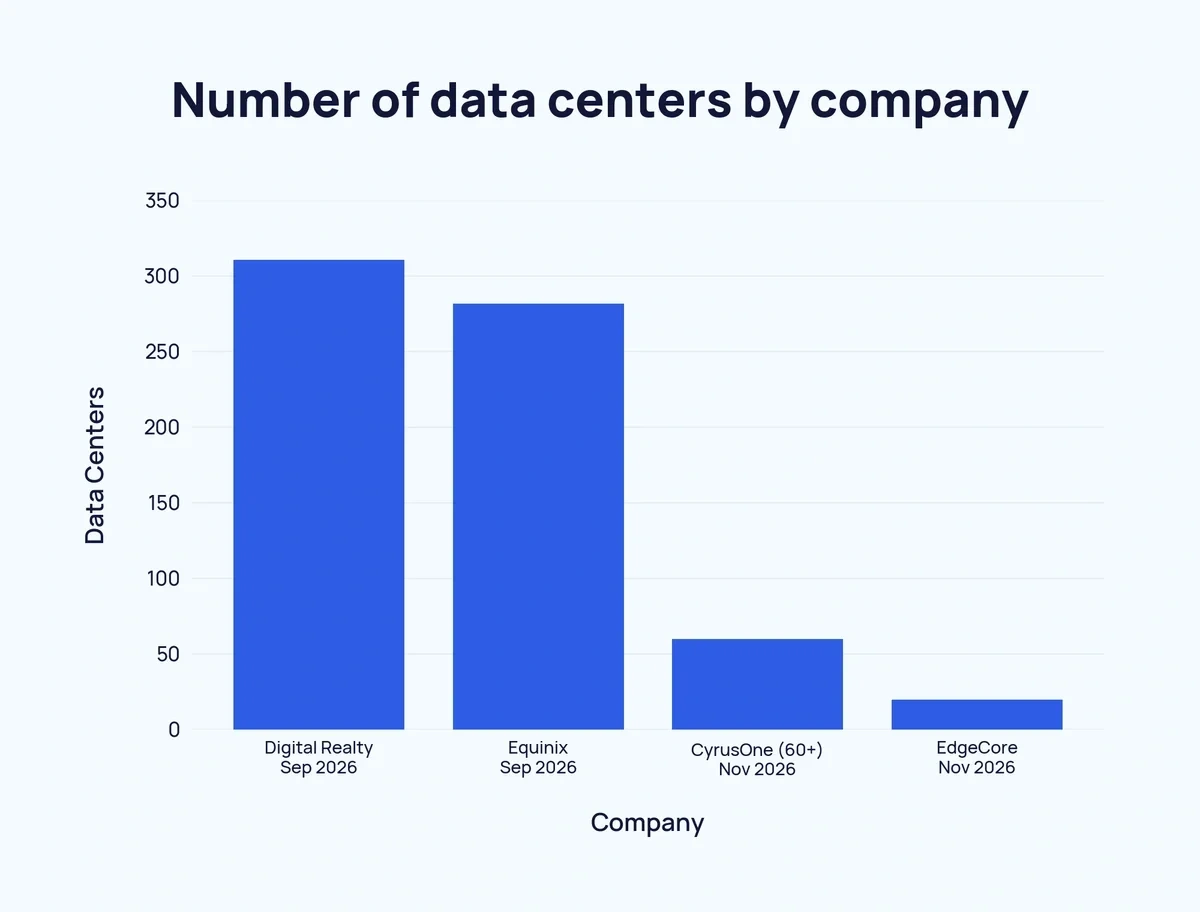
Here’s a breakdown of the biggest data center companies, with the size figure each company reports:
| Company | Headquarters | Ownership | Size (as of) |
| Digital Realty | Austin, Texas | Public (NYSE: DLR) | 311 data centers, ~3.2 GW IT capacity (Sep 30, 2026) |
| Equinix | Redwood City, California | Public (Nasdaq: EQIX) | 282 data centers in 77 markets (Sep 30, 2026) |
| CyrusOne | Dallas, Texas | – | 60+ data centers (November 2026) |
| Aligned Data Centers | Dallas, Texas | AIP, MGX and BlackRock’s GIP | 51 campuses, 6.4+ GW operational and planned (Jul 2026) |
| EdgeCore | – | – | 20 data centers in six US markets (November 2026) |
| Iron Mountain Data Centers | – | Public (NYSE: IRM) | 528.5 MW operating (Jun 30, 2026) |
| Vantage Data Centers | – | Private (DigitalBridge, Silver Lake) | Planned: 1.4 GW Frontier and ~902 MW Lighthouse campuses (announced 2025) |
1. Digital Realty
Year founded: 2004 (incorporated in Maryland)
Location: Austin, Texas
Ownership: Public (NYSE: DLR)
Size: 311 data centers, including 88 in unconsolidated entities, as of September 30, 2026
What they do: Digital Realty is a data center real estate investment trust (REIT) that leases colocation space and hyperscale capacity. Digital Realty had 311 data centers and about 3.2 GW of IT capacity as of September 30, 2026, according to its third-quarter 2026 results.
Digital Realty also reported about 9.8 GW of buildable IT capacity under development or held for future development.
Digital Realty’s total revenues were $1.9 billion in the third quarter of 2026, up 21% from a year earlier.
2. Equinix
Year founded: 1998 (incorporated in Delaware)
Location: Redwood City, California
Ownership: Public (Nasdaq: EQIX)
Size: 282 data centers across 77 markets, including 24 xScale data centers, as of September 30, 2026
What they do: Equinix runs interconnected colocation data centers, plus xScale data centers built for hyperscale customers. Equinix had 282 data centers across 77 markets as of September 30, 2026, according to its quarterly filing.
Equinix had 52 build projects underway across 33 markets worldwide in July 2026, according to its second-quarter 2026 results.
3. CyrusOne
Location: Dallas, Texas
Size: More than 60 data centers across North America, EMEA and APAC (company website, November 2026)
What they do: CyrusOne develops and operates data centers for hyperscale and enterprise customers. CyrusOne has more than 60 data centers across North America, EMEA and APAC, according to the company’s website.
CyrusOne is one of the colocation providers that Synergy Research Group names among the leading companies in its Colocation Market Tracker.
4. Aligned Data Centers
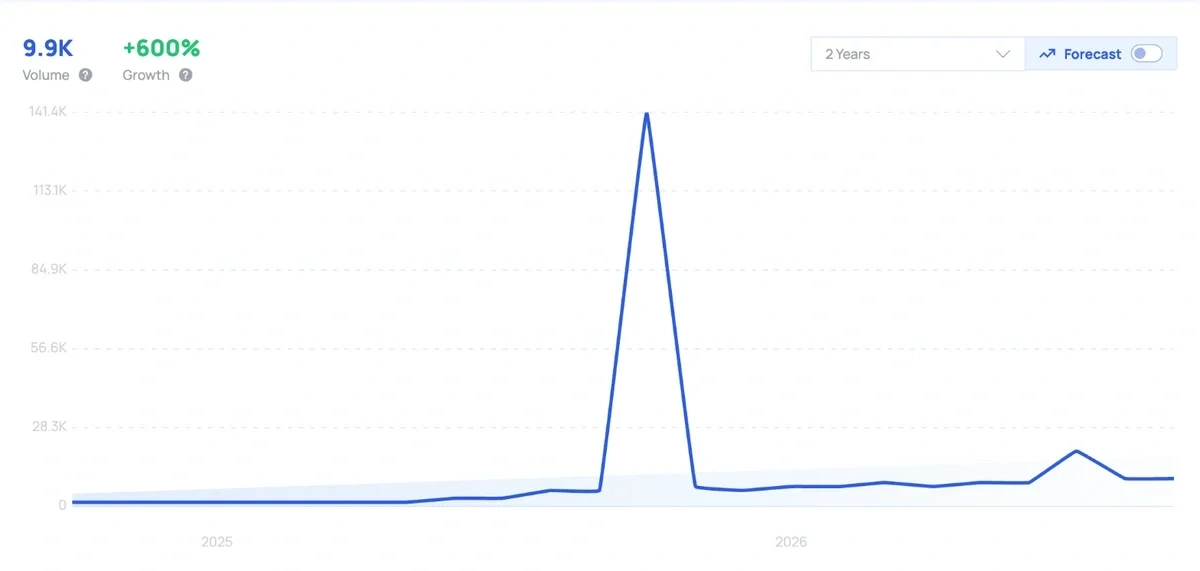
5-year search growth: 600%
Location: Dallas, Texas
Ownership: Private (the Artificial Intelligence Infrastructure Partnership, MGX and BlackRock’s Global Infrastructure Partners)
Size: 51 campuses with more than 6.4 GW of operational and planned capacity (July 2026)
What they do: Aligned builds and operates data center campuses across the Americas. A consortium of the Artificial Intelligence Infrastructure Partnership (AIP), MGX and BlackRock’s GIP completed its acquisition of Aligned for about $40 billion in enterprise value in July 2026, Pulse 2.0 reported.
At that point, Aligned had 51 campuses with more than 6.4 GW of operational and planned capacity.
5. EdgeCore
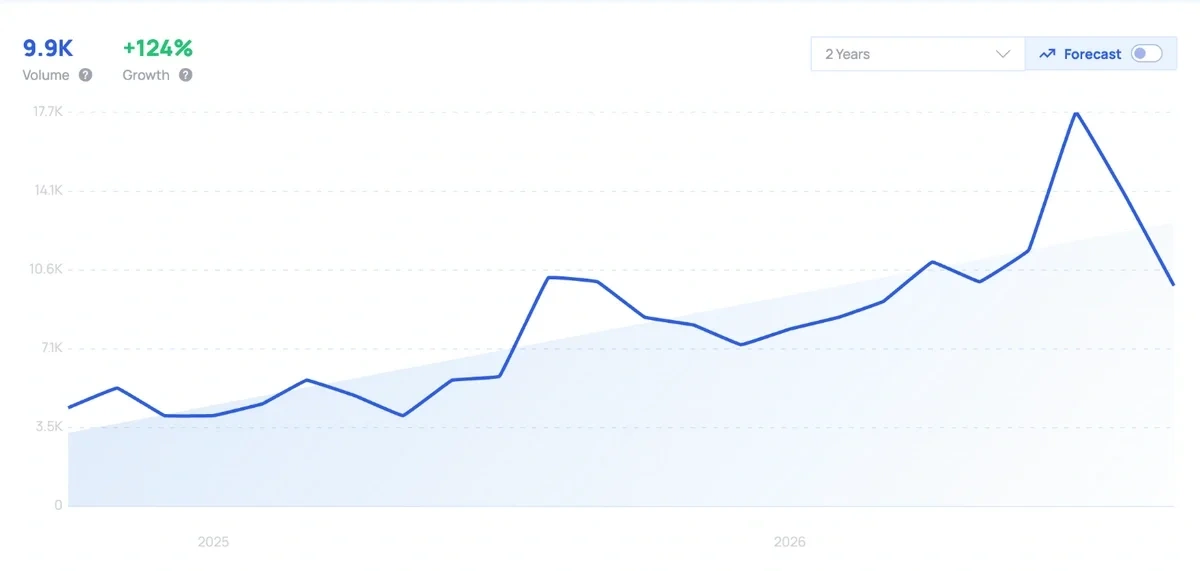
Size: 20 data centers in six US markets (company website, November 2026)
What they do: EdgeCore builds data center campuses exclusively for hyperscalers. EdgeCore has 20 data centers in six US markets, according to the company’s website.
EdgeCore’s markets are Ashburn, Culpeper and Louisa County in Virginia, Phoenix, Reno and Silicon Valley. The Louisa County campus alone accounts for more than 1.1 GW.
EdgeCore also says it has $8 billion in committed capital.
6. Iron Mountain Data Centers
Ownership: Public (part of Iron Mountain, NYSE: IRM)
Size: 528.5 MW leasable operating capacity, 97.1% leased, as of June 30, 2026
What they do: Iron Mountain, best known for records storage, also builds and leases data centers. Iron Mountain had 528.5 MW of leasable operating data center capacity as of June 30, 2026, according to its second-quarter 2026 supplemental report.
Iron Mountain also had 160.2 MW under construction and 684.2 MW held for development, for a total potential portfolio of 1,372.9 MW.
Iron Mountain leased 110 MW in 2026 through July, according to its second-quarter 2026 earnings presentation.
7. Vantage Data Centers
5-year search growth: 457%
Ownership: Private (equity led by DigitalBridge and Silver Lake)
Size: Planned campuses: Frontier, Texas, 1.4 GW; Lighthouse, Wisconsin, about 902 MW (announced 2025)
What they do: Vantage builds large-scale data center campuses for hyperscale and AI customers. Vantage plans to invest more than $15 billion in its Lighthouse campus in Port Washington, Wisconsin, targeting about 902 MW of critical IT load by 2028, Data Center Frontier reported.
Vantage’s Frontier campus in Shackelford County, Texas, announced in August 2025, is planned at 1.4 GW across ten AI data centers.
These are planned figures, not operating capacity. Vantage hasn’t published a current company-wide capacity figure, so it sits last in this list.
For enterprise insights teams, these figures show that much of the new capacity is being planned as gigawatt-scale campuses for hyperscale and AI tenants. For more context, see our cloud computing statistics and cloud computing trends.
Fast-Growing Data Center Startups
The fastest-growing data center startups are building AI capacity: CoreWeave, Crusoe, Nscale, Lambda and Fluidstack have raised billions of dollars to build or lease GPU data centers.
CoreWeave
5-year search growth: 4,200%
Year founded: 2017
Location: Livingston, New Jersey
Ownership: Public (Nasdaq: CRWV)
Size: About 1.5 GW of active power and about 3.7 GW of contracted power as of June 30, 2026
What they do: CoreWeave is an AI cloud company that rents out GPU compute from its data centers. CoreWeave’s active power rose by nearly 500 MW to about 1.5 GW in the second quarter of 2026, according to its second-quarter 2026 results.
CoreWeave’s revenue was $2.575 billion in the second quarter of 2026.
CoreWeave’s revenue backlog was about $104 billion as of June 30, 2026.
That backlog figure doesn’t include more than $25 billion of new customer commitments added early in the third quarter.
CoreWeave was founded in September 2017 and is headquartered in Livingston, New Jersey, according to its quarterly filing.
Crusoe
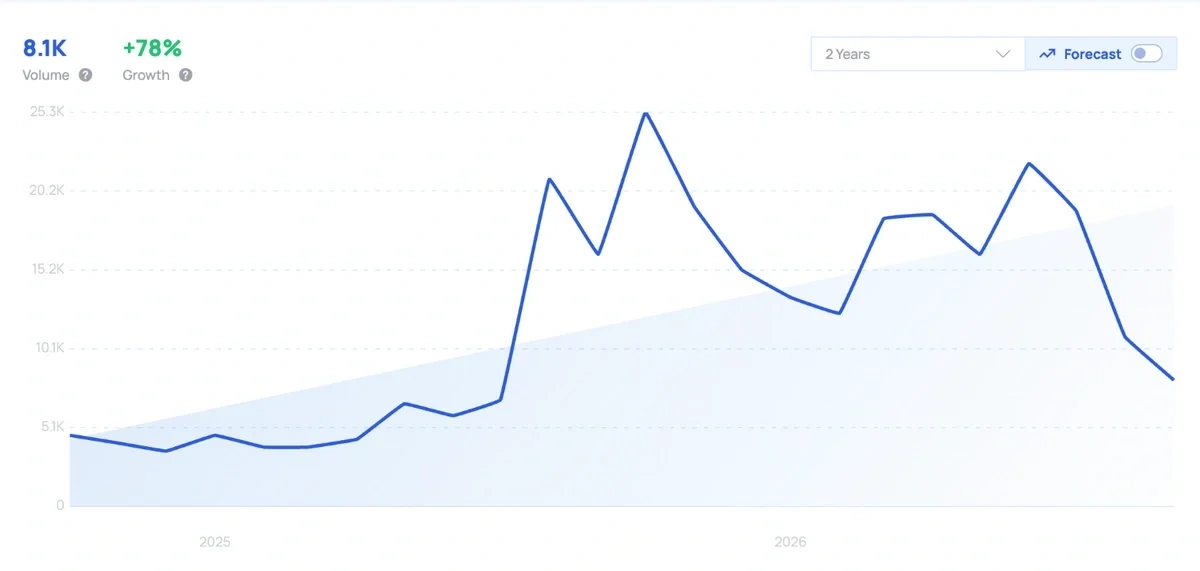
5-year search growth: 700% (searches for “Crusoe Energy”)
Funding: Initial closing of an anticipated $3.9 billion Series F (September 2026)
Size: 1.2 GW AI data center campus planned in Abilene, Texas (announced March 2025)
What they do: Crusoe builds AI data centers and runs an AI cloud on them. Crusoe announced the initial closing of an anticipated $3.9 billion Series F round in September 2026, according to the company. The round was co-led by Atreides Management, Mubadala Capital and Valor Equity Partners.
The round valued Crusoe at $30.9 billion post-money.
In March 2025, Crusoe said its campus in Abilene, Texas, was planned at 1.2 GW across eight buildings and about 4 million square feet, according to Crusoe.
Nscale
5-year search growth: 2,650%
Year founded: 2024
Location: United Kingdom
Funding: $2 billion Series C (March 2026)
Size: Data centers in Norway, the UK, Portugal, Iceland and the US
What they do: Nscale sells AI infrastructure, including GPU compute, networking and software, from data centers in Norway, the UK, Portugal, Iceland and the US. Nscale raised a $2 billion Series C in March 2026, The Next Web reported. Aker ASA and 8090 Industries led the round.
The Series C valued Nscale at $14.6 billion.
Nscale’s contracts with Microsoft include a planned Texas facility for 104,000 NVIDIA GB300 GPUs.
Lambda
5-year search growth: 425% (searches for “Lambda Labs”)
Year founded: 2012
Location: San Francisco, California
Funding: Over $1.5 billion Series E led by TWG Global (November 2025)
What they do: Lambda runs a GPU cloud for AI training and inference. Lambda was founded in San Francisco in 2012, according to the company’s website.
Lambda raised over $1.5 billion in a Series E round led by TWG Global in November 2025, according to the company.
Lambda also signed a multibillion-dollar deal to supply Microsoft with AI infrastructure using tens of thousands of NVIDIA GPUs, according to TechCrunch.
Fluidstack
Location: New York City (relocating its global headquarters)
Funding: $830 million Series A (January 2026)
What they do: Fluidstack builds AI infrastructure and data centers for AI labs. Fluidstack raised an $830 million Series A in January 2026, led by Situational Awareness, according to the company.
The Series A valued Fluidstack at $7.5 billion.
Anthropic selected Fluidstack to deliver custom data centers in New York and Texas, according to Fluidstack.
Applied Digital
Location: Dallas, Texas
Ownership: Public (Nasdaq: APLD)
Size: About 1,410 MW of contracted critical IT load across five campuses (May 31, 2026)
What they do: Applied Digital builds and leases AI and high-performance computing data center campuses. Applied Digital had about 1,410 MW of contracted critical IT load across five campuses as of May 31, 2026, according to its fiscal 2026 results.
Applied Digital’s revenue was $611.3 million in its fiscal year to May 31, 2026, up 167% from the previous year.
CoreWeave has leased the full 400 MW at Applied Digital’s Polaris Forge 1 campus in North Dakota, where 175 MW was live, according to Applied Digital.
Lancium
Location: Offices in The Woodlands, Texas, and Newport Beach, California (company website)
Funding: $600 million debt financing (October 2025)
What they do: Lancium develops energy-first “Clean Campus” data center sites in Texas. Lancium secured $600 million in debt financing in October 2025, Pulse 2.0 reported.
The first project for that financing is the 1.2 GW Abilene campus, which Crusoe is building.
Nebius
Location: Amsterdam, Netherlands
Ownership: Public (Nasdaq: NBIS)
What they do: Nebius runs a full-stack AI cloud for AI developers and companies. Nebius’s revenue was $582.3 million in the second quarter of 2026, up 454% from a year earlier, according to its second-quarter 2026 results.
For investors, these companies show how much capital is flowing into AI infrastructure, and how quickly valuations have moved. For more fast-growing companies in the space, see our lists of AI companies and startups and cloud computing startups.
Explore more trending startups on Exploding Topics’ AI startups page.
Other Data Center Companies to Know
These established data center companies are smaller than the operators above, or don’t publish a current company-wide size figure.
STACK Infrastructure
What they do: STACK develops data center campuses, including a planned Stargate campus in New Mexico. In September 2025, STACK said it will deliver digital infrastructure for a planned campus of more than 1 GW in Doña Ana County, New Mexico, part of Oracle’s Stargate capacity, according to the company.
Flexential
What they do: Flexential provides colocation data centers in the US. Flexential is one of the colocation providers that Synergy Research Group names among the leading companies in its Colocation Market Tracker.
H5 Data Centers
What they do: H5 owns and operates data centers and interconnection ecosystems across the US. In February 2026, H5 acquired three data centers from 365 Data Centers in Buffalo, Nashville and Tampa, StorageNewsletter reported.
Sentinel Data Centers
Size: More than 3 million square feet delivered (company website, November 2026)
What they do: Sentinel develops and operates data centers for enterprise customers. Sentinel says 85% of its historical customers are Global 2000 companies, according to the company’s website.
Nautilus Data Technologies
What they do: Nautilus sells water-cooled EcoCore data center infrastructure for AI and high-performance computing, according to the company’s website. Its Stockton, California, data center was commissioned in 2021.
What’s Next for Data Center Companies?
Data center companies are moving toward gigawatt-scale campuses for AI. Synergy Research Group forecasts that hyperscale operators will account for 67% of all data center capacity by 2031.
Many of the newest campuses depend on new power supply as much as on land, which is why developers such as Lancium and Crusoe start with energy. For a wider view of where the data goes once it lands in these buildings, see our data storage trends.
How We Compiled This List
We ordered the biggest data center companies by company-reported size: first by the number of data centers (or campuses) each company reports in its own filings or on its website, then companies that report only capacity in megawatts. Companies define these figures differently, so the order is a guide, not an official ranking.
Hyperscalers such as Amazon, Microsoft and Google appear in the market section, because they don’t report comparable data center counts. Startups are listed in no particular order. Search growth comes from Exploding Topics, and funding comes from company announcements and news reports. Figures are as of November 3, 2026.
Want to size up a data center company’s market and competitors? The Semrush Traffic & Market toolkit shows any company’s website traffic, audience and market share. Try Semrush free, and use Exploding Topics Pro to spot fast-growing infrastructure startups before they make headlines.
Stop Guessing, Start Growing 🚀
Use real-time topic data to create content that resonates and brings results.
Exploding Topics is owned by Semrush. Our mission is to provide accurate data and expert insights on emerging trends. Unless otherwise noted, this page’s content was written by either an employee or a paid contractor of Semrush Inc.
Share
Newsletter Signup
By clicking “Subscribe” you agree to Semrush Privacy Policy and consent to Semrush using your contact data for newsletter purposes
Written By


Josh is the Co-Founder and CTO of Exploding Topics. Josh has led Exploding Topics product development from the first line of co... Read more