


Get Advanced Insights on Any Topic
Discover Trends 12+ Months Before Everyone Else
How We Find Trends Before They Take Off
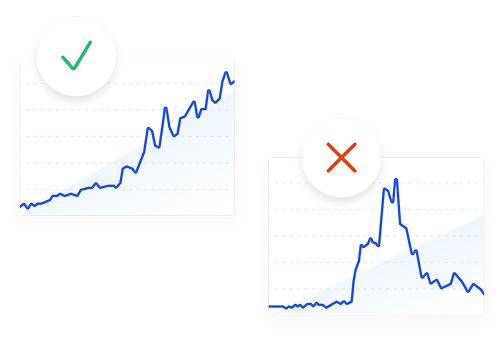
Exploding Topics’ advanced algorithm monitors millions of unstructured data points to spot trends early on.
Keyword Research
Performance Tracking
Competitor Intelligence
Fix Your Site’s SEO Issues in 30 Seconds
Find technical issues blocking search visibility. Get prioritized, actionable fixes in seconds.
Powered by data from
Latest Blog Posts
Featured Case Studies
See what's trending before everyone else
Each week, we'll send you our best Exploding Topics. Plus, expert insight and analysis.
Do AI Tools Know Your Brand Exists? Free AI Visibility Checker
AI-powered search is continuing to shift consumer behavior in disruptive ways.
Your potential customers will likely hear about you first in an AI chat before they ever visit your website or click a link.
And if you want to prepare for a future where users rely on LLMs to discover, research, and compare brands, you need one thing:
A clear and accurate picture of your AI search performance.
The AI Visibility Checker gives you a quick summary of where you stand in AI search today.
Are you showing up in the responses that matter? And when you do show up, are you being portrayed the way you expect?
With our free tool, you’ll instantly see the results from 150 live queries across three AI platforms (ChatGPT, Perplexity, and Gemini).
You can use it to learn how you’re stacking up in AI search versus your competitors. No signup required!
How to Use the AI Visibility Checker
To run the AI visibility analysis, you just need to enter these 4 details:
- Brand name
- Website URL
- Product/service category
- Competitor
The tool will generate a report with your visibility score across several key dimensions.
Interpreting Your AI Visibility Results
Your main overall score is an aggregate of your individual search visibility across the three LLMs evaluated in this report.
This metric is a scale that runs from 0-100.
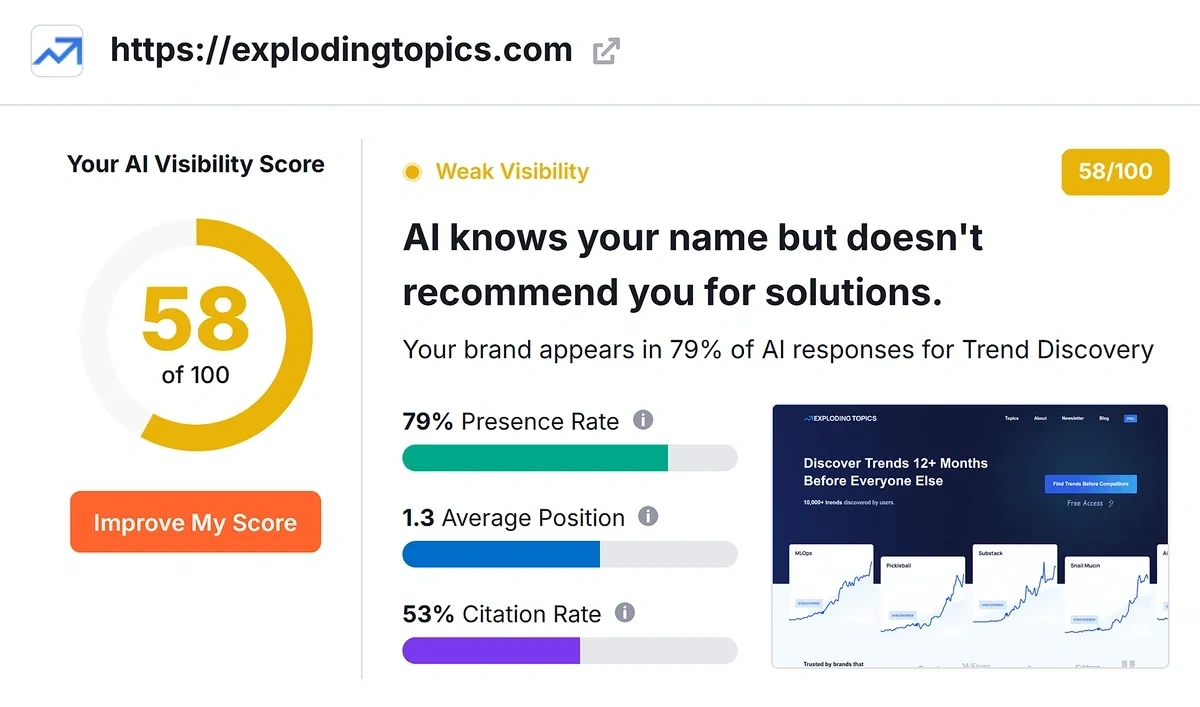
If you score at least 60 here, it’s a good sign.
It means you frequently showed up in the 150 sample query prompts run across ChatGPT, Gemini, and Perplexity.
At the same time, you need to keep your sights on a score of at least 80 if you want to be ideally AI-visible.
Because brands scoring 80+ are consistently recommended and own the lion’s share of mentions in AI answers in your category.
While your overall score tells you how you’re generally performing, you’ll need the breakdown of individual platform scores and query categories to make a deeper sense of your visibility.
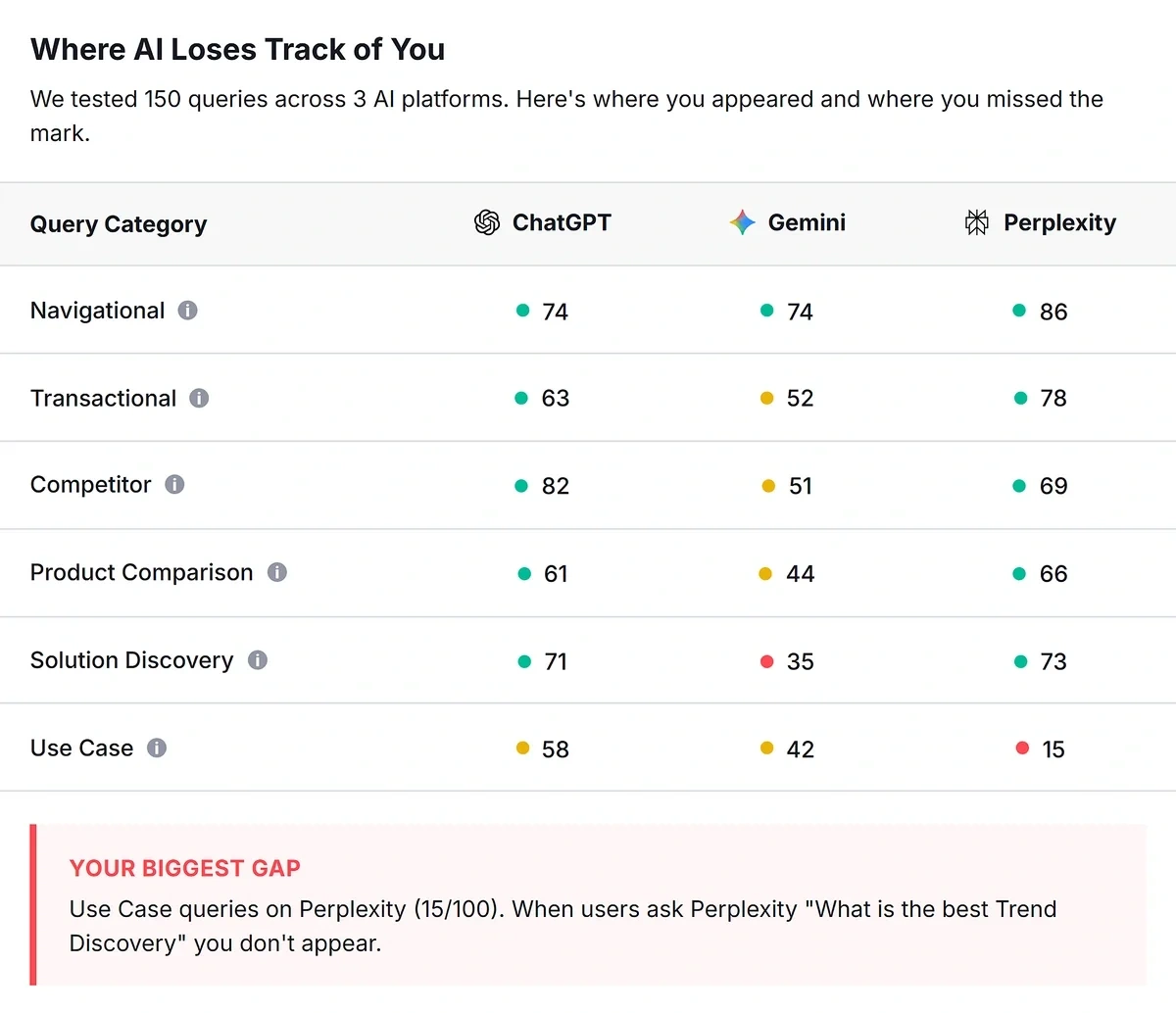
Looking at your scores at a platform level matters because each LLM sources information differently.
- ChatGPT leans heavily on training data and broadly-cited web content
- Gemini integrates Google's search index with its language model
- Perplexity pulls from real-time web searches and values recent, authoritative sources it trusts
It’s not unusual to rank highly in one AI model but underperform in another.
If you know exactly which AI models favor you and which ones don’t, you can adapt your marketing strategy to suit the preferences of the LLM in question.
For instance, news-style content strongly appeals to Perplexity because it’s programmed to look for fresh stories when constructing answers.
You also need to show up in all query categories. These are important for different reasons and for audiences in different stages of their journeys.
Navigational Queries
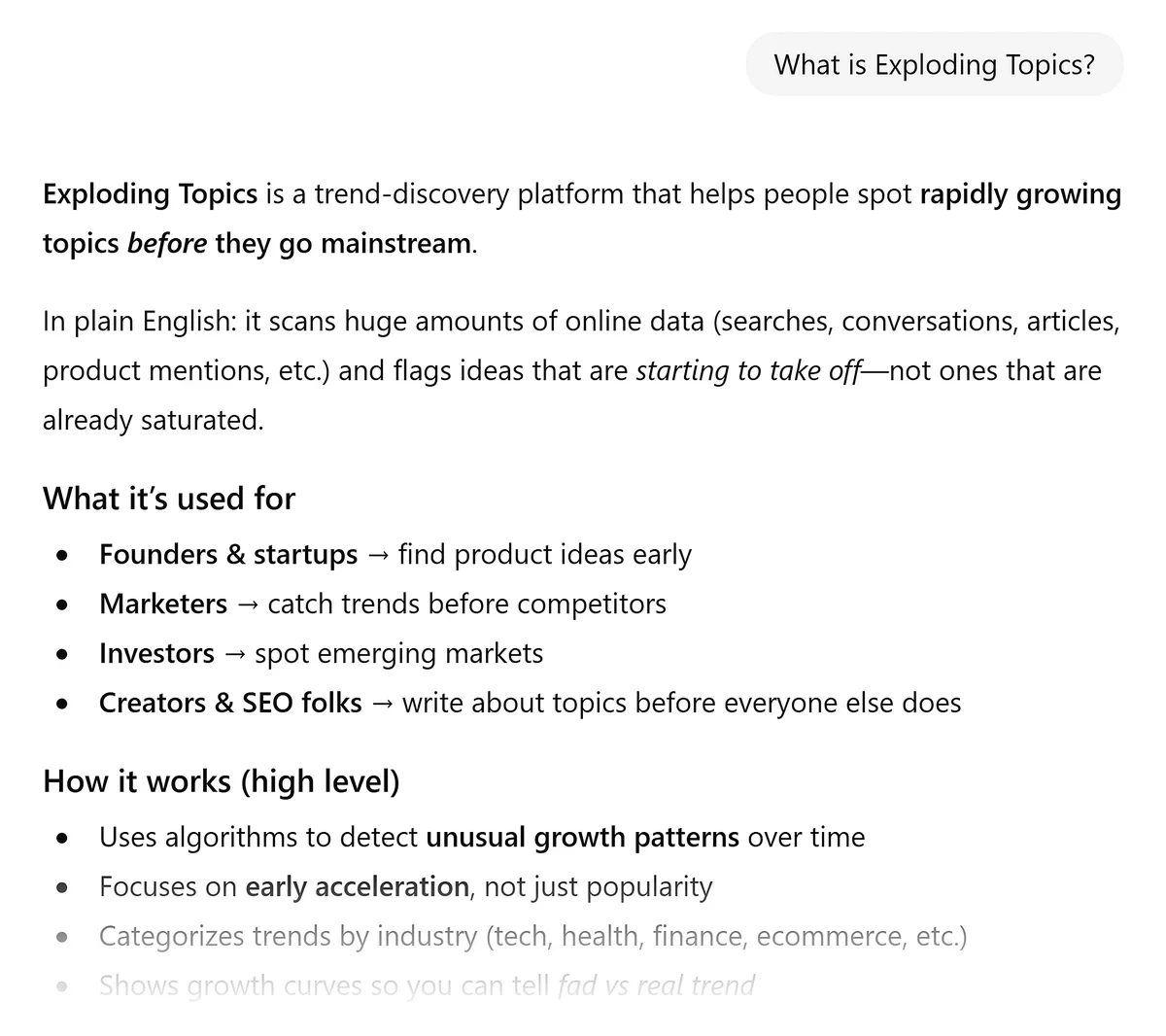
These are the queries people type in when they’re in the process of learning about a brand they’re interested in.
People might be completely unaware of your brand or have only a vague idea at this stage.
So navigational queries often directly reference a brand with prompt structures like:
- Who is {brand name}?
- What does {brand name} do?
- {Brand name} overview
Some brand-agnostic queries also fall under the navigational category, such as:
- Best CRM tools
- Top solar power batteries
In order to show up in navigational queries, AI models must know who you are.
If the AI answers about your brand are unconvincing, that’s a big problem.
Unless you’re a recently launched brand or product, this usually points to AI models failing to recognize you as a distinct entity.
Here are the most important things you can do to improve your entity recognition:
- Make a crystal clear “About” page on your website
- Implement the organization structured data
- Enhance your web footprint by creating company LinkedIn and social media pages
- Build mentions in authoritative sources like Wikipedia and product review platforms
Transactional Queries
Users ask transactional questions when they’re ready to buy a product.
Transactional queries in AI conversations tend to be highly price focused:
- How much does {product} cost?
- Is {product} worth the money?
- Which options in {product category} offer the best value for money?
- {product} pricing plans
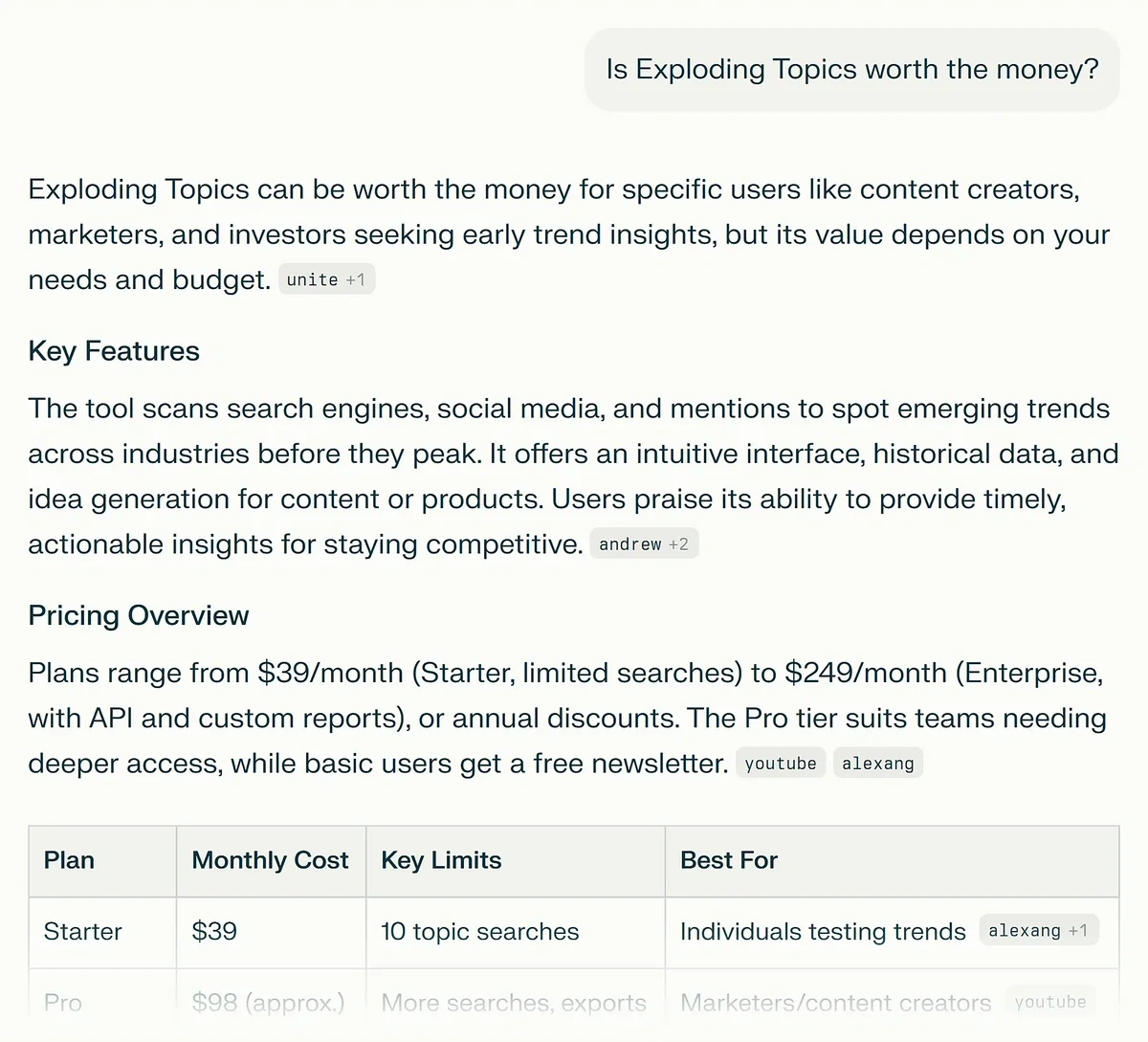
AI recommendations when users are ready to buy can contribute to your sales and help interested users convert.
However, if an LLM feels less confident about your brand, they might recommend a competitor instead.
You’d essentially be losing a customer to your competitor if you’re ignored by AI in questions of a transactional nature.
Optimize your brand for recommendations in transactional queries by:
- Building dedicated pricing page on your website with unambiguous and specific numbers
- Collecting authentic user reviews on review platforms AI trusts (G2, Capterra, TrustPilot)
- Discussing pricing in product reviews, roundups, and comparison content on your site
- Publishing case studies with a focus on ROI and value derived by customers
- Getting featured in product roundups and “best of” content on external industry-relevant sites
Comparative/Competitor Queries
Competitor queries represent high buying intent. You need strong competitive positioning and differentiation to win recommendations in these queries.
These queries often request direct comparisons between specific brands:
- {Company Name} vs {Competitor}
- Is {Company Name} better than {Competitor}
- Best alternatives to {Company Name}
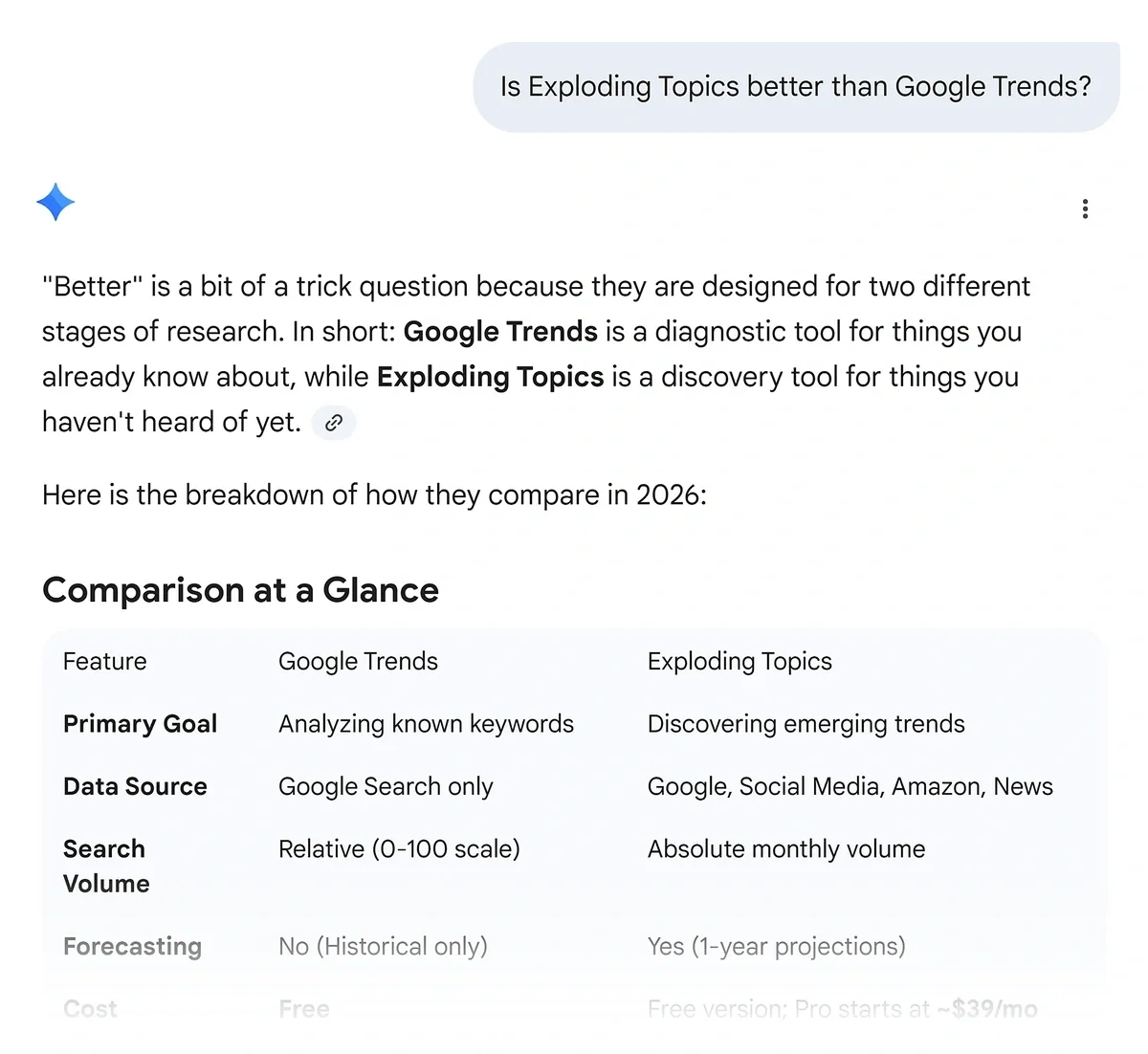
Once again, your chances of showing up in these queries are higher if you’re targeting comparison content deeply own your website and also appear elsewhere on the web:
- Create a “vs” page library comparing your brand with top 5-10 competitors
- Frontload comparison content with key differentiators for ease of readability to AI
- Request inclusion in third-party content featuring your competitors in comparison/roundups but not you.
- Influence reddit discussions about competitor comparisons and alternatives
Product Comparison Queries
Users often discover brands and products when researching a relevant category using AI.
These questions are often more specific, centering on discovering the right product fit for the user’s specific needs:
- Best {Category} for beginners
- Best {Product or Service} for professionals
- {Category} feature comparison
- Top rated {Category}.
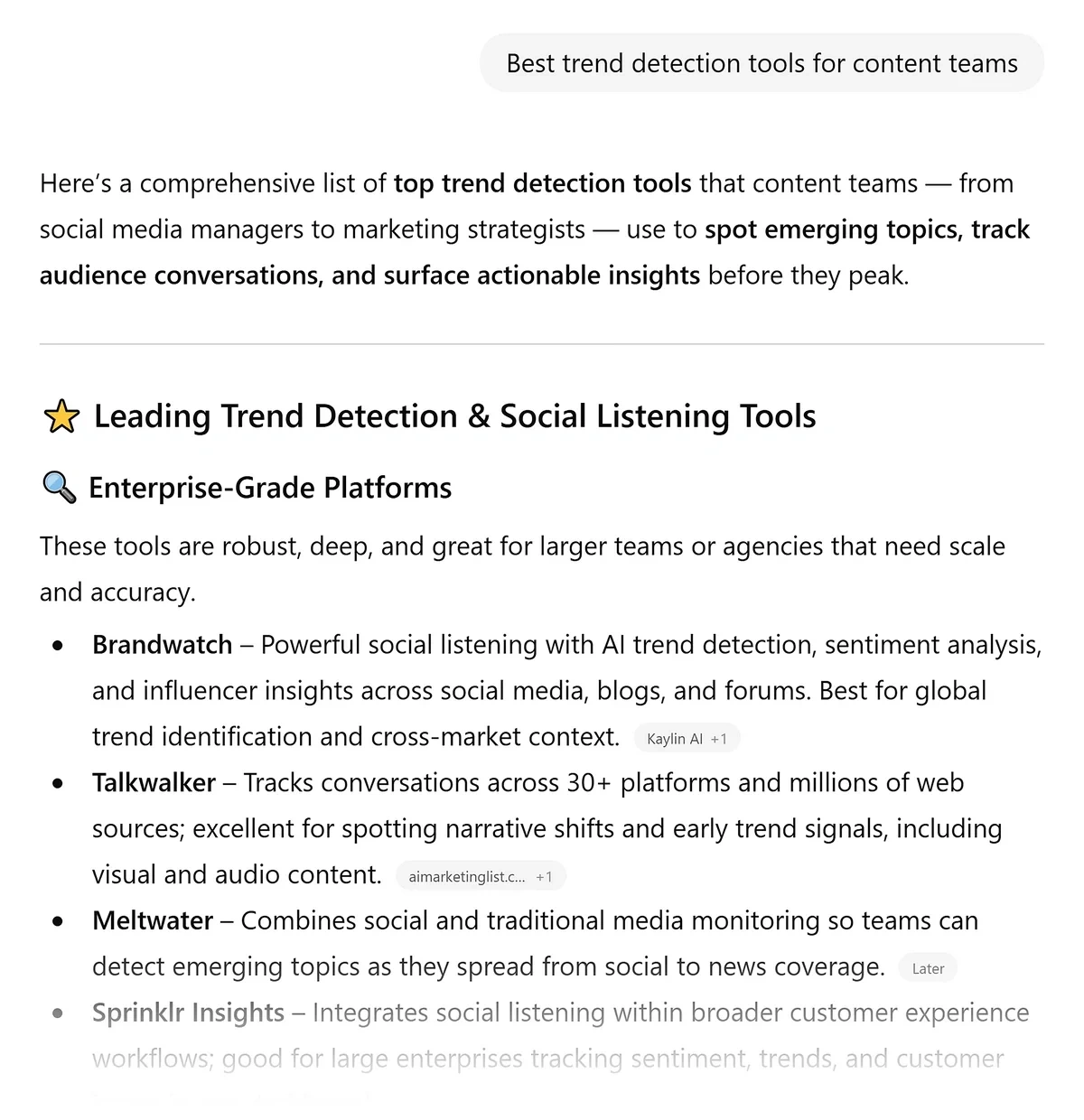
If you’ve optimized your content well for competitor content and “vs” pages, it will also give you an edge in product comparison queries.
It’s also a good idea to semantically pair your brand or product with specific target audiences or use cases.
For example, if your product is designed to appeal to small businesses, make sure to naturally highlight those aspects of your product.
LLMs are good at associating brands in contexts that they frequently appear on the web.
So if your product emphasizes beginner-friendliness, it should reflect in the language and angles of the content you’re producing.
Solution discovery queries
Educational content targets users that aren’t fully sure what to look for before picking a product from available options.
In AI chats, solution discovery queries typically use these phrasings:
- What makes a good {Product or Service}
- {Category} buying guide
- How to find the right {Product or Service}
- {Product or Service} pros and cons
- Is {Category} worth it
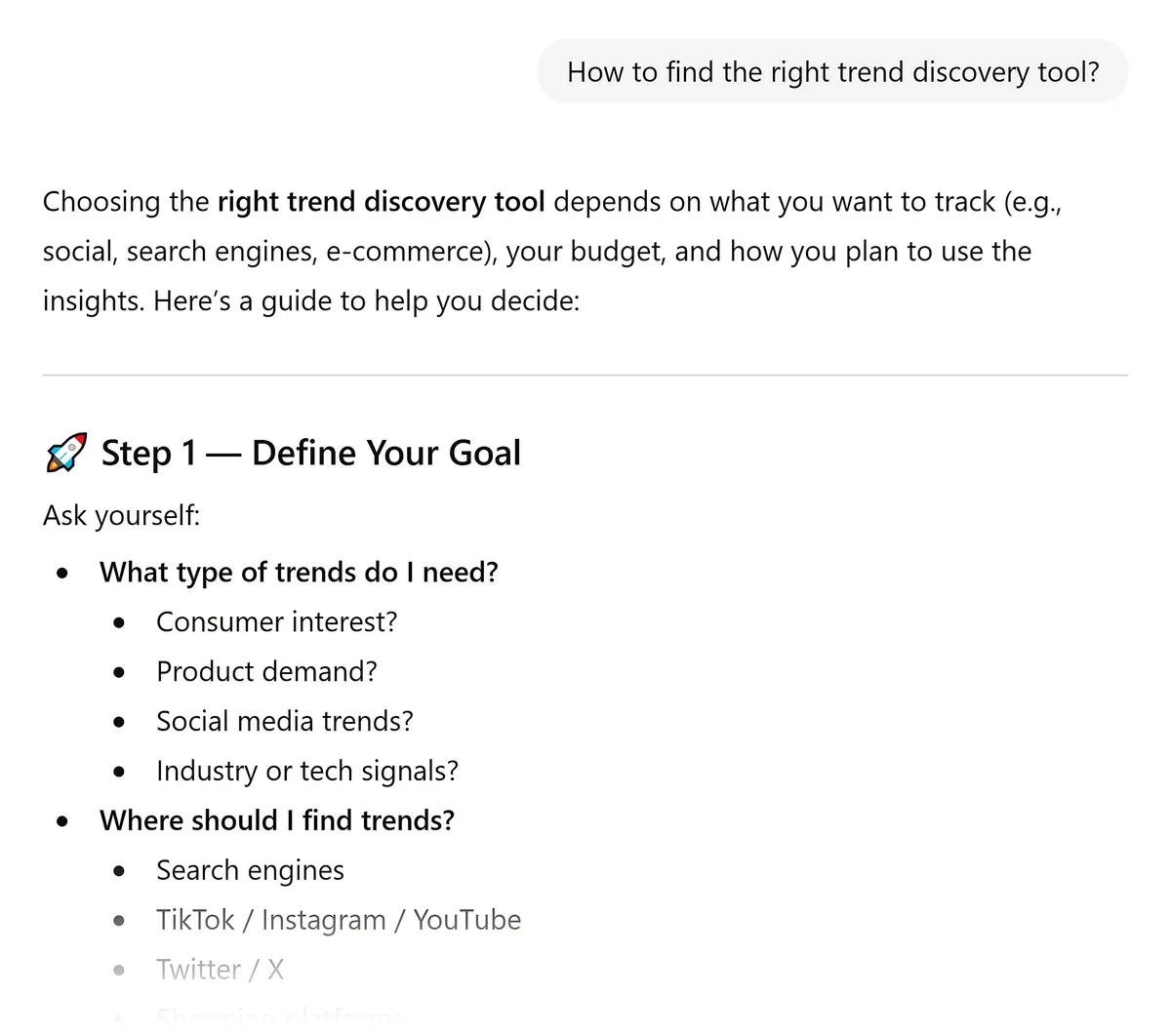
You’ll get natural opportunities to discuss why your product is a good solution for common problems pertaining to your target audience.
Dedicate sections focusing on pros and cons and how you check all the boxes expected of a good, reliable product that people can trust.
Use case queries
The last category of queries this AI Visibility Checker uses to analyze your brand includes queries where users describe problems and seek recommendations:
- What {product} do {category} experts use?
- Are there any free {product or service}
- Top {category} for {use case}
- Most popular {category} for {audience}
- What do startups use for {task}?
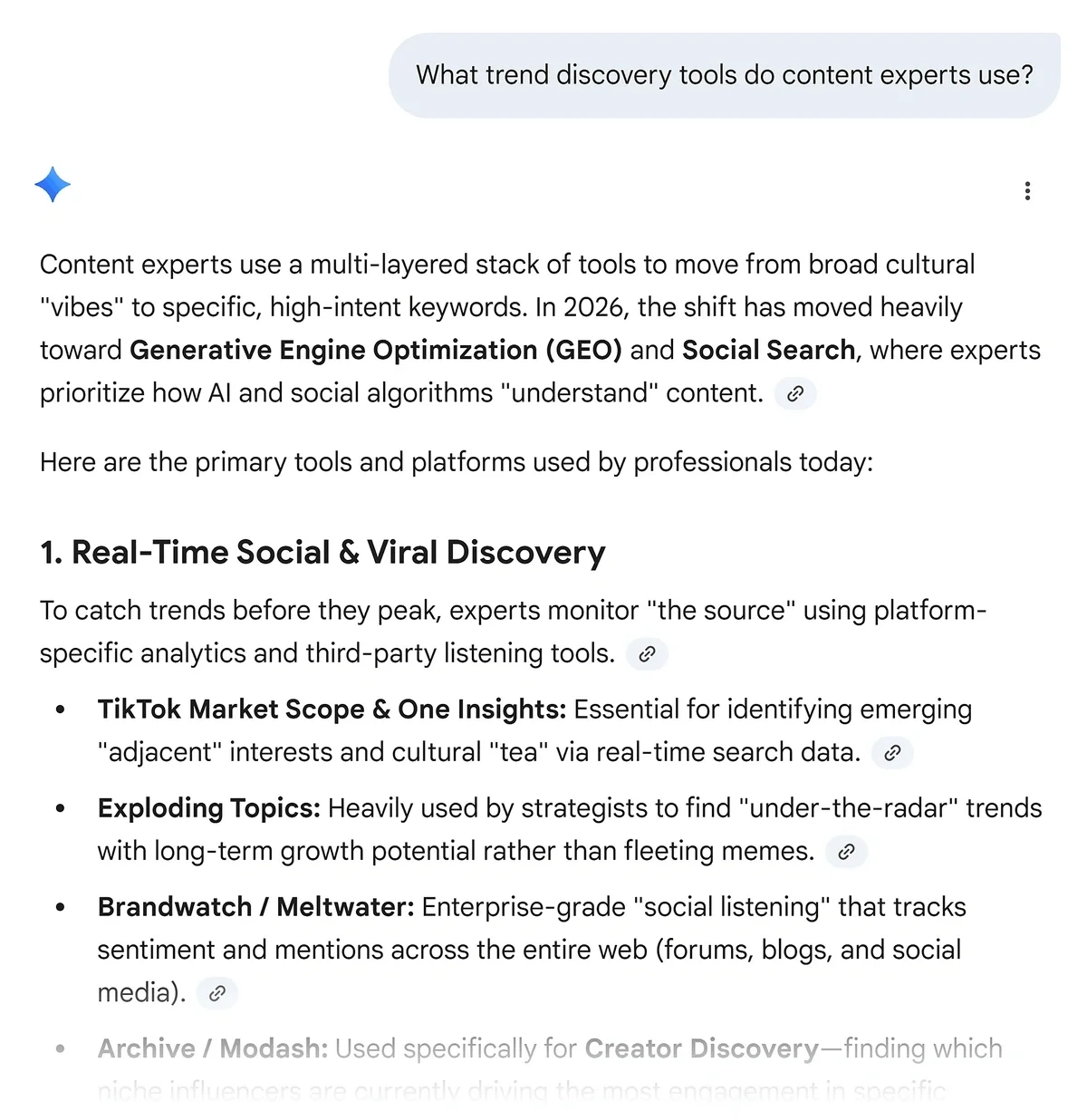
You need both a strong presence on the web and positive sentiments to earn AI recommendations for these queries.
As always, your on-page content will play an important role.
But UGC content in the form of user reviews and testimonials, along with off-page validation from other websites makes a big impact as well.
Reddit is another highly AI-visible source that’s the go-to place for users seeking guidance for problems in specific scenarios.
Engaging with Reddit audiences gives you an opportunity to influence the narrative about your brand, shaping how real users and AI chatbots perceive you.
How to Boost Your AI Visibility Across Platforms
The AI Visibility Checker gives you a snapshot of how strongly positioned you are in AI search
The next step is to take targeted actions aimed at fixing those areas first where your visibility is the lowest.
Unless you establish a dominant presence across every important query set, you’ll be leaking customers to competitors that the AI recommends instead.
Here are the strategic actions that directly influence how AI systems speak about you:
1. Build Your Brand's Citable Footprint
AI tools need to trust your brand if you want to show up in prompt responses.
One of the things you can do to build trustworthy content is by contributing original ideas and being an authoritative source of truth that AI needs to answer relevant questions your audience may have.
For example, our study on user attitude toward AI Overviews focuses on a trending topic without regurgitating existing knowledge.
It contributes to the discussion by providing fresh perspectives backed by real statistics we gathered from surveys we conducted ourselves.
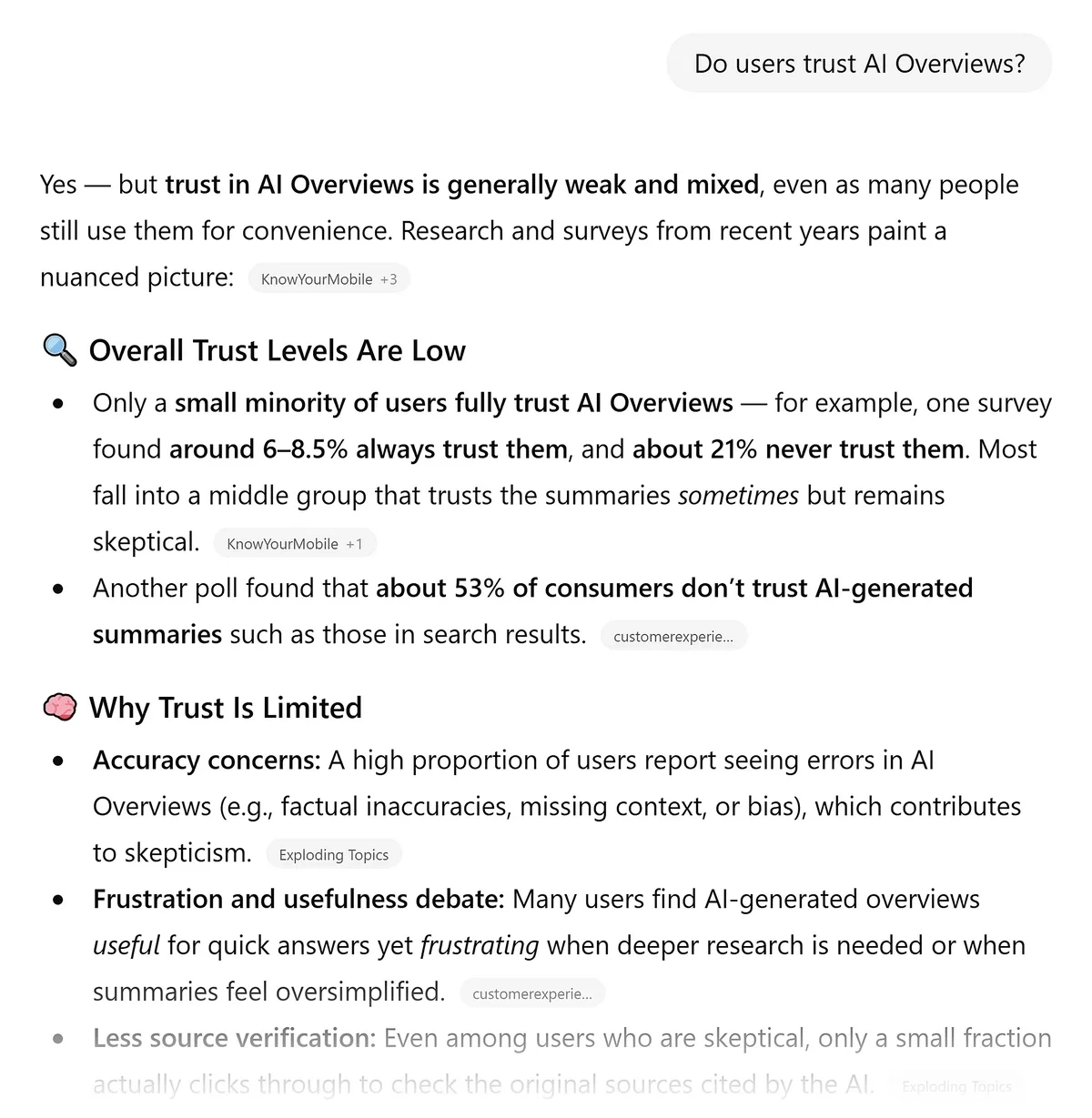
And we’re regularly cited by ChatGPT, Perplexity, and Google AI for queries related to consumer perceptions about AI answers.
Based on the patterns I’ve seen, here’s what I recommend for building citable
- Original research and data: LLMs are always looking for fresh statistics to cite. Publish industry surveys, benchmark reports, or unique datasets to improve your AI citation rate.
- Definitive guides: Comprehensive, authoritative content on specific topics that answer questions exhaustively and address long-tail queries.
- Expert quotes and credentials: E-E-A-T matters for AI just as much as it does for SEO. Content with quoted experts and clear authorship signals authority.
Your off-page presence also plays a huge role, especially if you’re in conversations on Reddit.
Both ChatGPT and Perplexity weigh Reddit discussions heavily.
We received good engagement on several subreddits where we shared the results of our AI Overview trust survey.
It further proves that genuine engagement in relevant subreddits (not spam) can significantly boost brand mentions.
The free AI Visibility Checker factors in your citation rate in the AI score.
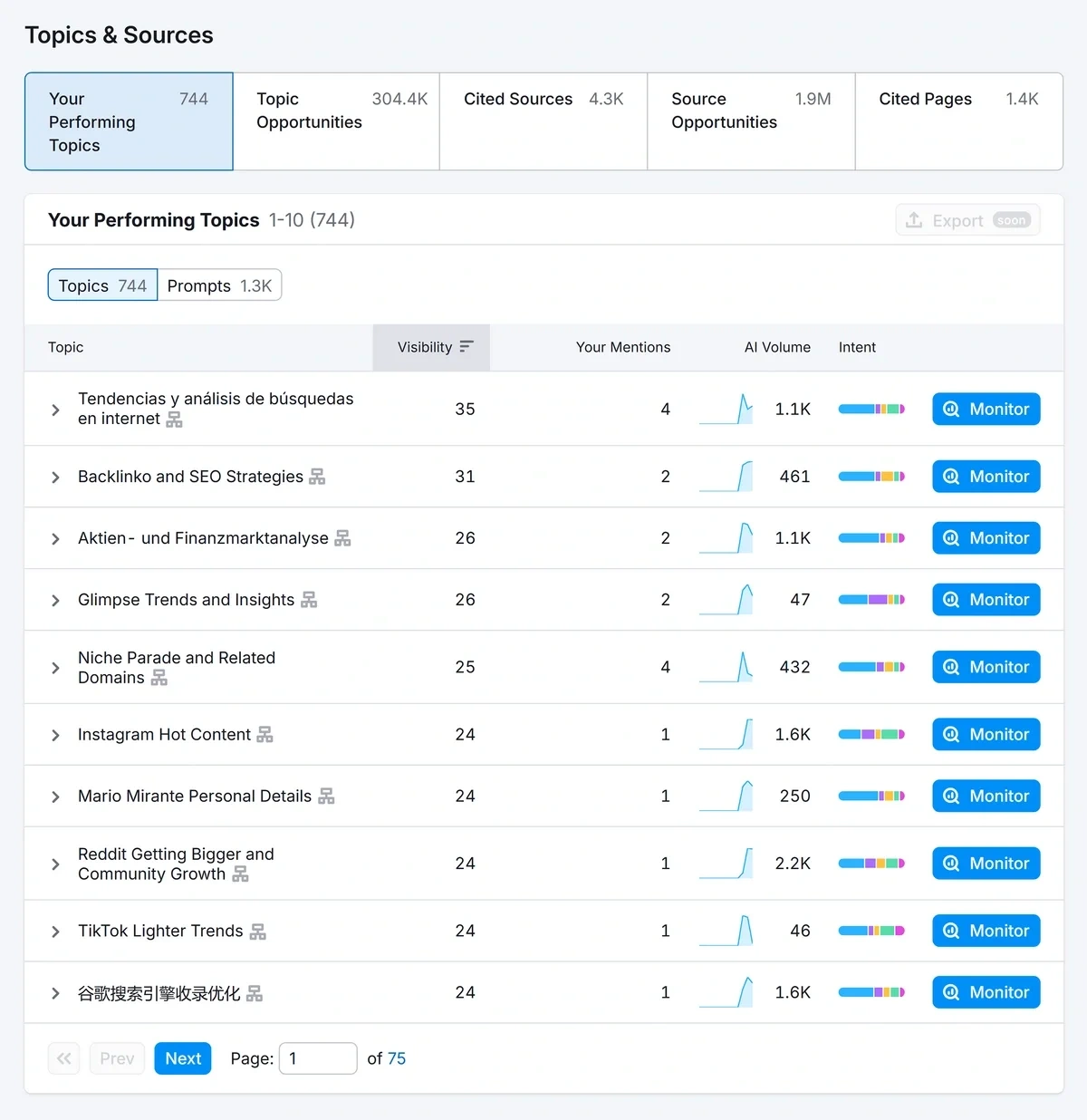
While that’s great for a one-time analysis, you’ll need to monitor your cited pages over time as you produce more content and update citable pages.
The Semrush AI Visibility tool shows you the top pages that are being cited in each AI platform. It even shows you the prompts that are triggering citations for the page in question.
2. Think in Questions, Not Keywords
AI optimization requires a shift in how we think about search queries.
Because of how classic search engines work, users learned to compress queries into short keywords to find the information they needed.
But AI interfaces encourage users to describe their situation fully, leading to expanded queries with much greater specificity.
This means you're now optimizing for long-tail, hyper-specific variations you'd rarely see in traditional keyword research tools.
Adapting to this shift requires you to tap into different AI research tools as well.
The Semrush Prompt Research tool is the perfect place to start.
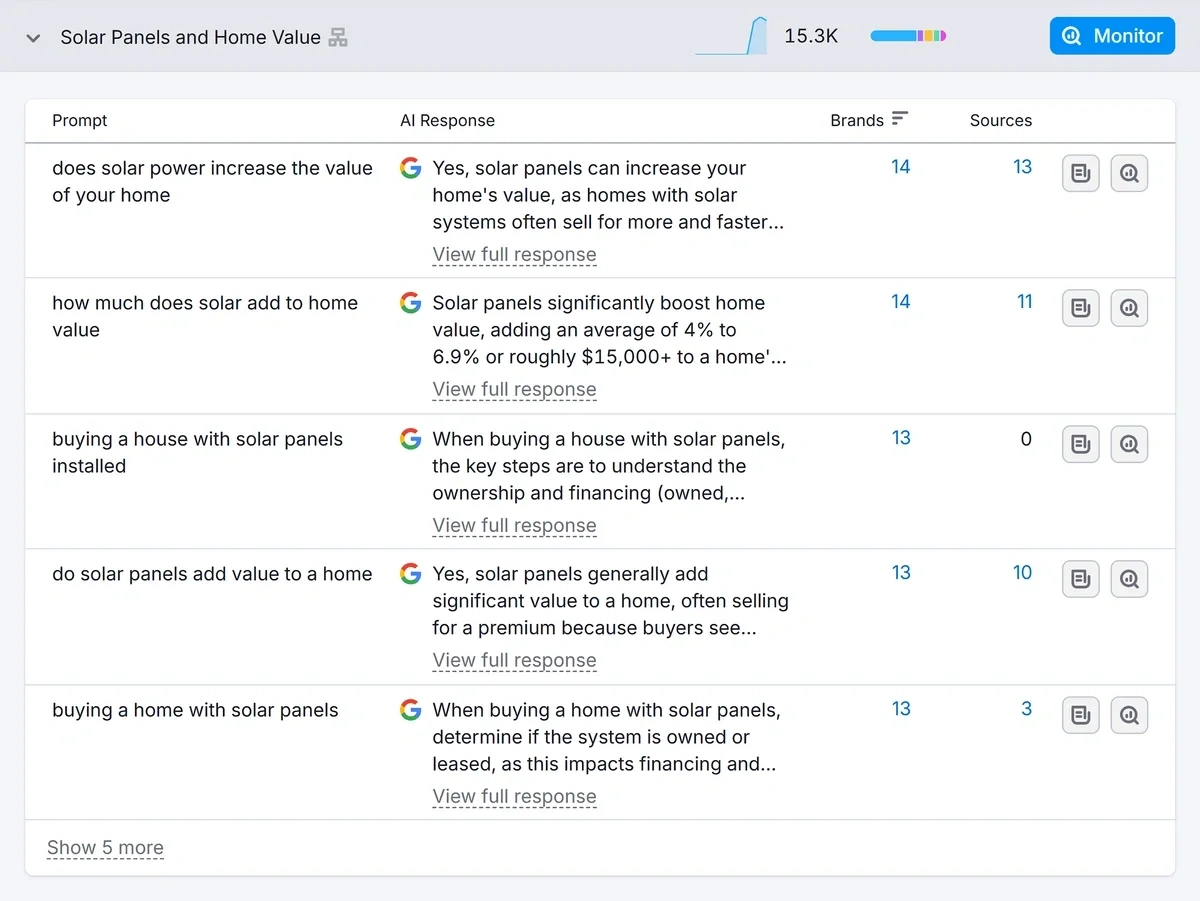
This tool gives you a clear idea about the questions people are asking in AI chats.
You can’t satisfy AI tools simply with query coverage alone.
These systems look for content that answers main queries with completeness, while also addressing follow-up questions that AI tools often get from users.
Your task is to create comprehensive content that addresses questions and associated follow-ups originating from the primary query.
3. Monitor and Respond to AI Sentiment
AI visibility isn’t just about presence in answers.
It’s equally important that your brand is being portrayed positively and with the right set of attributes that matter to you.
Our free AI visibility checker scores your brand sentiment as well when evaluating your overall visibility.
Sentiment isn’t a static property, though.
Just like citations and brand mentions, AI systems can change their sentiments about your brand over time.
Keep an eye on how different AI tools perceive your brand with the Semrush AI Perception tool.
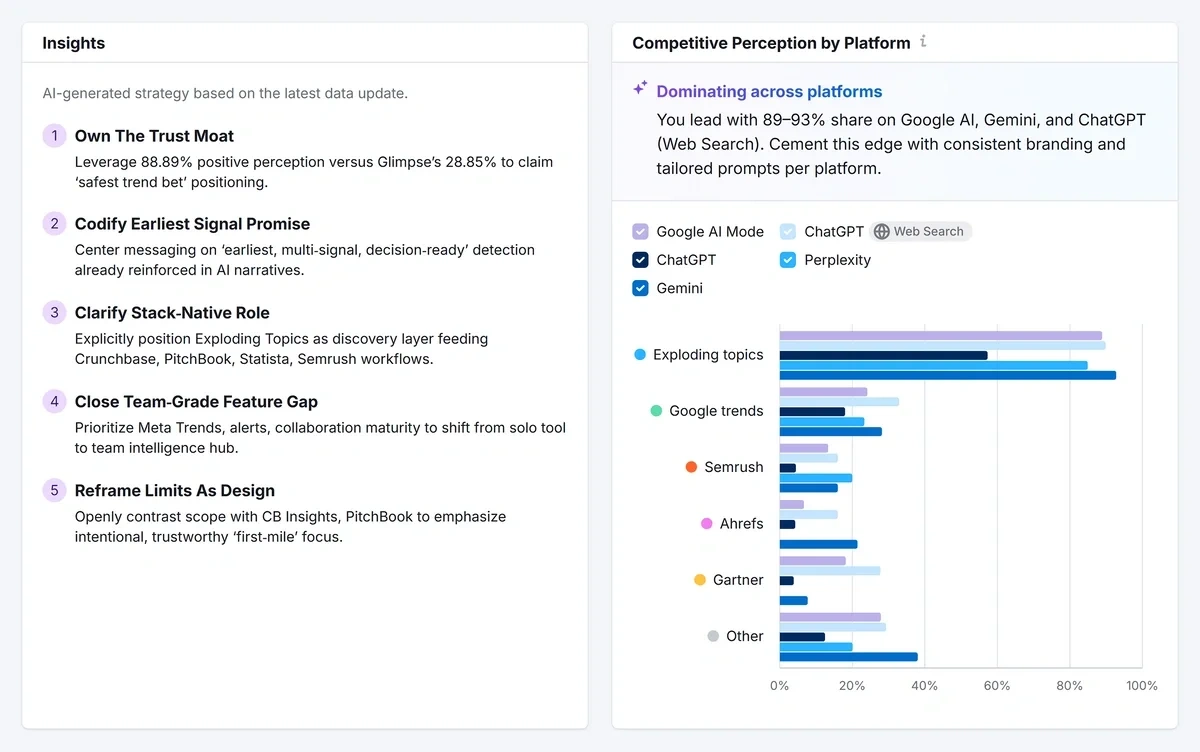
The competitive chart pits your sentiment evaluation against your top competitors. It gives you a helpful frame of reference to see who’s winning the sentiment race in your industry.
In addition, it’s essential for you to understand how AI describes your brand’s strengths and weaknesses.
The Key Sentiment Drivers section shows you a helpful summary of your strongest and weakest attributes as perceived by AI.
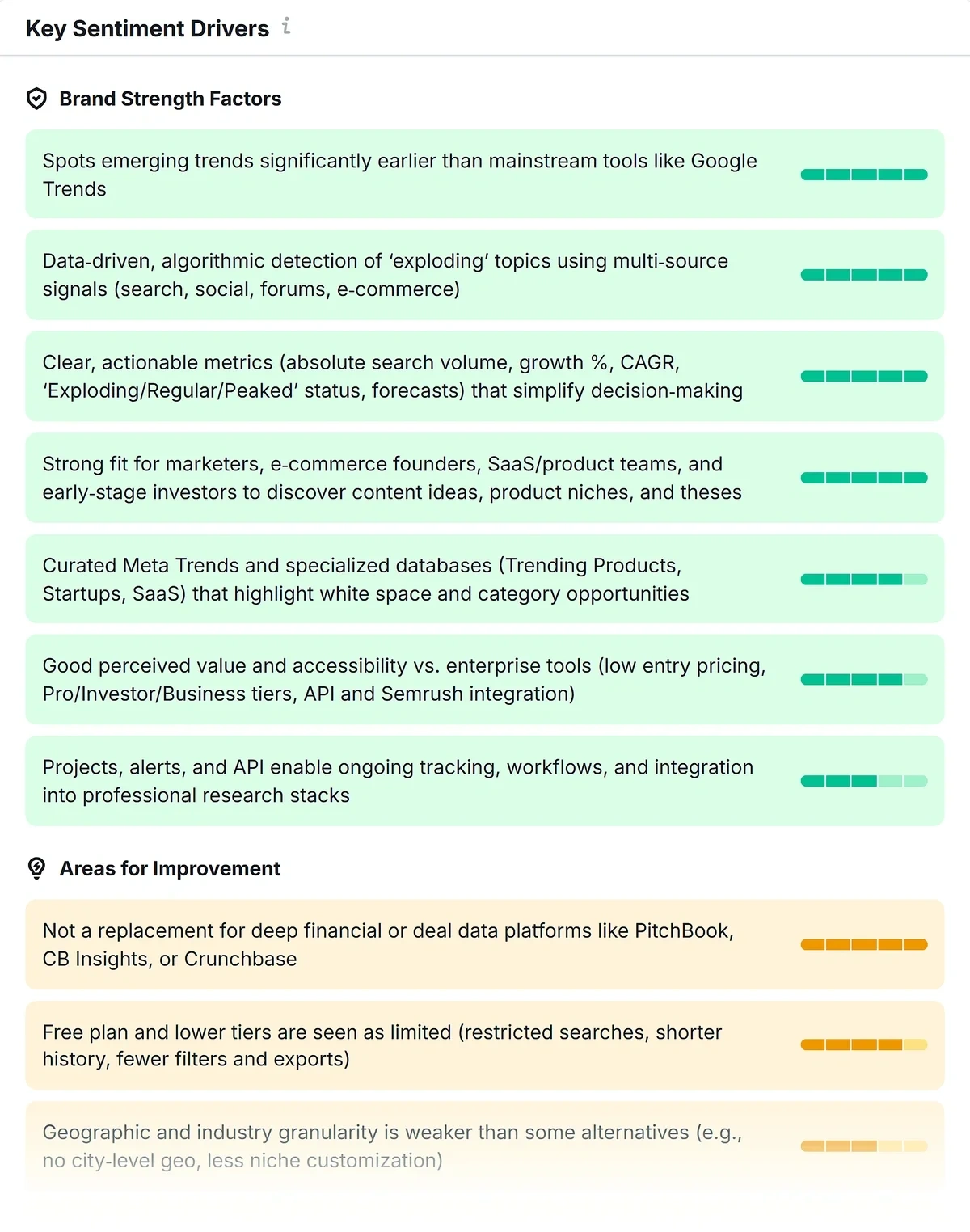
Knowing the key sentiments affecting your brand perception, you can design strategies aimed at accentuating your strengths and addressing the negative feedback:
- Ensure your website clearly articulates your positioning and differentiators
- Address objections or criticisms as highlighted by Semrush directly in your content
- Build case studies that demonstrate specific value propositions
- Monitor and respond to reviews on third-party platforms
4. Structure Content for AI Comprehension
Structure is the bare minimum you need to get noticed by AI.
That’s because LLMs process structured information more effectively than flowing prose.
And if AI finds your content easier to read, it’s more likely to reward you with increased citations and mentions.
Wherever possible, stick to these tips to improve your AI-readability and comprehension:
- Use clear H2/H3 headers that match common question formats ("What is X?", "How does Y work?", "X vs Y comparison")
- Implement structured data and schema markup on relevant pages
- Front-load key information in opening paragraphs
- Use bullet points and numbered lists for comparative or step-by-step content.
Tip: Most AI models lose their ability to extract information from the middle sections of a document. This is why it’s inefficient to add important details in the middle. Start with the key information first to appeal to the way LLM’s retain and process information.
At the same time, don’t ignore other content formats like videos.
Videos are frequently referenced by Google in AI Mode and AI Overviews. ChatGPT also cites YouTube videos, especially for product queries.
I frequently come across at least several video sources in Perplexity’s sources tab for most queries where video content exists and makes sense.
The same principle of structured flow of information applies to video content as well.
That means:
- Splitting YouTube videos into clearly labeled sections
- Descriptive text providing quick context and summary of the video
- Adding a ToC style list for skipping to sections with a timestamp
- Clear, non-clickbait headlines that reveal the video’s purpose obvious to AI
5. Diversify Your Source Presence
Your brand needs presence in multiple high-authority locations before AI can really trust you enough to recommend you to users.
Naturally, your website is one of the first places that AI will turn to when it needs to learn about your brand.
But that alone isn’t sufficient to compete strongly and become the dominant brand leading AI visibility in your industry.
You’ll also need to target other prominent platforms:
- Wikipedia (if your brand qualifies for a page)
- Podcast appearances and transcriptions
- Guest posts on authoritative blogs
- Press coverage and earned media
- Review sites and comparison platforms (G2, Capterra, etc.)
Getting featured in authoritative and AI-visible platforms is the first step.
Beyond that, you also need to expand your footprint by appearing in other websites.
If you don’t know where to start, look for the websites that LLMs are already using to reference your competitors but not you.
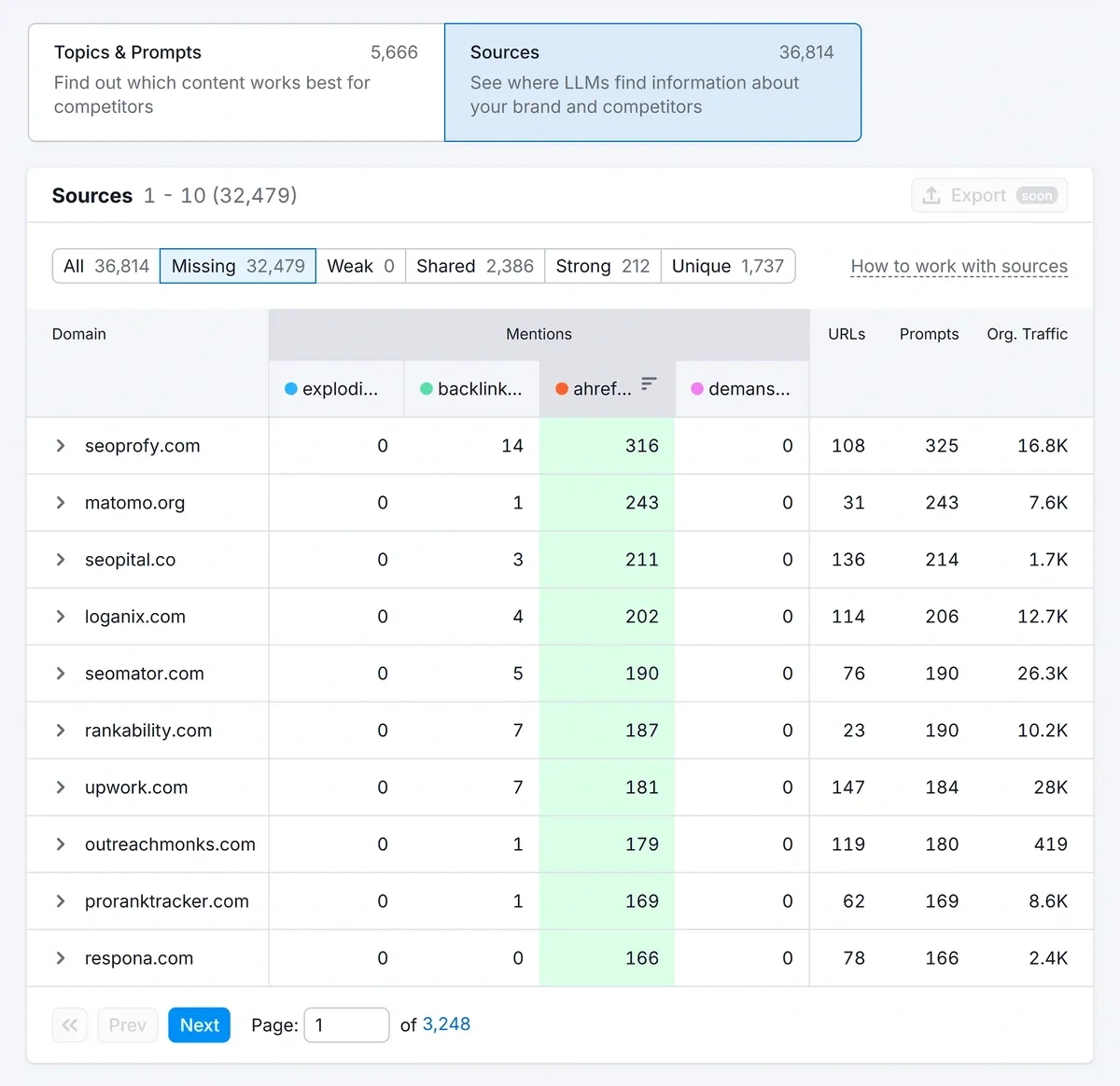
This is where the Semrush AI Competitor Research tool will come in super handy.
It helps you find source gaps between your brand and your competitors.
If AI tools are already partial to these sources when they mention your competitors, you can also generate AI visibility for yourself by requesting brand placements on the same platforms.
6. Don't Abandon Traditional SEO
An important nuance to bear in mind is that LLM optimization (LLMO) and SEO aren't opposing strategies.
Many fundamentals overlap, so it’s helpful to think of LLMO as an expansion of SEO rather than a replacement.
For one, the technical health of your website is still as critical as before.
Mainstream LLMs like Perplexity, Gemini, and ChatGPT increasingly rely on web search to ground answers on latest search results.
That’s why website indexability matters for your visibility in traditional search as well as AI.
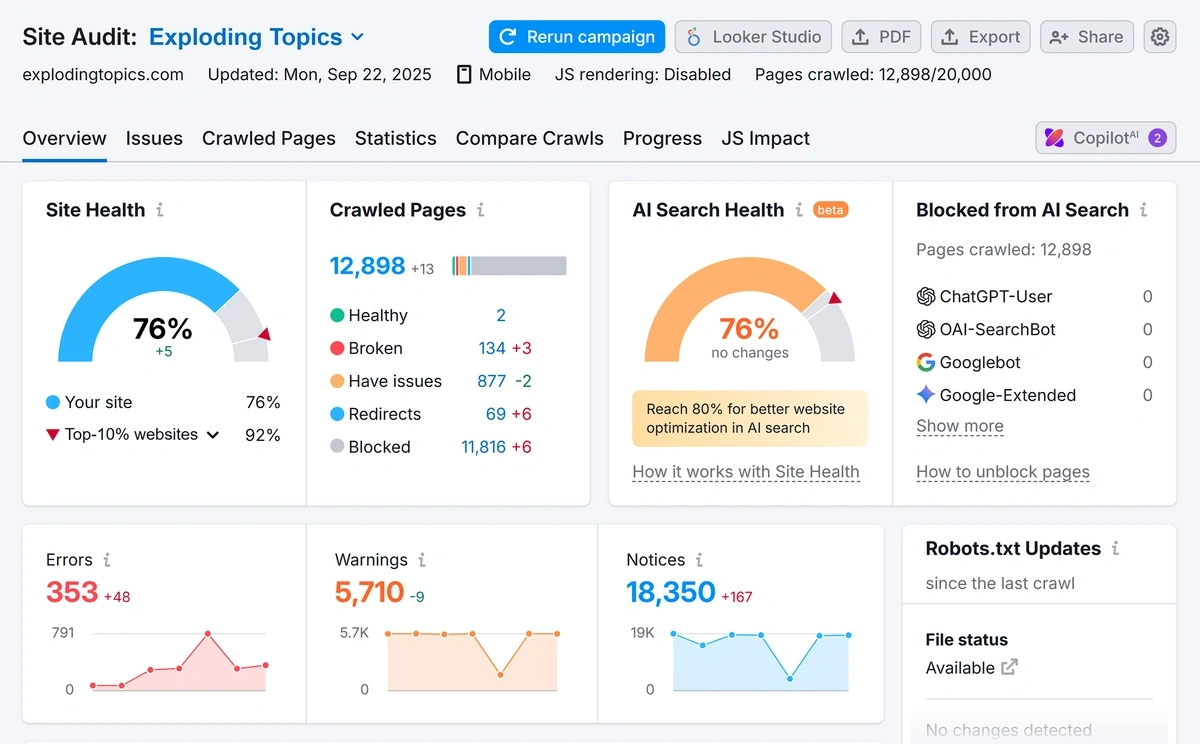
In addition to indexability checks, the Semrush Site Audit now also measures your website’s AI health.
This includes the quality of your content optimization for AI algorithms, as well as whether important AI search bots are blocked from accessing your website.
Site speed also continues to play an important part.
Especially with agentic browsers and bots growing more popular, your website needs to be quick and serve additional AI bot traffic without slowing down.
AI agents will simply move to a different website if you’re taking too long to load.
Your Core Web Vitals report is still one of the best ways to diagnose your site performance and implement fixes.
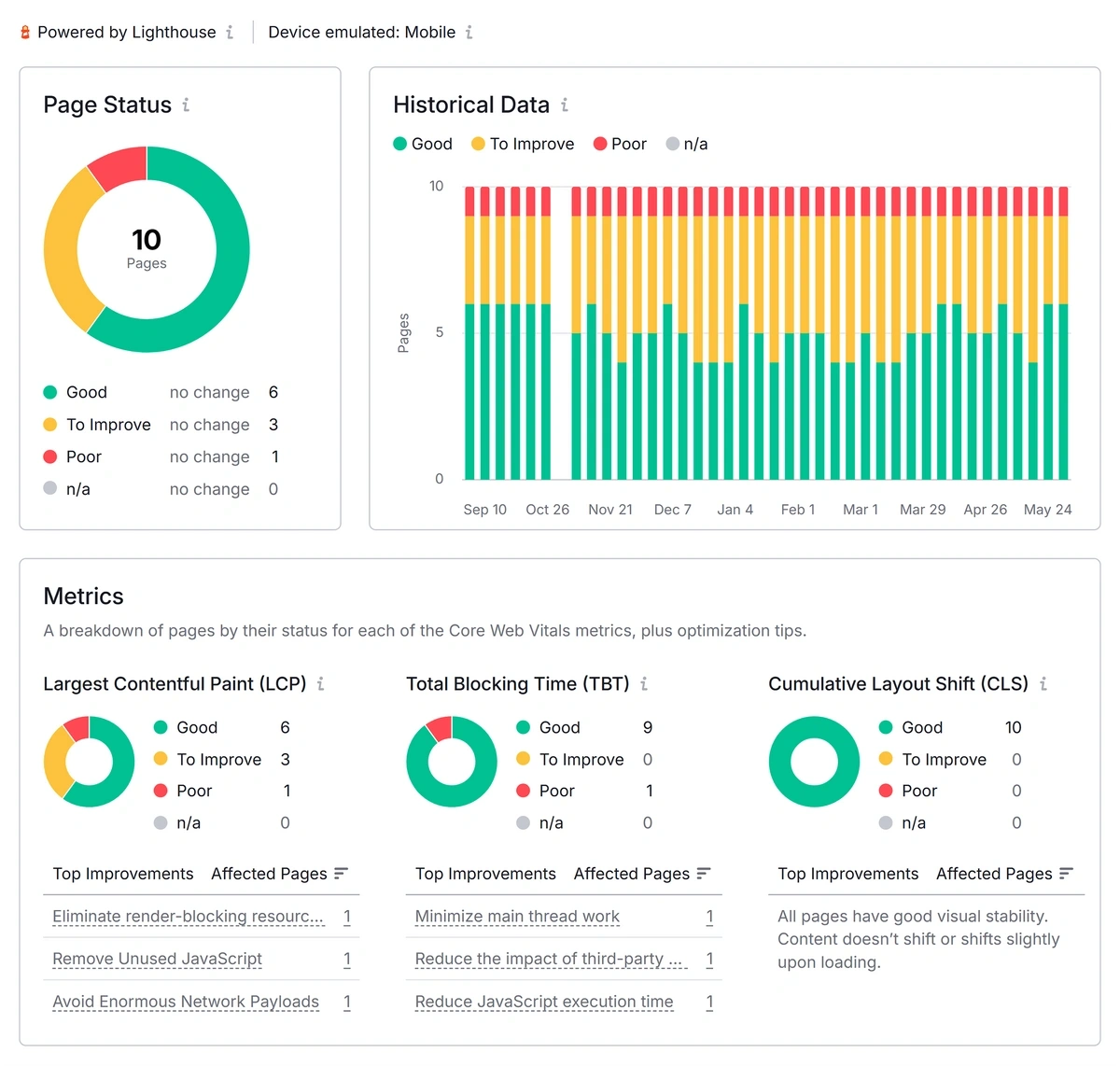
You also need to be mindful about unnecessary scripts bloating your website. Avoid wrapping important content in JavaScript and use HTML as much as possible.
Simple, lightweight, and accessible websites are making a comeback to accommodate human users as well as AI bots with minimal friction.
Adopting the same design philosophy is an important step toward building an AI-ready website.
What the AI Visibility Checker Shows vs. What Happens Next
You should use an AI Visibility checker if you’re just getting started and want to understand how popular AI tools see your brand.
The query breakdown across ChatGPT, Perplexity, and Gemini gives you a glimpse of your strong areas and things that need improving.
When you’re ready to start optimizing, you’ll need more than a summary snapshot.
You’ll need historical tracking and ongoing monitoring to observe the impact of your optimizations.
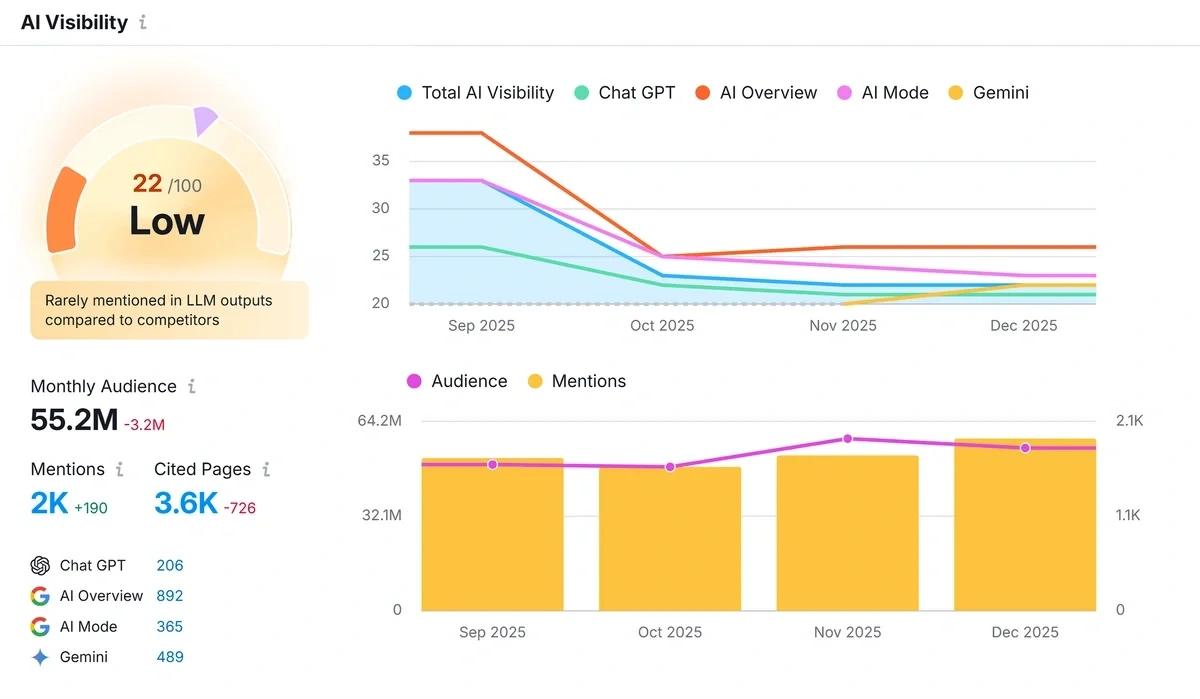
The Semrush AI Visibility tool tracks your AI performance for all LLM platforms, so you’ll know whether your visibility is rising or declining month-over-month.
And the competitive charts are super important to compare how you’re gaining ground in AI search relative to your competitors.
These reports will tell you whether your efforts are working and the areas you need to focus on.
Start with the free AI visibility check. See where you stand. Then, dive in deep with the Semrush One to get traditional SEO and AI analysis features you need to win in search.
Stop Guessing, Start Growing 🚀
Use real-time topic data to create content that resonates and brings results.
Exploding Topics is owned by Semrush. Our mission is to provide accurate data and expert insights on emerging trends. Unless otherwise noted, this page’s content was written by either an employee or a paid contractor of Semrush Inc.
Share
Newsletter Signup
By clicking “Subscribe” you agree to Semrush Privacy Policy and consent to Semrush using your contact data for newsletter purposes