Exploding Topics
Remineralizing Gum search volume grew from under 100 to 27,100 monthly searches between February 2024 and January 2026.
Remineralizing gum
+5100%
GLP 1 Supplement search volume grew from 5,920 to 74,000 monthly searches between February 2024 and January 2026.
GLP 1 supplement
+1150%
Soursop Bitters search volume grew from 9,900 to 110,000 monthly searches between March 2024 and February 2026.
Soursop bitters
+1011%



Get Advanced Insights on Any Topic
Discover Trends 12+ Months Before Everyone Else
How We Find Trends Before They Take Off
Exploding Topics’ advanced algorithm monitors millions of unstructured data points to spot trends early on.
Keyword Research
Performance Tracking
Competitor Intelligence
Fix Your Site’s SEO Issues in 30 Seconds
Find technical issues blocking search visibility. Get prioritized, actionable fixes in seconds.
Powered by data from
Latest Blog Posts
Featured Case Studies
See what's trending before everyone else
Each week, we'll send you our best Exploding Topics. Plus, expert insight and analysis.
ChatGPT Ads: Here’s What Will Happen Next

 Add Exploding Topics on GoogleAdd Exploding Topics as your preferred source to see more of our stories on Google.
Closing in on 1 billion users, OpenAI has finally decided that it is time to introduce adverts to ChatGPT.
Even without ads, ChatGPT reached an ARR of around $20 billion in revenue in 2025. However, OpenAI is losing 3 times what it’s earning.
And 95% of existing ChatGPT users are on the free plan. Ads offer a way of extracting at least some value from these hundreds of millions of non-paying users.
But can OpenAI continue to grow the ChatGPT user base alongside the introduction of ads? Can it retain its existing users? And will it be enough to create a viable long-term business?
How ChatGPT made money without ads
AI is expected to be a multi-trillion industry by the early 2030s. OpenAI, and ChatGPT specifically, has become almost synonymous with this boom.
With over 5 billion visits per month, the AI chatbot has ascended with unbelievable speed to become the 5th-most-visited website in the world.
Rarely has a tool become so embedded in the lives of so many in such a short amount of time. It may even be unprecedented.
However, this rapid growth would not have been possible without more or less unfettered user access. ChatGPT offers paid plans, which were generating at least $415 million per month as of April last year, but the free version is proving sufficient for the vast majority of users.
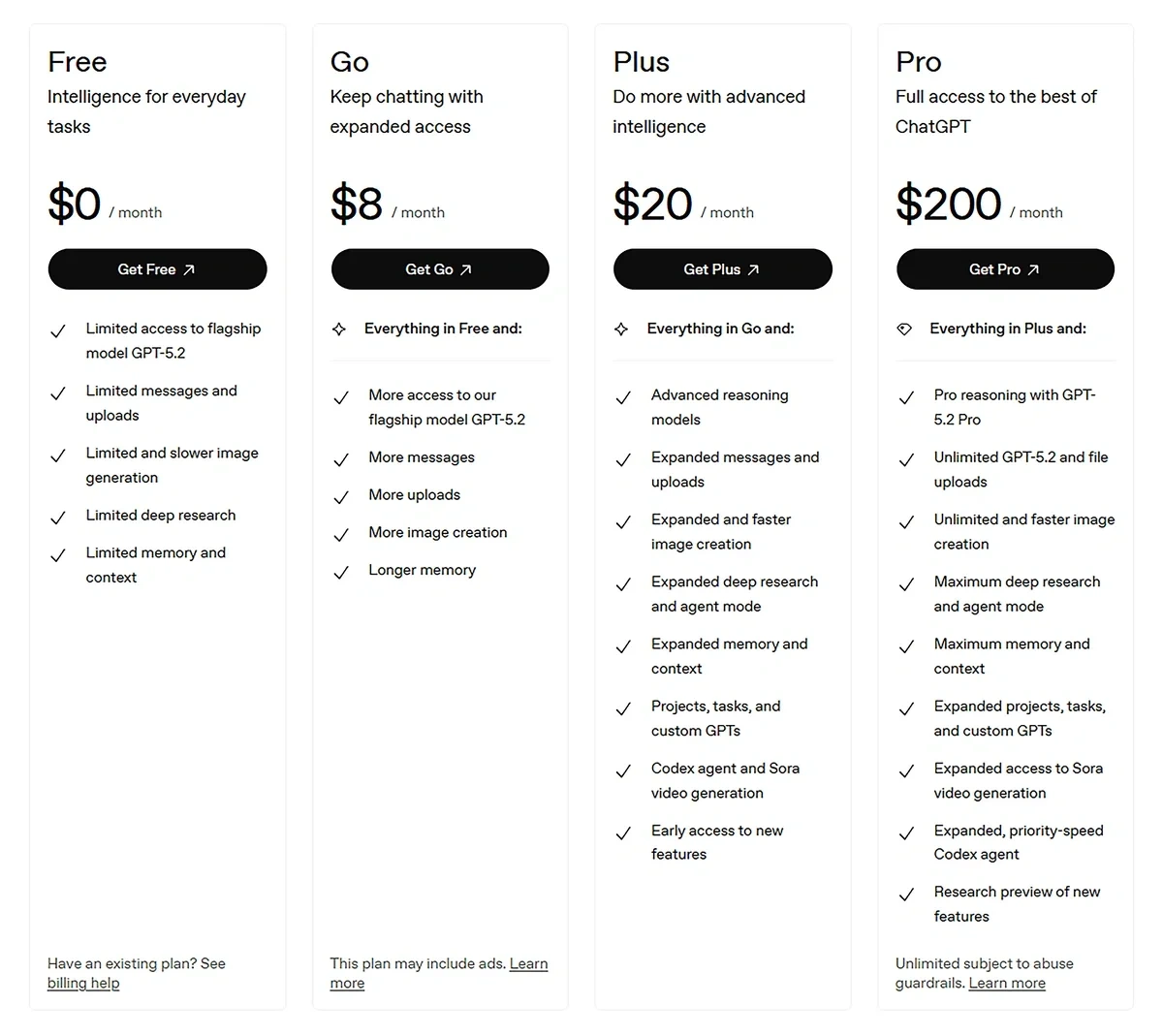
This would pose a challenge to any business. It’s particularly troublesome when the product OpenAI is offering relies on vast quantities of compute power, requiring major and recurring outlays.
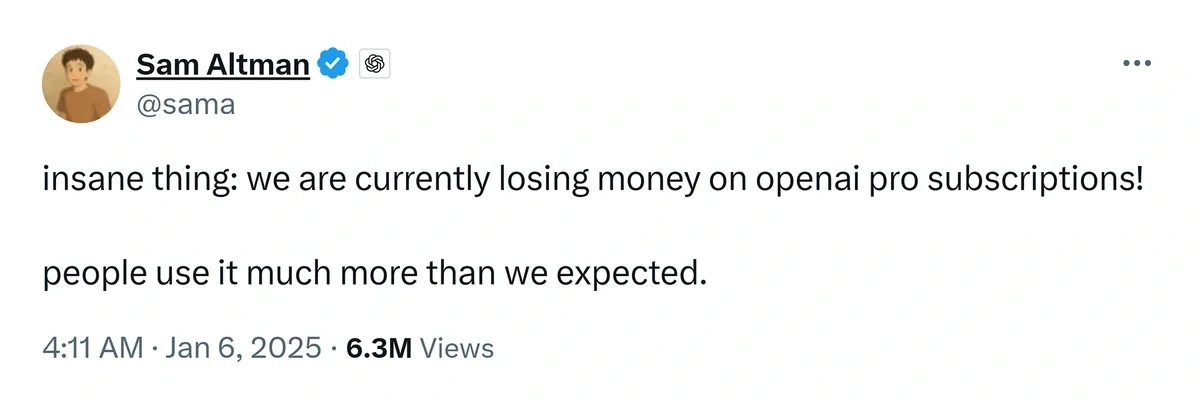
Even the $200 per month ChatGPT Pro plan is not significantly altering the equation. Sam Altman admitted last year that OpenAI was actually losing money on the top non-enterprise plan, with individual “power user” subscribers exceeding their expected usage by a large margin.
The recently-added “Go” plan seeks to somewhat address this. It’s pitched at relatively low-level ChatGPT users, who may be tempted to pay a small amount for increased limits which OpenAI can still offer with a profit margin built in.
But it would need to be wildly popular to noticeably change the underlying arithmetic. The uncomfortable reality for OpenAI is that 95 out of every 100 ChatGPT users are currently on the free plan, and the company has been running at a heavy loss to finance its hyperscaled user acquisition, despite OpenAI revenue reaching around $50 billion ARR in October 2026.
How ChatGPT ads will work
Enter ChatGPT ads. While adding adverts will never be especially popular with users, the math means that it has long felt like an inevitable step.
Realistically, the other major option to improve the prospects of profitability was to remove the free plan altogether. The introduction of ads at least means this conversation is delayed for now.
But there are understandable concerns about what this might mean for the quality of OpenAI’s product. Will ad partnerships affect ChatGPT’s responses?
OpenAI’s answer is an emphatic no. “Ads do not influence the answers ChatGPT gives you,” it wrote in a statement announcing the planned rollout.
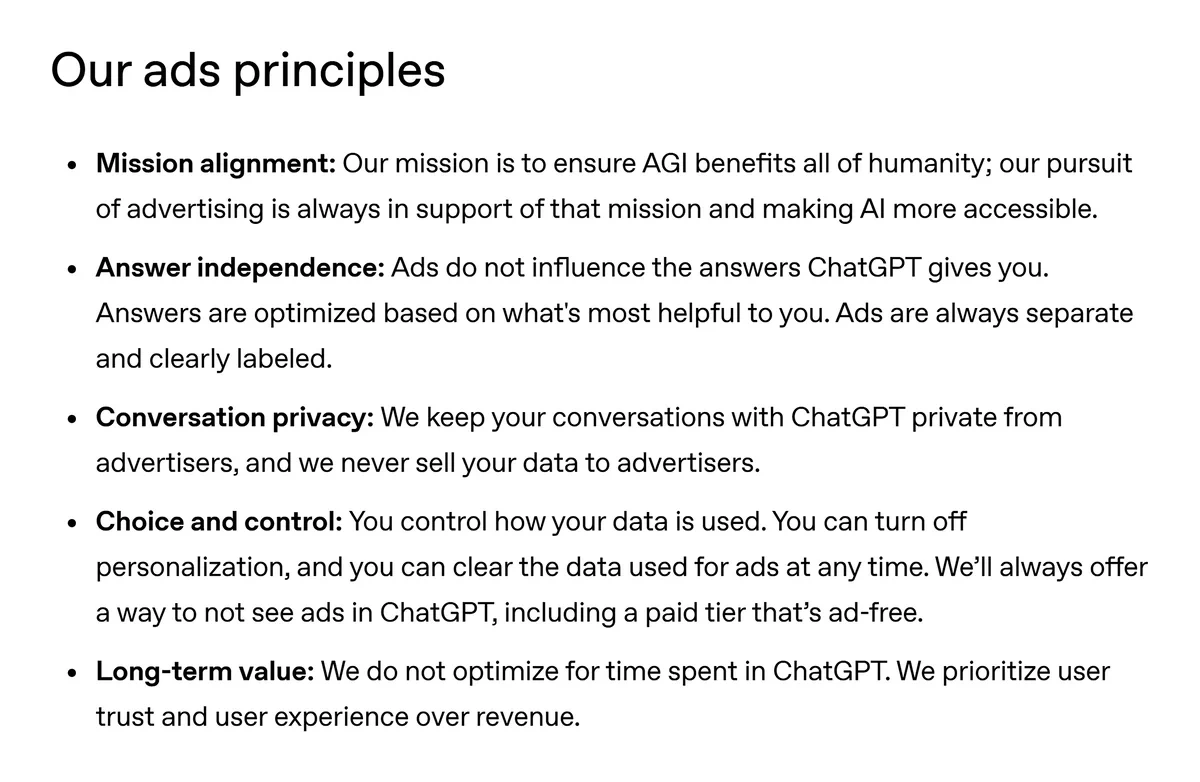
OpenAI also set out other guiding principles for its ads, including a commitment to privacy and a pledge not to disproportionately advertise to high-volume users.
That all sounds positive. But even in the very first examples supplied by OpenAI, you’d have to say that ChatGPT is set to be sailing a little close to the wind.
Take this mockup of what the first ad formats could look like:
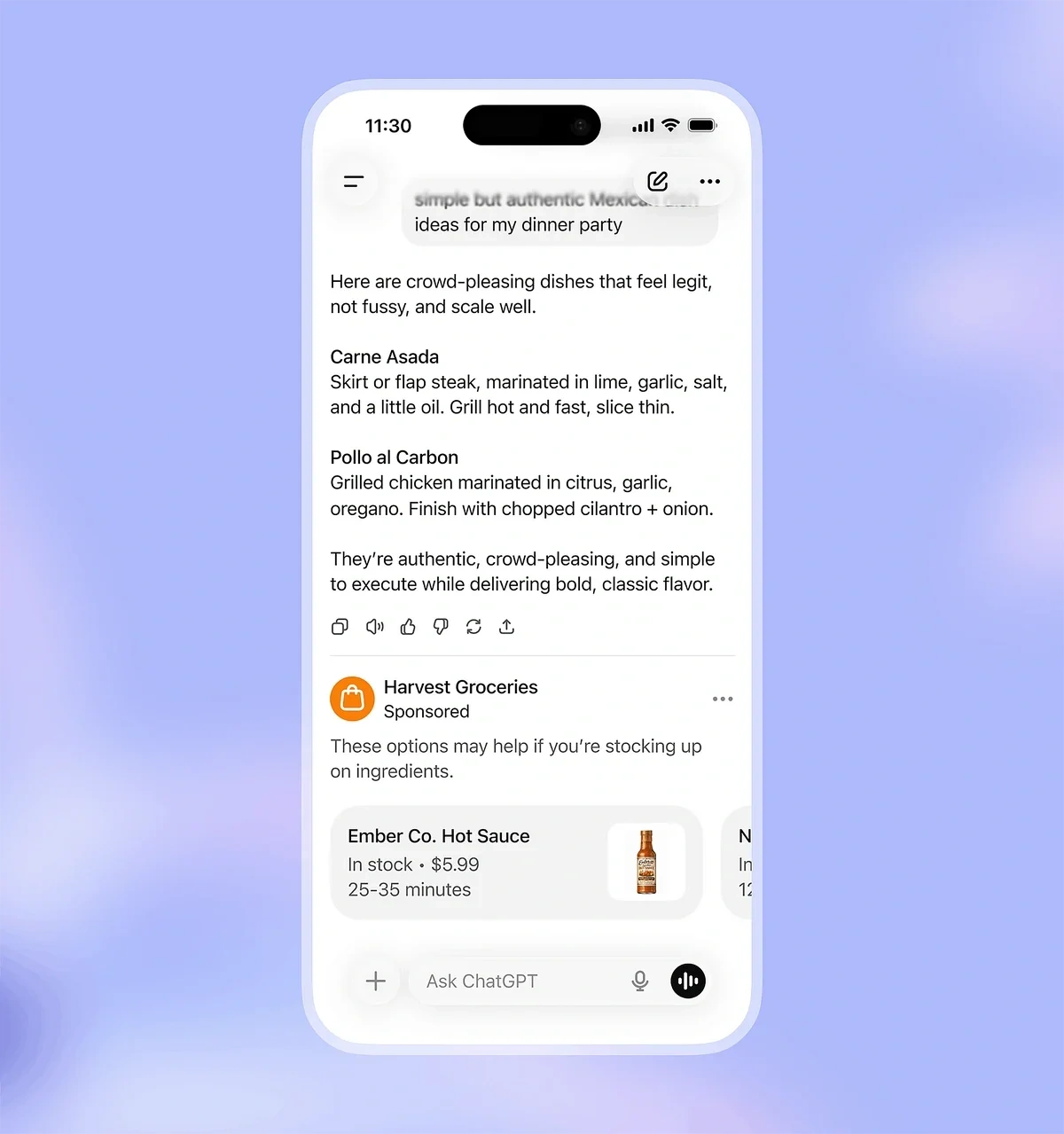
This example, an ad for hot sauce below a chat about Mexican recipe ideas, might not technically infringe on conversation privacy. But the average user may well still be unnerved by contextual ads that are served based on the content of their chat with ChatGPT.
Moreover, while the exact format of the ads is still a work in progress, this first design doesn’t exactly go out of its way to differentiate the AI answer from the advert. The “sponsored” label is certainly a good thing, but the copy could otherwise read like a continuation of ChatGPT’s response.
Bear in mind that this is just an initial mock-up, created to be published within a post that’s designed to reassure users about the limited impact of ads. Those who were around for the dawn of search will be all too aware that sponsored posts tend to become more intrusive over time, not less.
So it will take more than OpenAI’s assurances to convince users that ads will not harm their ChatGPT experience.
For now, however, users do retain the option of subscribing to the Plus or Pro plan to avoid ads. The experience on ChatGPT will not change for anyone on these tiers, and OpenAI has committed to always offer a way to remove ads.
OpenAI sets premium price point for ChatGPT ads
OpenAI is obviously treading a thin line. But by rolling the dice on user experience, it has felt able to charge a high fee to advertisers.
According to reports, it will charge on a cost-per-mille (CPM) basis, assessed on the number of impressions rather than clicks. And it has set the rate at $60 per thousand views, some 3X higher than equivalent ad space on Meta.
Although it’s a little outdated now, a Semrush study from 2023 found that even the most expensive industries for advertisers only averaged a CPM of $7.63. So it’s clear that OpenAI is charging a major premium.
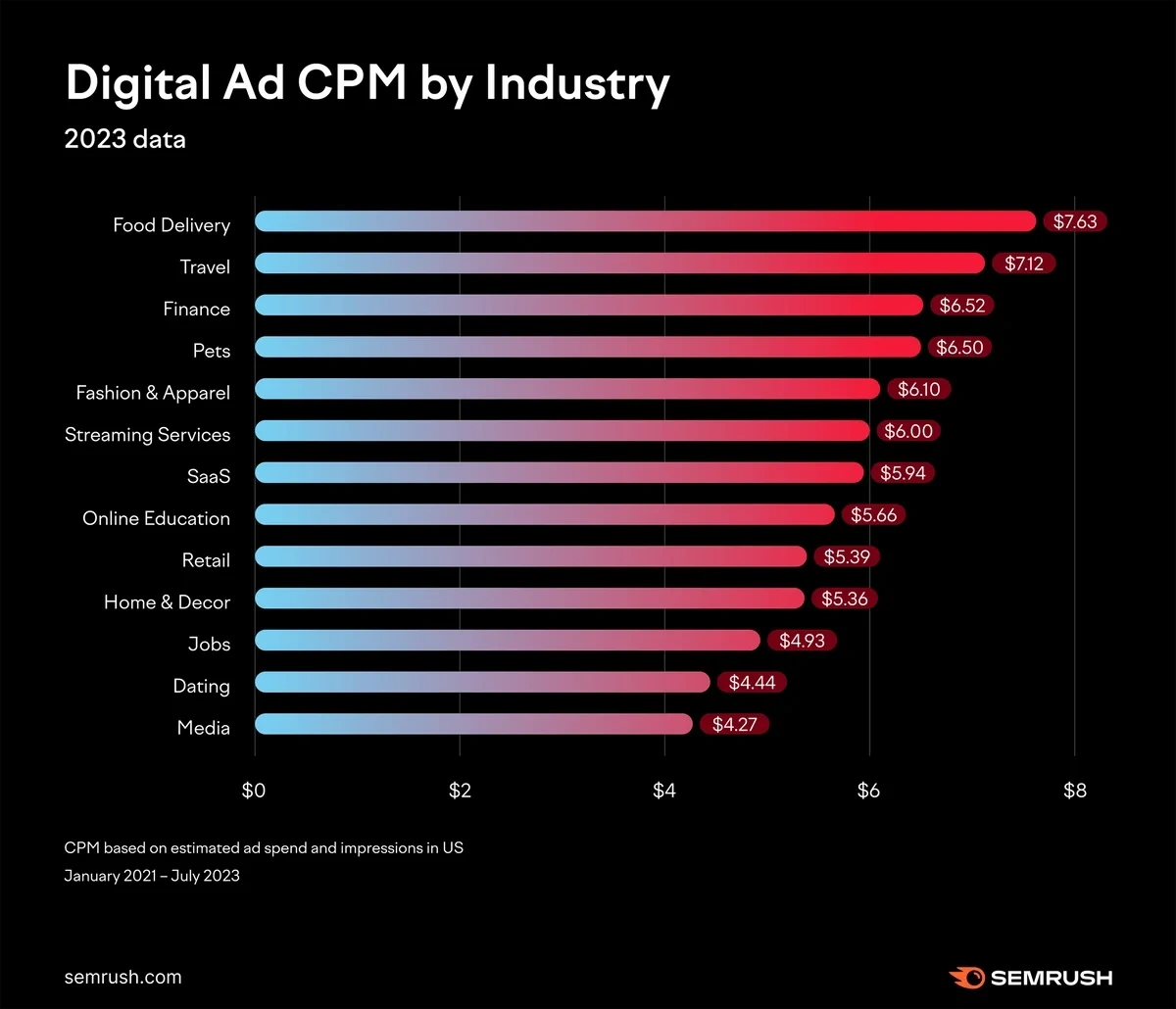
But you could argue that OpenAI can justify it. After all, ChatGPT users are generally high-intent: researching and question-answering is comfortably the most popular personal AI use case, and that often precedes a purchase.
The premium price point would certainly help OpenAI’s financial picture. At the proposed $60 CPM rate, if we were to count each of the 5 billion monthly visits to ChatGPT as an ad view, ads alone would generate $300 million per month.
Of course, that’s much too simplistic. Premium users will not be served ads, not every visit will necessarily result in a single ad view, and there’s still no real data on whether advertisers will actually be willing to pay the asking price.
But this extremely rough calculation goes some way to explaining why OpenAI has felt compelled to pull the trigger on ads.
And for further context, Meta just reported its full-year numbers. It generated $196 billion from ad revenue in 2025, representing the vast majority of its total income.
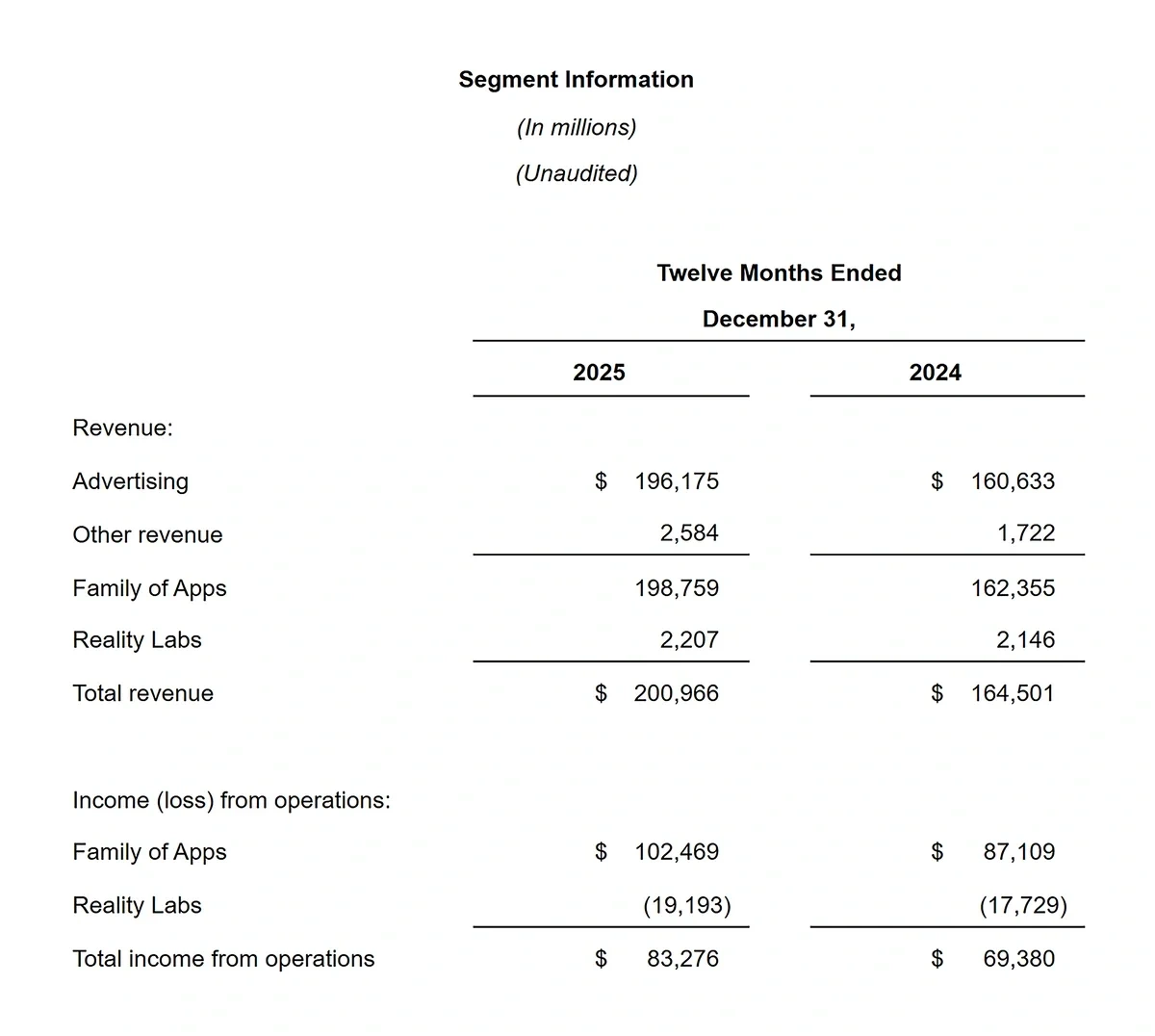
Even if OpenAI can only reach a tiny fraction of that total, ads have the power to significantly reshape its financial outlook.
Build a winning strategy
Get a complete view of your competitors to anticipate trends and lead your market
Is OpenAI taking a risk with ChatGPT ads?
There is no doubt that introducing ads to ChatGPT is a major risk for OpenAI.
For one thing, the business optics are not great. Altman once said that he considered ads “a last resort as a business model”.
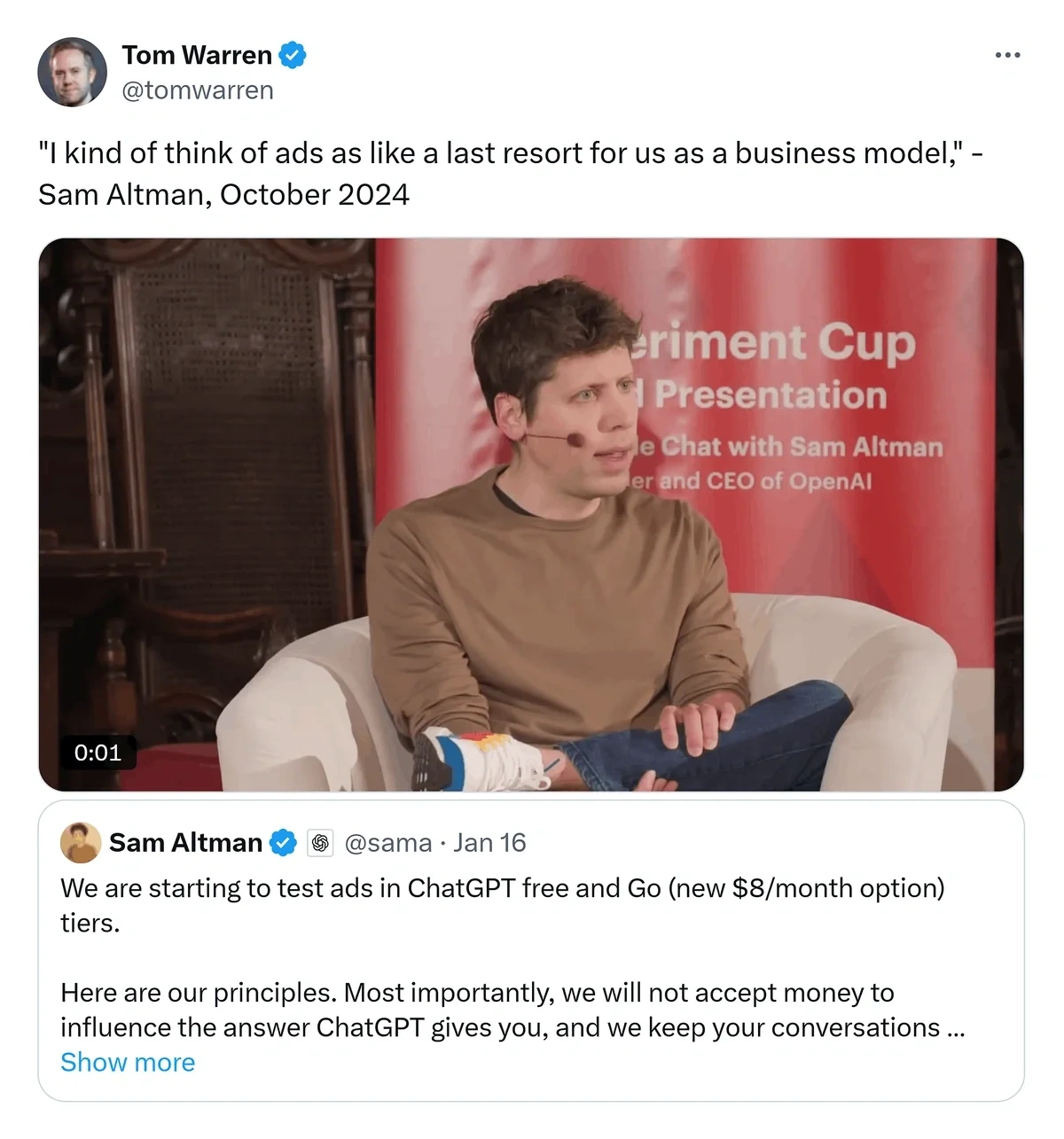
It’s reasonable to ask what has changed so dramatically in the space of 15 months. If Altman is already triggering a “last resort”, it is only fair to question just how bleak the prospects of profitability are for the company that has blazed a trail for AI.
Having said that, investors do not appear to be unduly put off. Perhaps buoyed by the prospect of further monetization through ads, investors including Nvidia, Microsoft and Amazon are in talks over a funding round that could reach $100 billion.
Amazon is a particularly notable name in that list. While Nvidia and Microsoft would be increasing existing investments, the E-commerce giant would represent a new name: one that is considering an investment of up to $20 billion.
But OpenAI will need every cent of this funding to stand any chance at all of emerging from an increasingly intense arms race. The uncomfortable reality for the AI powerhouse is that ChatGPT users have a range of free-to-use and ad-free alternatives to turn to if they don’t like the experience of sponsored posts.
Most pertinent of all is Google. It has already struck an agreement with Apple this year that will see Gemini power upgrades to Siri, and you’d imagine that the world’s 11th-largest company by revenue will be able to retain an ad-free product for as long as it takes to establish itself as the go-to LLM.
Gemini already increased its MAUs at a faster rate than ChatGPT in 2025, growing 360% year-on-year compared to 280% for the OpenAI chatbot. Of course, the latter started from a higher base, but it’s interesting that growth was beginning to show signs of leveling out even before the introduction of ads.
As of November 2025, Gemini was up to 650 million MAUs. The gap is undoubtedly closing.
There is little to split the two AIs when it comes to quality either. Gemini 3 Pro, Google’s latest model, is actually narrowly ahead for the best score on Humanity’s Last Exam, a well-regarded benchmark designed to be a comprehensive multimodal test of knowledge.
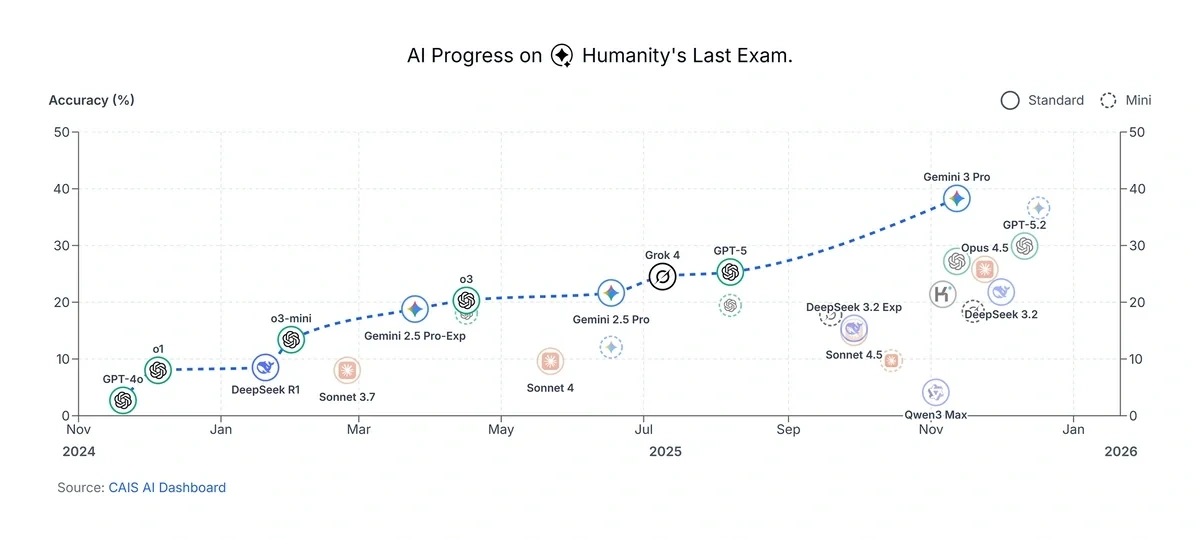
Claude (from Anthropic) is another wholly ad-free alternative to ChatGPT. There’s even DeepSeek, the Chinese AI tool that has proved very competitive on various benchmarks.
With so many competitors, OpenAI is taking a big step into the unknown by betting that ads won’t send free users elsewhere.
A turning point in the AI arms race
Introducing ads to ChatGPT could be the moment OpenAI cements itself as one of the world’s largest companies by monetizing its massive user base. Or it could be the moment it surrenders its first-mover advantage for good, haemorrhaging its users to competitors.
Either way, it is a hugely significant decision. And it’s one that makes it more important than ever for marketers to get to grips with AI.
You need to know what your potential customers are talking about on ChatGPT. With the initial ad price set high, it’s critical to be sure you’ll be getting a return on investment.
Just as importantly, you need to be monitoring conversations across a range of AI platforms. OpenAI’s dominance of the space is already creaking, and ads could bring tools like Gemini ever closer to parity.
Tools like Semrush let you monitor your brand performance across ChatGPT, Gemini, AI Overviews, and Google AI Mode. They can future-proof you against changing AI habits.
For now, it will be fascinating to see the user response as ads start to roll out in earnest across the ChatGPT Free and Go plans. AI is a notoriously fast-moving industry, and it has just taken its latest turn.
Stop Guessing, Start Growing 🚀
Use real-time topic data to create content that resonates and brings results.
Exploding Topics is owned by Semrush. Our mission is to provide accurate data and expert insights on emerging trends. Unless otherwise noted, this page’s content was written by either an employee or a paid contractor of Semrush Inc.
Share
Newsletter Signup
By clicking “Subscribe” you agree to Semrush Privacy Policy and consent to Semrush using your contact data for newsletter purposes
Written By


James is a Journalist at Exploding Topics. After graduating from the University of Oxford with a degree in Law, he completed a... Read more