


Get Advanced Insights on Any Topic
Discover Trends 12+ Months Before Everyone Else
How We Find Trends Before They Take Off
Exploding Topics’ advanced algorithm monitors millions of unstructured data points to spot trends early on.
Keyword Research
Performance Tracking
Competitor Intelligence
Fix Your Site’s SEO Issues in 30 Seconds
Find technical issues blocking search visibility. Get prioritized, actionable fixes in seconds.
Powered by data from
Latest Blog Posts
Featured Case Studies
See what's trending before everyone else
Each week, we'll send you our best Exploding Topics. Plus, expert insight and analysis.
ChatGPT Instant Checkout is Dead. Long Live AI Shopping

 Add Exploding Topics on GoogleAdd Exploding Topics as your preferred source to see more of our stories on Google.
Less than 6 months after it was launched, OpenAI has quietly shelved Instant Checkout.
Announced in September 2025, the feature allowed ChatGPT users to buy directly from US Etsy sellers without ever leaving the chat. And that was meant to be the first step of a much wider rollout.
Instead, Instant Checkout has been dropped entirely. But its "Agentic Commerce Protocol" (ACP) lives on, and could ultimately be much more significant in reshaping the e-commerce landscape for the age of AI.
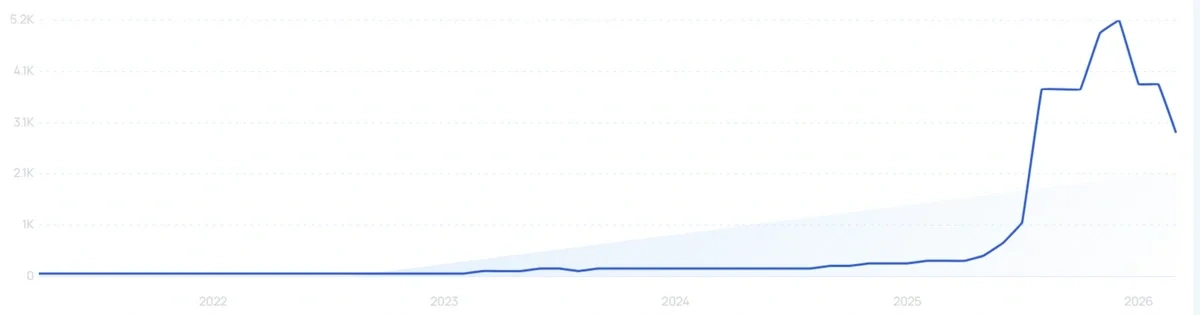
"AI shopping" searches have increased by 1,767% in the last 2 years.
This open-sourced protocol lets any online seller share their product catalog with ChatGPT and other AI agents. So when users browse with the help of AI, they can be served the most up-to-date items, prices, and promotions.
In this article, we’ll explore how the ACP is set to disrupt the online sales industry, despite the unceremonious death of Instant Checkout. And we’ll explain what e-commerce sellers need to do in order to seize the potentially massive AI shopping opportunity.
What went wrong for ChatGPT Instant Checkout?
Instant Checkout was launched with some fanfare. It was announced at the same time as the Agentic Commerce Protocol, and it got top billing (OpenAI chose "buy it in ChatGPT" as the URL slug).
Yet fast-forward to March 2026, and eagle-eyed followers of the OpenAI blog noticed a tacit admission of defeat. Buried near the end of "Powering Product Discovery in ChatGPT", the feature was indefinitely mothballed:
"We’ve found that the initial version of Instant Checkout did not offer the level of flexibility that we aspire to provide, so we’re allowing merchants to use their own checkout experiences while we focus our efforts on product discovery."
In other words, users can no longer "buy it in ChatGPT". Instead, OpenAI is focsuing its efforts on making its AI a better shopping research tool.
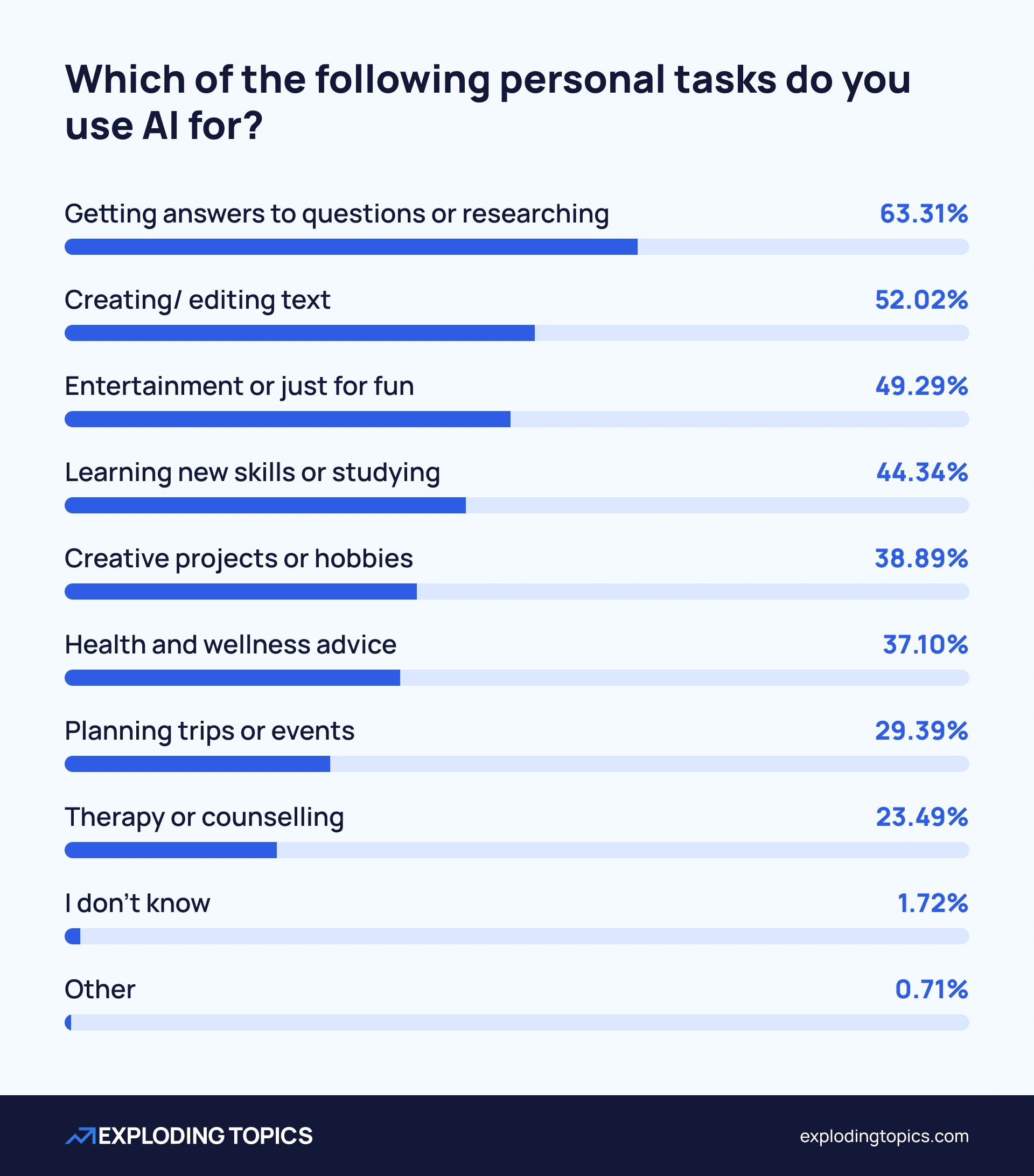
ChatGPT is already well-established as a tool for product research. An Exploding Topics survey from last year found that 63% of AI users are harnessing the technology for research purposes.
And more than 700 million people use ChatGPT every week. That’s a huge amount of potential traffic being driven to online stores.
But OpenAI theorized that it could avoid sending this traffic away to third-party checkouts by placing the entire purchasing journey inside ChatGPT. Instant Checkout was meant to be a win-win: a more frictionless buying experience for consumers, better access to customers for online businesses, and a slice of the pie for OpenAI in recognition of its role as intermediary (à la the social commerce/TikTok shop model).
Starting off with Etsy as a partner was no tentative step. The artisan e-commerce platform recorded gross merchandise sales of $3.59 billion in Q4 2025.
And OpenAI had far bigger plans for Instant Checkout. Over 1 million Shopify merchants were also due to be onboarded, including brands like SKIMS, Spanx, Glossier, and Vuori.
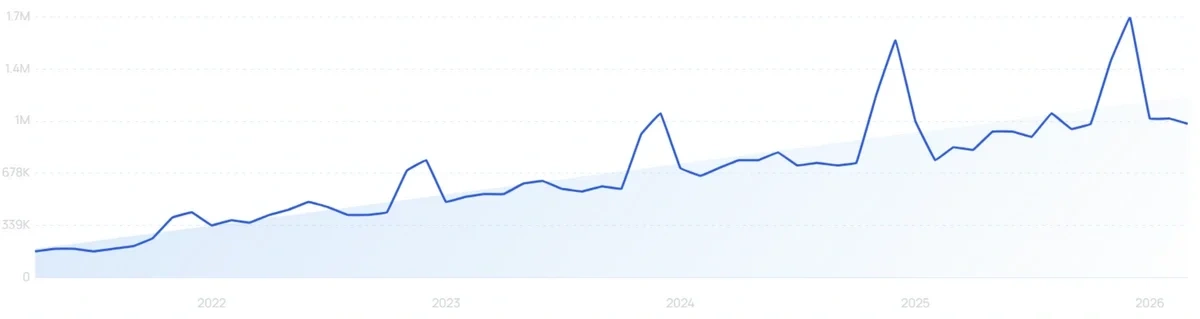
“Vuori” now attracts 1 million searches per month.
But while the theory seemed sound, this grand vision has not transpired. There are a number of possible reasons why the idea has unraveled so quickly.
OpenAI's official line references the lack of "flexibility". That's rather vague, but suggests some level of unforeseen technical obstacles, with ChatGPT perhaps unable to adequately handle the nuances of native checkouts (e.g. discount codes, personalized offers, membership schemes).
But it seems likely that the bigger problem was a misjudgment of consumer sentiment. If the problems were wholly technical, OpenAI would iterate, not abandon.
It appears that while consumers are ready to use AI to help with their shopping, there simply isn't an appetite to turn the whole process over to ChatGPT. Whether that changes with time remains to be seen, but it explains why OpenAI is refocusing on product discovery for now.
At Exploding Topics, we conducted our own original research on AI shopping trends to learn more about how shoppers are using AI. Our findings were pretty illuminating in light of OpenAI's decision to shutter ChatGPT Instant Checkout.
Our research shows that 77% of shoppers have used AI in the past six months to help them make shopping decisions.
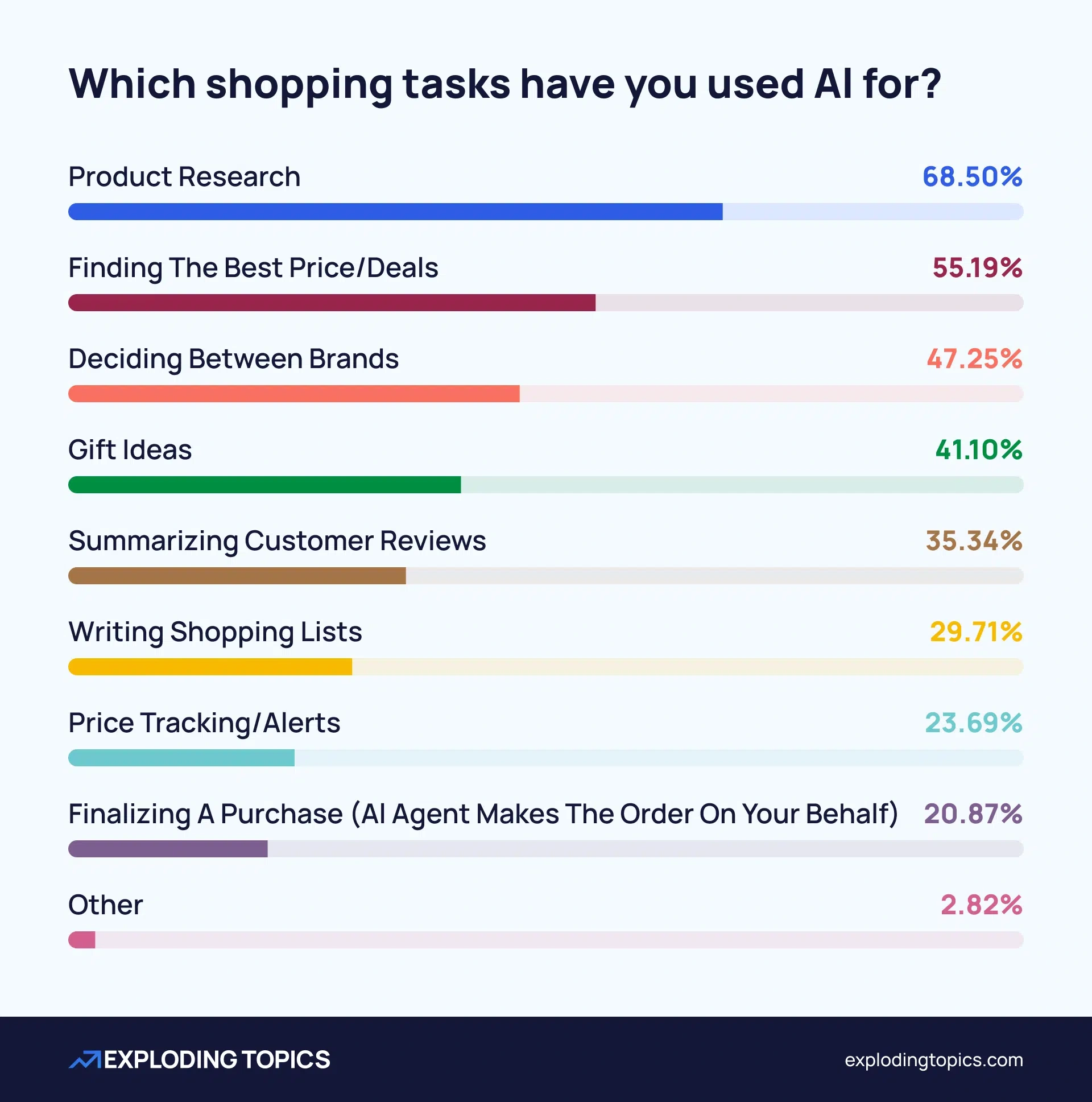
Specifically, we found that 68.5% of shoppers are using AI for product research. This is consistent with OpenAI's decision to refocus on discovery.
Our research also echoed the user sentiment that AI is useful for shopping assistance, but buyers aren't ready to hand over complete autonomy to AI just yet.
When it comes to AI tools that can complete purchases for you, we found that users were most likely to describe their attitudes toward such tools as "skeptical" (41.08%) and "suspicious" (33.10%).
The mode average that a consumer trusts AI to spend autonomously is $0. The median would cap AI autonomous spending at $50.
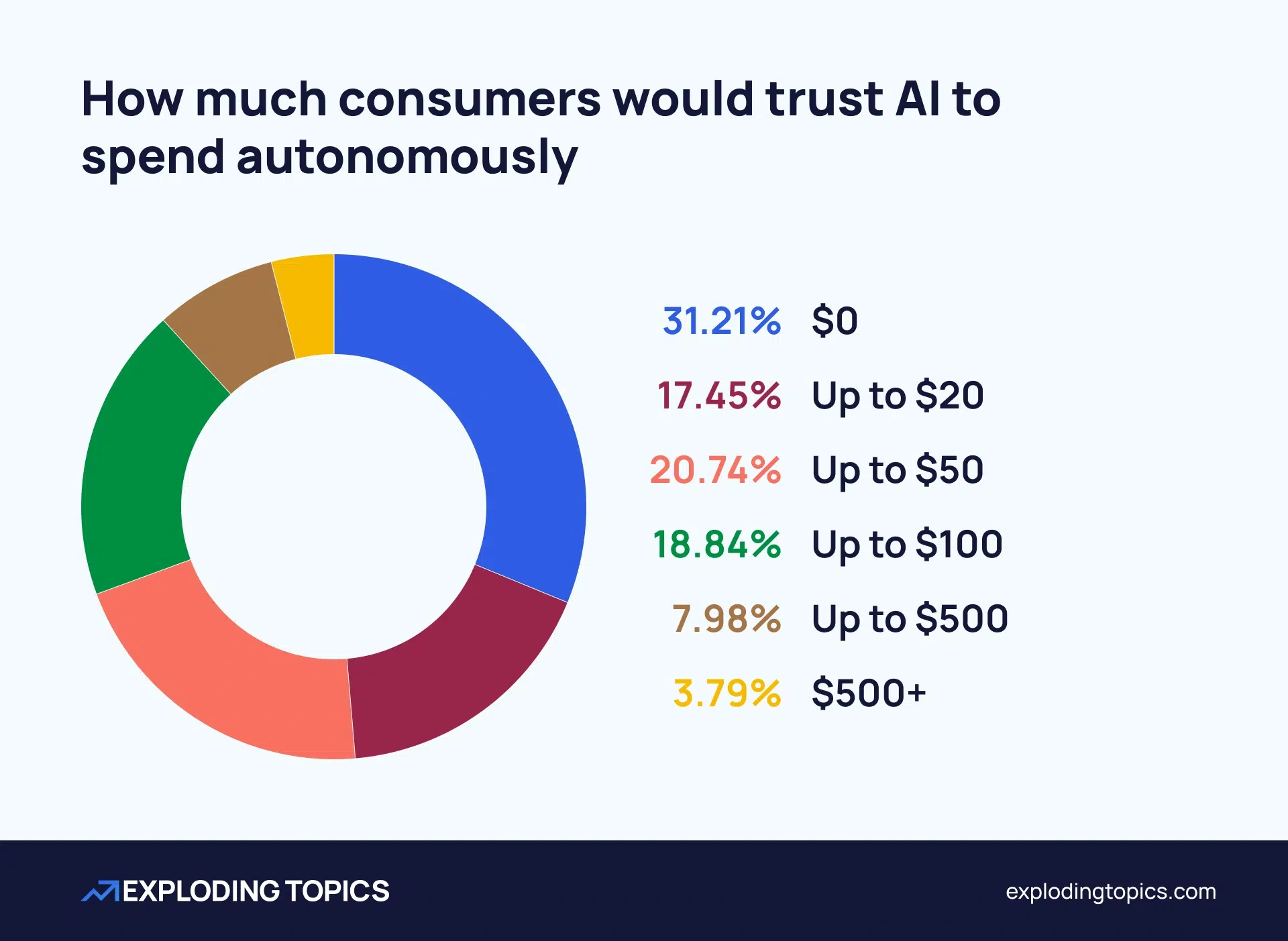
Based on our findings, shoppers are comfortable turning to AI to help them discover and research products, brands, and prices. They're okay with using it to access reviews.
But they're simply not nearly as comfortable handing purchasing power and decisions over, along with any personal data.
Knowing this, it's easy to understand why OpenAI made the decision that it did regarding ChatGPT Instant Checkout. It doesn't mean AI shopping is going away, though. Quite the opposite.
Read more of our original research on AI shopping: New data: 77% use AI to shop. Nearly 1 in 3 won't let it spend.
The Agentic Commerce Protocol
At the same time as pausing Instant Checkout, OpenAI confirmed further development of the Agentic Commerce Protocol, focusing on product discovery.
OpenAI developed the ACP alongside Stripe. But it has open-sourced the technology.
It envisages ACP supporting innovation across the AI and e-commerce ecosystem. Per the FAQs, "any business or AI platform can implement the ACP spec to participate in agentic commerce".
In other words, this is bigger than just ChatGPT. In theory, merchants will be able to make their products more readily discoverable in any AI chatbot, regardless of which AI agents their potential customers are using.
How Does the Agentic Commerce Protocol Work?
The Agentic Commerce Protocol works by granting AI agents access to merchant product feeds.
Merchants supply a regularly refreshed feed containing price details and availability, as well as additional details like rich media and product reviews. Chatbots are then able to present this information to users within their own interfaces.

In other words, ACP is the "connective layer between merchants and users". It allows merchants to make sure AI agents are both aware of its products and up to date with the latest information, giving shoppers a better AI product discovery experience.
Target, Sephora, The Home Depot and other top brands have all integrated ACP for better discovery within ChatGPT. At the moment, onboarding product feeds is only available to approved partners.
Although OpenAI has walked away from Instant Checkout, the protocol does also still technically support the possibility of the AI agent then supplying payment information to the merchant. Confirmation or rejection of the order is confirmed in turn to the user, again via the AI chatbot.
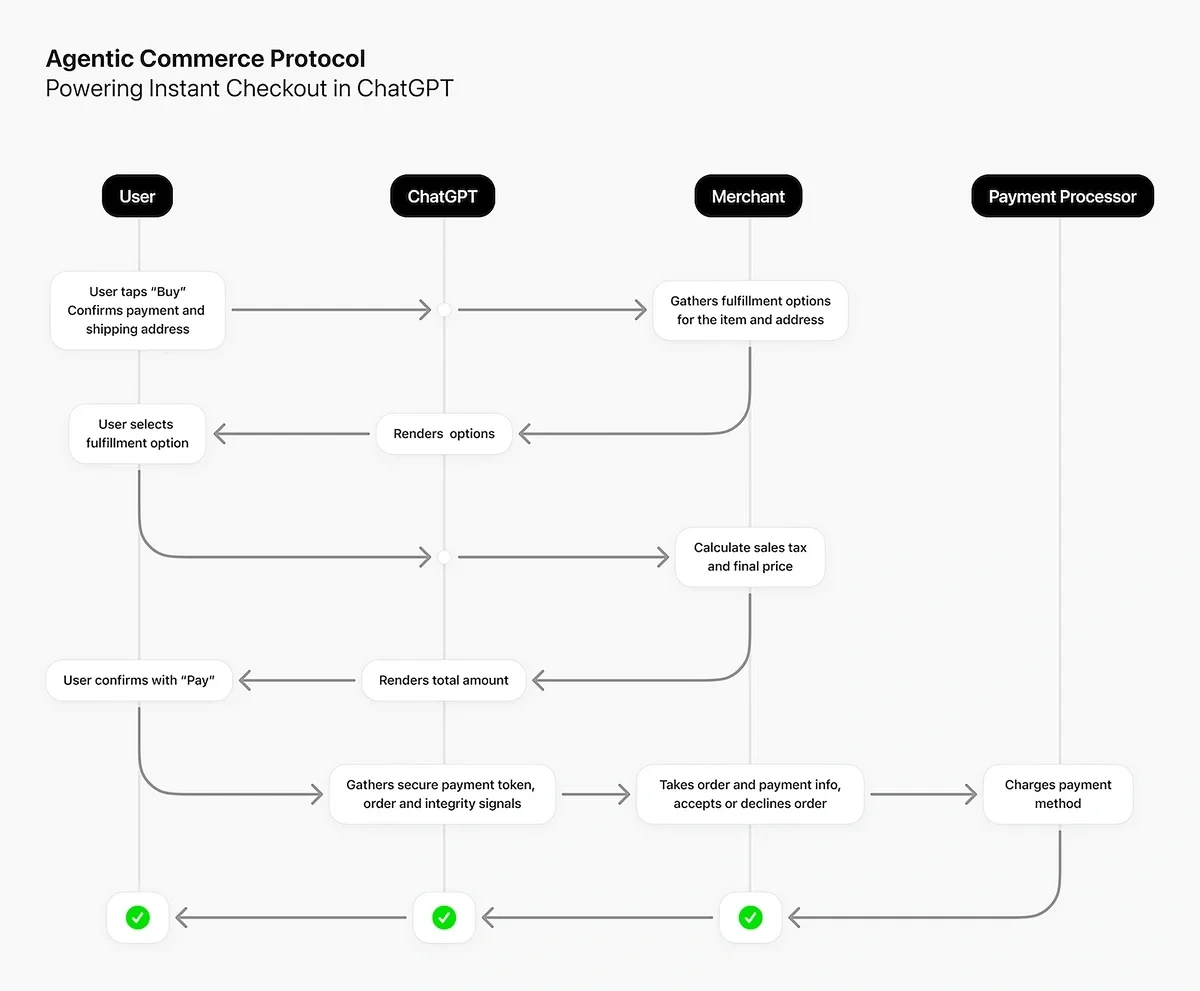
OpenAI may choose to return to that functionality in future. Or, because ACP is open-source, another AI company could decide to start supporting an Instant Checkout-like feature.
But for now, the bottom line is that ACP makes your products more discoverable within ChatGPT.
Optimizing for Agentic Commerce
The death of Instant Checkout does not mean you can afford to ignore AI shopping.
In fact, OpenAI's pivot means that AI optimization is more important than ever.
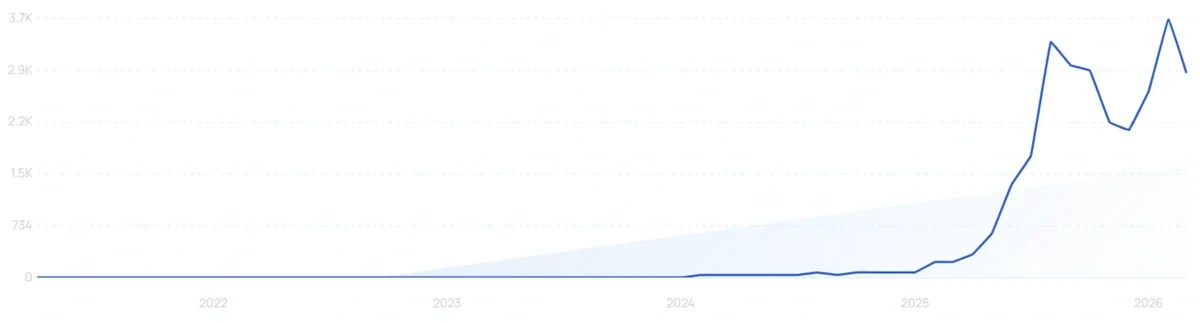
Just as you would optimize your e-commerce store to appear in Google, you can take steps to improve your visibility in tools like ChatGPT. It's a process also known as Generative Engine Optimization (GEO).
“Generative Engine Optimization” searches have risen by 7,800% in 2 years.
Clearly, OpenAI has come to the conclusion that enhanced product discovery is the main way in which consumers want to use AI to shop. So your e-commerce store needs to be doing everything to maximize its chances of appearing in AI answers.
When it opens up to everyone, one way of doing that will be to connect your store to ChatGPT via the ACP. (And once you are approved, OpenAI lists best practices for you to follow.)
But even if ChatGPT has your product catalog, you're still fighting for consumer attention, just like in traditional SEO.
Let's say a user asks an AI chatbot for “best running shoes under $100”. This is what’s known as a non-branded query: it does not mention a brand by name, but the results it returns will link to various brands.
Essentially, you need your brand to be getting name-checked when the user asks that question.
Semrush AI Visibility Toolkit allows you to track your AI visibility. You can see the specific prompts that lead to mentions for your brand across ChatGPT, Google AI Mode, and AI Overviews.
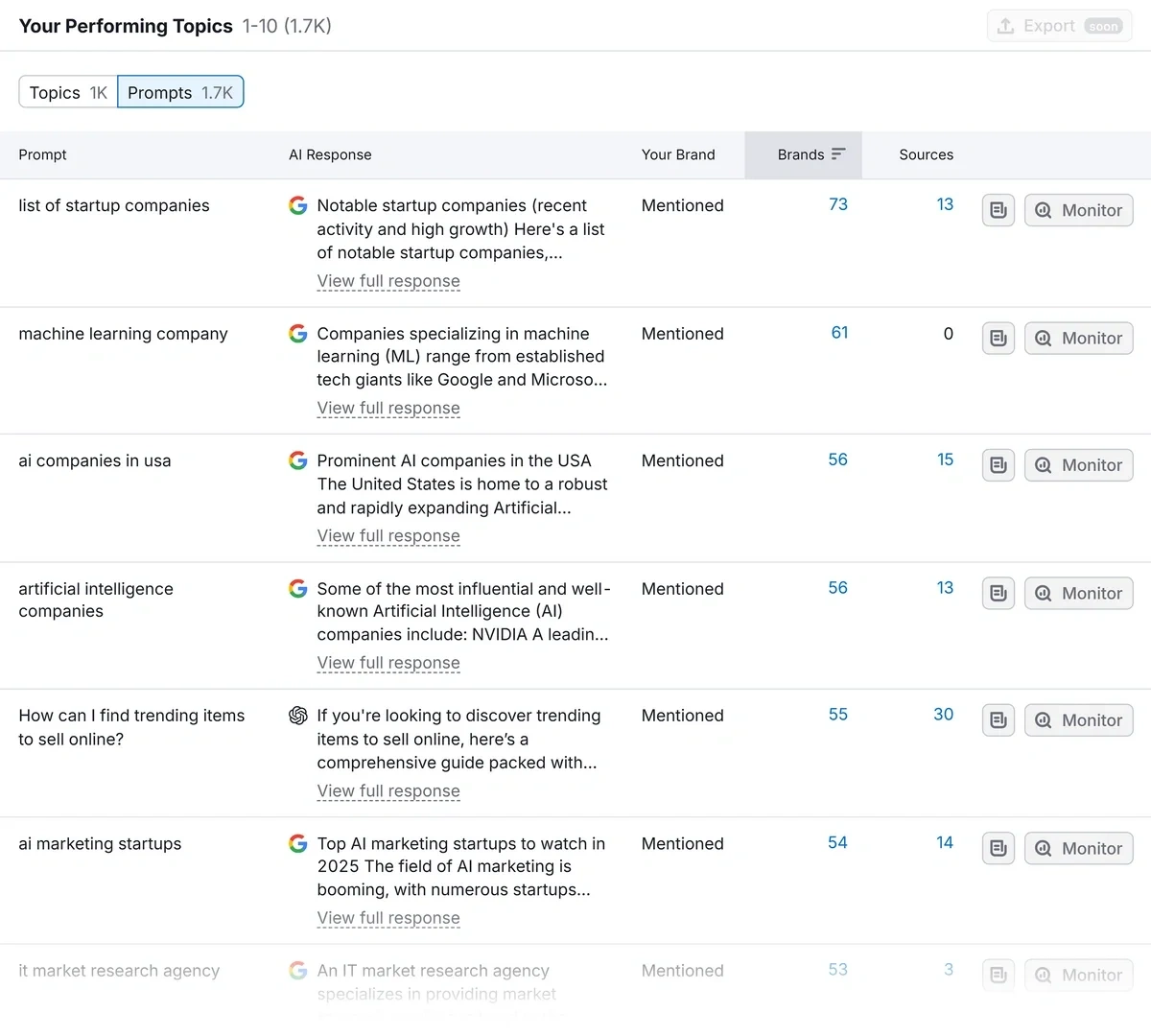
You can also conduct prompt research to see what questions users are asking AI about your products. And competitor research helps to surface any gaps in your AI visibility.
In an era of agentic commerce, a tool like this is invaluable. My colleague Osama’s guide to optimizing for AI shopping is a useful resource.
There's also now ChatGPT ads to think about. OpenAI has insisted that advertisers will not be able to influence AI responses, but featuring alongside high-intent user conversations is clearly premium real estate.
Other Agentic Commerce Tools
OpenAI has brought the term “agentic commerce” into popular use with the launch of its protocol. But ChatGPT is not the first chatbot to get shopping capabilities.
In fact, Perplexity arguably went on the same learning curve as ChatGPT months earlier.
Launched in November 2024, its premium Shop Like A Pro initiative brought in native checkout for retailers in the Perplexity Merchant Program (with the added benefit of free shipping, even when not offered by the merchant). But that appears to have been quietly replaced with an enhanced product discovery experience, available for free to all users.
Meanwhile, last September, Google announced its Agent Payments Protocol, AP2. Unlike Perplexity and ChatGPT, this does remain focused on actually making purchases with AI, not just improving the discovery process.
AP2 is a method of carrying out transactions led by AI agents. It’s designed to work across all payment methods, and big names from both retail (Etsy is involved here as well) and payment processing (PayPal, Revolut, Mastercard, etc.) have collaborated on the project.
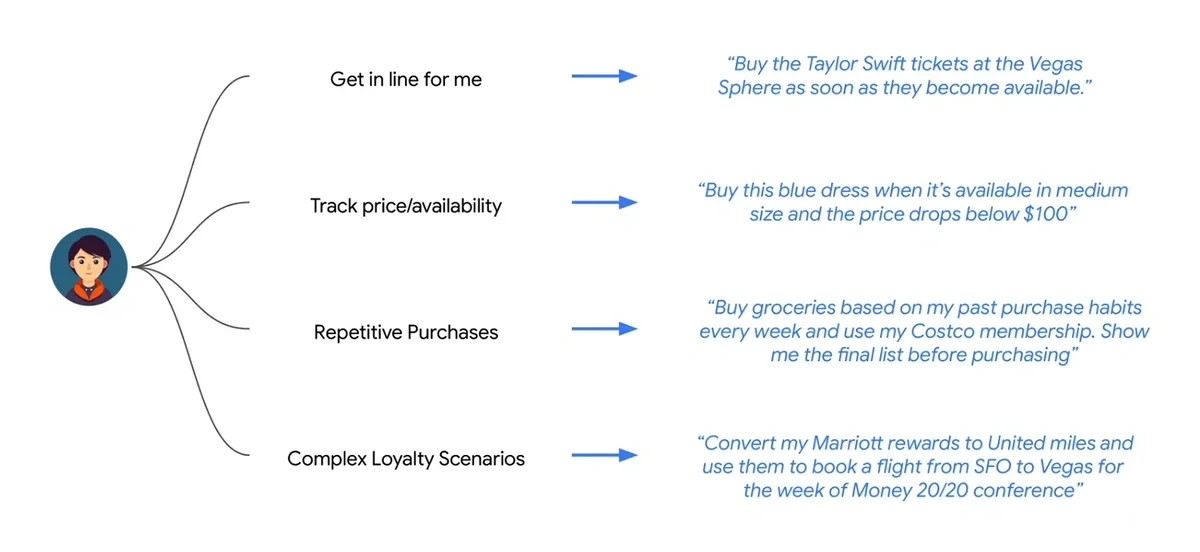
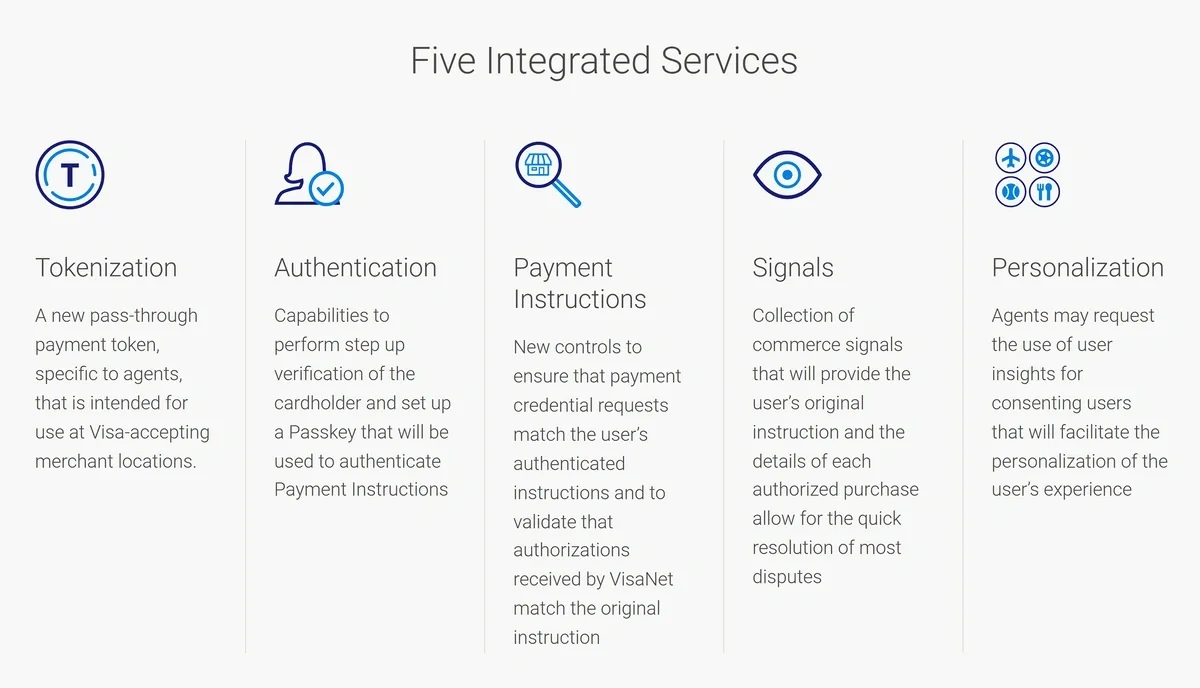
From the payment side of the ecosystem, Visa has launched Intelligent Commerce. Again, this is designed to facilitate secure payments from AI agents on behalf of users.
Unlike the others, Visa’s system is not payment-agnostic. But for merchants who accept Visa, Intelligent Commerce establishes a system of verification that allows agents to make pre-authorized payments.
This enables users to buy directly from chatbot interfaces, set up instructions for future payments (e.g. when tickets for a live event go on sale), and access more personalized experiences based on shopping history.
Most recently, Stripe has launched the Machine Payments Protocol. Any businesses already using Stripe can accept AI payments in just a few lines of code.
Regardless of which specific tools end up gaining widespread adoption, it’s clear that major players in both AI and e-commerce are convinced that agentic commerce is the future of retail. ChatGPT and Perplexity may have found only lukewarm consumer appetite for agent-led transactions, but there is nonetheless a rush to get the infrastructure in place for an even more AI-enabled future shopping landscape.
Build a winning strategy
Get a complete view of your competitors to anticipate trends and lead your market
You Can’t Ignore Agentic Commerce
It’s impossible to overstate the impact that the Agentic Commerce Protocol could have on e-commerce.
For now, it further cements AI agents as places for high-intent shoppers to research their purchases. In future, it could make AI tools like ChatGPT one-stop shops.
And even if consumers never fully embrace the idea of agent-led checkouts, a more seamless connection between merchants and AI chatbots still changes the retail landscape.
Optimizing for AI now will provide a massive first-mover advantage, while neglecting chatbots will mean getting left behind.
Sign up for Semrush to try out the AI Visibility Toolkit. It’s an elite tool for tracking when and why your e-commerce brand is being mentioned by chatbots, and providing actionable insights on how to improve your visibility.
Your customers are looking for product inspiration in ChatGPT. If you want them to be signposted to you, and not to your competitors, then the time to act is now.
Stop Guessing, Start Growing 🚀
Use real-time topic data to create content that resonates and brings results.
Exploding Topics is owned by Semrush. Our mission is to provide accurate data and expert insights on emerging trends. Unless otherwise noted, this page’s content was written by either an employee or a paid contractor of Semrush Inc.
Share
Newsletter Signup
By clicking “Subscribe” you agree to Semrush Privacy Policy and consent to Semrush using your contact data for newsletter purposes
Written By


James is a Journalist at Exploding Topics. After graduating from the University of Oxford with a degree in Law, he completed a... Read more