Exploding Topics
Remineralizing Gum search volume grew from under 100 to 27,100 monthly searches between February 2024 and January 2026.
Remineralizing gum
+5100%
GLP 1 Supplement search volume grew from 5,920 to 74,000 monthly searches between February 2024 and January 2026.
GLP 1 supplement
+1150%
Soursop Bitters search volume grew from 9,900 to 110,000 monthly searches between March 2024 and February 2026.
Soursop bitters
+1011%



Get Advanced Insights on Any Topic
Discover Trends 12+ Months Before Everyone Else
How We Find Trends Before They Take Off
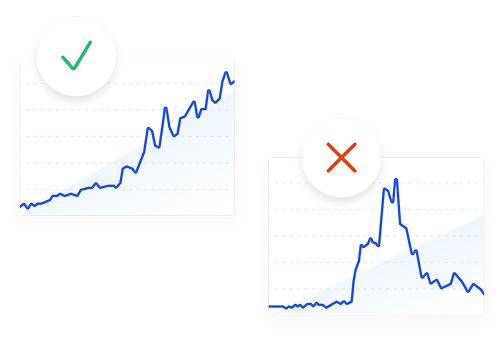
Exploding Topics’ advanced algorithm monitors millions of unstructured data points to spot trends early on.
Keyword Research
Performance Tracking
Competitor Intelligence
Fix Your Site’s SEO Issues in 30 Seconds
Find technical issues blocking search visibility. Get prioritized, actionable fixes in seconds.
Powered by data from
Latest Blog Posts
Featured Case Studies
See what's trending before everyone else
Each week, we'll send you our best Exploding Topics. Plus, expert insight and analysis.
How to Validate a Product Idea in 6 Steps

 Add Exploding Topics on GoogleAdd Exploding Topics as your preferred source to see more of our stories on Google.
So you’re sure you have a winning idea for a product that will fly off the shelves — but have you validated this concept with your audience?
In order to make your business successful, it’s important to validate product ideas before you invest time and money into research, development, prototypes, and production.
Build a winning strategy
Get a complete view of your competitors to anticipate trends and lead your market
What is Product Idea Validation?
Product idea validation is the process of making sure that your intended audience actually wants to buy and use the product you're considering selling.
While it's important to make sure that your audience is interested in buying products you source from another vendor, true product idea validation is essential when you're considering making a product to sell. This holds true whether you're planning a digital product or a physical one.
Why Should You Validate a Product Idea?
If you launch a product without validating it first, you may find that your sales are low or your target market simply prefers a competitor's product over yours.
How To Validate a Product Idea in 6 Steps
The first stage in a product validation process is to have a minimum viable product (MVP) and a target audience in mind. From there, you need to do the following six things:
- Conduct market research
- Identify audience interests and pain points
- Clarify what real problem your product solves
- Conduct a competitor analysis
- Assess product market fit
- Run tests
Let’s take a closer look at each of these tasks in turn and explore what the entire product idea validation process entails.
1. Conduct Market Validation Research
You must conduct market research when validating a product idea. Market research allows you to:
- Determine who your ideal customer is
- Evaluate whether your current target audience is a potential buyer for your idea
- Create buyer or user personas to guide your continued research and future marketing
There are a few different ways you can conduct market research. You can:
- Hire a market research firm to conduct qualitative and quantitative studies
- Create a survey and paying for distribution through a service like SurveyMonkey Audience
- Have conversations with your existing audience
- Explore current and projected future product trends in your industry
- Research how well similar products sell (the Exploding Topics Trending Products report is helpful in this regard)
- Analyze social media activity using a social listening tool
- Evaluate competitors in your industry using a tool like Semrush
2. Identify Audience Interests and Pain Points
As you gather research data, you'll want to look for specific audience interests and pain points. The trick is to look for common interests and complaints, not outlier opinions expressed by just one or two people.
If you have the ability to hold conversations with your current and potential customers, do so. These conversations will be very useful as you keep building out your plan. (It's OK if you need to outsource those conversations to a market research firm or consultant — founders and marketers can't do everything on their own!)
You can also gather anonymized data from a larger pool of people using social listening tools and trend spotting platforms like Exploding Topics. By pairing product trend data with real user interviews, you can see how pain points and topics of interest might fluctuate over time based on seasonality and other factors.
Let’s say I want to launch a modular ”weekender bag” that people can add and remove components on to use as a travel bag, diaper bag, work bag, and more. By using Exploding Topics, I can see that searches for weekender bag have high seasonality.
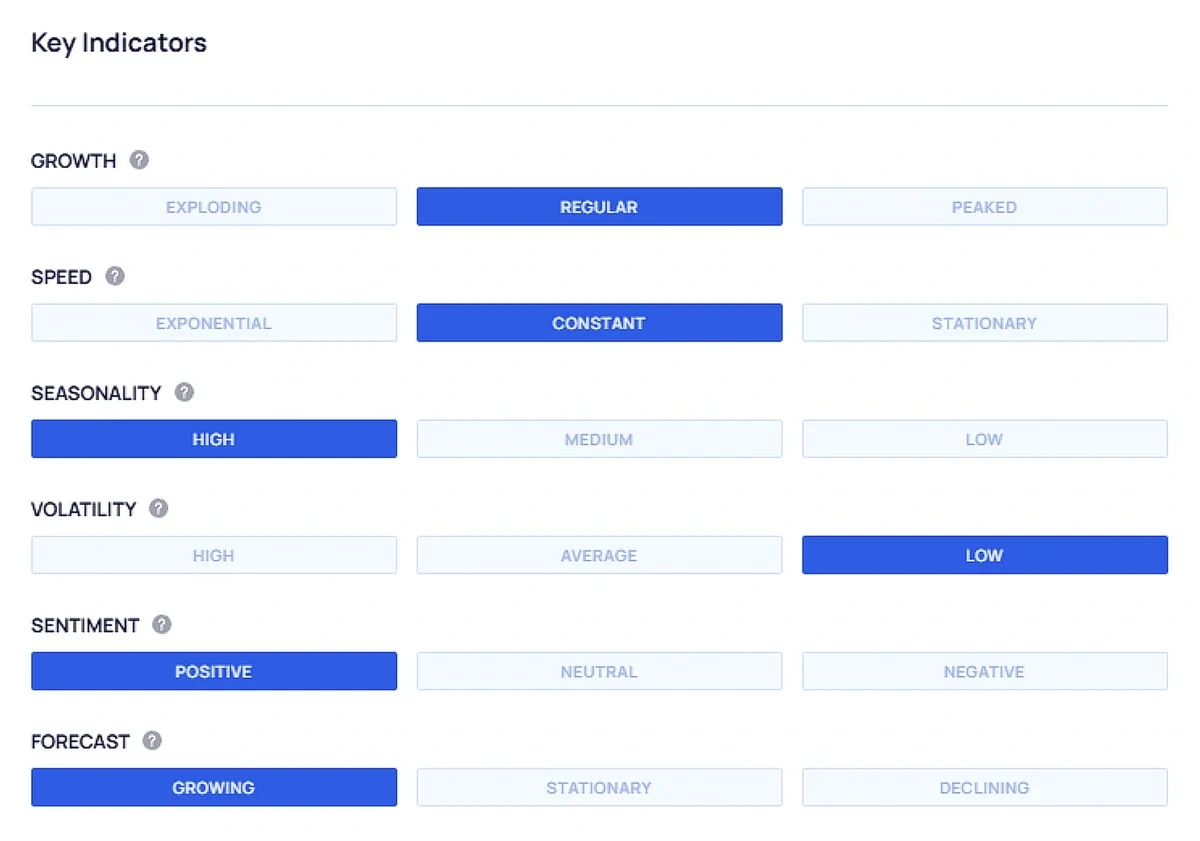
If I talk to my target customer base during a low season, I might think there’s less interest in my product than there would be if I talked to them during a peak travel season.
3. Clarify What Problem Your Product Solves
Market research will help you establish what pain points and desires your audience has — but you can’t solve every single problem or need. It’s important to clarify what specific problems your product will solve, or what gaps in the market you’ll fill. For example, using the luggage idea, I might say my weekender bag could:
- Serve the needs of minimalist travelers who don’t want to acquire a series of different bags for different activities
- Act as a one-bag solution for new parents frustrated with the design of diaper bags currently on the market
I could then use one of directions as a starting point for:
- Competitor analysis
- Further market research
- Product prototype design
- Pricing analysis
- Marketing strategy
4. Conduct a Competitor Analysis
As soon as you know exactly what you want your product to be, who it’ll serve, and what problems it will solve, you can move to the competitor analysis stage of validation. You’ll need to:
- Figure out who your primary competitors are in terms of both product offered and audience served
- Identify how closely your product’s features overlap with existing items on the market
- Establish how you can position your product as a better alternative than the competition, either through quality, price, or usability
When conducting your research, be sure to collect data on potential competitors’:
- Sales channels
- Marketing tactics
- Product lines
- Price points
- Messaging
- Warranties and guarantees
If you can offer a better product, price, terms, features, or support, you may have a real shot at becoming a serious player in your new market.
Want to Beat Your Competition?
Find out who’s linking to them and build a better backlink strategy.
5. Assess Product Market Fit
Of course, it’s not enough to say “competitor X is selling a similar product, I can sell mine for $100 more with better fabrics.” You’ll need to carefully assess product market fit to ensure that your audience will want to pay the price you set for your product. Once again, this entails research like:
- Evaluating the structure and features of competitors’ top selling products
- Running another survey to get clear details about what customers prioritize when shopping for new products
6. Run tests
Test your product and associated materials as you reach the final stages of your planning and validation process. For software and digital products, this can take the form of beta testing. For physical products, you’ll need to produce a small batch or set of prototypes to test and evaluate.
Various tests can include:
- User experience testing
- Product durability testing
- A/B tests of marketing messages and sales pages
- Interviews with potential buyers of physical products
3 Tools You Need For Successful Product Idea Validation
Product idea validation is a time-and-data intensive process. And unless you already have a very large existing customer base or following online, it might be impossible to do every validation phase yourself. Luckily, there are a variety of tools and services that you can use to make your research easier.
1. A Market Trend Tracking and Research Tool
A good trend tracking tool will make spotting emerging, declining, and seasonal trends much easier. Having a good understanding of how audiences’ interest in specific things shifts over time will be helpful. You’ll have the data you need to make profitable decisions — not waste time trying to launch products at the wrong time.
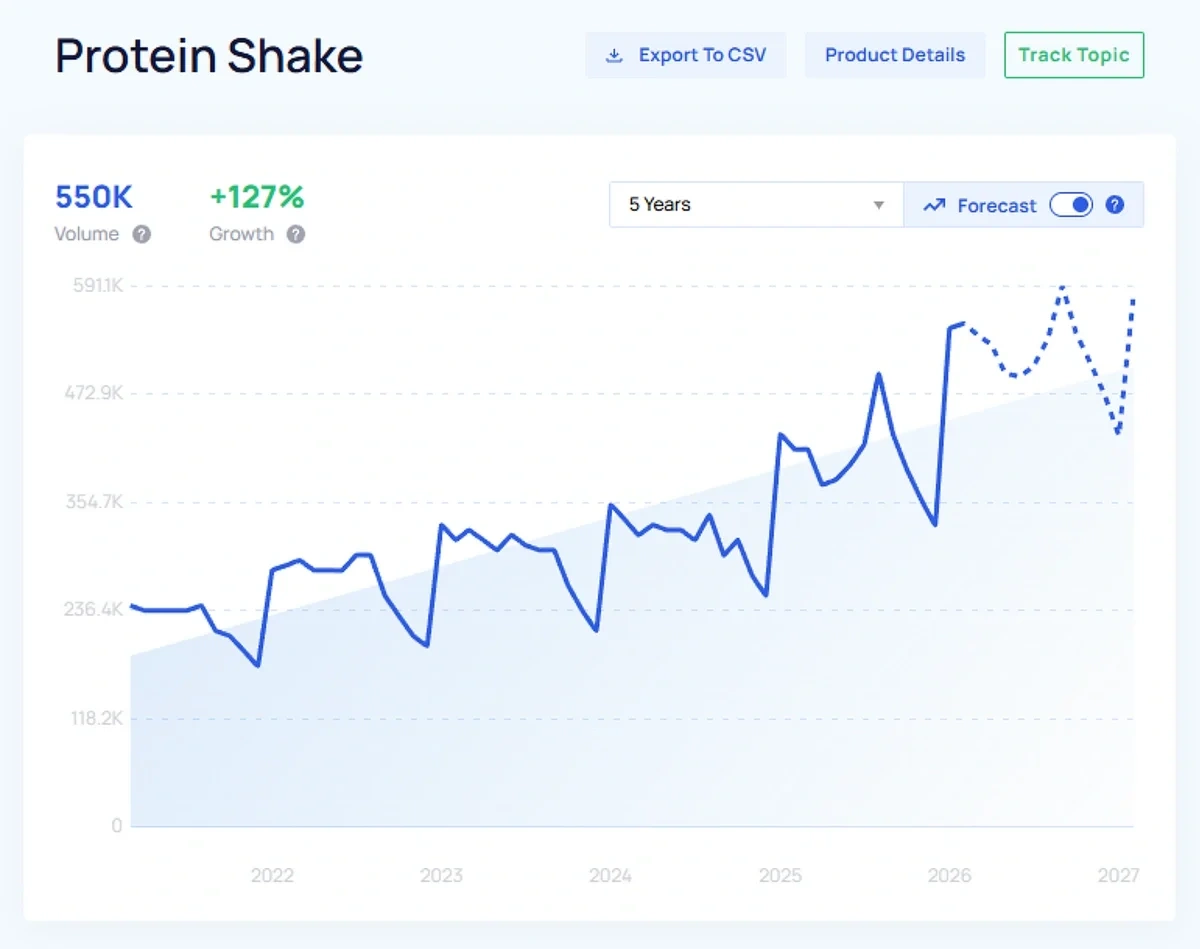
I like Exploding Topics for this purpose, as do many of the founders and entrepreneurs I’ve talked to over the past year. For instance, MNML Laundry founder Nicole Short specifically cites Exploding Topics as a useful trend validation tool.
I like Exploding Topics because it makes it simple to:
- See the top trends in an industry
- Look up specific topics and trends on demand
- Evaluate how trends connect to each other with the Meta Trends tool
- Read trend reports (they land in your inbox every week!)
- Explore potential competitors with the Trending Startups report
- Assess reviews, pricing, and more using the Trending Products report
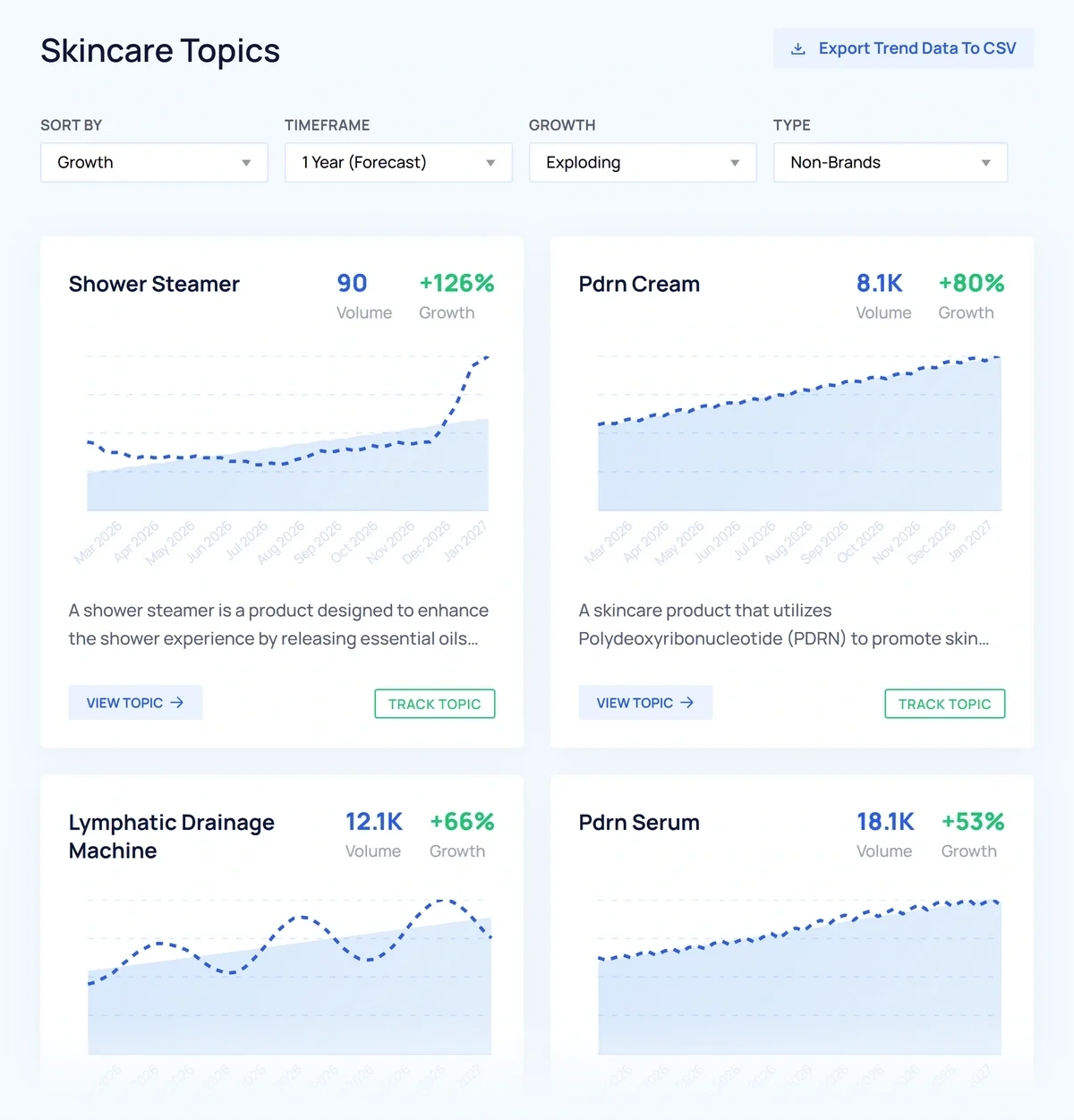
- View one-year trend forecasts to get a sense of how interest in a product or topic will fluctuate going forward
- Connect to AI and create a trend validation agent
2. An SEO and Competitor Analysis Tool
While Exploding Topics does include information about the popularity of select brands and startups, it’s also helpful to have a reliable competitor analysis tool on hand.
I use Semrush One for all of my competitor analysis research, as it lets me:
- See how much traffic a competitor’s site gets
- Evaluate the most popular search terms related to my idea
- Analyze other brands’ social media accounts
- Find media mentions related to my brand, competitors, or product
- Identify media contacts and other websites that can help to promote my product launch
Want to Spy on Your Competition?
Explore competitors’ website traffic stats, discover growth points, and expand your market share.
3. A Survey Tool
Finally, while you can decide to launch a product after researching trends and the competitive landscape on your own, it’s a good idea to have a survey tool on hand too. Polling tools are helpful whether you choose to create a survey and send it to your existing audience or reach out to new groups of people.
I like using SurveyMonkey for basic polls, whether I distribute them myself or use the platform's paid survey distribution tool. But there are other great options available at different price points, too, including Qualtrics, Respondent, and Jotform.
My suggestion for validating your product idea quickly, easily, and within budget? Use Exploding Topics to conduct your initial market research, dig deep into competitors with Semrush, and gather data from your existing audience using a SurveyMonkey or Jotform poll. You can start putting your research in motion right now with a free seven-day trial of Exploding Topics and an extended Semrush One trial — grab our exclusive coupon code to get started.
Stop Guessing, Start Growing 🚀
Use real-time topic data to create content that resonates and brings results.
Exploding Topics is owned by Semrush. Our mission is to provide accurate data and expert insights on emerging trends. Unless otherwise noted, this page’s content was written by either an employee or a paid contractor of Semrush Inc.
Share
Newsletter Signup
By clicking “Subscribe” you agree to Semrush Privacy Policy and consent to Semrush using your contact data for newsletter purposes
Written By


Emily is a freelance content writer at Exploding Topics. A former news correspondent, she has over 15 years' experience creati... Read more