Exploding Topics
Remineralizing Gum search volume grew from under 100 to 27,100 monthly searches between February 2024 and January 2026.
Remineralizing gum
+5100%
GLP 1 Supplement search volume grew from 5,920 to 74,000 monthly searches between February 2024 and January 2026.
GLP 1 supplement
+1150%
Soursop Bitters search volume grew from 9,900 to 110,000 monthly searches between March 2024 and February 2026.
Soursop bitters
+1011%



Get Advanced Insights on Any Topic
Discover Trends 12+ Months Before Everyone Else
How We Find Trends Before They Take Off
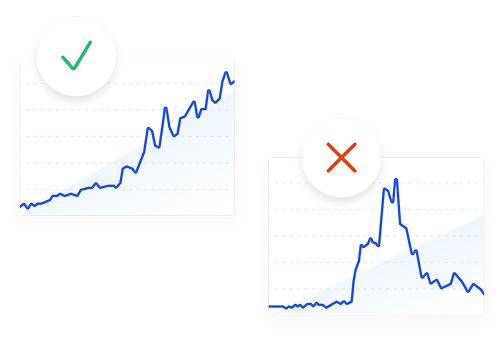
Exploding Topics’ advanced algorithm monitors millions of unstructured data points to spot trends early on.
Keyword Research
Performance Tracking
Competitor Intelligence
Fix Your Site’s SEO Issues in 30 Seconds
Find technical issues blocking search visibility. Get prioritized, actionable fixes in seconds.
Powered by data from
Latest Blog Posts
Featured Case Studies
See what's trending before everyone else
Each week, we'll send you our best Exploding Topics. Plus, expert insight and analysis.
How to Find Profitable E-Commerce Niches for 2026

 Add Exploding Topics on GoogleAdd Exploding Topics as your preferred source to see more of our stories on Google.
Starting an e-commerce store is easy. Starting a profitable e-commerce store takes preparation, research, and careful selection of a good e-commerce niche.
This guide breaks down what you need to know about e-commerce niches, trends, and more, including the tools that will help you do and sell more in your new business.
Understanding E-Commerce Trends
E-commerce trends change based on a variety of factors including:
- Upcoming holidays
- Season and temperature
- The start or end of a school year
- Movie releases
- Viral challenges
These trends can vary widely between regions and demographics, too. This makes it hard to keep your finger on the pulse of exactly what’s popular (and what’s about to be the next big thing).
A reliable trend spotting tool is incredibly helpful, especially if it includes e-commerce product data. For example, if I want to know what the most popular beauty products are right now, I don’t have to spend time scrolling TikTok or read a stack of retail store sales reports. I can simply open up Exploding Topics and do two things:
1. Check the Trends Database related to my industry niche or vertical of interest and browse all exploding trends.
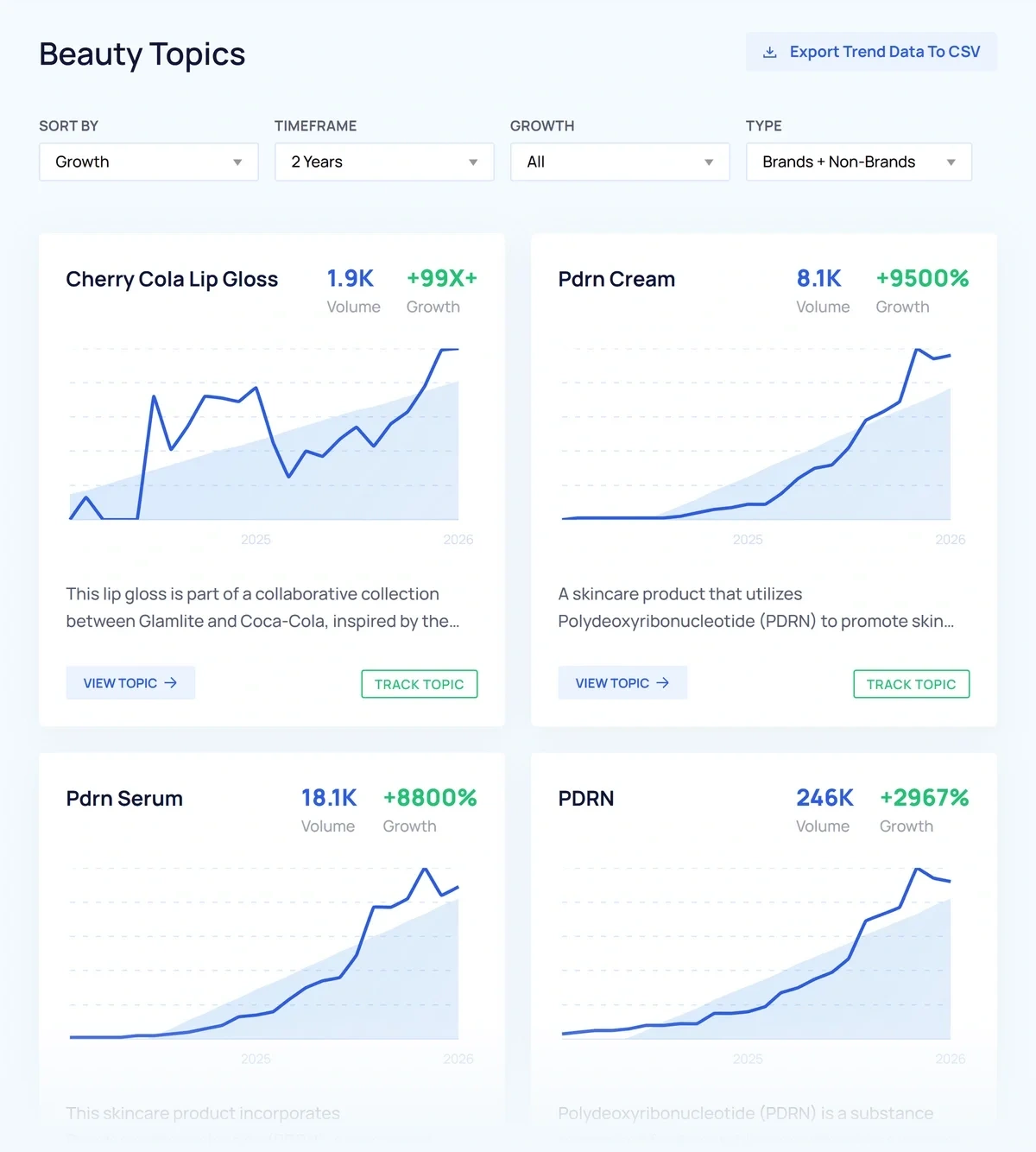
I've focused on beauty here. But you can browse over 50 categories and sub-categories. (See how furniture company 2Modern uses the trends database to augment its inventory decisions.)
2. Filter the Trending Products report to focus on my industry and review what’s currently in high demand.
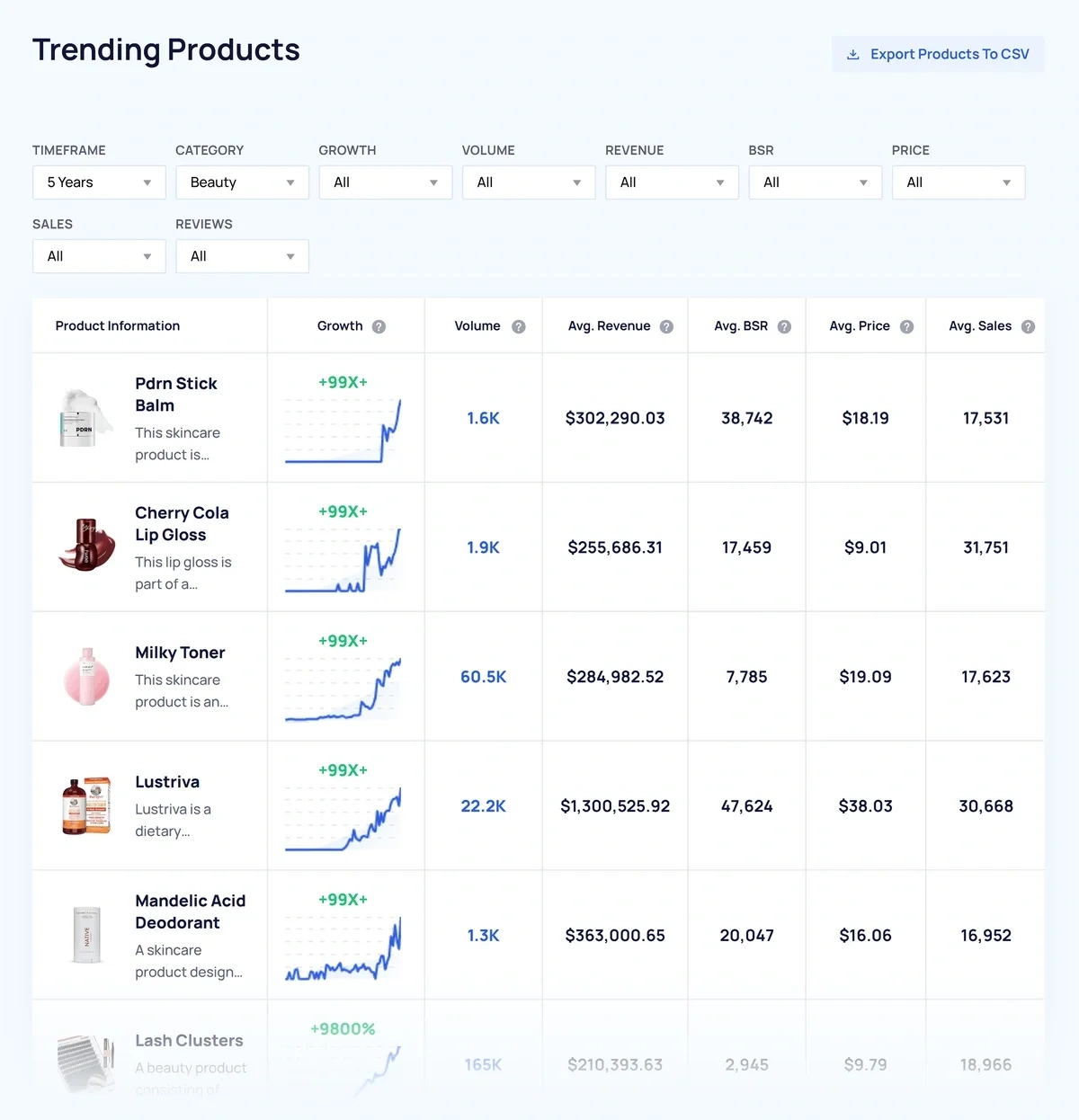
From there, I can do deeper trend analysis and view Meta Trends reports to get a better understanding of the current beauty product landscape.
But these simple steps only work if I already have an e-commerce niche to focus on.
What is an E-Commerce Niche?
An e-commerce niche is a narrow section of a market, typically focusing on providing a very specific type of products to customers.
Simply creating an e-commerce business around “health and wellness” or “beauty” isn’t a true niche; these are both very broad categories. For example, there are multiple niches that can fall under each of these areas, including:
- Natural skincare
- Mushroom supplements
- Skincare tools
- Sustainable cleaning products
- Home fitness equipment
Tip: Trend spotting tools are a great way to explore different niches and to perform E-commerce niche validation. You can start exploring possible niches in your own industry for free using Exploding Topics.
Why Do E-Commerce Businesses Need a Niche?
At first, it may seem appealing to sell a wide range of products — after all, the more you offer, the more potential customers you can reach, right?
Not exactly. If you sell lots of products in your online store, you can run the risk of diluting your focus and messaging too much. You also may find yourself overwhelmed by the sheer number of marketing tasks you have to do or ads you have to run.
Focusing in on a specific niche (and applying E-commerce SEO best practices) is a great way to find and target a very clear audience that’s ready to buy. You can also streamline your products to ensure you’re selling the best that money can buy … then gradually expand into a new niche when it makes sense.
What are Good E-Commerce Niches For Beginners?
First-time online business owners should focus on niches that don’t require a proprietor to store or ship inventory. Good beginner niches include:
- Digital products for teachers
- Printable bridal shower games
- Digital planners for iPads
- Personalized products (drop-shipped to buyers)
- Print-on-demand books and gifts
Luckily, it’s easy to find a good e-commerce niche whether you’re a beginner or a longtime online sales expert.
How to Identify a Profitable E-Commerce Niche in 6 Steps
You don’t have to run an in-depth market research survey to determine what niche to focus on — you can figure this out yourself using some affordable online tools and a little investigative work.
1. Look at What’s Trending on Amazon
There’s no need to actually sell your products on Amazon, but the platform is a great indicator of market trends. (Amazon results can shift based on your account history, so be sure to do your research while logged out.) Take note of what the top sellers are in different categories and how much similar products are selling for.
You can also gather this data through tools like Jungle Scout and Exploding Topics. I find Exploding Topics to be the better choice for beginners, as Jungle Scout includes a lot of features to help you optimize an Amazon storefront. Jungle Scout is a great tool to use if you do wind up selling on Amazon, but it can be a bit overwhelming when conducting initial research.
The Exploding Topics Trending Products report shows you the average Amazon reviews and price for the top items in every industry. You can see trend graphs in the same view, too, making it easy to pinpoint the products that are and will be in high demand.
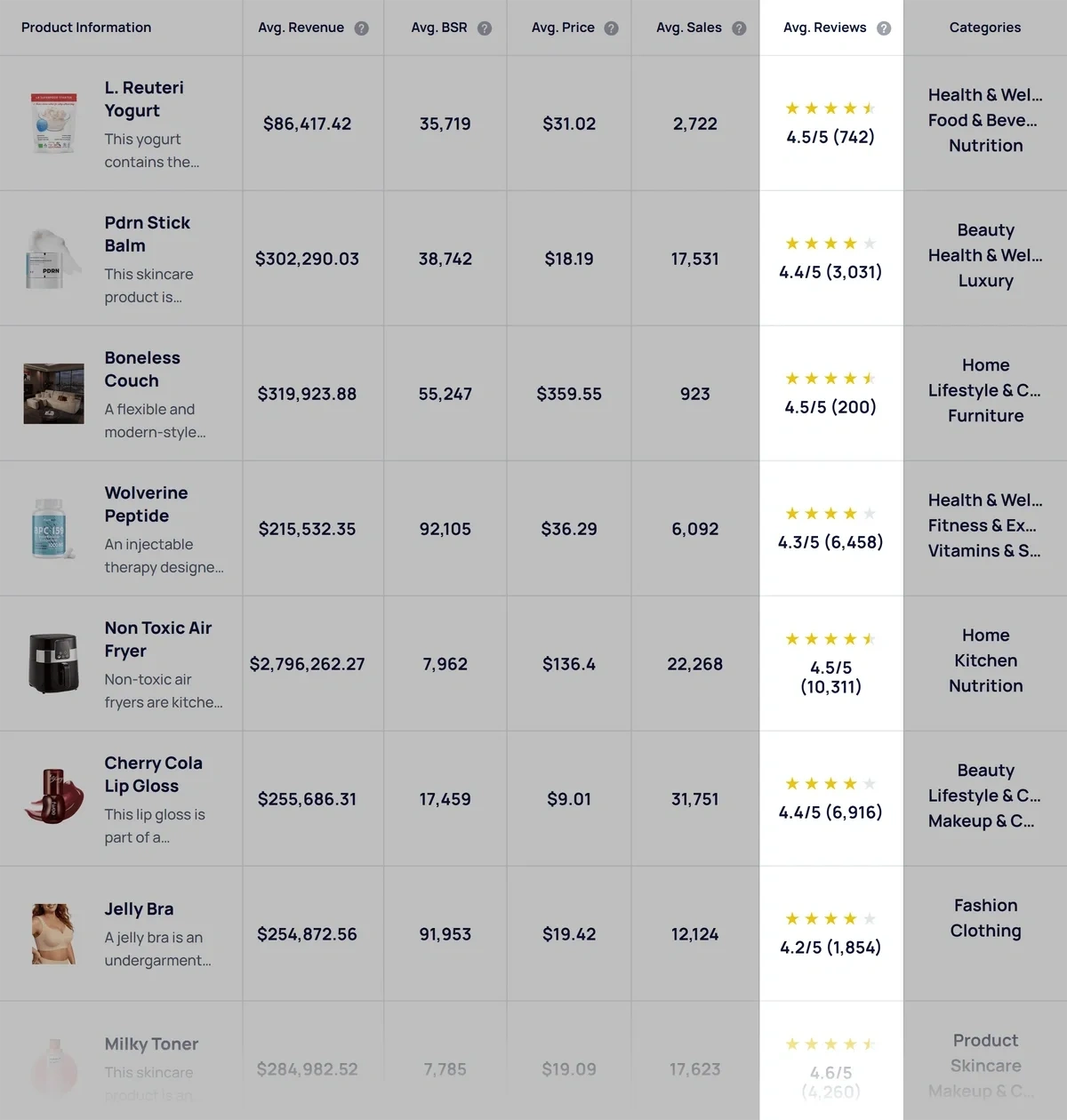
Tip: Google Trends is another free resource for spotting growing interest in a type of product or industry. It's not Amazon-focused, and only shows you broad trend data (not specific prices), but it's useful when you really don't know where to start your research.
2. Research Trending Products
After using the Trending Products report to pick out a group of items you're interested in, you can begin doing further research to narrow down the products with high potential.
Let's say I identified "lip gloss charms" as a possible product after reviewing all trending goods. I'd want to click through to the trend detail page to learn more about:
- What the trend is
- How many searches are made for the trend every month
- How much search growth this trend has seen
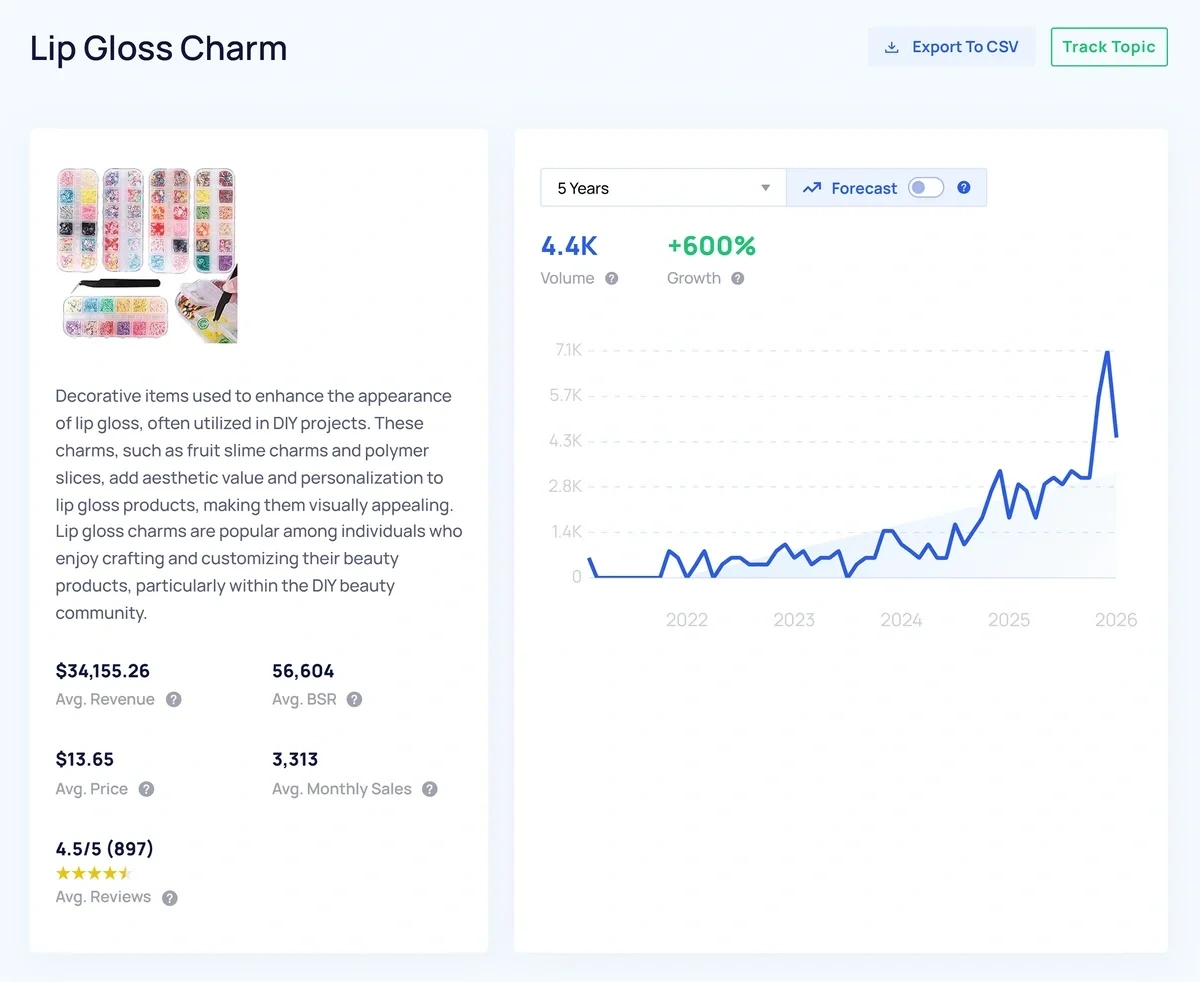
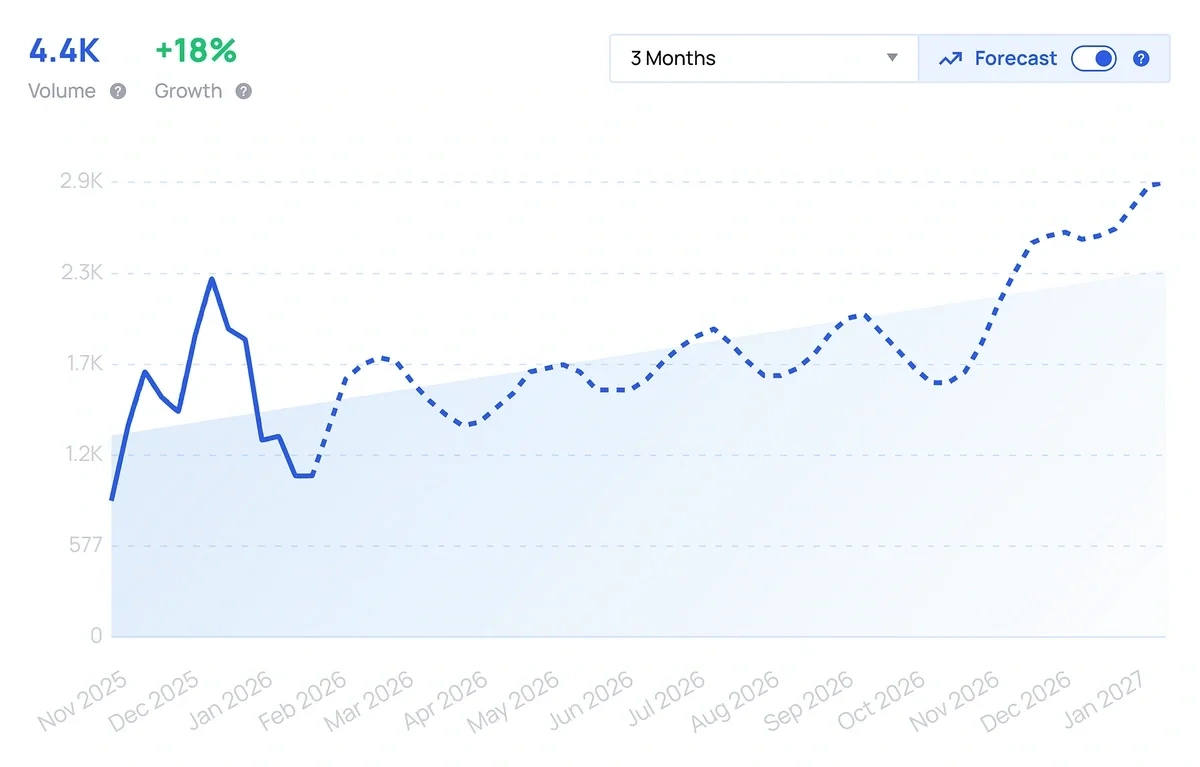
But looking at the past and current trend data isn't always enough. If I'm planning to launch a new e-commerce shop, then I want to be sure that my inventory is going to still be popular later this year.
Exploding Topics makes this easy to see — all I have to do is toggle on the "forecast" button above any trend graph. By doing this, I can now see that interest in lip gloss charms is likely to maintain quite the same level of popularity through the next year.
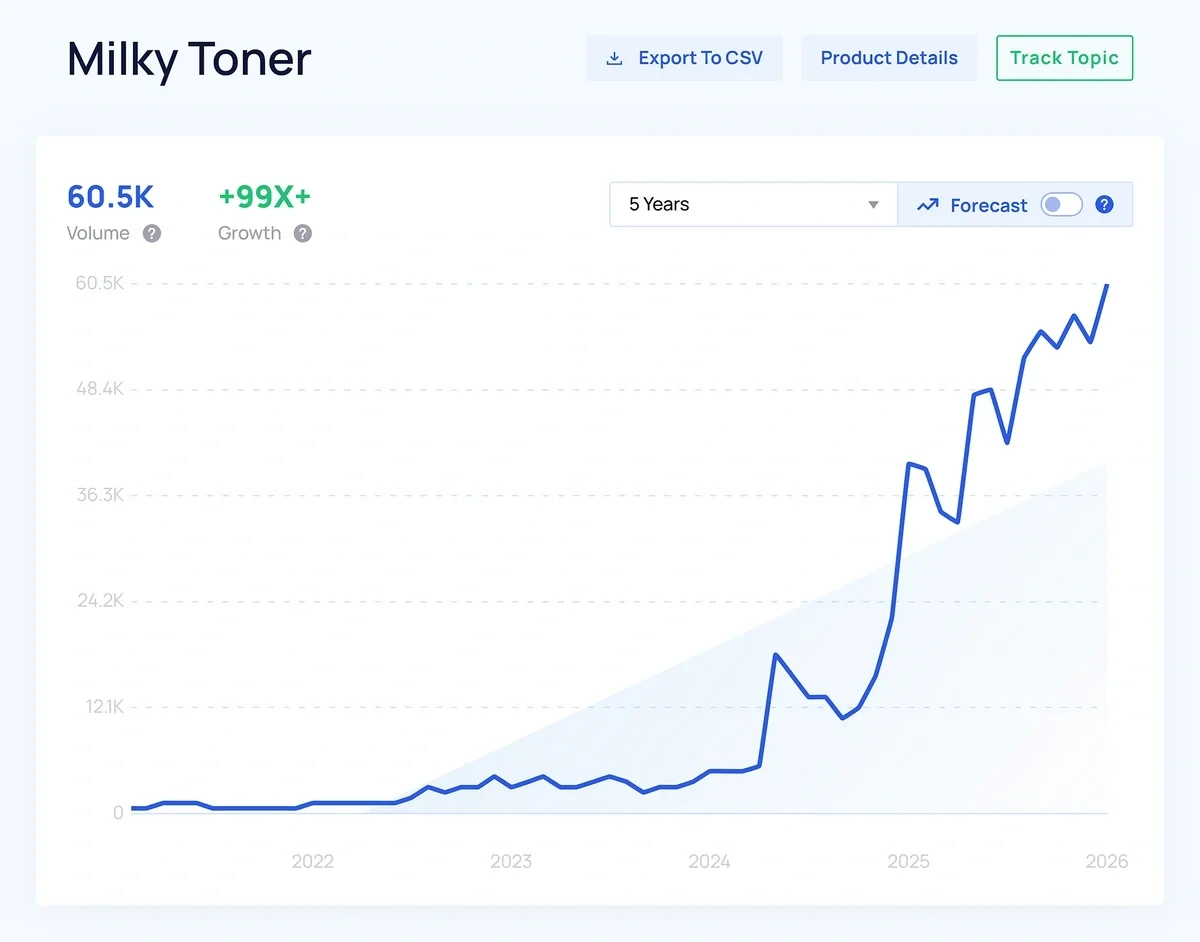
If I look deeper at another trending product, milky toner, I can see that it's also experiencing high growth right now.
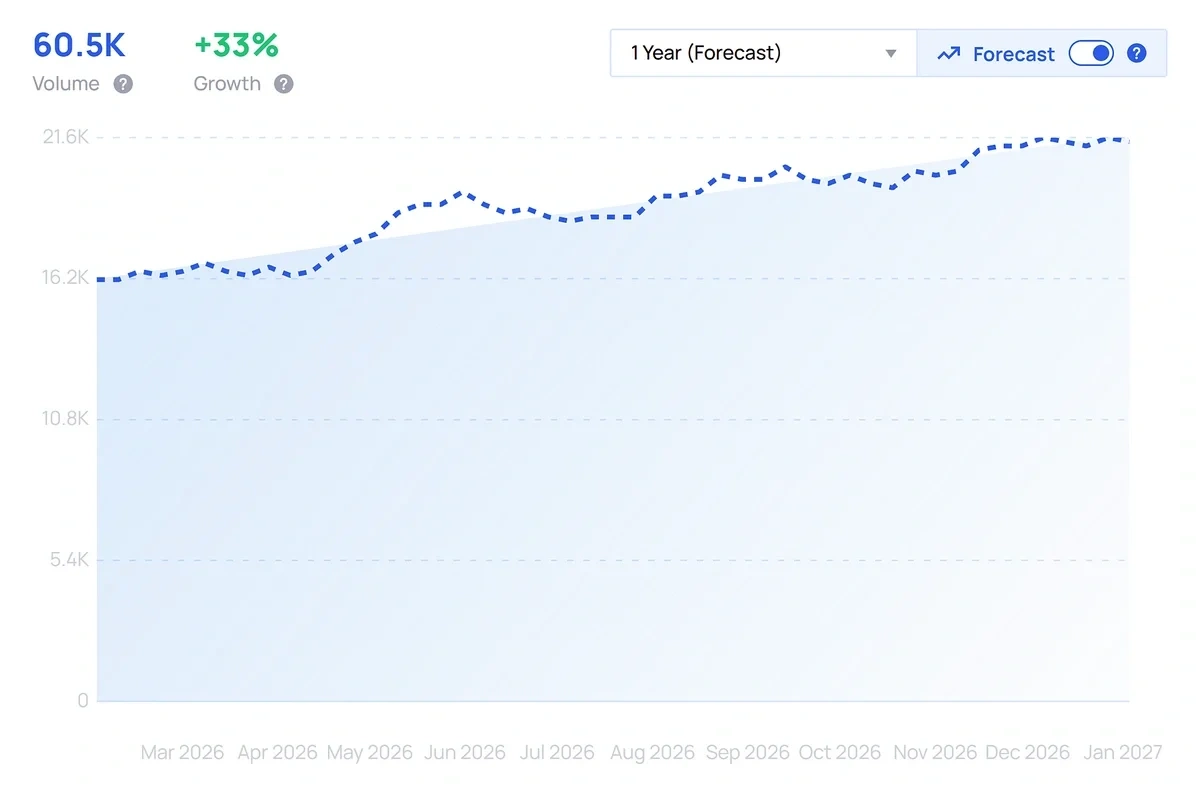
But this time, toggling on the forecast shows me that I can expect a continued 33% growth in interest around milky toner. This is invaluable information for E-commerce demand forecasting.
By clicking on the "top sellers" tab on a product detail page, I can see similar products and what they're currently selling for on Amazon.
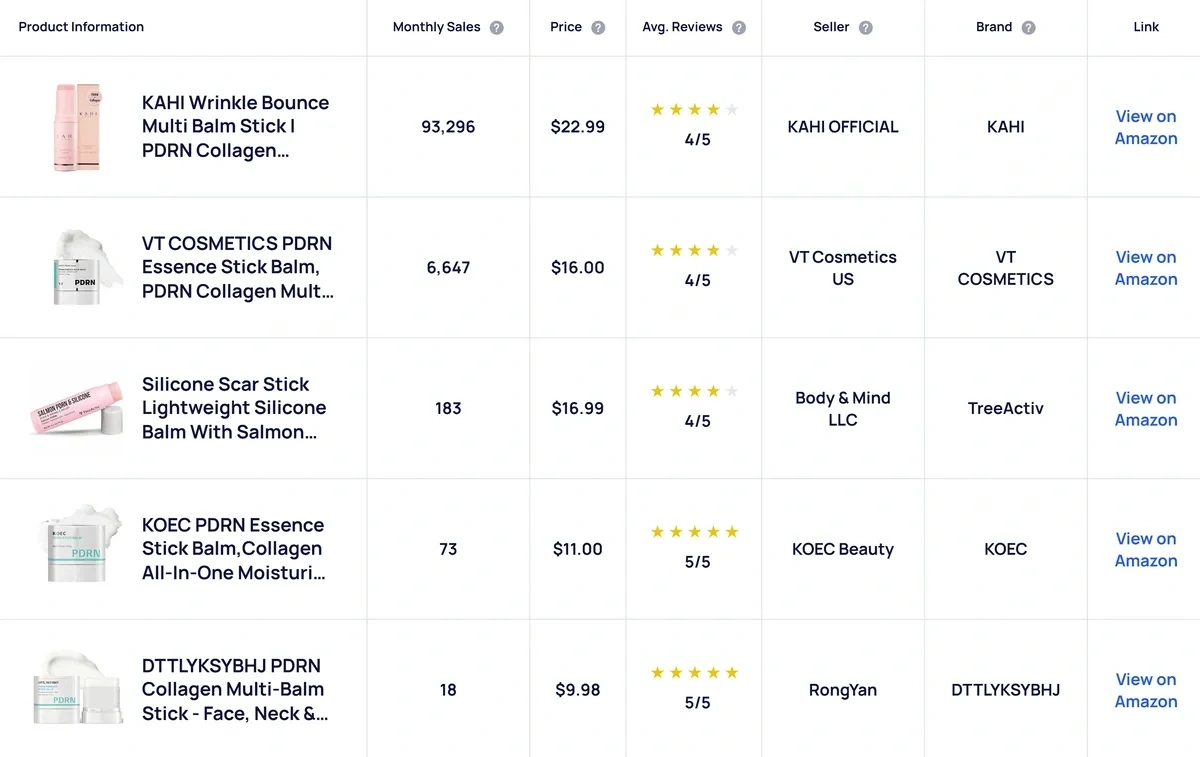
I now know that milky toner is expected to grow in popularity, it's usually selling for more than $10 a bottle, and products in this category are well-reviewed on Amazon. And by reading the milky toner product description in Exploding Topics, I can learn that this product falls within the realm of strengthening and rejuvenating skincare.
You can even automate much of this process using the Exploding Topics API. It's one a number of E-commerce APIs that can make it easier to find and take advantage of profitable niches.
3. Group Products and Narrow Your Focus
After looking at product detail pages, I'll have a better idea of what items are likely to spike in popularity over the coming year — these are the items I can use to guide my niche decision.
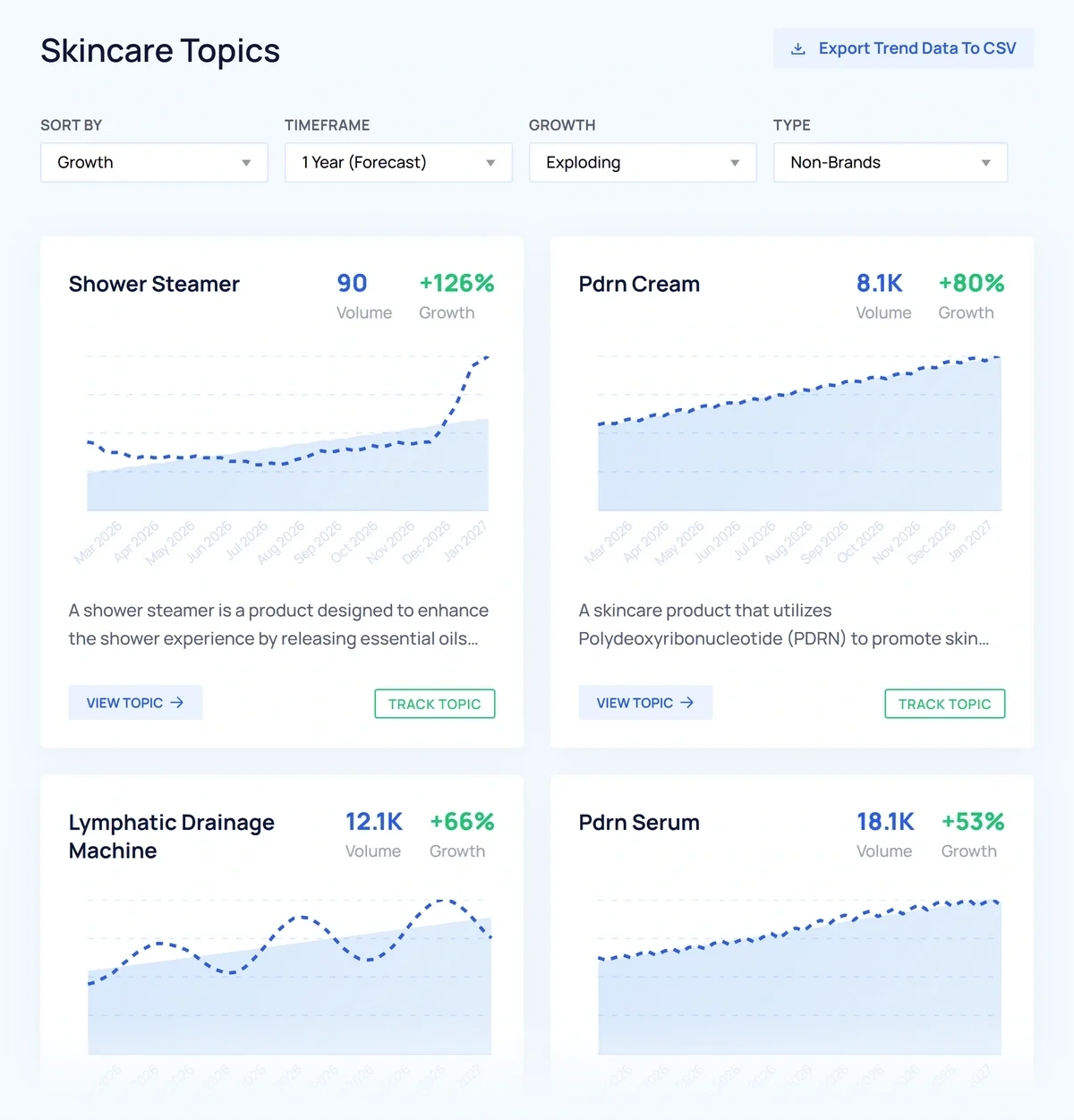
My exploration around "milky toner" sparked my interest in skincare that's promoted as supporting the skin barrier. I want to see what other kinds of trends are happening that might be related to this, so I'm going to explore skincare trends in the Trend Database.
Filtering the entire skincare topics database by timeframe (one year) and type (non-brands) makes it easy for me to see expected future growth for trends in this category.
4. Explore More Products Related to a Niche
By scrolling through the database, I can see that there are several trending topics and product categories related to strengthening and improving one's skin, including:
- PDRN cream (136% expected growth)
- Peptide toner (40% expected growth)
- Multi balm (20% expected growth)
- Overnight masks (20% expected growth)
This gives me a great starting point for going back to the Trending Products report and continuing my research. Through the products report, I can find brands and Amazon listings that are selling specific products related to PDRN cream, peptide toners, skin balms, and masks.
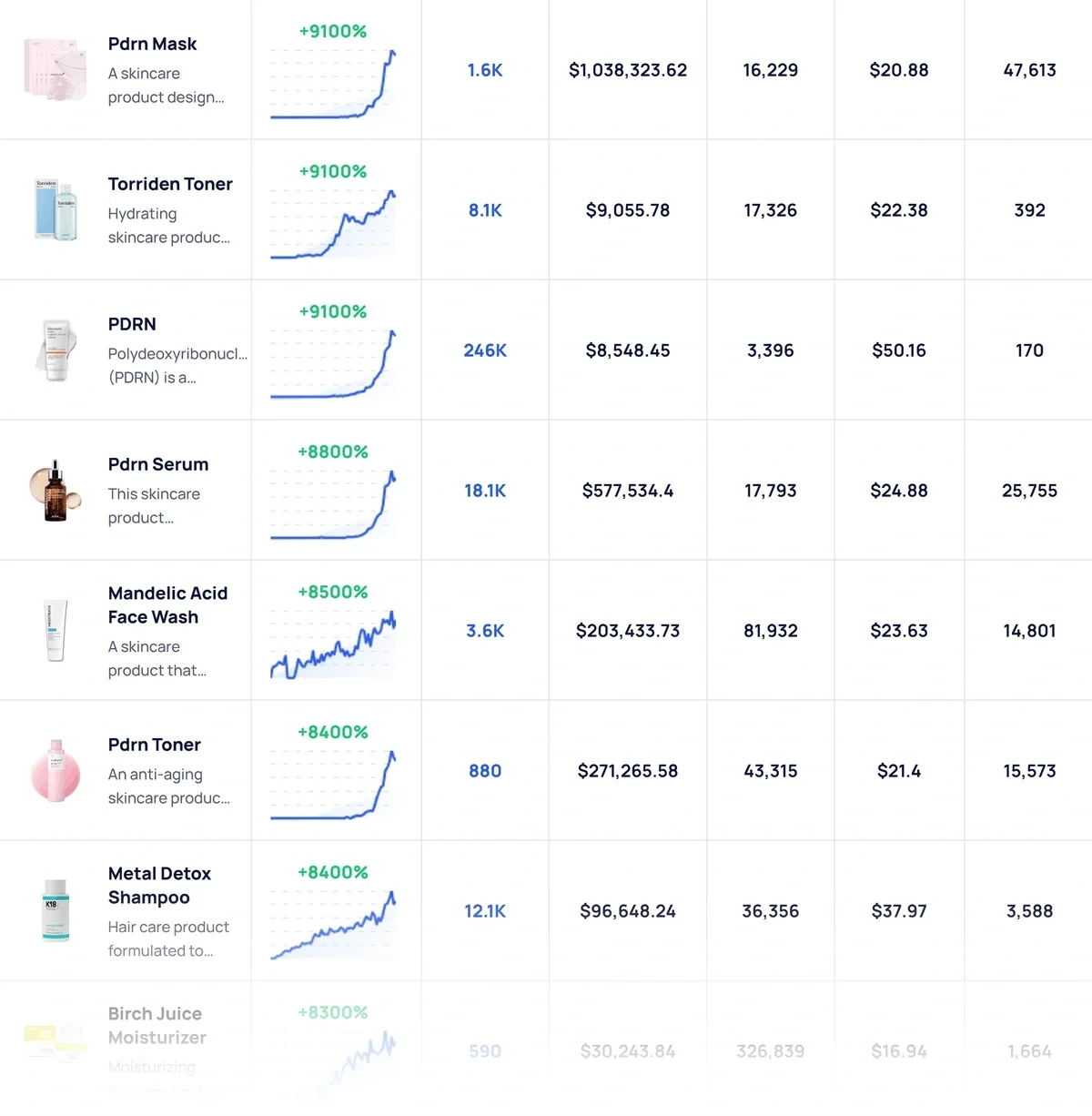
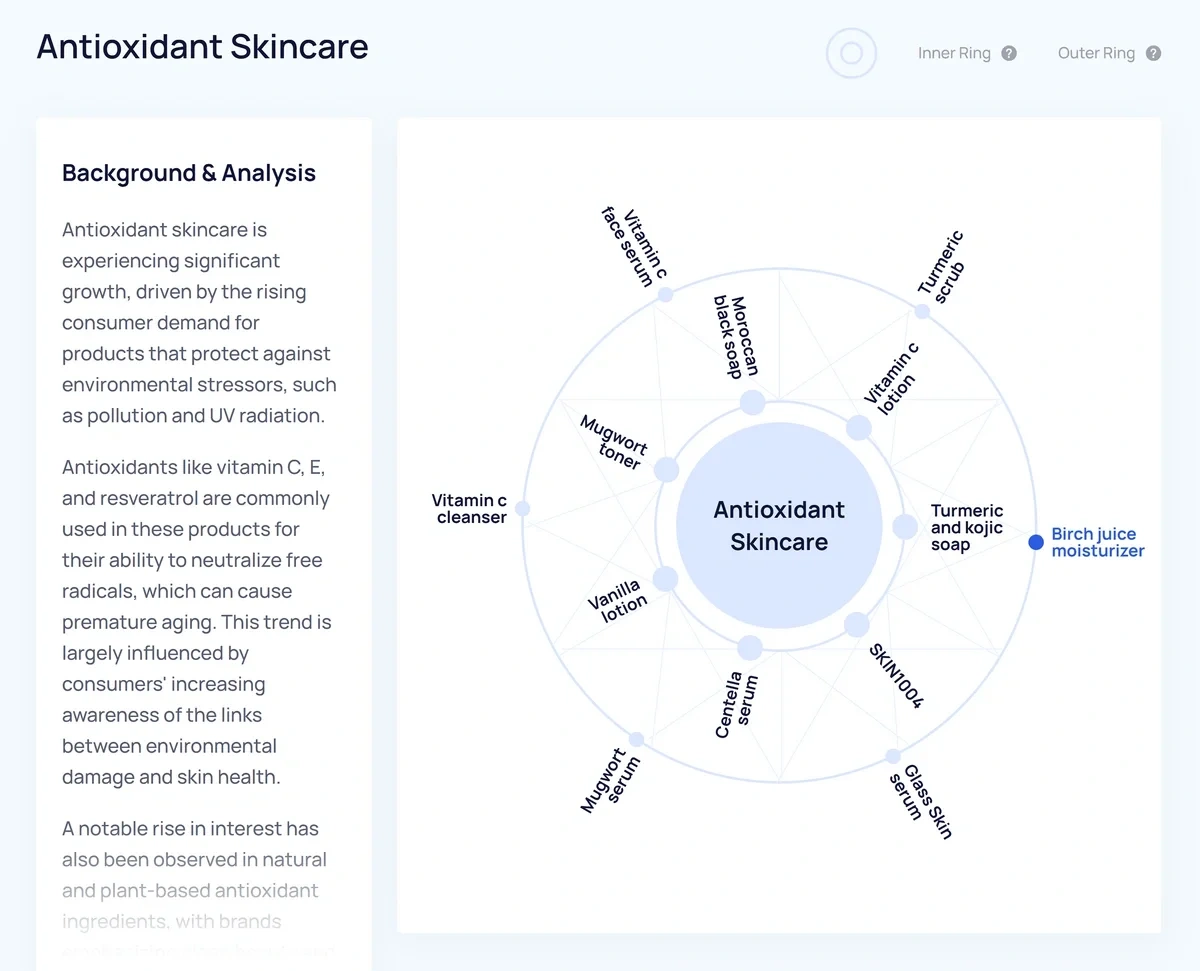
I can also take a look at the Meta Trends reports to get a better understanding of how different skincare products and trends fit together.
This entire process does require some level of familiarity with an industry, so you may need to do additional research as you work on identifying specific products. Ultimately, though, Exploding Topics' reports make the whole journey very easy.
5. Identify the Right Channels
Let's say I decide to move forward with my target skincare niche and have developed a list of products I'm interested in selling. I now need to figure out where I should focus when marketing my products to customers. Exploding Topics makes this easy, too. Every trend and product detail page includes a channel breakdown so you can see whether it's more popular on TikTok, Instagram, Reddit, or another social media platform.
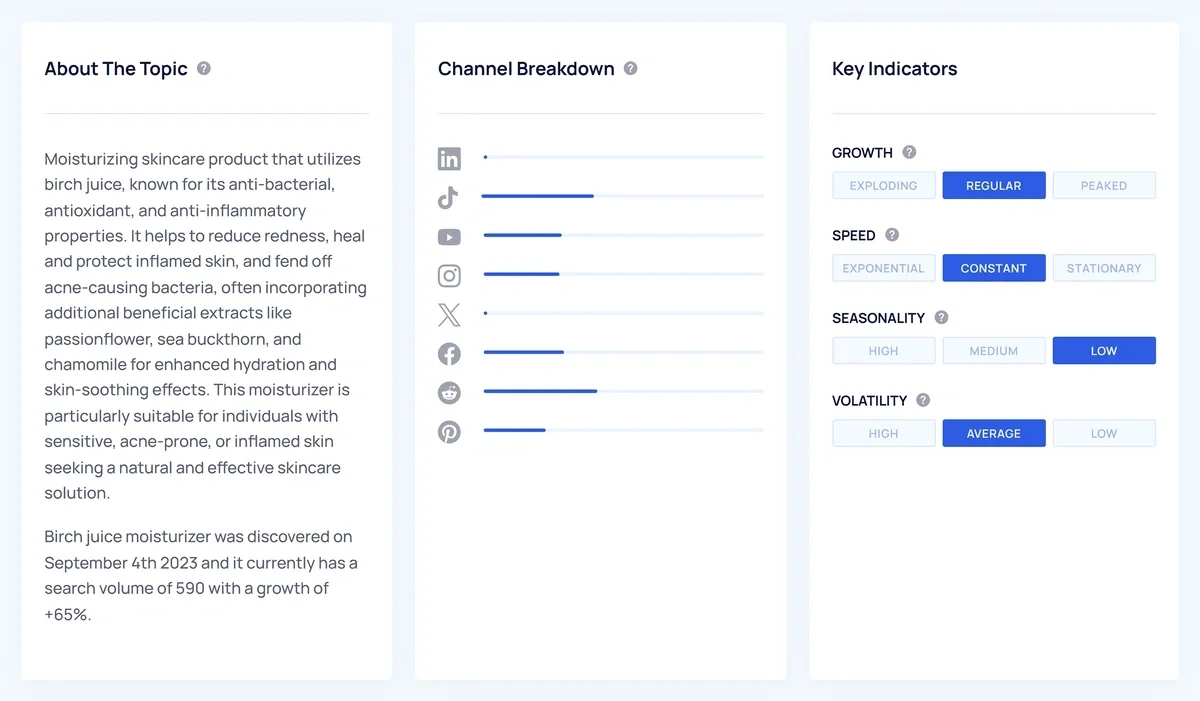
If you're interested in selling products through TikTok Shop, you can see data related to that platform in the Trending Products report, too.
Tip: Many social media platforms have public ad libraries that you can browse to get a feel for what products other companies are advertising. The Meta Ad Library is one such example and a good place to start your research.
6. Check Search Volume
No matter what social media platforms you plan to promote your e-commerce shop on, it's also important to check organic search volume related to your products.
Every Exploding Topics trend page shows you this information, however, if you're serious about your e-commerce business you'll want to do some additional research around related keywords, too. Our free keyword research tool is a great starting point; if you want to dig even deeper, I recommend signing up for a free Semrush account.
Tip: If you like using ChatGPT or Claude in your work, you might enjoy adding the Semrush MCP server into your workflow. This will allow you to talk to the AI about your e-commerce search engine optimization (SEO) and related data.
What Are The Most Profitable E-Commerce Niches Right Now?
E-commerce trends are always fluctuating, but these niches are worth a closer look in 2026.
| Category | Niche | Example Products |
| Beauty | Natural skincare | PDRN creams, cuticle balms |
| Home | AI-enabled appliances | AI dishwasher, AI air purifier |
| Health & Wellness | Functional food | mushroom supplements, coffee alternatives, Shilajit gummies |
| Fashion | Comfortable clothing | foldover shorts, wireless push-up bra, hands-free sneakers |
Frequently Asked Questions
Does Competition Matter When Choosing an E-Commerce Niche?
Yes, competition matters when choosing an e-commerce niche. If you decide to sell products that are extremely popular and part of an oversaturated market, you may run into issues generating a good profit.
A reliable marketing analytics tool is important to have, as it can:
- Help you determine how competitive a niche may be and see who your primary competitors are
- Allow you to find the right keywords to target through organic and AI search or ads, helping you to outrank your competition
- Enable easier progress tracking and ongoing optimization
Semrush One is a great choice for this — you can get a free 14-day trial using our exclusive coupon code.
Do Seasonal Trends Impact E-Commerce Niches?
Yes, seasonal trends can impact the performance and profitability of your e-commerce niche. There are two big ways in which seasonality has an effect:
- Product demand spikes or declines based on the time of year. For example, in the warm months, sun-protective skincare brands may see a sales spike; in the cold months, home fitness brands may sell more units as people look for activities they can do indoors. This calls for a seasonal inventory management plan.
- Advertising cost. The amount you pay per click on a search or social media ad can increase dramatically around peak buying seasons and holidays. You’ll likely face stiffer competition from other retailers trying to bid on the same ad keywords, too.
What Are the 4 Types of E-Commerce?
Most e-commerce companies fall into one of four categories based on their target audience:
- Business to business (B2B). A B2B company sells goods and software to other businesses — an online office supply store or restaurant equipment company are good examples of B2B e-commerce.
- Business to consumer (B2C). Many dropshippers run B2C e-commerce companies. Direct to consumer (DTC) brands are another form of B2C e-commerce.
- Consumer to consumer (C2C). This includes online transactions done through sites like Mercari and eBay, both of which allow individuals to sell their lightly used goods to others.
- Intra-B. Intra-B commerce refers to electronic, digital transactions made between departments in a company. This isn’t a type of business you create so much as it is a necessary process for running some e-commerce (and other) businesses as they expand.
Instantly Analyze The Popularity of Any Product with Exploding Topics
Ultimately, one of the best things you can do for your e-commerce planning and business operations is to invest in a reliable trend tracking tool. This way, you can see exactly how customer interest is shifting — and quickly look up any interesting product or trend that sparks your interest.
Ready to give it a try? Start your seven-day free trial to see exactly how Exploding Topics can make your e-commerce niche selection process easier.
Stop Guessing, Start Growing 🚀
Use real-time topic data to create content that resonates and brings results.
Exploding Topics is owned by Semrush. Our mission is to provide accurate data and expert insights on emerging trends. Unless otherwise noted, this page’s content was written by either an employee or a paid contractor of Semrush Inc.
Share
Newsletter Signup
By clicking “Subscribe” you agree to Semrush Privacy Policy and consent to Semrush using your contact data for newsletter purposes
Written By


Emily is a freelance content writer at Exploding Topics. A former news correspondent, she has over 15 years' experience creati... Read more