
Get Advanced Insights on Any Topic
Discover Trends 12+ Months Before Everyone Else
How We Find Trends Before They Take Off
Exploding Topics’ advanced algorithm monitors millions of unstructured data points to spot trends early on.
Keyword Research
Performance Tracking
Competitor Intelligence
Fix Your Site’s SEO Issues in 30 Seconds
Find technical issues blocking search visibility. Get prioritized, actionable fixes in seconds.
Powered by data from
Latest Blog Posts
Featured Case Studies
See what's trending before everyone else
Each week, we'll send you our best Exploding Topics. Plus, expert insight and analysis.
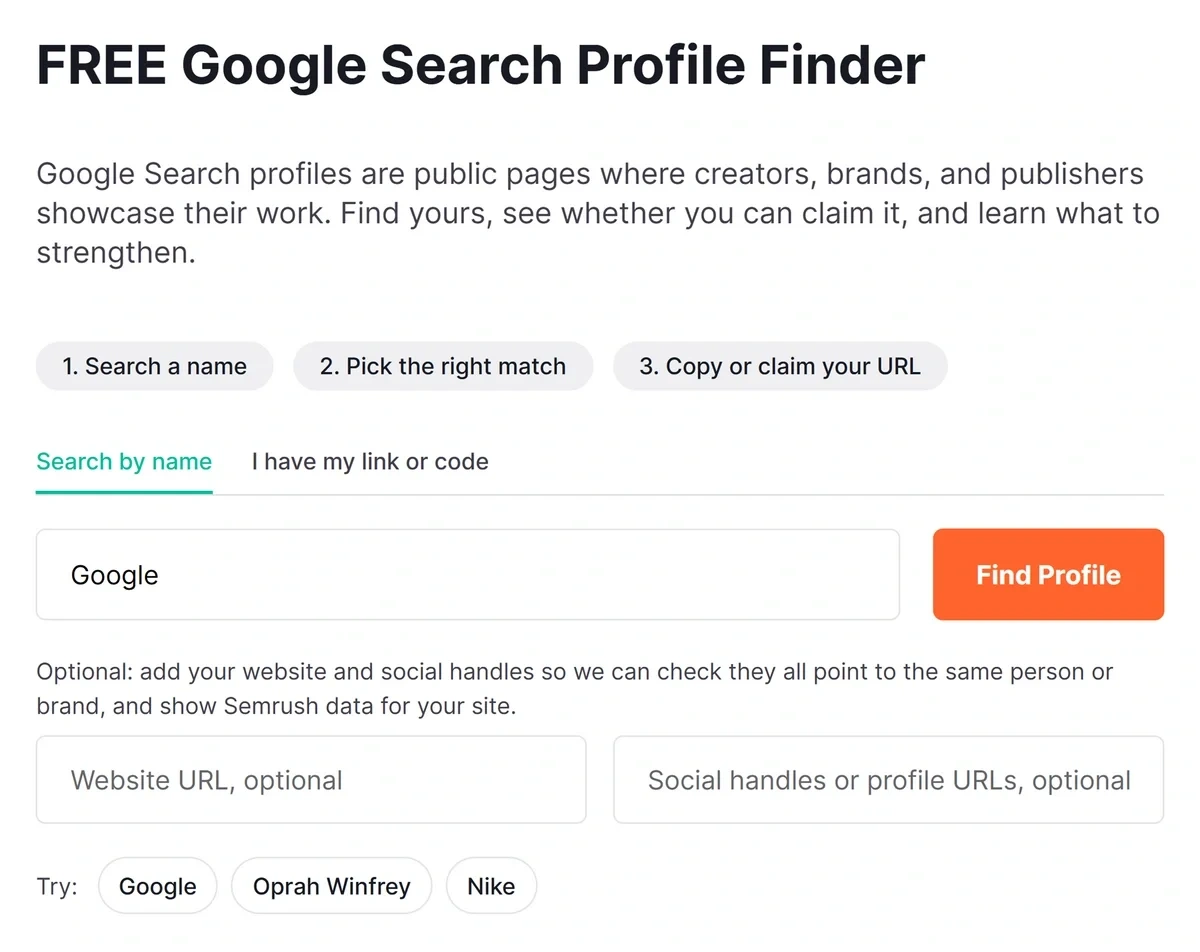
What Is a Google Search Profile?
A Google Search profile is a dedicated, shareable page on Google Search where publishers and creators can feature articles, videos, social posts, websites, and links in a single place.
Instead of relying entirely on whatever Google's algorithms assemble about you, an eligible creator can claim their profile, curate it, and share a single official link (hosted at profile.google.com) that represents them across the web.
Every Search profile is built on top of an entity in Google's Knowledge Graph (the database Google uses to understand entities). That's why finding your profile starts with finding your entity.
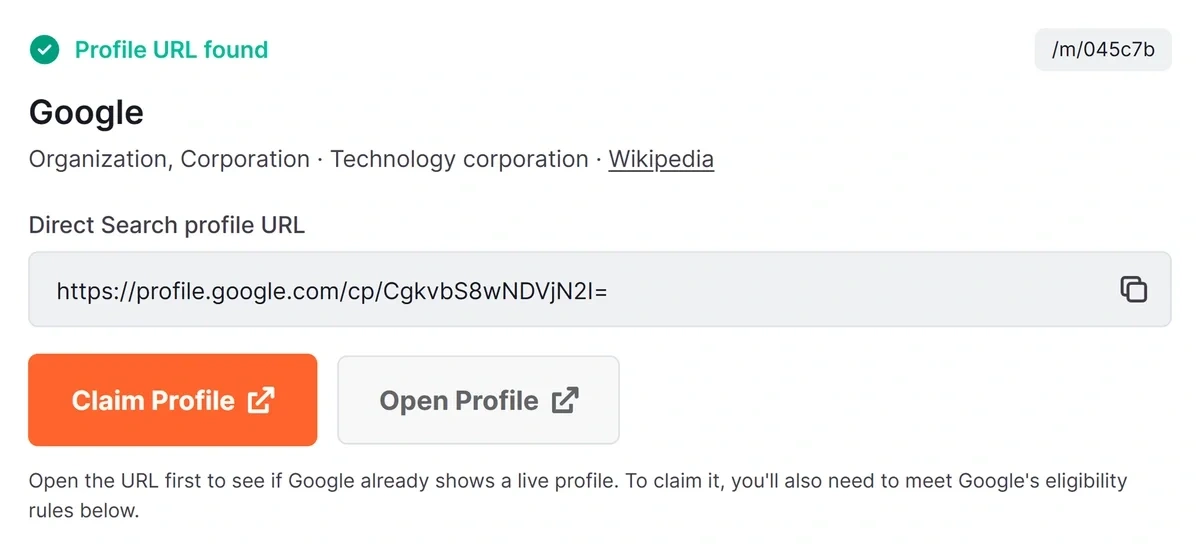
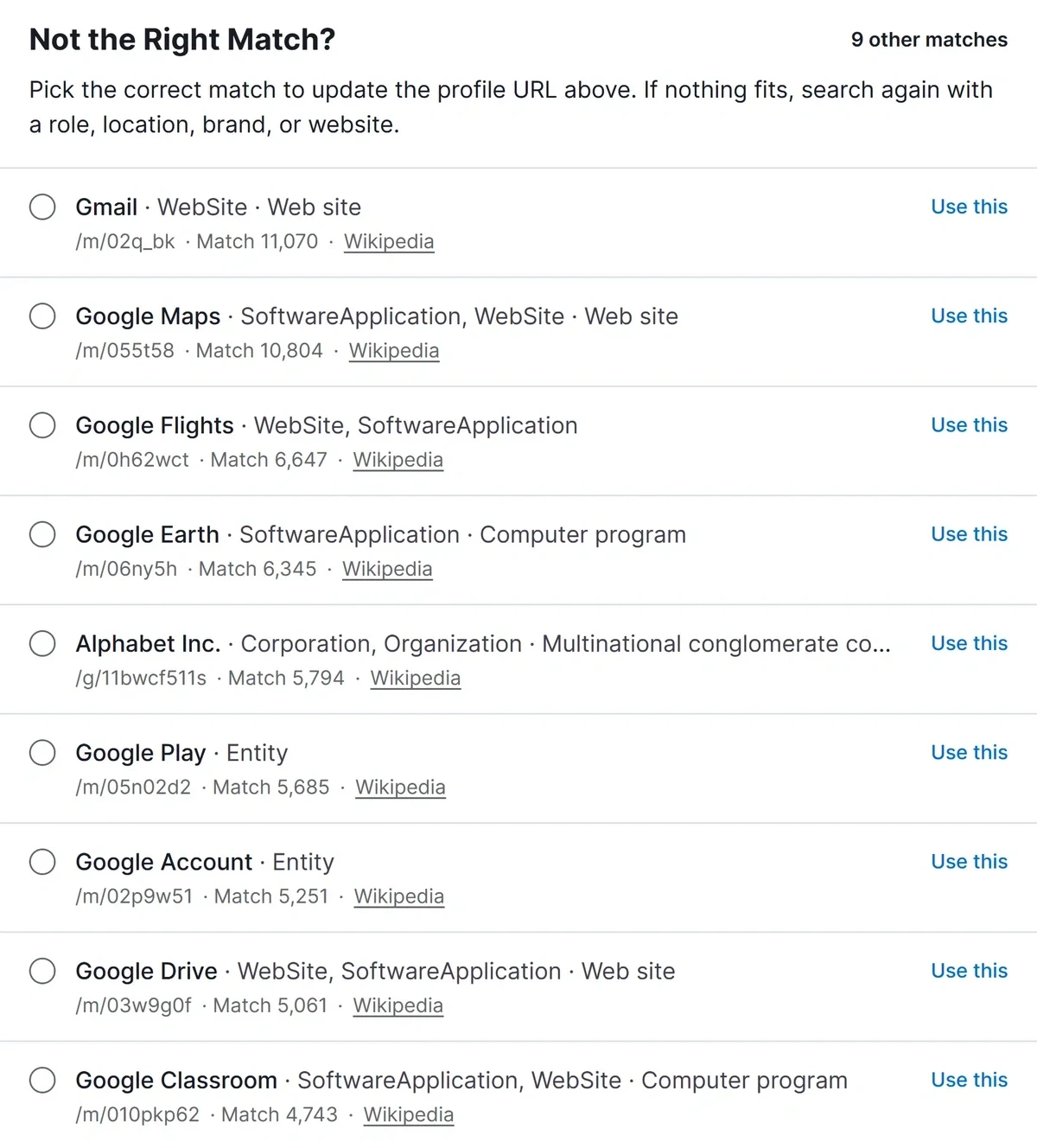
This tool searches the Knowledge Graph, shows you the matching entities, and generates the direct profile URL for the one that represents your brand.
What This Google Search Profile Finder Tells You
The Google Search Profile Finder gives you an instant snapshot of how Google's Knowledge Graph sees you.
In a single search, this tool:
- Locates your entity in Google's Knowledge Graph
- Generates your official Search profile URL
- Checks you against Google's current eligibility requirements
- Audits the consistency of the entity signals behind your profile.
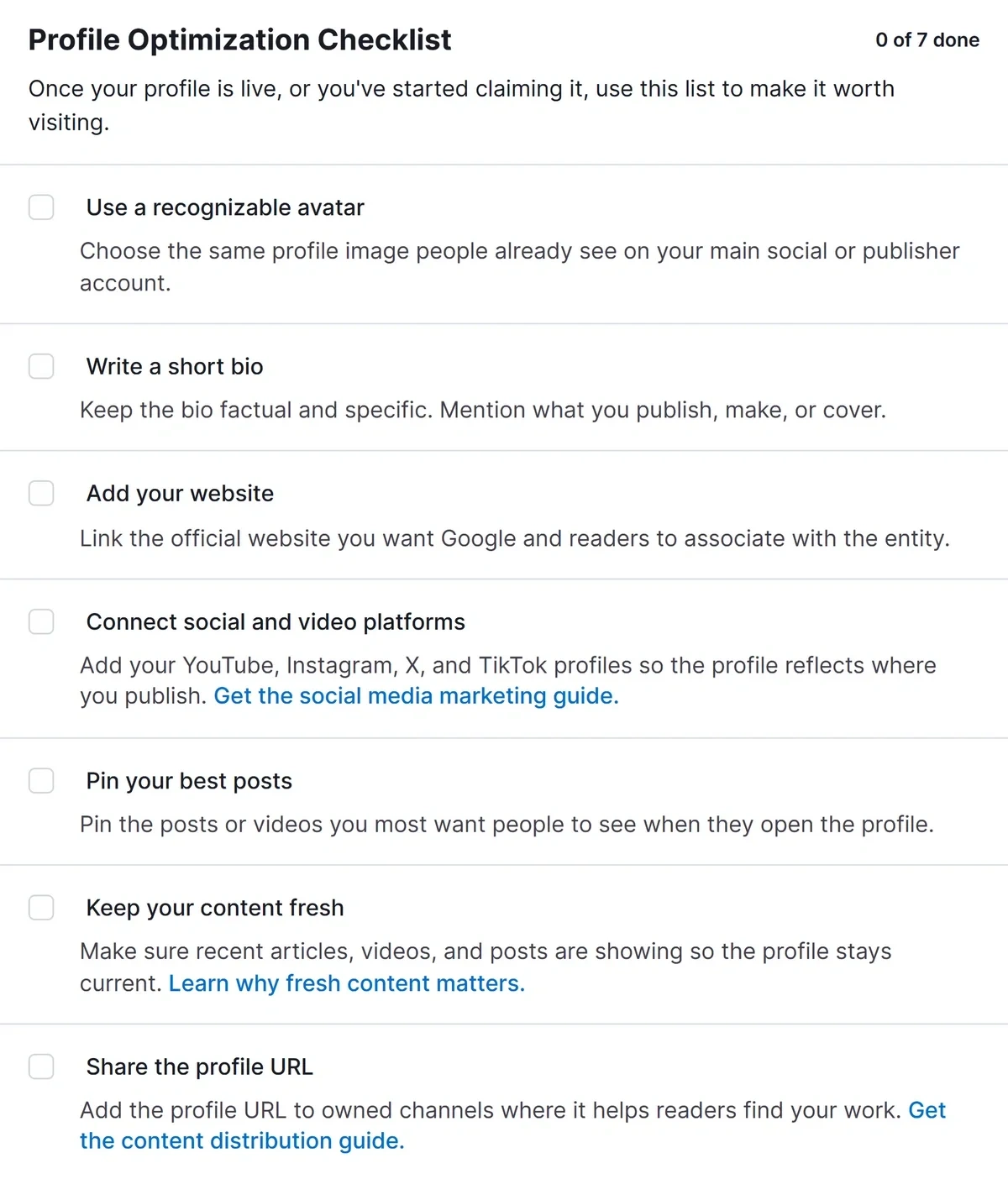
The results show you a pathway to claim, optimize, and track your Google Search Profile.
What Checks Does the Google Search Profile Finder Perform?
The finder runs your name, brand, or Knowledge Graph ID through several layers of analysis:
- Knowledge Graph Entity Match: Searches Google's Knowledge Graph and returns up to 10 plausible entity matches, so you can confidently confirm which entity is actually yours.
- Profile URL Generation: Converts your selected entity into the direct, official Google Search profile URL at profile.google.com.
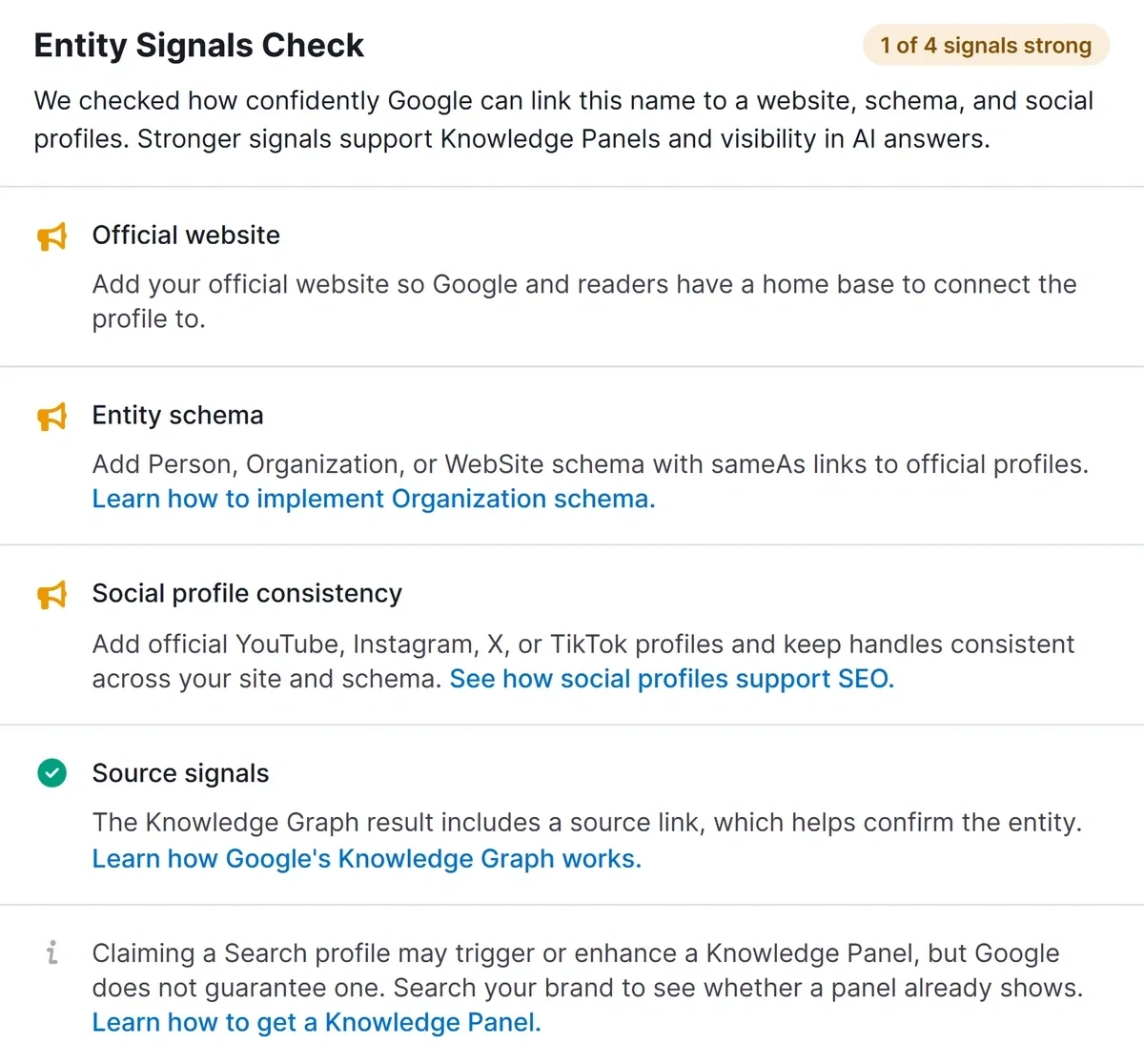
- Entity Consistency Check: Takes your website and social handles and audits the basic signals connecting them, such as sameAs and schema markup opportunities on your site, alignment between your owned site and social profiles, and whether your links are profile-ready.
- Source Signal Review: Surfaces the authoritative signals feeding your entity from structured sources like Wikidata and Wikipedia, along with guidance on your current Knowledge Panel status.
What Does the Entity Readiness Check Reveal?
The entity behind your profile is only as strong as the signals feeding it. The readiness check evaluates three key layers:
- Website Signals: Checks if your site declares who you are in a machine-readable way with Organization or Person schema, sameAs links pointing to your official social profiles, and clear identity information AI systems and search engines can parse.
- Social Consistency: Inspects your social profiles to check that your names, handles, bios, and cross-links match across all platforms and point back correctly to your properties. Inconsistent profiles fragment your entity.
- Authoritative Source Coverage: Analyzes structured sources like Wikipedia and Wikidata to check if they recognize your entity. The references Google leans on to build, verify, and enrich Knowledge Graph entries and Knowledge Panels.
Weak or inconsistent signals across these dimensions may lead to wrong entities showing up for your name and outdated descriptions.
In the worst-case scenario, you might have missing website links or no Knowledge Graph presence at all. The readiness check flags these gaps so you know what to fix first, and in what order.
Who Can Claim a Google Search Profile?
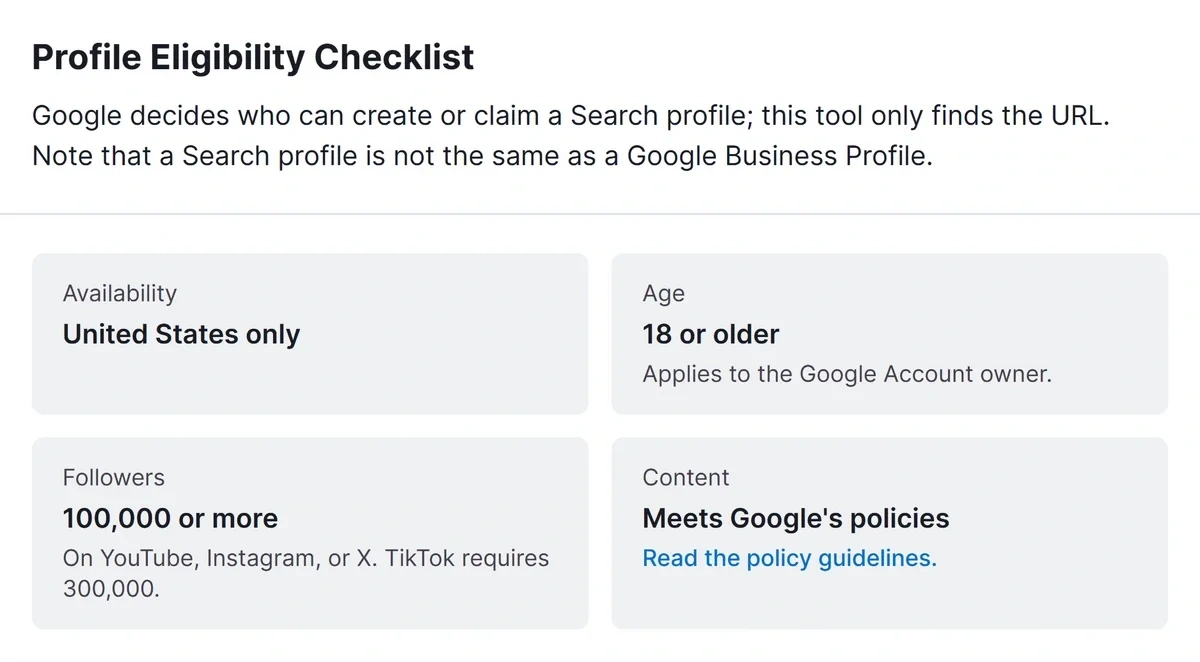
As of Google's current requirements, you need to meet all of the following conditions to be able to claim your search profile:
- Location: Search profiles are currently only available in the US.
- Age: You must be 18 or older.
- Audience threshold: You need a public profile with at least 100,000 followers or subscribers on YouTube, Instagram, or X. Or at least 300,000 followers on TikTok.
- Policy compliance: Your content must comply with Google's content policies.
Don’t meet the requirements yet? Our tool is still useful.
The URL it generates shows you how Google currently represents your entity, and the eligibility checklist tells you exactly how far you are from qualifying.
In the meantime, the entity-readiness steps strengthen the foundation your profile will eventually sit on.
Who Is the Free Google Search Profile Finder For?
- Creators & Influencers: Confirm your Knowledge Graph entity, check whether your follower counts clear Google's thresholds, and claim the official profile that represents you on Search.
- Publishers & Media Brands: Locate the entity behind your publication, generate the shareable profile URL, and consolidate how your articles and channels surface on Search.
- SEO Professionals & Agencies: Run instant entity lookups for clients, diagnose weak or fragmented Knowledge Graph signals, and turn entity readiness into a deliverable (with Semrush data to back it up).
- Founders & Personal Brands: Protect your digital identity, see exactly how Google represents you today, and build the entity signals that feed Search profiles, Knowledge Panels, and AI answers alike.
Why Should You Use This Google Search Profile Finder?
Modern Google search offers multiple distinct visibility opportunities for brands and creators that go beyond sponsored results and organic rankings.
Search profiles, Knowledge Panels, and AI-generated answers all draw from the same underlying entity recognized by the Knowledge Graph. If that entity is weak, inconsistent, or missing, Google is likely to misrepresent your brand or ignore it altogether.
This tool closes that gap in minutes. Instead of guessing why your brand looks incomplete on Search, you get a concrete checklist and a quick audit evaluating your brand’s strength and eligibility for claiming your unique profile.
Exploding Topics Pro is trusted by 1,200+ teams worldwide.
How We Find Trends
We track topics across the internet to identify under-the-radar trends before they go mainstream.
Analyze
Our trend identification process begins with a comprehensive data collection from a variety of online sources.
- Social media platforms
- Search engines
- Online forums and communities
- News articles and blogs
- E-commerce websites
- Podcasts
Identify
Our proprietary machine learning models are designed to detect the absolute earliest signs of an emerging trend.
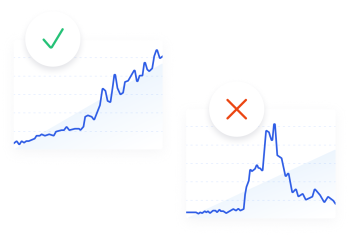
- Analyze historical data to identify growth patterns
- Predict future trends based on current data trajectories
- Detect sudden spikes in interest or activity around specific topics
Curate
While our algorithms are powerful, human expertise is crucial for contextual understanding, ensuring quality topics.
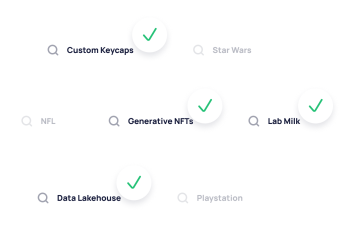
- Review the top-scoring trends identified by our models
- Validate the authenticity and relevance of these trends
- Filter out fads (movies, TV shows, celebrity gossip, etc.)
- Provide qualitative insights to complement quantitative data
Get Exclusive Access to Emerging Trends
Stay ahead of the competition with a 7-day free trial of Exploding Topics Pro.
1.1M+ trends in our growing database. Pro plans starts at $1.29/day.
Powered by
FAQ
Everything you need to know about using our features and getting the most out of them.
Does creating a Google Search profile improve my rankings?
No. A Search profile does not directly affect Google Search rankings. Its real value is in enhancing your presence and visibility beyond traditional search and AI answers. You get an official, curated page representing you on Search. Plus, it offers the potential for triggering or enhance a Knowledge Panel for eligible creators and publishers.
Is the Google Search Profile Finder free?
Yes. Searching the Knowledge Graph, generating your profile URL, and running the eligibility and entity-readiness checklists are all free.
The Semrush Data Preview shows Authority Score, Ranking Keywords, and Referring Domains for free when you provide a domain; deeper metrics like Organic Traffic, AI Visibility, and AI Citations are available in Semrush One.
Is a Google Search profile the same as a Google Business Profile?
No. A Google Business Profile is for local businesses appearing in Maps and local search results. A Search profile is for publishers and creators highlighting their content on Search. If you're a local business, you need a Business Profile. A Search profile doesn't replace your Business Profile, but it can enhance your Knowledge Graph and give you a shareable curated profile that houses all your important links.
Will claiming my Search profile get me a Knowledge Panel?
Not necessarily. Claiming a Search profile may trigger or enhance a Knowledge Panel for eligible publishers and creators, but this is not a guarantee. That said, strong, consistent entity optimization will improve your chances.
What's a Knowledge Graph ID and where do I find mine?
It's the unique identifier Google assigns to every entity in its Knowledge Graph (it usually looks like /g/... or /m/...). If you don't know yours, just search by name. The tool displays the KG ID for every matching entity. If you do know it, enter it directly to skip the picker.
What if the tool can't find an entity for my name or brand?
If this tool can't find your brand, it usually means Google's Knowledge Graph doesn't yet recognize you as a distinct entity. The good thing is that this is a fixable problem.
The tool will show you an entity-building checklist and find the gaps that are contributing to your absence in the Knowledge Graph. These usually include issues with schema markup, profile inconsistencies, and lack of authoritative source coverage.