Exploding Topics
Remineralizing Gum search volume grew from under 100 to 27,100 monthly searches between February 2024 and January 2026.
Remineralizing gum
+5100%
GLP 1 Supplement search volume grew from 5,920 to 74,000 monthly searches between February 2024 and January 2026.
GLP 1 supplement
+1150%
Soursop Bitters search volume grew from 9,900 to 110,000 monthly searches between March 2024 and February 2026.
Soursop bitters
+1011%



Get Advanced Insights on Any Topic
Discover Trends 12+ Months Before Everyone Else
How We Find Trends Before They Take Off
Exploding Topics’ advanced algorithm monitors millions of unstructured data points to spot trends early on.

Keyword Research
Performance Tracking
Competitor Intelligence
Fix Your Site’s SEO Issues in 30 Seconds
Find technical issues blocking search visibility. Get prioritized, actionable fixes in seconds.
Powered by data from
Latest Blog Posts
Featured Case Studies
See what's trending before everyone else
Each week, we'll send you our best Exploding Topics. Plus, expert insight and analysis.
Kalshi and Polymarket weekly trading volume hits $6B

 Add Exploding Topics on GoogleAdd Exploding Topics as your preferred source to see more of our stories on Google.
Polymarket and Kalshi have exploded in popularity in the US. The peer-to-peer “bet on anything” platforms are each processing billions of dollars every week, with markets ranging from sports to politics (and everything in between).
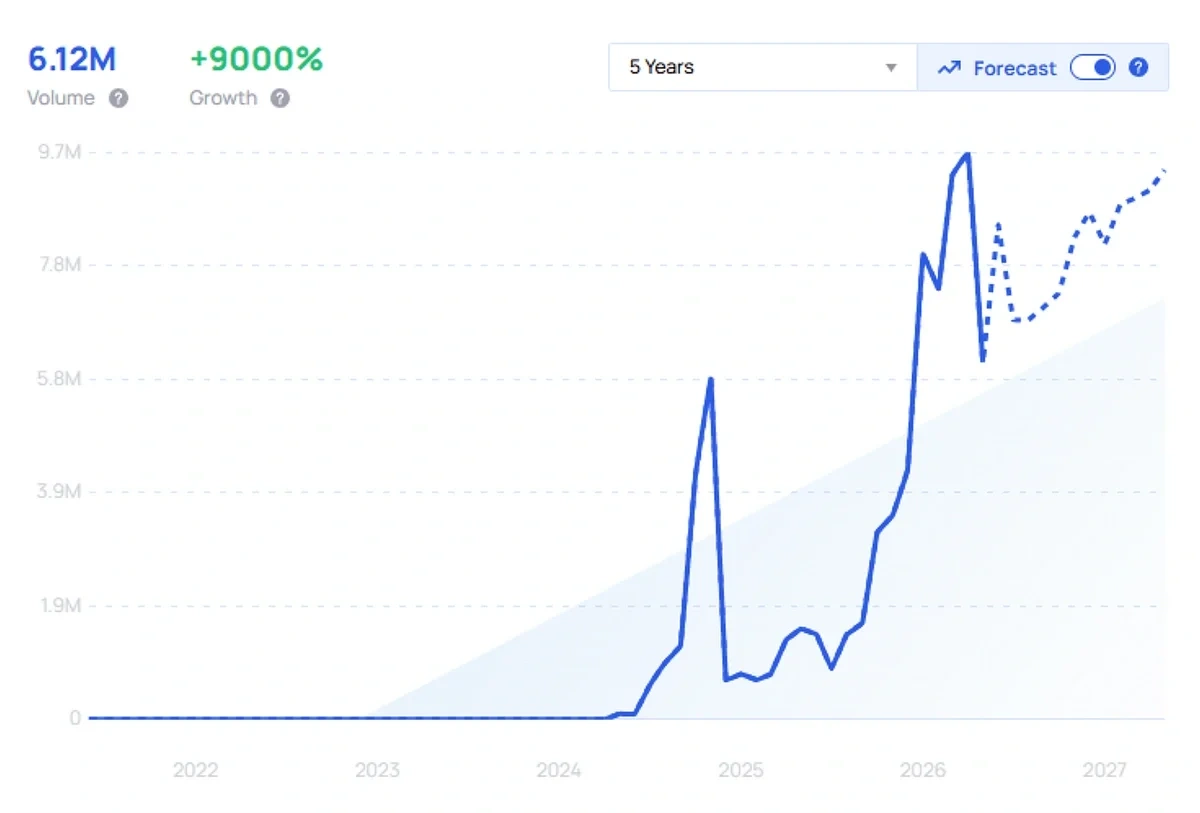
“Polymarket” searches are up 9,000% in the last 5 years, and Exploding Topics forecasts further steep growth in the next 12 months.
Riding a national moment of gambling deregulation and Gen Z retail investor culture, the exchanges straddle the line between betting and trading. The allure of monetizing perceived crowd-beating expertise or insight has drawn in millions of users.
But this rapid growth has not been without controversy. The proliferation of novel markets has led to accusations of insider trading, exacerbated by the relative anonymity granted by Polymarket’s crypto-based system. And governments are still trying to get to grips with the implications of both platforms at the state and federal level.
Read on to find out the facts and numbers behind the Polymarket and Kalshi boom.
What are Kalshi and Polymarket?
Kalshi and Polymarket are exchanges. They do not take bets in the traditional sense and do not describe themselves as bookmakers.
Instead, they facilitate the trading of “event contracts”: all-or-nothing derivatives offering a fixed payout if the specified event happens within the predefined period.
On a practical note, this means that contracts are only available when there is sufficient liquidity in the market: bettors essentially take bets against each other.
To that end, both Polymarket and Kalshi have incentive schemes that reward users for providing liquidity to the market. That’s one of four main ways to try and make money on the exchanges:
Betting
Gambling is the main appeal of Kalshi and Polymarket. Users attempt to turn a profit by correctly predicting yes/no markets, with higher upside when going against the crowd. For example, for an event with an implied probability of 70%, you could purchase a “no” contract for $0.30.
Sports betting is especially popular. But unlike platforms like DraftKings or BetMGM, bettors on Polymarket and Kalshi are betting against each other as opposed to “the house”.
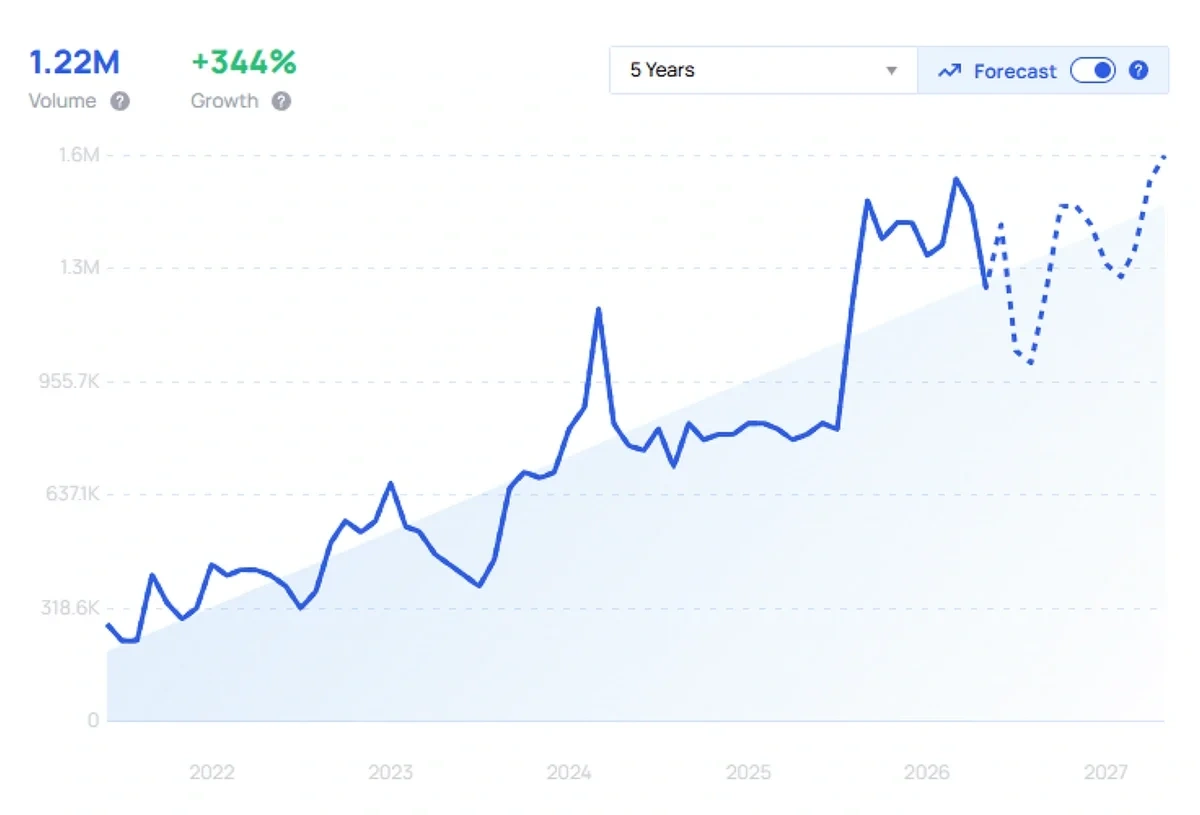
All kinds of sports betting has seen a surge in the US. “BetMGM” searches are up 344% in the last 5 years.
Hedging
Individuals or companies can use the exchanges to reduce their exposure to risks. An example provided by Kalshi is a businessman who stands to lose $10,000 if an income tax proposal becomes law: by buying 10,000 “yes” contracts at $0.50, he limits his loss to $5,000 regardless of whether or not the proposal passes.
Arbitrage
Arbitrage seeks to deliver guaranteed small wins by exploiting market inefficiencies to take both sides of the same wager where the combined implied probabilities create a guaranteed profit. There are various circumstances where this may be possible:
- Placing the bets at different times: this still comes with some risk, as the initial wager is effectively a bet on the implied probabilities changing.
- Placing the bets with different platforms: when implied probability is in the region of 50%, slight differences between Kalshi and Polymarket (or a more traditional bookmaker) can produce guaranteed wins from the outset.
- Trading two different markets: Sometimes, closely related markets on the same platform will allow the user to cover both the yes and no outcomes profitably.
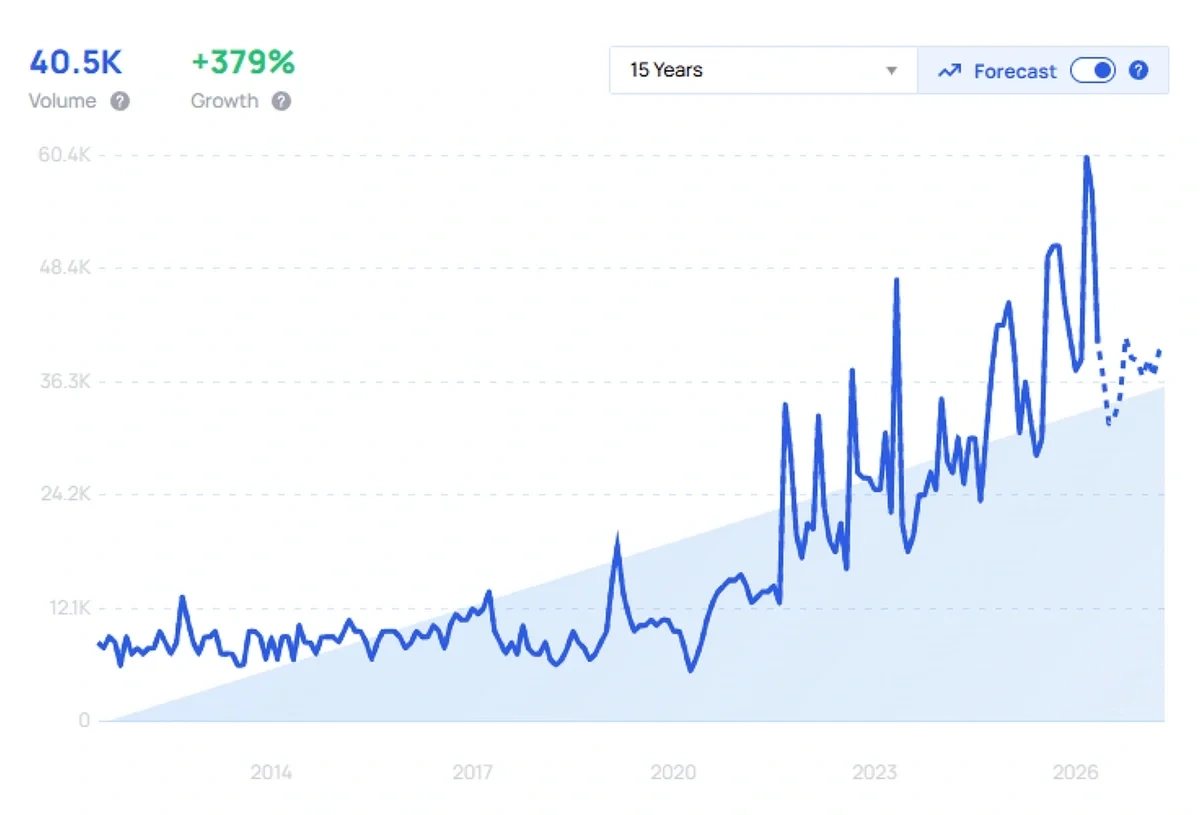
“Arbitrage betting” searches are up by 379% in the last 15 years.
Market-making
Few traders will use this as their main strategy, but it is possible to try and maximize liquidity incentives via a high turnover of event contracts and a willingness to take either/both sides of a wager. These market makers support the platforms by minimizing supply and demand issues, effectively serving as micro-bookmakers.
The “bet-on-anything” phenomenon
Both Kalshi and Polymarket have become hugely popular. For the week ending May 10, combined trading volume surpassed $6 billion: $4.1 billion on Kalshi and $1.9 billion on Polymarket.
Kalshi has about 2 million monthly users, and recently raised a $1 billion funding round that values the company at $22 billion. Polymarket has around 630,000 MAUs.
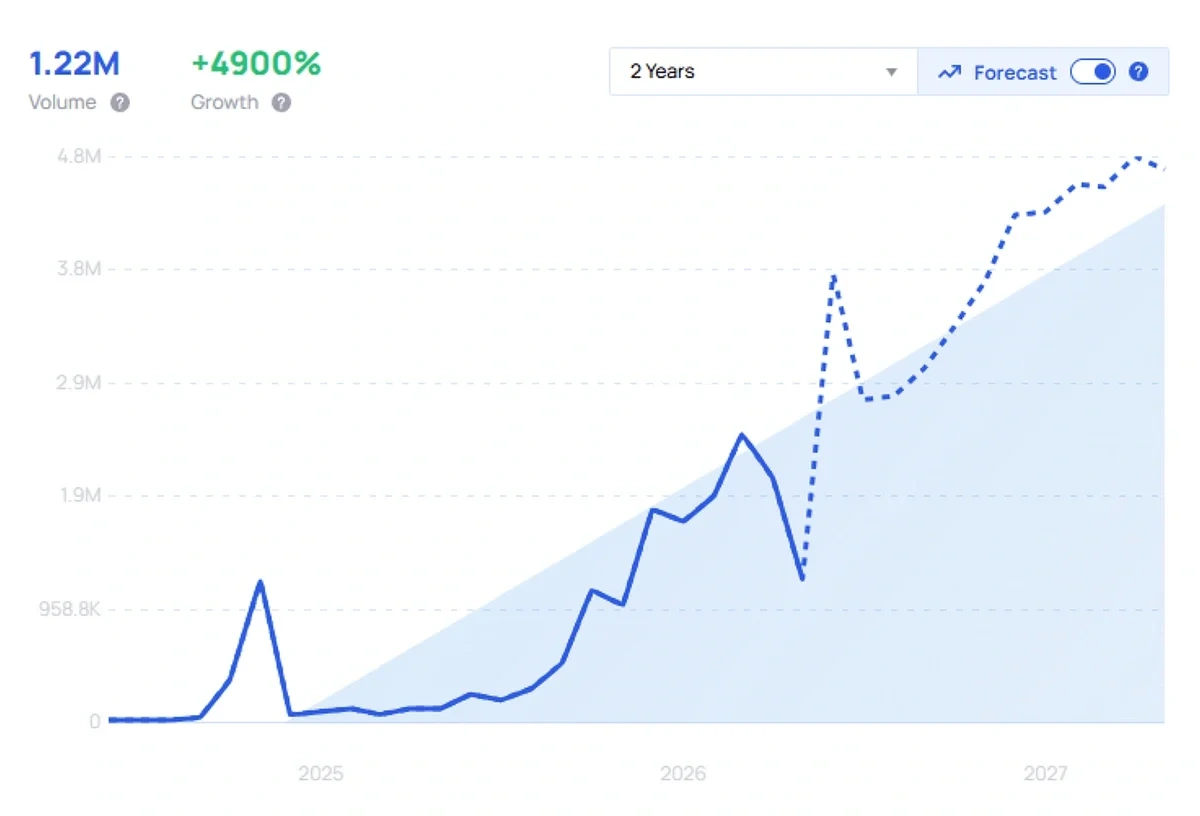
Meanwhile, “Kalshi” searches have increased by 4,900% in the last 2 years alone. Further steep growth is predicted.
Sports drive most of the activity. Sports betting is forecast to be a $39 billion market in the US by 2030, with total amounts wagered ballooning more than 10x since 2019, following the lifting of a federal ban the previous year.
But some of the biggest publicity surrounding the exchanges has come from other, alternative markets. Politics betting is particularly popular, with more than $2 billion wagered on the last presidential election on Polymarket alone (and that was at a time when the platform was not even accessible in the US).
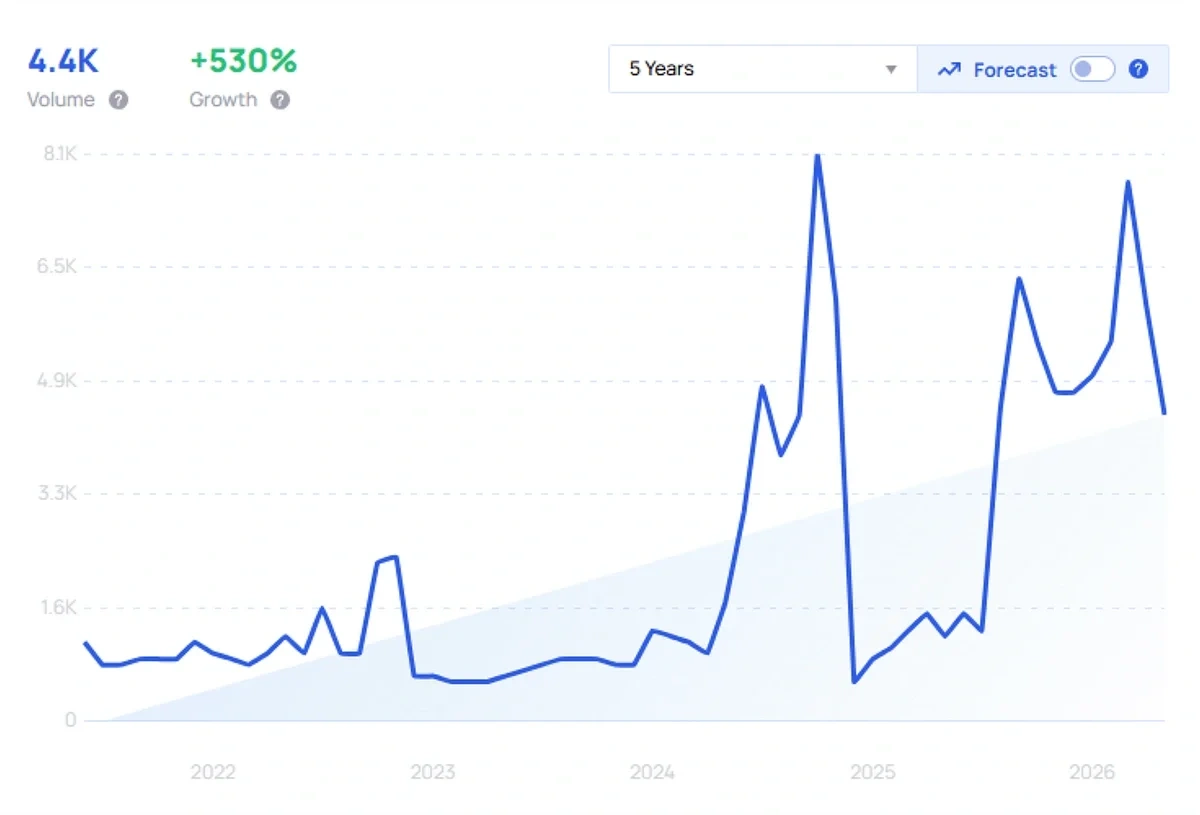
“Politics betting” searches are up by 530% in the last 5 years.
There are also markets for weather (there was an investigation in France following alleged tampering with a temperature sensor by a Polymarket user), tech, culture, and “mentions” (will X say Y in a given speech/publication).
Aside from the deregulation, Polymarket and Kalshi are experiencing growth right now because these types of market resonate with the “meme stocks” and speculative investing culture of Gen Z.
Social media has demystified and proliferated investing, but also placed a spotlight on riskier approaches, all while young people are constantly fed hard-to-attain lifestyles. Chasing quick wins is more tempting than ever.
80% of Gen Z (and 75% of Millennials) who are interested in prediction markets, sports betting, crypto, options or meme stocks say it is because they feel financially behind. They view these instruments as possible shortcuts to their financial goals.
At the same time, 53% of Gen Z “doomscroll” regularly. There is an unprecedented degree of anxiety about the future, and many young people cope by adopting a layer of detachment from serious issues.
Reducing significant global events down to fun guessing games with a chance to make money is symptomatic of this increasing “doomerism”.
Are Kalshi and Polymarket legal?
It is legal to use Kalshi in the US. Polymarket has a US-specific version that is also legal to use, although the primary platform is geo-restricted.
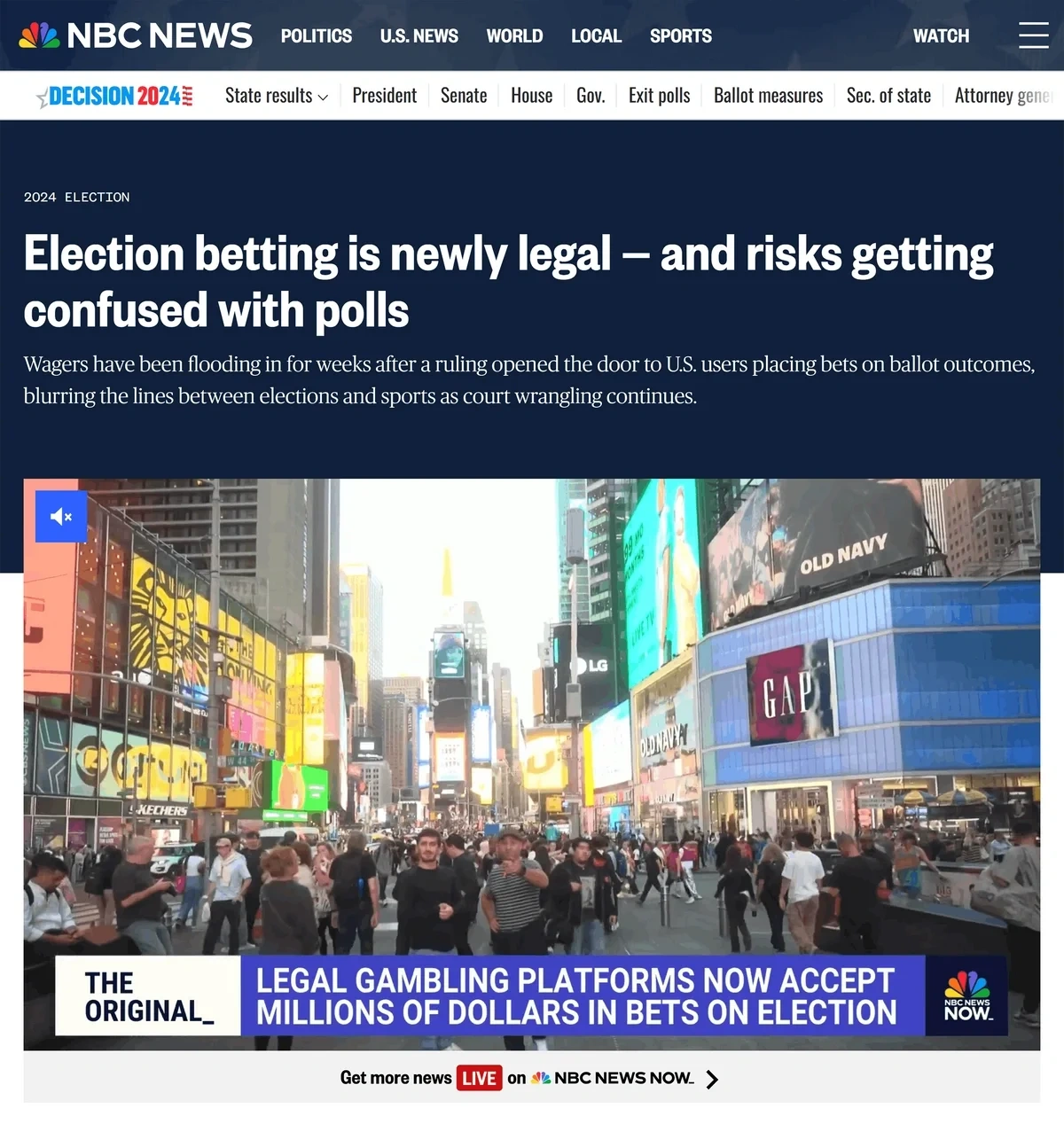
There is a long-term trend toward greater tolerance of gambling in the US. In 2018, the Supreme Court struck down the federal ban on sports betting. In 2024, a district court ruling paved the way for election betting.
However, Polymarket and Kalshi are in a regulatory gray area. They are simultaneously potentially subject to federal trading platform rules and state-level gambling regulations, although in practice they may sometimes slip through the gaps between the two.
At the state level, there are more than two dozen lawsuits alleging that Kalshi and Polymarket are actually unlicensed sports gambling operations.
40/50 states have now legalized sports betting, but it remains closely regulated, and some people feel as though these exchanges are side-stepping important safeguards. After all, almost 90% of contracts purchased on Kalshi in the last year were sport-based.
Meanwhile, from a federal perspective, Polymarket was only cleared to operate in the US in September last year, having previously been banned by the Commodity Futures Trading Commission for operating an unregistered derivatives trading platform. Kalshi, for its part, is registered with and regulated by the CFTC.
The regulatory struggles have been felt beyond just the US. Spain just blocked access to both Polymarket and Kalshi, investigating if they are in breach of national law by operating without a gambling license.
There’s also controversy around certain political markets, especially those most closely associated with Gen Z “doomerism.” Amid escalating US/Iran tensions, some Kalshi users were treating “Ali Khamenei out as Supreme Leader?” as a de facto assassination market, and the platform ended up refunding all bets.
Further complicating the picture, Polymarket is based in Panama, placing controversial markets outside of Washington’s jurisdiction. In theory, making those markets available in the US could constitute regulatory or criminal breaches, but there is an ongoing question of who bears the responsibility when individuals bypass regional restrictions using VPNs.
One thing that remains unquestionably illegal is using Kalshi or Polymarket for insider trading. But the proliferation of niche markets, and the increased anonymity of (in Polymarket’s case) a crypto-based system, vastly increase the risks compared to traditional bookmakers. A US soldier is currently on trial for allegedly using classified information to bet on the removal of Venezuelan president Nicolás Maduro.
Even more recently, Google engineer Michele Spagnuolo was arrested, and brought before a federal New York judge on charges of breaking insider trading laws by placing a series of Polymarket bets related to the company. He made $1.2 million on the platform, allegedly using confidential but internally-available marketing material to rack up huge wins. His biggest profits came on markets predicting who would be the most Googled person in 2025.
Build a winning strategy
Get a complete view of your competitors to anticipate trends and lead your market
What’s the difference between Kalshi and Polymarket?
While Kalshi and Polymarket are undoubtedly part of the same trend, there are some important differences.
Polymarket’s main, international platform is a true decentralized exchange. It is crypto-native, accepting only USDC (a stablecoin tethered 1:1 to the US dollar), and contracts are executed on the blockchain.
Kalshi, on the other hand, has a centralized order book, and accepts US dollars.
Where things get complicated is that Polymarket’s international exchange is inaccessible in the US. To get national approval, they acquired a pre-existing CFTC-registered exchange. So the US-only version is not blockchain-native and is functionally similar to Kalshi.
However, Polymarket US only offers sports markets, and accounts for a small percentage of total volume. What most people mean when they talk about the platform is the main version, accessible internationally or via VPN.
Kalshi likes to emphasize its regulated credentials compared to Polymarket. The Coalition for Prediction Markets, which includes Kalshi but not Polymarket, recently ran a full-page ad in the Washington Post:

In terms of other differences, sports bets only make up about 40% of the volume on the main Polymarket exchange, making it more of a leader than Kalshi in the “bet-on-anything” phenomenon. But Kalshi hosts a larger volume of trades overall.
Can you use Kalshi and Polymarket for genuine investments?
The received wisdom when it comes to gambling is that the house always wins. With Kalshi and Polymarket, there is no “house” in the usual sense because you are betting against other individuals.
That means there is no in-built disadvantage to try and overcome (although there are still trading fees to factor in). A typical sportsbook effectively “charges” about 4.5% for every bet placed by rounding up or down from the true estimated probabilities, whereas odds on exchanges are entirely controlled by user activity.
Betting against individuals as opposed to massively data-backed bookmakers also means that sites like Kalshi and Polymarket theoretically present more inefficiencies to be exploited. Bookies will very rarely set “bad” odds that shift the statistical advantage to the bettor—and when they do, they typically have a sea of terms and conditions that may allow them to avoid paying out.
In other words, Kalshi and Polymarket offer a potentially more viable investment strategy than betting against the house. And they provide a route to hedging other, more traditional investments.
Even so, the vast majority of people are using Polymarket and Kalshi to gamble, which is not a reliable investment strategy. An analysis of Polymarket showed that around 69% of traders lose money, with most profits concentrated in the top 0.1% of accounts.
That’s partly because automated, high-frequency trading bots play an outsized role on the platform. Most ordinary people are therefore entering into contracts with bigger players who have access to better data, much like they would be on a sportsbook.
All investments come with risk, but you always want to be the one with the best data. That’s where Exploding Topics comes in.
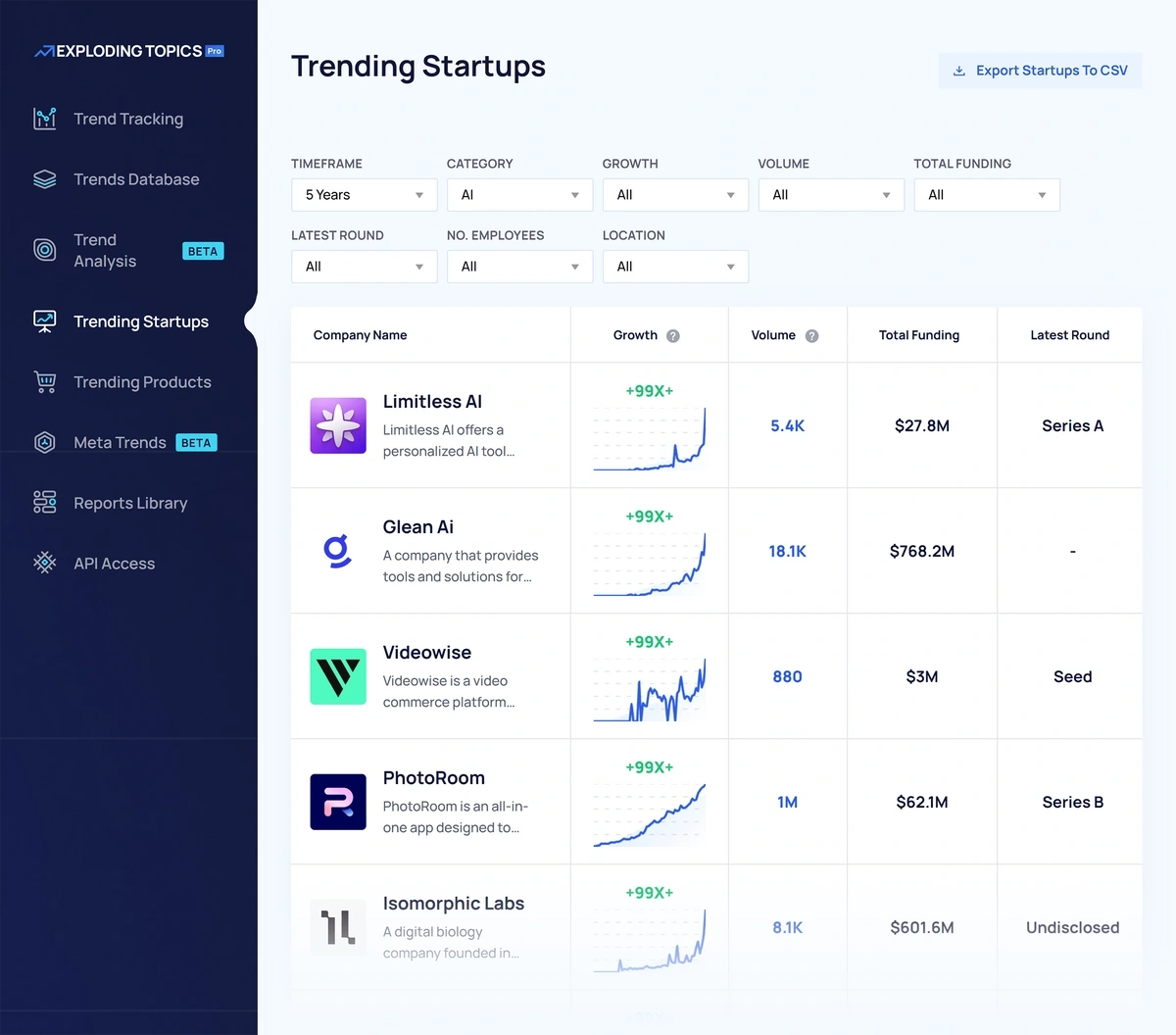
Our dedicated startup database helps you to find high-potential investment opportunities early. And our multi-platform search data lets you validate market size and growth potential.
With more than 60% of relatively new investors (<5 years) more patient now than when they started, the same people who were drawn in by meme stocks and prediction contracts are beginning to look for more data-driven, long-term bets. A good trend intelligence platform is an invaluable resource for serious investors.
Find the trend behind the trend
You should now know more about the rapid rise of Kalshi and Polymarket, and the forces that are driving the growth. It might seem as if the two platforms came out of nowhere, but they actually tell us an awful lot about wider US cultural shifts.
Whether you’re an investor, businessperson, or SEO specialist, it pays to stay on top of trends. The Exploding Topics blog is a great place to start for more deep dives like this one.
For the best insights, you should subscribe to the platform. You’ll get instant access to millions of trends, products, and startups in our database, putting the industry-specific data you need at your fingertips.
And you can scratch beneath the surface with our Meta Trends feature. See how micro trends fit into wider patterns to really gain a mastery of your niche.
Not only that, but our weekly newsletter exclusively for Pro subscribers features hand-curated breakdowns, focused specifically on early-stage, high-growth products and startups.
Stop Guessing, Start Growing 🚀
Use real-time topic data to create content that resonates and brings results.
Exploding Topics is owned by Semrush. Our mission is to provide accurate data and expert insights on emerging trends. Unless otherwise noted, this page’s content was written by either an employee or a paid contractor of Semrush Inc.
Share
Newsletter Signup
By clicking “Subscribe” you agree to Semrush Privacy Policy and consent to Semrush using your contact data for newsletter purposes
Written By


James is a Journalist at Exploding Topics. After graduating from the University of Oxford with a degree in Law, he completed a... Read more