


Get Advanced Insights on Any Topic
Discover Trends 12+ Months Before Everyone Else
How We Find Trends Before They Take Off
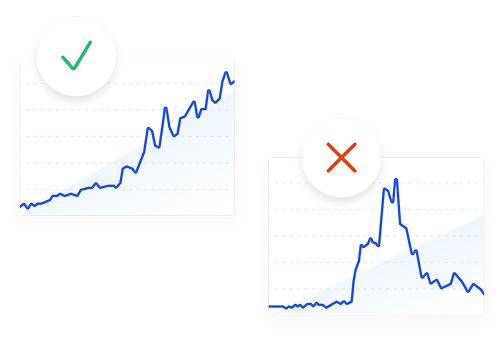
Exploding Topics’ advanced algorithm monitors millions of unstructured data points to spot trends early on.
Keyword Research
Performance Tracking
Competitor Intelligence
Fix Your Site’s SEO Issues in 30 Seconds
Find technical issues blocking search visibility. Get prioritized, actionable fixes in seconds.
Powered by data from
Latest Blog Posts
Featured Case Studies
See what's trending before everyone else
Each week, we'll send you our best Exploding Topics. Plus, expert insight and analysis.
How I Create Seasonal Inventory Management Plans

 Add Exploding Topics on GoogleAdd Exploding Topics as your preferred source to see more of our stories on Google.
Ordering too much or too little inventory is a big problem.
Seasonality is one of the most common reasons E-commerce store owners lose money due to an inventory management issue. It’s hard to determine how much product you’re going to need during those seasonal ups and downs!
Plus, there’s always the possibility that demand won’t follow the same trajectory as years before, leaving you in the dark…and with too much or too little inventory.
But with the right plan, you can avoid that as much as possible.
I’ll walk you through a step-by-step process for managing seasonal inventory, including how to layer in trend research so you’re anticipating those changes in demand year-over-year.
What Is Seasonal Inventory Management?
Seasonal inventory management is the practice of planning, ordering, and clearing stock based on predictable cycles of consumer demand driven by weather, holidays, events, or cultural moments.
Cyclical inventory demand goes up and down with the economy, often without much warning. Seasonal inventory, on the other hand, is more predictable. It tends to follow the same patterns each year, so you can actually plan ahead.
Why Is Seasonal Inventory Planning Harder Than It Used to Be?
Traditionally, seasonal inventory planning assumes your sales are pretty predictable. You look at last year’s numbers, tweak for growth, factor in holidays, and order based on that. And for products tied to specific seasons, that approach still works just fine.
For example, if you sell clothing, you’ll obviously sell more sweatshirts during the colder seasons.
For products without that kind of predictability, though, seasonal demand gets much harder to figure out.
Platforms like TikTok and Instagram now create their own mini “seasons”—short bursts of demand sparked by a single video, trending sound, or influencer shoutout. A product can go from barely searched to completely sold out in just a few weeks. And by the time that spike shows up in your historical data, you’ve already missed your chance.
For example, a cozy home product that's always sold reasonably well in fall might do 10x its usual volume if it gets picked up by a wave of "hygge season" content on TikTok in October. Your historical data told you to expect a seasonal lift, but not one that big!
This doesn't mean historical data isn’t useful—it should still be used as your baseline. It just means that you need to pair it with forward-looking trend data to catch those possibilities. I'll get into exactly how to do that in Step 3.
How to Manage Seasonal Inventory: A Step-by-Step Process
Step 1: Categorize Your Seasonal Products
Before you work with any sales data, sort your seasonal products into two groups: products with a fixed and easily defined seasonal cycle, and products whose seasonal demand is a little more wishy-washy.
For example, products with a fixed seasonal cycle might be holiday decor, seasonal clothing, or garden supplies. These have a very predictable demand curve every year, making them the most straightforward to plan around.
The second group is trickier. These are products that have some element of seasonality (like maybe they sell better in fall or tend to spike around Valentine's Day) but their demand is more sensitive to trends, social media, and consumer mood than to the calendar itself.
We’ll approach these two categories differently when forecasting to make our forecast more accurate.
Step 2: Pull and Clean Your Historical Sales Data
Your historical sales data is the most important part of your seasonal inventory plan. Pull at least 12–24 months of data broken down by SKU, including unit sales, revenue, return rates, and dates.
Before you do anything with that data, clean it.
Three things in particular will skew your forecasts if you leave them in:
- Stockout periods (days with zero sales because you had no inventory, not because demand dropped)
- One-time anomalies like a press mention or viral moment that isn't repeatable
- Any data gaps from platform migrations or system changes
Replace stockout-period zeroes with estimated figures based on surrounding weeks, and flag anomalies separately.
Once the data is clean, plot weekly or monthly sales by SKU across the full period and look for patterns. When do your upward trends start building? How long do they last? How sharp is the drop-off?
Take notes and then move on to step 3.
Step 3: Layer In Trend Data
Historical data is your bread and butter for planning your inventory, but it can't tell you what's trending right now, especially for products in that trend-sensitive category you identified earlier or anything new to your catalog.
This is where you need a tool.
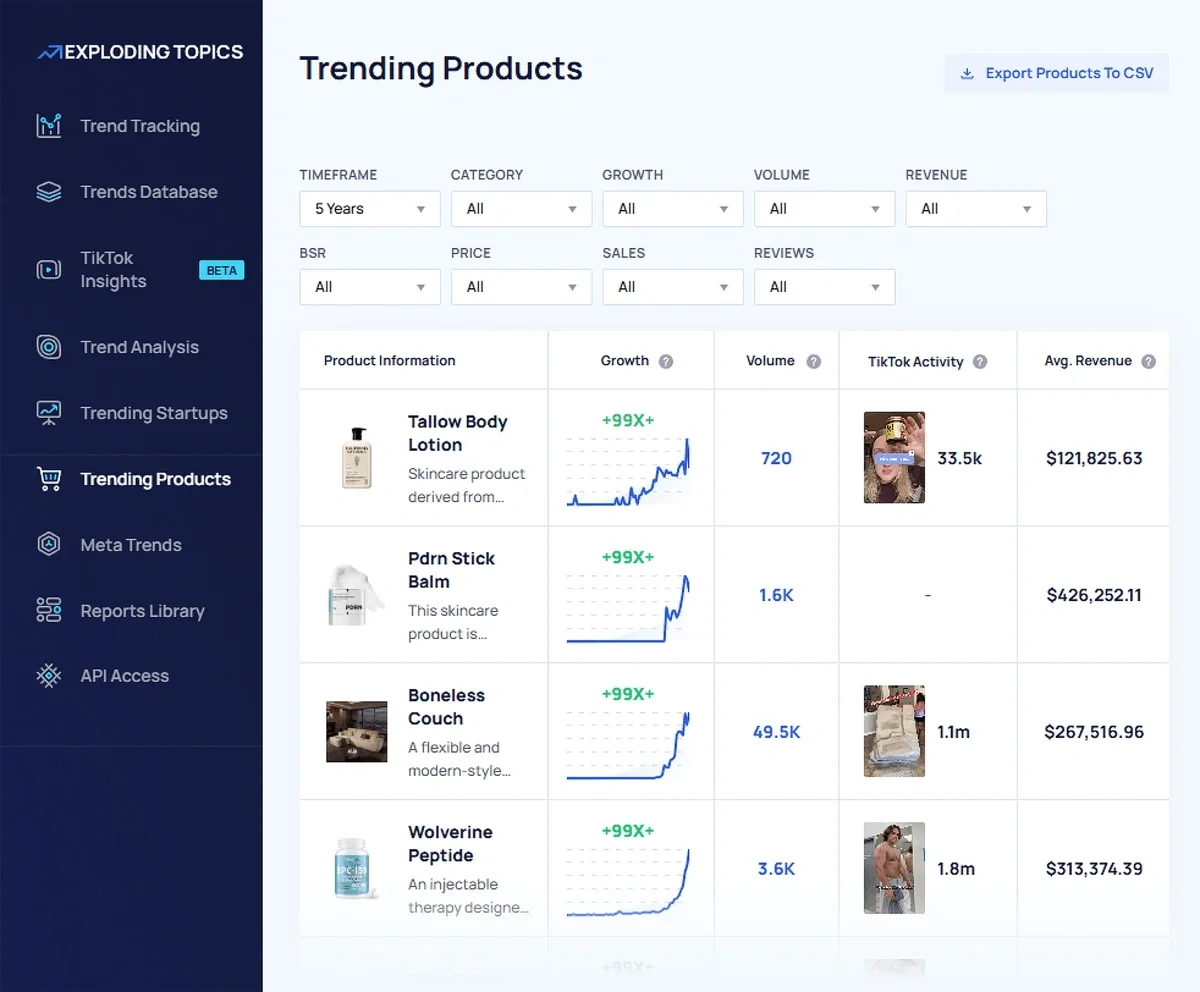
Exploding Topics is a trend-spotting platform that identifies rapidly growing industries, products, and search terms months (or even years) before they become mainstream.
The Exploding Topics Trending Products report surfaces products with growing E-commerce search interest across search engines and social platforms.
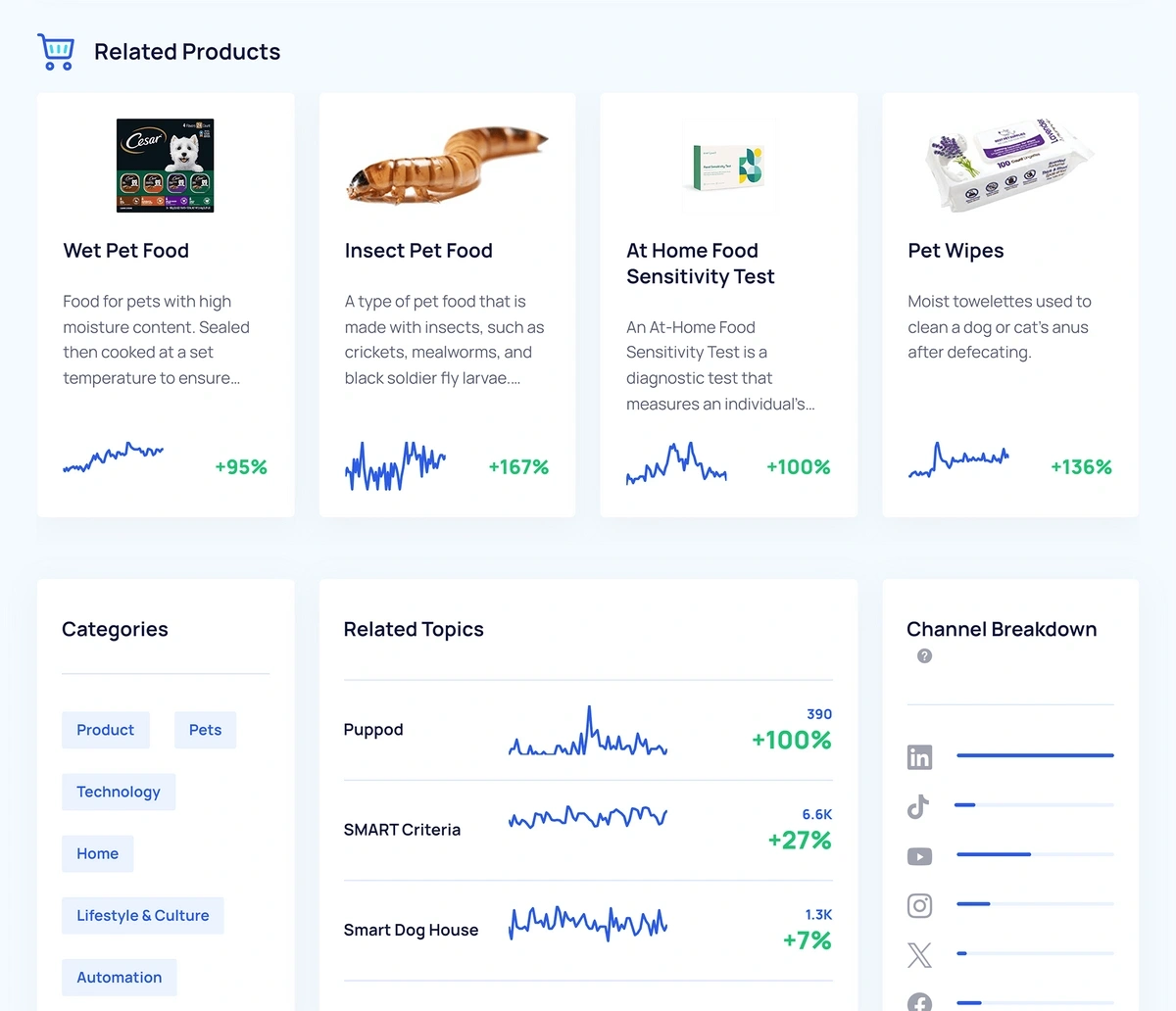
For each product in the database, you get a growth trajectory, a channel breakdown data showing where interest is originating, and related products that are trending alongside it.
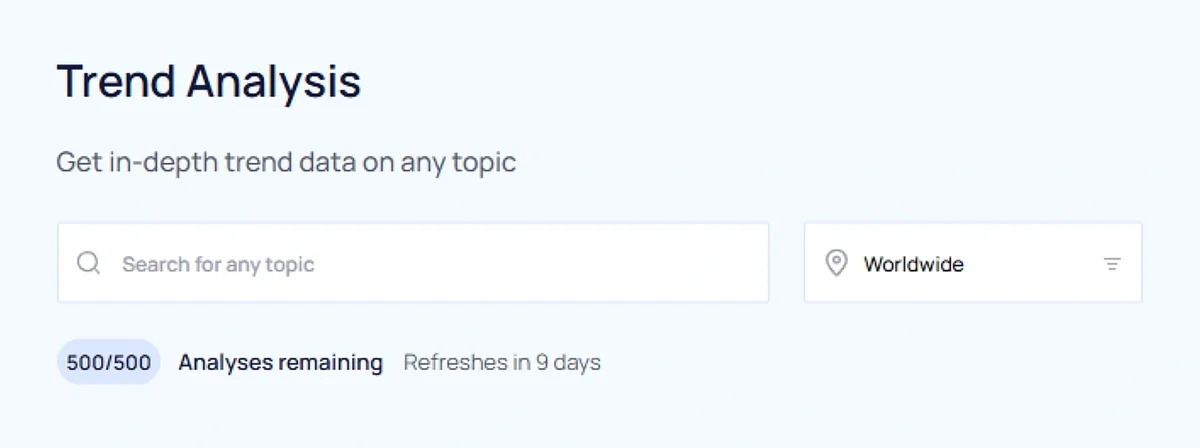
Starting with your seasonal products that are usually easy to predict, toss them into the Trend Analysis tool:
If you sell fall home goods, for example, search your core product categories and look at which related topics and use cases are getting more popular as you head into the season. A product you've always stocked might have a new angle driving demand this year, so they’re worth looking up.
For your trend-sensitive products, treat Exploding Topics data as a direct input to your forecast. If a product in your niche shows growing early interest, that's a signal to plan more inventory than last year's sales would suggest.
On the other hand, if a category you were planning to expand into is stagnant or declining, you have data to justify stocking less.
For example, let’s say you stock humidifiers, and you tend to sell more of them in the fall and winter months.
However, if you had checked Exploding Topics in December or January, you would have seen a sudden popularity spike as more people became more interested in using humidifiers for things like skincare routines, plant care, and general indoor air quality optimization:
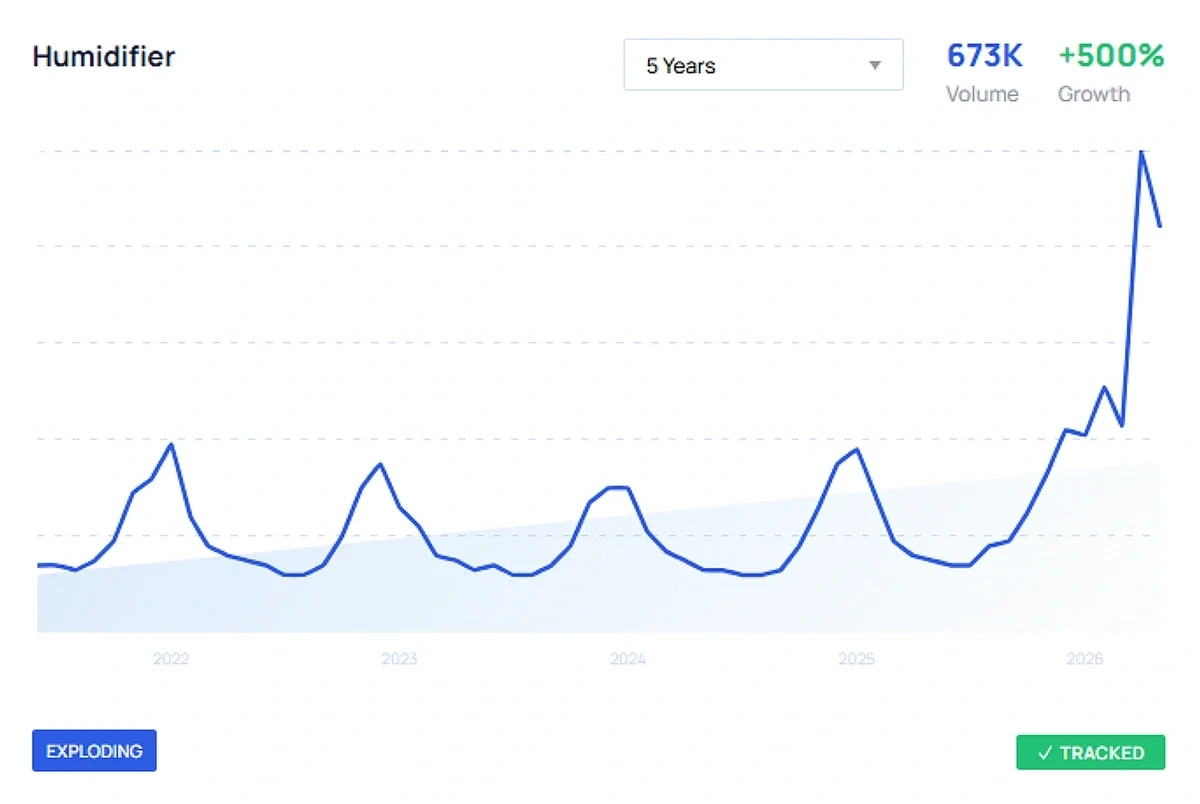
Stocking extra humidifiers at that point would have been a great idea, as sales continue to spike in comparison with years before.
The goal here is to use your historical sales as a baseline, then layer trend signals on top, combining what you know happened with what's actually going on in the market right now.
For a deeper dive into using Exploding Topics in your demand forecasting, check out How to Master E-commerce Demand Forecasting + Find More Profitable Products.
Step 4: Set Reorder Points and Safety Stock
With your cleaned data and trend signals in hand, build out your forecast SKU by SKU and calculate two numbers for each product: your demand estimate and your reorder point.
Your reorder point is the inventory level at which you need to place a new purchase order to avoid a stockout. A straightforward formula to follow is:
(average daily sales × lead time in days) + safety stock
Safety stock is the buffer you keep beyond your expected demand to absorb forecast errors and supply chain delays. A common way to figure out how much you need is to multiply your average daily sales by the number of buffer days you want to keep.
For your trend-sensitive seasonal products, you might want to build in a more conservative buffer. Demand can speed up faster than your lead time allows you to respond, and running out of stock during a short seasonal peak is typically a bigger problem than holding a few extra units at the end.
Keep good notes as you go. If your forecast turns out wrong, document exactly what happened. These notes will help you make a more accurate forecast next season!
Step 5: Build Your End-of-Season Plan Before the Season Starts
Don’t wait to plan for the end of the season when it arrives. By the time sales drop off, your options for getting rid of any excess stock have shrunk significantly.
Before peak season begins, decide in advance what you'll do with inventory that doesn't sell. A clearance or flash sale strategy should already be mapped out, including the discounts you're willing to accept and the timing of markdowns.
Some seasonal merchandise can carry forward to next season without losing much value. Identify those products during your purchasing decisions and scale your orders accordingly, rather than treating all seasonal inventory the same.
For products with a short appeal window (anything tied to a specific cultural moment, a trending character, or a current-year theme), consider building your purchase quantities conservatively from the start. It's often better to sell out and miss a few sales than to absorb a large markdown on inventory that has a hard expiry date on its relevance.
Reviewing your exit plan against actual sell-through rates mid-season also gives you time to pull forward your clearance timing if a product isn't moving as expected, rather than reacting after the peak has already passed.
Variables That Can Throw Off Your Seasonal Forecast
No matter how much thought and careful planning you put into your forecast, your inventory plan will miss sometimes. These are the most likely culprits to throw you off:
Competitor stockouts. When a competitor runs out of a seasonal product, their demand could shift directly to you. Try to keep an eye on competitor inventory levels during peak season so you’re ahead of the game if they sell out.
Supply chain delays hitting at the wrong time. A two-week shipping delay matters a lot more for Halloween decor in early October, for example, than it does for a year-round product. Seasonal inventory has hard deadlines, and delays that wouldn’t matter as much at other times of year can wipe out your entire selling window for a seasonal product.
To minimize the possibility of this happening, build extra lead time into your purchase orders for your most time-sensitive seasonal products, and have a backup supplier identified in advance just in case.
Treating a viral spike as a new baseline. If a product had an unusually strong season because of a press mention, an influencer feature, or a social media moment, that result is real, but it's typically not repeatable. Using that spike as your demand baseline for the following year is one of the fastest ways to overstock. Flag those anomalies when you clean your data in Step 2, and make sure your next forecast is built on normalized demand, not a one-time event.
Underestimating the post-holiday return surge. For E-commerce stores, the period immediately after peak season often brings about a significant return volume. Gift-driven categories are particularly prone to this. Factor your typical return rate into your end-of-season inventory expectations so you're not caught with more stock and fewer sellable units than your sales numbers suggest.
The best way to keep your seasonal inventory plan as accurate as possible is to combine clean historical data with forward-looking trend research. Your past sales tell you what to expect, whereas the trend data you get from Exploding Topics tells you where demand is heading.
Start your free trial of Exploding Topics Pro to find trending seasonal products before they peak and curate a more accurate seasonal inventory.
Stop Guessing, Start Growing 🚀
Use real-time topic data to create content that resonates and brings results.
Exploding Topics is owned by Semrush. Our mission is to provide accurate data and expert insights on emerging trends. Unless otherwise noted, this page’s content was written by either an employee or a paid contractor of Semrush Inc.
Share
Newsletter Signup
By clicking “Subscribe” you agree to Semrush Privacy Policy and consent to Semrush using your contact data for newsletter purposes
Written By


Jolissa Skow is a senior content writer and content strategist with a background in SEO, Google Analytics, and WordPress. She's be... Read more