Exploding Topics
Remineralizing Gum search volume grew from under 100 to 27,100 monthly searches between February 2024 and January 2026.
Remineralizing gum
+5100%
GLP 1 Supplement search volume grew from 5,920 to 74,000 monthly searches between February 2024 and January 2026.
GLP 1 supplement
+1150%
Soursop Bitters search volume grew from 9,900 to 110,000 monthly searches between March 2024 and February 2026.
Soursop bitters
+1011%



Get Advanced Insights on Any Topic
Discover Trends 12+ Months Before Everyone Else
How We Find Trends Before They Take Off
Exploding Topics’ advanced algorithm monitors millions of unstructured data points to spot trends early on.
Keyword Research
Performance Tracking
Competitor Intelligence
Fix Your Site’s SEO Issues in 30 Seconds
Find technical issues blocking search visibility. Get prioritized, actionable fixes in seconds.
Powered by data from
Latest Blog Posts
Featured Case Studies
See what's trending before everyone else
Each week, we'll send you our best Exploding Topics. Plus, expert insight and analysis.
7 Best Google AI Overviews Tracking and Monitoring Tools

 Add Exploding Topics on GoogleAdd Exploding Topics as your preferred source to see more of our stories on Google.
Google’s AI Overviews (AIO) now appear on roughly 50% of searches. And when one does appear, it sits above the organic results on the page.
Traditionally, rank trackers logged where you ranked in the 10 blue links. But when AI Overviews appeared, those tools had to scramble to add tracking for them or risk becoming outdated.
Unlike traditional rankings, though, AI Overviews don’t appear consistently for every search, can vary between users, and contain multiple cited sources rather than a single ranking position. That makes them much harder to measure reliably.
Some rank tracking tools stepped up to the plate and added AI Overviews tracking, while new ones also emerged that are centered around tracking visibility in large language models (LLMs).
In this guide, I’ll take a look at the top AI Overview tracking tools to help you decide which one will work best for your team. I’ll go over what makes them great, how much you can expect to pay for them, and how well they hold up to the competition.
What Makes a Good Google AI Overviews Tracker?
Not every tool that claims to track AI Overviews does it equally as well. Before you commit to one, here are three things to take a critical look at first:
- Detection method: AI Overview trackers collect data in different ways. Some (like Semrush) draw from large proprietary prompt databases built from billions of real AI search interactions. Some (like Ziptie) use real browser sessions, rendering search results the way an actual user would. Others query AI platforms directly with automated prompts, capturing responses at the individual query level. In general, Semrush’s database method and other tools’ browser session rendering method are the two strongest, most accurate ways to obtain data.
- Citation-level data: A tool that tells you "an AI Overview appeared" gives you less useful data than one that tells you which URLs Google cited inside it. Citation tracking lets you see which of your pages are earning AIO mentions, which competitor pages are getting cited instead of yours, and where the gaps are.
- Trend tracking over time. A single snapshot of your AIO presence is helpful, but not as useful as being able to see your progress over time. You need to know whether you appeared yesterday and disappeared today, and whether a content update you made last week actually changed anything. Look for tools that log historical data rather than just current state.
7 Best Google AI Overviews Tracking Tools
Here's a quick comparison before I go deeper into each tool:
| Tool | Best for | AI platforms tracked | Starting price |
| Semrush AI Visibility Toolkit | Full-ecosystem AIO monitoring | AI Overviews, AI Mode, ChatGPT, Gemini | $99/mo |
| Ziptie | AIO detection accuracy | AI Overviews, ChatGPT, Perplexity | $69/mo |
| SE Ranking | AIO tracking inside your rank tracker | AI Overviews, AI Mode, ChatGPT, Perplexity | $174.40/mo |
| Otterly.ai | AIO monitoring with content recommendations | AI Overviews, ChatGPT, Perplexity, Copilot | $25/mo |
| Profound | Enterprise-grade AIO citation depth | AI Overviews, ChatGPT, Perplexity (Growth); 10 platforms at Enterprise | $399/mo |
| Rankability | Historical AIO citation tracking | AI Overviews + traditional SERP | $99/mo |
| Advanced Web Ranking | AIO brand mention tracking inside a rank tracker | AI Overviews, AI Mode, ChatGPT, Perplexity | $139/mo |
1. Semrush AI Visibility Toolkit
Best for: Most marketing teams
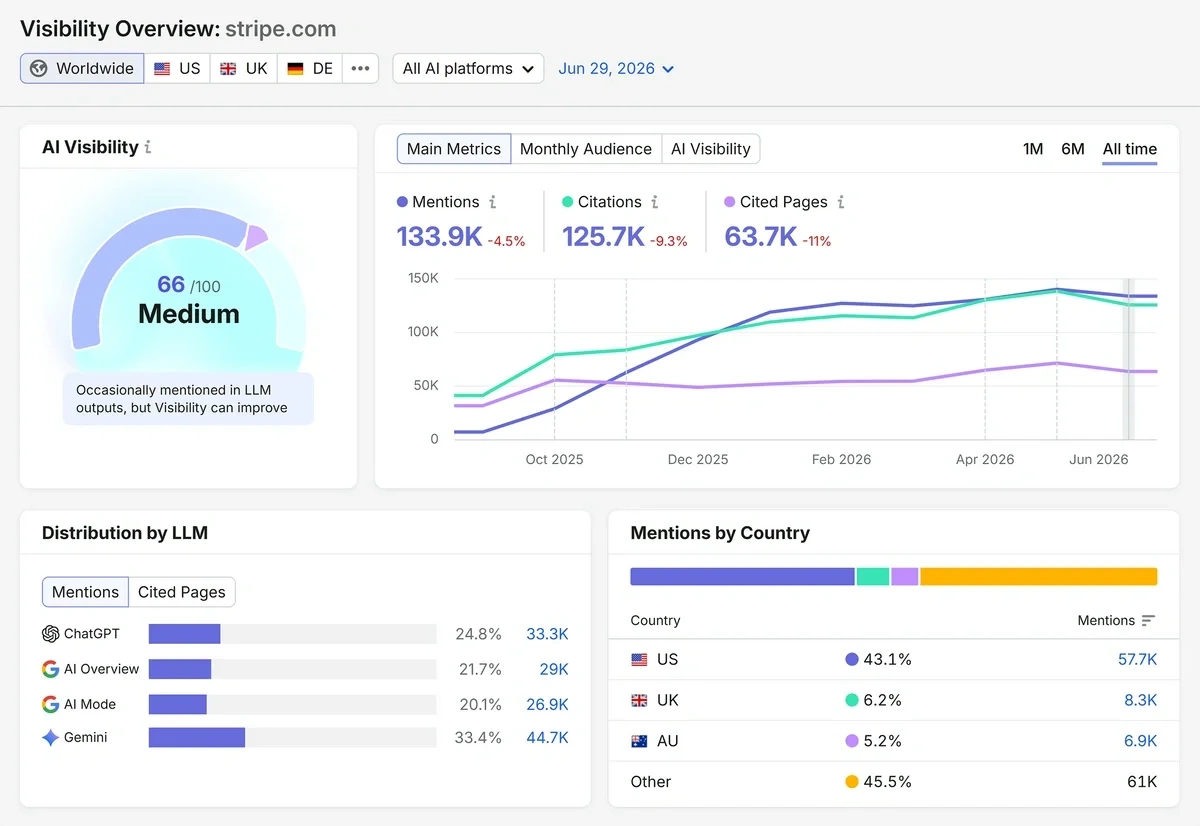
Semrush's AI Visibility Toolkit tracks how your brand appears across AI-generated search results, including Google AI Overviews, Google AI Mode, ChatGPT, and Gemini. But beyond just tracking when, where, and how you appear, it also surfaces the specific prompts you’re mentioned in, top competitors, your brand’s perception across AI mentions, and more.
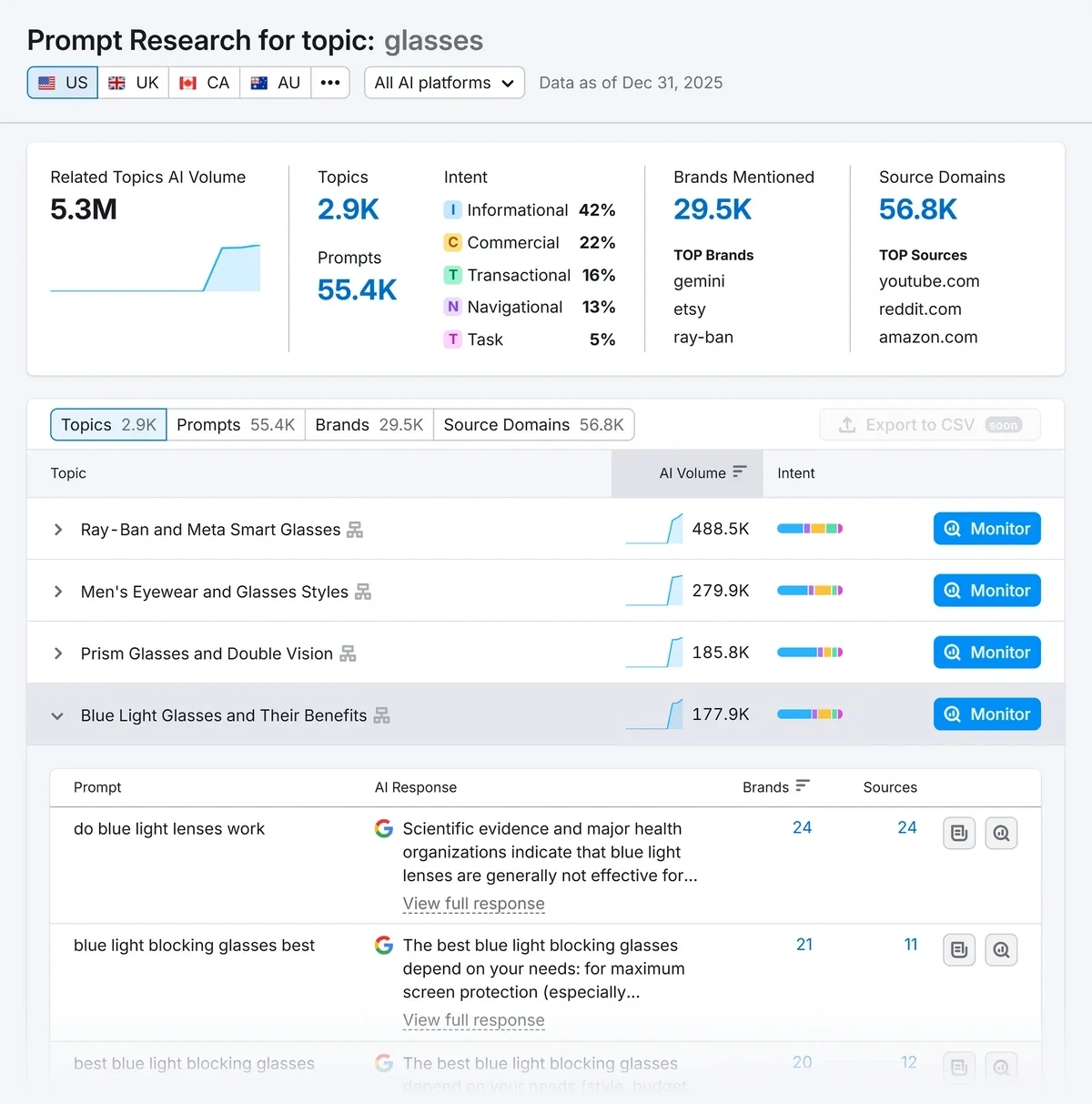
A feature I particularly love within the AI Visibility Toolkit is Prompt Research. Prompt Research is the AI search equivalent of keyword research. Enter a topic and the tool surfaces the real prompts people are asking AI platforms in your industry, along with LLM volume scores, search intent, and which brands and source domains are getting cited in the responses.
It's such a powerful resource for identifying content gaps, finding new topics to write about, and identifying brands and sources that are doing really well in AI answers so you can try to copy their tactics.
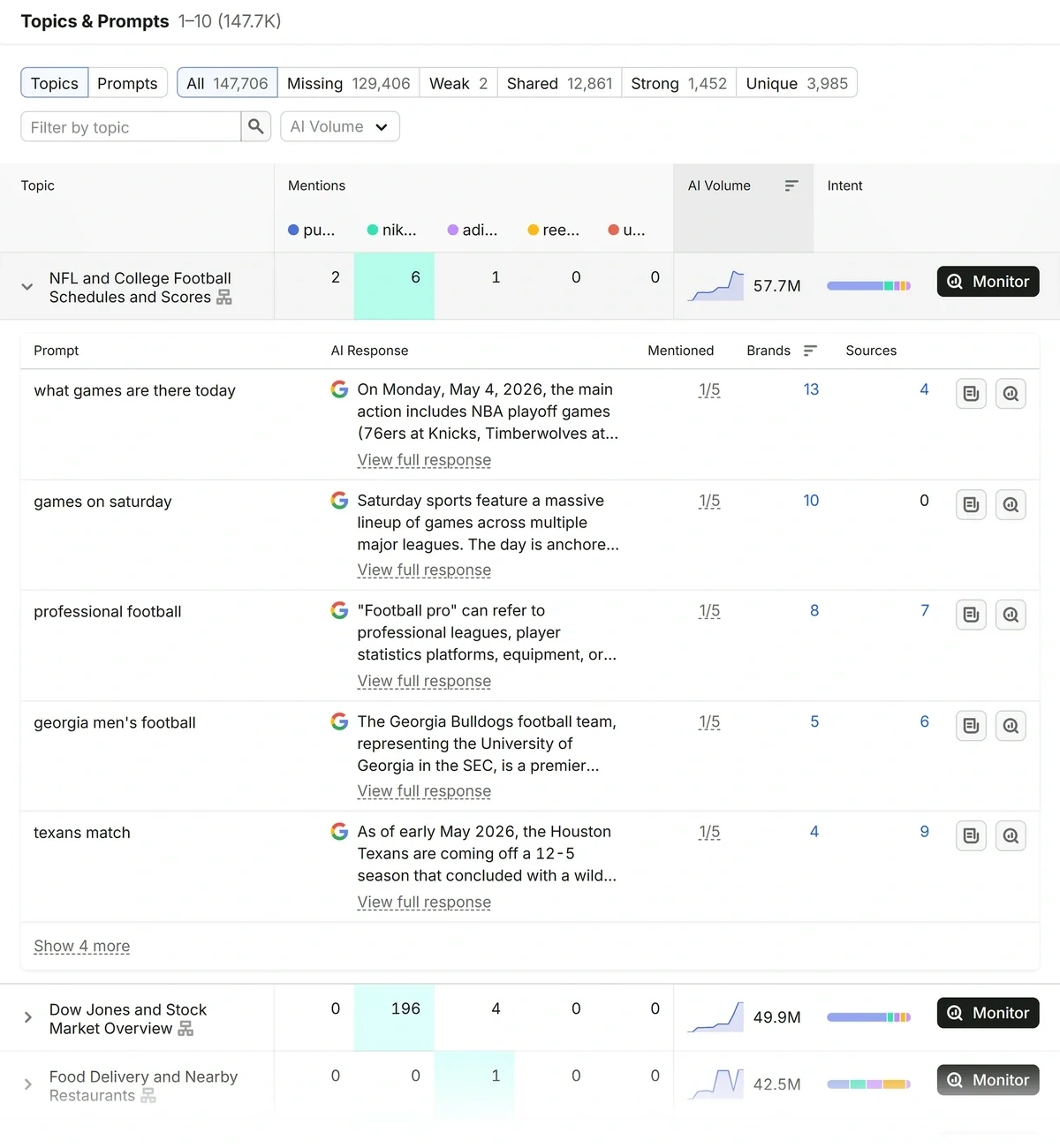
And for AIO tracking, you can narrow your visibility report to just AI Overviews to figure out where your brand is coming up, which pages specifically are ranking in AI Overviews, which brands you compete with, and more.
I’m also a huge fan of the Competitor Research gap report. It surfaces the specific prompts where your competitors appear in AI Overviews but you don't — essentially a prioritized list of content opportunities, organized around the queries where you're currently lacking in AIO visibility.
The standalone AI Visibility Toolkit starts at $99/month. For teams that want traditional SEO bundled in — keyword research, rank tracking, and site auditing, for example — Semrush One starts at $165.17/month billed annually and includes both toolkits under one subscription.
Semrush’s SEO tools have AI Overviews data built in, too. You can track your brand’s appearances there in the Position Tracking tool, see which keywords trigger AI Overviews in the Organic Research report, and more.
AI platforms tracked: Google AI Overviews, Google AI Mode, ChatGPT, Gemini
Starting price: $99/month (AI Visibility Toolkit standalone)
2. Ziptie
Best for: Dedicated AIO specialists
Some AIO trackers query Google through an API. Ziptie uses real browser sessions with real Google accounts, which means it renders search results the way an actual user would. That methodology difference matters more for AI Overviews than for any other SERP feature, because AIOs don't always appear consistently across search types.
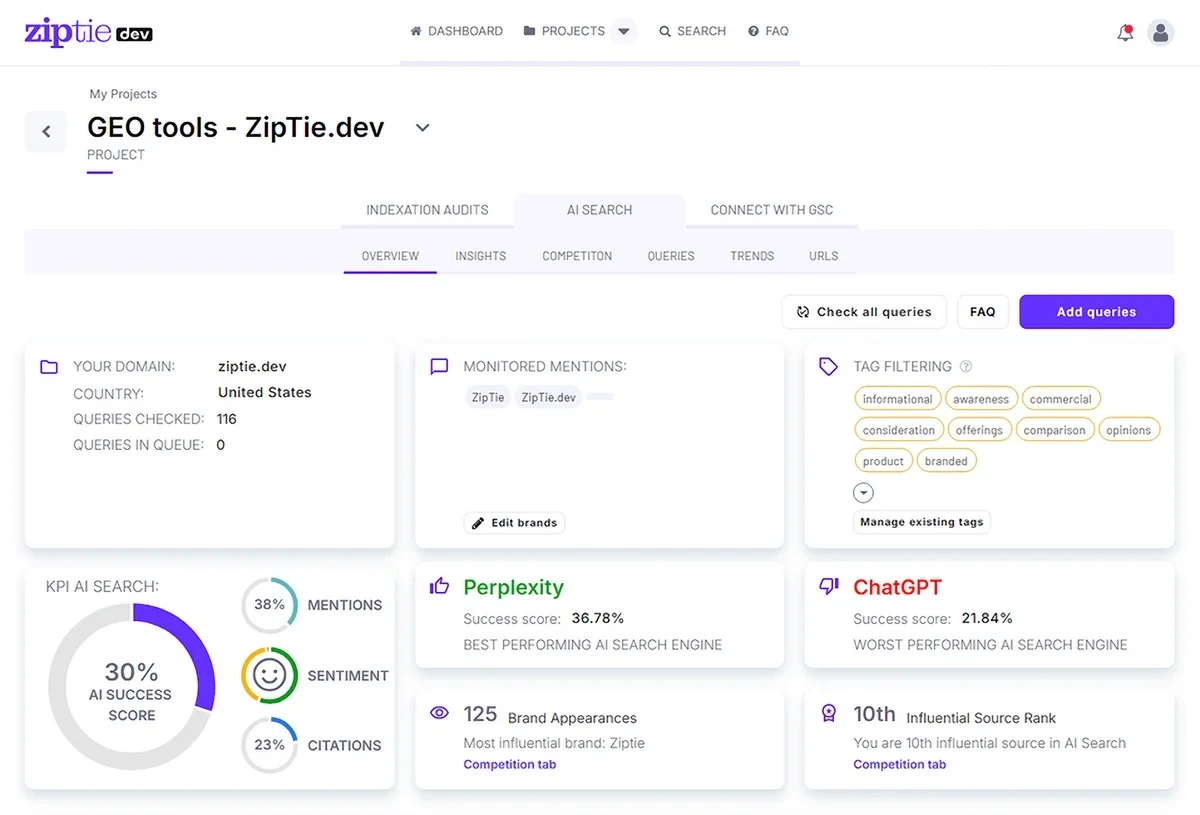
One thing that sets Ziptie apart from other trackers is how it handles query discovery. Rather than asking you to manually predict which prompts to track, it can analyze your actual content URLs and generate the conversational queries your audience is likely asking about them. You can also import queries directly from Google Search Console or enter them manually. If you’ve struggled with figuring out which prompts to track, that URL-based approach is a fantastic shortcut.
For each tracked keyword, you get citation-level data — whether your brand appeared, which URLs were cited, and the sentiment context around those mentions. The AI Success Score aggregates mention frequency, sentiment, and citation strength into a single metric at the query level, so you can quickly identify where to focus your optimization efforts without manually reviewing individual AI response screenshots.
Ziptie tracks Google AI Overviews, ChatGPT, and Perplexity across six regions.
AI platforms tracked: Google AI Overviews, ChatGPT, Perplexity
Starting price: $69/month (500 AI Search checks)
Get More Search Traffic
Use trending keywords to create content your audience craves.
3. SE Ranking
Best for: Teams already using SE Ranking
If you’re tracking AI visibility in a separate tool from your traditional rankings, SE Ranking can close that gap. Its AI Overviews Tracker sits alongside traditional rankings in the same project, so you can see where your site ranks in organic results and whether it appears in the AI Overview for the same keyword in one view (similar to Semrush).
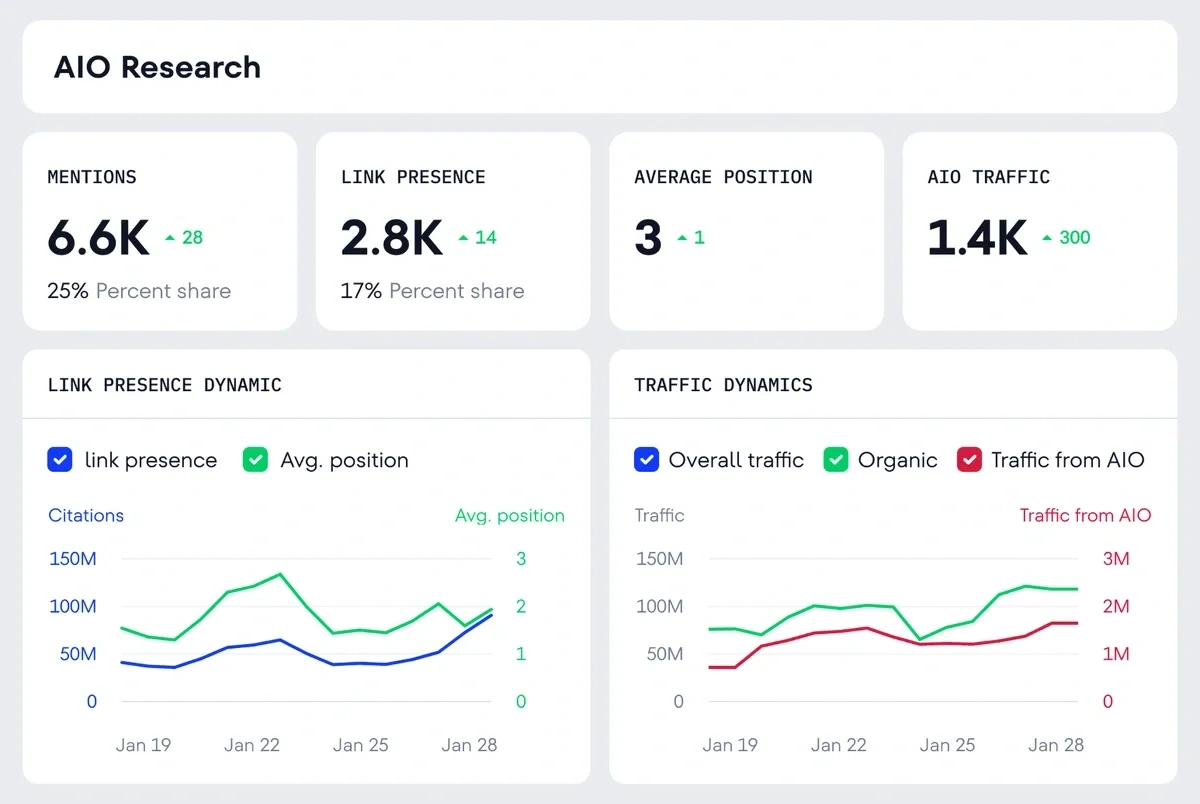
A feature that stands out to me in SE Ranking is the Organic–AI Overlap metric. It shows how often your domain appears in both organic results and an AI Overview for the same keyword. That data is really handy for diagnosing traffic drops: when organic position holds steady but clickthroughs decline, checking whether an AIO appeared above your result (or if you dropped out of the AIO) is often where the answer is.
Beyond your own domain, you can analyze the source domains and individual URLs that Google pulls into AIO responses, filtered by type (like media, blogs, forums) to see how frequently each appears across your tracked keywords. That gives you a really good look at which sites are winning AIO citations in your niche and where to focus your content efforts.
Pricing starts at $174.40/month for the Core plan billed annually, which includes 100 prompts daily across five platforms, plus the AI Search addon for the AI tracking features.
AI platforms tracked: Google AI Overviews, Google AI Mode, ChatGPT, Perplexity, Gemini
Starting price: $174.40/month (Core, billed annually)
4. Otterly.ai
Best for: Small businesses and solo practitioners
Otterly is on this list specifically because it covers the full loop from monitoring to optimization. Otterly's GEO Audit feature analyzes your pages against dozens of on-page factors to identify why AI isn’t citing them and what to change to improve your citation rate. You can use this feature to move from "we're not showing up" to "here's what we're doing about it" without switching tools.
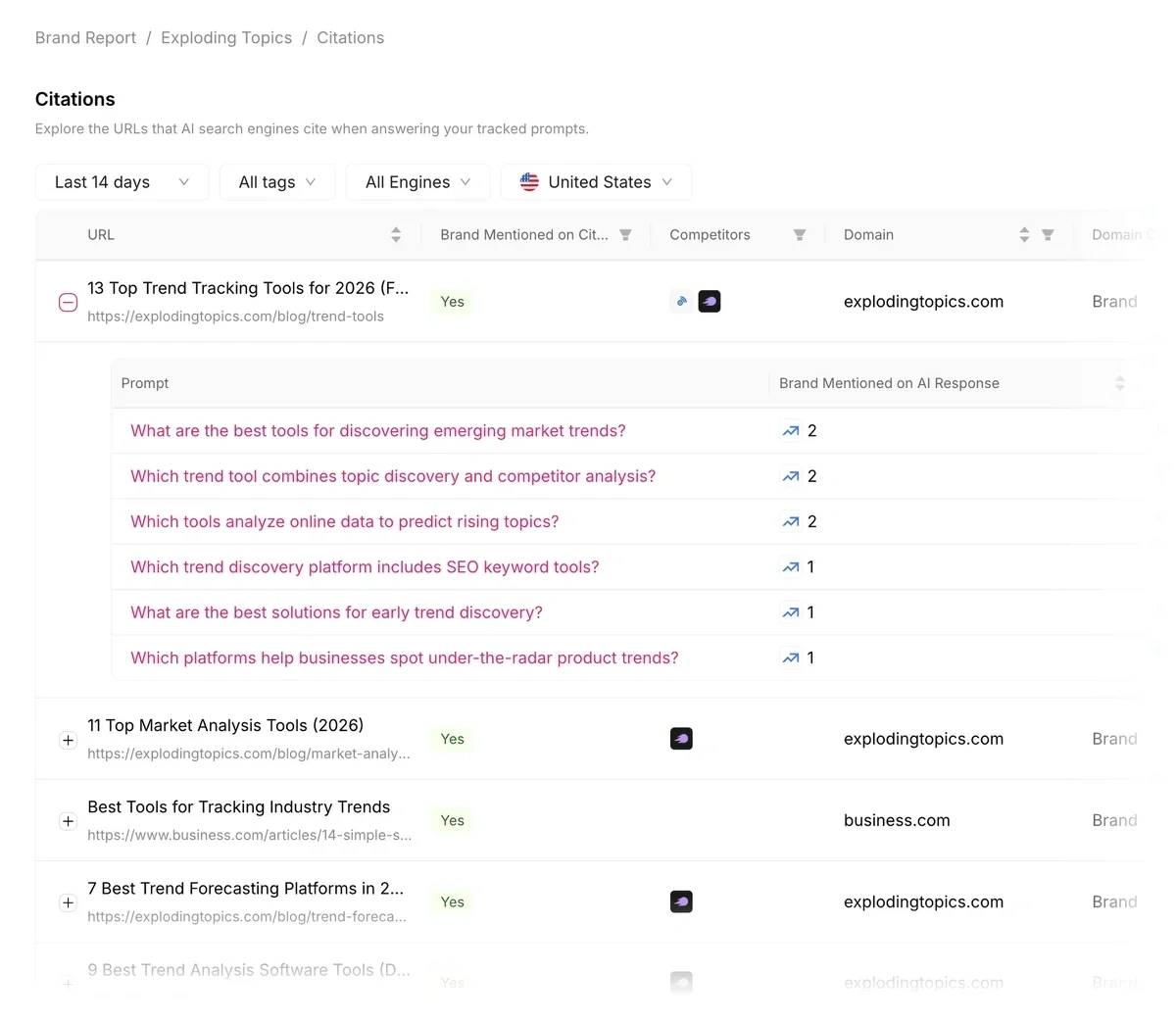
The citation-level data (which URLs Google actually pulled into an AIO response, and which competitor pages are getting cited instead of yours) feeds directly into that workflow, giving you specific pages to prioritize in the audit.
All four base platforms — ChatGPT, Google AI Overviews, Perplexity, and Microsoft Copilot — are included on every tier, with daily tracking and 50+ country support. Google AI Mode and Gemini are available as paid add-ons.
The Lite plan starts at $29/month for 15 prompts, making it one of the more accessible entry points on this list if you just want to validate whether AIO tracking is worth investing in before committing to a higher tier.
AI platforms tracked: Google AI Overviews, ChatGPT, Perplexity, Microsoft Copilot; Google AI Mode and Gemini as paid add-ons
Starting price: $29/month (15 prompts)
5. Profound
Best for: Enterprise teams that need deep AIO citation data across a high volume of prompts and platforms
Every prompt you add to Profound is re-run daily across the platforms you cover, and each answer is stored as a complete snapshot. You’ll see whether your brand was mentioned, where it ranked in the answer, and which sources the model pulled from.
That snapshot history is part of what sets Profound apart in terms of AIO tracking at scale, because you're building a record of how AI Overview citations shift over time and in response to content changes you’re making in order to gain visibility.
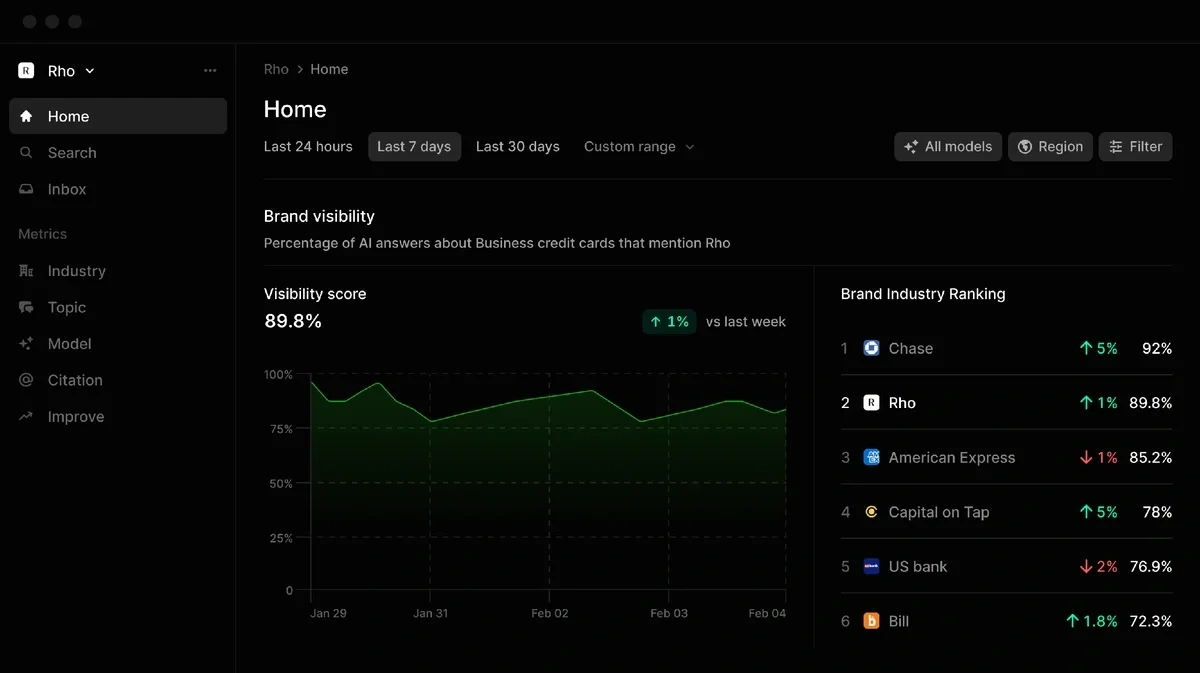
Similar to Ziptie, Profound also uses real browser searches to obtain AIO data, rather than using an API.
Where Profound goes beyond most tools on this list is features like Agent Analytics, which shows how AI crawlers are actually accessing your site — which pages they visit, how often they return, and what traffic and conversions are coming from AI referrals. That makes Profound a great choice for enterprise teams that need to connect AIO citation data to actual site behavior.
The entry point is $99/month, but AI Overviews tracking is only available starting at the Growth plan level which is $399/month (or slightly less if billed yearly). Profound is best suited to enterprise brands where AI visibility is a big priority. It's much more platform than most smaller teams need.
AI platforms tracked: ChatGPT, Perplexity, Google AI Overviews (entry); adds Gemini, AI Mode, Claude, Copilot, Grok, Meta AI, DeepSeek at higher tiers
Starting price: $99/month overall, but $399 per month for AIO tracking
6. Rankability
Best for: Agencies needing specific client reporting
Rankability's Tracker (marketed specifically toward agencies) monitors visibility across traditional search, AI answer engines, Google’s local pack results, and video search in one place. It rolls everything into its Search Performance Index (SPI), a single 0–100 score that shows whether overall visibility is going up or down.
For each tracked keyword, the platform captures whether AI engines mentioned your client’s brand, where the brand landed in their recommendations, which of the brand’s pages were cited as sources, and how AI described the brand. So instead of just watching a ranking number for each client, you’re seeing the full AI answer scope.
My favorite Rankability feature is the way it handles citations. Tracker keeps a running feed of every citation you win, lose, or move up/down on, and a visual heatmap shows which domains are being cited consistently versus which have dropped off. This is really helpful for deciding which citation sources are worth building relationships with and which aren't worth your time.
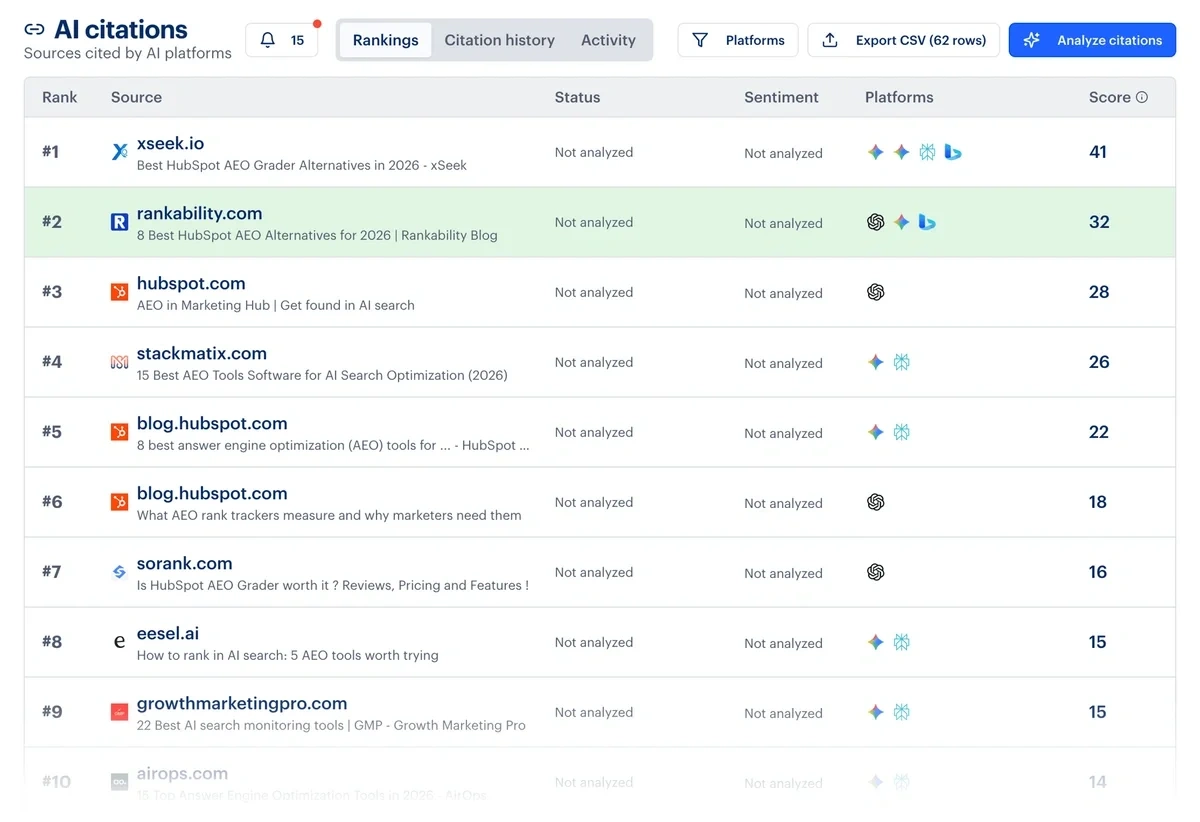
Rankability also comes with features to perform keyword research, write optimized content, run website audits, and more.
Every plan includes full platform access with unlimited clients and users — tiers differ only by monthly credits. Pricing starts at $99/month (Starter, 10,000 credits), with Growth at $199/month (30,000 credits) and Scale at $399/month (75,000 credits).
AI platforms tracked: ChatGPT, Perplexity, Google AI Overviews, Google AI Mode, Gemini, Claude, Grok, Microsoft Copilot, Brave AI, DeepSeek
Starting price: $99/month
7. Advanced Web Ranking
Best for: Traditional rank tracker users
AWR has been a rank tracking staple for over 20 years, and its AI Brand Mentions feature makes it worth including on this list. For each keyword you track, AWR identifies whether your brand was name-dropped in an AI Overview or AI Mode result, whether it was linked, or whether one of your pages was cited as a trusted source. It also shows the same data for competitors so you can spot content gaps.
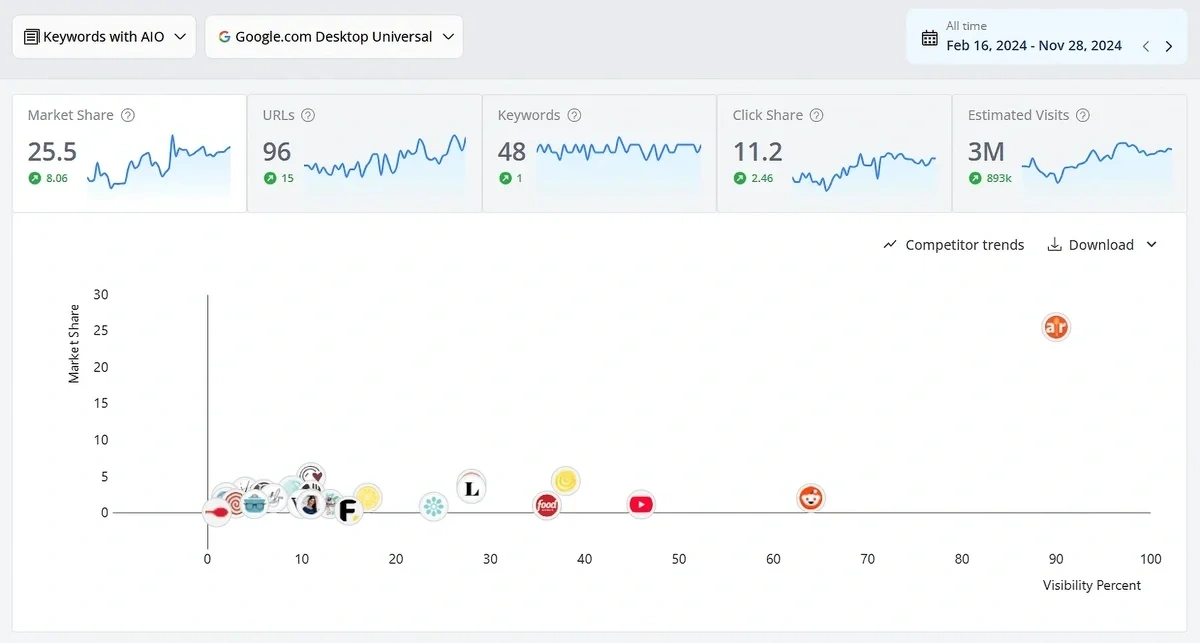
Beyond basic mention tracking, AWR estimates traffic and opportunities driven by AI results, surfaces the topics AI associates with your brand, and lets you track custom topics relevant to your business.
The mention classification is also a feature I like, because it delineates between a plain text mention, an inline link, and a citation. Tracking all three gives you a more complete picture of how Google's AI is engaging with your content than a simple yes/no appearance flag.
AI Search Visibility is included on all plans. Pricing starts at $139/month on the Pro plan.
AI platforms tracked: Google AI Overviews, Google AI Mode, ChatGPT, Perplexity, Gemini, Claude
Starting price: $139/month
My Recommendation
Start with the Semrush AI Visibility Toolkit. The Prompt Research feature works like keyword research for AI search — it helps you find the queries worth tracking before you commit to monitoring them. And the Competitor Research report shows exactly which prompts your competitors appear in that you don't, making it easy to plan out your content strategy from day one.
For teams already using Semrush for SEO or needing SEO tools, a Semrush One subscription bundles the AI Visibility Toolkit with the SEO platform. That includes Position Tracking, which shows AIO presence alongside traditional rankings in one dashboard.
Go ahead and start a free trial of Semrush One now to explore the AI Visibility Toolkit for yourself.
Stop Guessing, Start Growing 🚀
Use real-time topic data to create content that resonates and brings results.
Exploding Topics is owned by Semrush. Our mission is to provide accurate data and expert insights on emerging trends. Unless otherwise noted, this page’s content was written by either an employee or a paid contractor of Semrush Inc.
Share
Newsletter Signup
By clicking “Subscribe” you agree to Semrush Privacy Policy and consent to Semrush using your contact data for newsletter purposes
Written By


Jolissa Skow is a senior content writer and content strategist with a background in SEO, Google Analytics, and WordPress. She's be... Read more