Exploding Topics
Remineralizing Gum search volume grew from under 100 to 27,100 monthly searches between February 2024 and January 2026.
Remineralizing gum
+5100%
GLP 1 Supplement search volume grew from 5,920 to 74,000 monthly searches between February 2024 and January 2026.
GLP 1 supplement
+1150%
Soursop Bitters search volume grew from 9,900 to 110,000 monthly searches between March 2024 and February 2026.
Soursop bitters
+1011%



Get Advanced Insights on Any Topic
Discover Trends 12+ Months Before Everyone Else
How We Find Trends Before They Take Off
Exploding Topics’ advanced algorithm monitors millions of unstructured data points to spot trends early on.
Keyword Research
Performance Tracking
Competitor Intelligence
Fix Your Site’s SEO Issues in 30 Seconds
Find technical issues blocking search visibility. Get prioritized, actionable fixes in seconds.
Powered by data from
Latest Blog Posts
Featured Case Studies
See what's trending before everyone else
Each week, we'll send you our best Exploding Topics. Plus, expert insight and analysis.
4 AI Tools for Content Briefs (Tested by an SEO Writer)

 Add Exploding Topics on GoogleAdd Exploding Topics as your preferred source to see more of our stories on Google.
A high-quality AI content brief generator can help you find related topics and keywords quickly, streamline the content creation process, and make it easier to get marketing content onto your site regularly.
But if you choose a low-quality tool, or try to use a general purpose chat platform that doesn't understand context about keywords and SEO, you may wind up hurting your content marketing performance in the long run. I've personally tried and tested each of the high-quality content brief generation tools listed in this guide. While each one is reliable, I prefer some more than others—and explain why below.
Build a winning strategy
Get a complete view of your competitors to anticipate trends and lead your market
1. Semrush: Best for Most Marketers
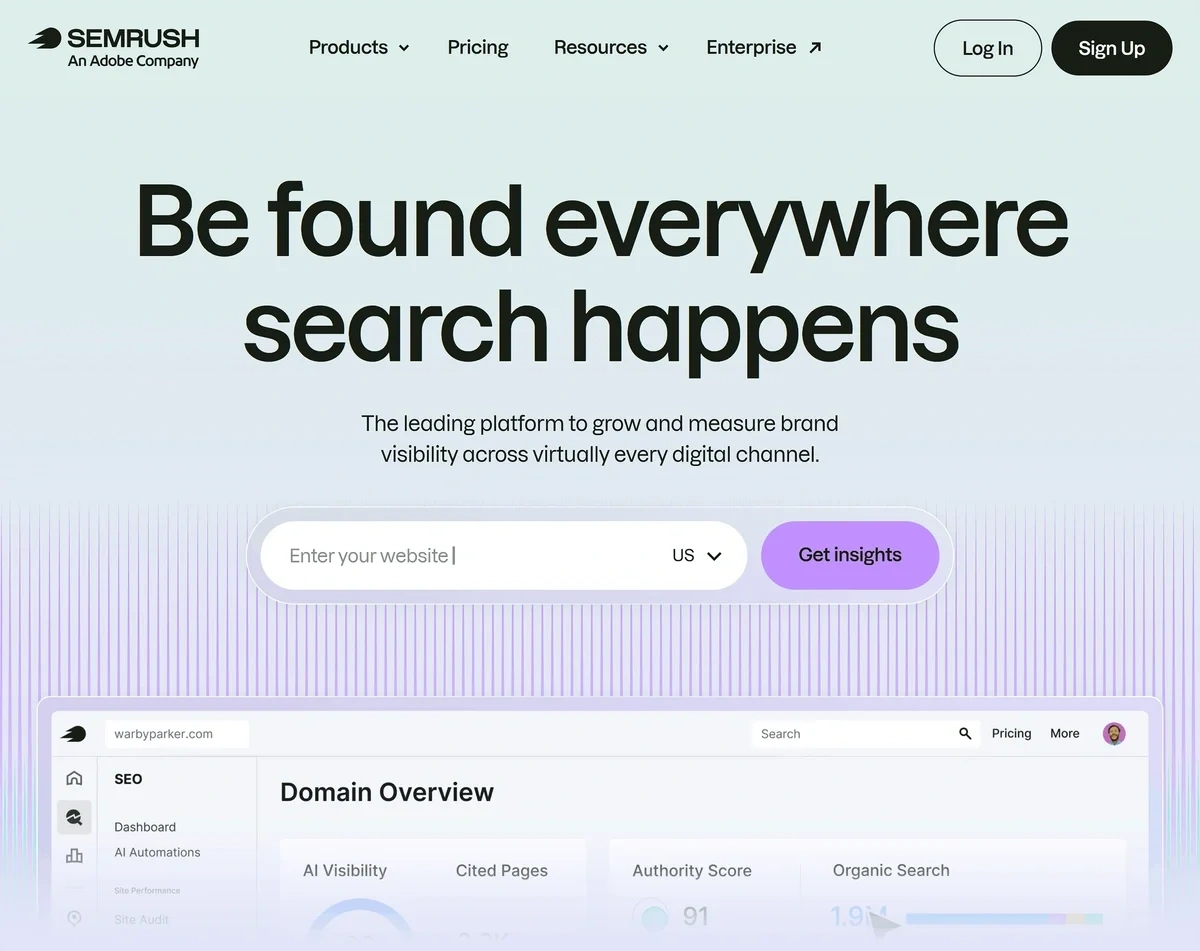
Semrush is a trusted, reliable SEO platform that offers two tools for creating content briefs: the SEO Content Template tool and the SEO Brief Generator.
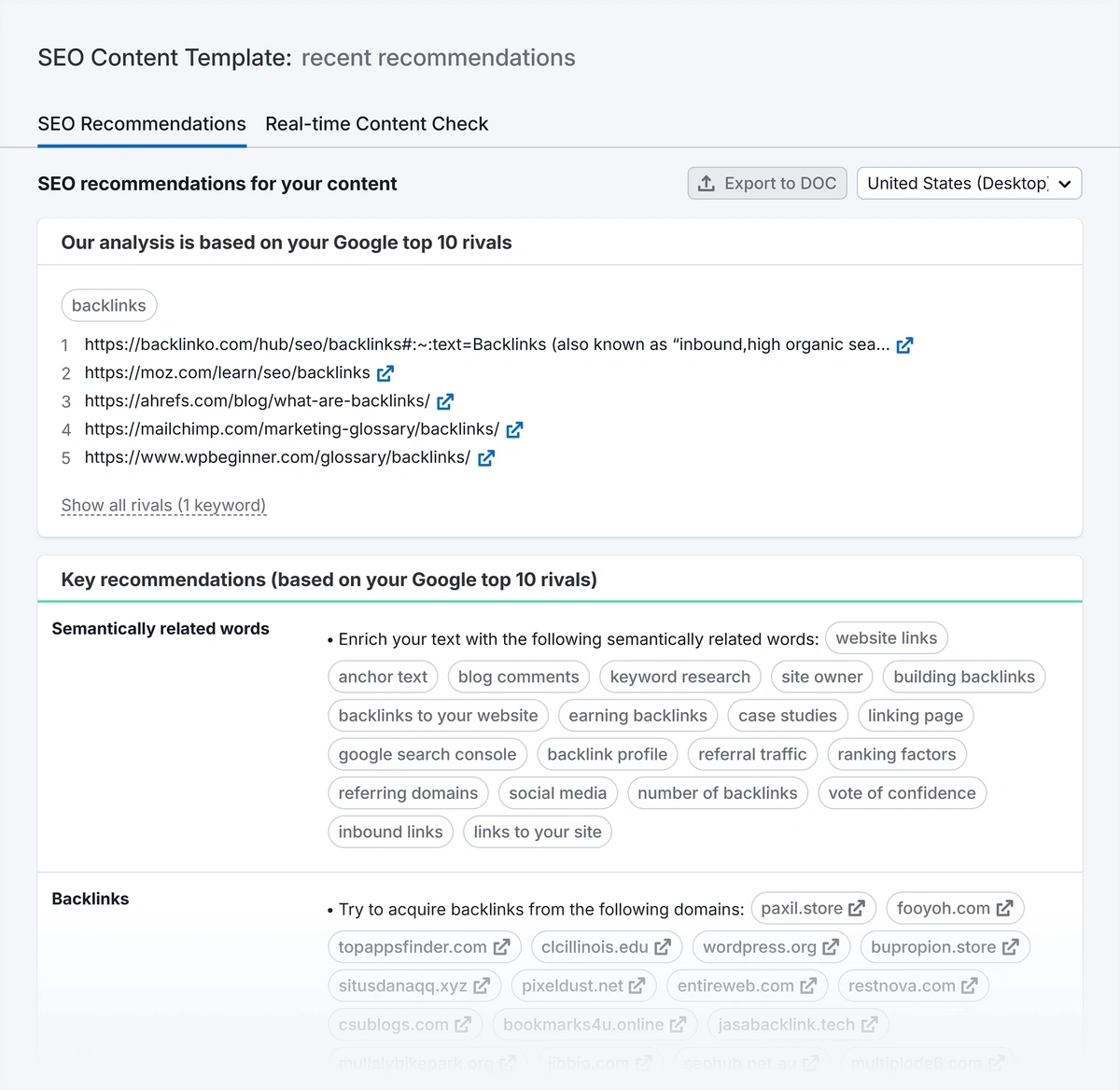
The SEO Content Template is a fast and helpful way to generate a brief and analyze your search engine results page (SERP) competitors for a given topic. Each template includes information about:
- The top 10 sites currently ranking in the SERP
- Semantic keywords to improve the SEO quality of your text
- A suggested readability score and article length
- Potential backlinks to pursue
- How your competitors are using the target keyword in their content
You can view these results in your browser, export the template to a Microsoft Word file, or send it to the SEO Writing Assistant or the AI Article Generator.
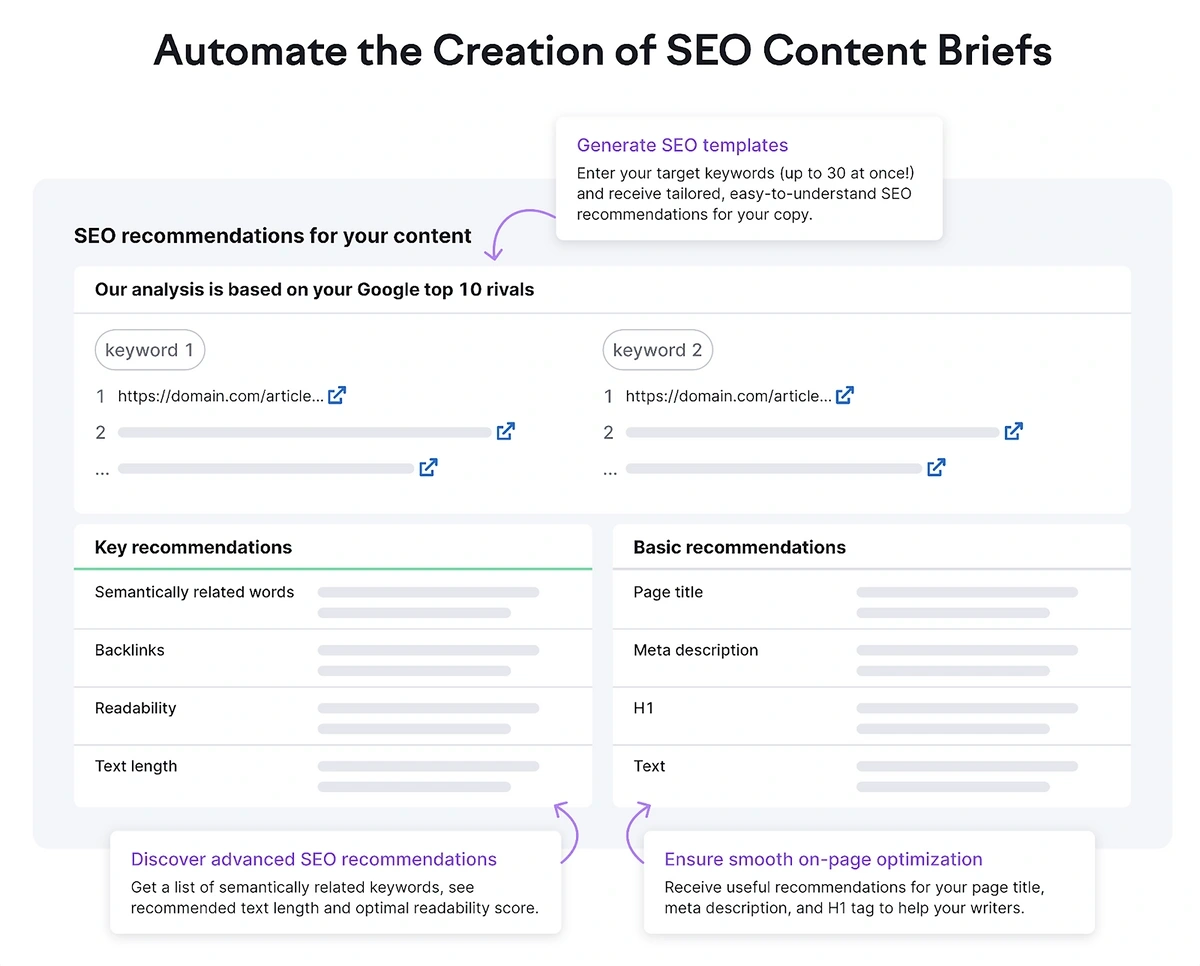
The SEO Brief Generator, which is part of the Content Toolkit, lets you customize every aspect of the brief. It's a more time intensive process than using the SEO Content Template, but you retain more control over the result.
To use the SEO Brief Generator, you'll need to:
- Conduct keyword research and enter your primary term into the generator
- Review a list of possible competitors and select the ones you'd like to focus on
- Choose a word count and suggested title
- Confirm the secondary keywords that you want to include in the text
- Review the suggested article structure and make any changes to headings and sections
- Select a meta title and description
The generator gives you suggestions for keywords, content, and structure along the way—you don't have to create anything from scratch, but you can completely change the brief if you want to.
It's easy to send your brief to Semrush's content optimizer tool, too, which will give you real-time SEO feedback as you write.
Semrush One plans start at $165.17 per month (when billed annually); the Content Toolkit is an additional $60 per month. You can also create a free Semrush account and only subscribe to the Content Toolkit, which makes it a very affordable option for many marketers.
My take: I love the tools' deep integration with Semrush's other toolkits, and the fact that you can subscribe to the Content Toolkit by itself if that's the only feature you need. I don't like to use AI to generate content, so I also appreciate the ability to stop after creating a brief—but if you want AI's help to write, the option is there.
2. MarketMuse: Best for Low-Volume Content Production
The MarketMuse platform is useful for both creating content briefs and getting suggestions on ways to refresh older content that already exists on your site.
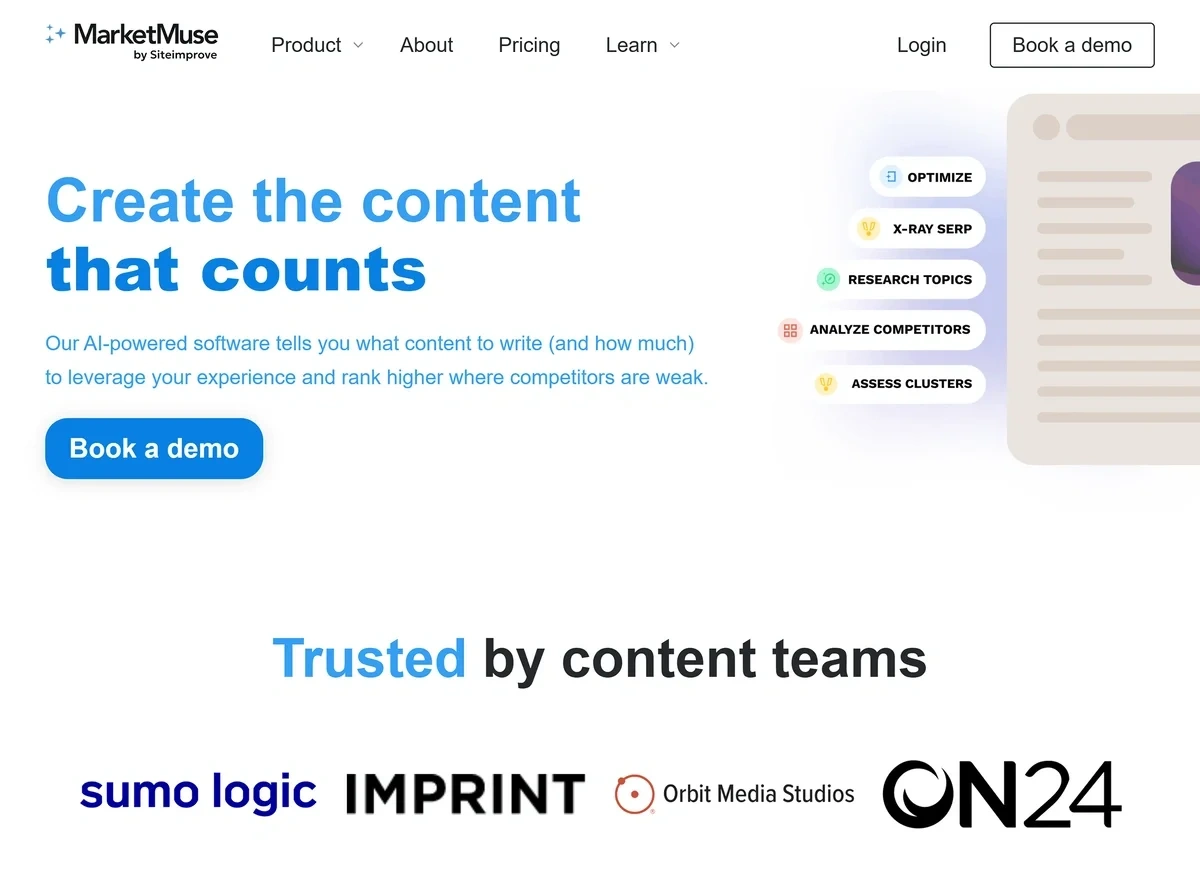
When you first start using MarketMuse, you can choose if you'd like to:
- Analyze the competitive and SERP landscape
- Research topics and plan content
- Generate a brief
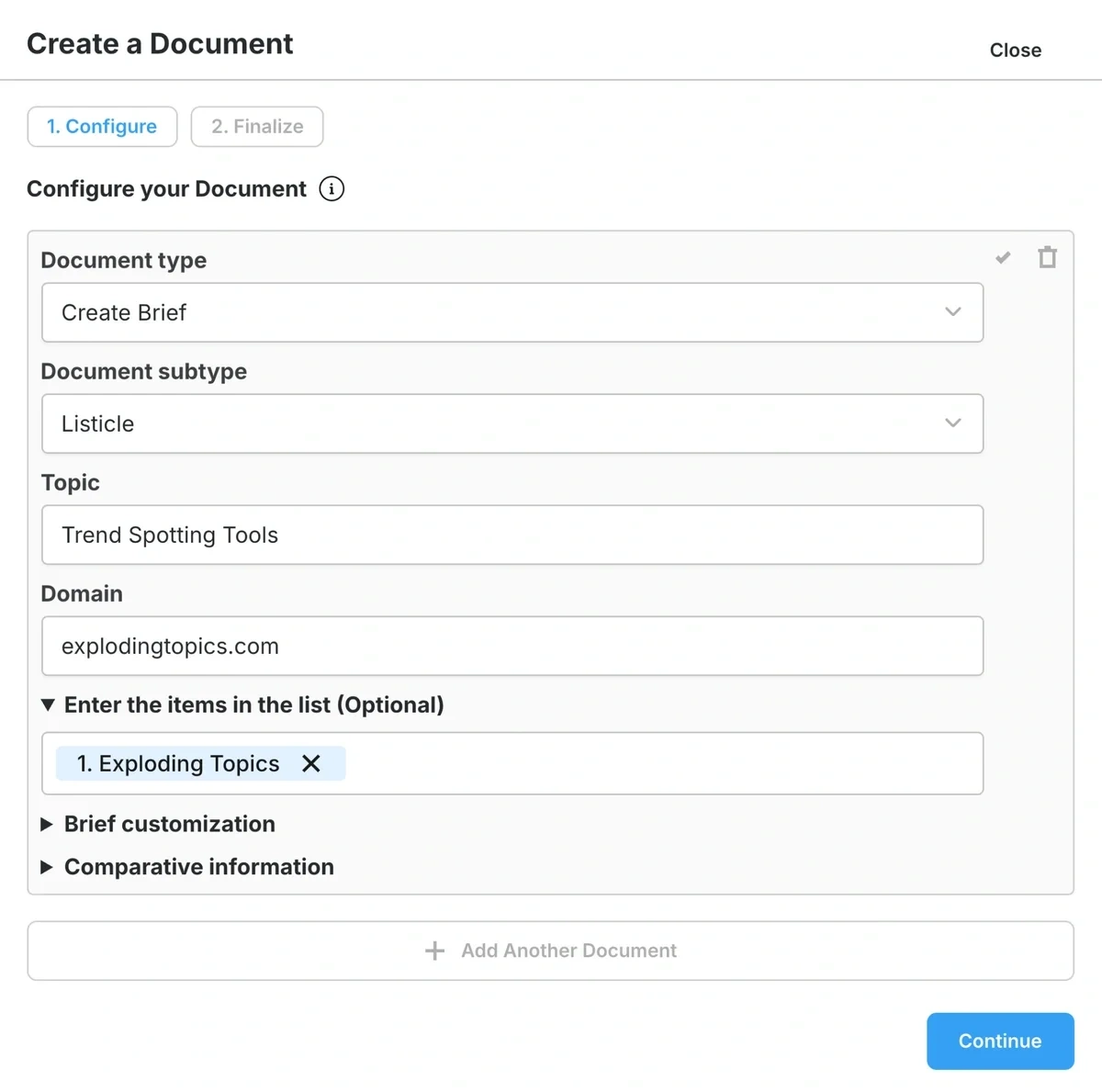
One thing I like about MarketMuse is that you can specify what kind of content your brief is for. The app doesn't automatically assume you're writing a long blog post. You can choose to create a brief for:
- Informational articles
- Comparison pieces
- Frequently asked questions
- How-to guides
- Listicles
- News updates
- Product reviews
- Localized content
MarketMuse pricing is available upon request; plans include the ability to create between five and 20 content briefs per month. As a result, MarketMuse is only suitable for teams with fairly low content creation needs.
My take: I once worked on a project that heavily relied on MarketMuse—and while I found the tool to be useful and accurate in its suggestions, I had trouble with the editing interface. You do run the risk of losing your text in any online brief generator if your browser crashes, so I prefer systems where I can export my brief to a file or pull it into Google Docs via an extension.
3. SE Ranking: Best Semrush Content Toolkit Alternative
SE Ranking's content marketing tool has several similarities to the Semrush Content Toolkit.
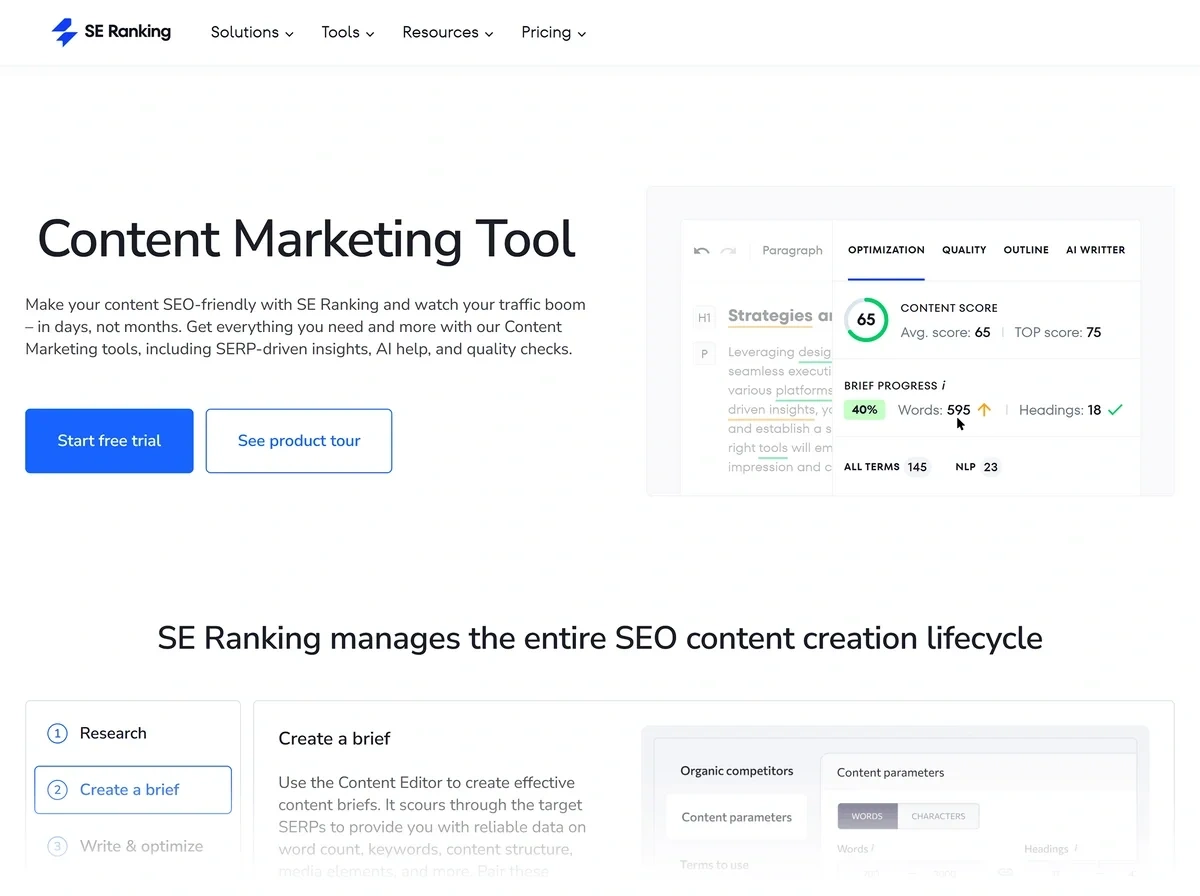
Both tools are connected to a larger SEO research platform, which makes it easy to identify keywords and plan other elements of your content strategy while generating briefs. And, like Semrush, SE Ranking includes both a brief creator and a content scoring tool.
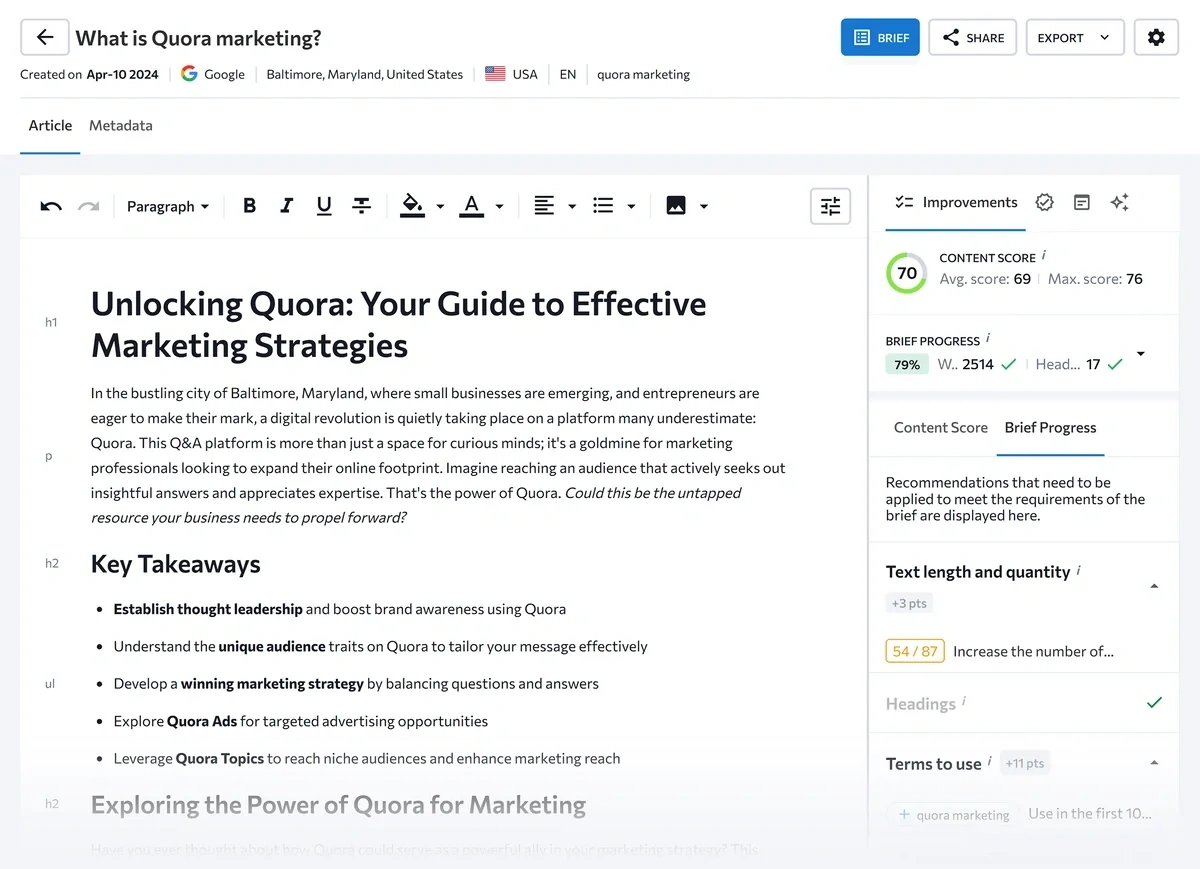
When you use the SE Ranking platform, you can adjust the brief both while you create it and after you've sent the results to the included text editor. The briefs include information about:
- Competing SERP pages
- Content length, images, heading frequency, and other structural elements
- Semantic keywords
- External links (you can manually add internal links as well)
- Questions to include
- Meta titles and descriptions
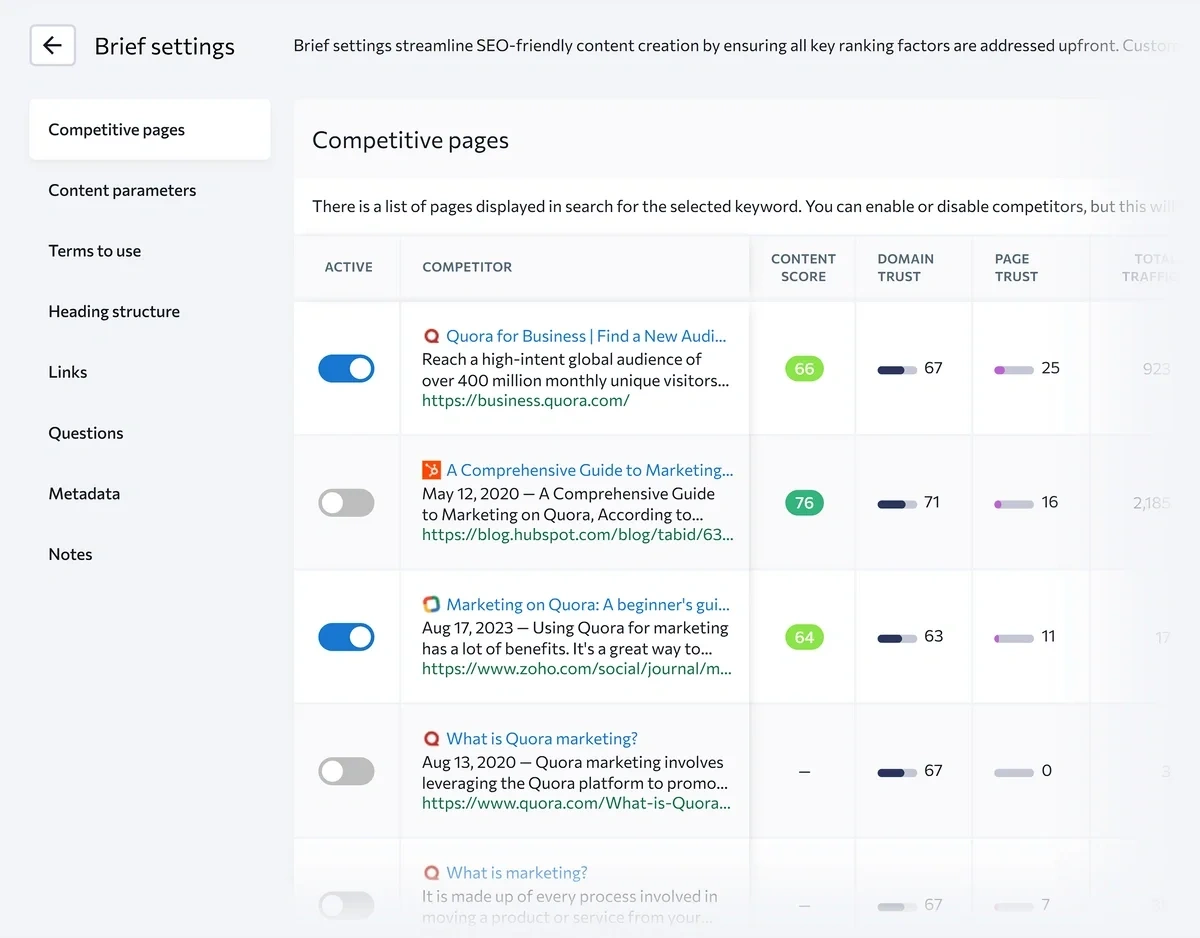
If you don't want to use SE Ranking's text editor, you can export the brief to a Word document or share it with someone else via a link.
SE Ranking plans start at $103.20 per month when billed annually and include 25 to 50 article briefs per month depending on plan.
My take: The similarities between SE Ranking and Semrush make this platform a solid alternative. I've always found SE Ranking to be very reliable and relatively easy to use, too.
That said, the Semrush Content Toolkit does offer a better deal—you can create 10,000 articles per month versus up to 50 with SE Ranking. If your content brief needs are limited, though, and you like the SE Ranking interface, then this is a solid choice.
4. Clearscope: Best for Corporate Teams
Clearscope is a content optimization platform that provides both briefing and analysis tools.
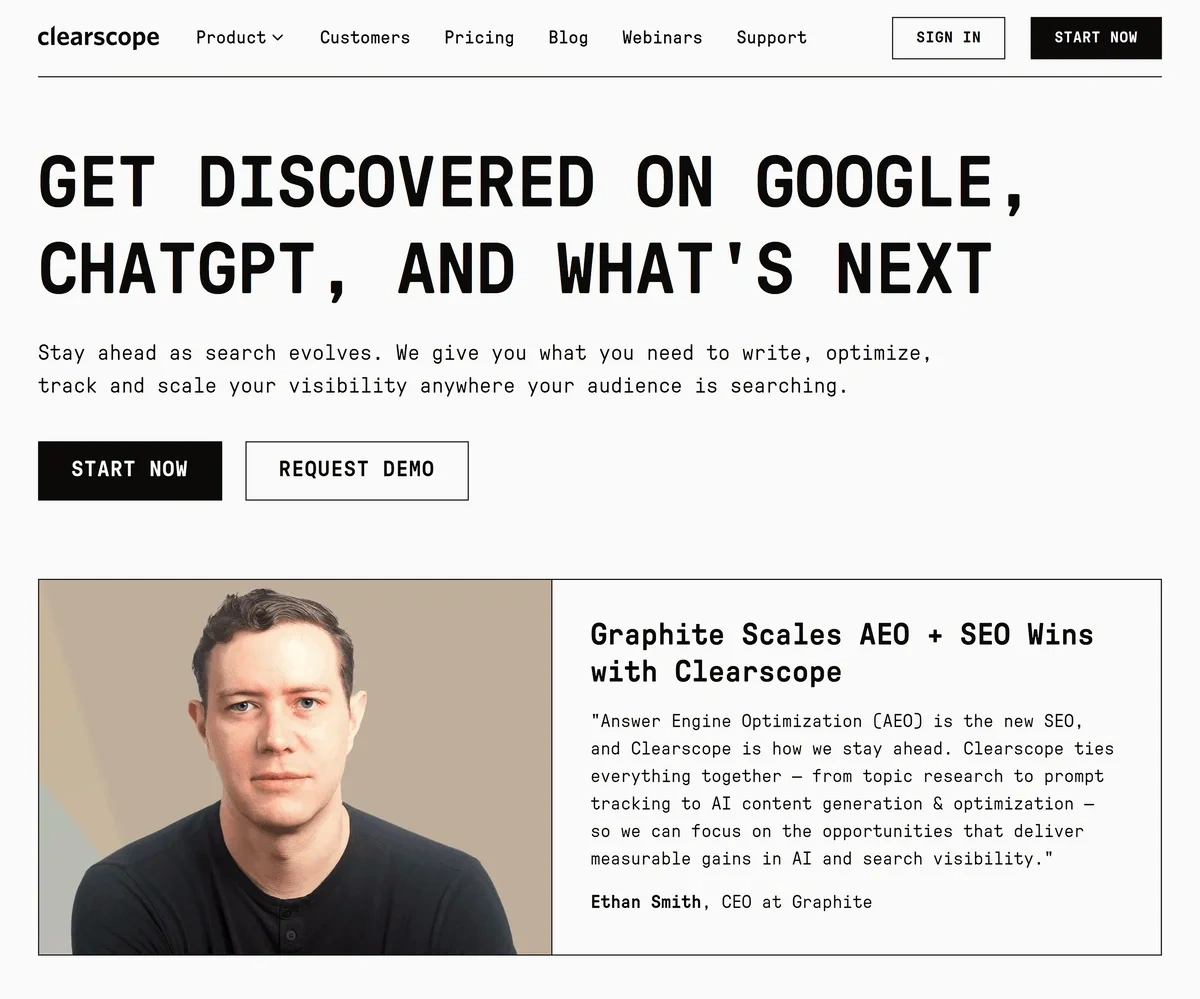
It's similar to the Semrush Content Toolkit in that Clearscope helps you find semantic keywords and scores your text as you write. But unlike Semrush, Clearscope doesn't give you access to a host of other tools at the same time.
You can use Clearscope to:
- Conduct top-level keyword research
- Identify competitors and semantic keywords for a term
- Monitor your existing content and get notifications when it's time for a refresh
- Generate outlines and article text
Clearscope generates reports that work in one of two ways:
- You can have the tool's built-in AI generate an entire draft for you based on parameters that you set.
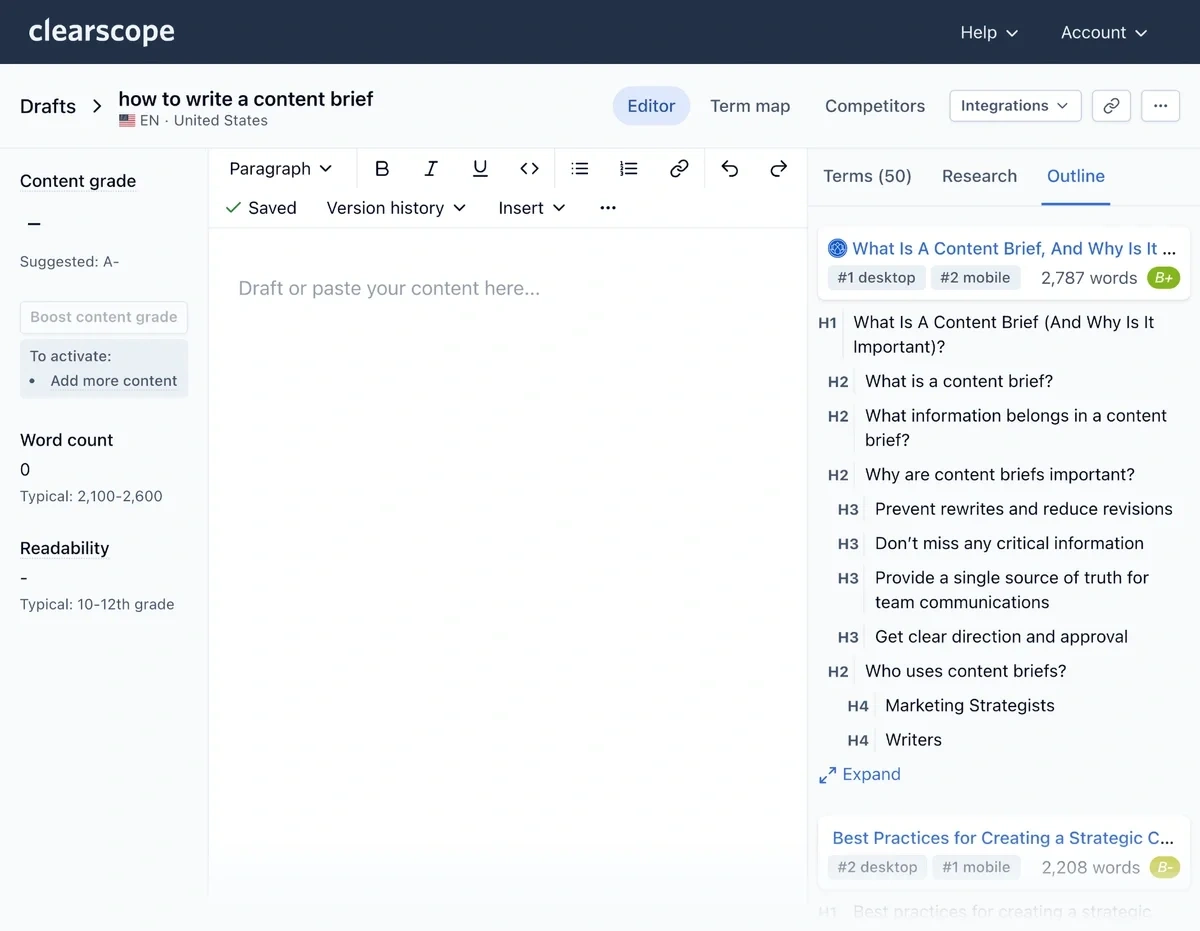
- You can open up a blank text editor with Clearscope's keyword, competitor, and heading suggestions in a side panel.
Each Clearscope report is the content brief. There's no good way to export it to a document, but luckily, you can share reports with anyone via a link. The recipient doesn't need their own Clearscope account, and they'll be able to put text into the editor and get a score.
Clearscope is one of the more expensive content brief tools on the market, though, with plans starting at $129 per month.
My take: I used Clearscope for years and found it to be very reliable—until the company introduced its generative AI features. Unfortunately, I found that its AI is prone to hallucinations. You run this risk with any generative tool, though, and you can easily avoid the AI features in Clearscope. And due to its price, I think Clearscope is best suited to corporate teams.
Get More Search Traffic
Use trending keywords to create content your audience craves.
What Makes an AI Content Brief Tool a Good Choice?
I've been playing around with different AI content brief generation tools since before ChatGPT launched publicly in 2022, and in this time I've noticed that there are distinct differences in the outputs between high and low-quality generators.
To find a high-quality AI content brief generation tool, you'll want to look for the following:
- A connection to a reliable SEO platform. This can be a generator that's made by an SEO company (like the ones made by Semrush and SE Ranking) or a platform that allows you to connect an SEO tool API.
- Editing features. Content marketing still requires a human touch, so it's important that your AI content brief generation tool allows you to manually pick and choose what appears in the brief. Otherwise, a brief generated in one shot may include poor keywords, inaccuracies, and even plagiarized content.
- Clear scoring systems. It should be easy to understand how and why the tool is giving importance to different topics, terms, and structures.
The resulting content briefs should include information about:
- The target keyword and search intent
- The target audience
- Article format and length
- Important subheadings
- Additional relevant keywords
- Questions and AI prompts to target
- External and internal links to include
You'll probably need to add some of this information to your brief manually, regardless of which AI-driven tool you choose to use.
My recommendation: The Semrush Content Toolkit absolutely gives you the best value for the price you pay, the quality of the data, and the number of briefs you can run. I myself switched from using Clearscope to relying on the Content Toolkit—and whether you're making the occasional brief or generating hundreds for a team or writers, you'll get a good return on your investment. Plus, you can give Semrush a try for free for 14 days with Exploding Topics' exclusive coupon code.
Stop Guessing, Start Growing 🚀
Use real-time topic data to create content that resonates and brings results.
Exploding Topics is owned by Semrush. Our mission is to provide accurate data and expert insights on emerging trends. Unless otherwise noted, this page’s content was written by either an employee or a paid contractor of Semrush Inc.
Share
Newsletter Signup
By clicking “Subscribe” you agree to Semrush Privacy Policy and consent to Semrush using your contact data for newsletter purposes
Written By


Emily is a freelance content writer at Exploding Topics. A former news correspondent, she has over 15 years' experience creati... Read more