


Get Advanced Insights on Any Topic
Discover Trends 12+ Months Before Everyone Else
How We Find Trends Before They Take Off
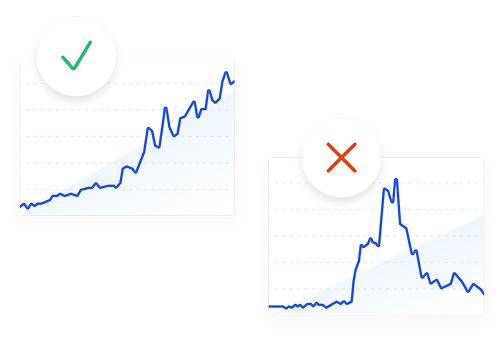
Exploding Topics’ advanced algorithm monitors millions of unstructured data points to spot trends early on.
Keyword Research
Performance Tracking
Competitor Intelligence
Fix Your Site’s SEO Issues in 30 Seconds
Find technical issues blocking search visibility. Get prioritized, actionable fixes in seconds.
Powered by data from
Latest Blog Posts
Featured Case Studies
See what's trending before everyone else
Each week, we'll send you our best Exploding Topics. Plus, expert insight and analysis.
I Tested 5 AI Citation Tracking Tools to Find the Best Solution for Content Marketers

 Add Exploding Topics on GoogleAdd Exploding Topics as your preferred source to see more of our stories on Google.
While the mainstream popularity of LLMs and AI generally has transformed content marketing forever, one thing is still as true now as it was in 2022: the tools you use and the data you have access to can make or break your success.
AI citation tracking tools are a must-have for anyone looking to monitor their brand’s visibility online. Citations are now as coveted as blue links on Google’s first page, and an important indicator of how your business is perceived by AI platforms.
The best AI citation tracking tools give you access to the metrics that matter so you can make informed decisions about your content strategy and optimization techniques, just like SEO tracking tools have done for years.
What Are AI Citations and Why Do They Matter for AEO?
AI citations are links to published content referenced by AI tools in their responses to users. You might be familiar with them from reading Google’s AI Overviews.
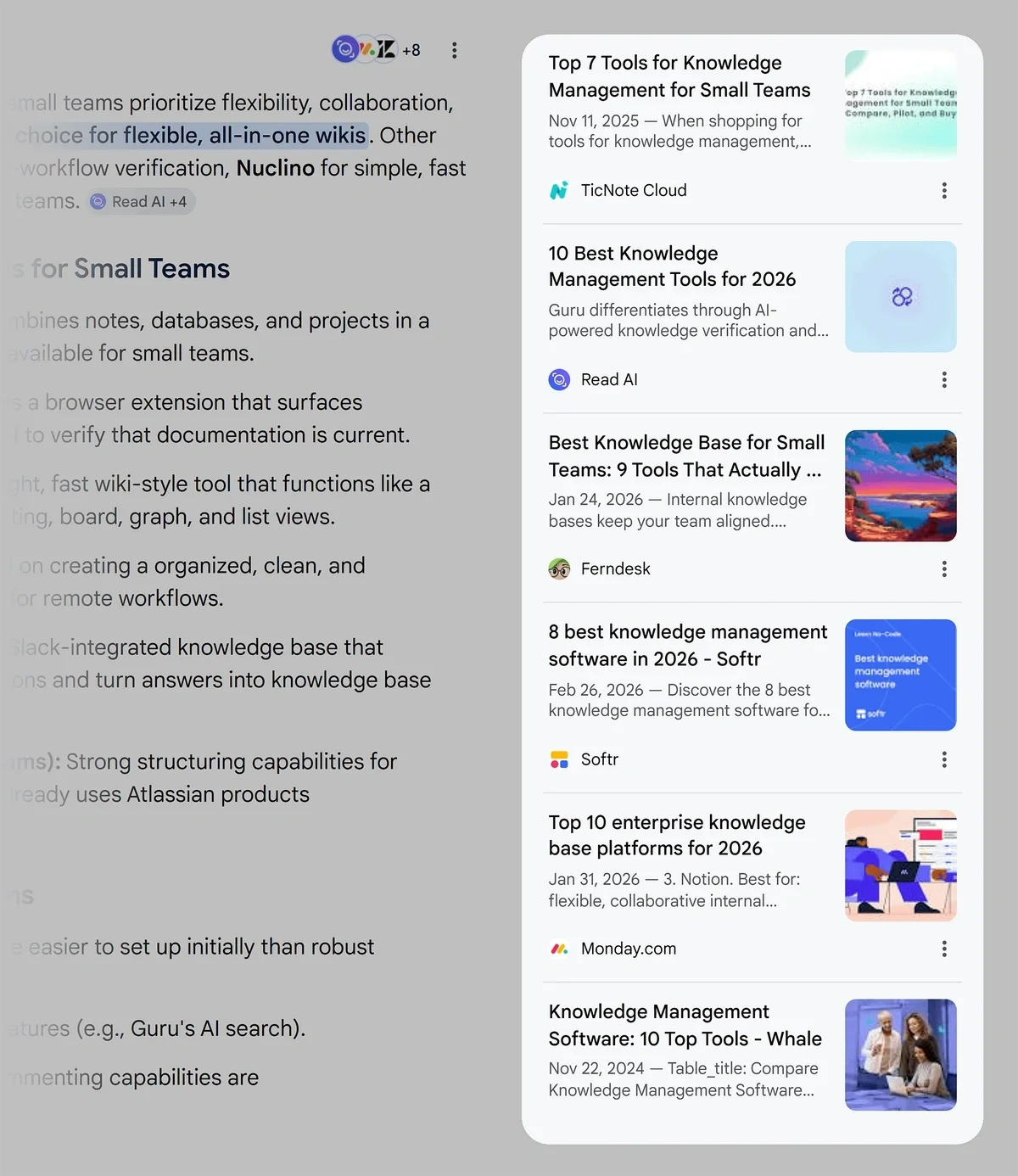
Or, you may have seen them in LLMs like ChatGPT or Perplexity.
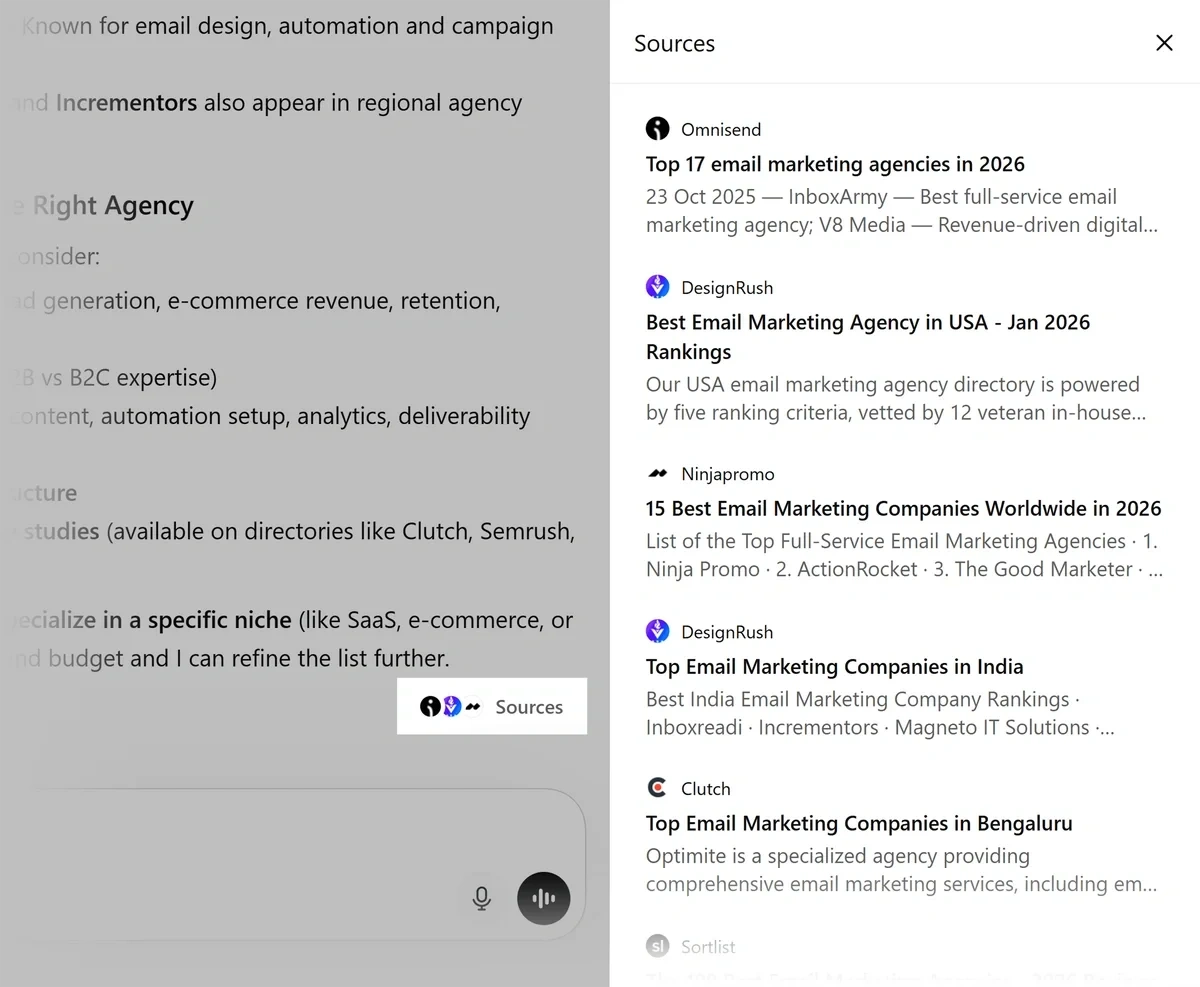
While traditional Google results used to be the go-to source for organic traffic and brand awareness, AI citations are now another way to increase your visibility online. It can impact your authority in your industry and the way your business is perceived.
Answer Engine Optimization (AEO) involves crafting content so AI tools can read and understand it. The goal is to not only land AI citations, but also to ensure the AI has a positive perception of your brand and recommends it to users.
First-Party vs. Third-Party AI Citations
First-party AI citations are direct links to your content in an AI response.
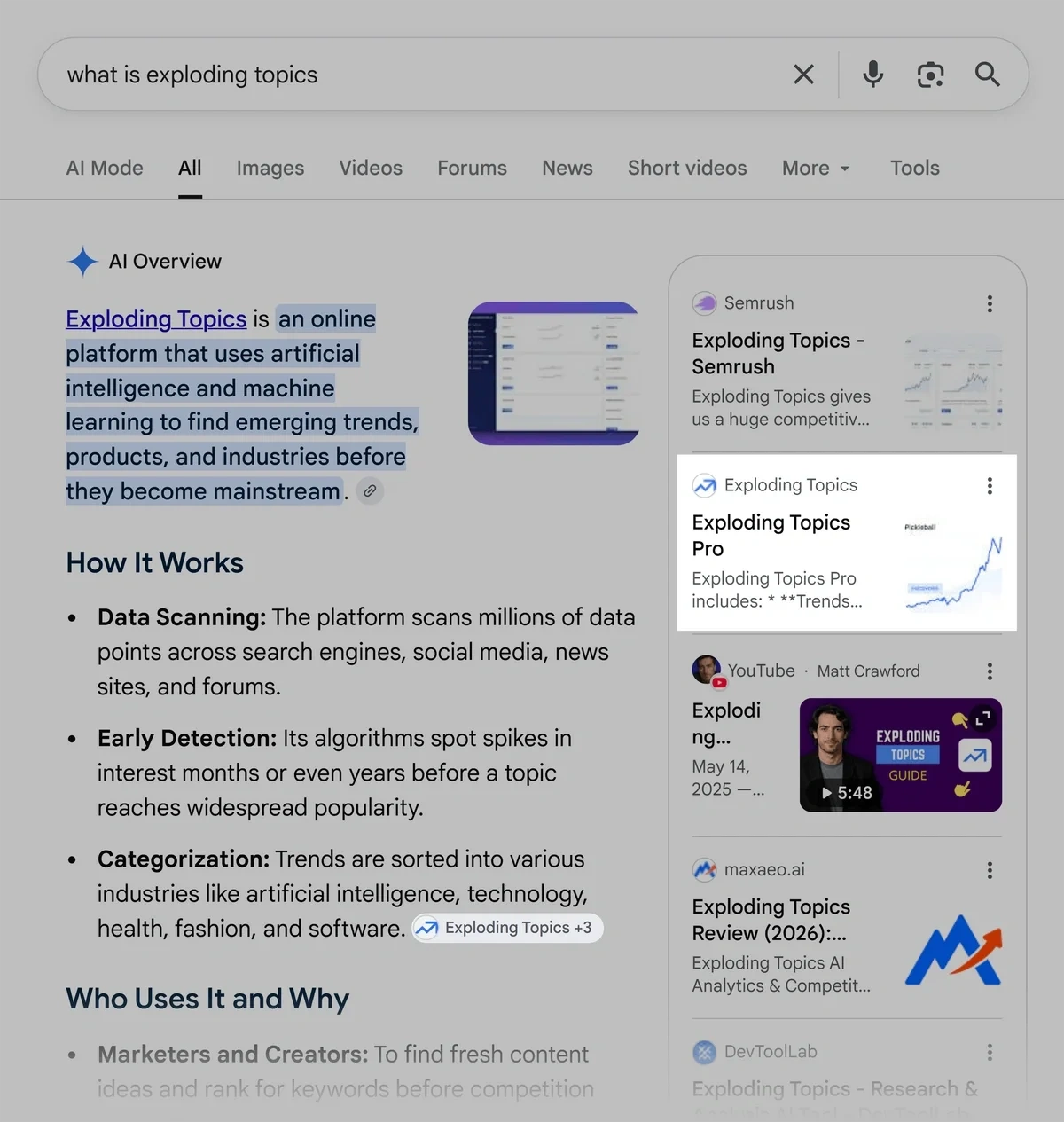
Third-party citations are links to content from other sources that reference your brand.
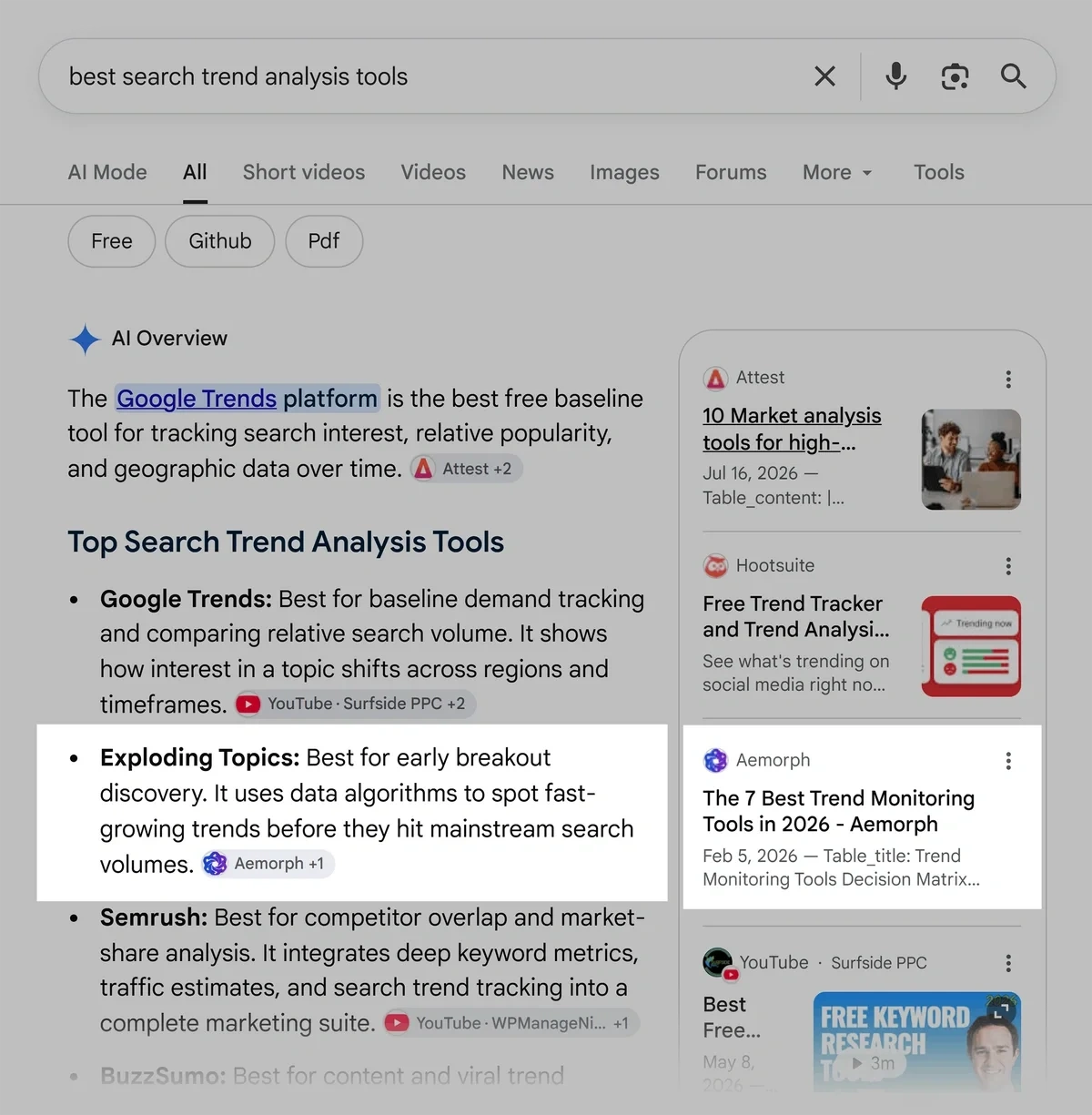
In traditional SEO, the focus is primarily on promoting your brand through your own content (and possibly guest posts).
Now that consumers are using AI to search for products and solutions, how other sites talk about your brand matters more than ever. AI tools consolidate information from across the internet, so content published by competitors and other reviewers impacts how AI presents your brand to users.
This makes monitoring third-party citations just as important as trying to optimize your own content for first-party citations.
Get More Search Traffic
Use trending keywords to create content your audience craves.
AI Citations vs. AI Mentions
In addition to citations, many AEO tools also track AI mentions. These are instances where a user’s prompt results in a response that mentions your brand but doesn’t link to it.
Hypothetically, AI citations can work similarly to traditional Google results and send organic traffic to your site. Understanding the importance of mentions requires a major shift in thinking away from SEO.
Brand mentions build awareness about your company and its products. The more your name appears in AI responses in a positive context, the more authority you build with your audience.
Awareness and authority have been marketing buzzwords since before AI entered the picture, but have always been difficult to measure. Tracking AI mentions alongside citations is one way to try to pin down these slippery indicators of success.
Who Needs AI Citation Tracking Tools?
Marketing professionals use AI citation tracking tools to keep track of metrics such as number of citations and mentions, share of voice (how often your brand is referenced compared to competitors), and brand sentiment (how positively AI represents your brand).
Although AI citation tracking is an essential task for marketing teams, its uses go beyond just monitoring AEO metrics. It also helps develop your thought leadership strategy.
In addition to monitoring brand perception, you can use AI citation tracking tools to check if LLMs reference your brand’s subject matter experts when prompted on specific topics. As they publish more authoritative content, how does the way AI portrays your brand change?
What Should You Look for in an AI Citation Tracking Tool?
Not all AI citation tracking tools are created equal. It’s important to choose one that gives you the information you need to make the best decisions for your brand moving forward.
First, make sure the tool tracks information across multiple AI models. Only knowing how your brand performs in ChatGPT gives you just a partial picture of your performance. You should also consider other LLMs like Gemini and Perplexity, as well as AI Overviews.
Naturally, you want your AI citation tracking tool to give you simple, clear citation metrics to track. You should be able to see how many citations and mentions your brand has, view whether they are first- or third-party citations, and see which URLs AI tools are citing.
It’s also helpful if your AI visibility tool notes the intent of the content that receives the most citations—is it informational, transactional, or something else?
As I mentioned earlier, share of voice and brand sentiment are key metrics for content marketers, as they help measure the quality of your citations and mentions. Your AI citation tracking tool should provide easy access to them.
I would also recommend choosing a platform that supports competitor monitoring. This helps provide a benchmark for your own AI visibility metrics so you can assess your content’s performance.
Lastly, look for tools that provide prompt tracking so you can see exactly what AI users are asking when they receive responses that include your brand. This is the equivalent of keyword research for AEO, and provides insights that can shape your content optimization efforts.
Build a winning strategy
Get a complete view of your competitors to anticipate trends and lead your market
Tested AI Citation Tracking Tools for Measuring AEO
I tested the top recommended AI citation tracking tools and compared them for you. Here’s a quick look at the results.
| Tool | Best for | AI Platforms | Features | Price |
| Semrush AI Visibility Toolkit | Content Marketers | ✓ ChatGPT
✓ Perplexity ✓ Google AI Overviews ✓Google AI Mode ✓Gemini | ✓ Citation metrics
✓ Share of Voice tracking ✓ Brand Sentiment tracking ✓ Competitor Monitoring ✓ Prompt Tracking ✓AI-Powered Insights | $99+/mo. |
| Otterly.ai | Freelancers and Small Teams | ✓ ChatGPT
✓ Perplexity ✓ Copilot ✓ Claude (addon) ✓ Google AI Overviews ✓Google AI Mode (addon) ✓Gemini (addon) | ✓ Citation metrics
✓ Competitor Monitoring ✓ Prompt Tracking ✓AI-Powered Insights | $29+/mo. |
| Peec.ai | Startups | ✓ ChatGPT
✓ Perplexity ✓ Copilot ✓ Google AI Overviews ✓Google AI Mode ✓Gemini | ✓ Prompt Tracking | $80+/mo. |
| Scrunch | Marketing Agencies | ✓ ChatGPT
✓ Perplexity ✓ Copilot ✓ Claude (Enterprise) ✓ Grok (Enterprise) ✓ Meta AI (Enterprise) ✓ Google AI Overviews ✓Google AI Mode (Enterprise) ✓Gemini (Enterprise) | ✓ Citation metrics
✓ Competitor Monitoring ✓ Prompt Tracking | $250+/mo. |
| Ahrefs Brand Radar | Cross-Channel Marketers | ✓ ChatGPT
✓ Perplexity ✓ Copilot ✓ Grok ✓ Google AI Overviews ✓Google AI Mode ✓Gemini | ✓ Citation metrics
✓ Competitor Monitoring ✓ Prompt Tracking | $199+/mo. |
Semrush AI Visibility Toolkit
Semrush’s AI Visibility Toolkit is my preferred AI citation tracking tool, and checks all the boxes when it comes to the features you need.
The AI Visibility Overview gives your site an overall score and provides a quick look at the number of citations it currently holds.
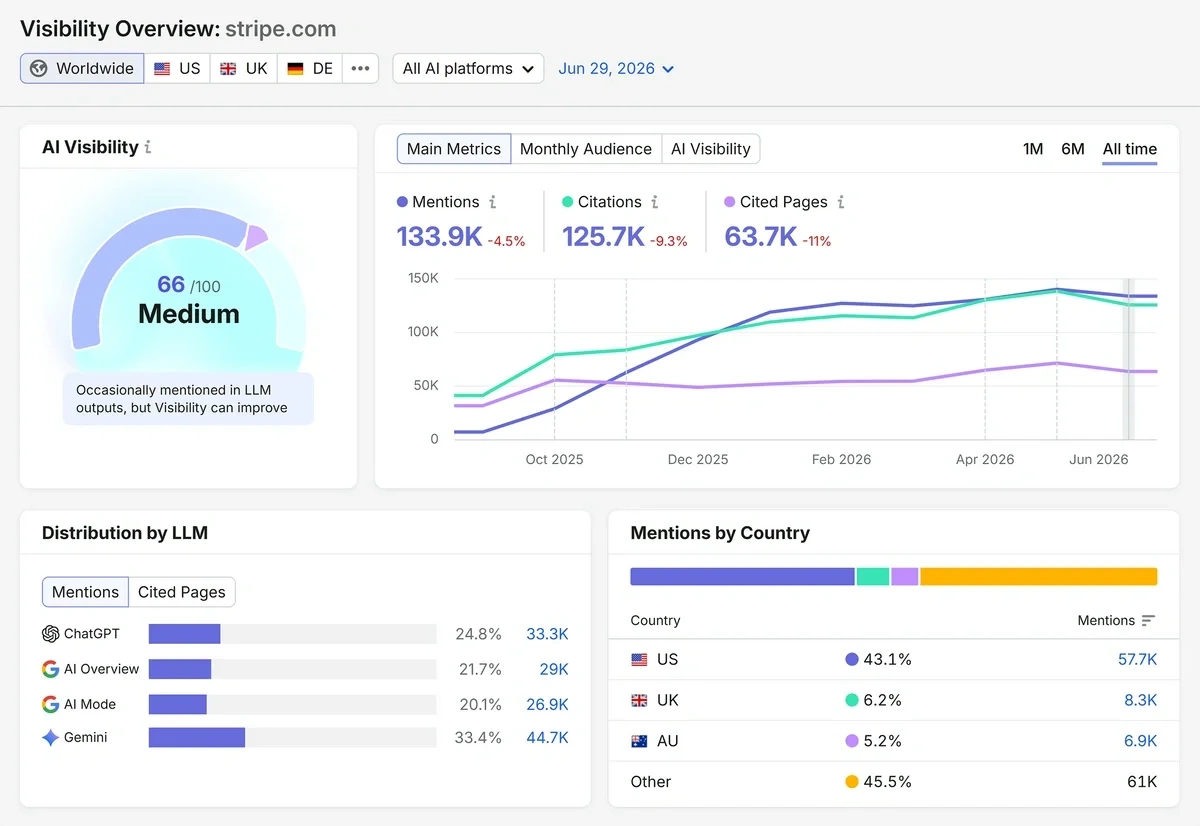
Mentions and cited pages by LLM are also available here. Semrush provides data for ChatGPT, Google’s AI Overviews, Google AI Mode, and Gemini.
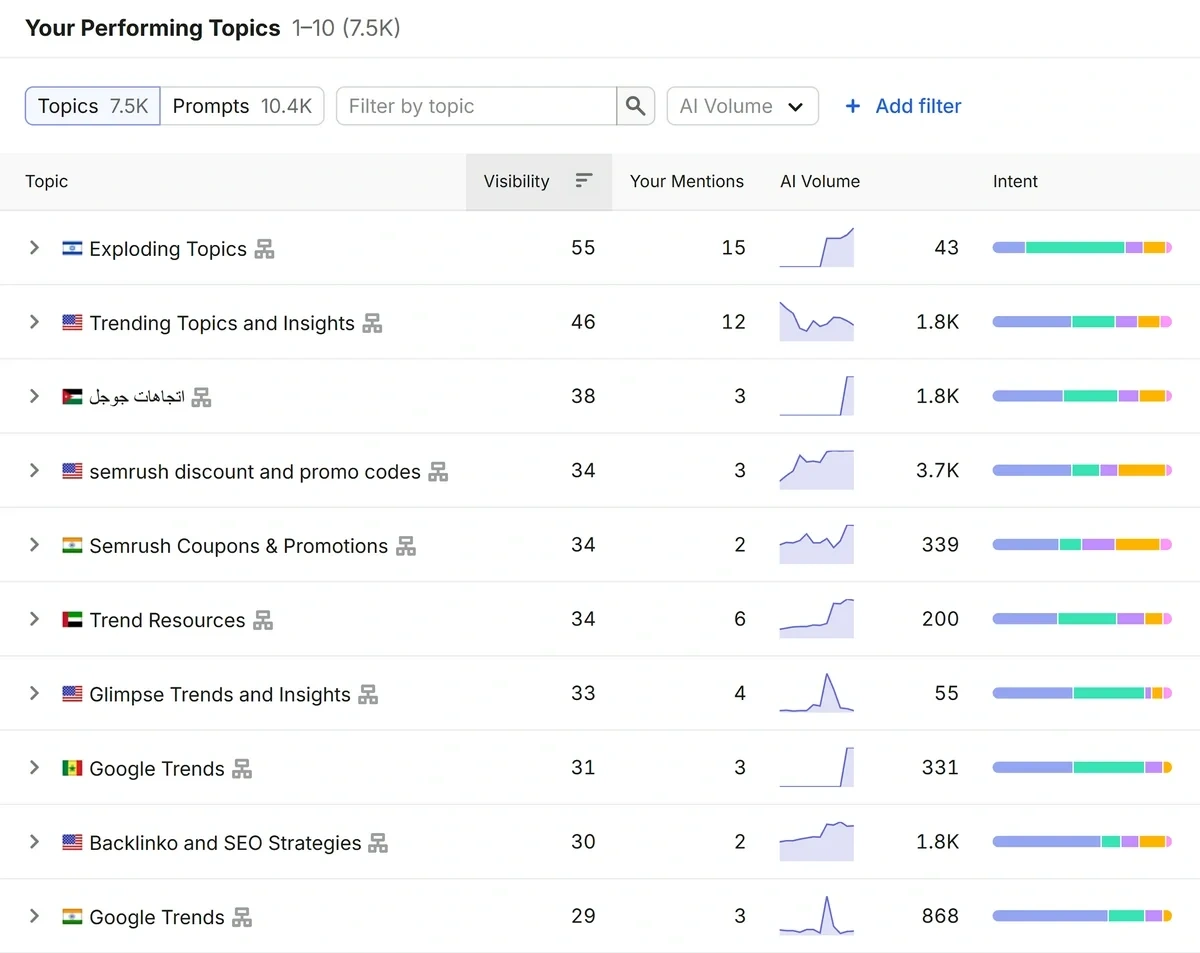
A bit further down the page, you can see both topics and prompts that are resulting in brand mentions. For topics, you can also see users’ intent.
In the Prompts tab, Semrush notes whether your brand is cited or mentioned, and lists the specific sources (first- and third-party) the AI links to.
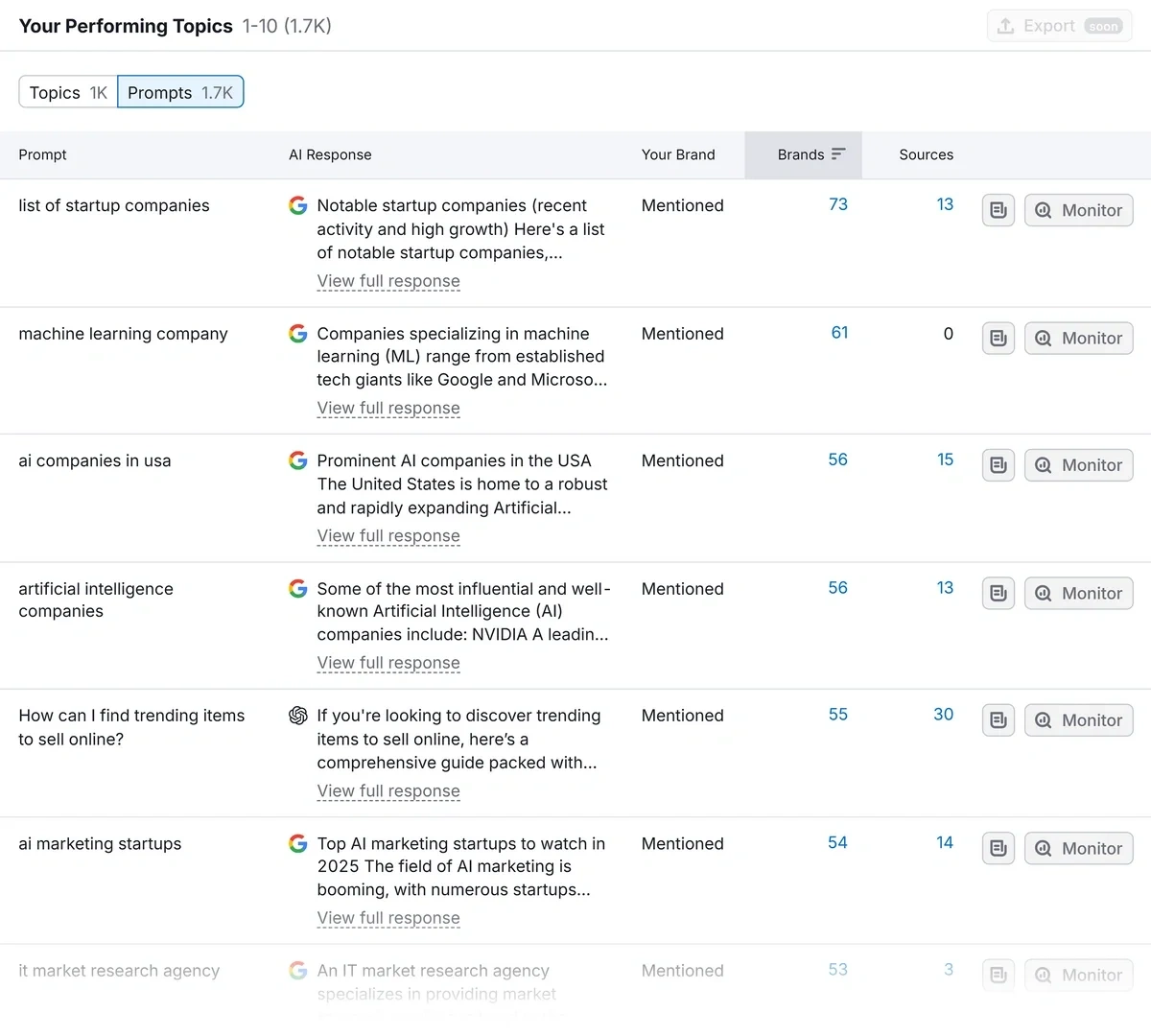
Semrush also offers prompt research features to help you find real users’ prompts that are relevant to your brand so you can optimize content around those queries.
The Brand Performance tool provides metrics for share of voice and brand sentiment.
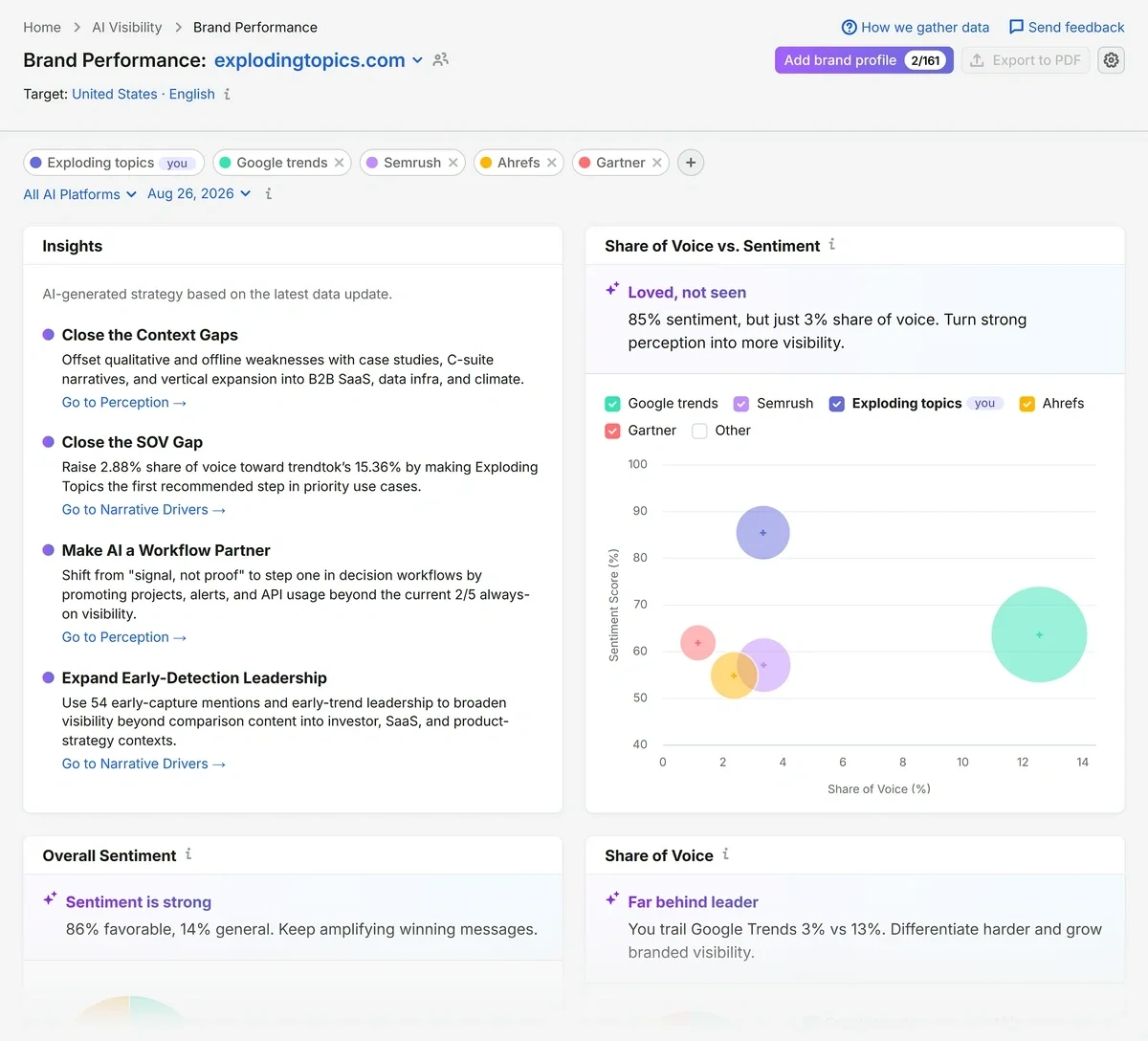
There are AI-powered insights into these metrics displayed in multiple places for your consideration as well, which is really helpful in highlighting actionable content strategy suggestions based on your data.
The last feature I’ll highlight is the Competitor Research tool. Enter up to three other brands’ websites and Semrush will show you how your own company performs in terms of AI visibility compared to theirs.
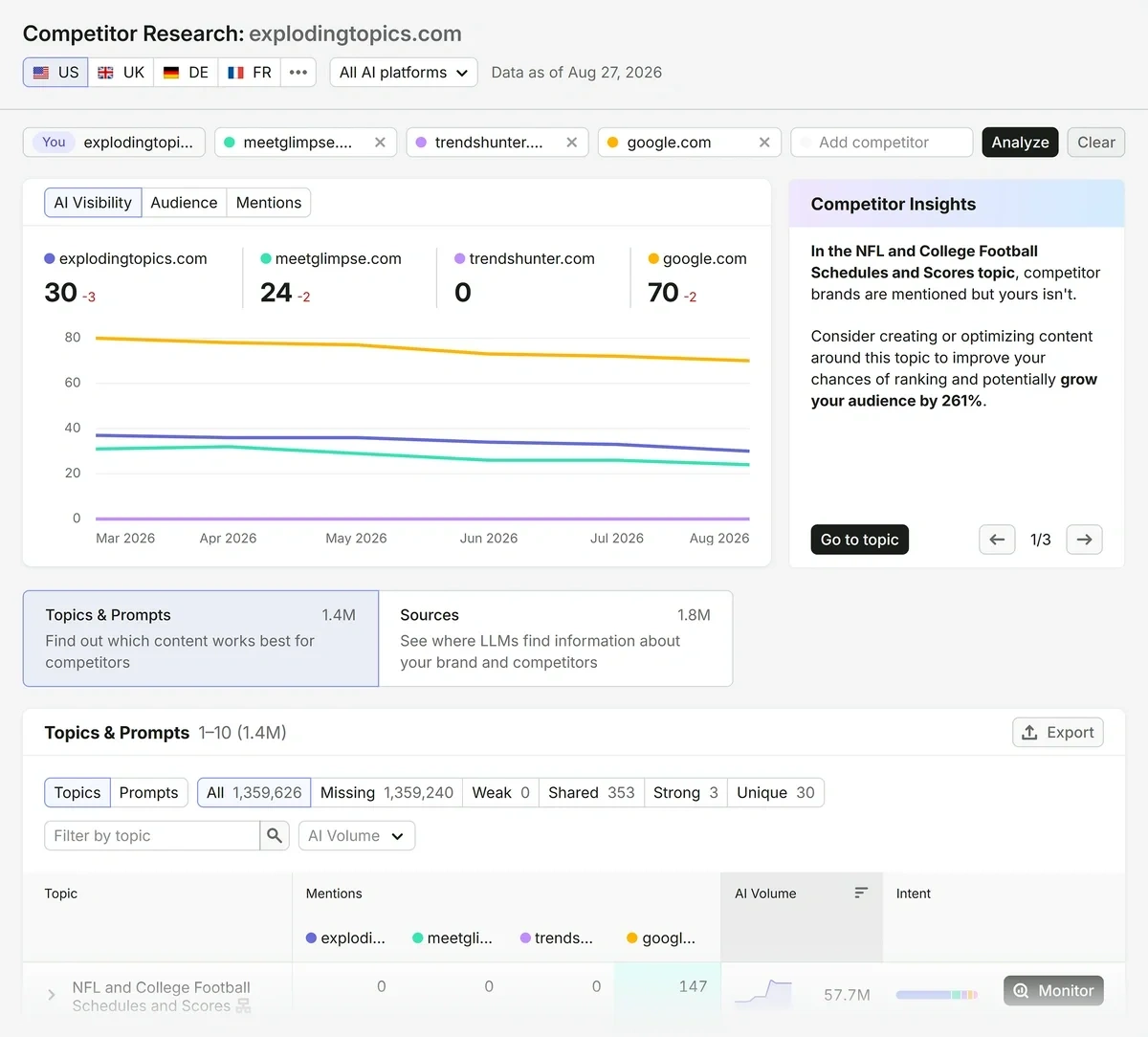
You can also compare your performance for specific topics and prompts. This information is key to helping you close content gaps by updating or publishing content.
Semrush is an especially strong choice for content marketing teams because you can access all of its SEO features in addition to its AEO tools. Ranking in traditional search still has its benefits, and it’s helpful to have everything you need to succeed in one convenient place.
Further Reading: Semrush AI Visibility Guide
You can access Semrush’s AI Visibility Toolkit by subscribing to the Semrush One plan for $165.17 per month billed annually. Or, add the AI Visibility Base plan to your SEO Classic plan for $99 per month.
Otterly.ai
Otterly.ai is a Generative Engine Optimization (GEO) tool making a name for itself among marketing pros looking to understand their sites’ AI visibility.
Right off the bat I was impressed with its price (plans start at just $29 per month) and the number of AI platforms it covers.
When testing it out, I really enjoyed Otterly’s AI citation tracking features. The layout is clear and straightforward to use, with cited URLs listed in an easily identifiable Citations tab.
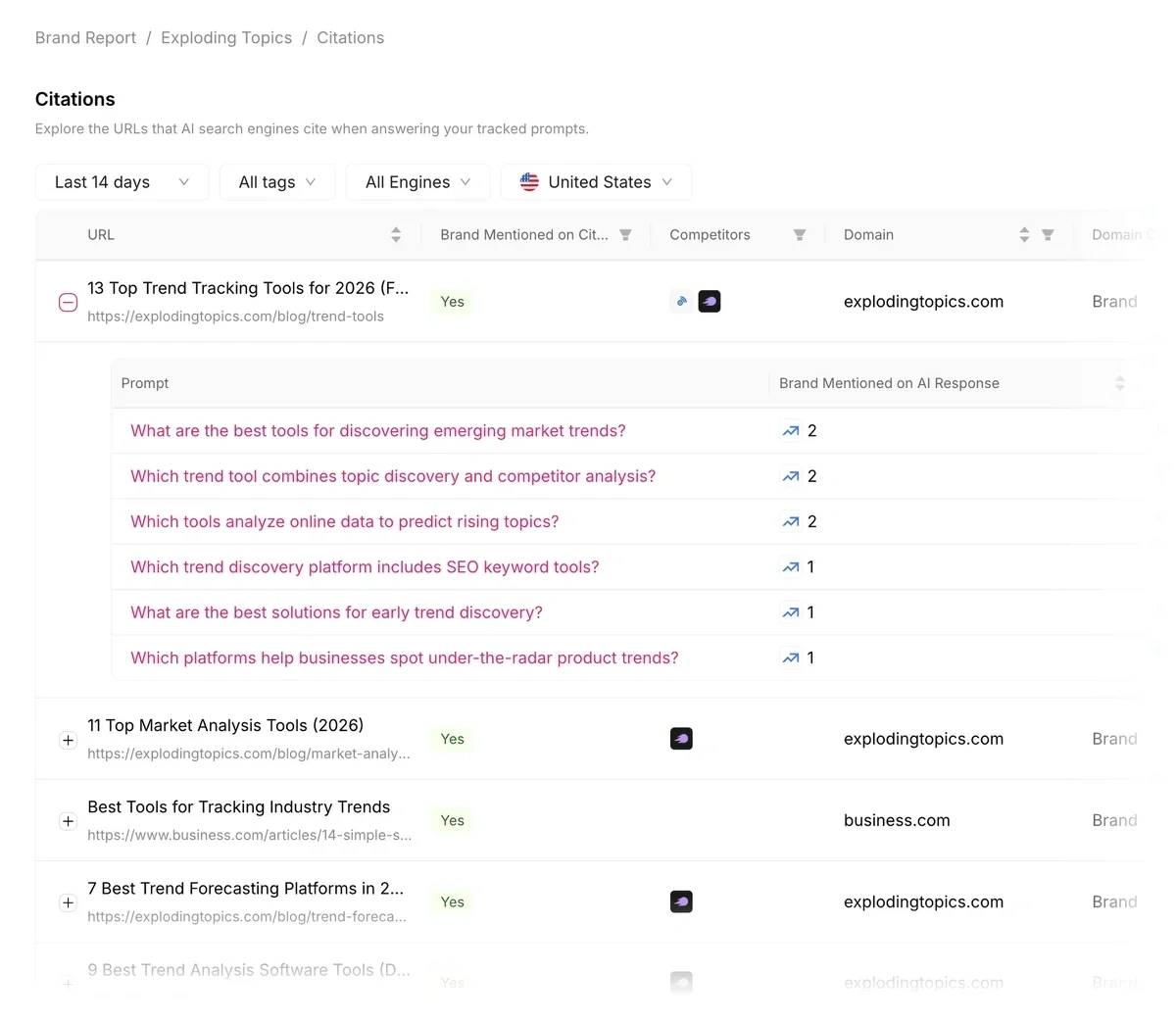
For each URL, you can see prompts that are citing your content and on which platforms those citations appear.
I also found its prompt research tool very easy to pick up. There are multiple ways to search for relevant prompts, and you can keep them in a list to monitor for your brand’s citations and mentions.
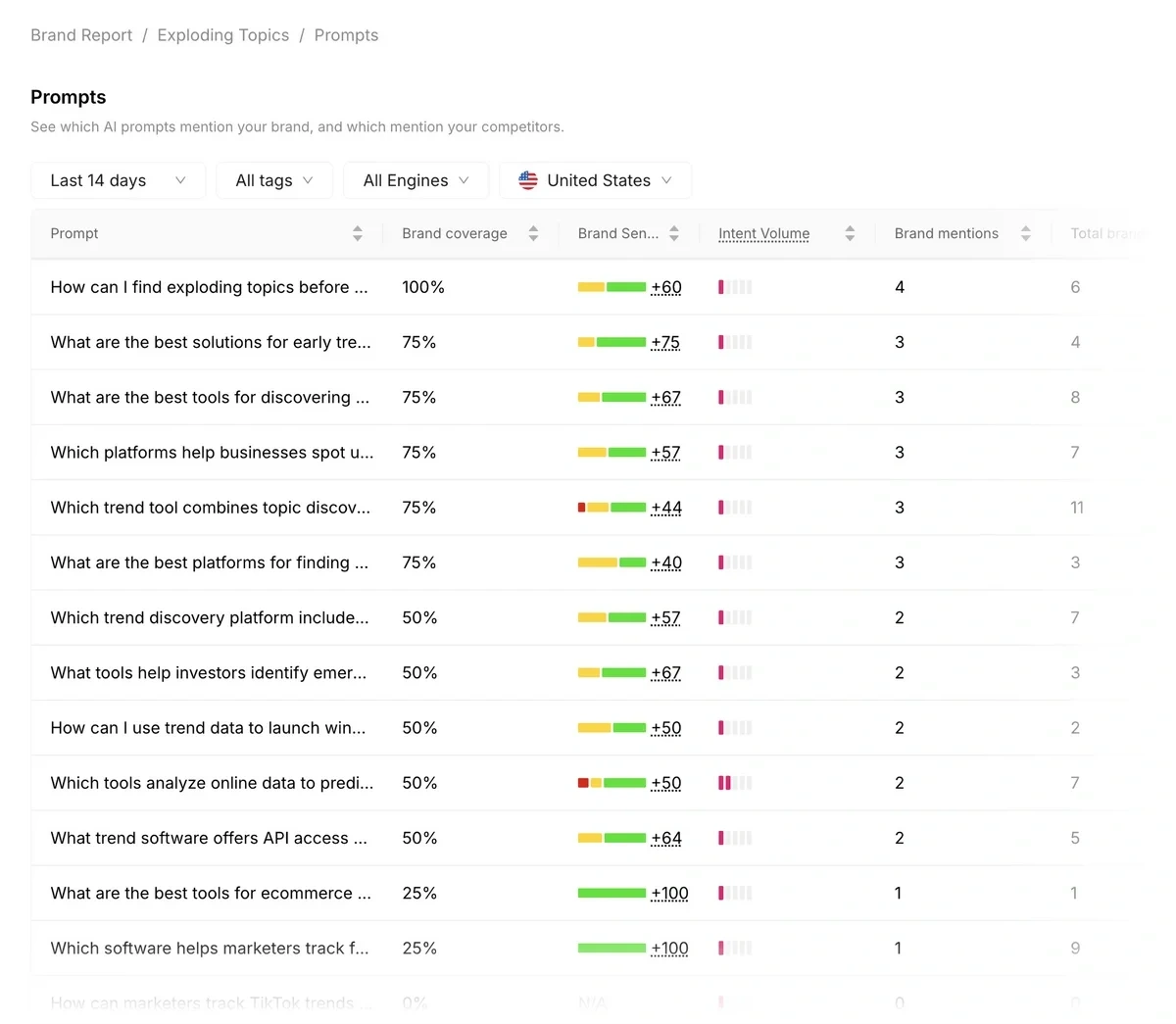
These features make Otterly.ai great for evaluating your site’s AI visibility, but I found it less helpful when it came to informing overall content strategy. Citation tracking tools need to not only tell you how your site is performing now, but also guide where it’s going.
It does provide AI-powered Recommendation to give you actionable guidance on how to earn new citations based on content your competitors are publishing and gaps in your own content.
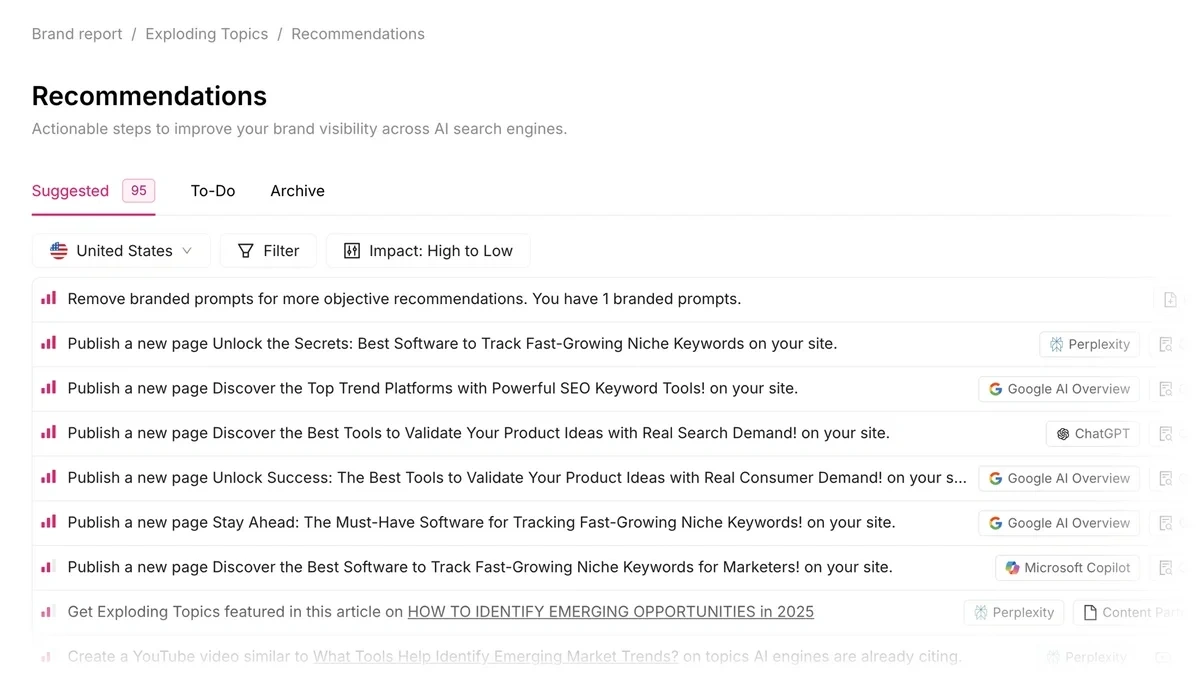
However, even though Otterly notes your brand’s share of voice and brand sentiment in its Overview report, it doesn’t give you the same level of detail as Semrush.
Overall, I think Otterly is a great choice for freelancers and other content marketing professionals on a tight budget who want to understand how their content is performing in AI search.
Further Reading: Otterly.ai vs. Semrush’s AI Visibility Toolkit
Peec.ai
Peec.ai is an interesting AEO tool with a much different feel than others I’ve tested. Even though Otterly.ai is definitely a newer platform for analyzing AI visibility, it still felt somewhat familiar in its layout and features.
Peec took a little more getting used to. It’s very much centered around prompt analysis and tracking rather than giving you a high-level overview of your AI visibility.
Using the onboarding wizard, you’ll select prompts relevant to your brand that you want to monitor.
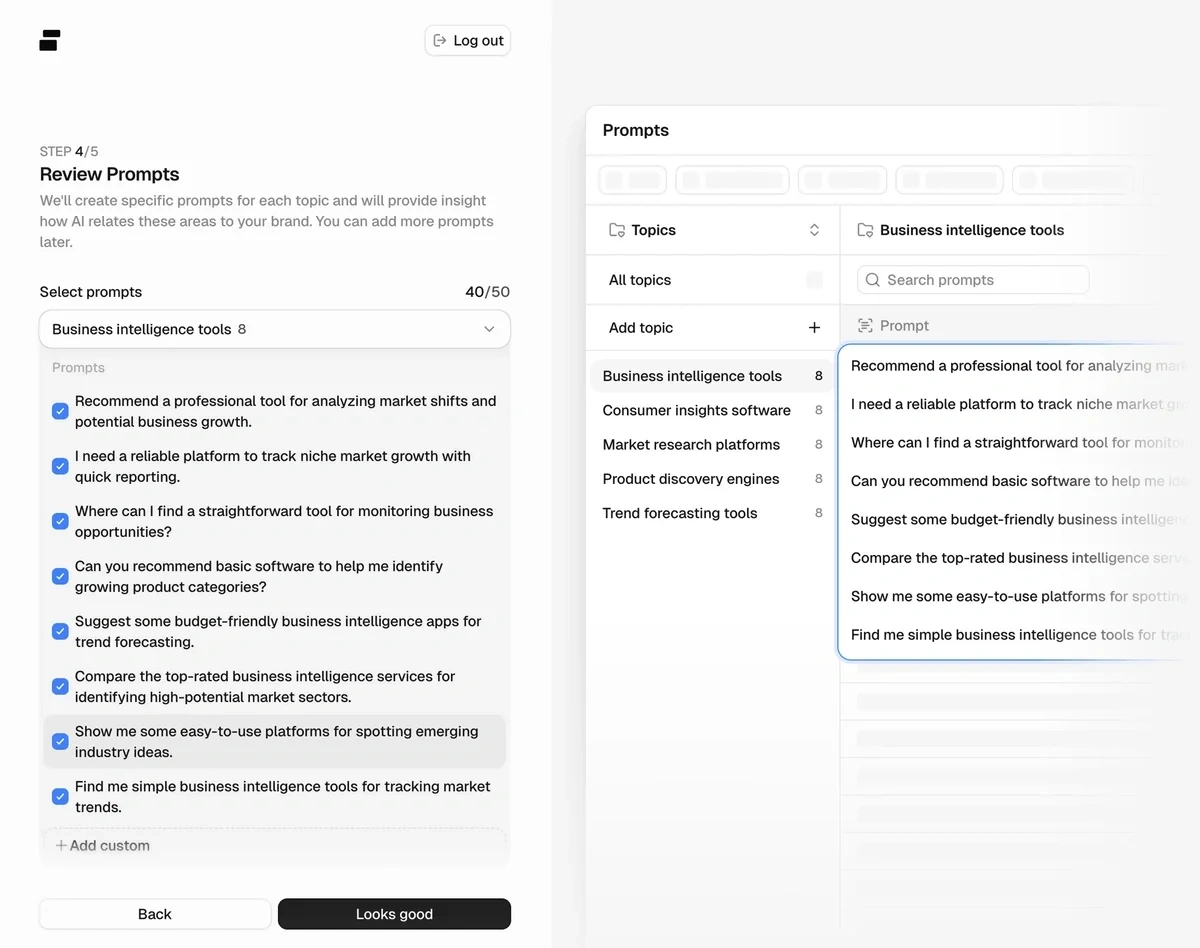
You can add to or change these later, so don’t worry over them too much. In your Peec dashboard, you’ll see a few general reports.
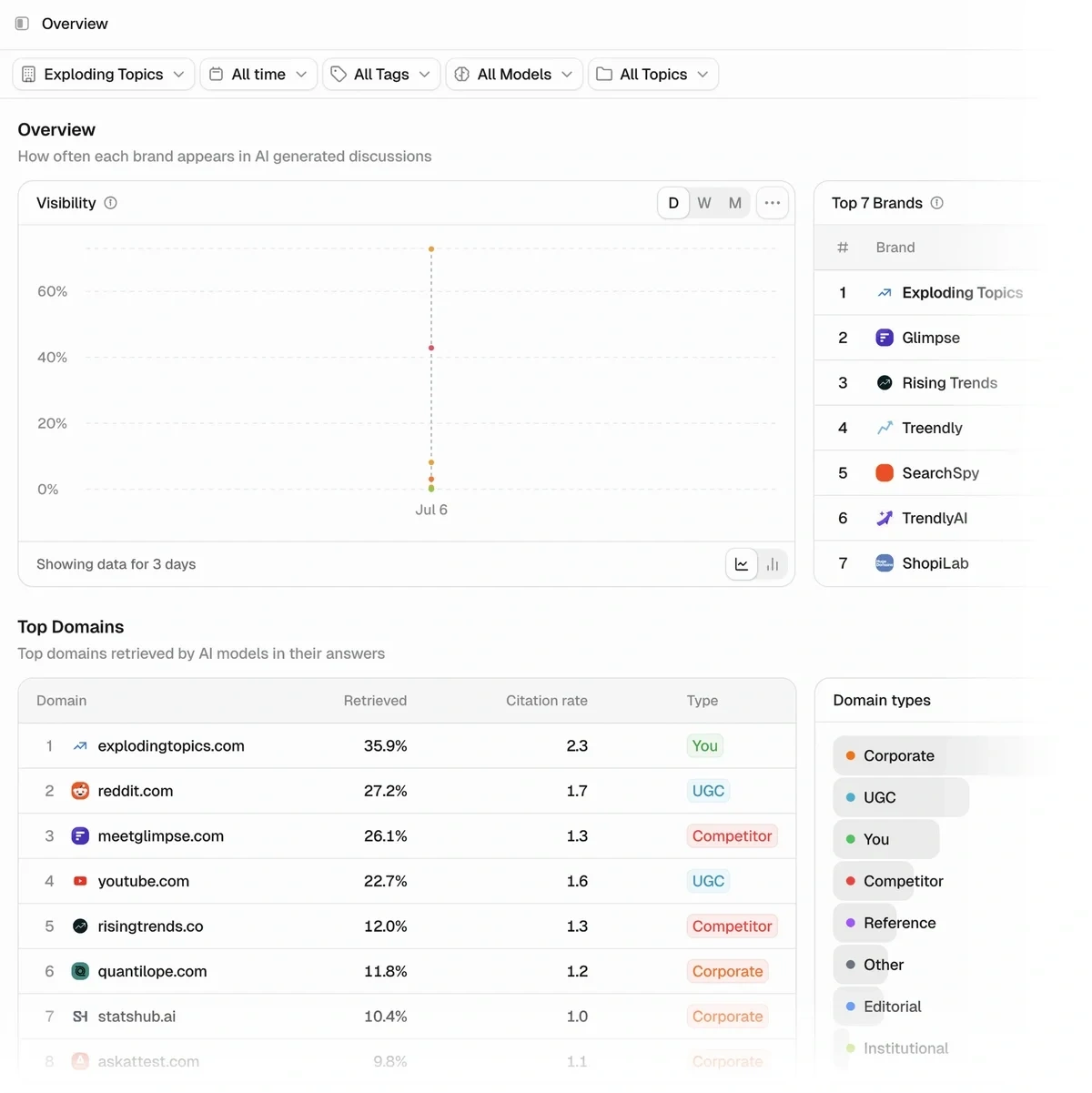
The Visibility chart is roughly the same as your share of voice, which is also noted in the Top Brands table, along with brand sentiment.
What I found more intriguing were the Top Domains and Domain Type tables. These helped easily identify sources referenced by the AI platforms I selected, and also told me whether they were my own content, user-generated content, competitor content, or other corporate content.
The information lacks depth, but I like the way it’s laid out and that user-generated content is flagged as its own category.
Peec’s main feature is in its prompt analysis tool, however. You can click on any chat in the All Chats section to see citations and brand mentions as they appear to users.
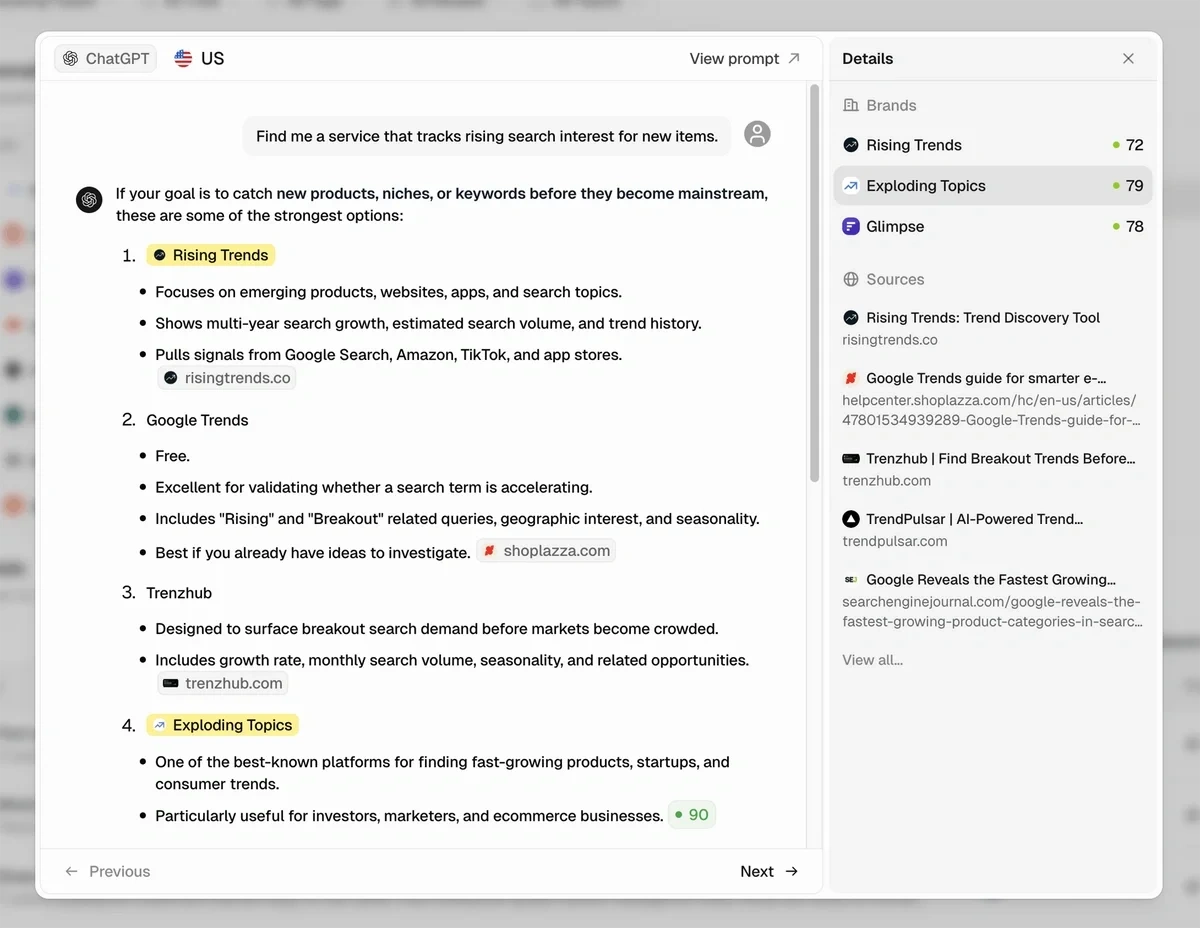
Clicking on View Prompt will show you the top brands, top domains, and domain types for the prompt that generated the response you’re analyzing. You can manage the prompts you want to track in the Prompts tab, but there aren’t rich prompt research tools like those provided by Semrush or Otterly.
Overall I think Peec.ai offers some value, but isn’t as well-rounded as the other AI citation tracking tools. Newer brands that are building their content strategy from the ground up will likely find it more useful than established businesses who need a bird’s eye view of their existing content’s performance.
Pricing starts at $80 per month billed annually. It’s important to note that although Peec.ai is capable of obtaining data from six different AI platforms, each plan (even the highest tier option) only grants you access to three. You can pay an additional $30 per month per model if you want to track AI citations across all six.
Want to Spy on Your Competition?
Explore competitors’ website traffic stats, discover growth points, and expand your market share.
Scrunch
Like Peec.ai, Scrunch enables you to monitor your brand’s AI visibility for specific prompts you’ve chosen to track. You can add prompts you’ve already discovered or use AI to generate prompts to track based on your criteria.
A feature that’s unique to Scrunch and makes it particularly useful for marketing agencies is its use of personas to inform the prompts generated for your brand.
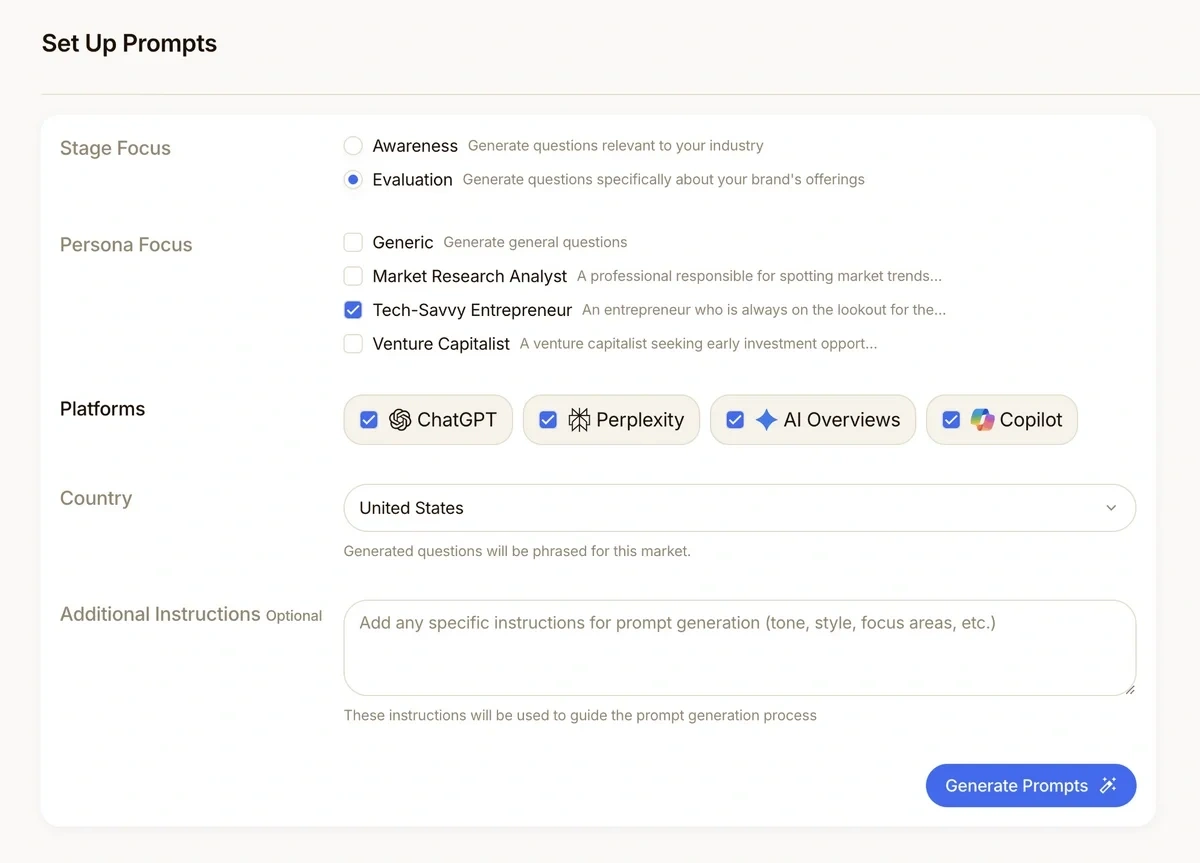
As with Peec, the drawback is that Scrunch doesn’t include prompt research tools to find relevant prompts from AI users. This has a significant impact on your data and may skew your results.
Once you’ve added your prompts, your dashboard will populate with data.
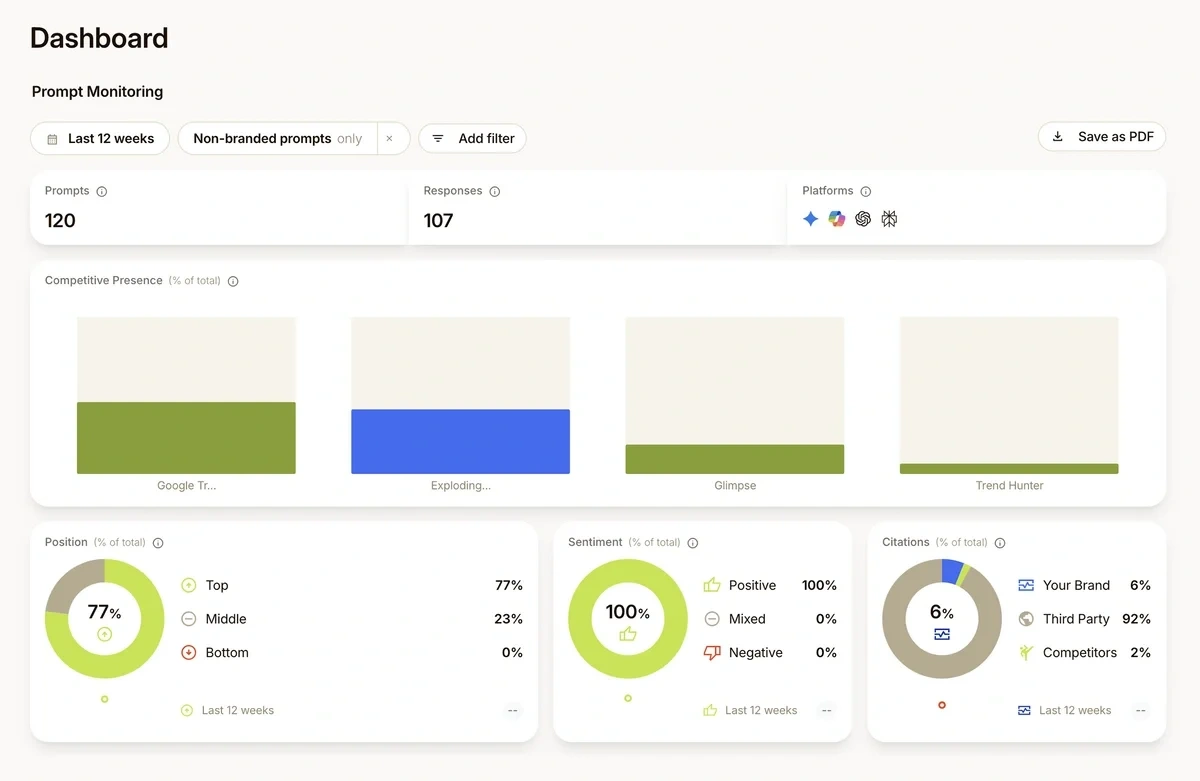
Competitive presence is roughly the same as share of voice, and shows how often your brand appears compared to competitors. AI sentiment analysis is also displayed here, as is an overview of your brand citation metrics.
In the Citations tab, you’ll find more specific data. I like how Scrunch separates citations by first-party, third-party, and competitor references. You can also view citations by domain or by URL, making it easy to see the specific content AI is linking to.
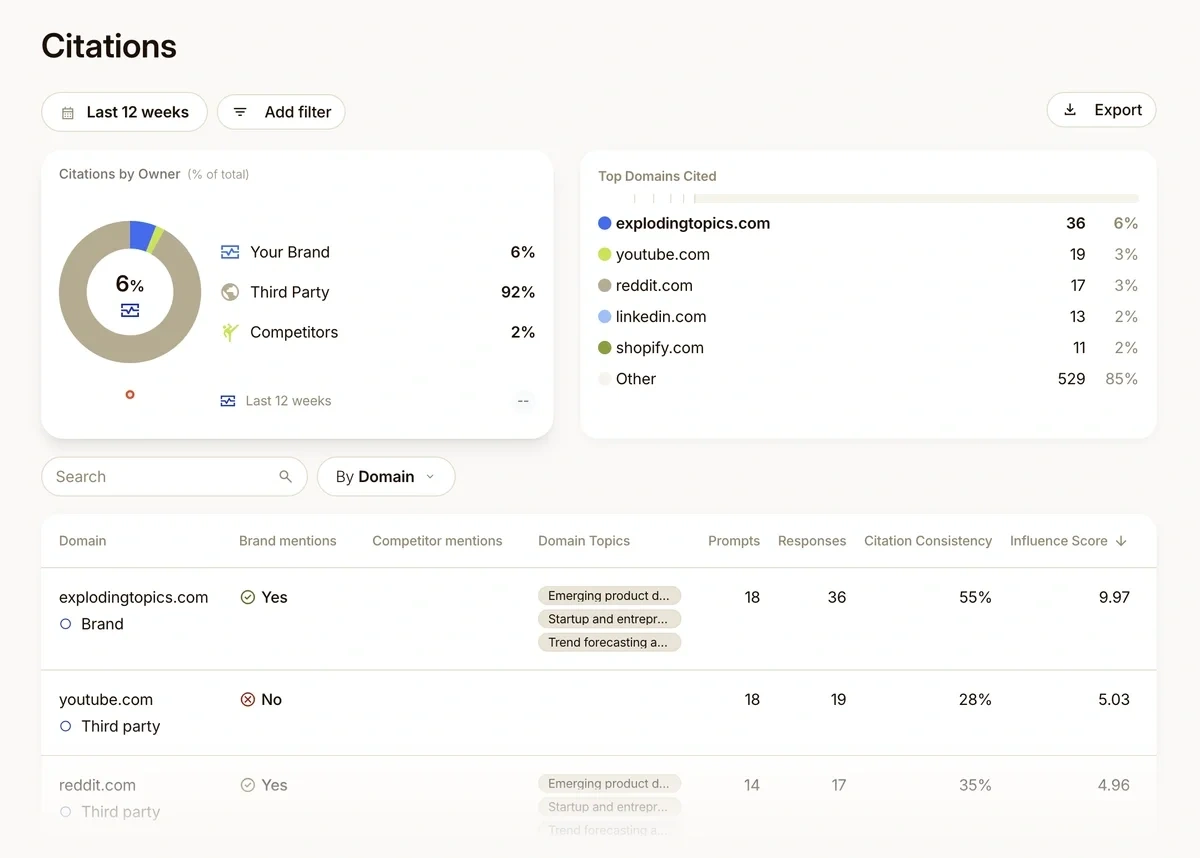
I also like its Citation Consistency metric. Because AI responses tend to vary, this is useful for understanding the true visibility of your brand for a particular prompt.
I feel that Scrunch’s depth of information isn’t as impressive as Semrush’s or even Otterly.ai’s, but the user interface is easy to navigate.
Scrunch also provides an impressive lineup of AI platforms from which to pull data, although you’ll need an Enterprise plan to access most of them. The Core plan includes ChatGPT, Perplexity, Copilot, and AI Overviews, which is still decent coverage.
Pricing-wise, Scrunch comes at a pretty steep cost. The Core plan comes in at $250 per month. Considering the relatively limited features compared to other options, the expense is somewhat hard to justify.
Ahrefs Brand Radar
Ahrefs Brand Radar is the AI visibility arm of this popular SEO and keyword research tool. It covers all the essentials for AI citation tracking, making it a viable solution for marketing teams who need to pair traditional SEO with AEO strategies.
A point in Ahrefs’ favor is the breadth of AI platforms for which it provides data. It covers several of the most popular LLMs (ChatGPT, Perplexity, Copilot, Gemini, and Grok) as well as Google’s AI Overviews and AI Mode.
The overview page provides quick access to some key metrics, including a few that are unique to Ahrefs.
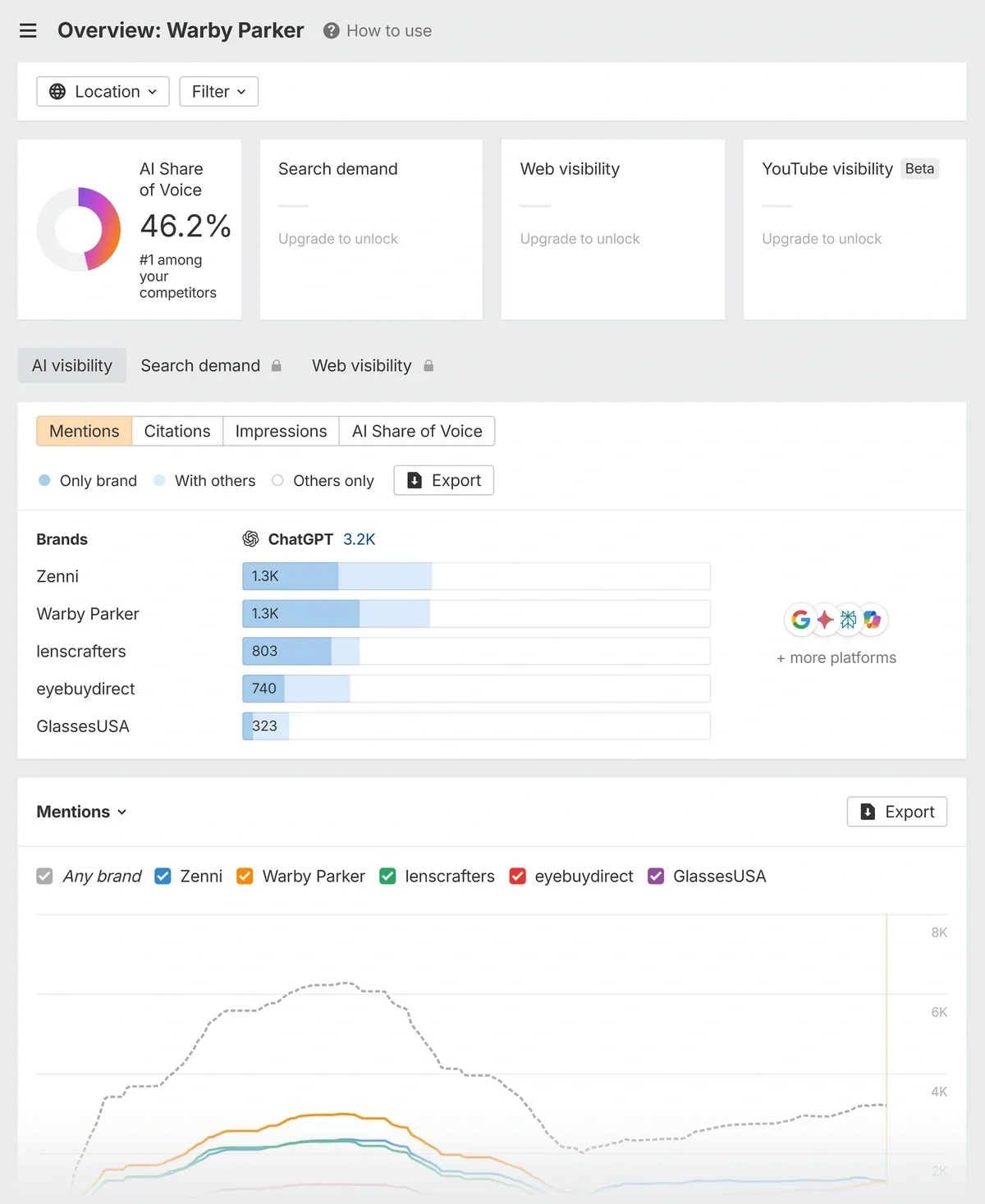
Your share of voice is visible here, as well as:
- Search Demand: Searches and prompts specifically asking about your brand.
- Web Visibility: Roughly the same as brand mentions.
- YouTube Visibility: Mentions of your brand in videos, pulled from YouTube titles, descriptions, and transcripts.
TikTok visibility is also on the horizon. These video tracking features make Ahrefs a strong contender for cross-channel marketing teams.
Notably, Ahrefs doesn’t offer any brand sentiment metrics at this time.
Brand Radar does let you easily compare your brand mentions and citations against select competitors from the overview page. You can also add competitors for comparison to your Topics, Cited Domains, and Cited Pages reports.
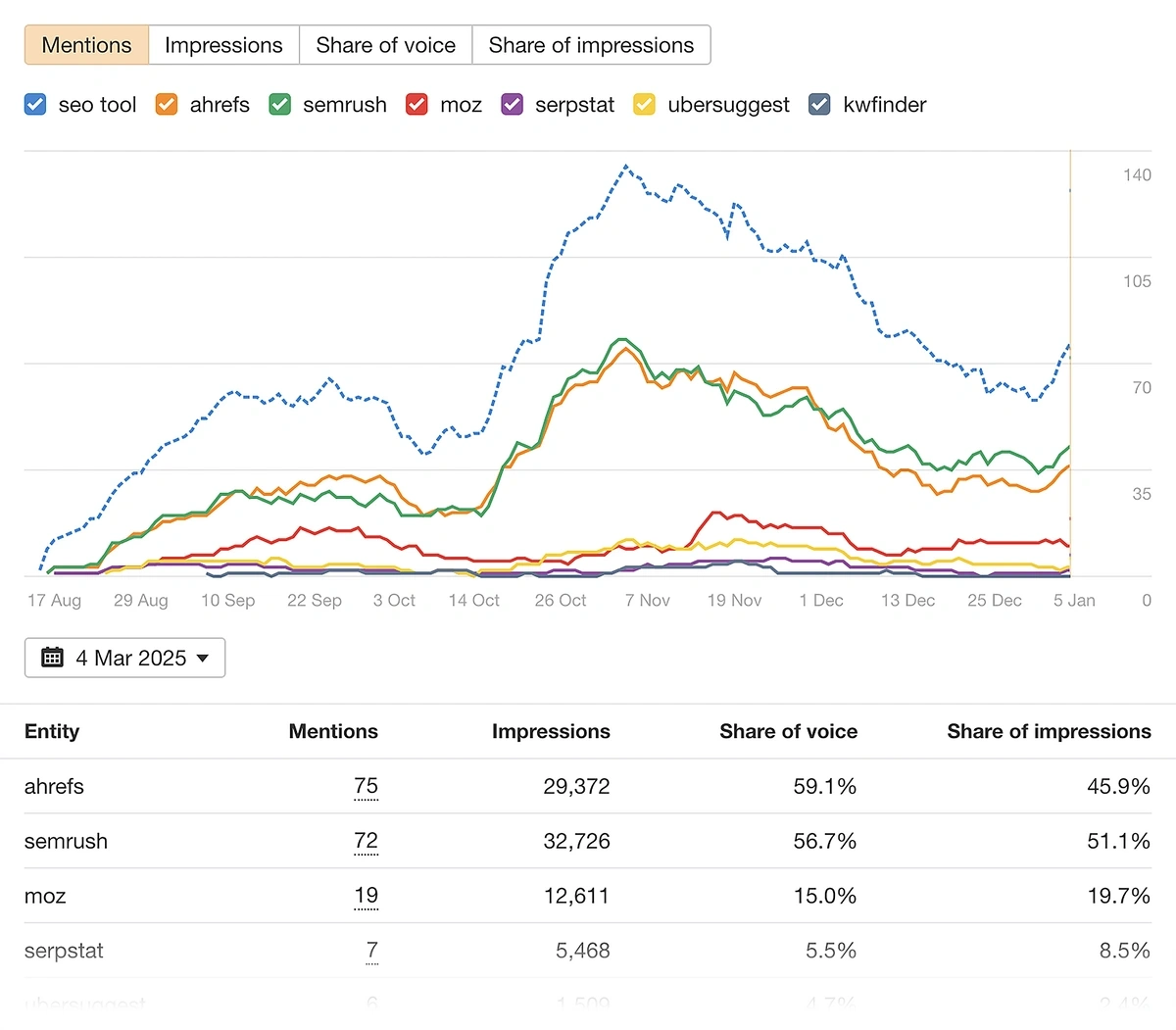
Compared to the dedicated competitor analysis tools provided by Semrush and other platforms, this approach has its pros and cons. It makes it easier to benchmark specific metrics, but harder to do a deep dive into your competitors’ overall performance and find content gaps you can use to your advantage.
Similarly, Ahrefs integrates prompt tracking features into its reports instead of offering a dedicated tool for it. You can still use it to see prompts with mentions and citations for your brand, and see the specific sources for those mentions and citations.
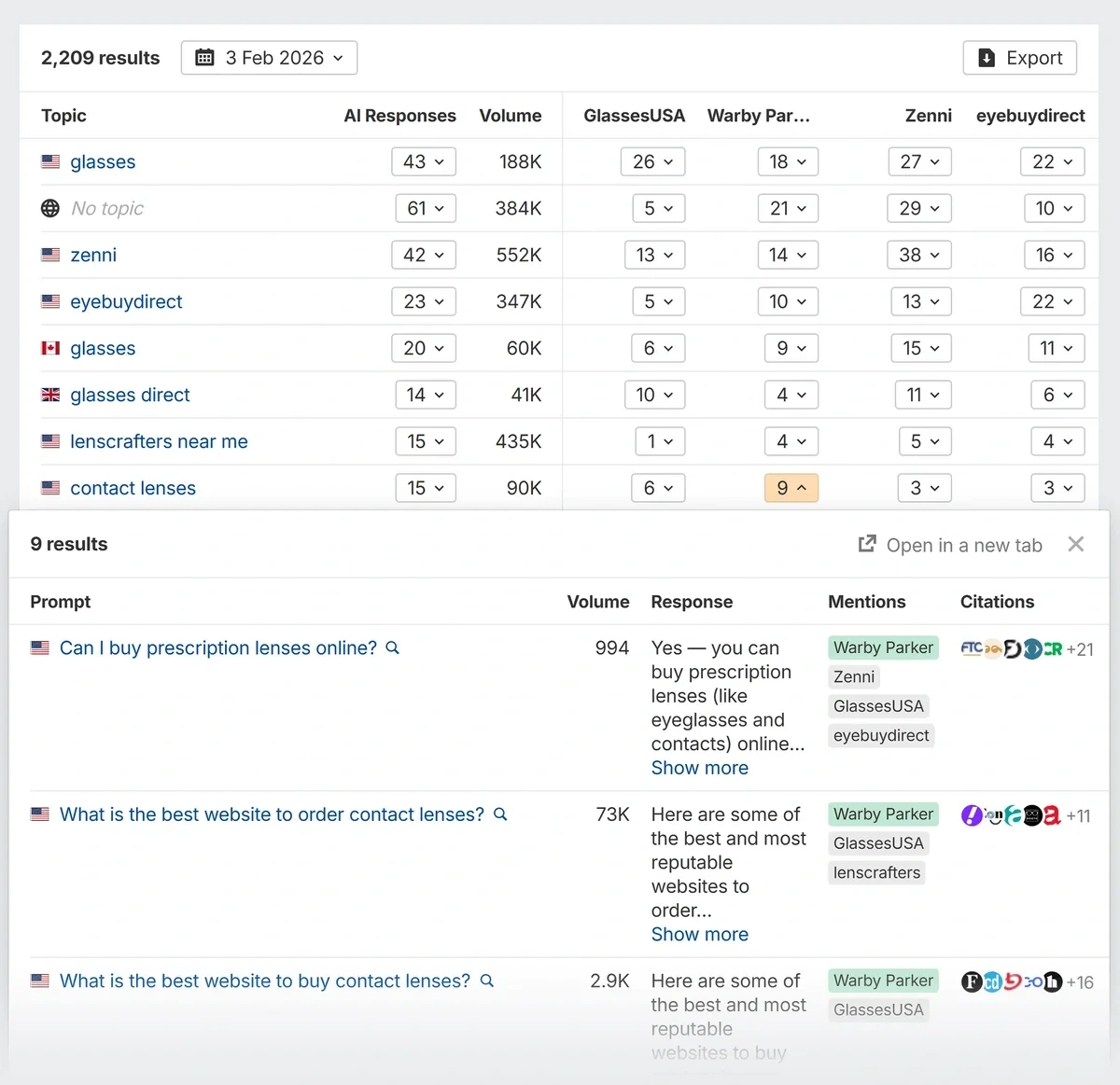
Overall, Ahrefs Brand Radar checks all the boxes needed for a solid AI citation tracking tool, and even provides some unique features you won’t find elsewhere. The user interface isn’t my favorite, but that’s a matter of personal preference and might be a positive depending on how you like to approach content strategy.
Further Reading: Semrush Visibility Toolkit vs Ahrefs Brand Radar
The hardest pill to swallow when it comes to Ahrefs Brand Radar is the price. You pay per AI platform, and to access the full lineup you’ll be out $699 per month (on top of your Ahrefs SEO plan, if you’re using those features as well).
Track AI Citations and Traditional SEO Performance With Semrush
All of the AI citation tracking tools in this post have what you need to monitor brand mentions in Google AI Overviews, ChatGPT, and other popular AI tools.
But don’t forget, SEO still matters too. Semrush brings together the best keyword research, traditional rank tracking, and AI tracking tools for a complete look at how your brand is performing.
If you’re new to Semrush, I recommend trying out Semrush One free for seven days to access the best SEO and AEO tools, including the AI Visibility Toolkit. If you’re already a Semrush Classic user, getting started with AI citation tracking is as easy as adding the AI Visibility Base plan to your existing subscription.
Stop Guessing, Start Growing 🚀
Use real-time topic data to create content that resonates and brings results.
Exploding Topics is owned by Semrush. Our mission is to provide accurate data and expert insights on emerging trends. Unless otherwise noted, this page’s content was written by either an employee or a paid contractor of Semrush Inc.
Share
Newsletter Signup
By clicking “Subscribe” you agree to Semrush Privacy Policy and consent to Semrush using your contact data for newsletter purposes
Written By


Molly is a technical content writer with a passion for making technology easy for anyone to understand. She specializes in content... Read more