Exploding Topics
Remineralizing Gum search volume grew from under 100 to 27,100 monthly searches between February 2024 and January 2026.
Remineralizing gum
+5100%
GLP 1 Supplement search volume grew from 5,920 to 74,000 monthly searches between February 2024 and January 2026.
GLP 1 supplement
+1150%
Soursop Bitters search volume grew from 9,900 to 110,000 monthly searches between March 2024 and February 2026.
Soursop bitters
+1011%



Get Advanced Insights on Any Topic
Discover Trends 12+ Months Before Everyone Else
How We Find Trends Before They Take Off
Exploding Topics’ advanced algorithm monitors millions of unstructured data points to spot trends early on.
Keyword Research
Performance Tracking
Competitor Intelligence
Fix Your Site’s SEO Issues in 30 Seconds
Find technical issues blocking search visibility. Get prioritized, actionable fixes in seconds.
Powered by data from
Latest Blog Posts
Featured Case Studies
See what's trending before everyone else
Each week, we'll send you our best Exploding Topics. Plus, expert insight and analysis.
What I Include in My Client SEO & GEO Reports in 2026

 Add Exploding Topics on GoogleAdd Exploding Topics as your preferred source to see more of our stories on Google.
I started building SEO reports in 2013, and they stayed basically the same for over a decade — traffic, rankings, top pages, impressions, and conversions were what mattered most. And sometimes, depending on the client, we’d watch metrics like time on page, bounce rate, paid ad visits, and social media referrals.
But over the past year or so, what matters most has changed in a very big way.
Traditional organic rankings? An almost obsolete metric. Search Console impressions? Useful, but no longer the sole indication of online visibility.
According to a Seer Interactive study analyzing 25.1 million organic impressions across 42 organizations, organic click-through rates for queries featuring AI Overviews fell 61% between June 2024 and September 2025.
And that’s not the only way search has changed.
Because of those huge changes, I've completely reworked how I approach SEO reporting for 2026. This guide covers it all: the main sections every monthly SEO report needs, plus the GEO and AI visibility data layers that make a report actually useful for the way search works today.
How to Build an SEO Report That’s Actually Helpful in 2026
The first rule in making your client SEO reports worth reading is to provide real SEO and AI visibility insights, not just a data dump. This isn’t new for 2026 — clients have always wanted to know what the data actually means for their business.
I make sure every client SEO report has three main things:
- Clear evidence of progress
- Honest context for setbacks
- An insightful view of what's coming
Every section should connect back to business outcomes, providing real insights into what the numbers are saying about where the business is headed.
I also make sure to include a little bit of education, especially considering the massive changes that search is undergoing right now. So if a client’s organic traffic has decreased year over year, for example, I’ll include some information about AI Overviews and AI visibility and how they contribute to the client’s overall organic presence.
One important note: not every section below belongs in every report. What you include and emphasize will always depend on the client's goals, your toolset, and your contract or agreement.
Also, I’ll be using Google Analytics 4, Semrush, and Exploding Topics to build my report as we go, but you can use the tools you have available.
What Sections Should Be Included in a Client SEO Report?
The modern client SEO report should cover both traditional search performance and AI visibility. In order to create a report that makes the most sense to clients, I organize it around the questions they actually care about: Are we being discovered? Are we earning traffic? Are we trusted? Are we converting? And are there technical barriers holding us back?
Here are the six sections I include in almost every report:
- Discovery & Visibility: Keyword cluster ranking movements, Search Console metrics, AI Overview results, LLM citations and share of voice
- Traffic Acquisition: Organic sessions and users, AI referral traffic from ChatGPT, Perplexity, Gemini, and beyond
- Authority & Trust: Backlink profile growth and referring domain quality
- Technical SEO Health: Site health score and critical issue tracking
- Conversions & Business Outcomes: Website conversions and other positive business outcomes
- Trend Intelligence: Rising topics in the client's niche, emerging keyword opportunities, and early signals on where search demand is heading
Let’s dive into each of those in more detail.
1. Discovery & Visibility: Are we showing up in search results?
This section answers the most fundamental question every SEO client has: can people find us on the internet? That question now has two distinct answers — one for traditional search, one for AI-powered search — and both belong in the report.
Traditional Search Visibility
Before I dive into keyword rankings, there’s one thing you need to know: I'm no longer reporting subtle keyword ranking shifts like I did several years ago. Fluctuating from ranking #3 to #5 in traditional search for one specific keyword, for example, is not a metric I'm focused on.
Instead, I'm looking at broad topical visibility and keyword cluster rankings.
I pull rank data from the Semrush Position Tracking tool and report on movement across primary keyword clusters (you can cluster your tracked keywords using tags). Which have moved up? Which slipped? Which pages have broken into the top 10 for the first time?
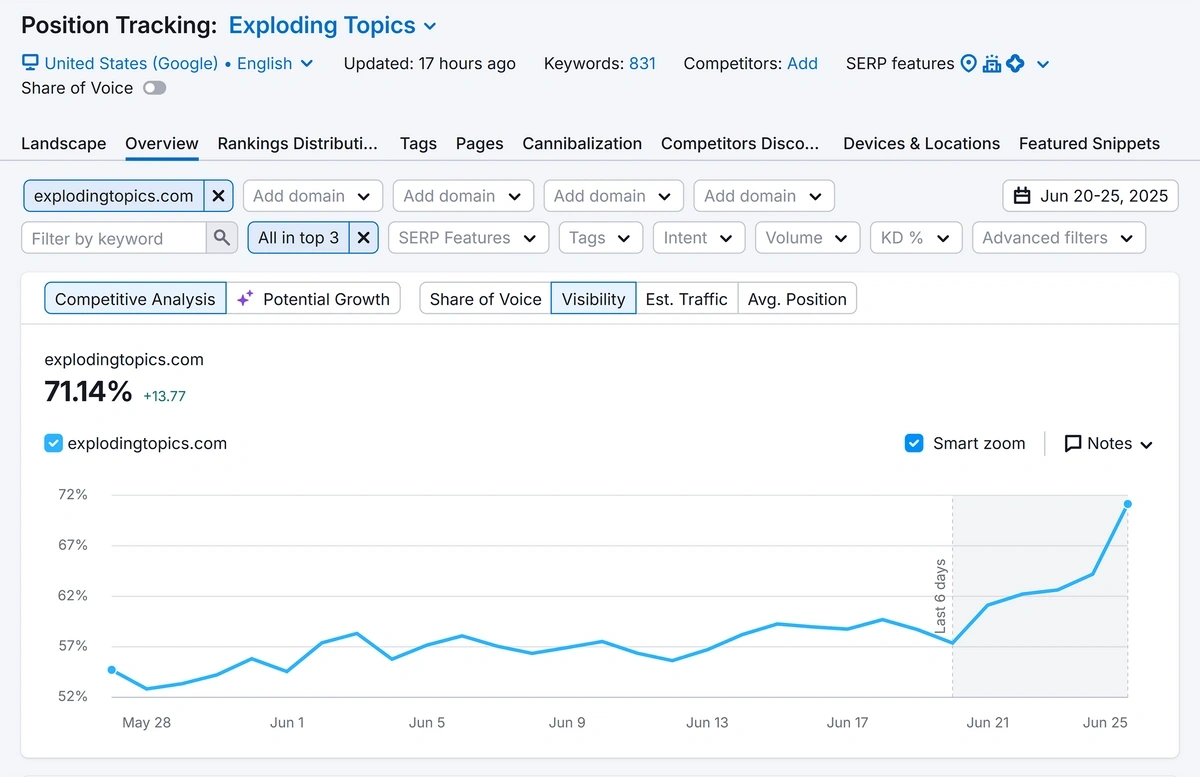
Alongside rankings, I include Google Search Console data for the period — clicks, impressions, average CTR, and average position. I’ll also sometimes add the top or trending up query groups and content via Search Console’s Insights report:
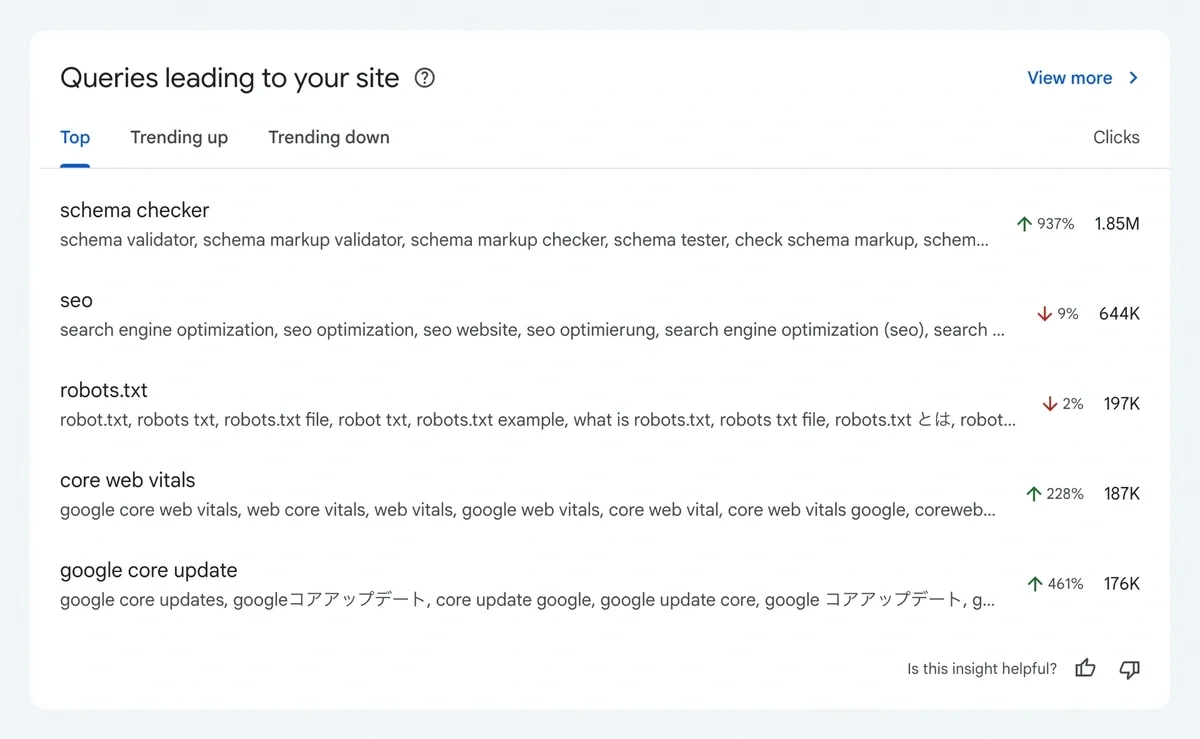
Together, these two data sources paint a pretty comprehensive picture of how the site is performing in traditional search.
Show wins prominently, but don't bury losses. A keyword cluster slipping in visibility is worth a sentence of context, and a page breaking onto page one deserves a clear callout.
Remember, do NOT just dump the data on your client and expect them to read it and understand what’s happening. Summarize the data in meaningful sentences and tie the data back to business objectives.
For a deeper look at why keyword cluster measurement outperforms keyword-first approaches now, see Why Keyword Research Doesn't Work in 2026 (And What to Do Instead).
AI & LLM Visibility
You should absolutely be including a section on AI visibility, even if your client isn’t showing up there much at the moment.
Today, AI Overview citations and LLM share of voice are as important to track as rankings and impressions, and they need their own dedicated space in the report.
I use Semrush to pull two key metrics:
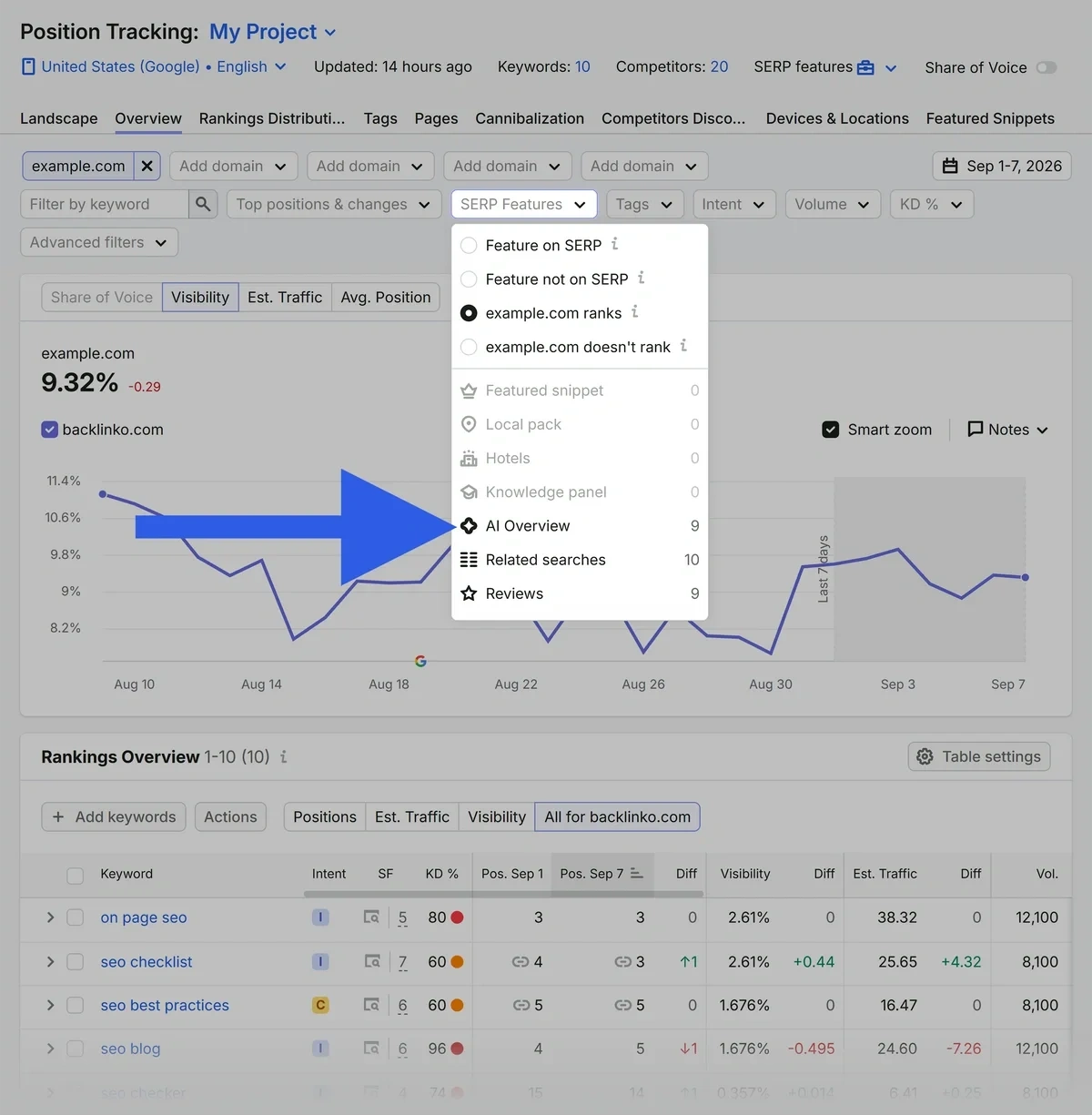
First, AI Overview inclusion rate: For the client's tracked keyword set, how often is their domain appearing in AI Overviews? Semrush's Position Tracking report flags keywords where an AI Overview is present and whether the client is currently being featured.
Second, LLM share of voice: How often is the brand mentioned or cited when AI platforms like ChatGPT, Perplexity, and Gemini answer questions in their category? Check Semrush’s AI Visibility Overview report to find your share of voice.
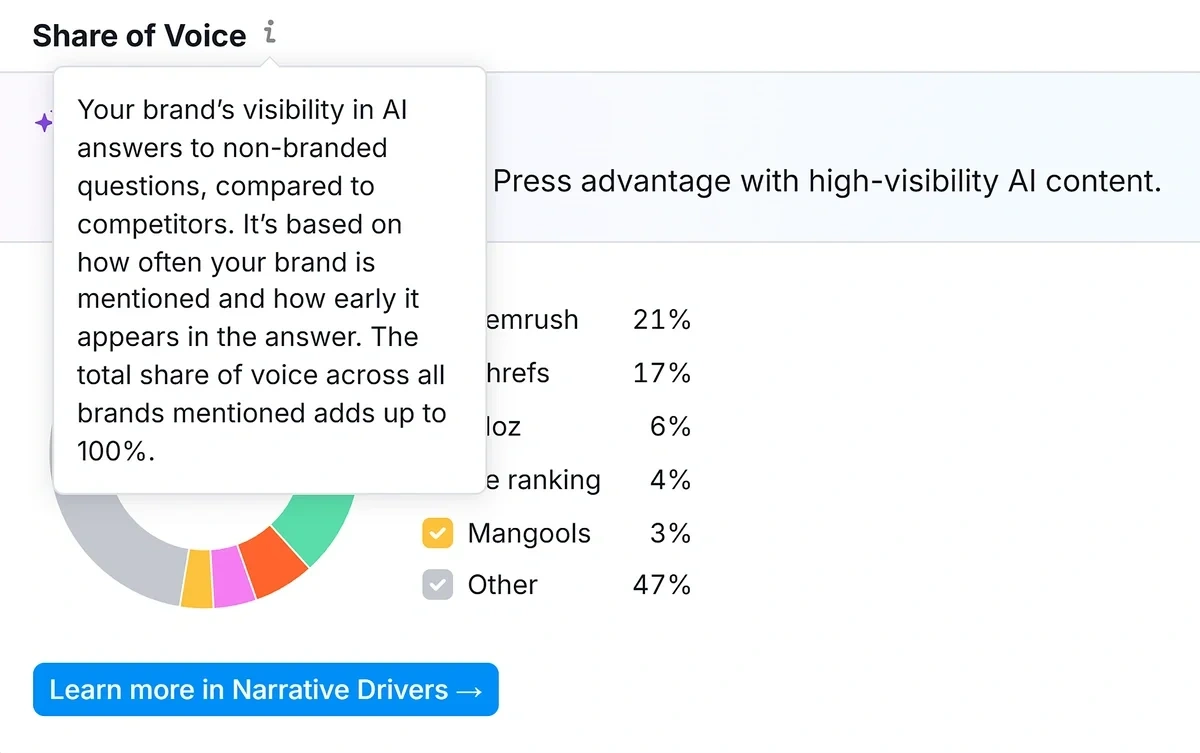
This is also where you might want to include some competitor comparisons. If a competitor is being cited in AI responses where your client isn't, that gap belongs in the report.
2. Traffic Acquisition: How do people find us?
Discovery and visibility tell your clients whether and how they are being found. This section, though, takes the visibility you just reported on and tells your client whether it’s translating into actual visits.
Organic Search Traffic
Start with organic sessions and users, trended over the reporting period against the prior month and/or year-over-year. I like to report on organic traffic via the Landing Pages report, so my client can see which pages are driving the most organic visits.
To create it, I add the Session source/medium dimension to the GA4 Landing Pages report, then type “organic” into the search bar:
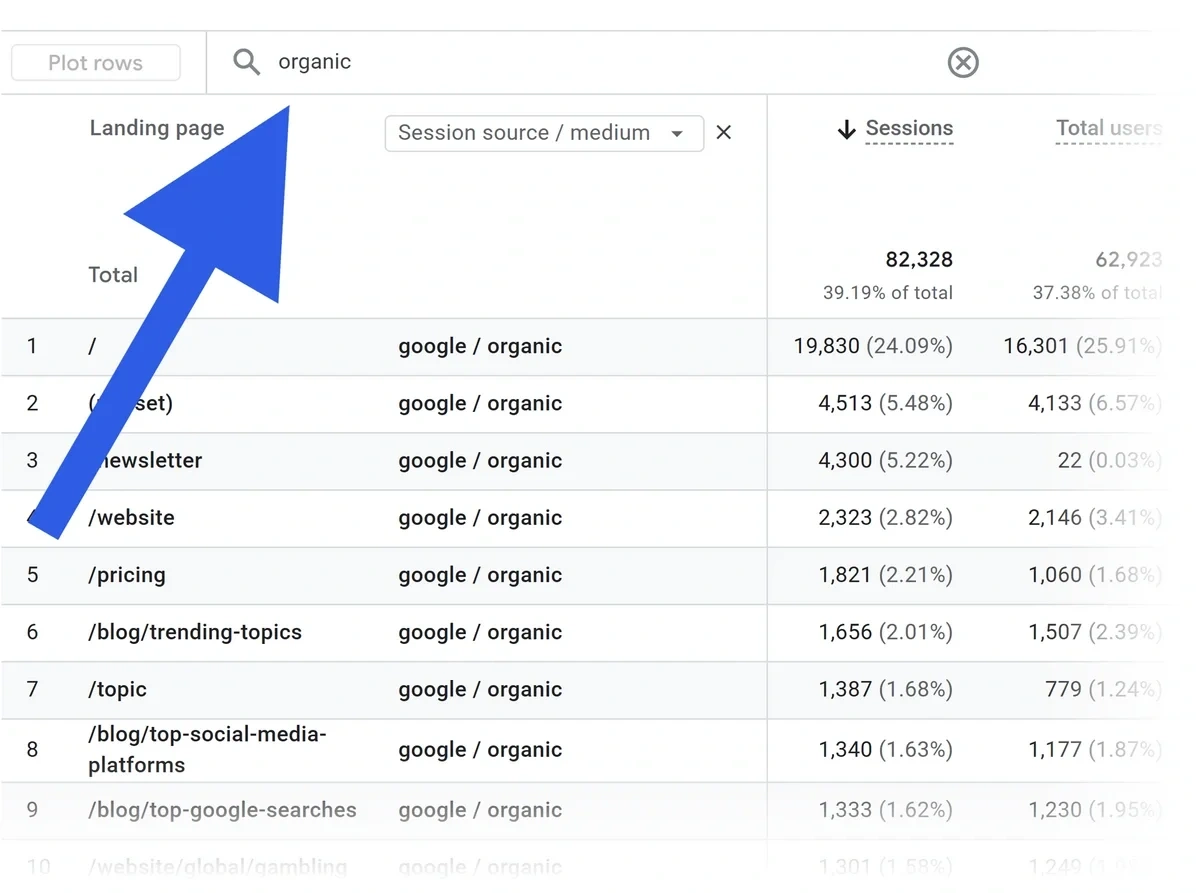
You can also build a better-looking custom organic traffic report in GA4’s Explore tab.
AI Referral Traffic
Although it's technically categorized as referral traffic, AI referral traffic is coming from organic visibility inside AI and LLM tools — which is why it belongs alongside organic search rather than in a general referral bucket.
Although Google Analytics announced a new AI referral traffic channel in GA4 called “AI Assistant” that shows visits driven by platforms like ChatGPT, Perplexity, and Gemini, some accounts aren’t seeing it yet.
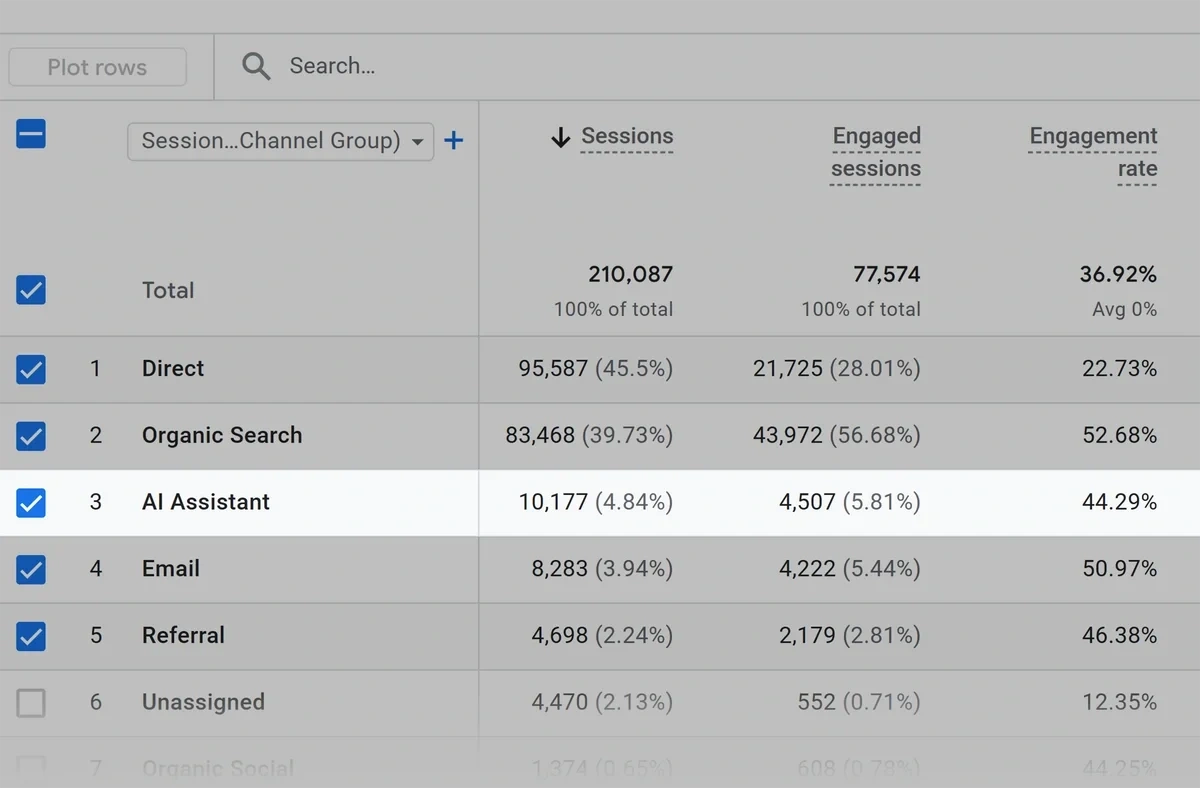
If your account does not have the new channel, try setting up a custom AI traffic channel group.
For most clients, the number of AI referrals is still small, but it's growing fast enough that establishing a baseline now will make it easy to show momentum later.
3. Authority & Trust: Does our domain carry topical authority?
Now that I’ve reported on what’s happening in terms of traffic (and added some insight as to why it’s happening), I move into more data about underlying signals that could definitely affect the client’s visibility.
Both traditional search rankings and AI citation likelihood can be improved by the same underlying signal: how many credible, high-authority sources reference and link to your client's site.
Pull the highlights from Semrush Backlink Analytics, such as new referring domains earned during the period, authority score, any lost links, and the overall referring domain trend over the last three to six months.
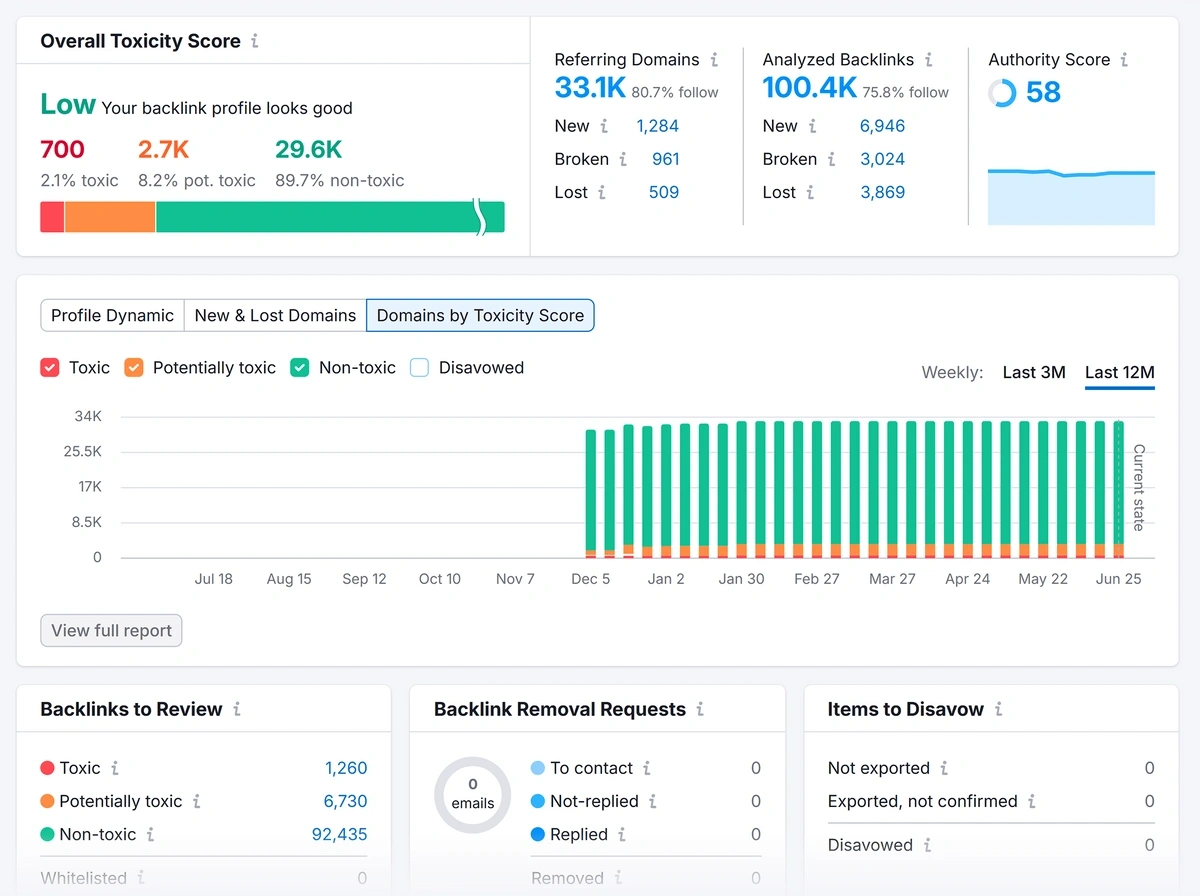
I’ll make sure to call out any high-authority links that were added, and any that were lost that I think we should try to recover.
4. Technical SEO Health
After covering the authority and trust signals that influence visibility, I move into the technical side of the site. Even a well-optimized, well-cited site can lose visibility if technical issues are left unchecked.
Run a monthly Semrush Site Audit and include the overall site health score alongside a brief summary of critical or high-priority issues. If you resolved issues flagged in last month's report, definitely call that out as evidence of your hard work.
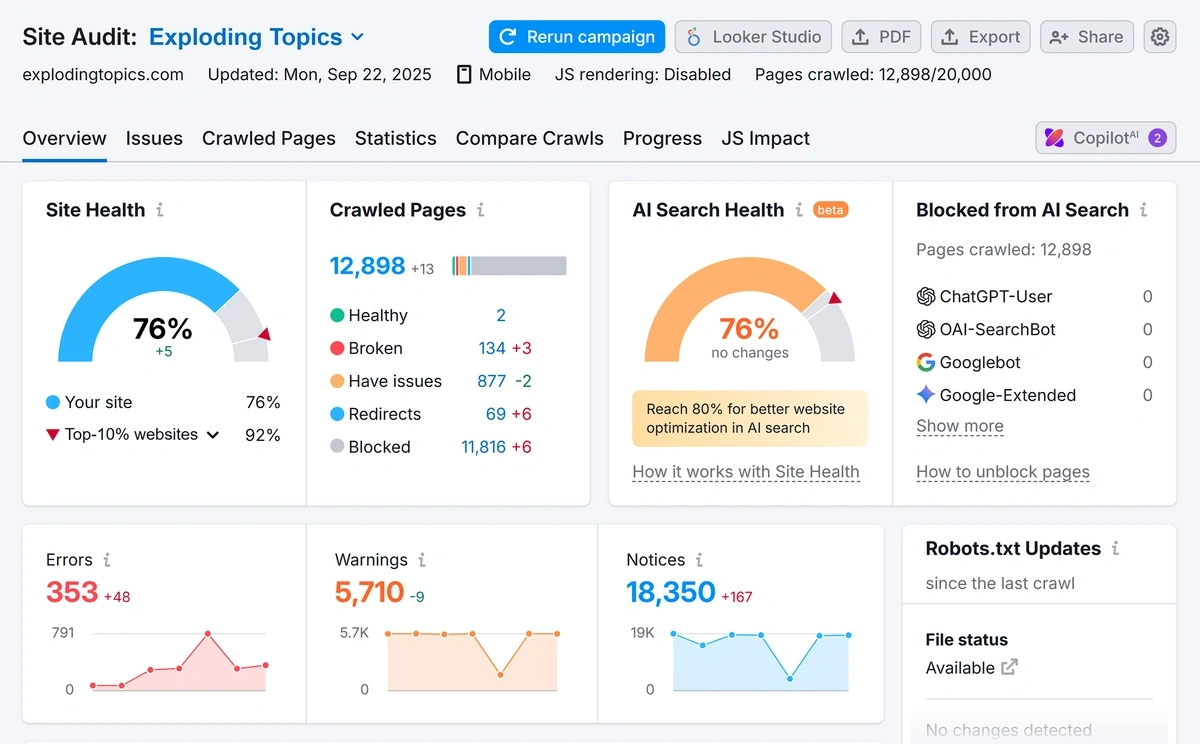
Keep this section concise for most clients and go deeper only when there's a significant issue worth explaining in plain language.
5. Conversions and Business Outcomes
Technical health sets the foundation for everything else — but ultimately, none of it matters if organic and AI visibility aren't producing real business results. This is the section where I tie it all together.
Organic traffic that doesn't produce business results is, in the end, a vanity metric.
However.
Attribution is hard. Today, your clients’ prospects are increasingly doing their research on AI platforms instead of clicking through to the website, making conversions from organic visits hard to trace.
Report on conversions, but don’t focus overly hard on conversions specifically from organic traffic. Your work as an SEO should hopefully be increasing conversions across multiple channels.
For more on attribution in the age of AI, check out Attribution gap in agentic search: how to close it.
6. Trend Intelligence: What opportunities are coming soon?
The five sections above give my clients a complete picture of where they've been and why they’ve been there. This section turns things around and shows them where their niche is headed.
I use Exploding Topics to identify rising search topics in the client's niche: terms whose search momentum is building but haven't reached peak competition yet.
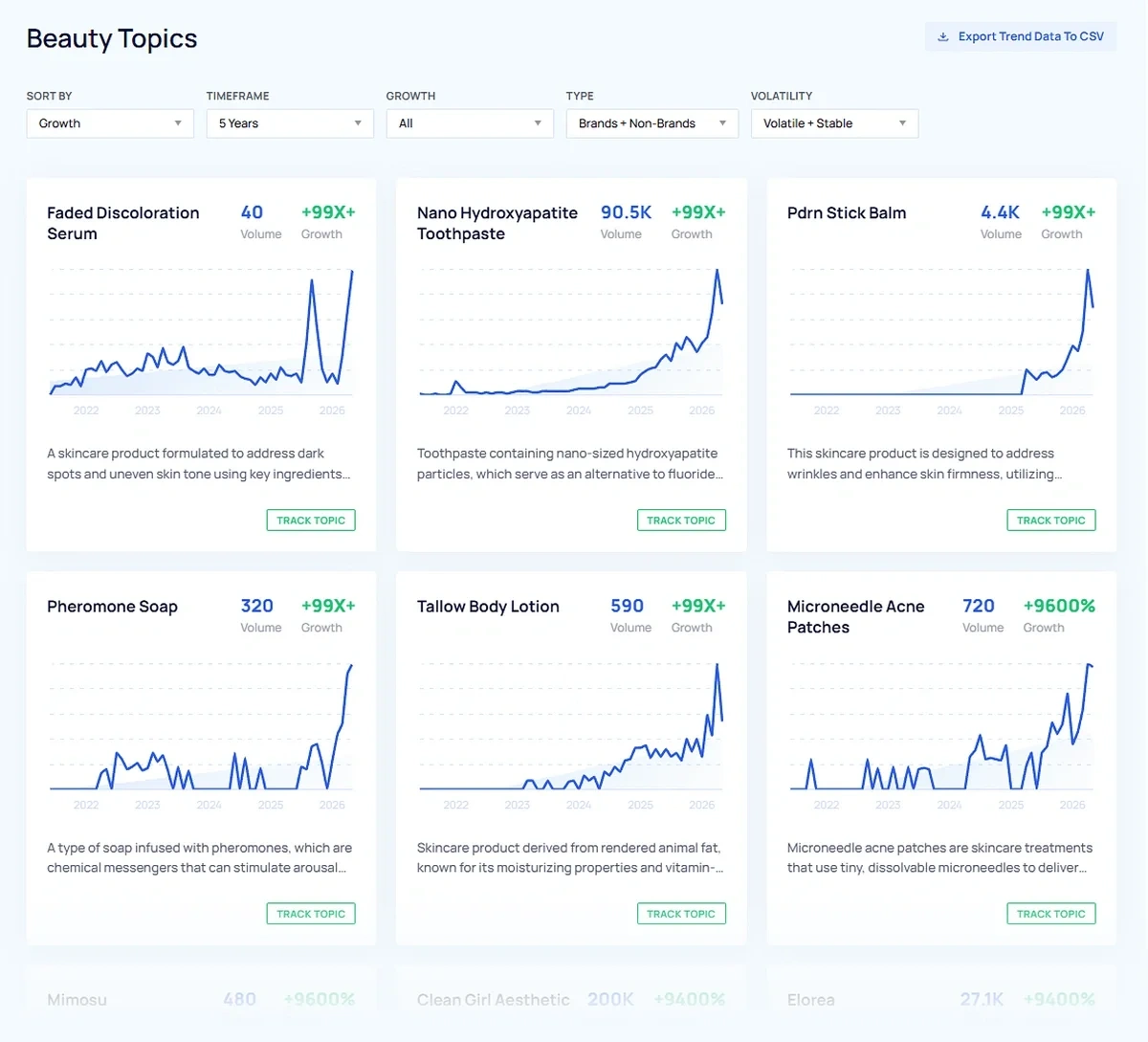
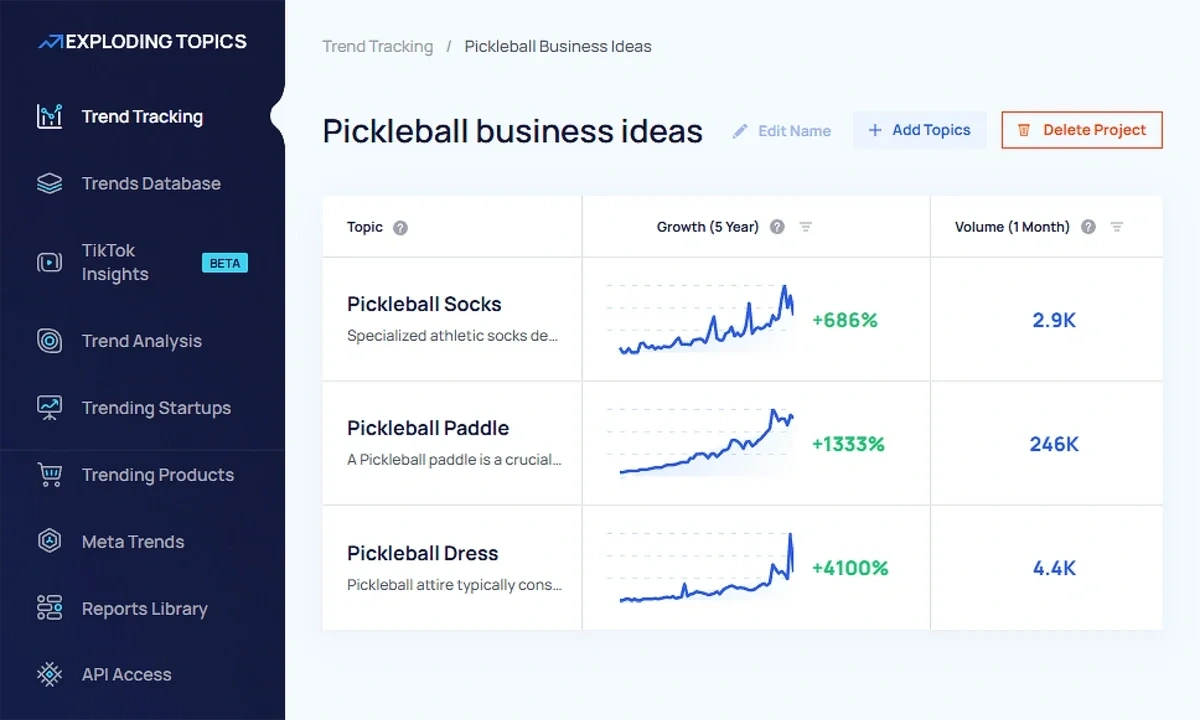
I keep a category of trending topics I’m watching for each client, so I can quickly and easily see if something I’ve been watching is on the rise:
I also do a quick look through the client’s niche in the Trend Database to identify anything new that we’re not aware of just yet:
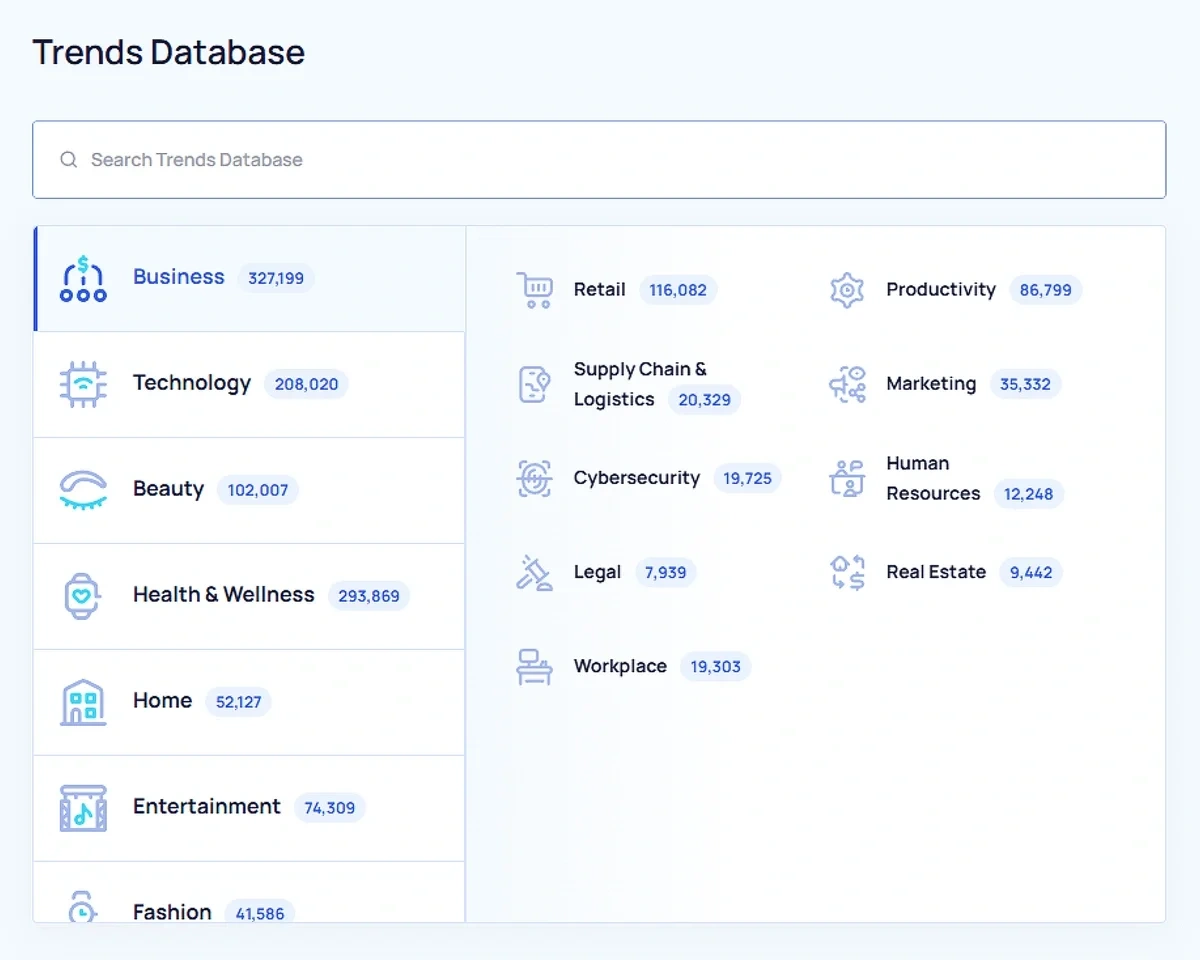
In a monthly report, this doesn't need to be elaborate. A short list of three to five trending topics relevant to the client's category, including a growth trajectory and a note on current keyword opportunity, gives them something concrete to act on.
Also, use the trend data to frame your recommendations. Instead of saying "we recommend creating content about X," you can show a client that search interest in that topic has grown significantly over the past year, competition is still relatively open, and many of their closest competitors haven’t built content around it yet.
Including forward-looking trend data in your monthly SEO reports is both great for your clients, and works as an agency differentiator. Most reports your clients have received from SEOs before looked more or less the same. Your reports show that you’re not just measuring results and spitting out data. Instead, you’re taking that data and turning into concrete, data-backed insights and tips to grow your clients’ businesses.
Used together, Semrush and Exploding Topics help you build the best possible client SEO report for the modern-day search landscape. Use them to connect each metric back to business impact and give your clients concrete insights and tips for the near future.
Stop Guessing, Start Growing 🚀
Use real-time topic data to create content that resonates and brings results.
Exploding Topics is owned by Semrush. Our mission is to provide accurate data and expert insights on emerging trends. Unless otherwise noted, this page’s content was written by either an employee or a paid contractor of Semrush Inc.
Share
Newsletter Signup
By clicking “Subscribe” you agree to Semrush Privacy Policy and consent to Semrush using your contact data for newsletter purposes
Written By


Jolissa Skow is a senior content writer and content strategist with a background in SEO, Google Analytics, and WordPress. She's be... Read more