


Get Advanced Insights on Any Topic
Discover Trends 12+ Months Before Everyone Else
How We Find Trends Before They Take Off
Exploding Topics’ advanced algorithm monitors millions of unstructured data points to spot trends early on.
Keyword Research
Performance Tracking
Competitor Intelligence
Fix Your Site’s SEO Issues in 30 Seconds
Find technical issues blocking search visibility. Get prioritized, actionable fixes in seconds.
Powered by data from
Latest Blog Posts
Featured Case Studies
See what's trending before everyone else
Each week, we'll send you our best Exploding Topics. Plus, expert insight and analysis.
Why Keyword Research Doesn't Work in 2026 (And What to Do Instead)

 Add Exploding Topics on GoogleAdd Exploding Topics as your preferred source to see more of our stories on Google.
I was working on an in-house marketing team when Google’s AI Overviews debuted and organic traffic began dropping for many (if not most) websites all across the web.
Even despite maintaining our good keyword rankings, organic traffic dropped significantly.
Something fundamental had shifted in the way search worked. I spent a lot of time analyzing data, running reports, and trying to figure out what we were missing. Eventually, I realized that we’d have to change our entire approach to keyword research, creating a content strategy, and building visibility online.
Traditional keyword research focuses on individual search queries. But AI search platforms like Google’s AI Overviews, ChatGPT, and Perplexity don't work that way.
Instead, they understand topics, context, and relationships between concepts.
So, creating content around and optimizing for individual keywords just doesn’t work anymore.
If you want to maintain organic rankings while also building visibility in LLMs, you have to make the shift from keyword research to topic research instead.
Topics vs. Keywords
What does that mean, to shift from keywords to topics?
Keywords are specific search terms users type into search engines.
Topics are broader themes that encompass multiple related keywords, questions, and concepts.
The key differences:
| Keywords | Topics | |
| Scope | Single query or phrase | Broader theme with multiple subtopics |
| Focus | Exact match terms and very slight variations | Wider coverage |
| User intent | One specific question | Full exploration of a subject |
| SEO impact | Limited to one query and slight variations | Visibility across many queries |
Over the past decade, Google’s updates have pushed search far beyond simple phrase matching toward a more contextual understanding of content.
Google and AI platforms now understand context, not just words. They recognize relationships between concepts, synthesize information across multiple sources, and prioritize comprehensive topic coverage over keyword density.
User search behavior changed, too. People ask conversational questions instead of typing careful keyword phrases. They explore topics through multiple queries and expect AI to understand context from previous questions. In fact, according to Google, searches beginning with “tell me about…” jumped up 70% year-over-year in 2025.
Plus, according to Semrush research, ChatGPT cites pages ranking in positions 21+ almost 90% of the time. So higher keyword rankings won’t even ensure AI visibility.
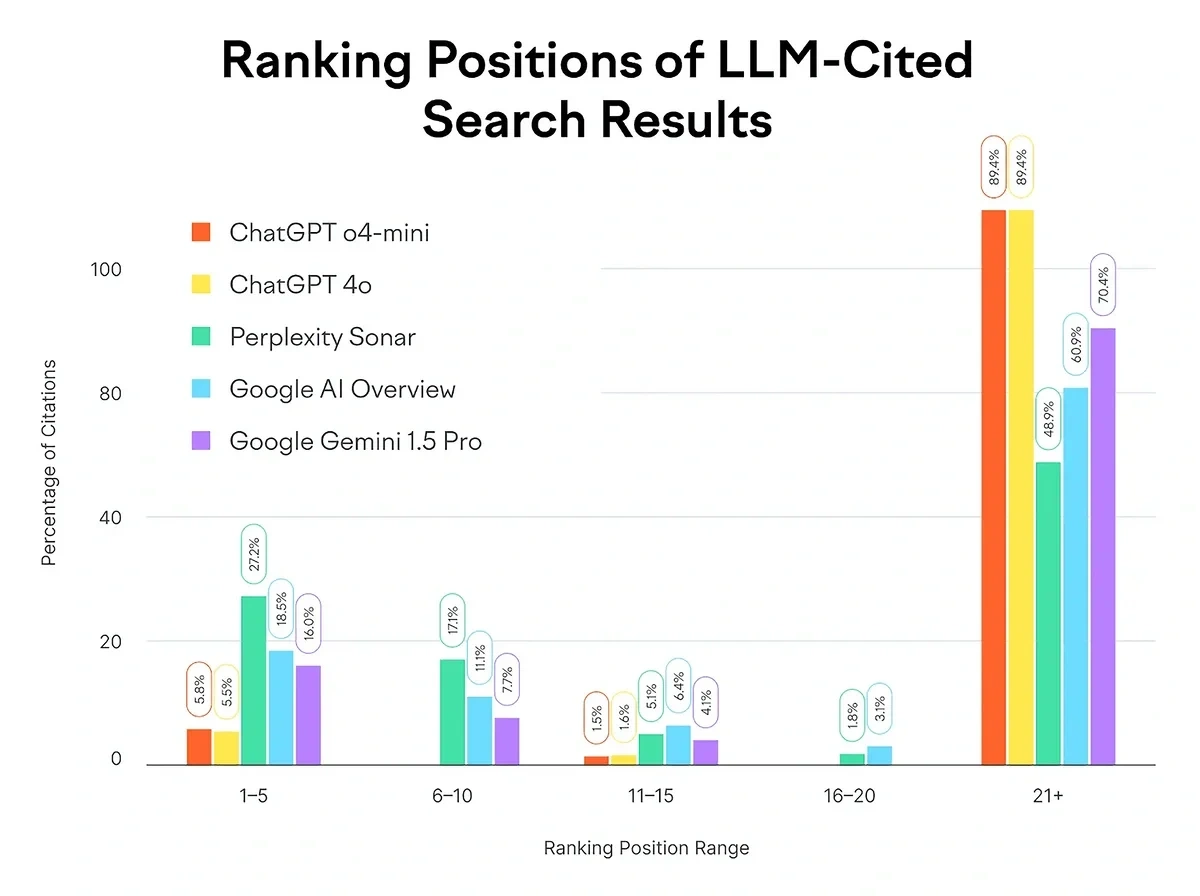
The takeaway: Your keyword rankings don't determine AI visibility. Factors like topical authority and contextual fit do.
Create Topical Authority with Query Fanout and Topic Clusters
So how does topical authority actually work in practice? You need to be fluent in these two concepts: query fanout and topic clusters.
Query Fanout
Query fanout describes how one broad topic generates dozens or hundreds of related search queries. Instead of users searching for a single keyword, they explore topics through multiple questions and angles.
Take email marketing as an example. Traditional keyword research might identify queries like "email marketing software," "email marketing tips," or "email marketing best practices." You'd create separate pieces targeting each keyword.
But users don't actually search that way anymore. Someone interested in email marketing might ask AI platforms: How do I improve email deliverability? What's the best time to send marketing emails? How do I segment my email list? What email automation workflows work best? How do I stay compliant with regulations?
All these queries relate to the same topic but use completely different keywords. That's query fanout in action.
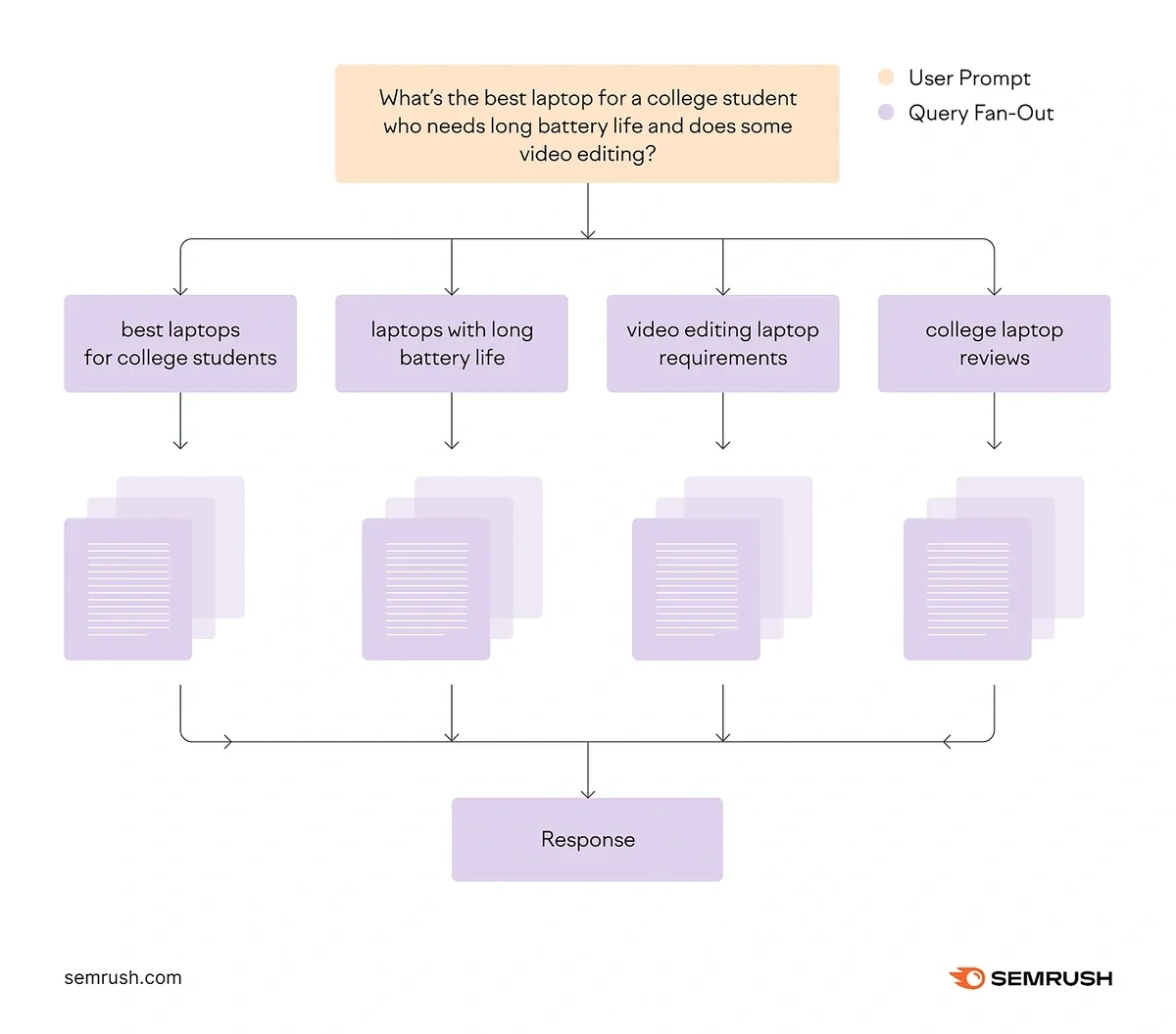
This changes what you create. Instead of writing separate articles for each individual query, you’re going to fan out your coverage with topic clusters.
Topic Clusters
Topic clusters organize content around broader themes. Whereas keyword research produces a list of target phrases, topic research produces a map of related concepts called topic clusters. You identify the core topic, map out subtopics and questions people ask about it, and create content that establishes authority across the entire topic area.
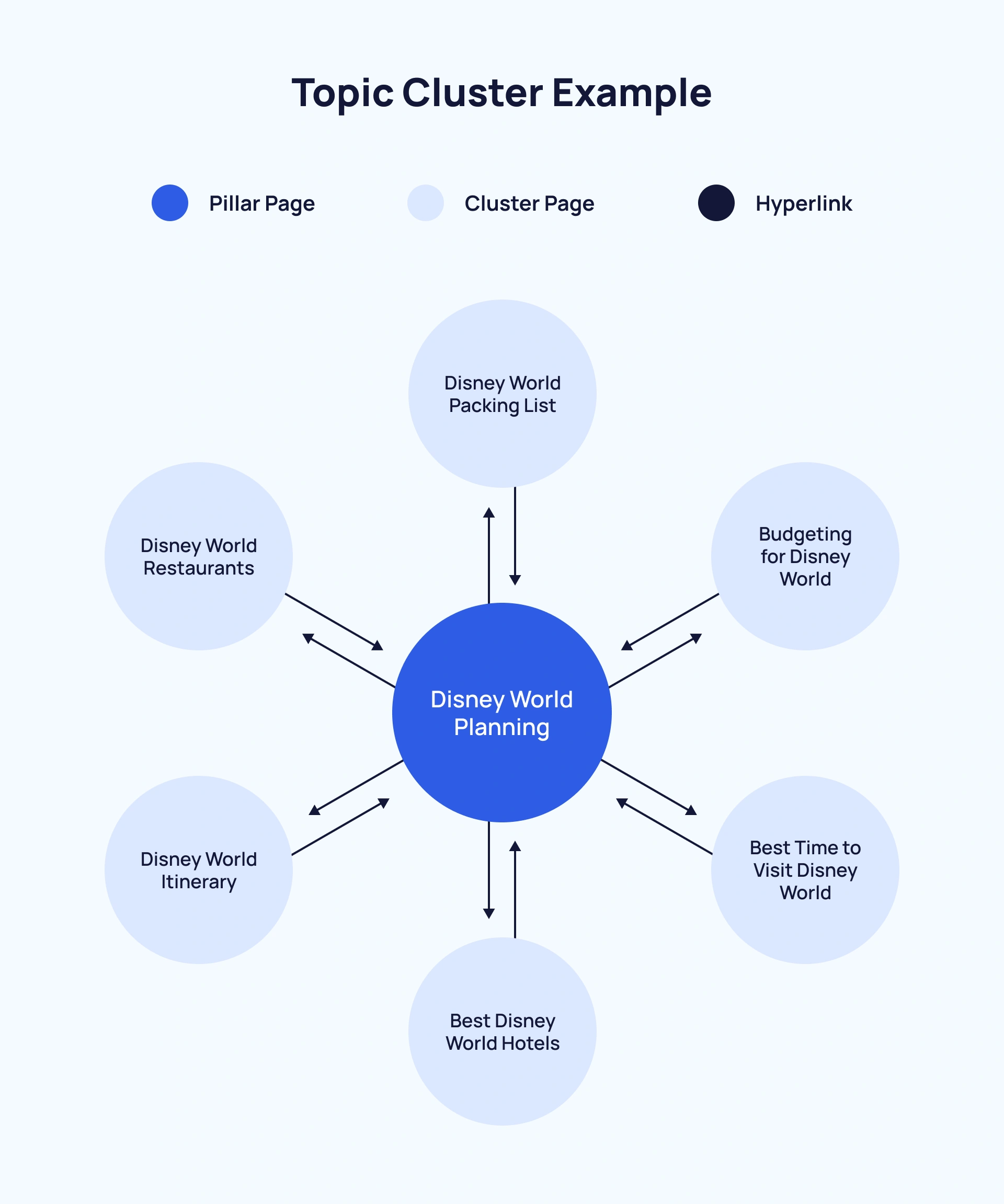
So instead of writing separate articles targeting "best email marketing software," "email marketing tips," and "email marketing ROI," you build wide coverage of the entire email marketing topic. Your pillar page addresses the core strategy. Your supporting content dives deep into software, deliverability, segmentation, automation, compliance, and analytics.
When AI platforms see this fanned out coverage, they recognize you as an authority on email marketing broadly, rather than just on individual keyword phrases. You get cited across hundreds of related searches instead of ranking for three specific keywords.
My Topic Research Framework
Now as a freelance content strategist, I’ve completely rebuilt my content research process around topics instead of keywords to help my clients gain AI visibility AND keep the organic clicks they’re managing to get.
The framework I use now starts with identifying the right topics to target, then mapping out subtopics and questions.
Here’s my process:
Step 1: Identify Topics to Target
First, you need to understand what your audience actually cares about. I use a couple different approaches depending on whether I'm looking for established topics or trending ones.
When researching established topics, I look at:
- Questions the audience is asking in customer support conversations, sales calls, and on social media
- Competitor content that’s driving visibility for them
- Goals and problems the audience has that I can solve using the jobs to be done (JTBD) framework
- Existing content performance and topic areas where some authority is already built
Shooting for visibility around established topics is a great place to start, but creating content around trending topics provides a huge opportunity to grow your visibility faster.
With up-and-coming topics, the content landscape is much less saturated, leaving more room for you to swoop in and build authority.
To find those emerging topics, I use Exploding Topics Pro. It shows me which topics are gaining popularity—often months before they peak. I keep my ear to the ground on social media, but it’s difficult to do manually. Exploding Topics tracks data across search engines, social media, and consumer behavior to surface trends for me.
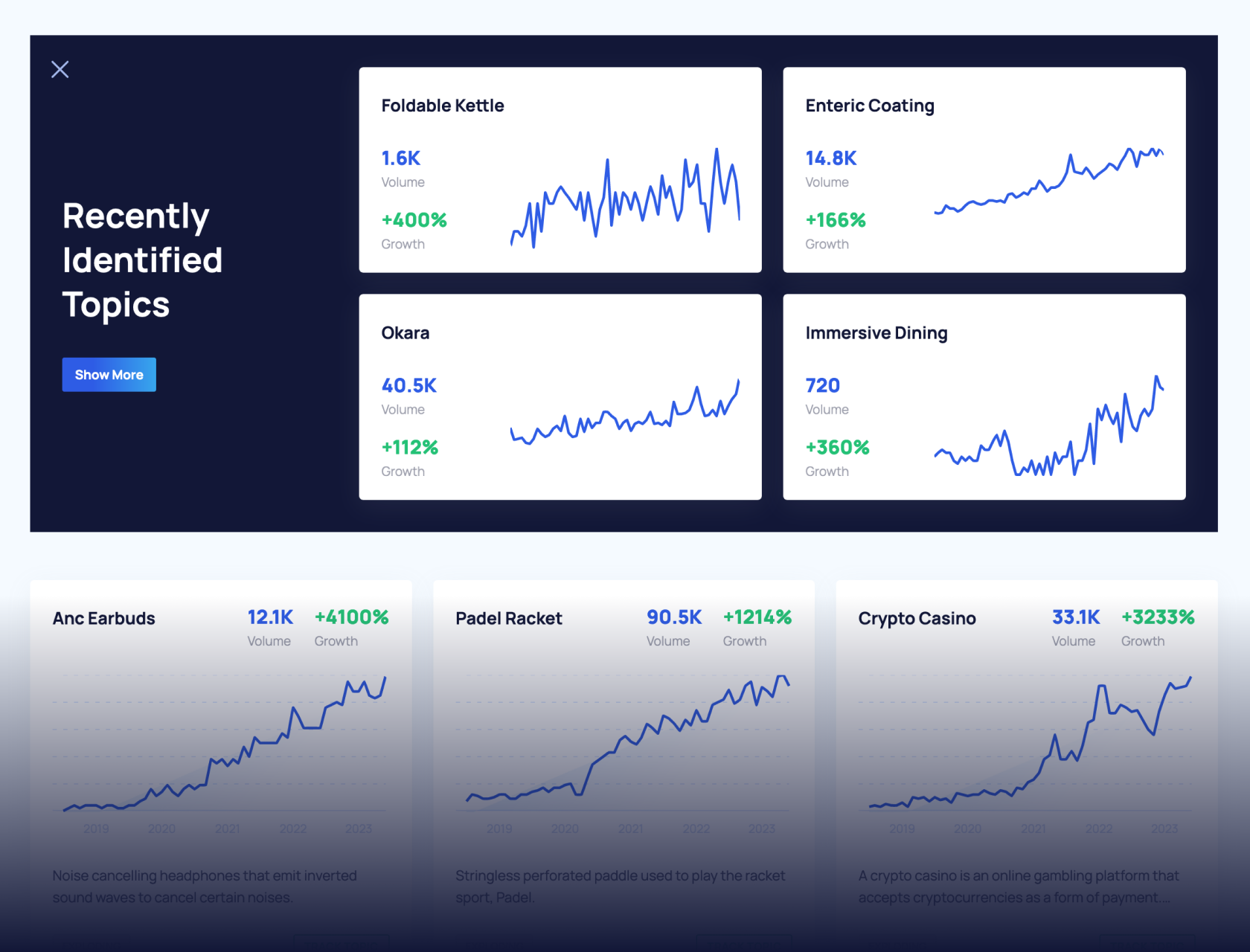
When I browse topics by industry category, I can see trending topics with their growth percentages and current search volume:
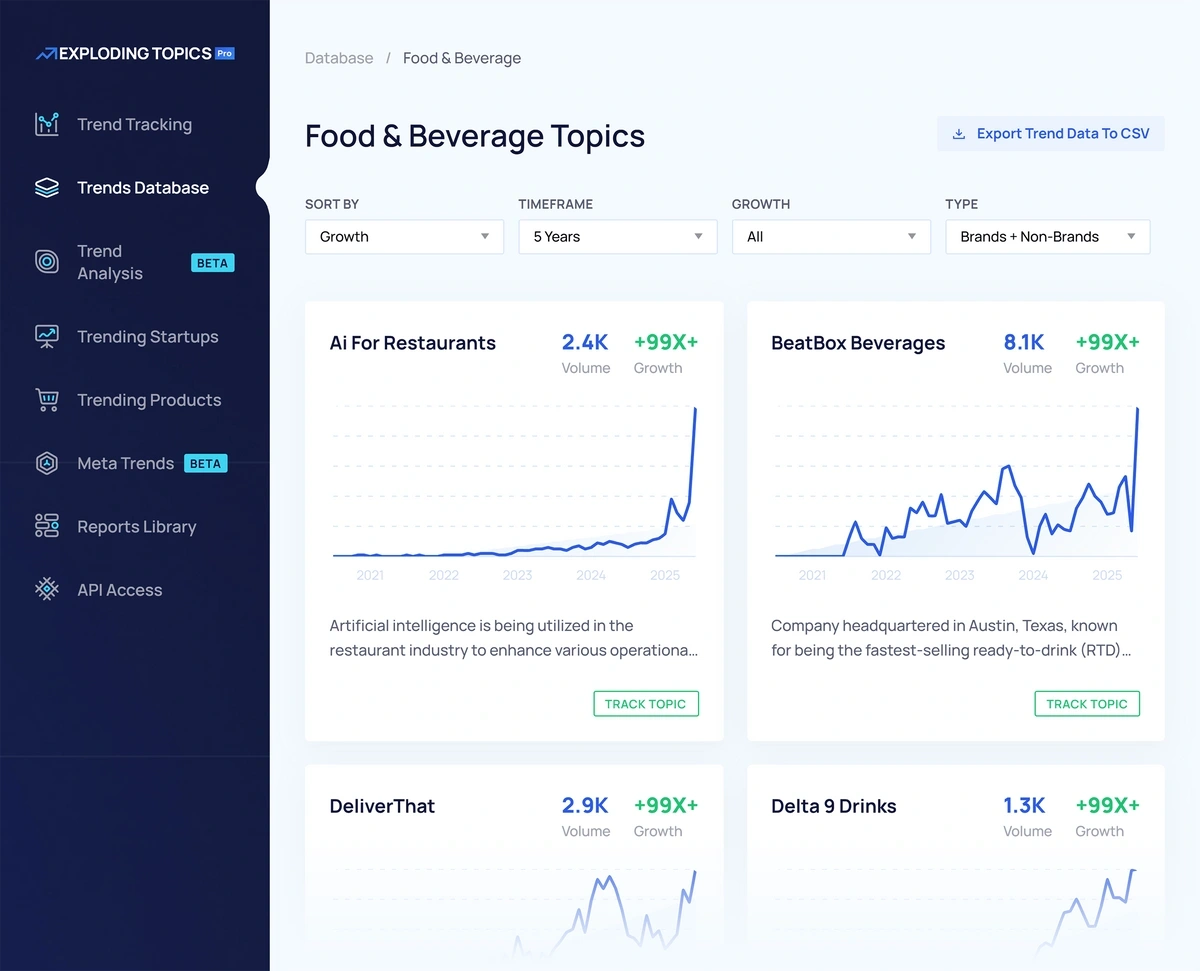
While I’ve definitely discovered topics via the Trends Database, what also works really well for me is searching by topic and then exploring related trends.
For example, let’s say I’m building a content strategy for a new productivity app that helps you habit stack, set SMART goals, create recurring tasks, organize your to-dos, and more. While our audience includes anyone in need of a task management solution, one of our primary audiences is individuals with ADHD.
To explore that content idea thread, I type “ADHD tips” into the Trend Analysis tool:
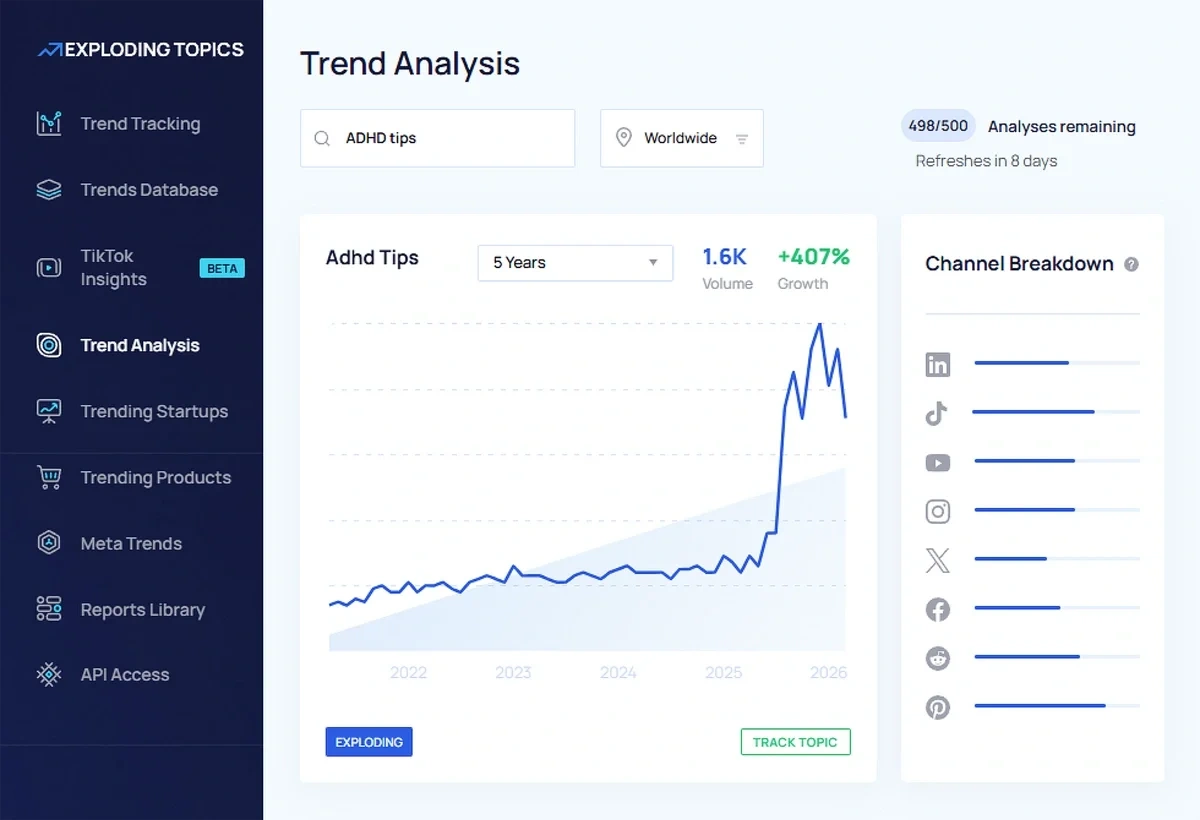
Now, I can see that “ADHD tips” itself is an exploding topic, with the highest amount of related activity on TikTok and Pinterest. I’ll file this idea away for later and scroll down to the Related Trends section. I sorted by volume, but you can also sort by growth or alphabetically by topic.
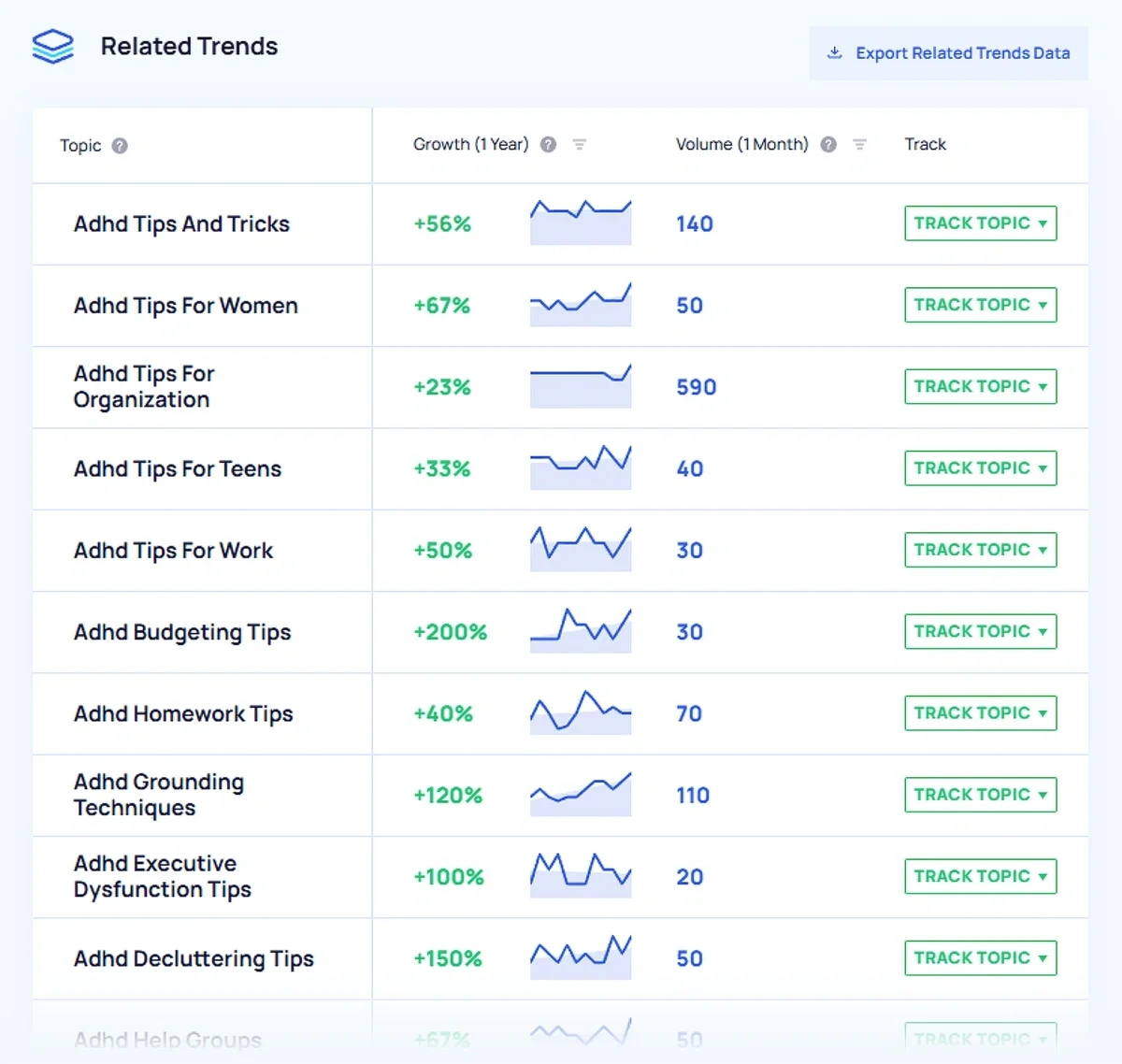
Right away, I’m seeing two trends that I think could be a great fit for the new app’s blog!
I love this list of related trends. It’s an awesome way for me to source trending content ideas that are going to pay off in the near future.
Step 2: Organize and Monitor Topics
Notice those “Track Topic” buttons next to any topic, startup, or product you find in Exploding Topics? Click that and choose a project (or create a new one) to add it to.
I use the Trend Tracking dashboard in Exploding Topics to organize topics by theme or client:
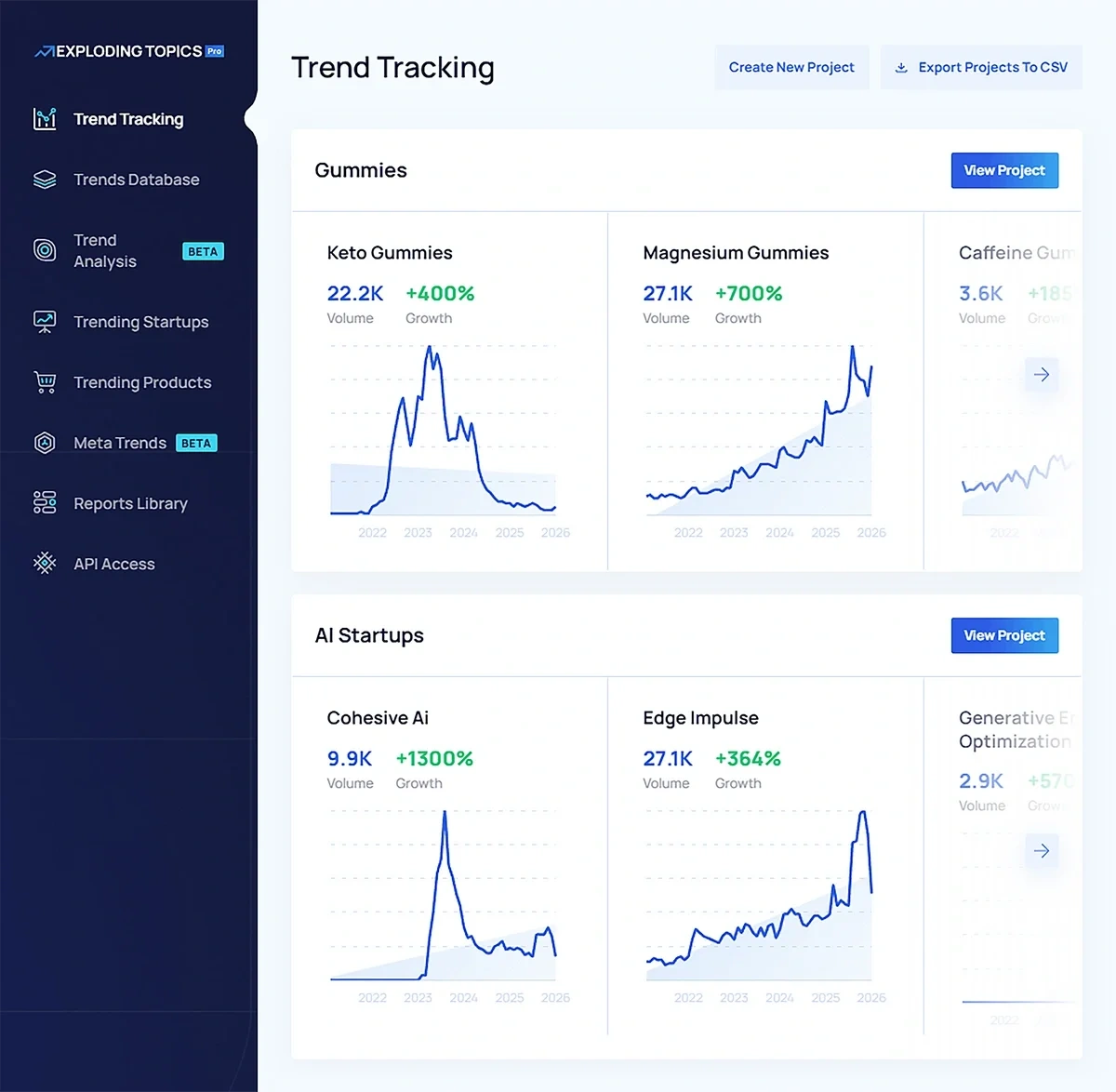
When I find a topic worth monitoring, I add it to the relevant project and set up alerts. Exploding Topics notifies me when topics in my projects accelerate, so I catch the optimal timing window for content creation.
This feature helps me track multiple topics simultaneously across totally different industries. I can monitor how each topic is developing and adjust my content calendar based on what’s trending.
Step 3: Map Out Your Topic Cluster
Once I've identified a topic to target, I map out a topic cluster or create content that I can add to an existing cluster. I look at the related topics Exploding Topics surfaces, then expand that research using tools like Semrush to identify specific questions and subtopics people are asking about.
The goal is to understand the full scope of the topic and all the angles people approach it from. I create a pillar page for the main topic, then plan supporting content for each major subtopic. Internal links connect everything together.
So for example, when I search “ADHD tips” in Semrush’s Keyword Magic tool, I’m seeing a few themes within that topic, like:
- Cleaning tips
- Motivation tips
- Studying tips
- Focus tips
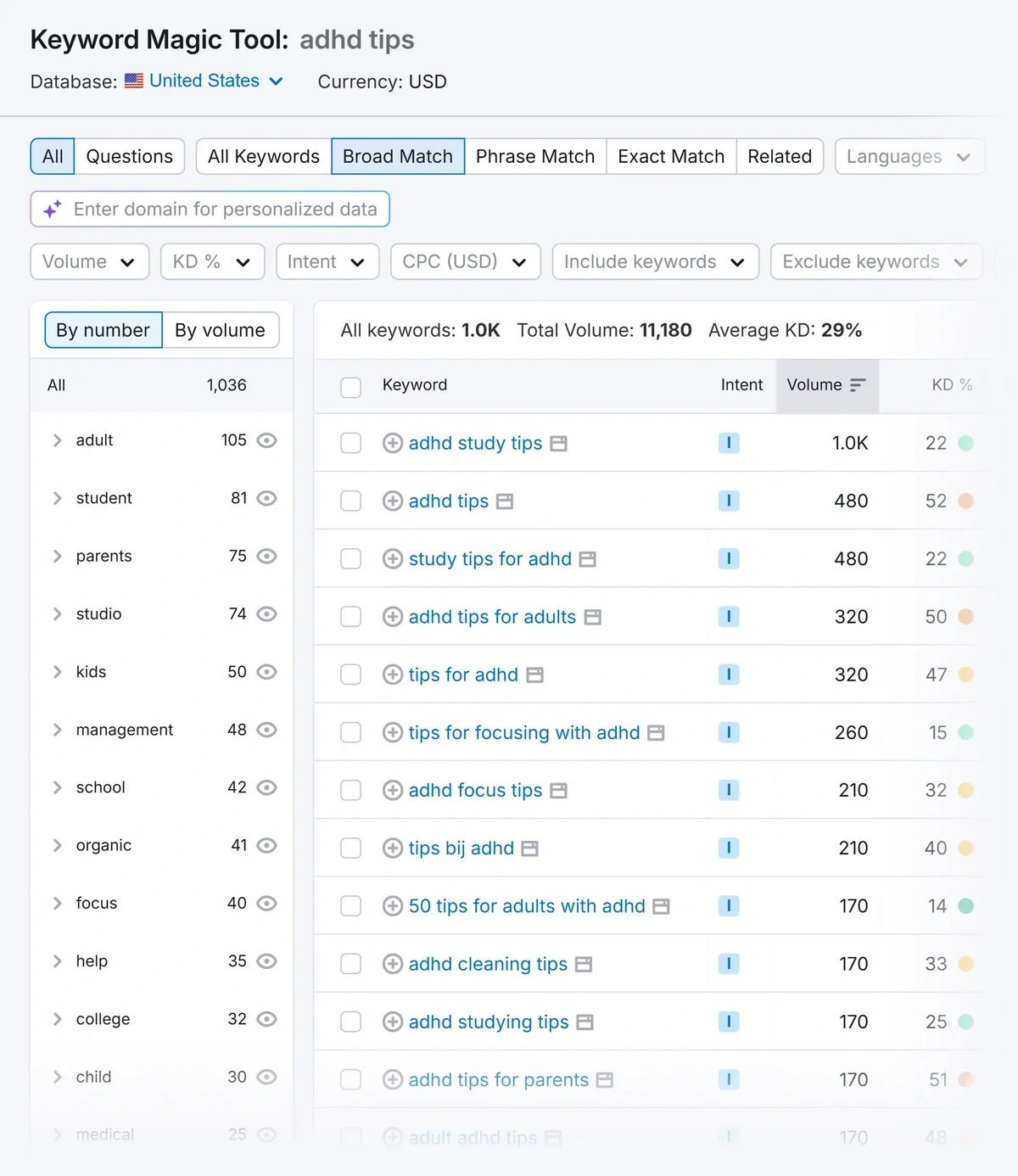
So, those would serve as my subtopic articles.
Step 4: Prioritize Based on Growth and Competition
Deciding what topics to focus on first can be a challenge. You want to grab visibility by going for emerging topics, but working on those established topics is important, too.
I try to shoot for a good mix. If a topic I’ve found in Exploding Topics is really promising, I’ll prioritize that because of its timeliness.
Then, I take note of Keyword Difficulty levels from Semrush (or run the keyword through the Free Keyword Difficulty Checker Tool). Super competitive topics are important, but I know it’s going to take more time and labor to gain visibility there.
Early content on emerging topics builds authority and captures the initial wave of growing search interest. Content on established topics builds authority there, too, but takes more time. So, aim for a good mix of both.
Tracking Topic Visibility Instead of Keyword Rankings
Now, you’ve got your plan and you’ve started implementing your content strategy. How do you figure out if it's working?
Traditional rank tracking just doesn’t cut it anymore. Afterall, you can rank #1 for a target keyword and still not drive meaningful traffic or gain meaningful visibility.
Instead, you need to shift to tracking your visibility beyond keyword rankings in organic search.
I track topic visibility using Semrush's AI Visibility Toolkit instead. It measures how often your brand gets mentioned across AI platforms (including Google’s AI Overviews) when users ask questions related to your topics.
The toolkit shows your share of voice across topics compared to competitors. Instead of seeing that you rank #3 for a specific keyword, for example, you see what percentage of AI responses about a topic mention your brand.
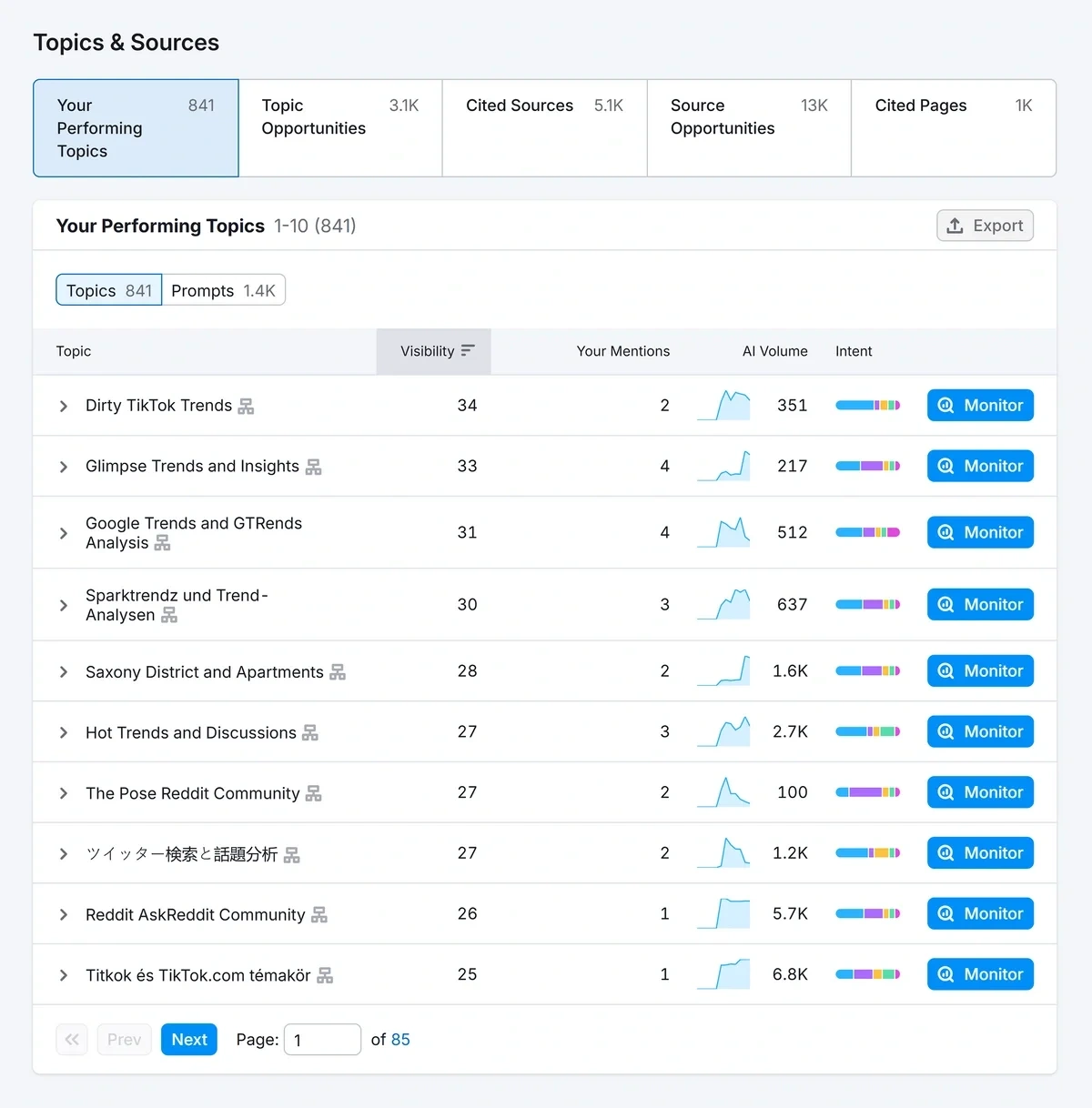
You can track this across ChatGPT, Google AI Overviews and AI Mode, and Gemini to understand where you have strong visibility and where competitors dominate.
Topic-level tracking helps you find opportunities your keyword research would miss. I've found topics where we have strong AI visibility despite weak traditional keyword rankings, and vice versa. Those insights help me understand what's actually driving business results versus what just looks good in a rank tracking dashboard.
For more on topic tracking with Semrush, check out How I Use Semrush to Identify AI Visibility Opportunities.
Why Topic Research Wins Over Keyword Research
Keyword research doesn’t identify the topics your audience is searching for in AI search engines and LLMs, which is a huge blind spot. Keywords also just don't represent the evolution of how most people are using search engines any longer.
Instead, they’re embracing AI tools and exploring wider topics before making decisions or clicking on sources. In fact, according to Google, searches beginning with “tell me about…” jumped up 70% year-over-year in 2025.
Plus, Semrush projects AI search will drive more traffic than traditional search by 2028. Topical authority will keep getting increasingly valuable as this shift accelerates. The work you put into building topic coverage today will establish visibility in AI answers that compounds over time.
Traditional keyword research optimizes for how search worked in the past. Topic research optimizes for how search works now and will work in the future. That difference determines whether you're building lasting authority and visibility.
Start tracking emerging topics with Exploding Topics Pro to build your topic research framework now.
Stop Guessing, Start Growing 🚀
Use real-time topic data to create content that resonates and brings results.
Exploding Topics is owned by Semrush. Our mission is to provide accurate data and expert insights on emerging trends. Unless otherwise noted, this page’s content was written by either an employee or a paid contractor of Semrush Inc.
Share
Newsletter Signup
By clicking “Subscribe” you agree to Semrush Privacy Policy and consent to Semrush using your contact data for newsletter purposes
Written By


Jolissa Skow is a senior content writer and content strategist with a background in SEO, Google Analytics, and WordPress. She's be... Read more