


Get Advanced Insights on Any Topic
Discover Trends 12+ Months Before Everyone Else
How We Find Trends Before They Take Off
Exploding Topics’ advanced algorithm monitors millions of unstructured data points to spot trends early on.
Keyword Research
Performance Tracking
Competitor Intelligence
Fix Your Site’s SEO Issues in 30 Seconds
Find technical issues blocking search visibility. Get prioritized, actionable fixes in seconds.
Powered by data from
Latest Blog Posts
Featured Case Studies
See what's trending before everyone else
Each week, we'll send you our best Exploding Topics. Plus, expert insight and analysis.
Inventory De-Risking: How I Separate Viral Fads from Stable Brands

 Add Exploding Topics on GoogleAdd Exploding Topics as your preferred source to see more of our stories on Google.
A product starts trending on social media. Within weeks, it's showing up on every dropshipping blog and wholesale marketplace. You place an order, but by the time your inventory arrives, demand has already peaked and you’re left with dead stock.
While some dead stock is pretty much unavoidable, having too much of it gets really expensive. It ties up cash, eats warehouse space, and forces the kind of margin-crushing markdowns that are difficult to recover from.
But in many cases, it’s preventable.
Separating products that fizzle too quickly and those with durable, long-term demand is the most important skill of inventory de-risking. But what’s the secret to making the right call on more products?
In this guide, I’ll show you how to read trend signals accurately and build a product research process that filters out fads.
Why Stocking Fads Gets So Costly
It’s pretty clear why stocking fads gets costly: you buy and stock items, the fad fades, and you’re stuck with products you can’t sell.
Remember, though, that there are also carrying costs.
Carrying costs (like storage fees, insurance, taxes, and money tied up in inventory that could be invested elsewhere) keep adding up the longer your slow-moving inventory sits.
And in some product categories, unsold fad items can't be returned to suppliers, leaving you to absorb the full loss.
Globally, retailers lose an estimated $1.73 trillion annually from the combined impact of stockouts and overstock, according to IHL Group—that’s 6.5% of total global retail sales.
A significant share of overstock problems trace directly back to buying into trends without vetting their durability.
But don’t let that scare you off! The goal of E-commerce inventory risk management isn't to avoid trending products entirely. Instead, you just need to be able to distinguish the ones worth buying from the ones that will only amount to a passing fad.
Key Differences Between a Fad Product from a Long-lasting Trend
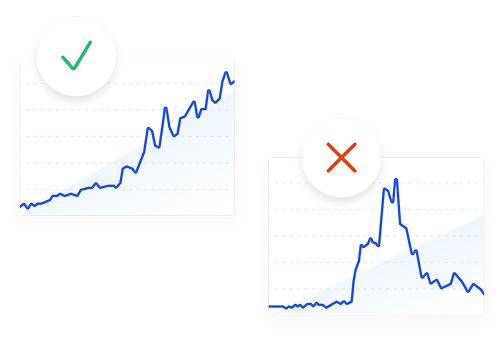
The most reliable indicator of a fad is the shape of its growth curve. Fads tend to spike fast and steeply. Interest jumps from near-zero to peak in a matter of weeks, often driven by a single viral moment.
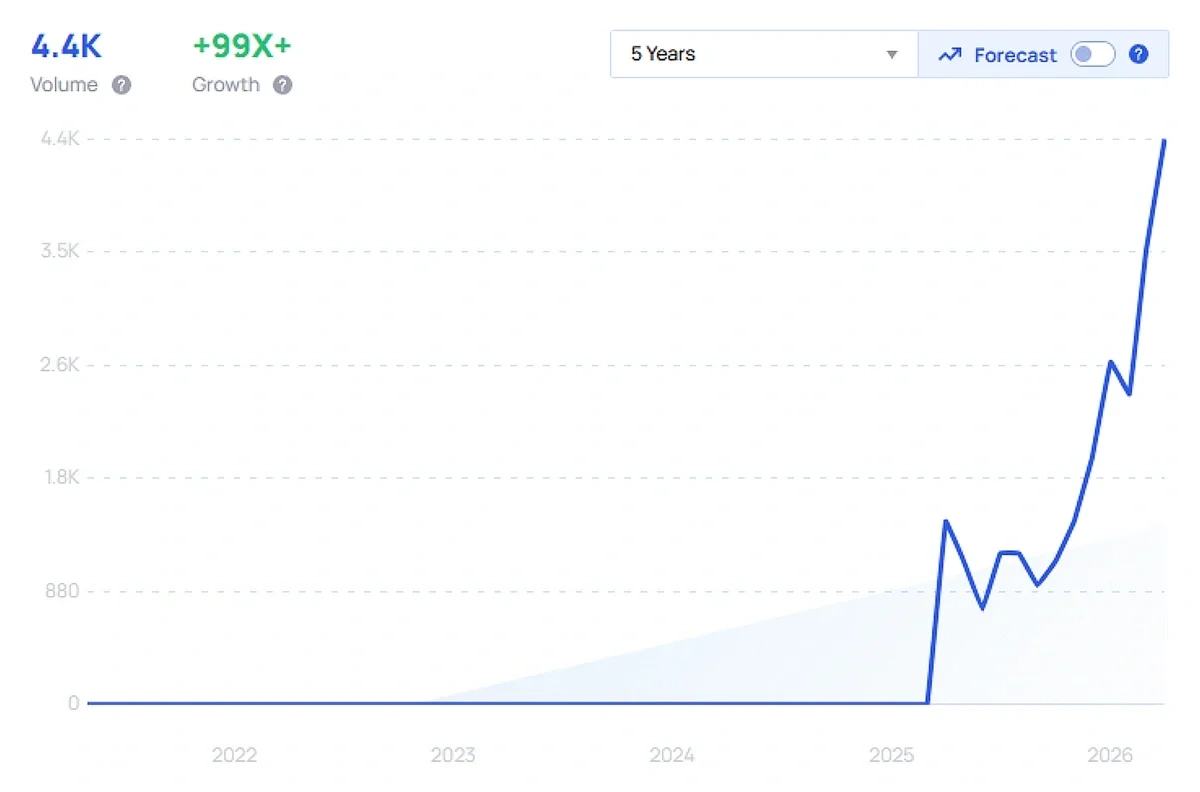
Durable trends, on the other hand, show gradual, consistent growth over months or years, reflecting an underlying shift in consumer behavior rather than a burst of social attention.
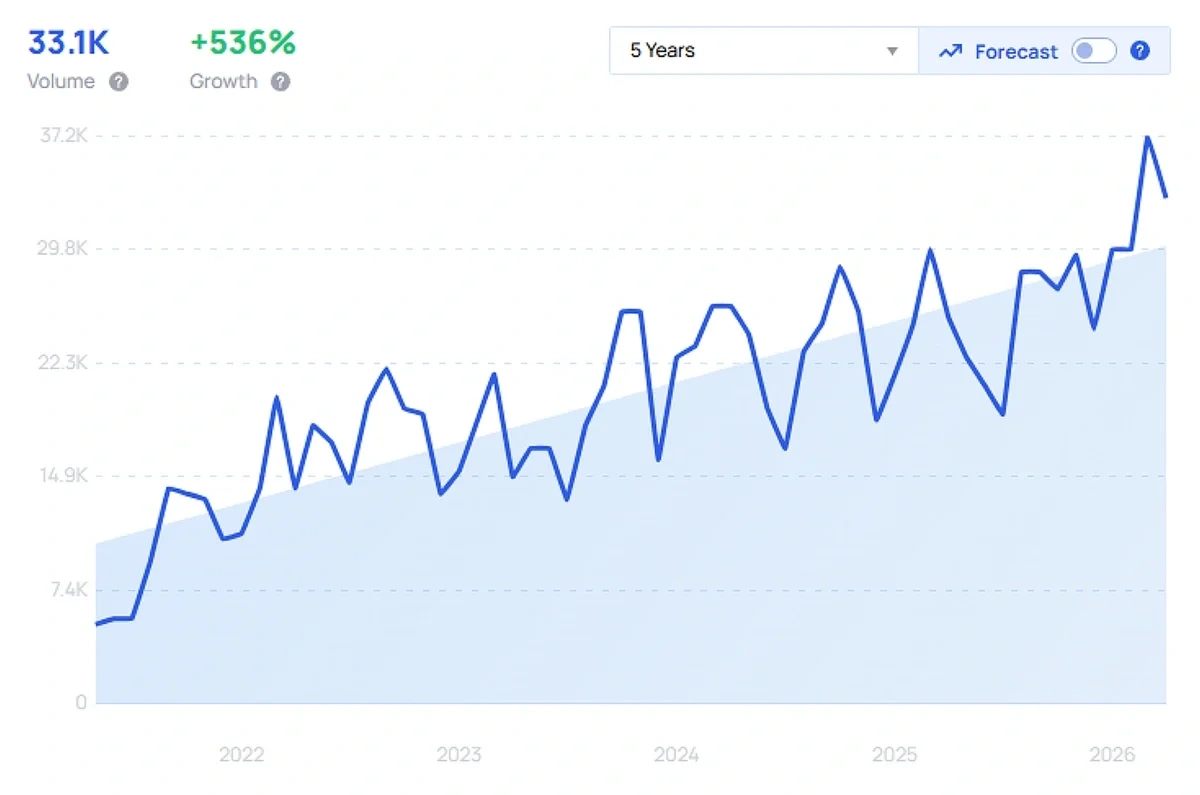
(Durable trends can still be seasonal, as long as there is a reliable and upward-trending seasonal spike. In that case, you'll want to think about seasonal inventory management.)
A few questions you can ask to determine a product’s potential:
- Does the product solve an ongoing problem? Products that address a persistent consumer need (think better sleep, reducing plastic waste, or managing chronic pain) tend to peak for longer because the problem doesn't go away. Products that are primarily about novelty or aesthetic appeal are more fickle once the novelty wears off.
- Is search interest growing alongside social buzz? Social virality and search interest are totally different entities. In general, you want search interest to be growing alongside social buzz. A product can have millions of views but minimal search volume, which usually means people are watching but not buying.
- Is the product part of a larger category trend? A single product that’s within a larger category trend (like a specific prebiotic supplement riding the gut health popularity wave) has established demand underneath it. That's usually a much safer inventory bet than a standalone viral item with no trending category to back it up.
How to Use Exploding Topics to Vet a Product Before You Invest in It
Exploding Topics monitors and tracks emerging products with real-time growth signals and sales data, so you can stock what actually sells now and what will continue to sell in the future.
This kind of product research tool is a vital part of your E-commerce inventory risk management plan.
When running product research with Exploding Topics, you can see a topic or product’s trajectory, assess how long popularity has been building, check its virality forecast, and identify the category context around it before investing in it.
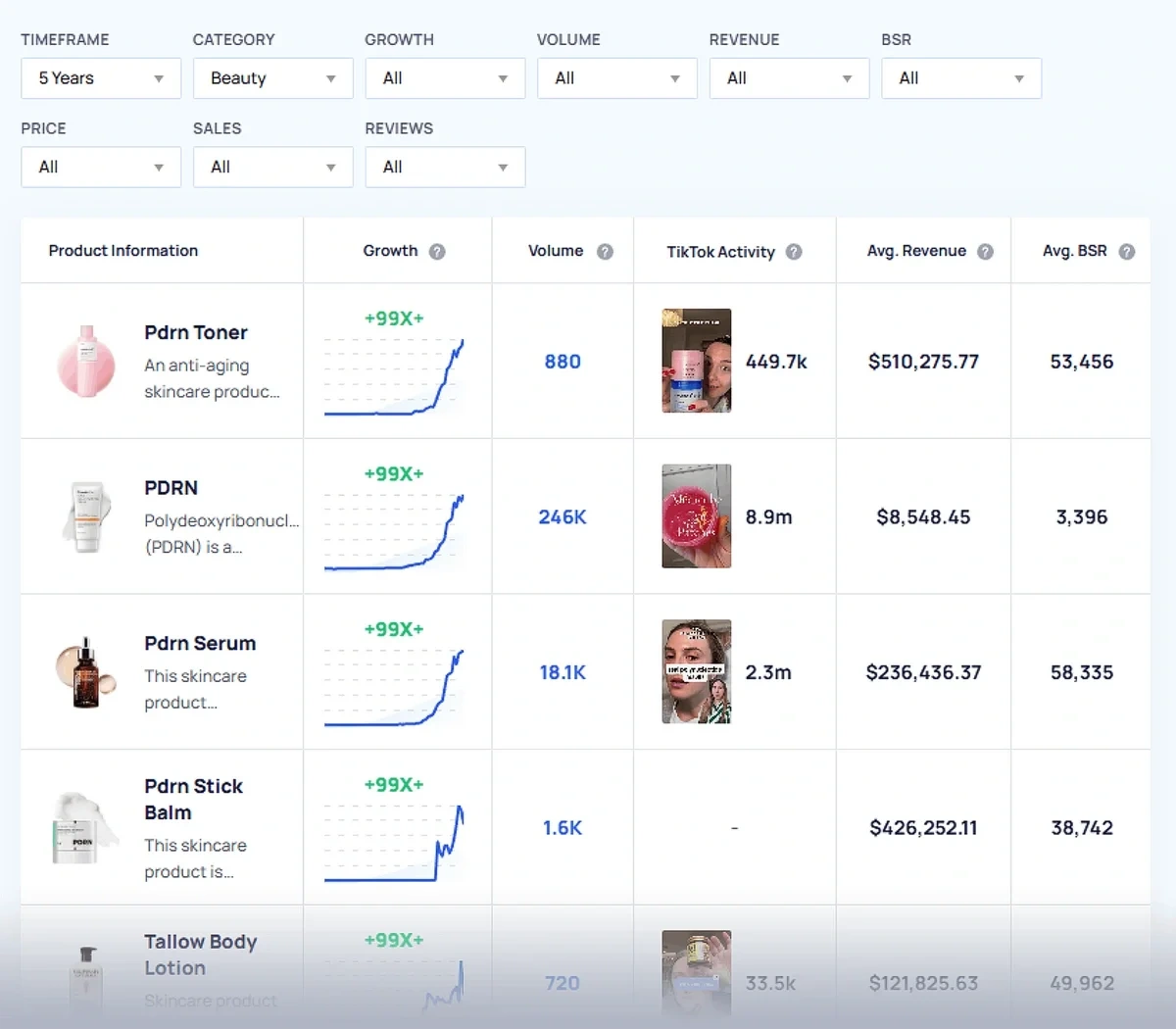
Here's the workflow I use.
Step 1: Review Trending Products in Your Category
This is something you’ll want to do regularly to keep up with trending products. Whether you’ve got a specific product in mind or not, head to the “Trending Products” tab and filter it by your category:
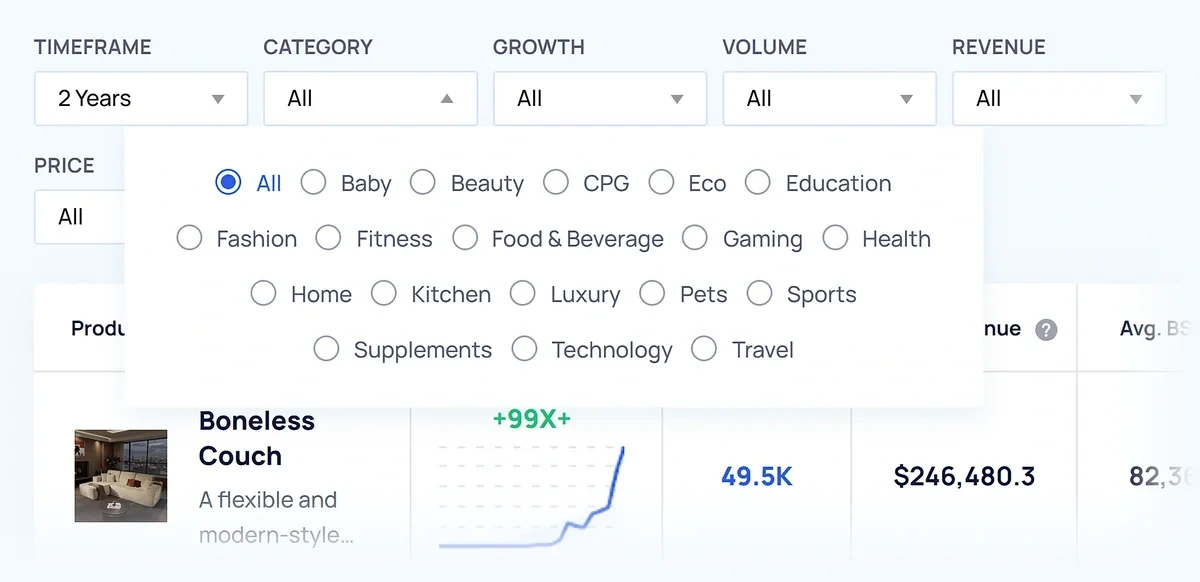
This is such a powerful tool for trending product discovery. Once you sort by your category, you’ll see a list of trending products with various growth types.
Let’s say you run an E-commerce pet supply store. You want to invest in up-and-coming products, but you have a lower risk tolerance and want to make sure a product will truly be profitable before buying it.
Use the filters in the Trending Products dashboard to surface exactly those products. Set the Category to “Pets” and select “Regular” in the Growth dropdown:
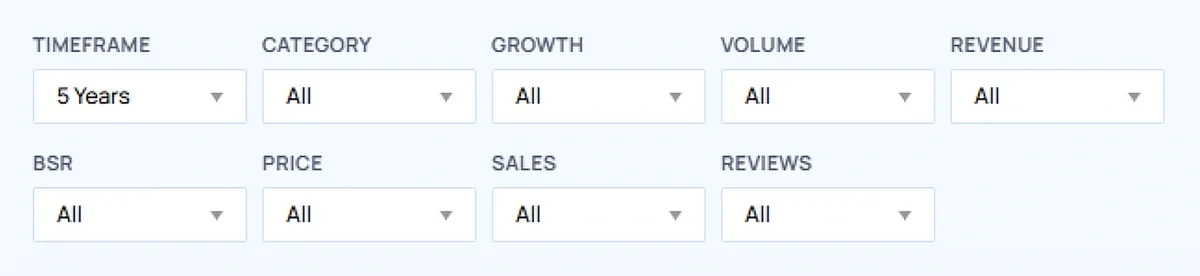
You’ll be left with products in your category that have shown steady growth over the past 5 years. Note that you can also change the timeframe if you want to find products that are growing more in the past year or other timeframe.
Selling on TikTok? If you have the TikTok Insights add-on, you’ll also see what products are popular on TikTok.
Step 2: Assess the Trend's Age and Slope
Once you find a product you’re interested in, click on it to get more information, including a volume graph and growth forecast:
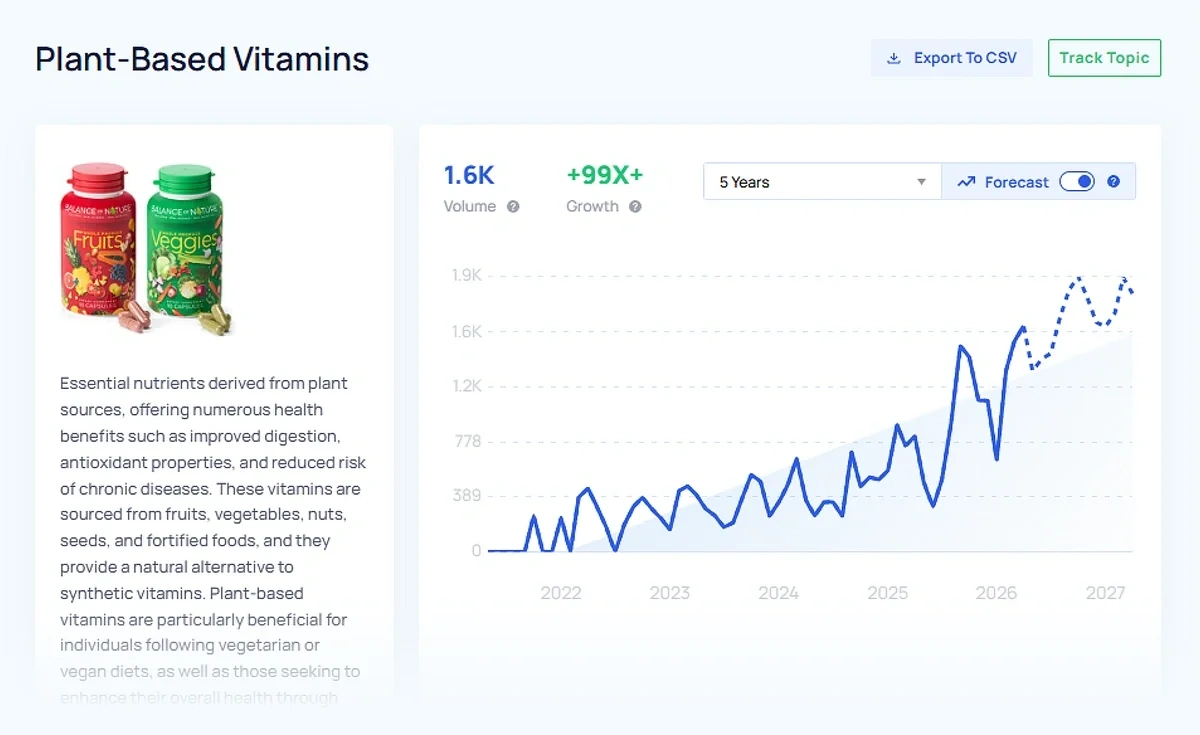
Look at how long the trend has been building. A product that has continued rising steadily over years carries a very different risk profile than one that shot up in the past 6–8 weeks.
A steep, recent spike doesn’t mean you have to discount the product altogether, but it is more likely to reflect a viral fad rather than a stable brand.
Step 3: Check Top Sellers and Related Products
On every product page, you’ll find a few different reports with important data to help you make decisions about whether the product will be a good fit for your store.
First, take a look at the “Top Sellers” tab to see which brands are currently the most popular on Amazon:
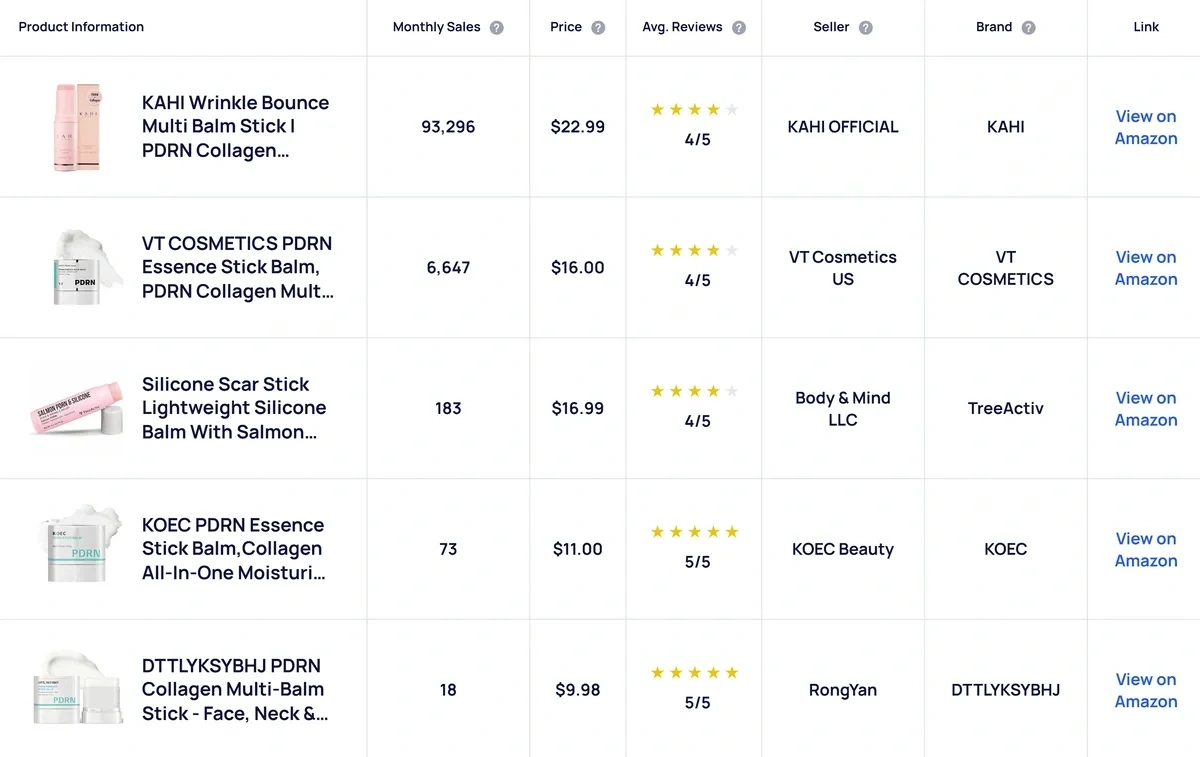
This list can help you get a lay of the land in terms of price points shoppers are looking for, features that are must-haves, and where reviews are landing.
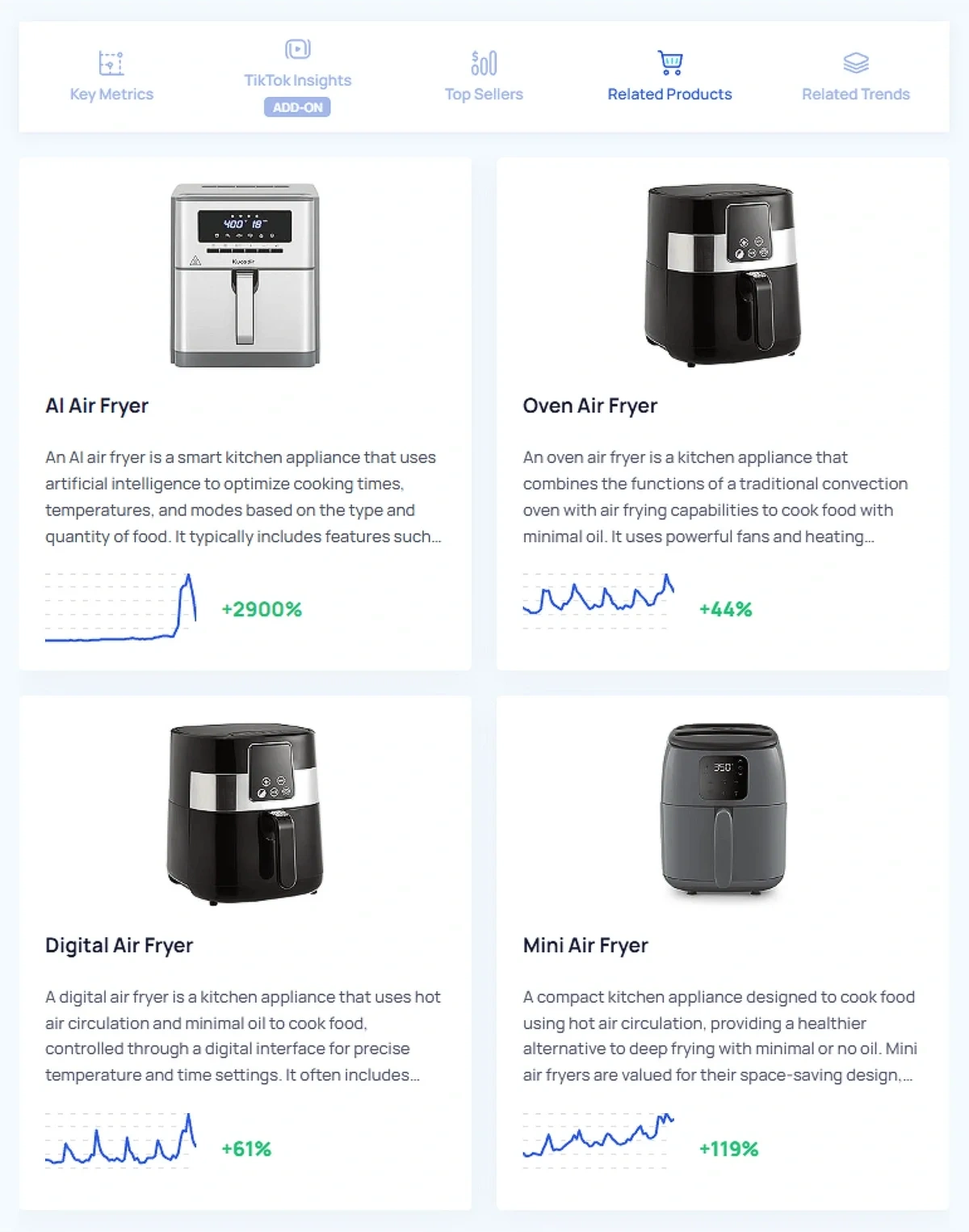
The “Related Products” tab is next. Don’t skip this one—it’s a potential gold mine of products closely related to the one you’re interested in that are also exploding in popularity right now:
Step 4: Explore Related Trending Topics
Pro tip: when researching products, don’t discount trending topics that are related to your products. When demand for a product is driven by a larger consumer trend, that’s a big signal that it’ll be more than a fad.
There are multiple ways to explore topics related to your products in Exploding Topics:
1. Use the Trends Database to Browse by Category
The Trends Database is the best place to go browsing when you want to discover what's rising within a broader category.
Head to the “Trends Database” tab in the left navigation and filter by your product category. From there, you can sort by growth status, timeframe, and whether you're looking at brands or non-brand topics.
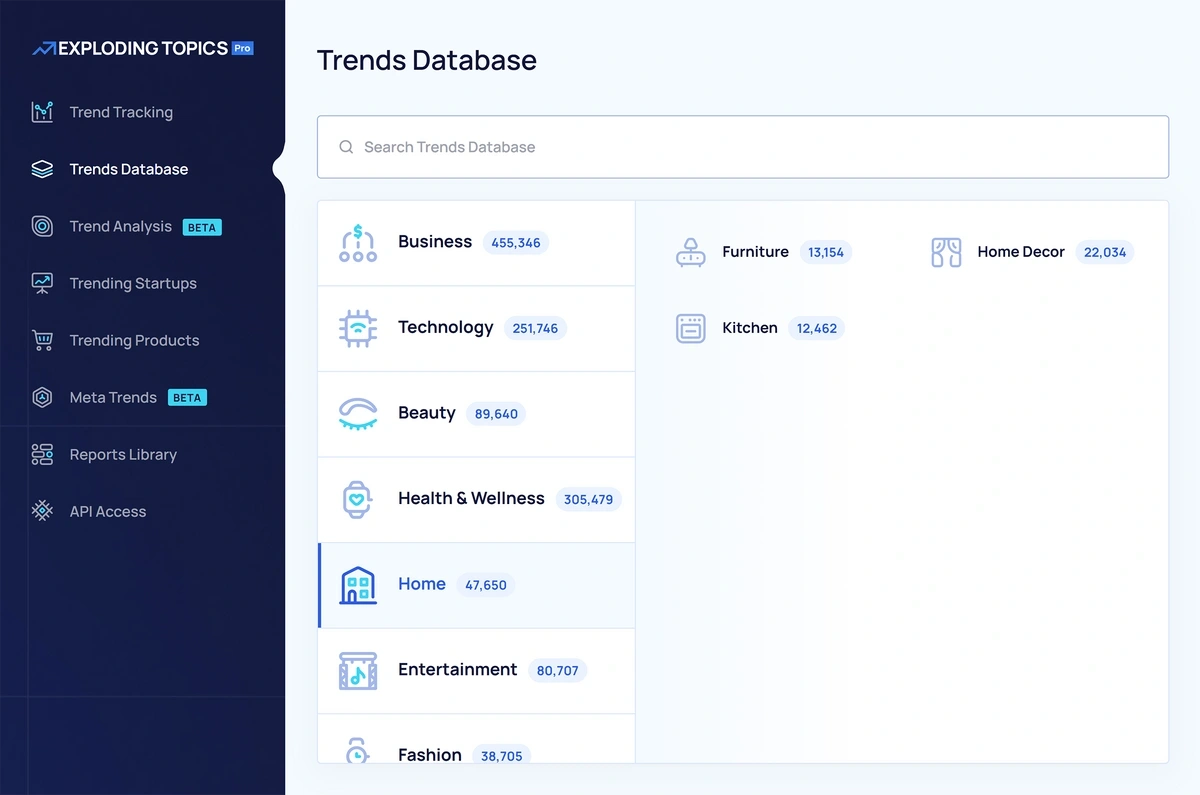
If you're already filtering for "Regular" growth products in the Trending Products report, doing the same here gives you the full topic-level picture: what consumers are searching for and talking about, not just what's selling on Amazon.
This is where you'll often find category trends you weren't aware of. A search for pet supply topics might surface "freeze-dried raw food" or "enrichment toys," which are broader consumer interests that point toward product categories worth exploring.
2. Search Any Topic with Trend Analysis
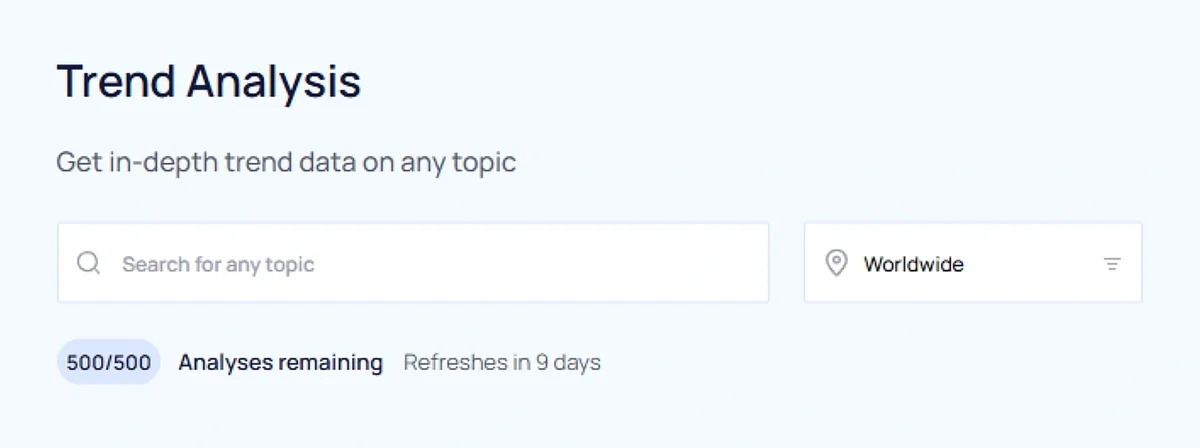
Already have a specific product or type of product in mind? Use the Trend Analysis tool to pull up a detailed report on thousands of topics.
Type the product name or category into the Trend Analysis search bar:
If the topic you searched has enough organic search history data, you’ll see a report of its search volume history, growth trajectory, channel breakdown (social platforms the interest is coming from), and related topics.
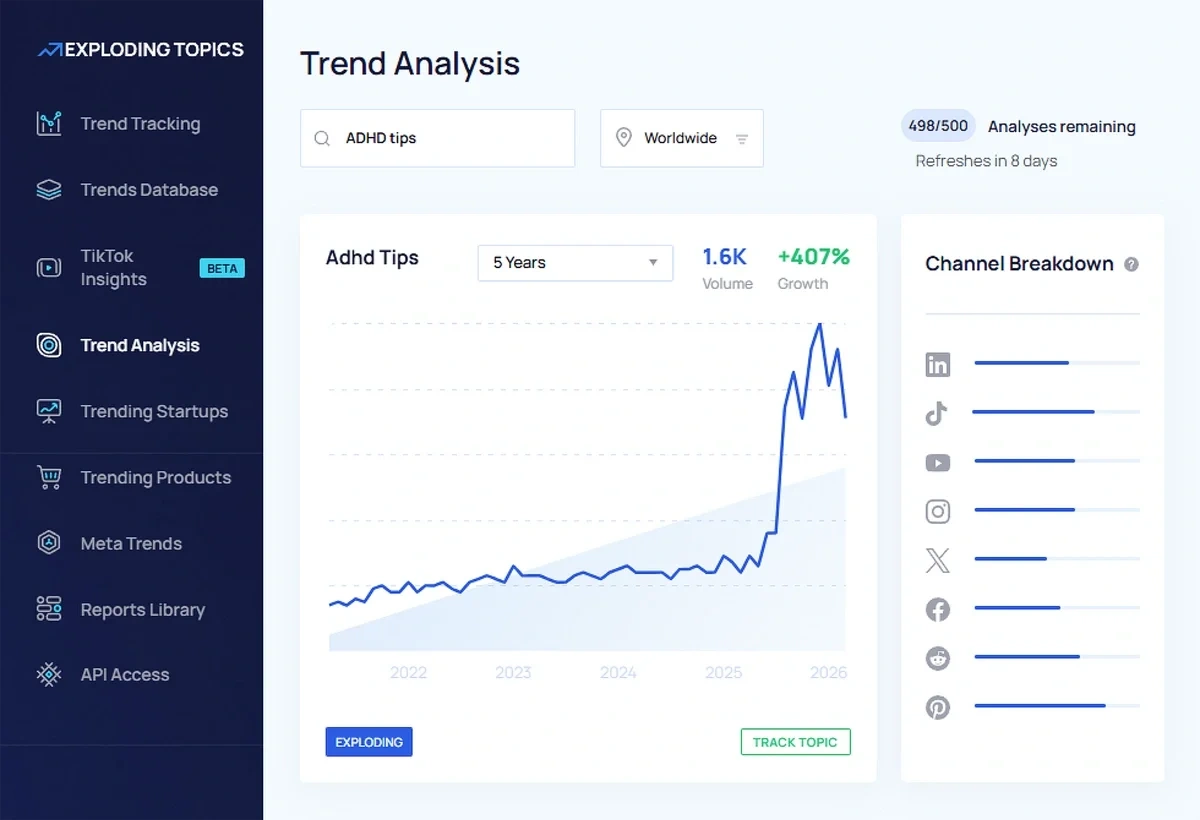
This report is incredibly helpful for deciding what platforms you might want to promote the product on, finding related terms people are using to find the product, and finding products and topics that are adjacent to the one you’re considering.
3. Check Meta Trends
Meta Trends reports group individual products and topics into larger consumer behavior movements.
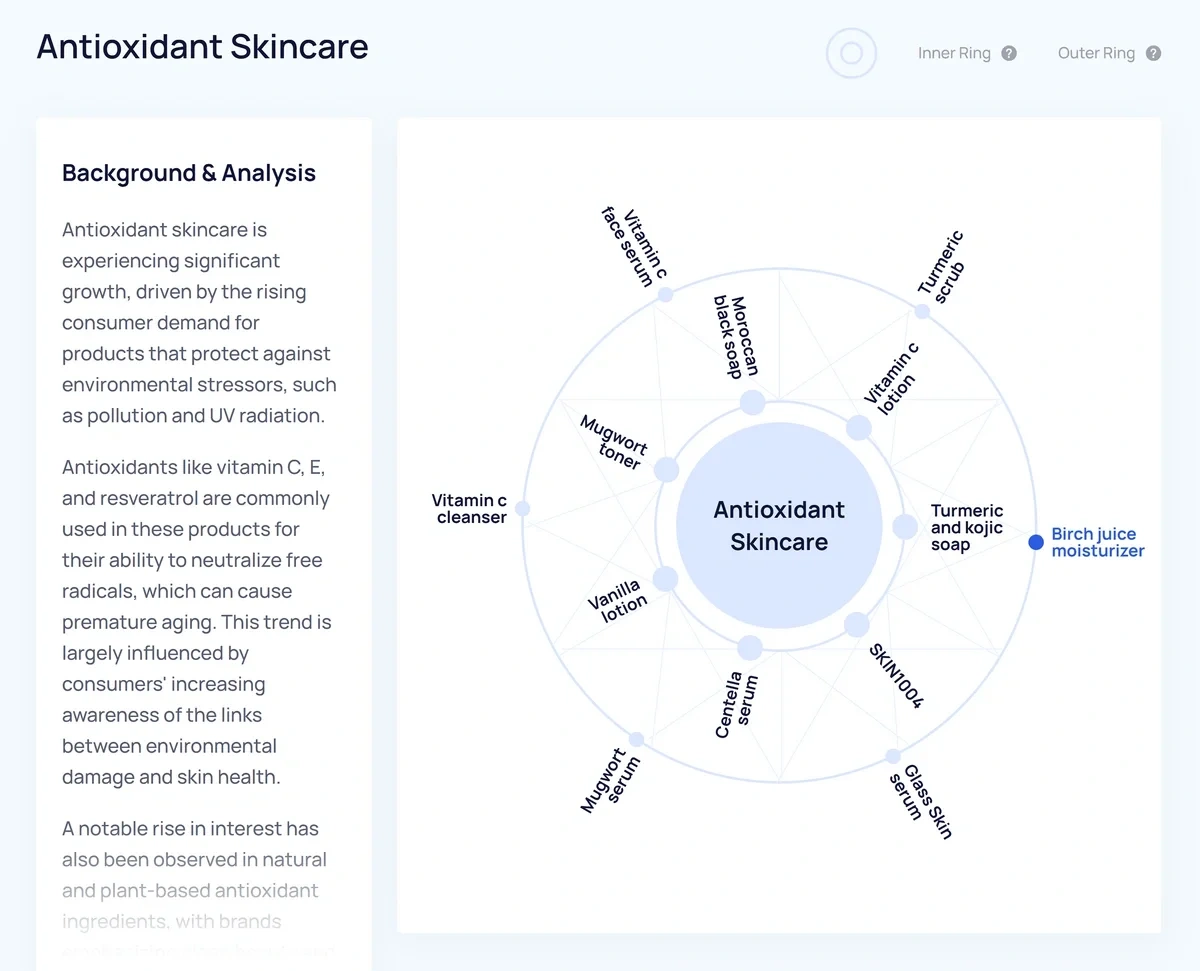
Find them in the left navigation under Meta Trends, then grouped by category.
If you find a meta trend that relates to your product, you’ll see an inner ring of micro trends and an outer ring of other related trends. This report is awesome for getting a broader look at the way a certain category is expanding.
Products embedded in a growing meta trend are generally safer inventory investments than standalone viral items. The meta trend tells you where consumer attention is heading at a category level, which helps you plan your buying calendar further out than a single product's data can.
Layer In These Additional Signals Before You Commit
Exploding Topics gives you the trend trajectory. These additional tools can help you verify that the product would be a good investment for your store:
- Google Trends provides a useful cross-reference for search volume confirmation. If a product shows strong growth in Exploding Topics and that pattern holds in Google Trends, you have corroborating data from two independent sources. Look at the 5-year view to understand the full arc.
- Amazon review velocity tells you whether real purchase behavior is following the buzz. A product with steadily accumulating reviews over the past several months is building an organic customer base. Be more careful with a product with hundreds of reviews concentrated in a short window.
- Wholesale and distributor catalogs offer a ground-level signal. When a product starts appearing in established wholesale platforms and mainstream distributor catalogs, it typically means demand has reached a level that larger supply chains are willing to support.
No single data point should make or break your buying decision. These signals work best as a stack: when they all point in the same direction, you have a much stronger case for buying inventory.
Structure Your Buying Budget Around Three Risk Tiers
Even with a solid vetting process, not every product decision will be clear-cut. Some products will show mixed signals. Others will look promising on trend data but haven't yet proven consistent sales velocity at your specific price point.
So, for the best possible inventory de-risking scenario, a portfolio approach to inventory planning helps you manage that uncertainty. Instead of treating every product the same, retailers group inventory by performance and risk using ABC Analysis.
ABC analysis organizes products into three categories based on their contribution to revenue and sales velocity.
For many E-commerce sellers, a relatively small percentage of products generate the majority of revenue. Structuring your buying strategy around that reality helps reduce the risk of overinvesting in unproven items.
Here’s how that framework can guide your buying budget:
- A-tier products are your core inventory (60-70% of your budget). These are the proven sellers that consistently drive the majority of your revenue. They have predictable demand, stable margins, and established customer interest. Most of your buying budget should go here because these products keep revenue flowing and inventory turning over.
- B-tier products are emerging growth opportunities (20-30% of your budget). These items show promising signals but haven’t yet reached the reliability of your top performers. Trend data may indicate growing demand, and early sales may be encouraging, but they still carry some uncertainty. This category is where you invest carefully in potential future best-sellers.
- C-tier products are controlled experiments (5-15% of your budget). These are early-stage ideas you’re testing at low volume. You’re evaluating whether a product resonates with your audience, fits your pricing strategy, and shows signs of sustainable demand. The goal isn’t immediate profit—it’s learning whether a product deserves promotion into a higher tier.
This structure keeps your cash flow protected by a stable core while still leaving room to participate in emerging trends. Use the Exploding Topics workflow above to determine which tier a product belongs in, so your buying decisions are based on real data rather than gut feel or social media hype.
Make More Big Inventory Wins
The trend data exists before most buyers go looking for it. That's the advantage Exploding Topics gives you: visibility into what's rising before it peaks, so you're making inventory decisions based on real trajectory data rather than hype.
If you’re an E-commerce store owner, Exploding Topics is an invaluable product and trend discovery tool for you. Sign up today for your free trial.
Stop Guessing, Start Growing 🚀
Use real-time topic data to create content that resonates and brings results.
Exploding Topics is owned by Semrush. Our mission is to provide accurate data and expert insights on emerging trends. Unless otherwise noted, this page’s content was written by either an employee or a paid contractor of Semrush Inc.
Share
Newsletter Signup
By clicking “Subscribe” you agree to Semrush Privacy Policy and consent to Semrush using your contact data for newsletter purposes
Written By


Jolissa Skow is a senior content writer and content strategist with a background in SEO, Google Analytics, and WordPress. She's be... Read more