


Get Advanced Insights on Any Topic
Discover Trends 12+ Months Before Everyone Else
How We Find Trends Before They Take Off
Exploding Topics’ advanced algorithm monitors millions of unstructured data points to spot trends early on.
Keyword Research
Performance Tracking
Competitor Intelligence
Fix Your Site’s SEO Issues in 30 Seconds
Find technical issues blocking search visibility. Get prioritized, actionable fixes in seconds.
Powered by data from
Latest Blog Posts
Featured Case Studies
See what's trending before everyone else
Each week, we'll send you our best Exploding Topics. Plus, expert insight and analysis.
AI Listens Better Than Your Doctor (But Could Make You Feel Worse)

 Add Exploding Topics on GoogleAdd Exploding Topics as your preferred source to see more of our stories on Google.
1 in 4 people have experienced a “serious problem” as a result of following AI health advice.
In fact, original research from Exploding Topics has found that using AI for health purposes has harmed more people than it has helped, per self-reported outcomes. Results are especially bad among those who have talked to AI about their mental health, with more than 40% experiencing serious issues.
Nevertheless, usage is increasingly widespread: two-thirds of consumers have at least tried using a generative AI chatbot for a health query.
So what is the driving force behind this surge, when outcomes are perceived as mixed at best? One factor is that, on the whole, people feel more heard by AI than by human doctors. But “deceptive empathy” can lead to further harm.
Our survey of over 1,000 people in the US also found that convenience, reassurance, and cost are driving the rise of the “AI doctor.” And while its main use is as a symptom checker, patients are also turning to AI with concerns about their medication, psychological state, and even potential medical emergencies.
Read on to explore consumer attitudes to AI health in 2026.
Fast facts
- 66.28% of people have tried using AI for a health query
- Symptom-checking (71.49%) is the top AI health use case
- 82.07% of users feel “listened to” by AI at least most of the time, versus 74.46% who feel the same when seeing a human doctor
- 25.18% of users have experienced a “serious problem” after following AI health advice, and a further 20.48% have had a minor problem
- 65.29% of users usually check the sources of information when given an AI health response
- 26.65% of people say they would consider using AI in a medical emergency
- 3 in 10 people would trust an AI over a human doctor for personal health advice
- 63.33% would be more comfortable sharing health information with a dedicated AI health app than with a generic AI chatbot
- AI triage (34.27%) and AI scan analysis (28.04%) still make a significant minority of patients uncomfortable
Most people have used AI for health purposes
66.28% of people have tried using AI for health queries.
Specifically, 27.79% of respondents reported that they “often” ask AI chatbots health-related questions. A further 24.69% do so occasionally, while 13.8% have tried it at least once.
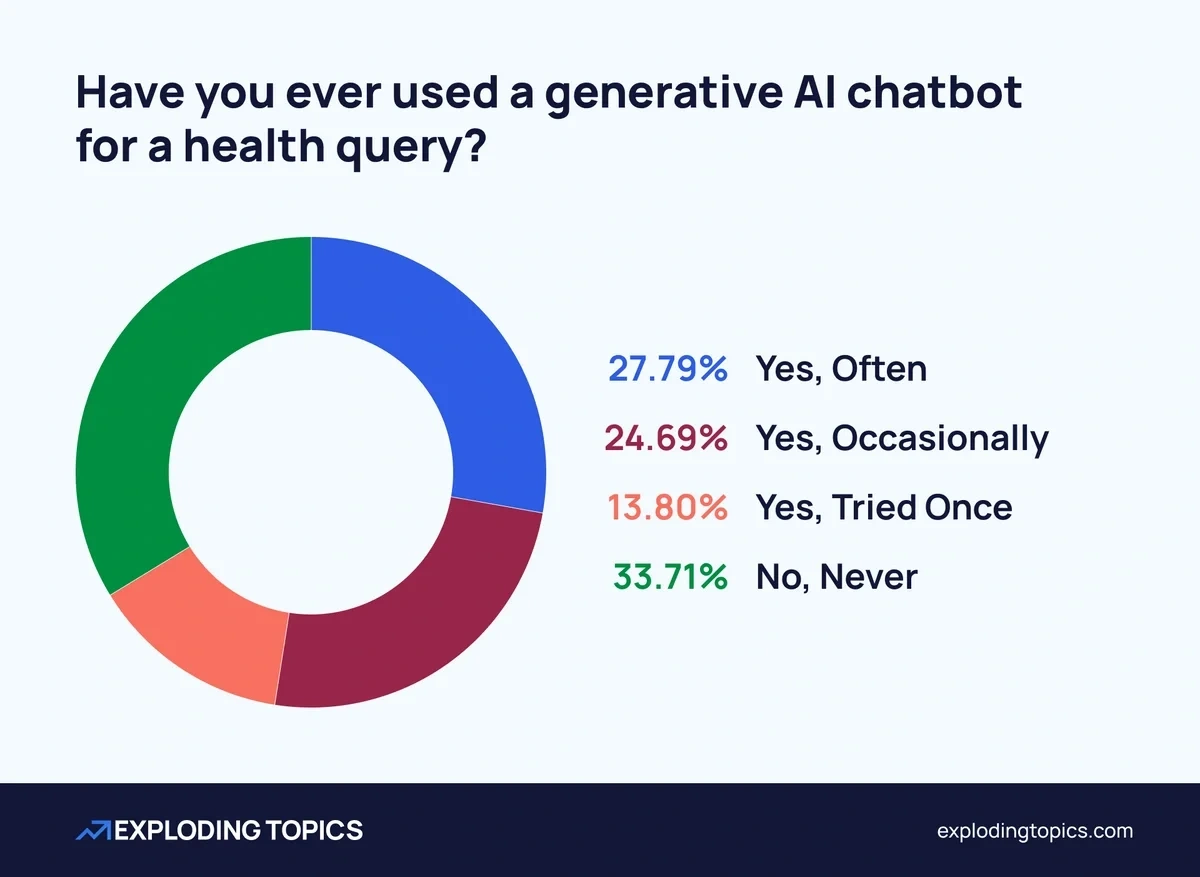
The remaining 33.71% have never used AI for health queries. However, most of these individuals do not use AI at all.
Among people who use AI tools of any sort, 80% have tried using them in the health context. That rises to 96.9% among daily users.
The survey indicated that only 18.78% of people never use AI for anything, with more than half using the technology at least weekly:
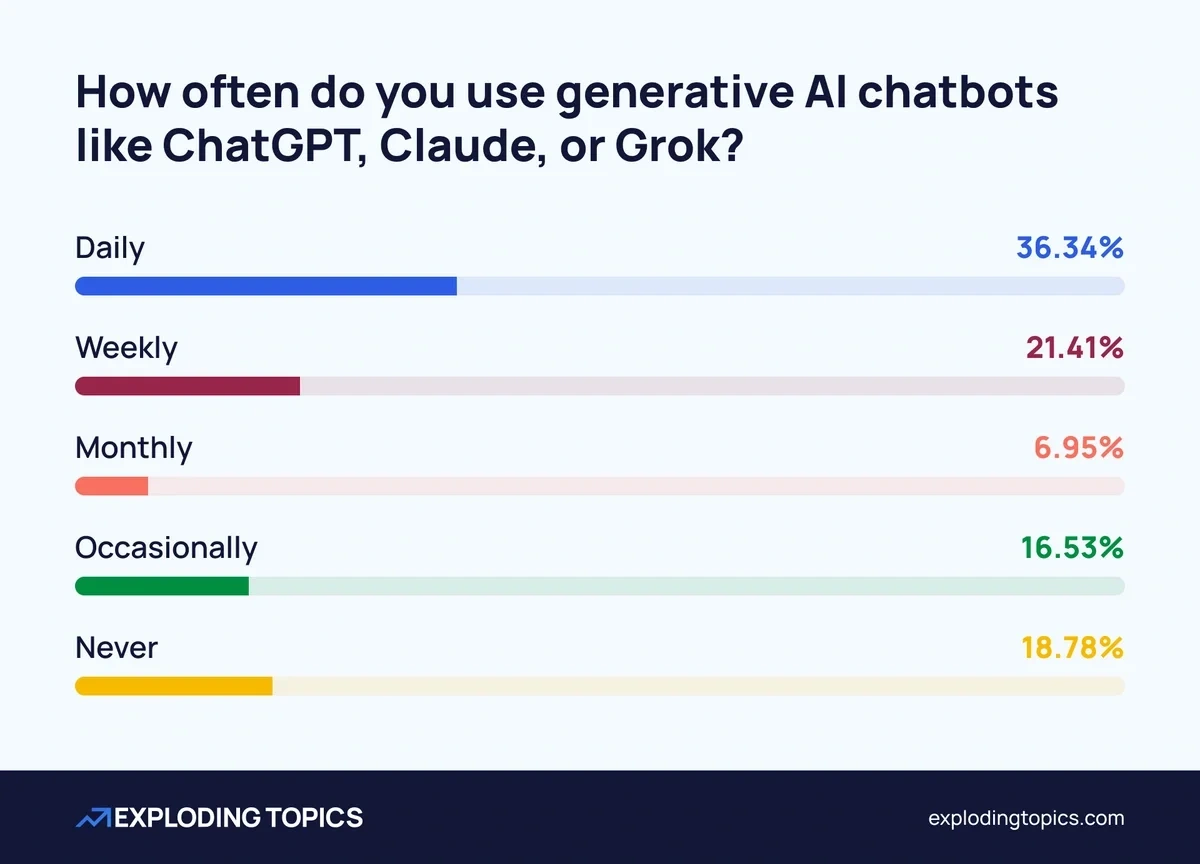
Those who reported “never” using AI, either in general or specifically for health purposes, were excluded from the next part of the survey, which focuses on the habits and preferences of existing users.
Why are people using AI for health?
Convenience is at the heart of the rising use of AI for health issues. Users can get AI answers far faster than they can get an appointment.
When asked to name their main reasons for using AI in a health context, 64.96% of users cited the convenience factor.
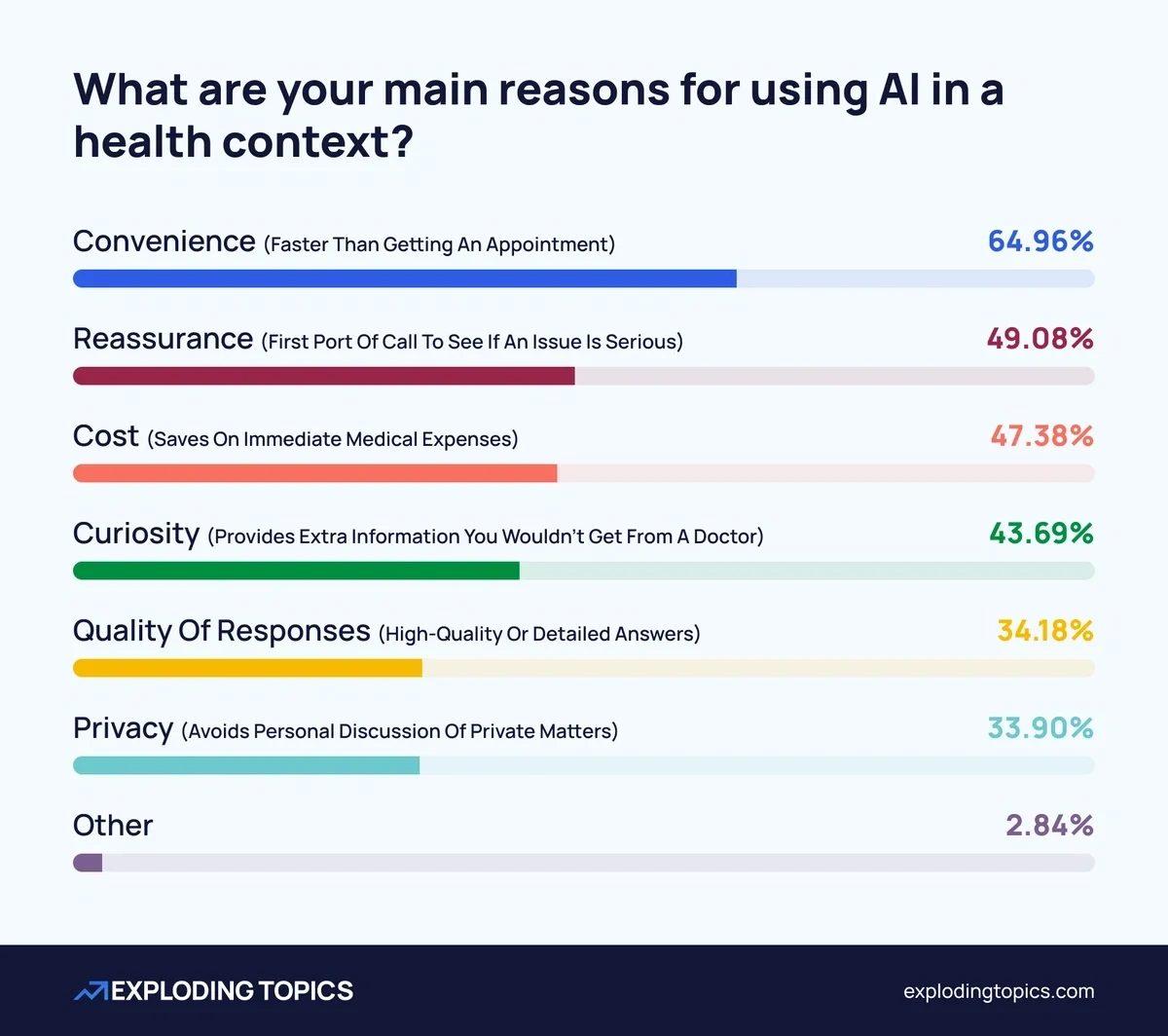
Reassurance (49.08%) and cost (47.38%) were also mentioned by almost half of respondents. In both cases, AI is being used as a primary filter: it might be able to prevent worry and/or needless expenses if it correctly identifies your condition as minor.
Men (54.2%) are more likely than women (41.33%) to turn to AI for cost reasons. But women (45.09%) are marginally more likely than men (42.32%) to use AI because of general curiosity, and a desire for extra information you wouldn’t get from a doctor.
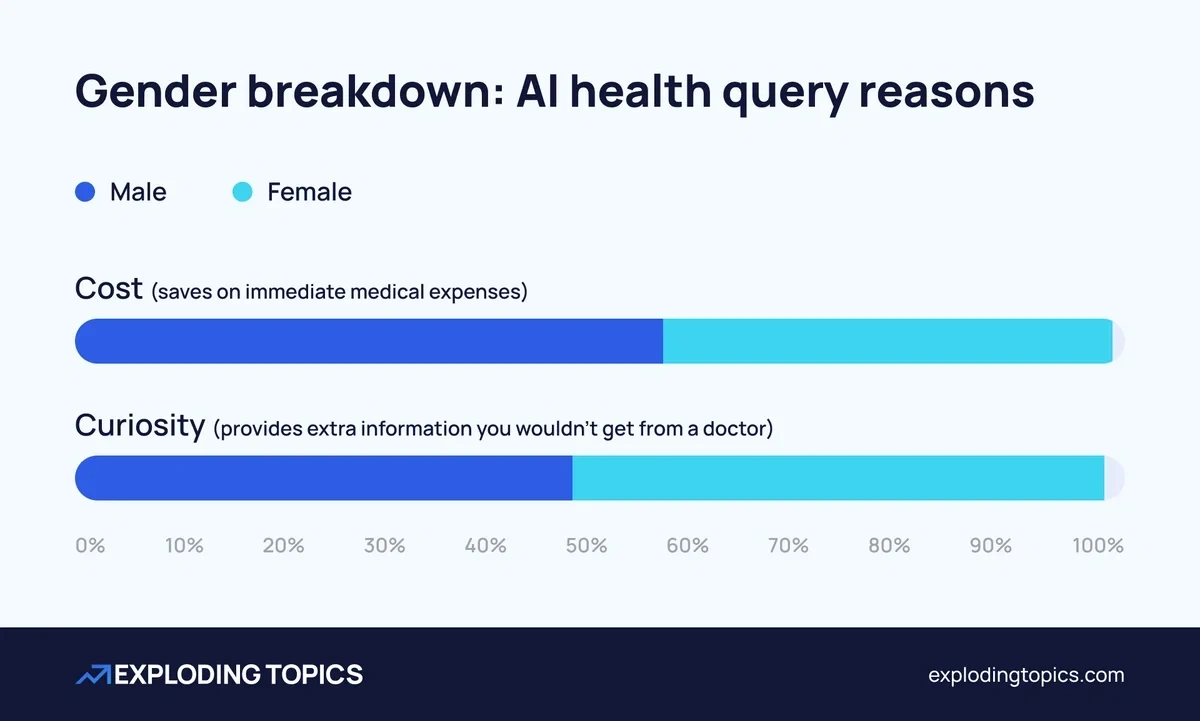
Convenience was the top factor overall for both men and women.
Respondents also reported that they are more likely to feel “listened to” by an AI than by a human doctor.
Among AI users and non-users alike, 74.46% said they felt listened to at least most of the time when explaining symptoms to a human physician. By comparison, 82.07% of people who use AI health tools feel listened to by the technology.
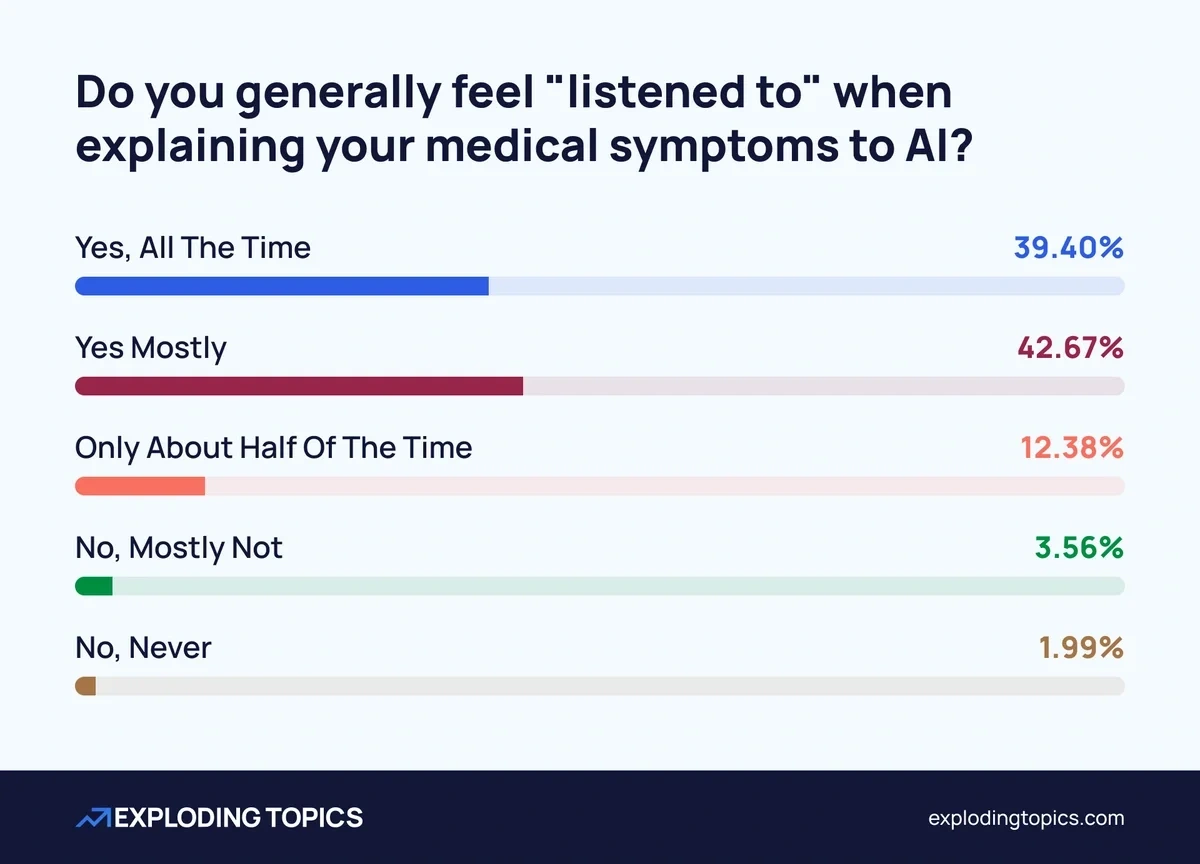
It was actually a little surprising to see that almost three-quarters of people feel mostly listened to by their human doctors: that goes against some of the prevailing narratives regarding the often overworked and understaffed medical profession. Even so, AI still manages to make more people feel heard.
And AI outperforms doctors by a greater margin when it comes to feeling listened to “all the time.” Only 30.61% of respondents felt that way about their physicians, compared to 39.4% of those who discuss their health with an AI.
With AI available on-demand, and excellent at presenting a sympathetic and curious persona, it addresses some of the most common points of friction in the healthcare system.
Expert’s opinion
Dr Alex Phelan, Co-Founder and Medical Director at Zenvité Health
MBBS, MRCGP, SCOPE Certified Obesity Practitioner, Certificate in Culinary Medicine, Member British Society of Lifestyle Medicine.
I don't think we should be defensive about the finding that 82% of users feel listened to by AI, compared to 74% by their doctors. Patients are telling us something real — they want time and space to explain what's going on, and they're not always getting that in a standard appointment.
In my own practice, we use AI dictation tools precisely because they free us up to focus entirely on the patient rather than the screen. But listening in medicine isn't just about letting someone talk. It's about reading the non-verbal cues, picking up on the subtext, noticing the symptom being played down or the thing mentioned in passing as if it didn't matter. So much of a consultation happens in what isn't said. That's the part AI can't really do, and it's often the part that matters most.
What health issues are people asking AI about?
Using technology as a first port of call for medical queries is not a new phenomenon. And for many users, AI is effectively taking over the role of services like WebMD.
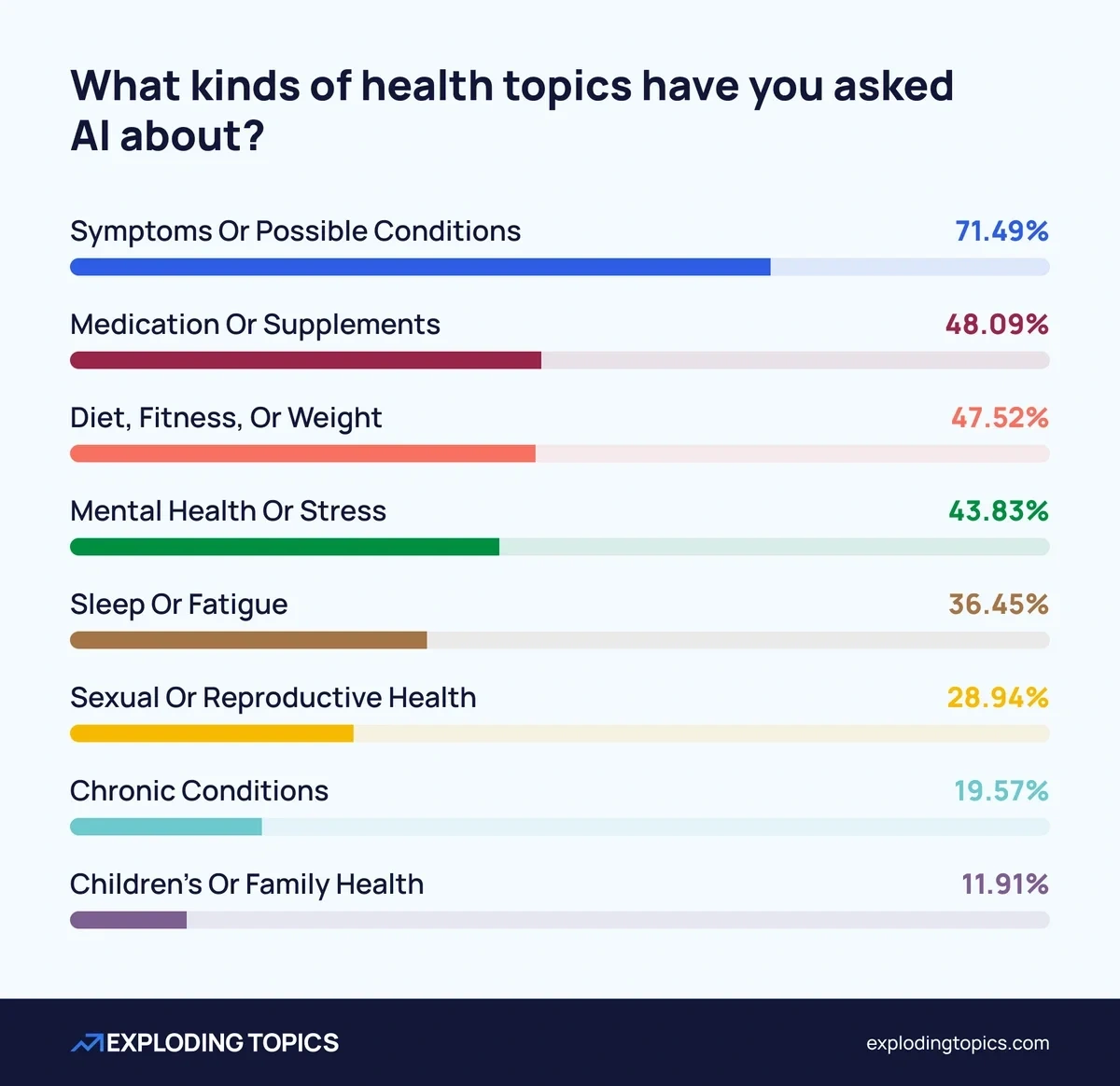
71.49% of AI health users have asked about symptoms or possible conditions.
Provided users don’t rely too heavily on the advice, this doesn’t seem especially problematic. A 2017 study on the effect of Googling symptoms actually found that most physicians reported a positive effect on patient consultations, a pattern you would expect to hold true for AI.
However, certain other use cases appear more unique to the human-AI relationship. In particular, the fact that 43.83% of users are talking to AI about mental health or stress is striking.
Interestingly, that figure rises above 50% for men (compared to 37.86% of women). It is the most heavily-gendered AI health topic.
The internet has long been a source of mental health resources, but user research was traditionally one-way. By contrast, AI approximates a therapeutic relationship: in the survey we published last November, 23.49% of people indicated that they had used AI for therapy or counseling.
AI users are least likely to turn to the technology for help with children’s or family health (11.91%).
Expert’s opinion
Dr Alex Phelan, Co-Founder and Medical Director at Zenvité Health
MBBS, MRCGP, SCOPE Certified Obesity Practitioner, Certificate in Culinary Medicine, Member British Society of Lifestyle Medicine.
Honestly, the finding that nearly 42% of users discussing mental health with AI reported a serious problem afterwards is the statistic that worries me most. It doesn't entirely surprise me. Mental health support depends so much on the relationship — on someone who can sit with you when things are hard, push back gently when your thinking is heading somewhere unhelpful, and recognize when you need more than a conversation can give. AI tends to be agreeable by design, and for someone who's struggling, an endlessly agreeable companion isn't always what they need. It can feel like support while quietly making things worse.
Bad outcomes from AI health advice
Despite its widespread usage in the health context, AI appears to be routinely leading to bad outcomes.
25.18% of users say that following AI health advice has led to a “serious problem”.
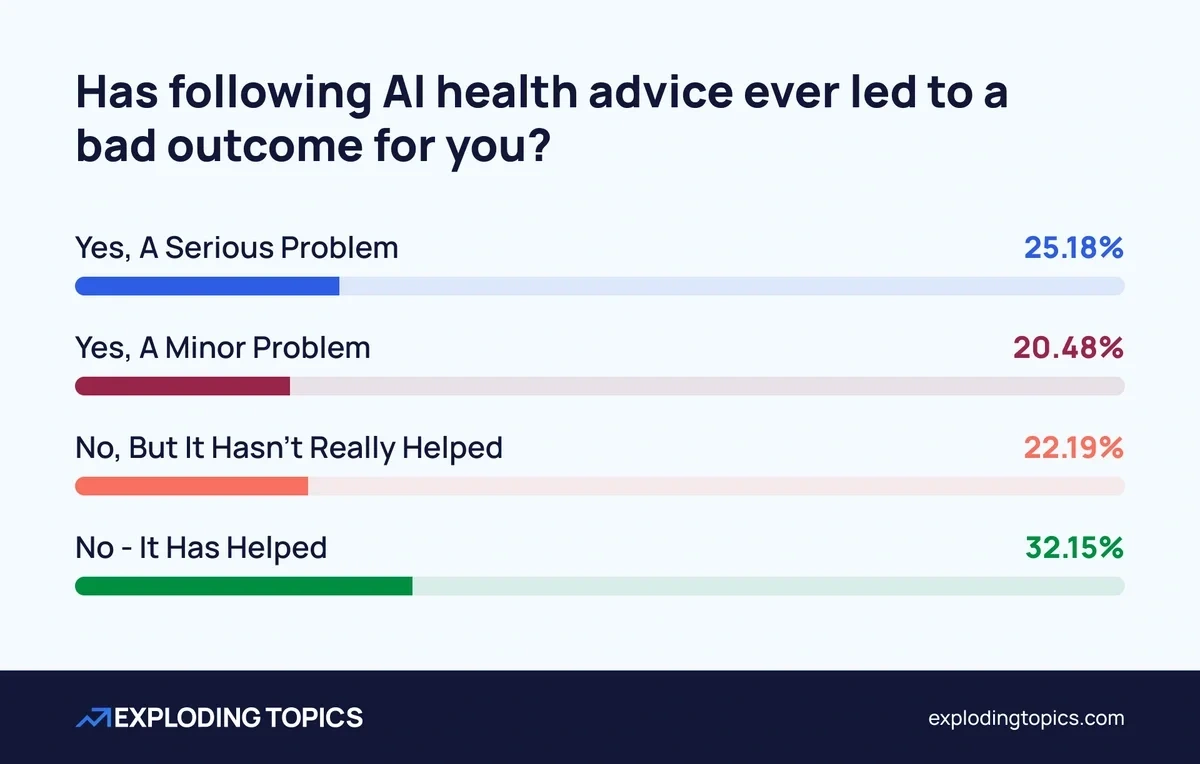
Not only that, but a further 20.48% of respondents said that AI health advice has led to a minor problem. So nearly half of all users have encountered some kind of self-defined bad outcome.
On the other hand, almost 1 in 3 say that they have been helped by AI health advice. But a further 22.19% admit that while AI has caused no harm, it hasn’t really helped either.
Interestingly, the over-60s were most likely to report entirely positive experiences. 44.44% said AI health advice had helped them, while only 20.37% noted any kind of bad outcomes.
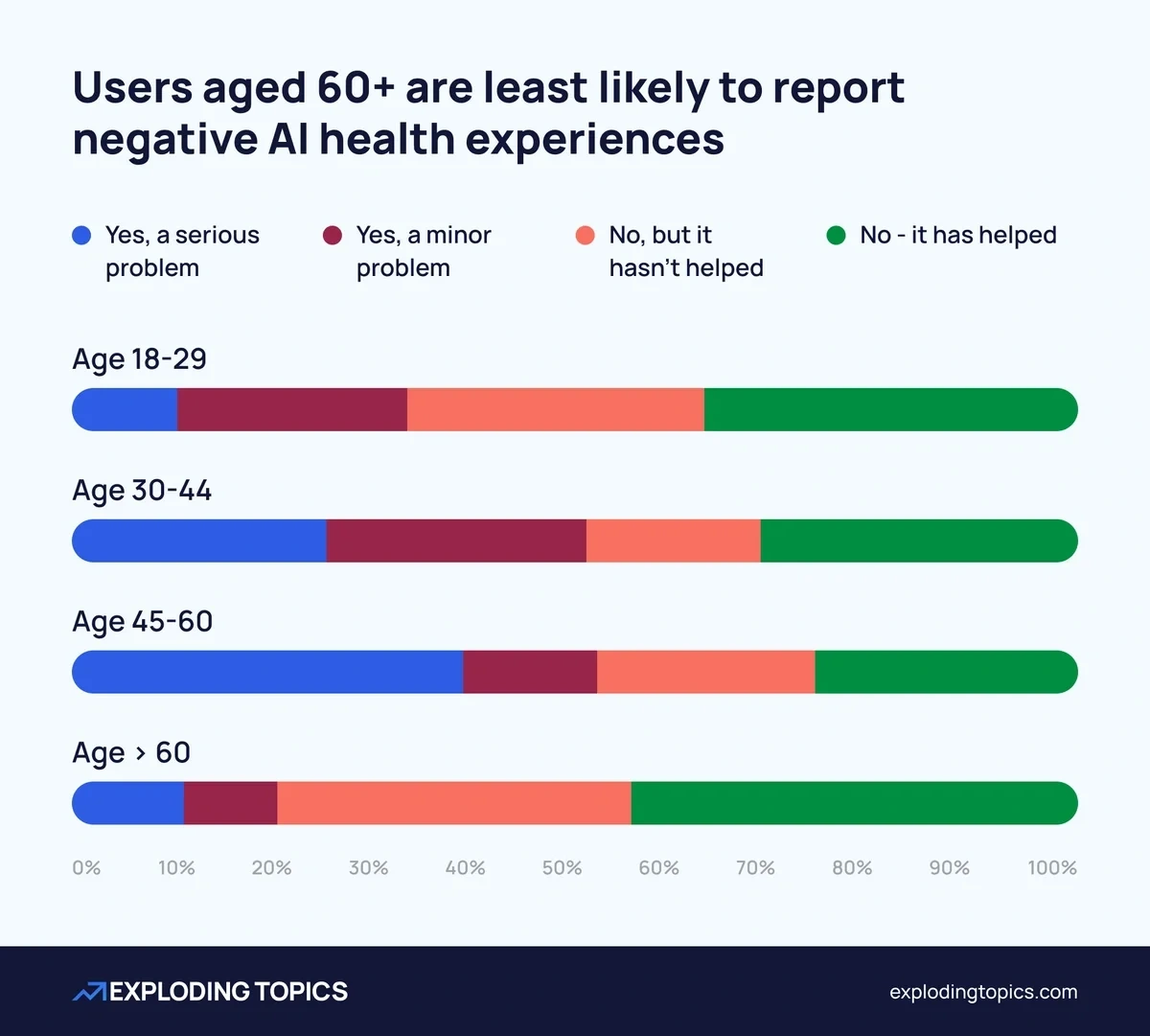
The youngest users (18-29) also seem to be avoiding the worst outcomes. But among the 45-60 age group, 38.89% report suffering a serious problem.
Certain topics of conversation seem to be especially prone to producing bad outcomes. Among those who have used AI to discuss mental health and stress, a staggering 41.56% report suffering a serious problem as a result of following AI advice.
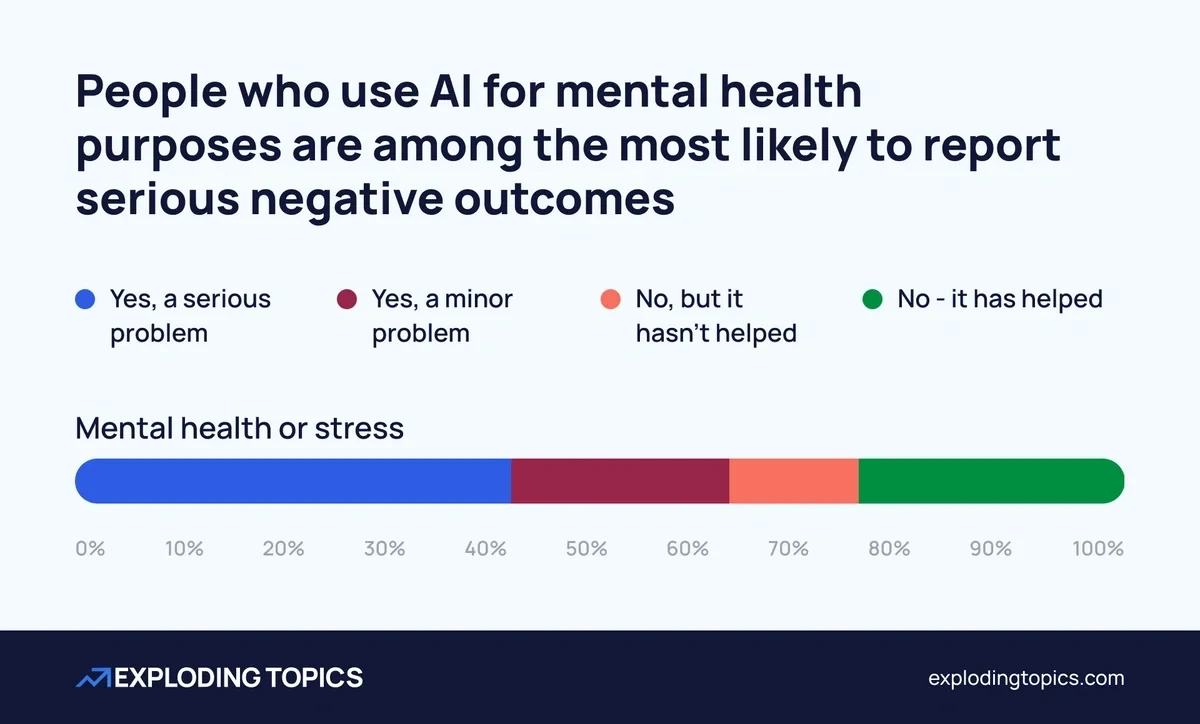
A further 20.78% of people who have used AI for mental health report experiencing a minor problem as a result of AI guidance.
It’s important to clarify that this doesn’t necessarily mean that all of the bad outcomes are related to mental health. Respondents were able to list multiple health topics that they have talked about with AI, and the problems they suffered could have been a result of a different topic of discussion.
Yet it is certainly notable that the users who talk about mental health with AI are so much more likely than the average user to have had serious adverse outcomes. The difference is stark:
| Area of AI discussion | Users reporting “serious” bad outcome (%) |
| Mental health or stress | 41.56% |
| Children’s or family health | 32.14% |
| Sexual or reproductive health | 29.41% |
| Medication or supplements | 28.40% |
| Chronic conditions | 27.74% |
| Symptoms or possible conditions | 26.10% |
| Sleep or fatigue | 25.68% |
| Overall average | 25.18% |
| Diet, fitness, or weight | 21.56% |
A recent study from Brown University may help explain this phenomenon. Licensed therapists evaluated AI conversations about mental health, and found 15 distinct ethical risks.
One area of risk was “deceptive empathy”, where AI makes patients feel heard without truly understanding. In our study, almost 90% of those who used AI for mental health reported feeling “listened to” at least most of the time, which is above the baseline for AI health users.
Other issues identified in the Brown research included lack of crisis management, a tendency to reinforce harmful beliefs, and lack of contextual adaptation. All of these could lend themselves to outcomes that users may legitimately describe as “serious problems”.
How much do people trust AI on health topics?
AI offers effective health reassurance
Despite the prevalence of bad outcomes, users continue to benefit from an instant “reassurance hit” when talking to AI about their health.
69.99% of users generally feel at least somewhat reassured when they ask AI about their symptoms.
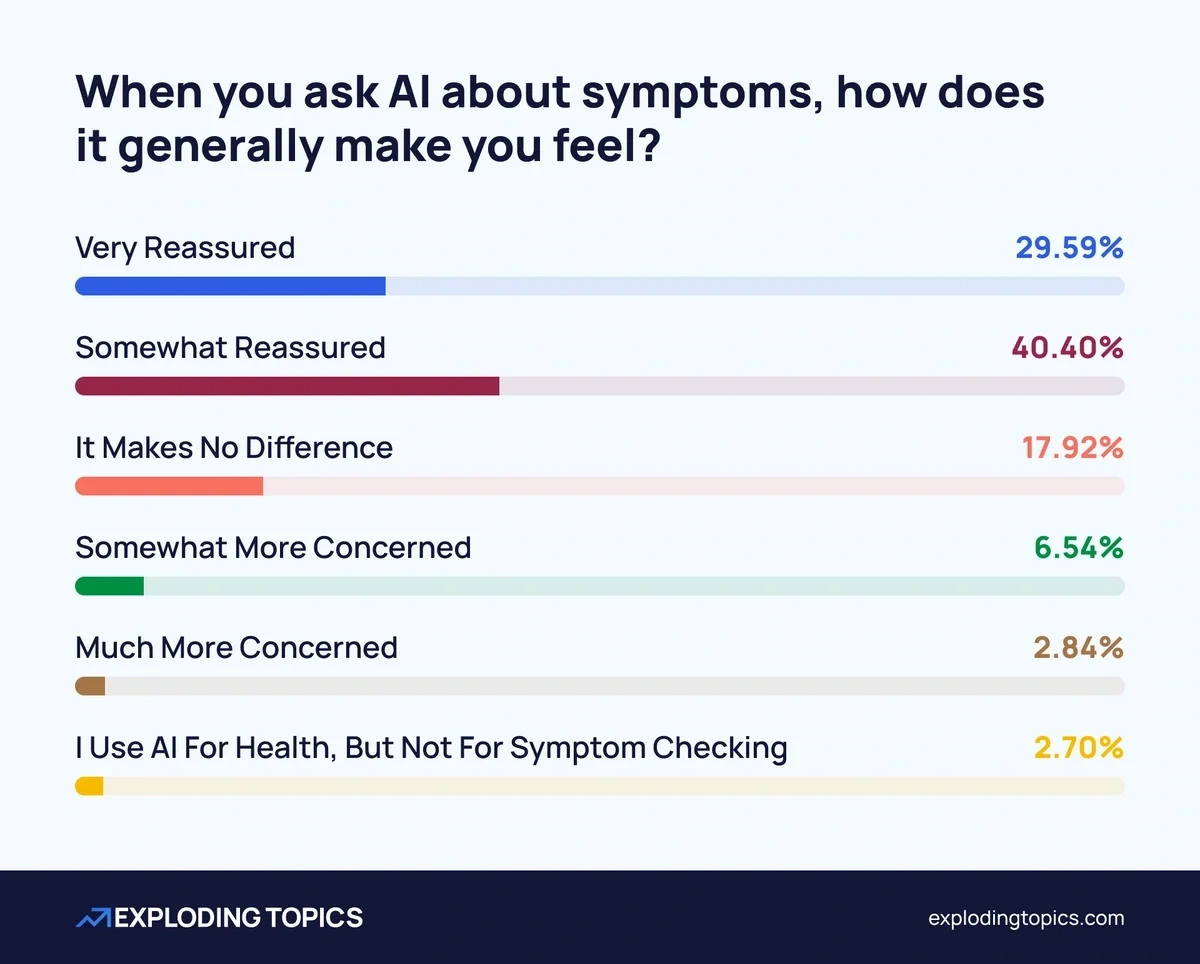
Fewer than 10% of people end up feeling more concerned after consulting with AI.
That is markedly different to the observed effects of checking symptoms on Google. An increase in anxiety during and after online symptom-checking has even been given its own name: cyberchondria.
This contrast may be because AI does a good job of pushing users away from the less plausible, more severe conditions. Instead of sending them down a rabbit hole, it guides them toward the more commonplace explanations that tend to be less serious.
But reassurance is only welcome when it is medically accurate. Amid the prevalence of self-reported negative outcomes, it looks a little jarring: AI may be uniquely good at making people feel better, even when it’s wrong.
Most users check AI health sources
Although people derive reassurance from AI answers, they still mostly feel the need to check sources. 65.29% of users always or mostly check the original sources of information when given an AI health response.
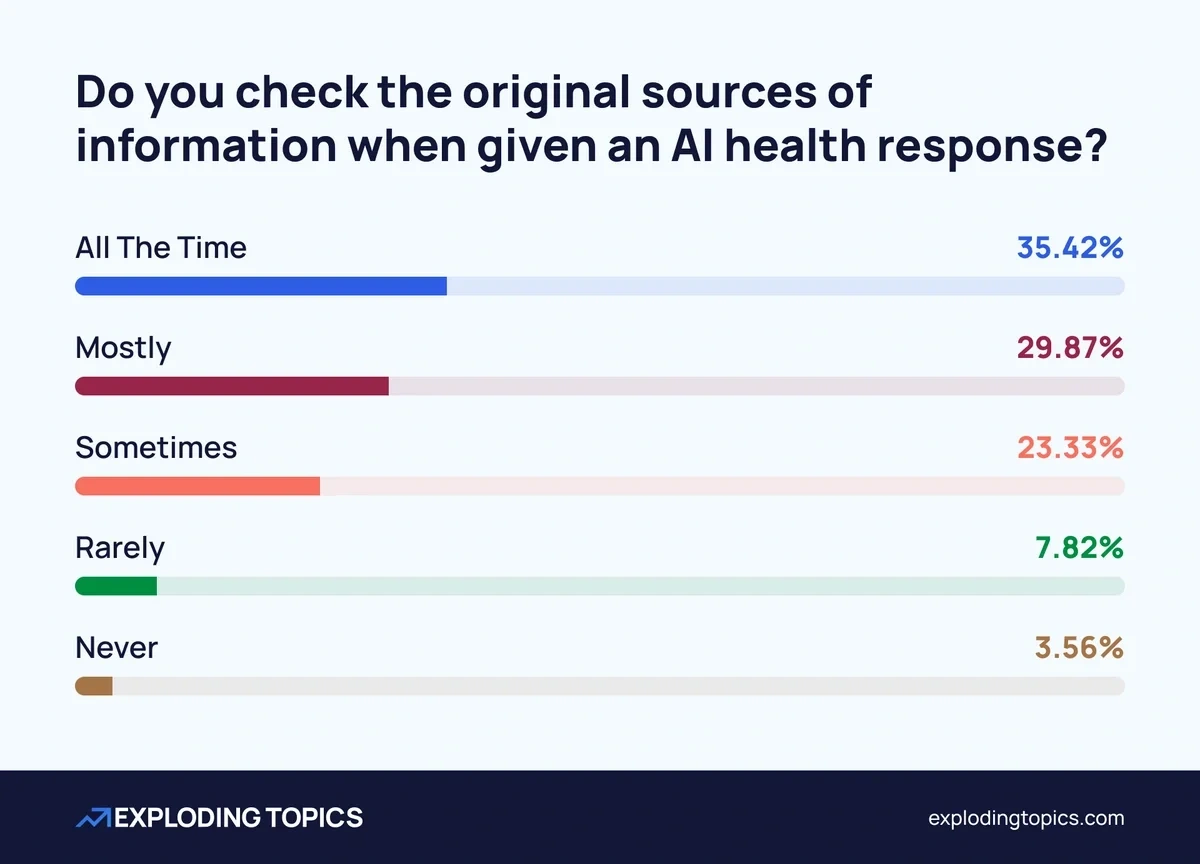
Just 3.56% say that they never check sources, and only 7.82% do so rarely.
This shows that users place medical queries in a special class. In a survey we published last October, only 7.71% of people reported always following the links in AI Overviews.
Yet while there is clearly increased vigilance when it comes to AI health responses, there is still a fairly significant minority who only “sometimes” check sources. And notably, people who have suffered serious problems are overwhelmingly the most likely to always check where AI is getting its information.
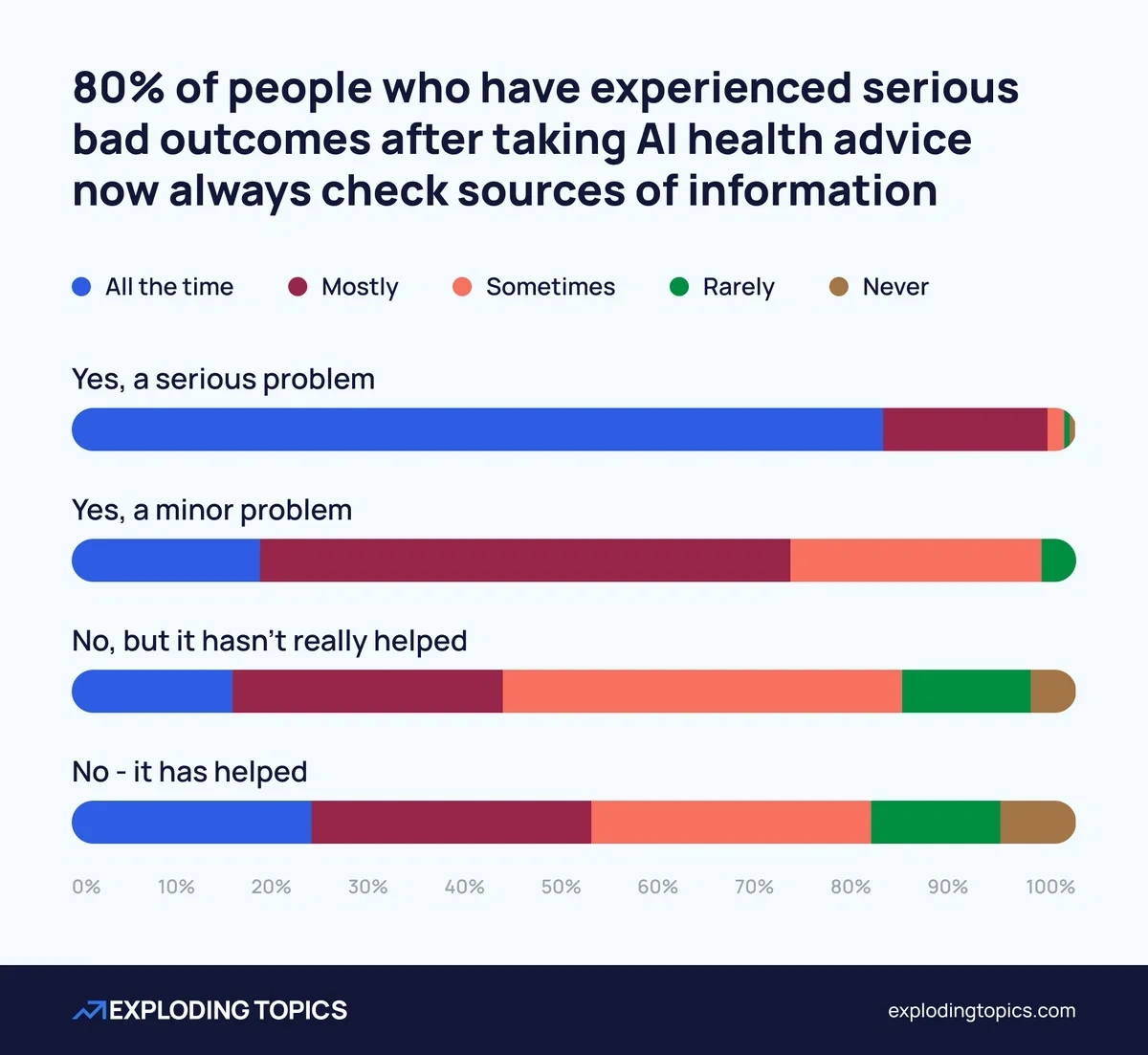
More than 80% of those who have had a serious problem after following AI health advice say that they always check sources, compared to just 35.42% of all users.
That strongly suggests that where major issues have arisen, users perceive they are a result of the AI providing unreliable or irrelevant information. As a result, they have become more meticulous at checking sources.
Attitudes to AI reliability
From this section onward, we put questions to all respondents, regardless of whether or not they currently use AI for health queries. We wanted to ascertain the attitudes of both users and non–users.
Only 14.04% of people rated AI as completely reliable for health advice. But only 12.25% said it was completely unreliable, with the majority of responses converging toward the middle ground.
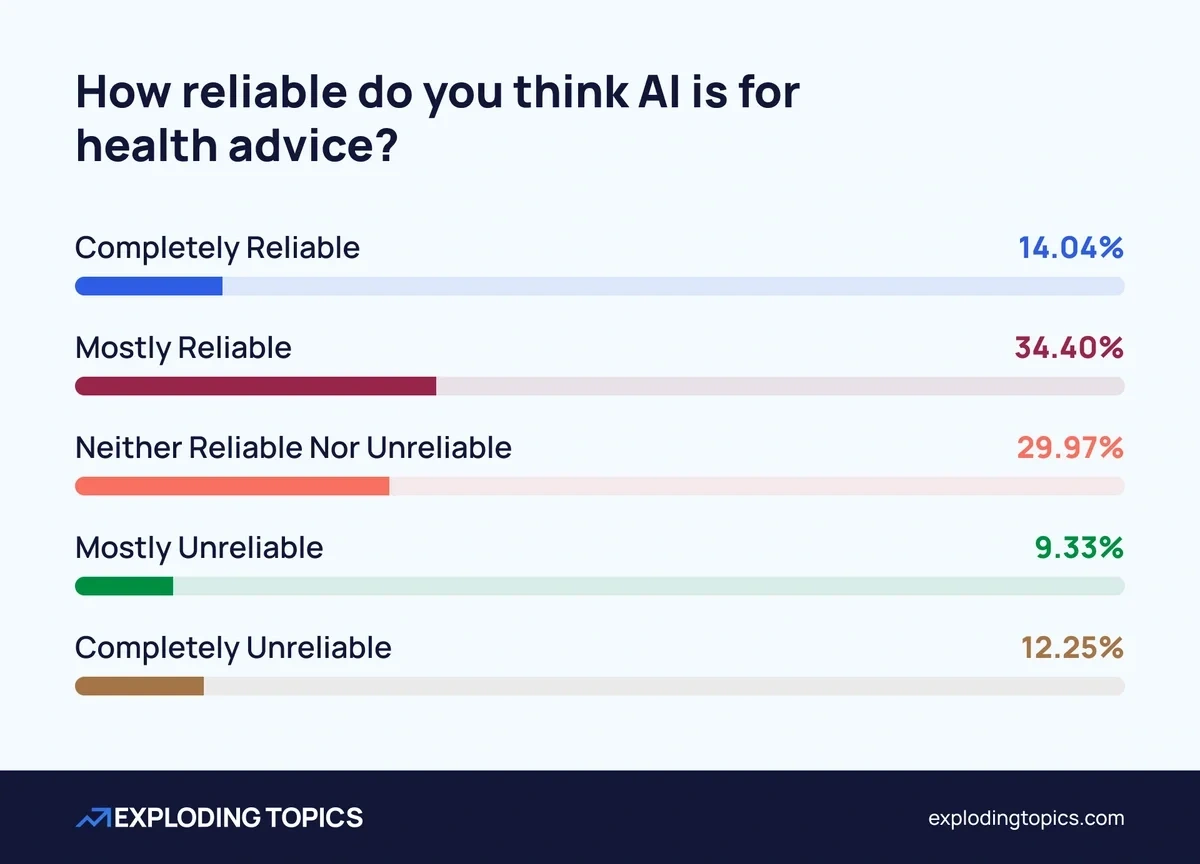
The mode response was “mostly reliable”, while the median was “neither reliable nor unreliable”. Even among those who have never used AI health tools, more than half selected one of these two responses.
Respondents in the Pacific region were the most likely to consider AI health information completely reliable, followed by those in the Middle Atlantic.
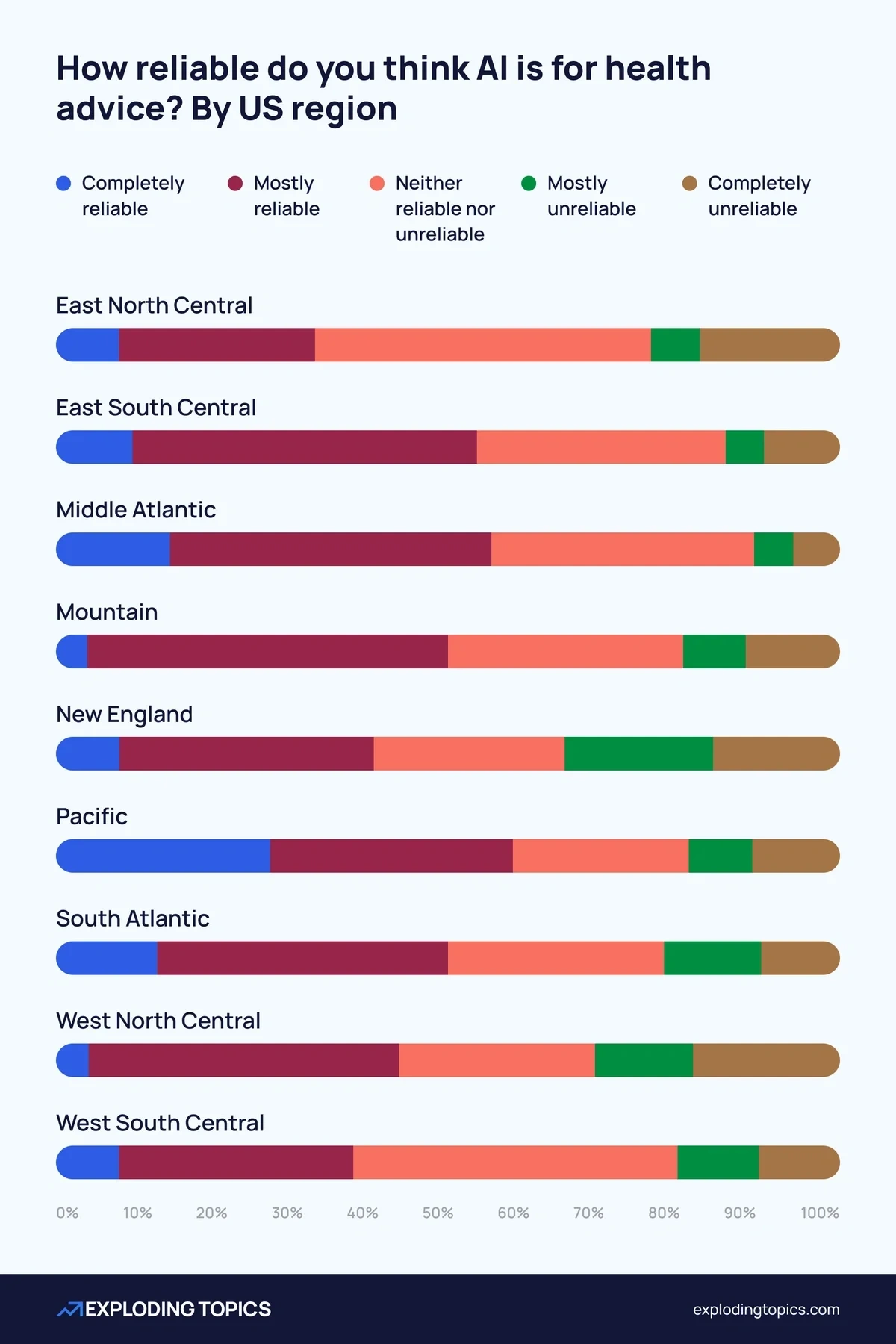
West North Central has the highest proportion of residents with zero trust in the reliability of AI health advice. Overall skepticism is highest in New England, where 35.14% find AI either mostly or completely unreliable for health purposes.
Healthcare scenarios where people would trust AI
Despite apparently moderate attitudes regarding its reliability, consumers are surprisingly willing to turn to AI tools in a wide variety of medical circumstances.
Most strikingly, 26.65% of people would consider using AI in a medical emergency. (The illustrative example given on the survey was “stabbing chest pains”.)
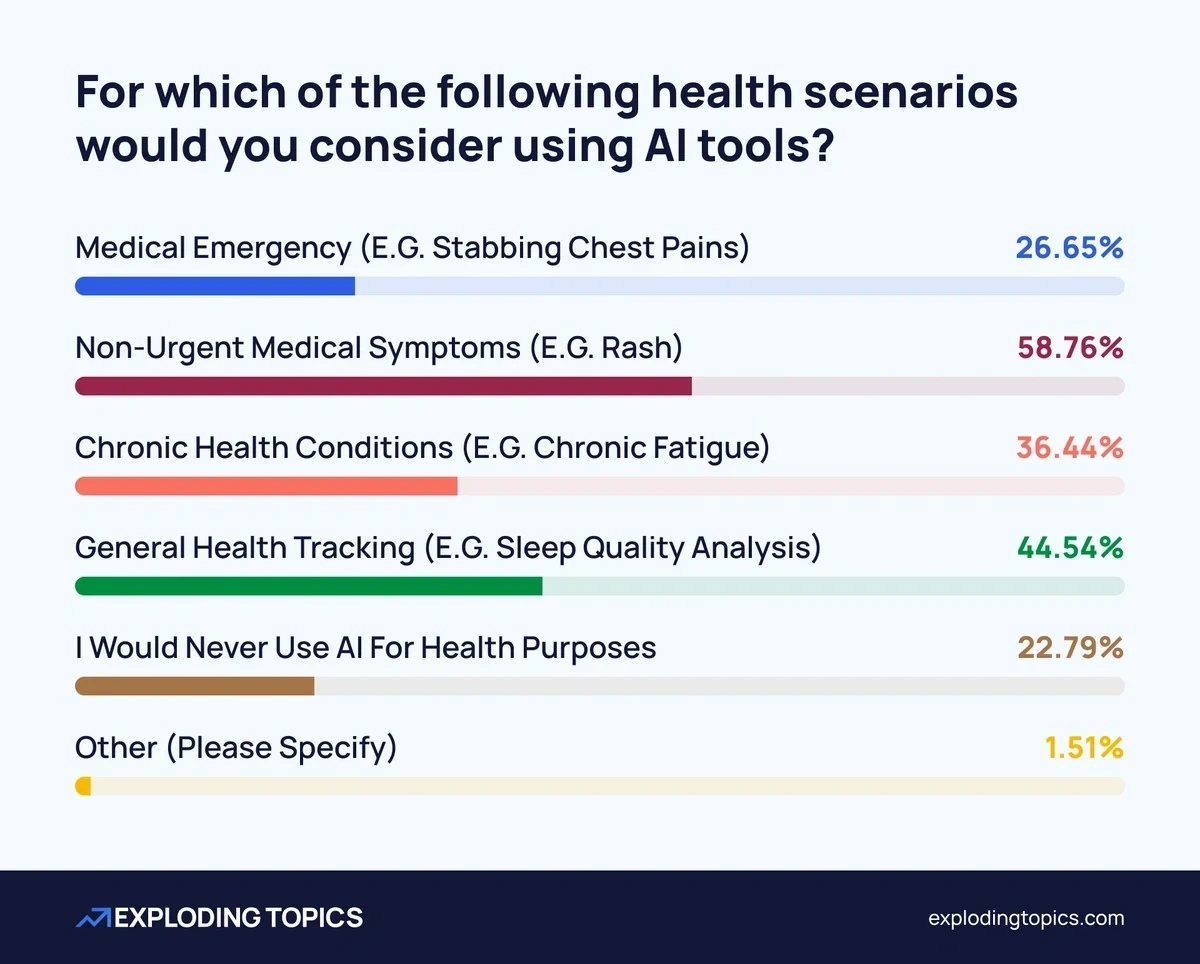
Non-urgent medical symptoms (e.g. rash) was the most common scenario where people would consider using AI, at 58.76%. That was followed by general health tracking, such as sleep quality analysis (44.54%).
But among those who “often” use AI for health purposes, a remarkable 67.57% would consider using the technology in a medical emergency. Incredibly, it was actually the most-selected use case among the heaviest users.
There are also lots of current non-users who would be open to adopting AI for some health purposes.
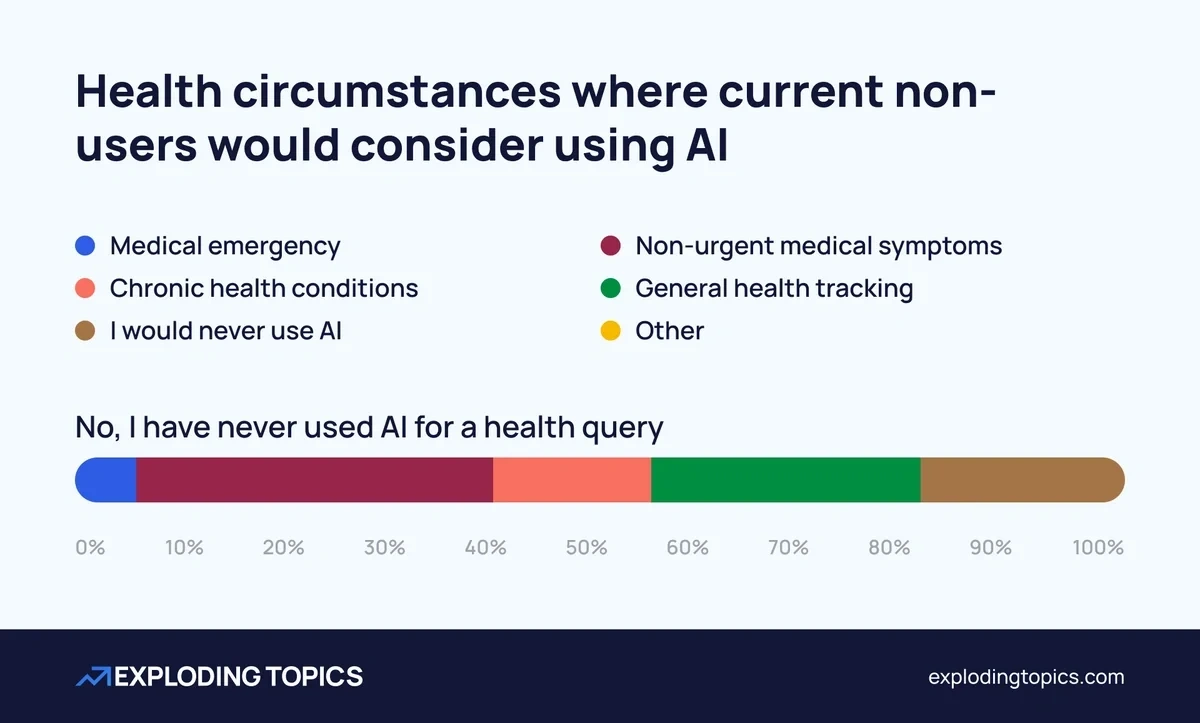
While only 5.85% of non-users would ever consider using AI for an emergency situation, 33.98% would consider using it for non-urgent symptoms. A quarter would use it for general health tracking.
Despite the surprising willingness to turn to AI in diverse medical scenarios, the majority of people would still have more trust in a human doctor.
64.4% said they would trust a human doctor most for personal health advice. 20.96% said they would most trust a specialist AI trained only on health, while 9.44% selected a general AI like ChatGPT.
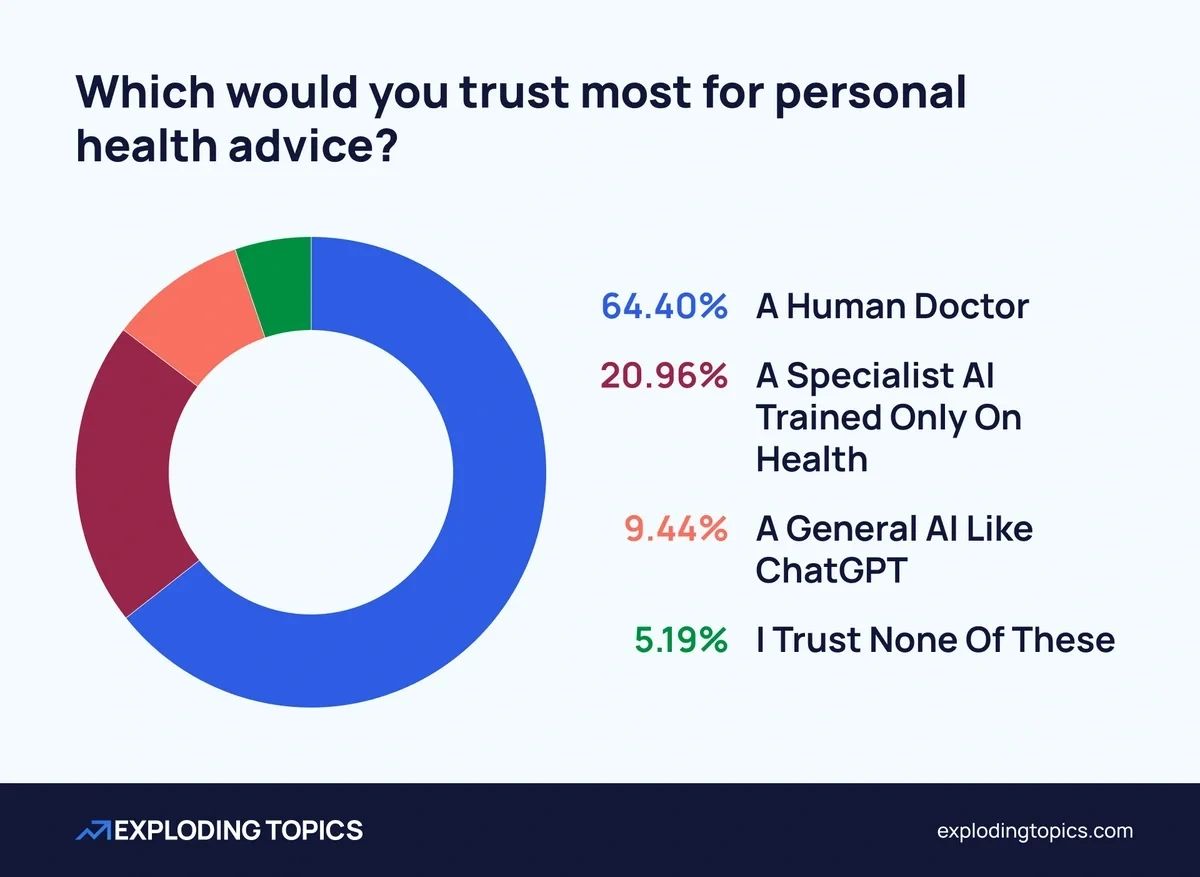
The remaining 5.19% said they would not trust any of these options.
Curiously, while the majority (54.39%) of the most regular users of AI for health purposes still favor a human doctor, occasional users are narrowly more likely to favor some kind of AI.
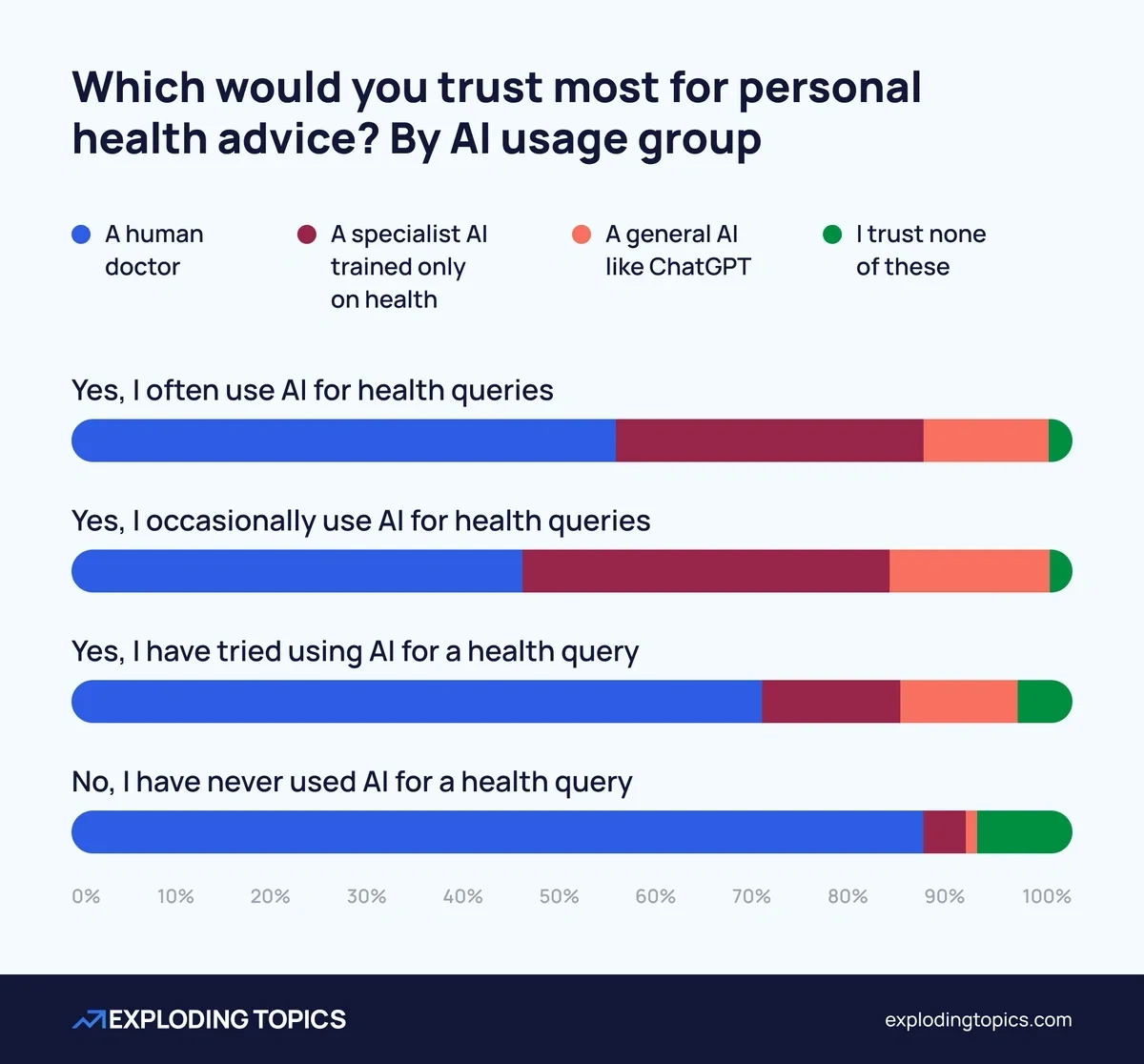
36.64% of occasional AI health users would trust a specialist AI the most, and 16.03% would choose a general AI. Combined, that’s more than the 45.04% who would opt for a human doctor.
As you would expect, the vast majority (85.11%) of those who do not currently use AI health tools would trust a human doctor the most. Over–60s (79.34%) also overwhelmingly favor the human option, with those aged 30-44 the most split (54.27% in favor of a human).
Expert’s opinion
Dr Alex Phelan, Co-Founder and Medical Director at Zenvité Health
MBBS, MRCGP, SCOPE Certified Obesity Practitioner, Certificate in Culinary Medicine, Member British Society of Lifestyle Medicine.
What I find telling is the figure showing more than 80% of people who'd had a serious problem with AI advice now always check sources, compared to about a third of users overall. People are learning caution the hard way. In any other part of healthcare, we'd want patients to have that information up front, not discover the risks retrospectively.
The thing that strikes me most is the mismatch in scrutiny. AI is already being applied across healthcare to augment clinical decision-making, enhance patient care, and drive new discoveries, and in many of those applications the patient never sees the AI at all. They still get the full human interaction with their clinician. Those tools go through proper validation because they sit inside a regulated process with a clinician accountable for what happens next. Meanwhile, the consumer chatbots that two-thirds of people are now turning to for health questions are operating without any equivalent oversight. The tools reaching the most people face the least scrutiny, and that's the gap worth closing.
It's worth saying that AI used well in clinical settings is already quietly improving care. We use dictation tools so we can give patients our full attention. In longevity medicine, we're developing tools for personalised risk scoring, helping patients focus on the areas of their health most likely to extend healthspan, rather than chasing every possible concern. There's also work being done on integrating decades of historical blood test data into a single readable record, so clinicians can actually see trends over a patient's lifetime rather than working from the last snapshot.
None of this looks like a chatbot giving health advice. It's AI doing the unglamorous integration work that frees clinicians to do the human work. That distinction — between AI that supports clinicians and AI that replaces the consultation altogether — is the one I'd want patients to hold onto.
Dedicated AI health tools and privacy concerns
The majority of current health AI adopters are using a general-purpose tool like ChatGPT or Claude.
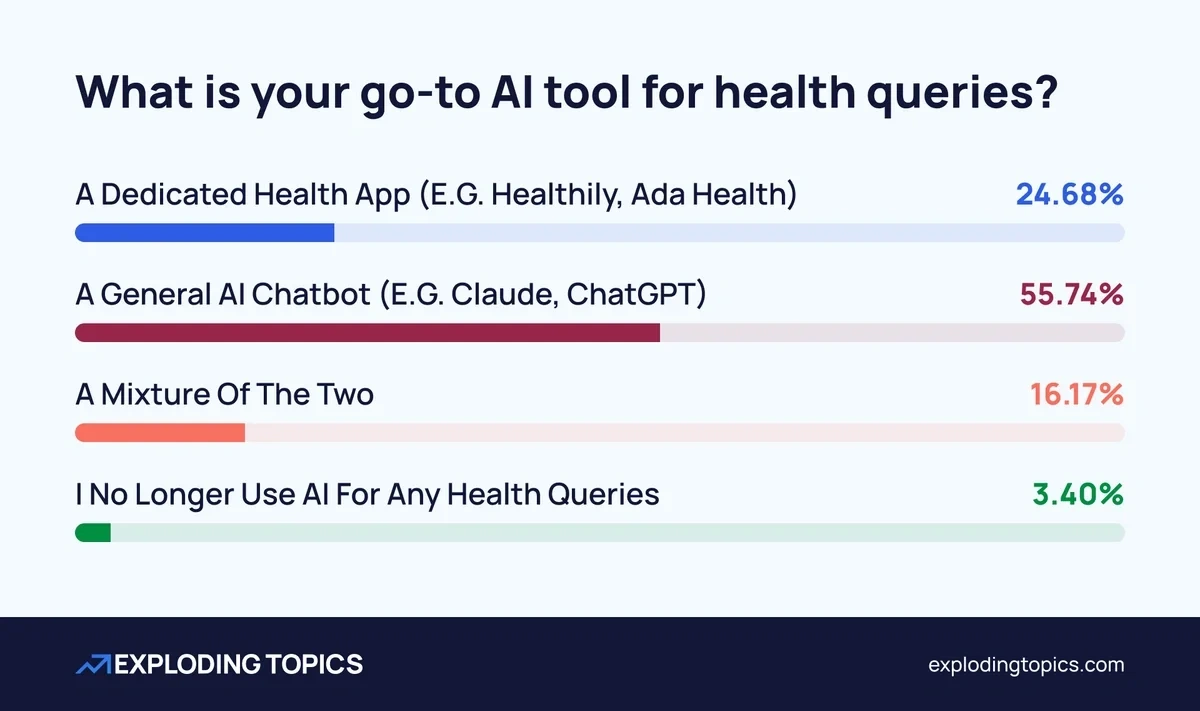
55.74% are exclusively using general AI chatbots. However, a significant minority are either using a dedicated health app like Healthily or Ada Health (24.68%), or a mixture of general and specific tools (16.17%).
And while most people are currently using general AI tools, the majority would feel more comfortable sharing health information with a dedicated AI health app.
28.93% of people would be “much more comfortable” sharing with a specialist app, e.g. ChatGPT Health. 34.4% would feel a little more comfortable.
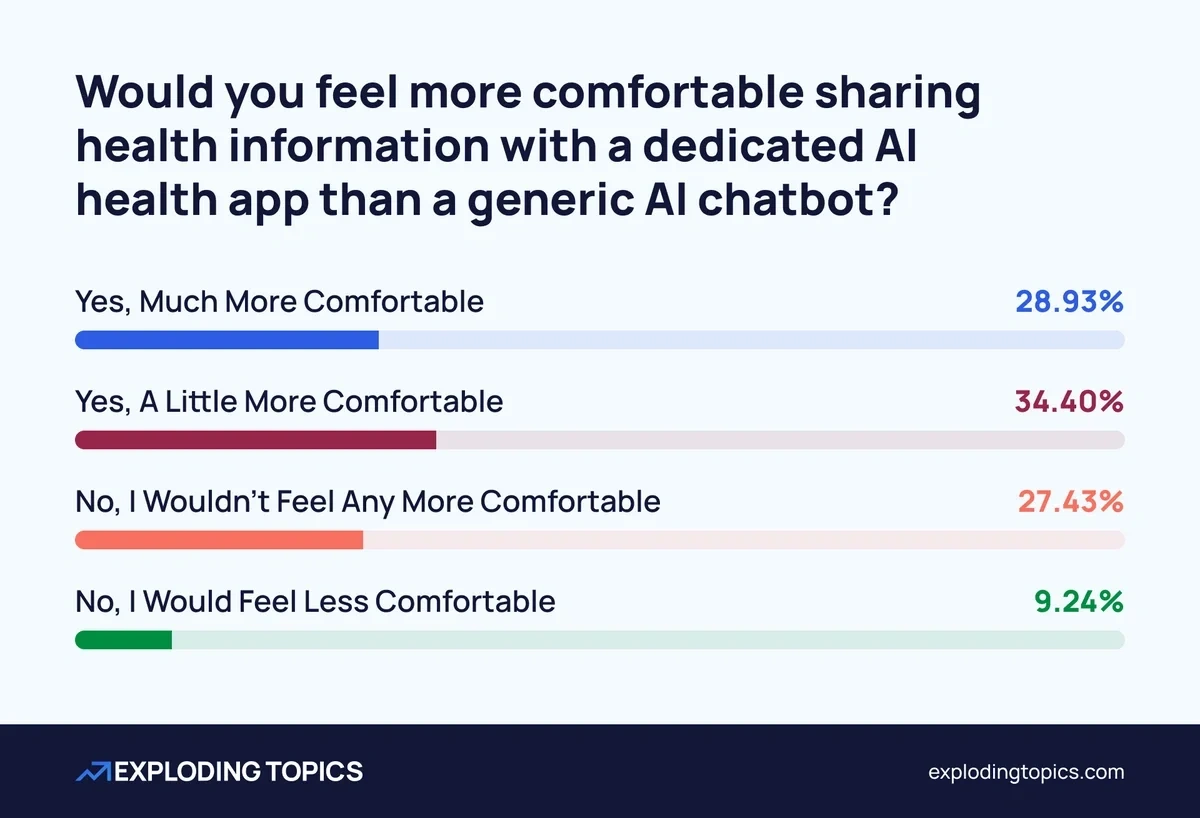
Fewer than 1 in 10 people would be actively less comfortable sharing with a dedicated healthcare app.
The heaviest users of healthcare AI are most likely to want specialized tools. But more than half of the lowest-volume users would also be at least a little more comfortable sharing information with a dedicated app.
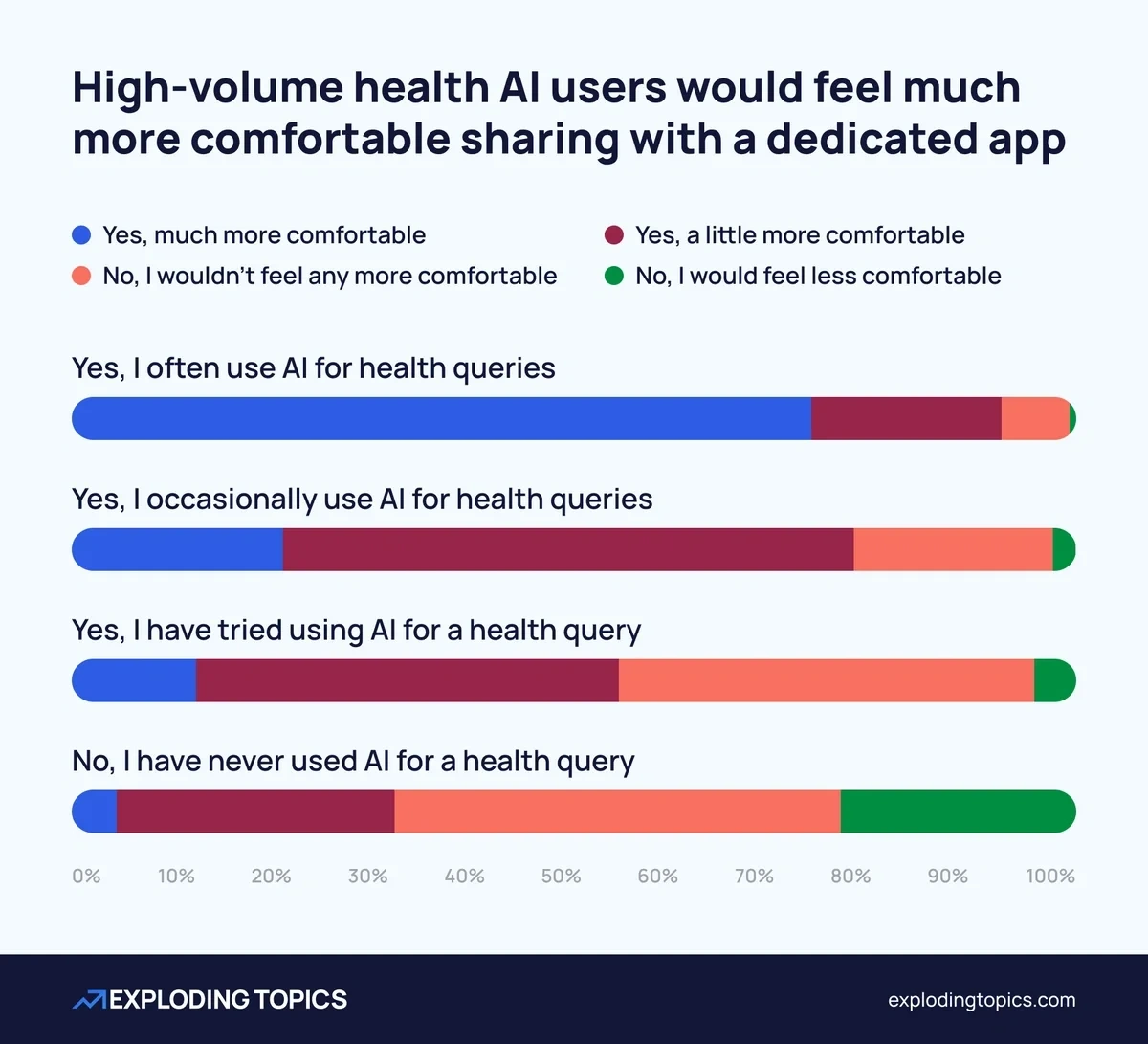
On the other hand, almost a quarter of non-users would actually be less comfortable sharing with an AI health app than a general AI.
Higher adoption of dedicated AI health apps could meaningfully change attitudes to sharing sensitive health information with AI. Currently, consumers are quite divided on the topic.
26.01% of people are very comfortable sharing sensitive health details with AI, and 22.81% are somewhat comfortable. But 21.02% are very uncomfortable, and 11.78% are somewhat uncomfortable.
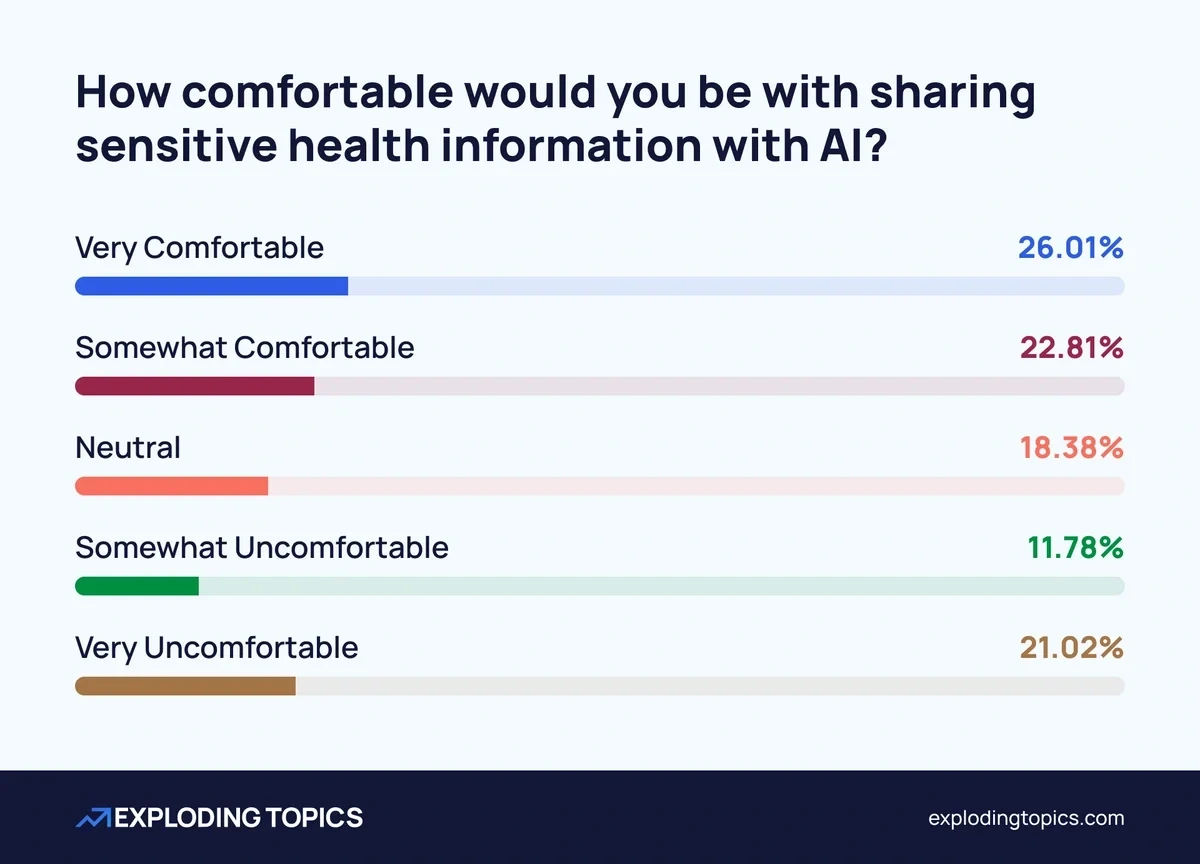
The remaining 18.38% are neutral.
In a recurring pattern from multiple Exploding Topics surveys, the eldest and youngest users are least likely to be comfortable sharing personal information with AI. Just 12.4% of the over-60s would be very comfortable sharing health details, rising only slightly to 16.99% for the 18-29 age group.
But despite being driven primarily by Millennial enthusiasm, the overall outlook is that fewer than 1 in 3 people are actively uncomfortable about sharing health information with AI. And many would even consider allowing dedicated AI health apps to store their medical history long-term if it promised better accuracy.
22.36% of people would allow an app to store their health history “without hesitation” if it meant better accuracy. A further 24.53% would do so “with some concerns”.
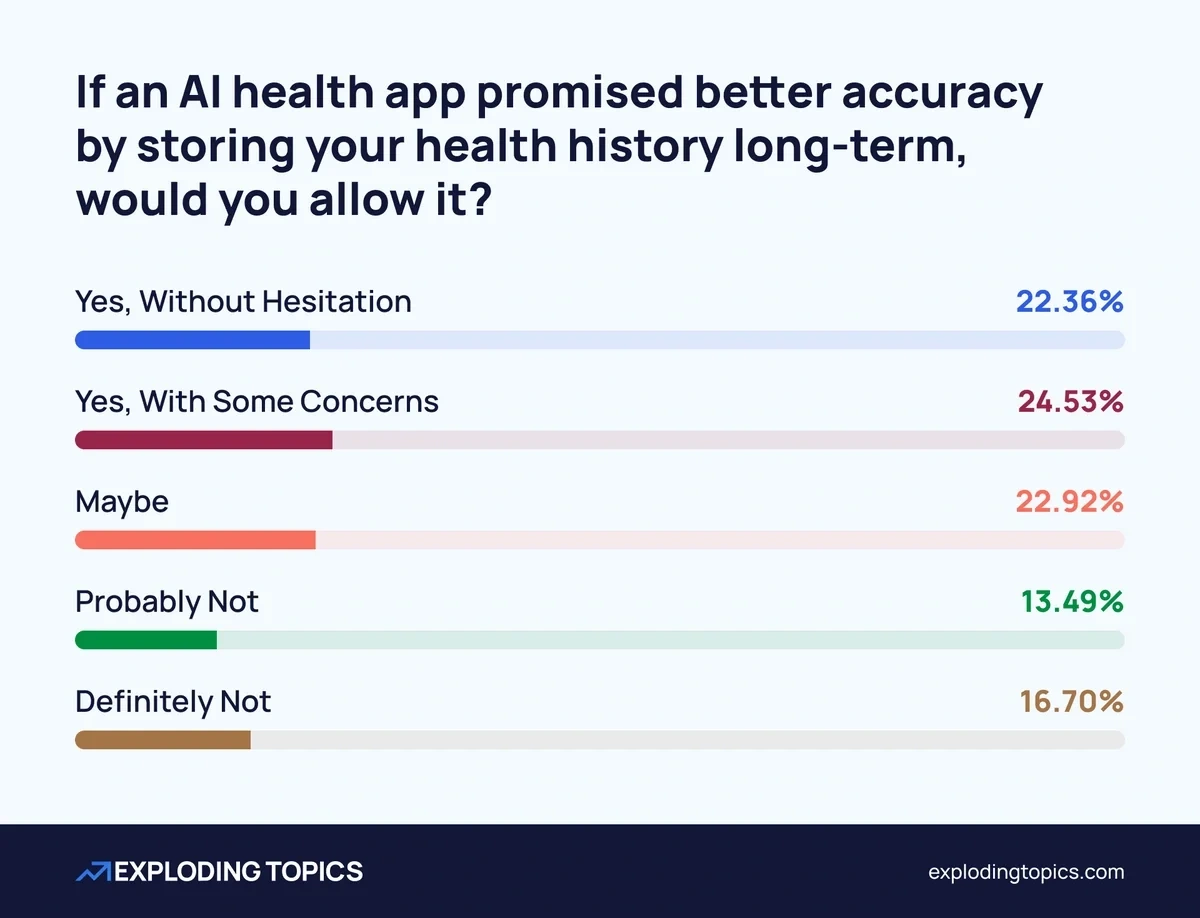
In total, only 16.7% definitely wouldn’t want AI storing their health details long-term. And three-quarters of those are people who currently aren’t using any kind of AI for health purposes.
While there is evidently some reticence, most people are willing to at least consider letting an AI store their healthcare data in exchange for better outputs.
Attitudes to AI in physical healthcare settings
We’ve seen that lots of people are choosing to turn to AI for health purposes, despite reservations about reliability and even serious adverse outcomes. But what about when people are confronted with AI in more traditional medical settings?
AI “triage” is already increasingly widespread. This is where an AI system acts as the first point of contact, assessing severity and determining how urgently you need to be seen.
And by and large, this appears to be acceptable to patients. 47.12% of people are at least somewhat comfortable with AI triage, and a further 18.6% are neutral.
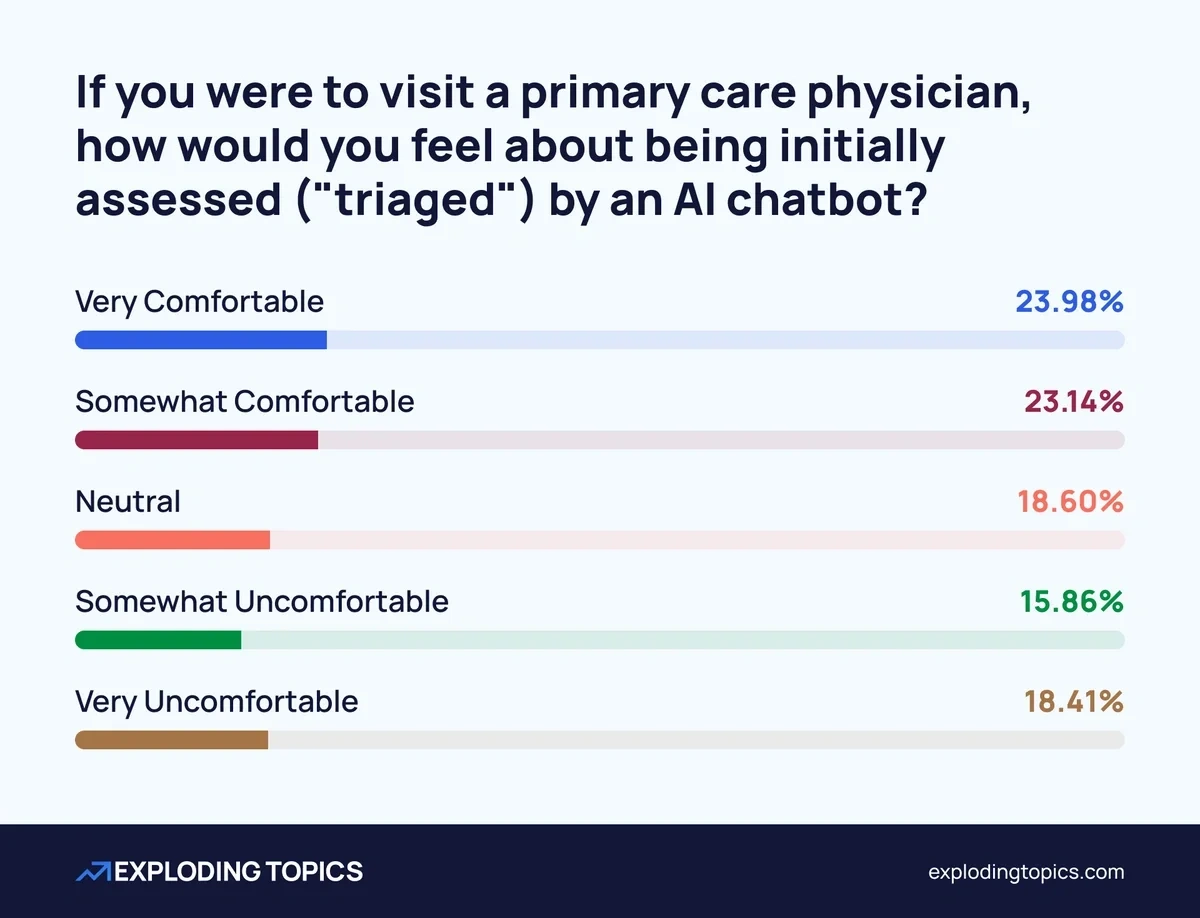
That said, there are a significant minority of dissenters. 18.41% would be very uncomfortable with AI triage, and a further 15.86% would be somewhat uncomfortable.
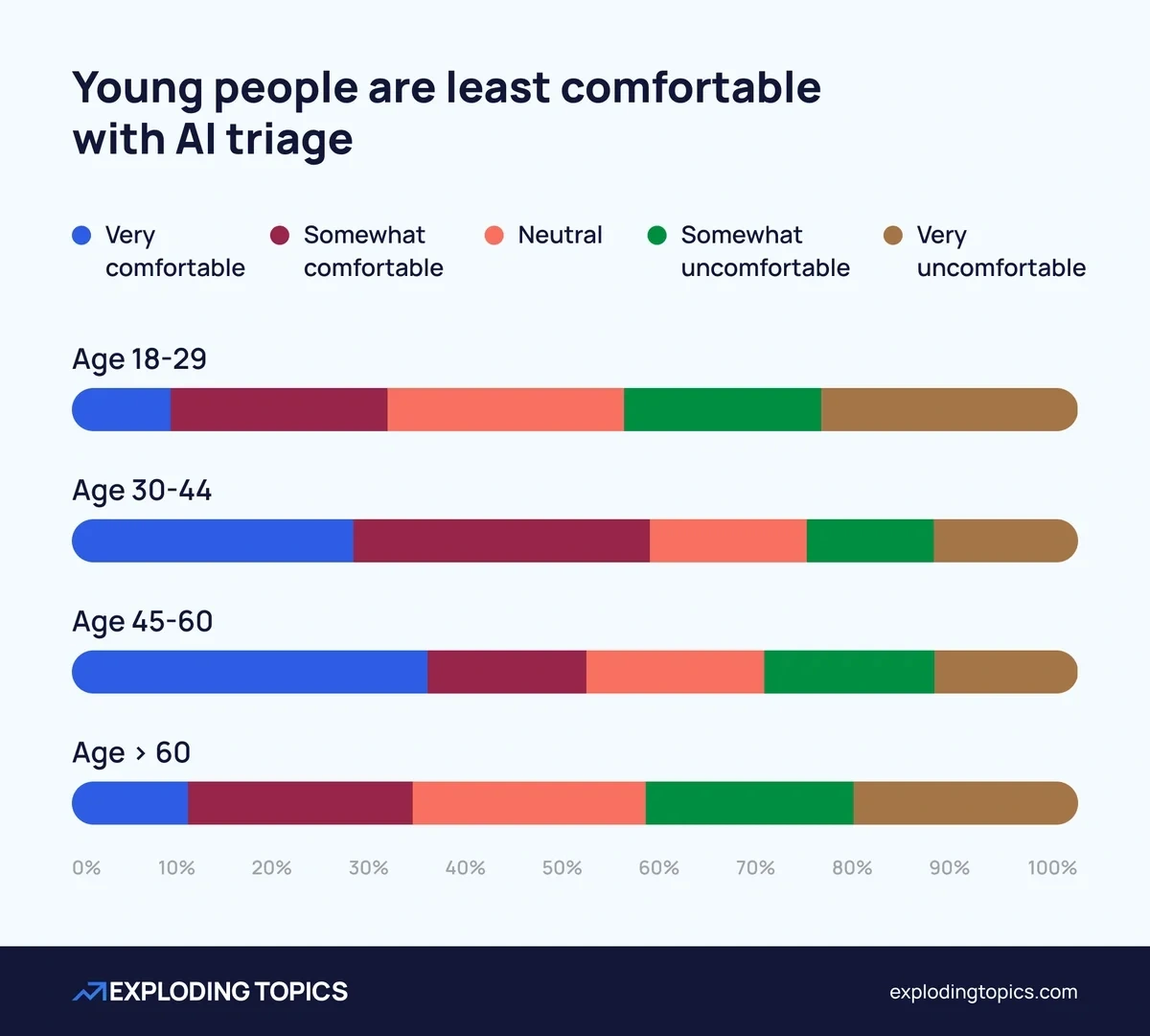
And young adults are the least comfortable being confronted by AI triage systems. 1 in 4 would be very uncomfortable, and 1 in 5 would be somewhat uncomfortable.
It’s a very similar pattern when it comes to the use of AI for analyzing medical scans. Again, this is an increasingly established use case: more than three-quarters of FDA-approved medical devices are related to radiology.
Almost exactly half of patients would be very or somewhat comfortable with AI being used in this way. A further 22.38% are neutral.
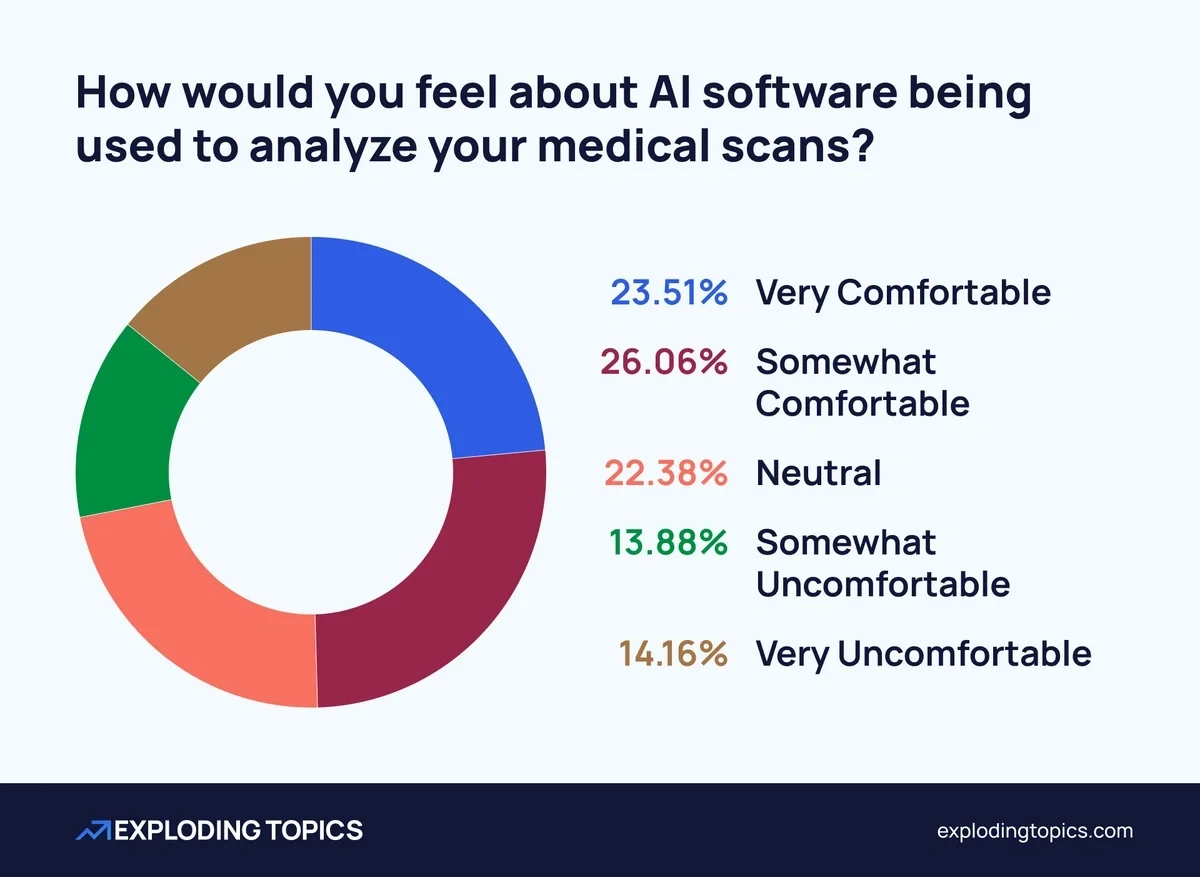
Once again, the main dissent comes from the youngest and oldest patients. Men (28.03%) are more likely than women (20.80%) to be “very comfortable” with the use of AI to analyze their scans.
Levels of discomfort are certainly high enough to remind care providers that consent should be sought before using any kind of AI assistance. But resistance to the responsible rollout of AI tools is not as strong as may have been expected.
Convenience at the cost of outcomes: Where AI health must improve
It is clear that people are finding genuine uses for AI health tools, both at home and in clinical settings. If nothing else, having an empathetic sounding board available 24/7 holds an obvious appeal.
But if any other health service was causing more than 40% of mental health patients to self-report “serious problems,” it would be under intense scrutiny. Without a rapid turnaround, it would not be allowed to remain operational for long.
AI for health (and generative AI in particular) is currently producing convenience without accountability. While it can genuinely help many users in many scenarios, there are not sufficient guardrails for when it all goes drastically wrong.
A shift toward more dedicated AI health systems could produce some improvements in this regard, and at the very least would increase user trust. But the biggest issues do not have any simple answers, and the core tension of feeling heard versus actually being helped goes to the very heart of the technology.
Methodology
We gathered responses from 1,065 Americans across a spread of geographic regions. Questions on AI health usage were put only to existing users (705), while questions on attitudes were put to everyone.
52.3% of respondents were female, and 47.7% were male. The median age range was 30-44, although respondents were drawn from all categories from 18-29 up to 60+.
The survey was sent out at the end of January 2026.
Stop Guessing, Start Growing 🚀
Use real-time topic data to create content that resonates and brings results.
Exploding Topics is owned by Semrush. Our mission is to provide accurate data and expert insights on emerging trends. Unless otherwise noted, this page’s content was written by either an employee or a paid contractor of Semrush Inc.
Share
Newsletter Signup
By clicking “Subscribe” you agree to Semrush Privacy Policy and consent to Semrush using your contact data for newsletter purposes
Written By


James is a Journalist at Exploding Topics. After graduating from the University of Oxford with a degree in Law, he completed a... Read more