


Get Advanced Insights on Any Topic
Discover Trends 12+ Months Before Everyone Else
How We Find Trends Before They Take Off
Exploding Topics’ advanced algorithm monitors millions of unstructured data points to spot trends early on.

Keyword Research
Performance Tracking
Competitor Intelligence
Fix Your Site’s SEO Issues in 30 Seconds
Find technical issues blocking search visibility. Get prioritized, actionable fixes in seconds.
Powered by data from
Latest Blog Posts
Featured Case Studies
See what's trending before everyone else
Each week, we'll send you our best Exploding Topics. Plus, expert insight and analysis.
How to Perform an E-commerce Competitive Analysis

 Add Exploding Topics on GoogleAdd Exploding Topics as your preferred source to see more of our stories on Google.
Competitive analysis is an essential process for e-commerce owners.
E-commerce revolutionized retail not only because it made finding and purchasing items easier, but also because it opened the door for more people to become entrepreneurs.
Reduced startup costs and the ability to reach a massive consumer base make launching an online retail enterprise an accessible goal. However, more entrepreneurs entering the market means e-commerce owners face steep competition.
For your business to thrive, it’s crucial to understand where it fits within your niche. This step-by-step guide walks through how to do an e-commerce competitive analysis and discover opportunities to set your brand apart.
Why Competitive Analysis Is Important for Successful E-commerce
Taking the time to do a full competitive analysis might feel like it should be pretty low on your to-do list, but it’s actually integral to every aspect of your business.
The information you gather during this process can tell you:
- If you’re charging too much (or not enough)
- If there are viable markets you’ve overlooked
- If your brand positioning stands out or blends in
- If there are marketing strategies you haven’t tried that could help you reach your audience better
- If you need to expand your product line
- If your value propositions are as enticing as other brands’
If you’re trying to make decisions about finances, product development, or marketing and advertising budgets without a solid competitive analysis, you’re navigating in the dark.
Anything else you need to do to keep your business running can be done better when you’re informed. Making the time to carry out periodic competitive analysis isn’t a perk, it’s a necessity.
Build a winning strategy
Get a complete view of your competitors to anticipate trends and lead your market
How to Perform an E-commerce Competitive Analysis
Competitive analysis covers every aspect of your business, from product ideation to marketing and even customer service.
To keep track of all the details you’ll be collecting for multiple competitors, I recommend creating a spreadsheet. Label the columns as follows:
- Competitor/Brand Name
- Target Audience
- Value Proposition
- Marketing Strategies
- Competitive Gaps
Before you dive in to step one, fill out the first row of your spreadsheet with your own business’s details. This will make it easy to compare what you offer with your findings from your competitive analysis.
Step 1: Define Your Competitive Analysis Goals
Having clear goals for your competitive analysis will guide your next steps. While you can proceed without taking the time to define objectives, you’re more likely to end up with a spreadsheet full of irrelevant data that way.
Understanding what you hope to be able to accomplish by the time you’re done will help you tweak the process a bit here and there so you find the information that actually matters to you.
Some examples of goals you might set include:
- Increasing conversions
- Enhancing your value propositions
- Improving your brand sentiment
- Increasing ROI on your marketing investments
- Finding new market segments to target
Step 2: Identify Your Competitors
Next, it’s time to start filling up the first column in your spreadsheet. You might already have some ideas of who your competitors are, and it’s okay to put those names in your sheet right away.
But it’s always smart to be thorough and search for others that may be flying under your radar while capturing the attention of customers.
One of the quickest and simplest ways to find competitors is using Semrush. I highly recommend the Pro plan, which includes all the features you’ll need to complete your e-commerce competitive analysis.
Hot tip: Semrush Pro also includes MCP access, so you can connect it to ChatGPT or Claude and chat to find information for your analysis.
Head over to the Traffic & Market section and open the Market Overview tool. Type in your e-commerce site’s domain, then scroll down to the Market Players section.
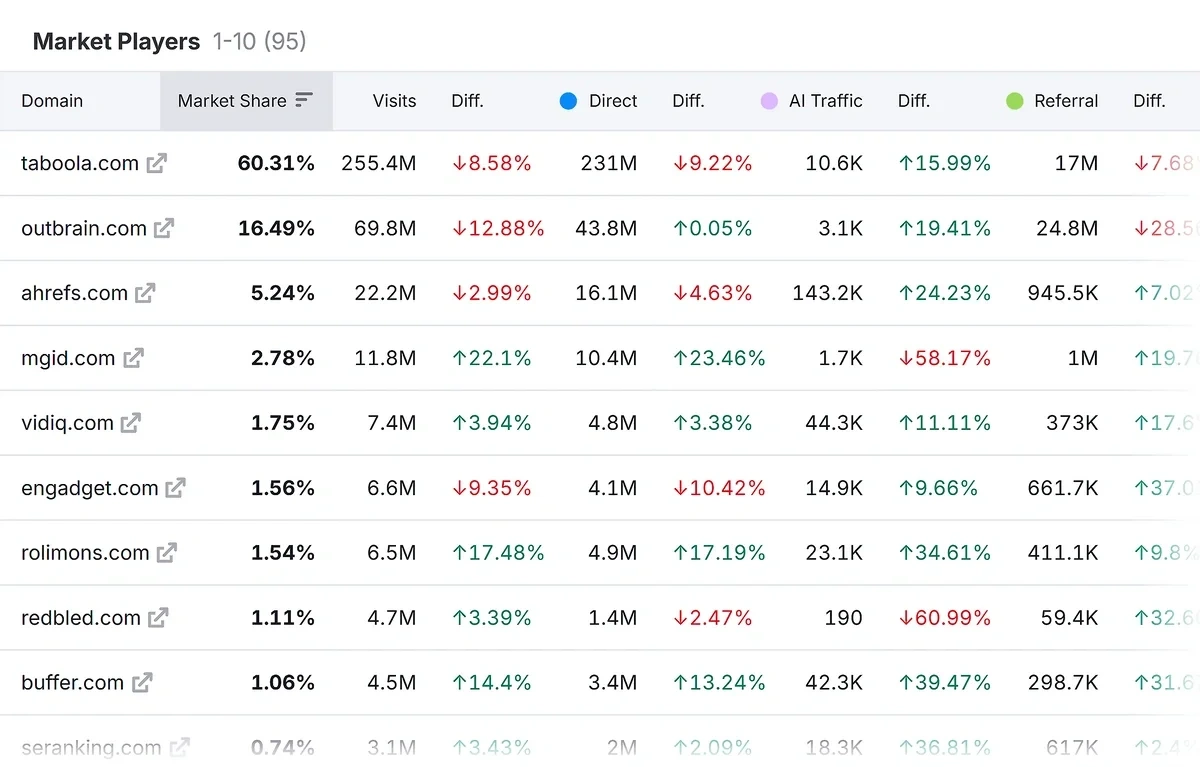
There you’ll find a data-backed list of your top competitors. If you see any you haven’t added to your spreadsheet yet, make sure to do so. I recommend a total of five to ten competitors for your list. This is a large enough sample size to give you solid insight into the market without overwhelming you.
Before you move on, consider adding these competitors to a list for future monitoring using Semrush’s EyeOn tool.
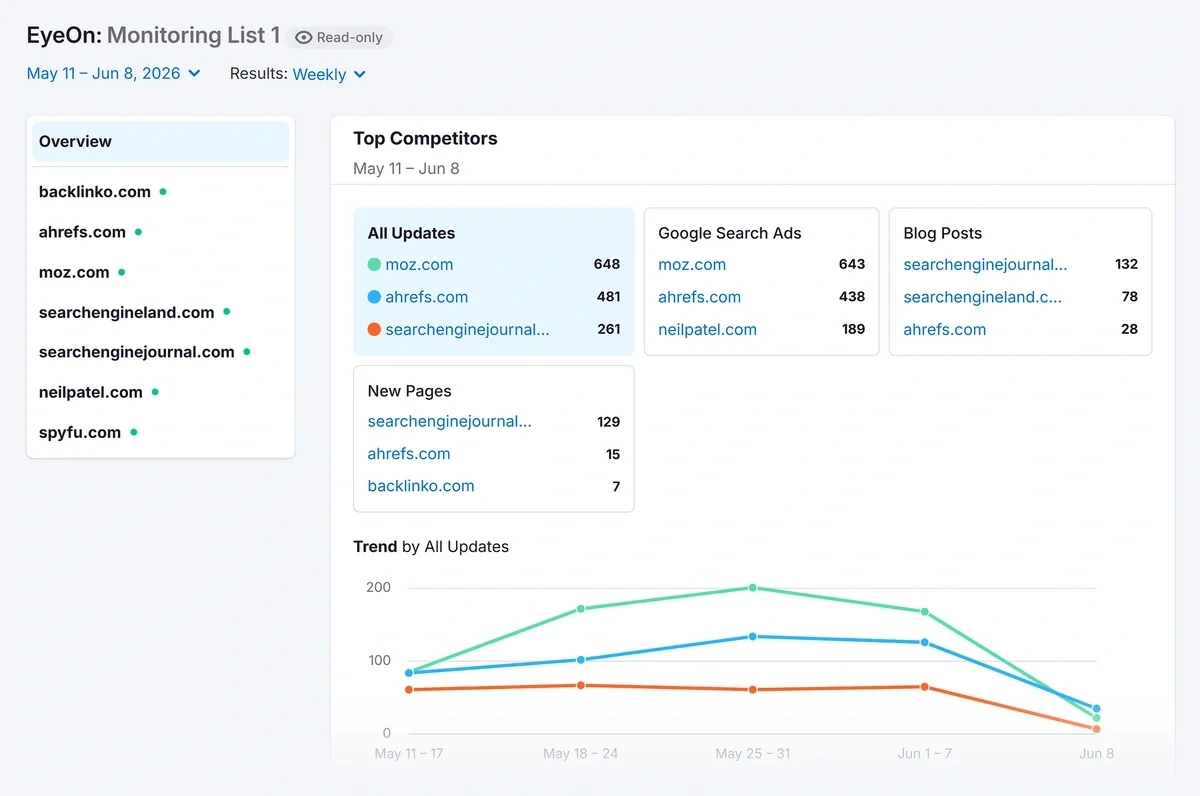
Competitive analysis is not a one-and-done task, it’s a repeatable process. This may save you some time when you next check in with your competition.
Step 3: Understand Your Competitors’ Target Audiences
With your list of competitors in hand, you can begin evaluating them, starting with their target customers. Knowing who your competitors serve is important because it provides insight into market segments you may be overlooking.
There are several ways you can learn who is shopping on your competitors’ sites, including:
- Analyzing their social media followers
- Reading customer reviews (on their site or third-party review sites)
- Assessing website traffic demographics
Semrush can help with the last point. Under Traffic & Market, go to Audience Profile. The Demographics, Socioeconomics, and Behavior tabs can tell you about the age, gender, and educational background of your competitors’ shoppers, plus a lot more.
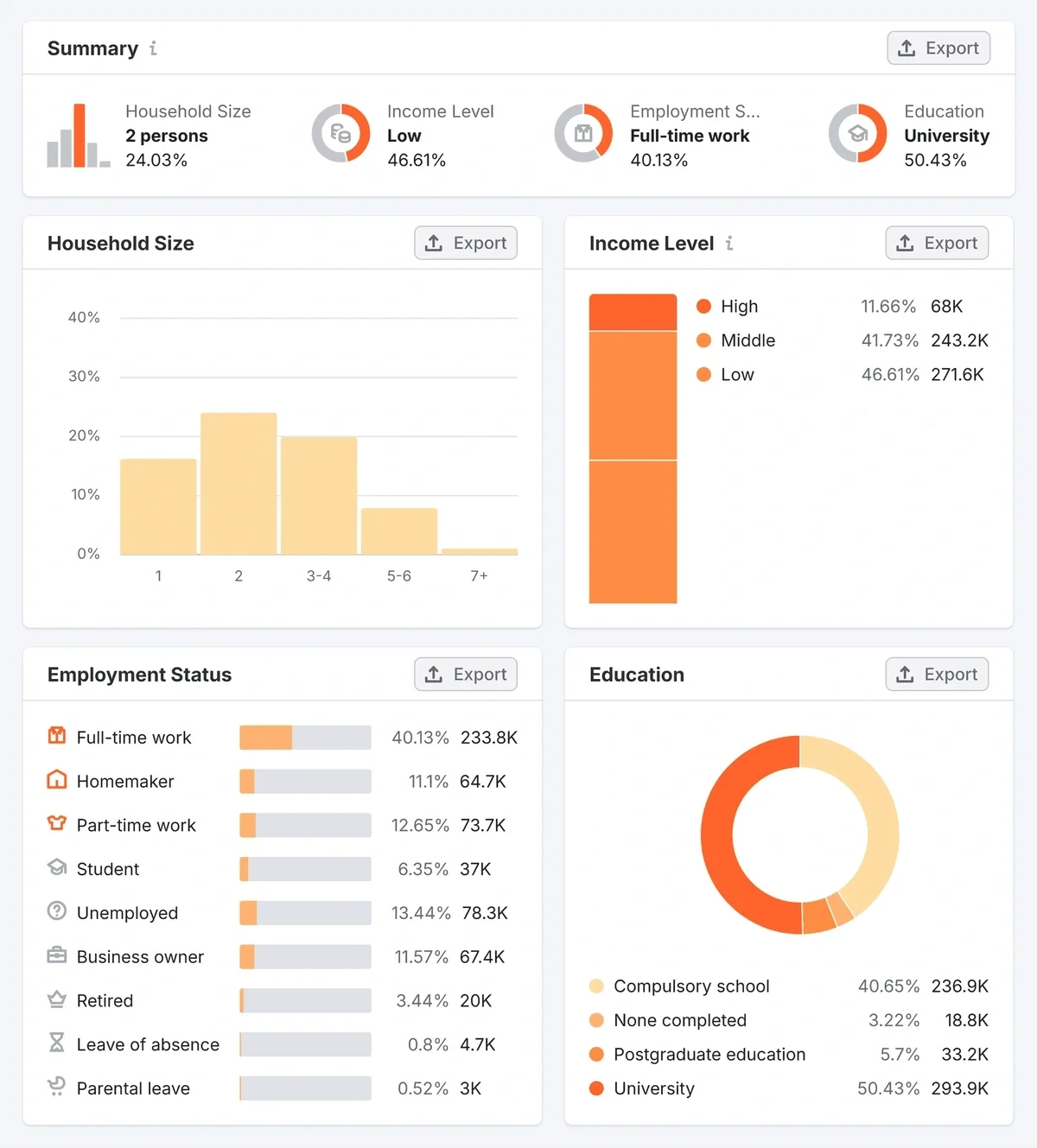
You can even see which social media platforms are most popular with your competitors’ audiences, which could provide some direction for your marketing strategy.
In your spreadsheet, fill in the Target Audience column with notes on key demographics and any other information that catches your eye.
Step 4: Assess Value Propositions
Your competitors’ value propositions are what set them apart from you. Online, shoppers have a huge range of buying options to choose from, so you need them to see that you provide the greatest benefits.
The place most people—including customers—first look for value is in your products. When analyzing value propositions, however, you’re not just comparing features. It’s important to keep your target audience in mind and consider how your products solve their problems.
Pricing is another area that customers pay a lot of attention to. Compare your products’ pricing to your competitors’, but make sure you consider everything that price includes.
For instance, maybe a competitor’s flagship product is priced very similarly to yours, but they also provide:
- Free shipping
- Free returns
- 24/7 customer service
- Product warranties
All of these offer customers value, be it financial savings, convenience, or an improved shopping experience.
In the Value Proposition column of your spreadsheet, note your competitors’ prices as well as anything else they provide that is a direct benefit to customers, especially if you don’t offer it yourself.
Step 5: Analyze Marketing Strategies
Researching how your competitors are engaging their customers can give you a better idea of how to reach shoppers where they are and draw them to your e-commerce site.
There are several different components to consider when analyzing other e-commerce sites’ marketing strategies, including:
- Paid advertising
- Organic search
- Social media
- Email marketing
Semrush can help with assessing both organic and paid search traffic. Use the Domain Overview tool to look up your competitor’s site.
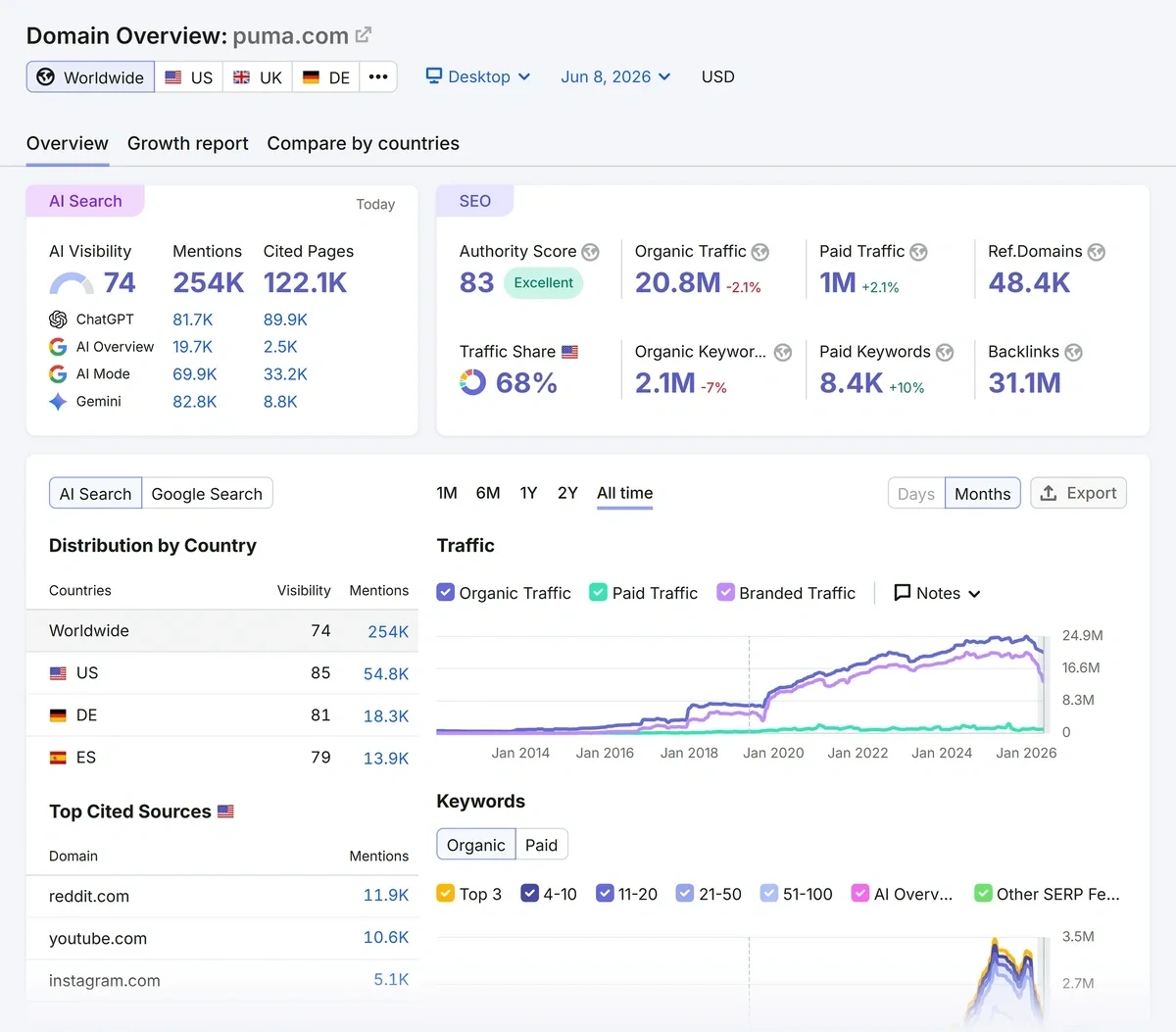
Semrush shows data for both traditional Google search and AI search, so you can see how consumers are searching for brands across channels.
The Organic Rankings section includes a list of all the keywords your competitor is ranking for:
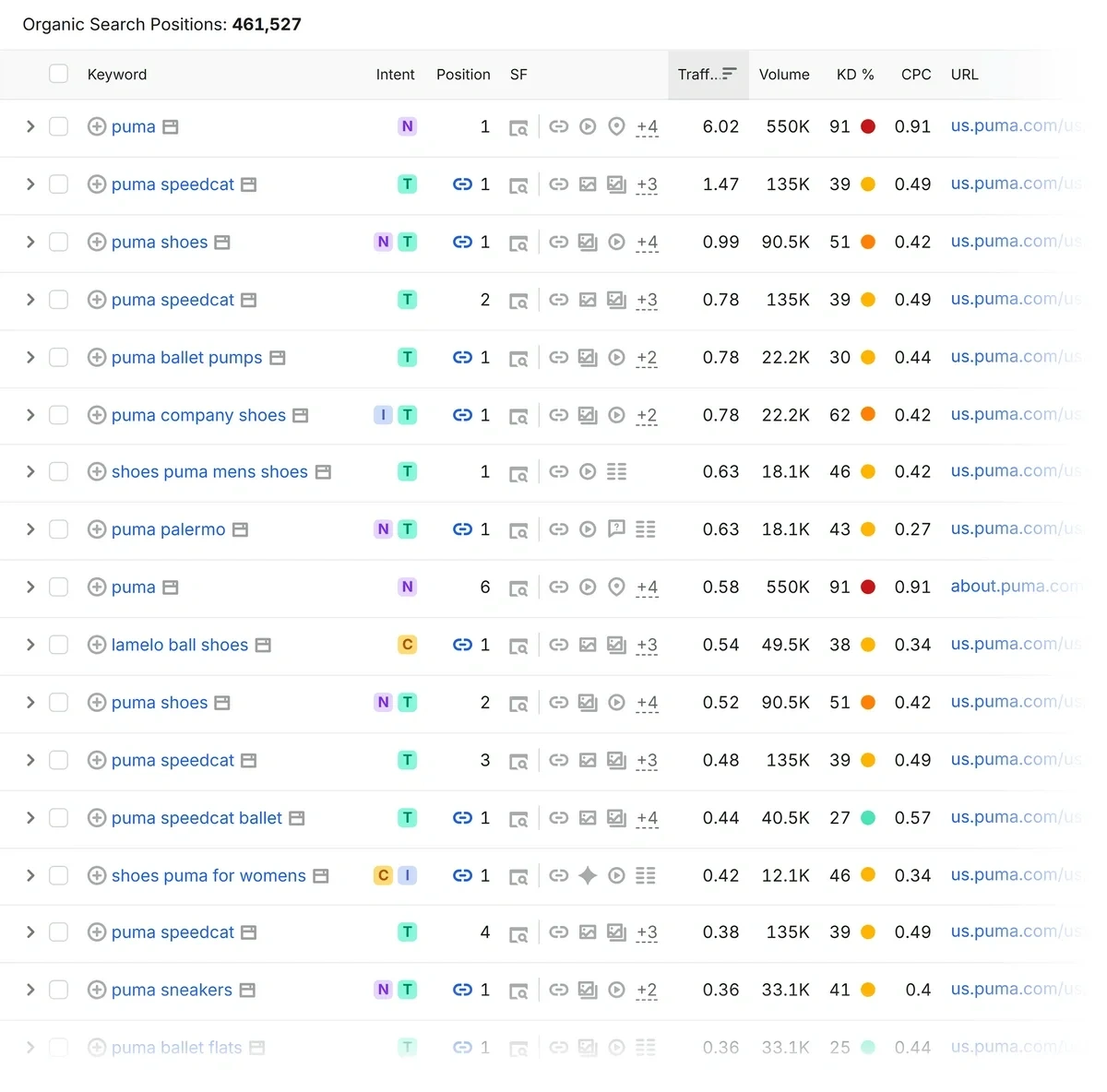
This is a great place to look for gaps in your own marketing and product strategies (more on that in a bit).
Semrush’s Advertising Toolkit provides access to a similar list for paid search, which can help guide your own decision making when it comes to your advertising budget.

Semrush also includes a handy competitor analysis tool just for AI visibility. You can enter your own domain along with up to four competitors.
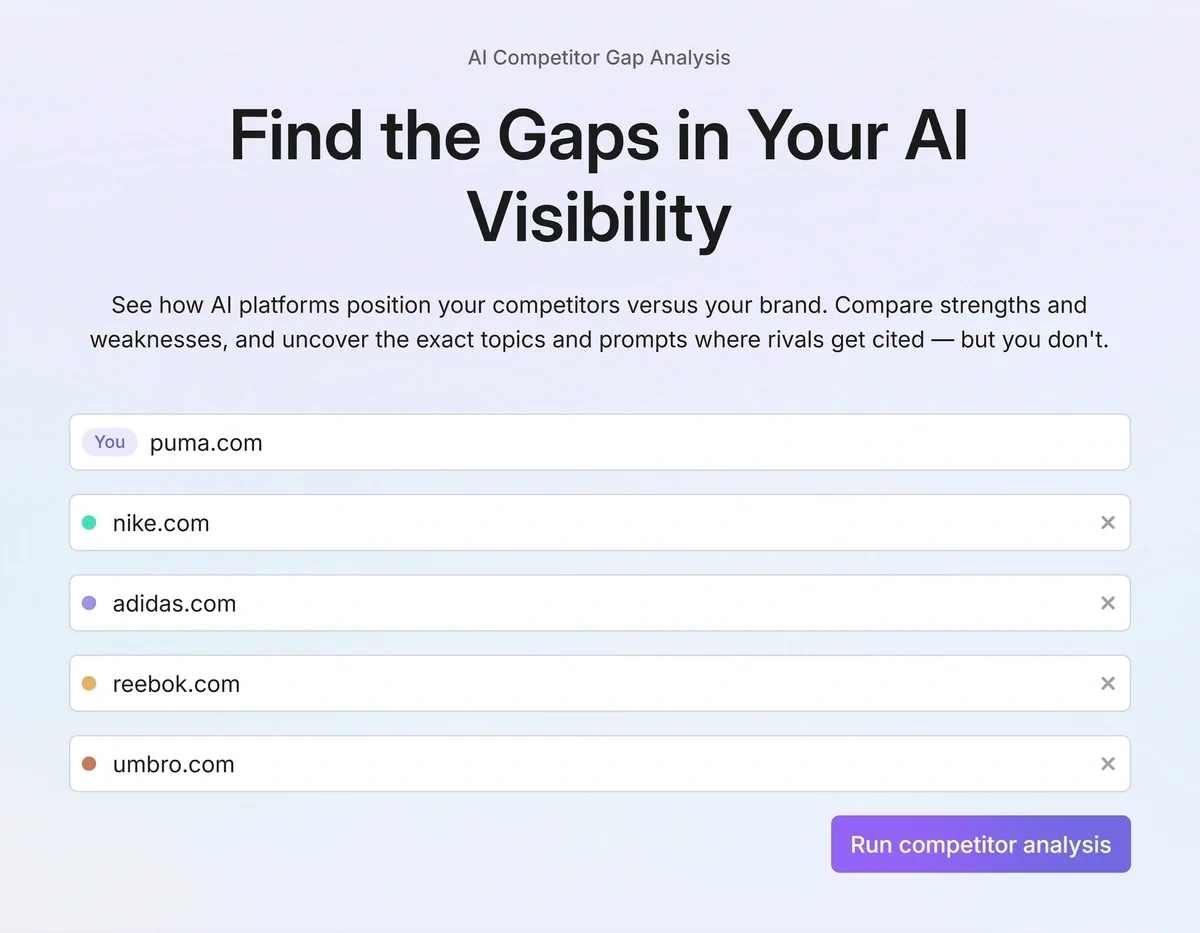
The results show how frequently your brand appears in AI conversations compared to others, as well as prompts that resulted in brand mentions.
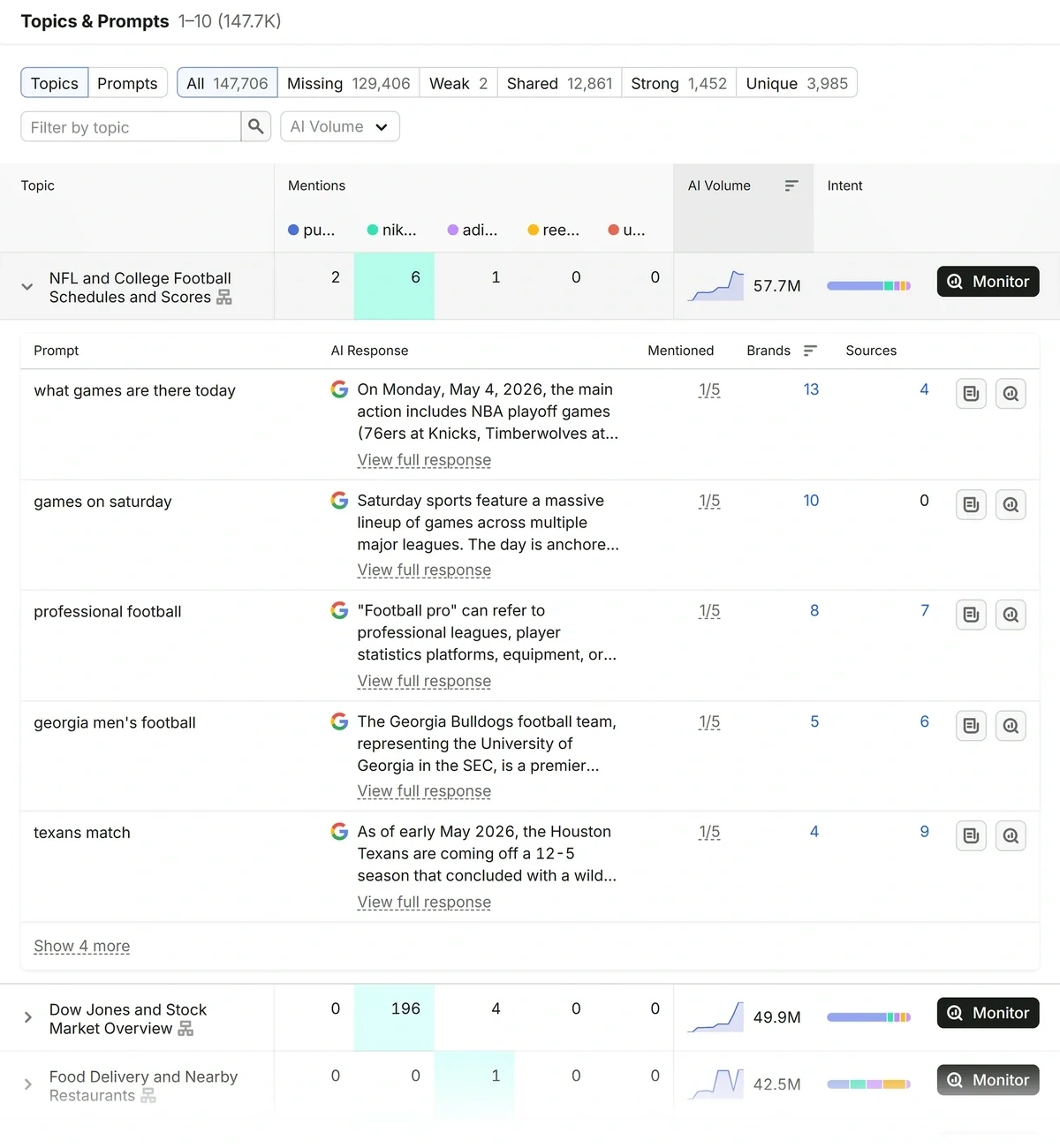
Add each competitor’s top organic and paid keywords as well as AI prompts to the Marketing Strategies column in your spreadsheet.
You should also make some time to visit each competitor’s blog. Note how frequently they’re publishing content and the type and length of content they’re sharing. Include all of these details in your sheet as well.
As for social media, I recommend taking a look at all your competitors’ profiles. In your spreadsheet, list which platforms they’re on and make a note of any particular campaigns or engagement strategies they’re using (posting customer features on Fridays, for example).
My last suggestion is to subscribe to your competitors’ email newsletters. It’s an easy way to deliver insights on their marketing strategies straight to your own inbox. In your competitor analysis spreadsheet, note details like how frequently they send emails and the type of content they include (more specifically, what value do their newsletters provide?).
For all the channels your competitors use, consider not only what they’re saying but how they’re saying it. What’s their messaging? What is their brand persona? How do they position themselves in your market?
Step 6: Search Out Market Trends
Your spreadsheet’s probably starting to look pretty full now, but there are a couple of other elements still to consider.
Staying on top of market trends gives you a competitive edge. Using Exploding Topics, you can find trending keywords and products before they take off so you can take advantage of them as an early adopter.
The Exploding Topics Trends Database is an easy starting point. You can browse by category and use the filters to narrow down the results.

I especially like looking at related trends for each topic, which can show you more specific trends in your niche.
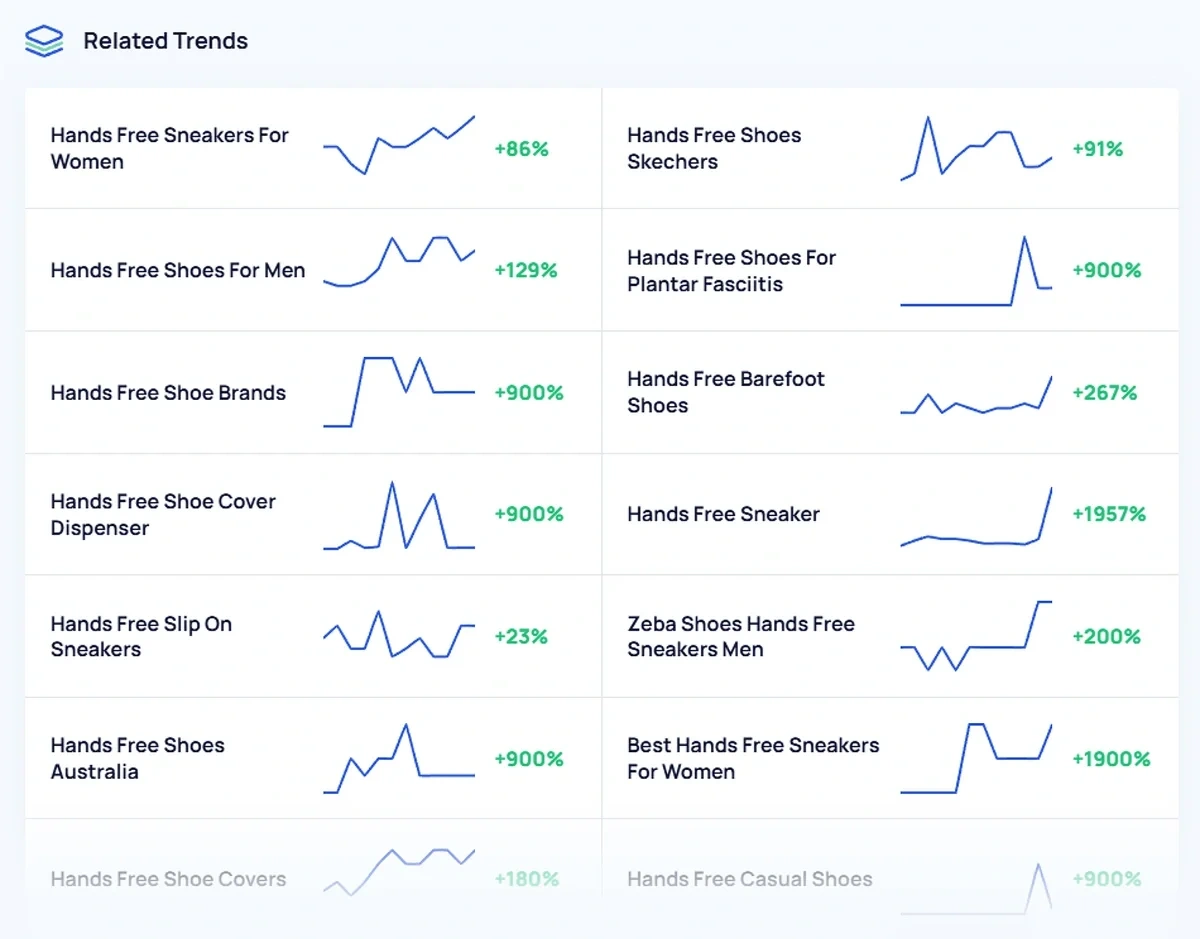
When you analyze market trends, check in with your competitors to see how they’re responding to these shifts in the market (if at all). This is another great way to spot gaps you can fill to position yourself as a unique solution to customers’ problems.
Step 7: Spot Competitive Gaps
The last column in your spreadsheet is the result of all the work you’ve done up to this point. You’ve gathered all the information you can about your competitors’ places in your market and how they’re appealing to shoppers, and now you can compare that to your own approach to find opportunities to act on.
A competitive gap is an area where your competitors have left a market need unmet in some way. This can apply to any of the areas you’ve analyzed so far: your target audience, value propositions, marketing strategies, and current market trends.
The more overlap you can create, the greater the opportunity the competitive gap provides. For example, if one of your competitors targets male shoppers more than female shoppers and also doesn’t offer any products related to the hands free sneakers trend, developing hands free sneakers for women could be a way for you to capture customers who can’t find what they want on your competitor’s site.
This process should work both ways, though. In addition to noting competitive gaps you can fill, identify any competitive gaps you’ve left for your competitors to fill. You might think of the former as “strengths” and the latter as “weaknesses” in a traditional SWOT analysis.
The end results should be a list of actionable ideas you can review in more detail to determine how viable they are.
Find Your Place in the E-commerce Ecosystem
When you’re competing with thousands of other sellers for shoppers’ attention, you need data to back your decisions and help you stand out from the crowd. A complete e-commerce competitive analysis is the best way to understand how you stack up against your competition.
Fortunately, tools like Semrush and Exploding Topics give you easy access to the information you need. From discovering who your top competitors are to understanding their marketing strategies, the foundations of your competitive analysis are just a few clicks away.
Not using Semrush or Exploding Topics Pro yet? Both offer free trials to get you started. Try them today to find what makes your brand unique and start leveraging your position in your niche to grow your e-commerce business!
Stop Guessing, Start Growing 🚀
Use real-time topic data to create content that resonates and brings results.

Exploding Topics is owned by Semrush. Our mission is to provide accurate data and expert insights on emerging trends. Unless otherwise noted, this page’s content was written by either an employee or a paid contractor of Semrush Inc.
Share
Newsletter Signup
By clicking “Subscribe” you agree to Semrush Privacy Policy and consent to Semrush using your contact data for newsletter purposes
Written By


Molly is a technical content writer with a passion for making technology easy for anyone to understand. She specializes in content... Read more