Exploding Topics
Remineralizing Gum search volume grew from under 100 to 27,100 monthly searches between February 2024 and January 2026.
Remineralizing gum
+5100%
GLP 1 Supplement search volume grew from 5,920 to 74,000 monthly searches between February 2024 and January 2026.
GLP 1 supplement
+1150%
Soursop Bitters search volume grew from 9,900 to 110,000 monthly searches between March 2024 and February 2026.
Soursop bitters
+1011%



Get Advanced Insights on Any Topic
Discover Trends 12+ Months Before Everyone Else
How We Find Trends Before They Take Off
Exploding Topics’ advanced algorithm monitors millions of unstructured data points to spot trends early on.
Keyword Research
Performance Tracking
Competitor Intelligence
Fix Your Site’s SEO Issues in 30 Seconds
Find technical issues blocking search visibility. Get prioritized, actionable fixes in seconds.
Powered by data from
Latest Blog Posts
Featured Case Studies
See what's trending before everyone else
Each week, we'll send you our best Exploding Topics. Plus, expert insight and analysis.
How to Use Exploding Topics for Rapid Competitive Product Analysis

 Add Exploding Topics on GoogleAdd Exploding Topics as your preferred source to see more of our stories on Google.
You’ve probably felt it before—that sinking feeling when you see a competitor’s product launch announcement and realize they beat you to it. Maybe their new offer wasn’t even something on your radar, and now there’s a huge gap in your lineup.
It’s tempting to act fast and try to put out something comparable as quickly as possible, perhaps even directly copying the new product just so you can say, “We have that, too!”
It might make you feel better in the short term, but in the long run, there’s no strategic advantage to rushing an unplanned product out the door. Instead, take a deep breath, then dive into some competitive product analysis to find out how to create an offer that is everything your competitor has, plus what they missed in the planning stage.
The One-Hour Competitive Response Framework
A streamlined, reliable system for responding when a competitor launches a new product first removes panic from the situation so you can think clearly and make a smart decision, not just a fast one.
The competitive analysis process I’ve outlined in this post can be completed in 60 minutes. I recommend trying it out when you’re not under pressure first, so you can make any tweaks needed and familiarize yourself with the steps.
The only thing you need before you get started is an Exploding Topics account. I use the Pro plan, but you can test drive the framework with the free version.
Step 1: Reverse-Engineer Your Competitor’s Position (15 Minutes)
If you're doing an E-commerce competitive analysis, the first thing you need to do is better understand your competitor’s current positioning.
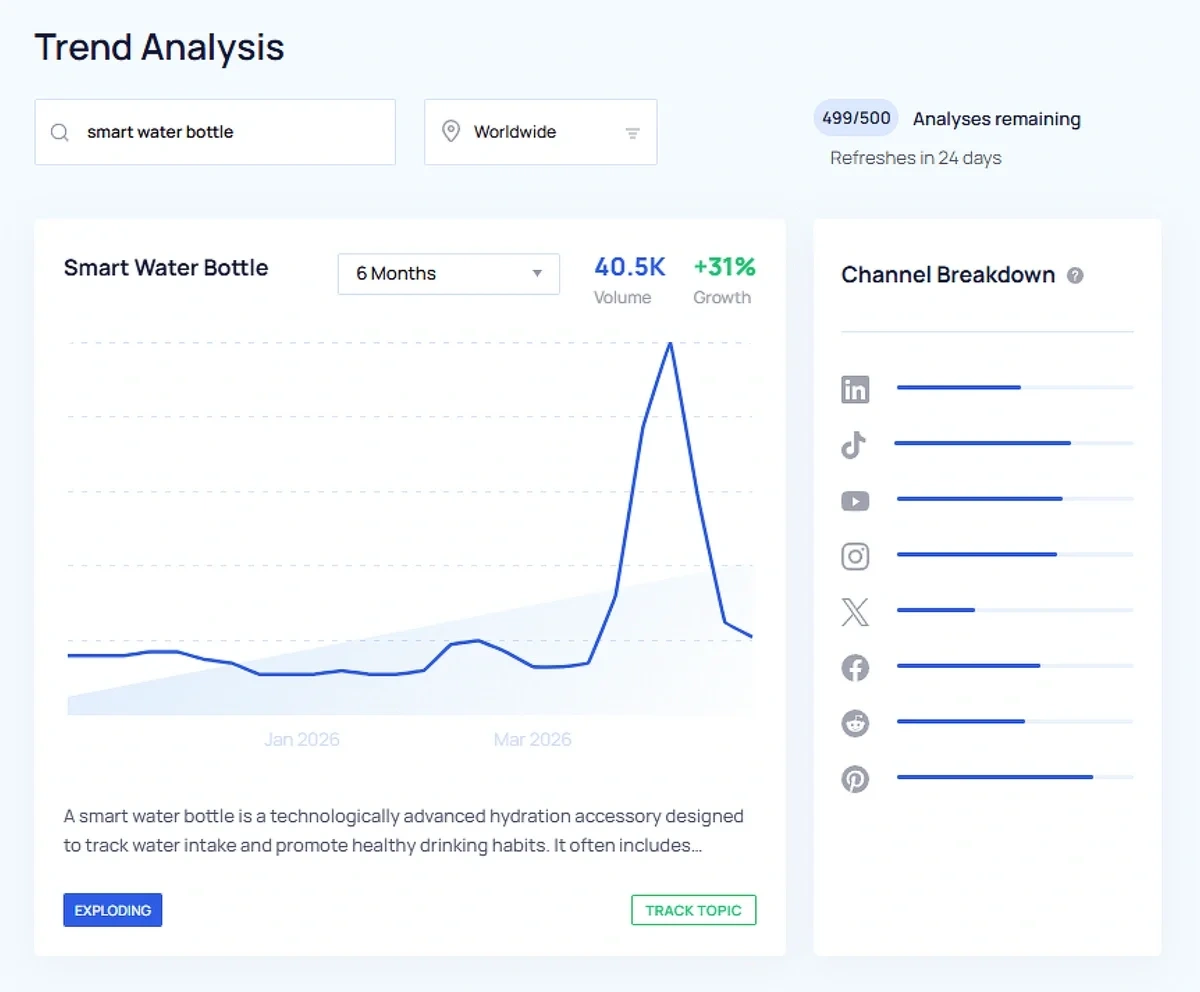
In Exploding Topics, go to the Trend Analysis tool and type in the main category for your competitor’s new product. For my example I’ll use “smart water bottle.”
Set the timeframe filter to six months. This will give you an idea of how the topic was growing during your competitor’s planning and production stage.
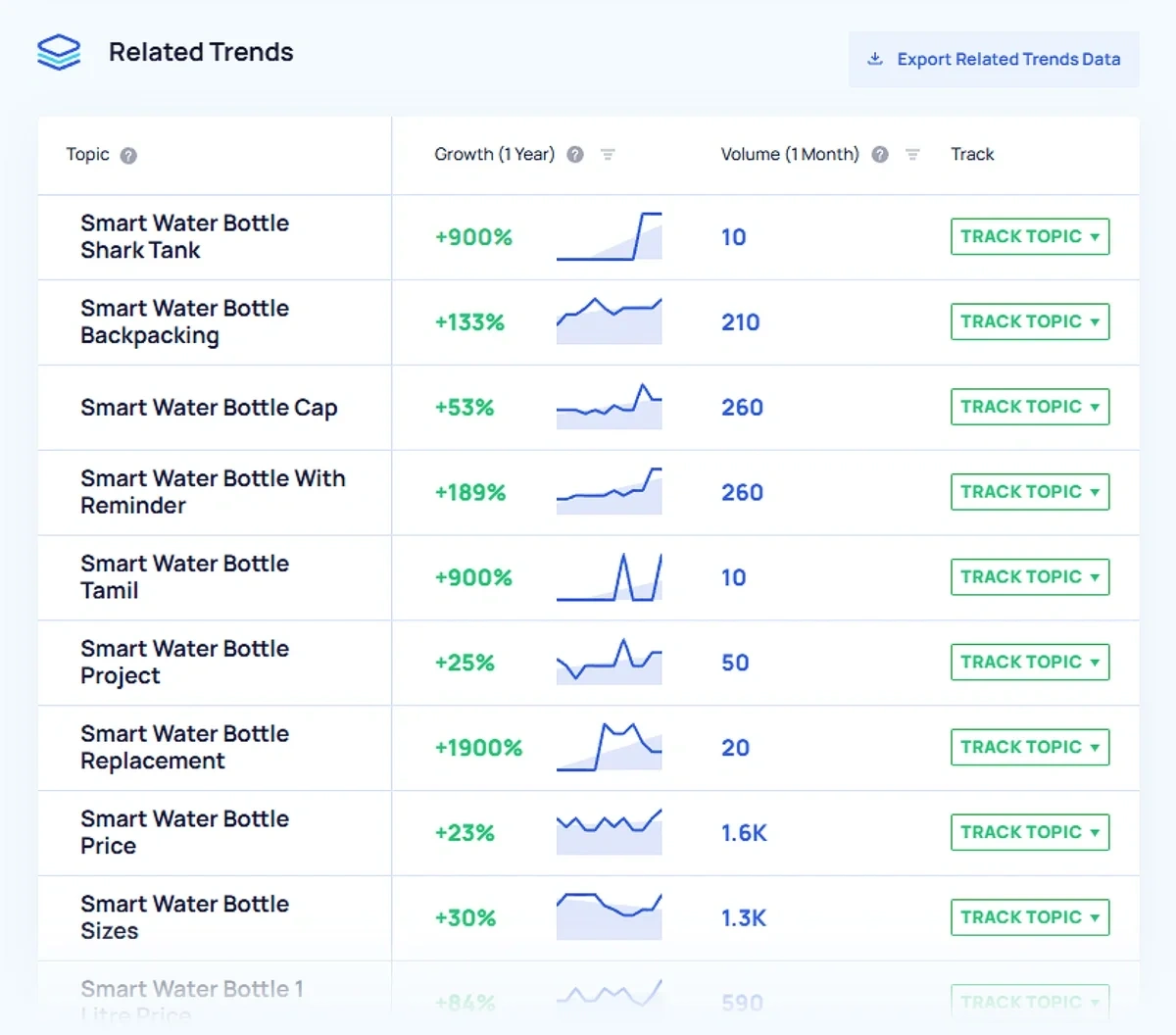
Next, scroll down to the related trends section and sort the trends by growth.
Then export the related trends to a spreadsheet.
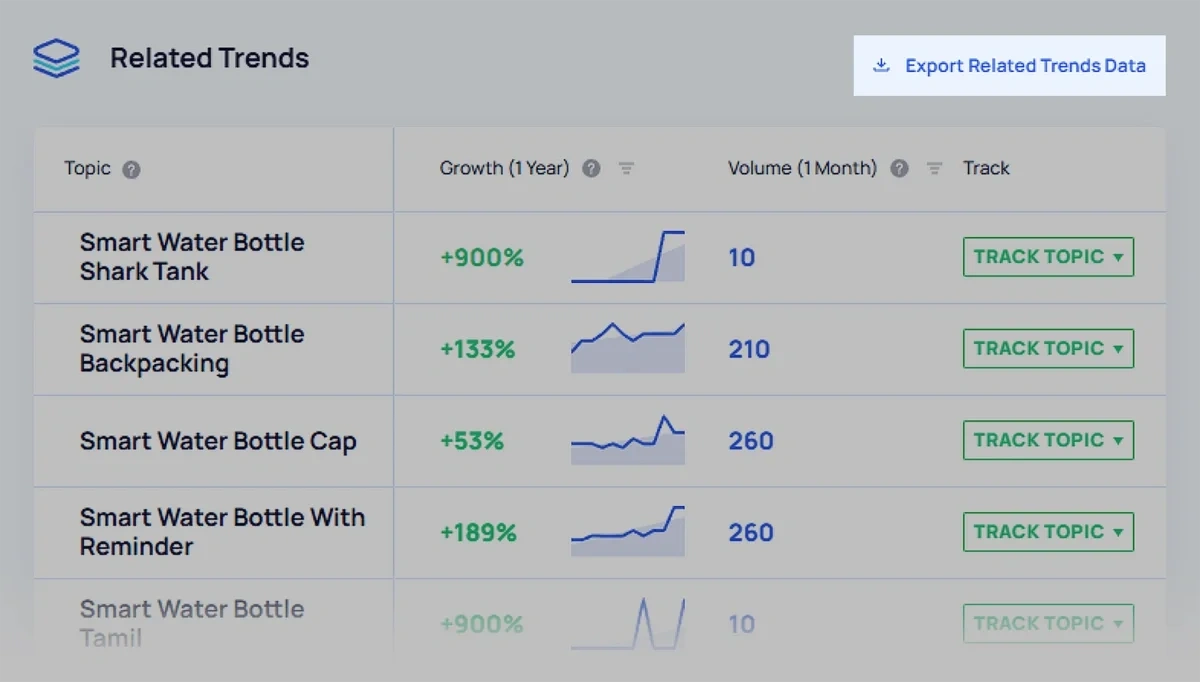
This will make it easier to filter out branded and irrelevant topics. Once you’ve done that, look at the remaining trends and see if you can spot any patterns. For example, there are several related trends for “smart water bottle” that reference backpacking, which is likely a popular use case.
After you’ve identified relevant related trends, search each of them and look at their trend curves, just like you did for your main search. What did their growth look like six to nine months ago, when your competitor was working on their product design? Could any of these trends have influenced their decision making?
To help with this, look at your competitor’s product page. Read the copy and note down any keywords that are related to trending terms you’ve found. If there are terms that stick out that aren’t already on your list, look them up in Exploding Topics and analyze their growth curves as well.
Once you’ve gathered all this information, create a new spreadsheet with three columns:
- Terms your competitor is targeting (must be in the copy on their product page)
- Terms that were trending when your competitor was working on their product that are now declining (found in related trends and/or on the product page)
- Terms that are trending now that your competitor likely didn’t see during their research (found in related trends and currently experiencing significant growth)
This sheet gives you insight into your competitor’s mindset prior to launching, and also starts to show you the gaps they left when they created their product.
Step 2: Search for Gaps in Your Competitor’s Strategy (20 Minutes)
Once you’ve filled in your spreadsheet, take a look at the trends you’ve collected and see if you can spot any that indicate a gap in your competitor’s strategy.
In short, you’re looking for trends that indicate there are untapped market segments your competitor hasn’t made an effort to appeal to. This can show up in a variety of ways, such as pricing, use cases, or customer service and delivery.
Some keywords you might look out for during this stage are “affordable,” “luxury,” “easy,” “beginner,” and “expert.” These all immediately signal a specific target market that’s actively looking for the product you’re researching.
However, there are more subtle ways gaps can show up, too.
Let’s expand on our hypothetical smart water bottle scenario. Perhaps my competitor has positioned their smart water bottle as an essential for athletes like marathon runners and crossfitters.
As I noted earlier, there are several related smart water bottle trends for backpacking and hiking. These would be use cases my competitor overlooked, and an opening for me to step in and market my own product toward backpackers and hikers looking for a smart water bottle.
[cta:comp_keywords]
Step 3: Find Differentiation Angles (15 Minutes)
Next you need to look at your spreadsheet and identify attribute trends, meaning that they are related to product features. Ideally, they’ll be from the column of trends that are taking off now that weren’t growing as much six months ago when your competitor was researching.
Incorporating these trends into your product design will give you a unique edge over your competitors and provide a tangible benefit to consumers who choose your product over theirs.
Using the Trend Analysis tool, search each of these topics and look at their related trends.
For example, I looked into “smart water bottle with reminder” and found “light up water bottle reminder.”
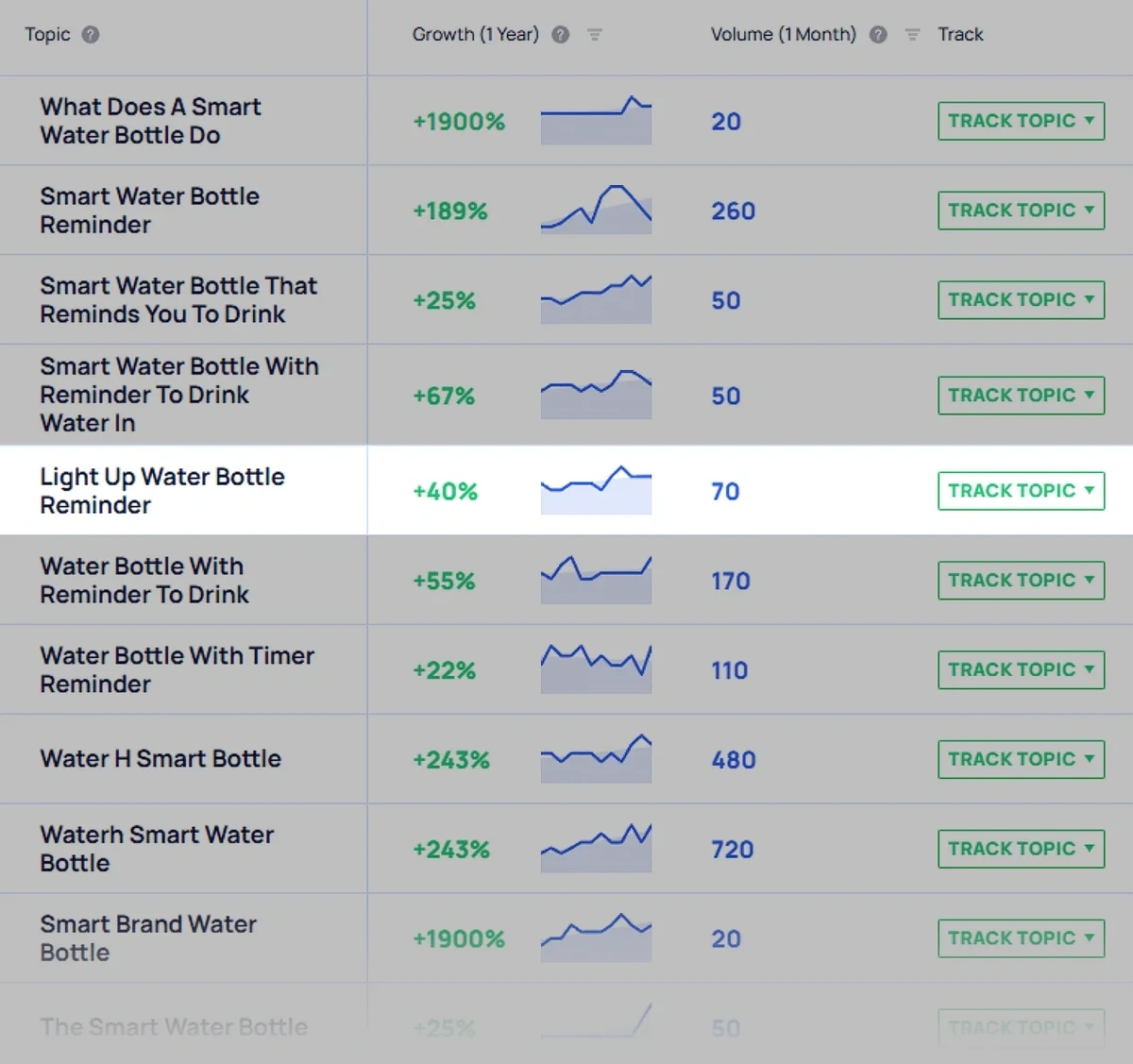
If my competitor’s product did have a reminder feature, but it didn’t include an indicator light, that would be an important gap to note and potentially incorporate into my own product design.
For each of these micro trends you identify, check the growth curve (if one is available). Trends with regular or exploding growth are preferable. Any trends that have peaked should be discarded.
Other strong signals include:
- Multiple related searches, which indicates there’s true demand for the trend
- The presence of branded terms, which indicates a maturing niche, not a flash trend
Repeat this process until you have five to ten differentiation angles. Not all of these will be viable to pursue, but ideally you’ll find a handful that have high growth momentum and are reasonable to implement from a production standpoint.
Step 4: Time to Market Assessment (10 Minutes)
At this point should have a handful of competitive gaps and differentiation points that you can combine to put out a product that is unique and not just a rip off of your competitor’s. But a strong idea is just the start. You also need to think about logistics.
Use the last ten minutes of your product analysis to do a quick time to market assessment. For the product or products you’ve brainstormed based off of your research, consider:
- The product development timeline
- Supplier availability
- Content creation needs (product page, announcement post for your blog, etc.)
- Advertising budget
Taking all of these factors together, put together a rough estimate of how long it will take you to launch.
Then go back to the trend analysis for the topics related to your product idea. Check your estimated launch timeline against the trend’s growth.
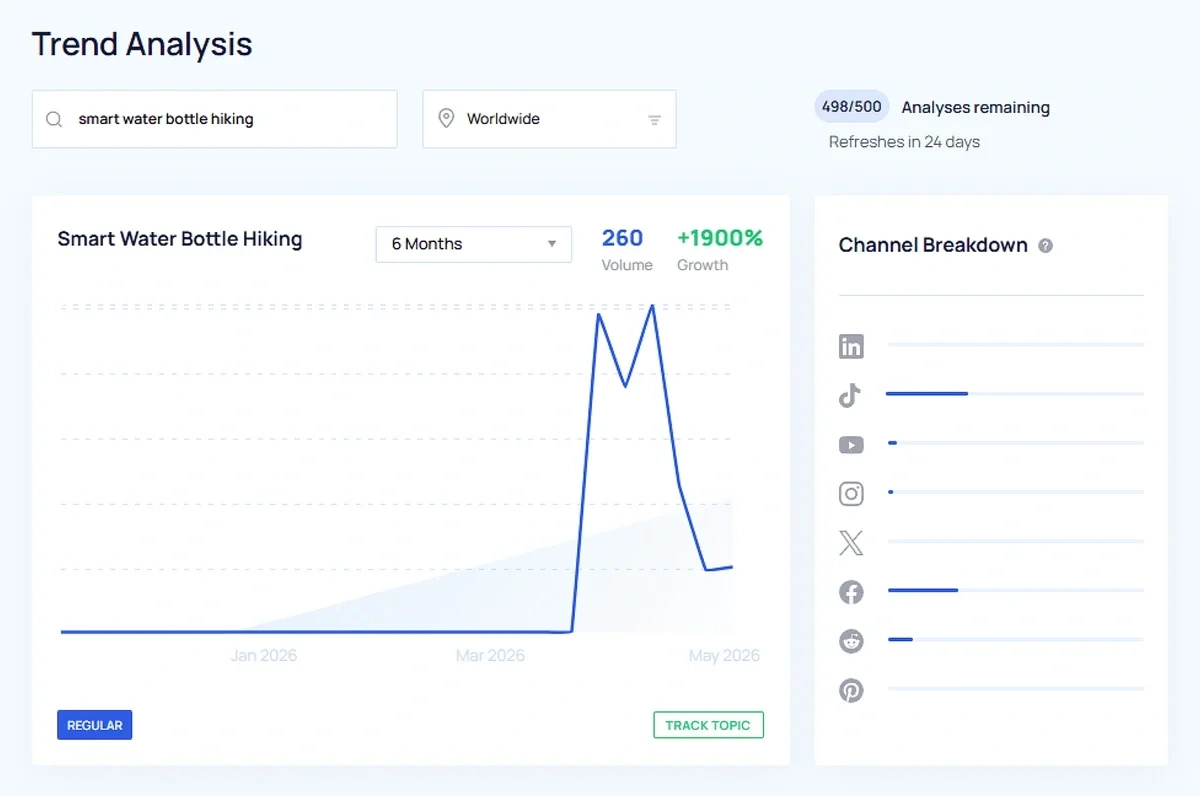
If it looks like a trend will peak before you can get your product on the market, adjust your idea accordingly. Ideally, you’ll see steady, sustainable growth and can count on it to continue while you bring your vision to life.
Build a winning strategy
Get a complete view of your competitors to anticipate trends and lead your market
Red Flags in Competitive Product Analysis
Sometimes it might be better to pass on launching a product in response to a competitor if there are certain indicators that it’s not a smart move strategically.
Feeling like your competition has outpaced you might cause you some difficulties in the short term, but investing time and resources into a product no one will buy is a mistake that could have long term impacts.
Here are some things to watch out for during your analysis that indicate it’s probably in your best interest to pass on developing a new product in response to your competitor’s launch:
- The trend has already peaked. If Exploding Topics is indicating that the trend has already reached the height of its growth curve, your competitor is late to the game. This space is likely highly competitive, and consumer interest is waning.
- There are few or no related trends. If there isn’t a healthy network of meta trends built around a product, interest is more likely an isolated event, not a true movement toward adopting the product.
- Trending brands are primarily major enterprises. If most of the brand names coming up in the related trends section are household names, smaller companies are going to have a harder time breaking into the space. Assess the barrier to entry carefully.
- The product contradicts your existing brand positioning. Even if a product is seeing massive growth, if it doesn’t fit in with your current messaging, your customers aren’t likely to buy into it. Make sure it’s appealing to your target market.
In short, don’t launch a product simply because your competitor has something comparable. Put all the same consideration into it as you would if you were developing a new product from scratch.
Launch First With Exploding Topics
The only thing better than a one-hour competitive product analysis framework is spotting emerging products before your competitors in the first place. Exploding Topics curates trends based on a unique blend of machine learning and human analysis to help you find relevant ideas for your brand while they’re still growing.
If you want to level up your trend spotting, you can use the Exploding Topics API to create a trending product alert system. Deliver the hottest product ideas to your Slack channel or another preferred platform to find opportunities without lifting a finger.
All you need is an Exploding Topics Pro plan. Try it free for seven days and see how it changes product development for your brand!
Stop Guessing, Start Growing 🚀
Use real-time topic data to create content that resonates and brings results.
Exploding Topics is owned by Semrush. Our mission is to provide accurate data and expert insights on emerging trends. Unless otherwise noted, this page’s content was written by either an employee or a paid contractor of Semrush Inc.
Share
Newsletter Signup
By clicking “Subscribe” you agree to Semrush Privacy Policy and consent to Semrush using your contact data for newsletter purposes
Written By


Molly is a technical content writer with a passion for making technology easy for anyone to understand. She specializes in content... Read more