Exploding Topics
Remineralizing Gum search volume grew from under 100 to 27,100 monthly searches between February 2024 and January 2026.
Remineralizing gum
+5100%
GLP 1 Supplement search volume grew from 5,920 to 74,000 monthly searches between February 2024 and January 2026.
GLP 1 supplement
+1150%
Soursop Bitters search volume grew from 9,900 to 110,000 monthly searches between March 2024 and February 2026.
Soursop bitters
+1011%



Get Advanced Insights on Any Topic
Discover Trends 12+ Months Before Everyone Else
How We Find Trends Before They Take Off
Exploding Topics’ advanced algorithm monitors millions of unstructured data points to spot trends early on.
Keyword Research
Performance Tracking
Competitor Intelligence
Fix Your Site’s SEO Issues in 30 Seconds
Find technical issues blocking search visibility. Get prioritized, actionable fixes in seconds.
Powered by data from
Latest Blog Posts
Featured Case Studies
See what's trending before everyone else
Each week, we'll send you our best Exploding Topics. Plus, expert insight and analysis.
How I Created a Daily Market Research Routine (15 Minutes Per Day)

 Add Exploding Topics on GoogleAdd Exploding Topics as your preferred source to see more of our stories on Google.
Market research provides key insights for product development, content marketing, and other aspects of business. Making time for it isn’t always easy, though, and neither is keeping up with everything you learn and acting on it in a timely manner.
What if rather than slogging through data for hours, you could build a simple, 15-minute daily routine that becomes a functional database of trends and helps you identify patterns that can grow your business?
More time spent doesn’t necessarily mean better results, and when it comes to market research, consistency carries you far. The daily market research routine I’ve outlined in this post will help you stay disciplined without burning out, and only gets better the more you use it.
The 15-Minute Daily Market Research Routine
Each step of this market research routine should only take one or two minutes. Initially it might take you a bit longer as you learn how to quickly make decisions and spot opportunities, but over time you’ll be able to complete the steps faster.
But first, let’s make sure you’re set up for success.
Market Research Routine Prep Work: Before You Start
Market research has many facets, all of which are important. The daily routine presented below is focused on understanding consumer interests and the problems people are trying to solve.
In order to make this system as effective as possible, there’s a bit of background research you’ll want to do first.
For starters, it’s important to find your niche. Your daily market research might help you narrow this down, or introduce you to sub-niches, but you need a high-level understanding of what your business provides.
Similarly, you need to know who your business serves. If you have buyer personas, they will help guide your research and give you a better understanding of how trending topics relate to your customer base.
I also recommend identifying your top competitors. Again, you’ll likely discover some in your daily research, but being aware of at least some of them beforehand will help guide you in your early decision making.
Additionally, consider a few decisions about your routine. Choosing a set time of day to do your research will help you stay consistent. First thing in the morning, right after your lunch break, or as your last task of the day are all good places to slot market research into your schedule.
You also need a system for recording the findings of your research. I prefer a spreadsheet, but the format is really up to you. Just make sure you date each entry and it’s easy to refer back to.
Finally, Exploding Topics Pro is a key tool in the routine I’m about to lay out. It’s an excellent market research tool for spotting early trend growth and watching consumer interest. If you don’t have a plan already, the free version is a great way to learn the basics.
Step 1: Trend Awareness
Once you’re ready to sit down and begin your daily market research routine, the first step is to get a lay of the land and assess how in tune you are with trending topics in your niche.
Open up the Exploding Topics database and select a category that’s relevant to your niche. (You can pick different categories each day, but you’ll only look at one category per session.)
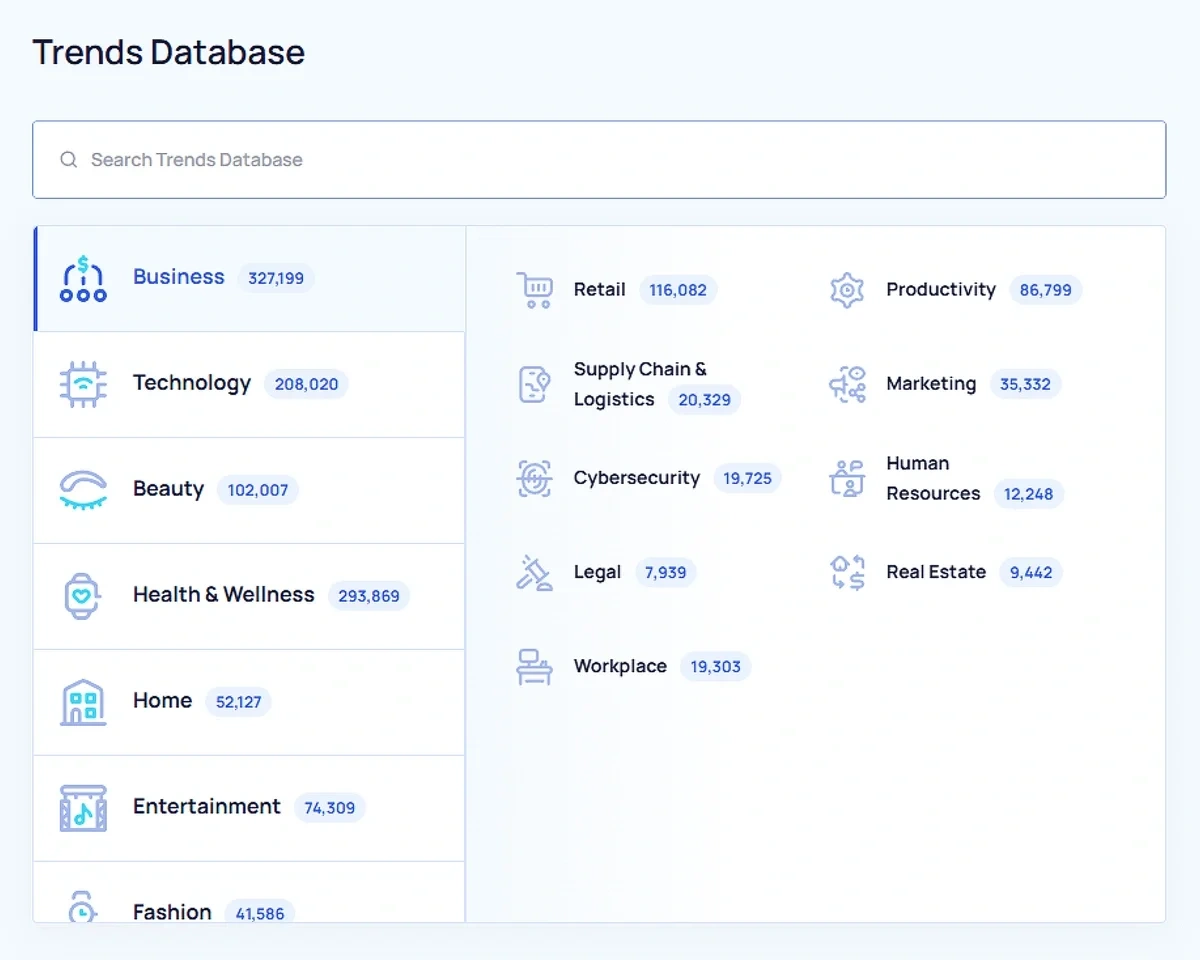
Then set the filters to the following:
- Sort by Growth to see trends with increased consumer interest.
- A timeframe of 6 months provides time to show consistent growth, but still focus on fresh topics.
- Keep Growth set to All to see topics at a variety of growth stages.
- Search Brands + Non-Brands to see trending topics as well as potential competitors.
- Set Volatility to Stable to see topics experiencing steady growth.
Then all you need to do is skim the results.
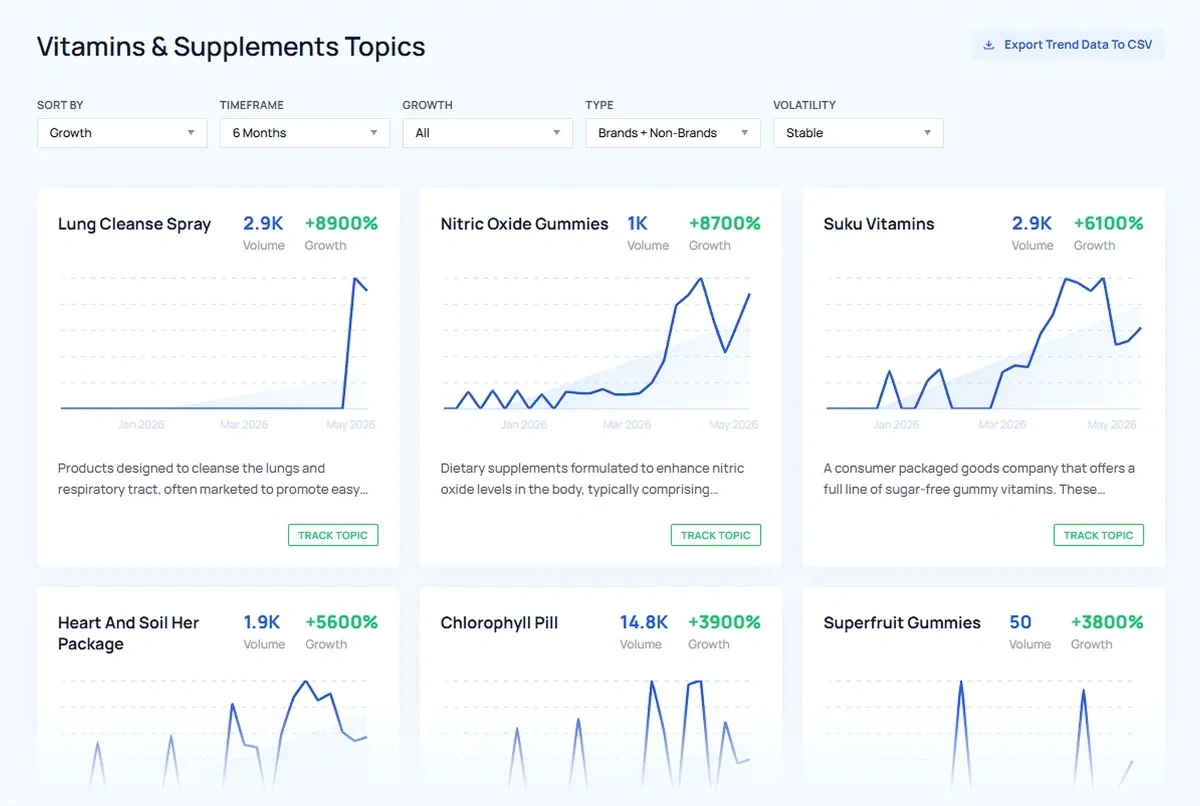
You’re looking for topics that sound familiar, brand names you recognize, or any patterns that stand out. The idea is to get a feel for how well you already know what’s trending in your niche.
Step 2: Flag 2–3 Topics for Follow Up
After you’ve scrolled through the results for a bit, start to look for topics you want to research in more detail. The formula here is Relevance + Surprise.
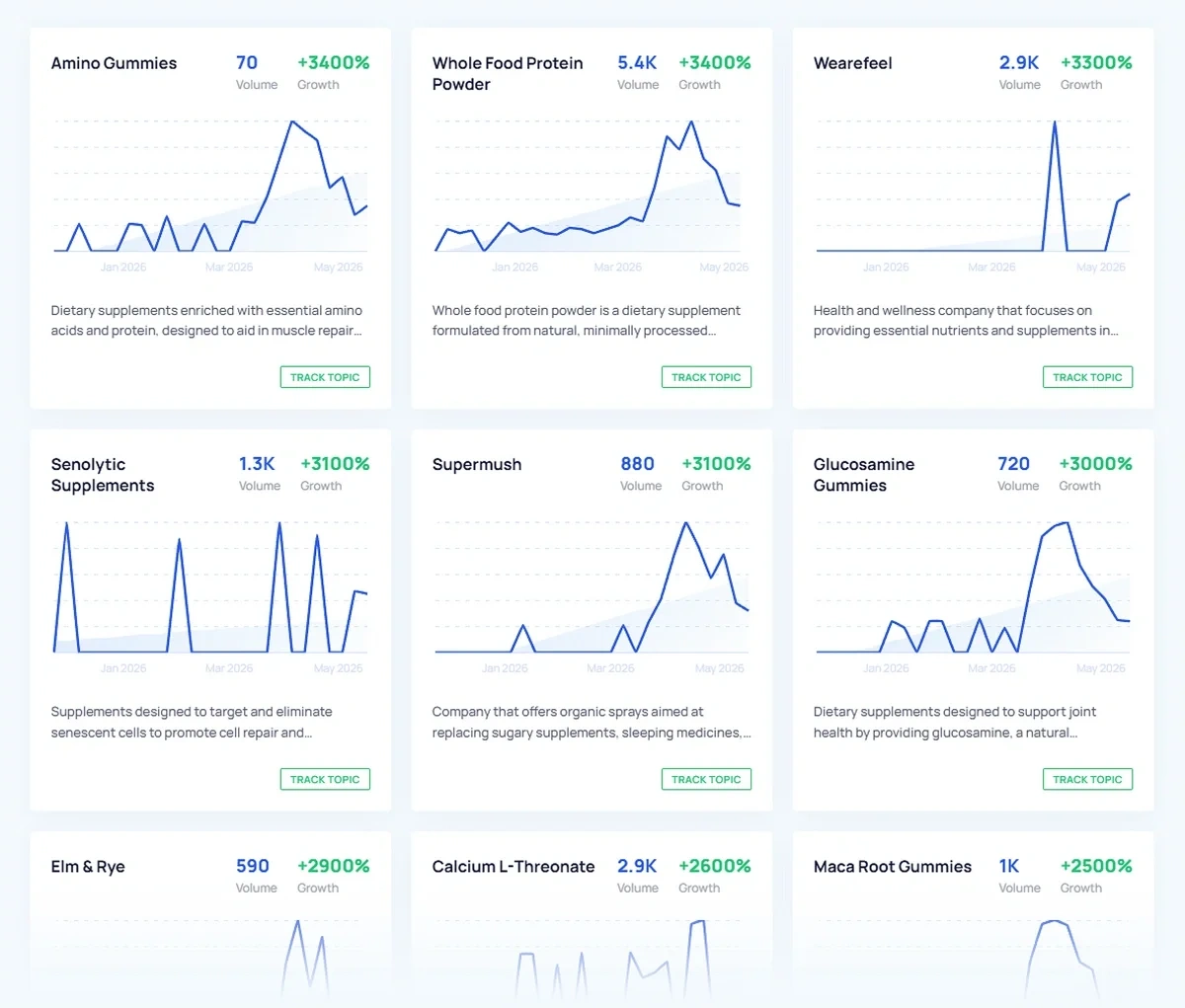
Relevance refers back to your target audience. Do any of the topics relate to a problem your customers are facing?
Surprise is exactly what it sounds like. Are there any topics that stick out to you, either because you’ve never heard of them or because they seem unexpected? That might also be the case for customers.
Flag two or three topics you’re interested in. You’ll only focus on one today, but you can come back to the other one tomorrow if it still stands out to you (another advantage of a daily routine!).
Step 3: Focus in on One Topic
Once you’ve narrowed in on a specific topic, click on it to see more details. First, check the summary and assess if the trend is relevant to your customers.
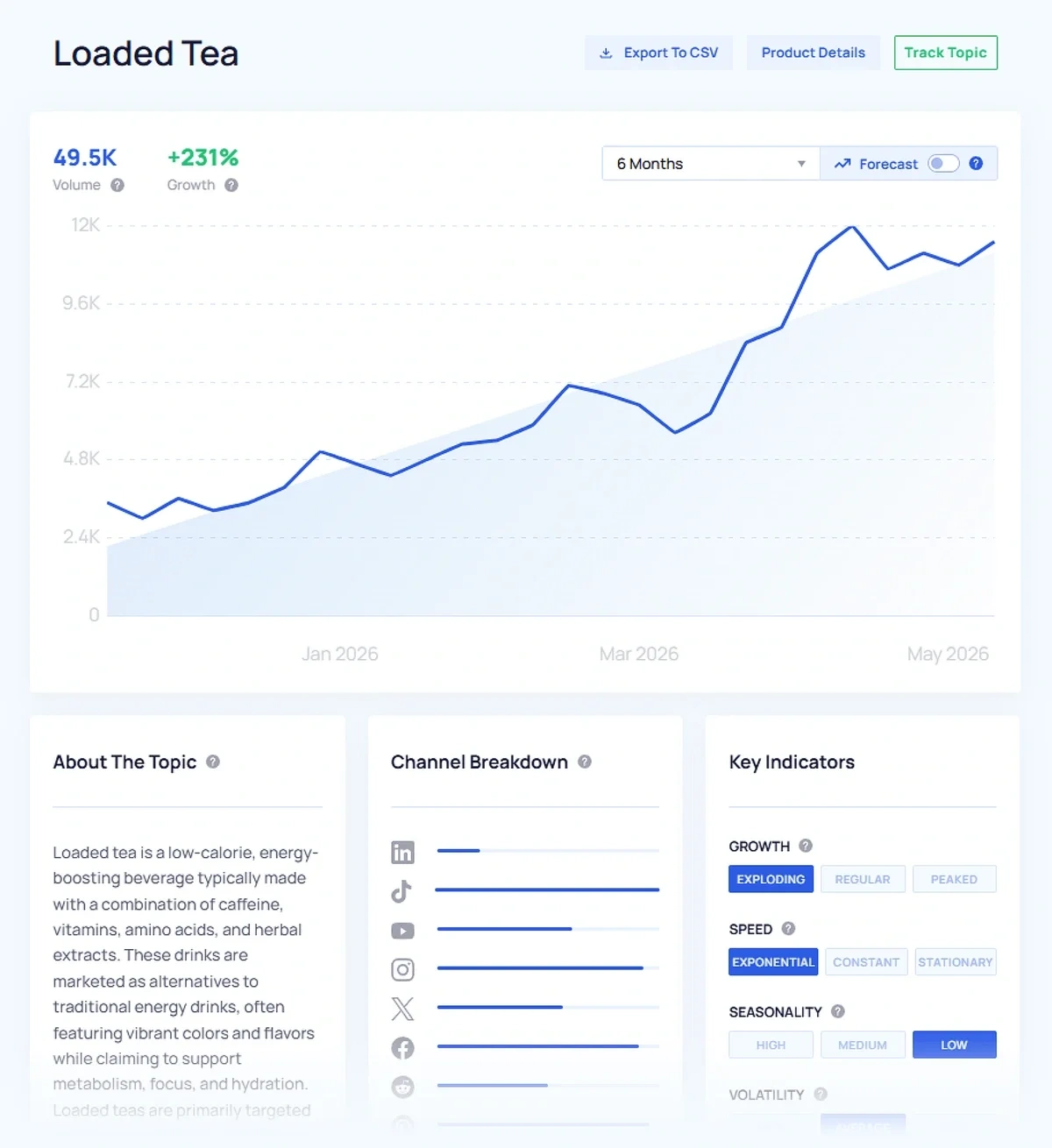
Ask yourself questions like, “does this solve a problem for my audience?” or “does this provide unique information related to my niche?”
You also need to look at the growth curve. This will give you insight into the trend’s potential.

Ideally, you want the trend to have steady growth, but not to have reached its peak yet.
Step 4: Analyze Meta Trends
Next, scroll down and look at the related trends section.
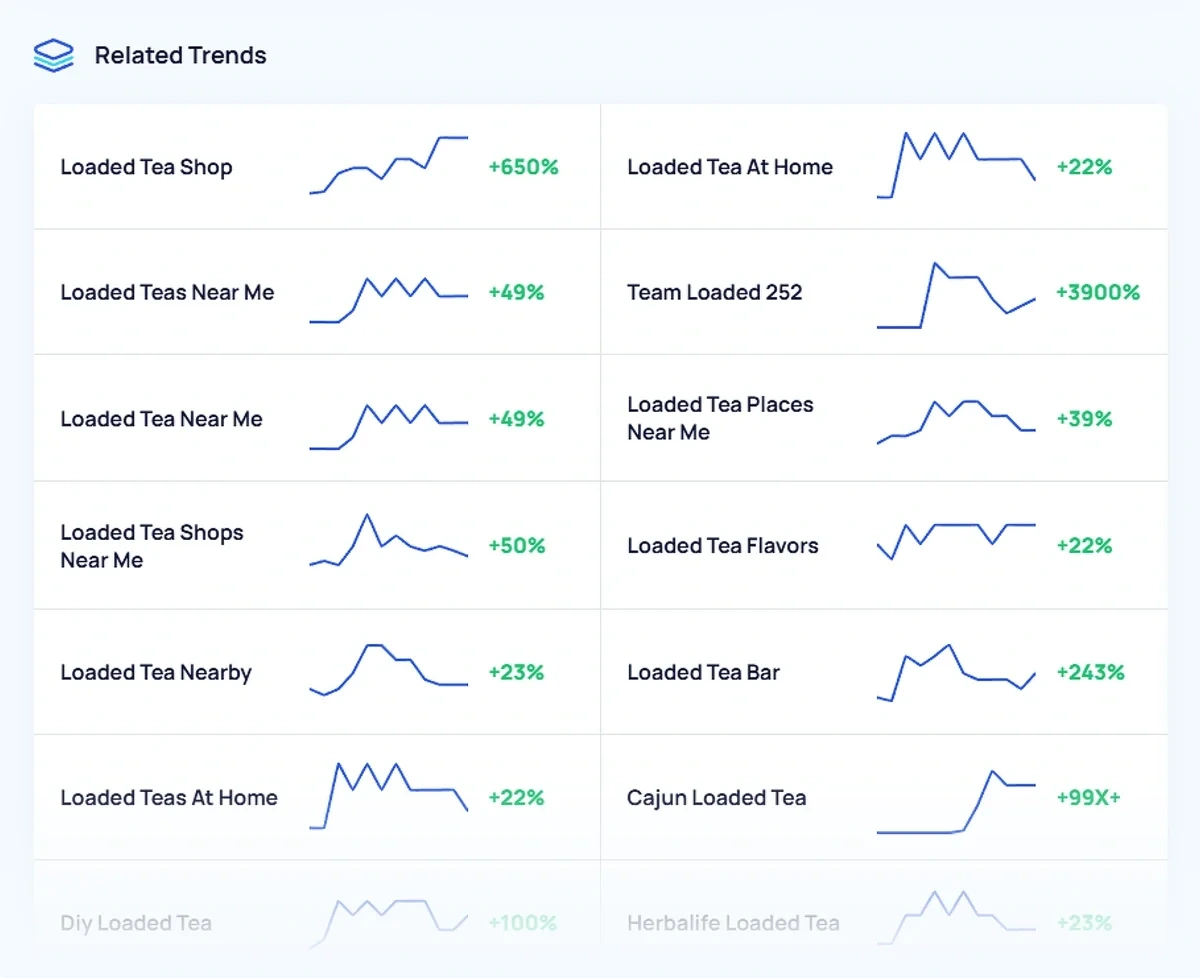
Look for any common denominators in the trends that give you insight into consumers’ mindsets. What about this trend is interesting? What conclusions can you draw based on this group of trends?
Make note of any patterns that stick out to you so you can consider them later when you take action.
Step 5: 60-Second Brainstorm
If you’re anything like me, this next part might be challenging. It’s time to brainstorm the practical application of the trend you’re researching for your brand, but it’s important not to get too sucked into the process. If you need to, set a timer to hold yourself accountable.
The idea is to spend about a minute jotting down your initial thoughts. Is this trend a product you could sell or promote? What steps will be required to bring that about?
Maybe this topic would attract organic traffic if you published content about it on your blog. Try drafting a headline, a call-to-action, or a one-sentence brief.
The purpose of this exercise is to determine how practical it is for you to pursue this topic. You don’t need a fully fleshed out idea yet, just some high-level possibilities to help you categorize this trend in Step 7.
If you don’t come up with anything in the allotted time, that’s okay. Move on to the next step, but keep this in mind in the coming steps.
Step 6: SERP Assessment
If you didn’t come up with any ideas during your brainstorm, this step might help solidify whether this trend is a good investment for you.
Search the topic in Google and give the results a quick skim. Look for:
- Any major brands that appear. If they’re not already on your list of competitors, consider whether they should be.
- The types of content that come up. Is it mostly blog posts or landing pages, forums or video content?
- Existing products that are for sale. Does the market seem saturated, or is there opportunity for you to throw your hat in the ring?
The goal for this step is to understand how well-established this trend is and areas of opportunity for your brand to capitalize on its growth. Like the brainstorming step, it’s important not to get too sucked into this process. If you need to, save search results for more in-depth follow up later.
Step 7: Categorize Topics by Action
Now it’s time to make a decision. This step might take practice, but the more you repeat your routine, the better you’ll get at making quick and confident decisions.
Considering the data from Exploding Topics, your brainstorm session, and your SERP assessment, categorize the trend as one of the following:
- ACT: This trend clearly presents an opportunity for your brand, and competition isn’t so high as to create a barrier to entry.
- WATCH: Flag this trend for follow up in another week or two. Maybe your brainstorm was unsuccessful, your SERP assessment was inconclusive, or growth is slower than you would like.
- PASS: The trend isn’t a good fit or is too competitive. No further action to be taken.
Stick to “ACT” or “PASS” as much as possible. It can be easy to label everything “WATCH” so you don’t have to firmly commit to pursuing the topic or not. “WATCH” should be reserved for topics you really think might have potential, but that aren’t ready to act on yet.
Step 8: Review and Plan
There’s one final step in your market research routine. Once a week (I prefer Fridays, but Mondays work well too), look back through your recent entries for any patterns.
For example, take notice if you’ve flagged several related trends for action. This might indicate an increase in interest around this topic for your audience, which you may want to explore further outside of your regular market research routine.
This information can also inform your future decisions during your daily market research routine. You might see more potential in topics that you would have overlooked before, or pass on topics that don’t solve problems for your customers.
The point of this exercise is to keep your routine adaptable. Repetitive habits have their pros and cons, and one of the drawbacks is that it’s easy to go on auto-pilot. Stepping back and periodically looking at the bigger picture keeps your routine from becoming stale.
Making Your Market Research Routine Part of Your Strategy
That’s it for your daily market research routine. All eight steps should only take you about fifteen minutes, especially after you’ve practiced it for a while and get better at being decisive and spotting potential.
Outside of your daily routine, there are a few other things you need to take care of. First and foremost, you need to follow through on your ACT and WATCH lists.
Add trends you’ve labeled “ACT” to your project management app, content calendar, or whatever tool you use to keep track of tasks that need to be completed. Don’t let them disappear into the void! Make sure they’re assigned and have due dates.
For trends labeled “WATCH,” I recommend setting some kind of reminder to go back to Exploding Topics and see how the trend’s growth has changed. At the end of the follow up, decide if you’re going to ACT or PASS on the trend.
Something else to consider is additional refinement of your research process. A good way to start is by adding monthly and quarterly pattern analysis to your calendar. Just like your weekly check-ins, this is a chance to get a higher-level view of the trends you’ve been looking at.
Lastly, it’s important to measure the results of any trends you act on. For example, if you publish a blog post about a topic you found during your market research, make sure to track its organic traffic, search rankings, and any other metrics that are important to you.
Add these details to your notes and keep them in mind going forward. What worked out for you and what flopped?
Enjoy Easier Market Research With Exploding Topics Pro
A key factor in keeping your daily market research routine streamlined and efficient is having the right tools on hand. Exploding Topics Pro uses a unique combination of machine learning and human analysis to provide the most up to date growth metrics alongside insightful context.
You can check out Exploding Topics for free, and try Pro for seven days to experience how it can make a difference in your market research process.
Stop Guessing, Start Growing 🚀
Use real-time topic data to create content that resonates and brings results.

Exploding Topics is owned by Semrush. Our mission is to provide accurate data and expert insights on emerging trends. Unless otherwise noted, this page’s content was written by either an employee or a paid contractor of Semrush Inc.
Share
Newsletter Signup
By clicking “Subscribe” you agree to Semrush Privacy Policy and consent to Semrush using your contact data for newsletter purposes
Written By


Molly is a technical content writer with a passion for making technology easy for anyone to understand. She specializes in content... Read more