Exploding Topics
Remineralizing Gum search volume grew from under 100 to 27,100 monthly searches between February 2024 and January 2026.
Remineralizing gum
+5100%
GLP 1 Supplement search volume grew from 5,920 to 74,000 monthly searches between February 2024 and January 2026.
GLP 1 supplement
+1150%
Soursop Bitters search volume grew from 9,900 to 110,000 monthly searches between March 2024 and February 2026.
Soursop bitters
+1011%



Get Advanced Insights on Any Topic
Discover Trends 12+ Months Before Everyone Else
How We Find Trends Before They Take Off
Exploding Topics’ advanced algorithm monitors millions of unstructured data points to spot trends early on.

Keyword Research
Performance Tracking
Competitor Intelligence
Fix Your Site’s SEO Issues in 30 Seconds
Find technical issues blocking search visibility. Get prioritized, actionable fixes in seconds.
Powered by data from
Latest Blog Posts
Featured Case Studies
See what's trending before everyone else
Each week, we'll send you our best Exploding Topics. Plus, expert insight and analysis.
How to Generate Content Ideas for Thought Leadership

 Add Exploding Topics on GoogleAdd Exploding Topics as your preferred source to see more of our stories on Google.
Authenticity is the currency of content marketing, and it’s only becoming more valuable as AI’s influence continues to spread. Thought leadership features real, unique industry insights that often stem from personal experience, making it a cornerstone of any solid content strategy.
Coming up with original content ideas for thought leadership can be challenging, though, especially in a saturated field. If you’re feeling stuck, there are a few places you can look to find inspiration that is specific to your position in your niche.
What Is Thought Leadership?
Thought leadership encompasses any type of content that demonstrates an expert opinion and addresses an industry-specific need.
Some qualities of thought leadership content include:
- Authoritative: Thought leadership should show why your opinion matters and build trust with your audience.
- Counter Cultural: Pushing back against industry norms (with evidence for why it’s valuable) can create engaging thought leadership content.
- Educational: Rather than promoting a product or brand, thought leadership focuses solely on providing valuable information to your audience.
- Inspirational: Effective thought leadership content makes the audience want to act on what they’ve learned.
You can publish thought leadership content on almost any channel—your blog, your email newsletter, social media (especially LinkedIn), and even in-person events.
Keep in mind that you may need to adjust the structure of your content to fit the platform. For example, while it’s completely fine to publish a 2,000-word thought leadership blog post, you’re less likely to gain traction with a piece that lengthy in an email or on LinkedIn.
Who Should Publish Thought Leadership Content?
Thought leadership is often associated with CEOs and other executives, but anyone with experience and authority in their industry can become a thought leader.
It’s easier to write appealing thought leadership content if you have access to business information (like customer data) that you can build a narrative around. However, you can access industry data in other ways.
Can You Generate Thought Leadership Content With AI?
One of the key things that makes thought leadership content impactful is its humanity. Anyone can ask ChatGPT to “write a thought leadership piece” about a topic, but if it’s lacking a distinct spark, it won’t land with your audience.
Pure AI content of all kinds struggles to perform, but when authenticity is a non-negotiable, it’s especially important to make sure your content has some human touch, even if it’s AI assisted.
There are some ways to integrate AI into your thought leadership content creation process that are more effective than having it write your piece for you. I’ve highlighted them in the content idea generation strategies below.
Get More Search Traffic
Use trending keywords to create content your audience craves.
How to Generate Content Ideas for Thought Leadership
Writer’s block gets to even the best of us, and when you’re balancing thought leadership content with other responsibilities, inspiration may be in short supply.
If you know where to look, there are plenty of places to discover unique insights about your business or your industry as a whole that you can shape into a compelling narrative.
Before You Begin
Even the best thought leadership content ideas can flop if you’re not well-informed before you publish. If you haven’t already, do some audience research. Learn what your customers’ pain points are and what trends are currently influencing them.
Also research which channels they use to interact with content and which formats appeal to them. One way to find this information is to go to Semrush’s Traffic & Market tool and select Audience Profile » Behavior.
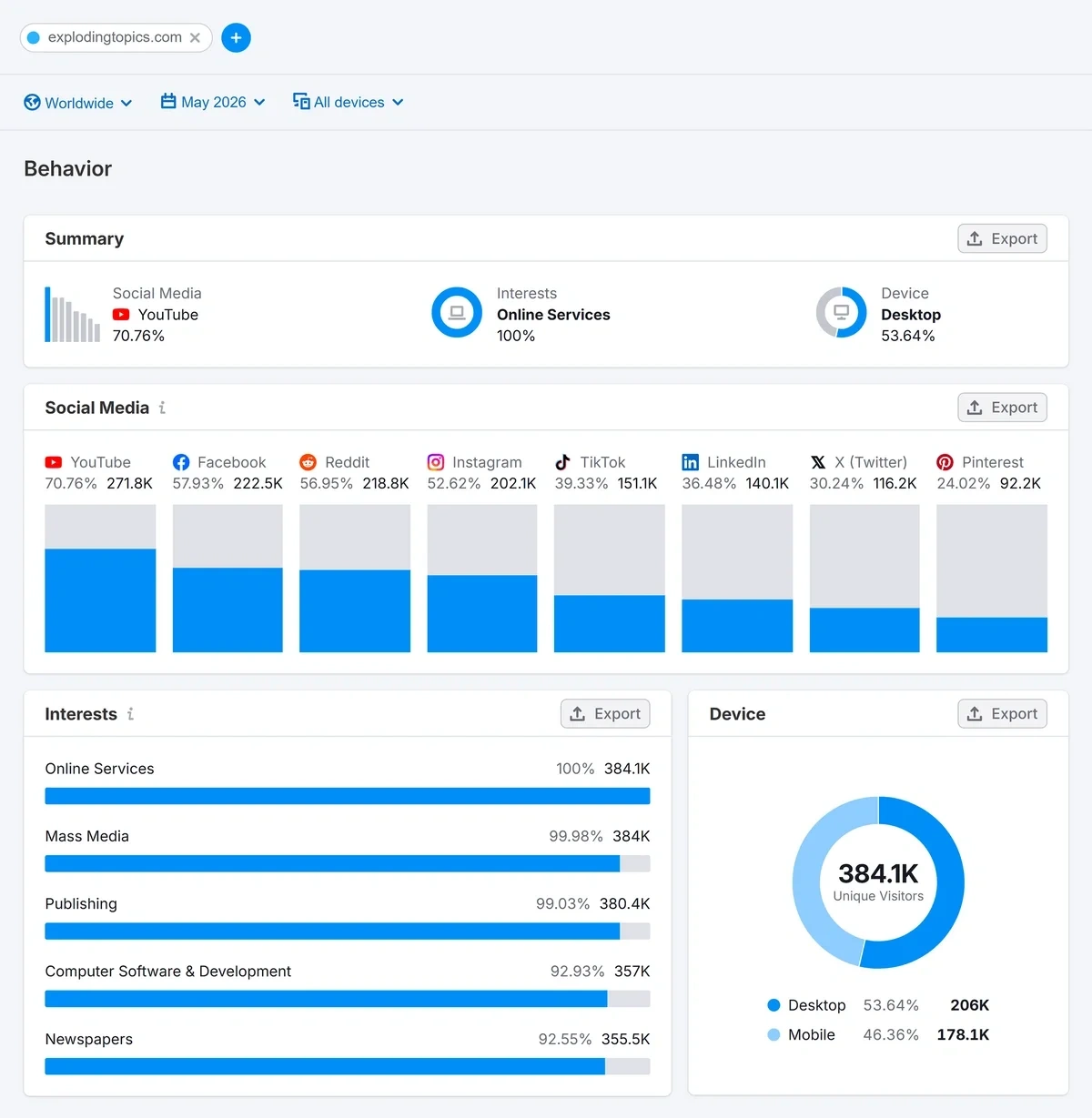
This will show you the preferred social media channels for visitors to your website.
With this information in mind, you can shape your content ideas for your audience.
1. Mine Your Business’s Data for Insights
Your company likely tracks a lot of metrics—sales, website traffic, support tickets answered, and dozens of other numbers that indicate how the business is performing.
An easy way to source some thought leadership content ideas is to look over these metrics and identify any big wins. Then share how you achieved the outcome.
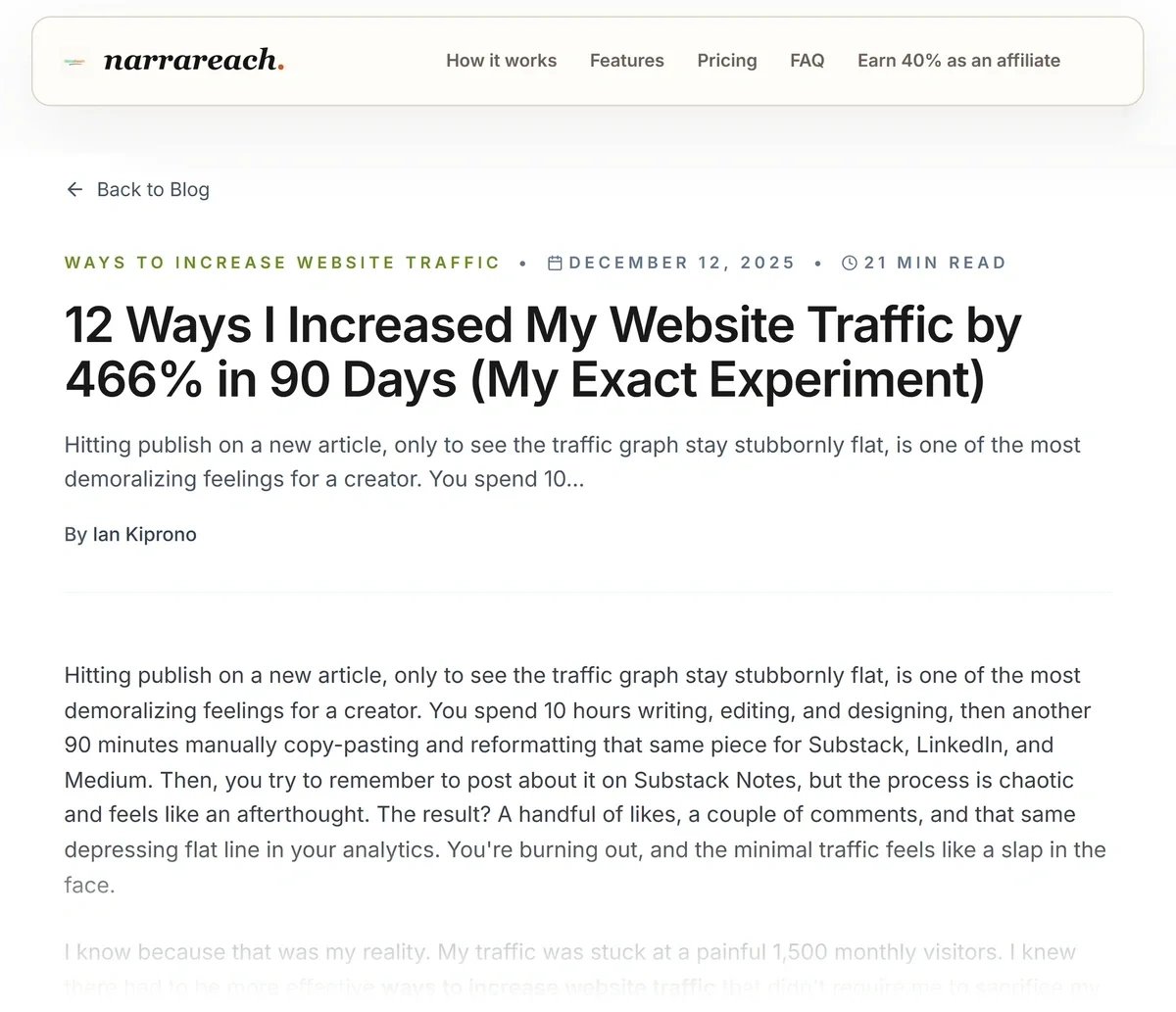
This method has authority and experience baked right in. You provide the numbers (or, if you don’t want to share the exact numbers, growth percentages) to show a concrete example of your success.
It’s also naturally educational and inspirational. When you explain how your team reached an important milestone, it encourages others to try to do the same.
There are several places you can look for data to write thought leadership content around, including:
- Google Analytics and Google Search Console
- Semrush
- Your CRM or email marketing tool
- Your customer support platform
- Internal dashboards and KPI trackers
The best options depend on your particular brand and area of expertise.
AI Assist: Use your preferred LLM to analyze company data and ask it to identify areas of growth that will resonate with your audience.
Bonus: Connect ChatGPT or Claude to the official Semrush MCP server to access marketing metrics directly from your LLM.
2. Spotlight Your Top Customers
Customer stories or case studies are another type of content that lends itself well to demonstrating authority and experience. After all, if your customers are succeeding, you must be doing something right, too.
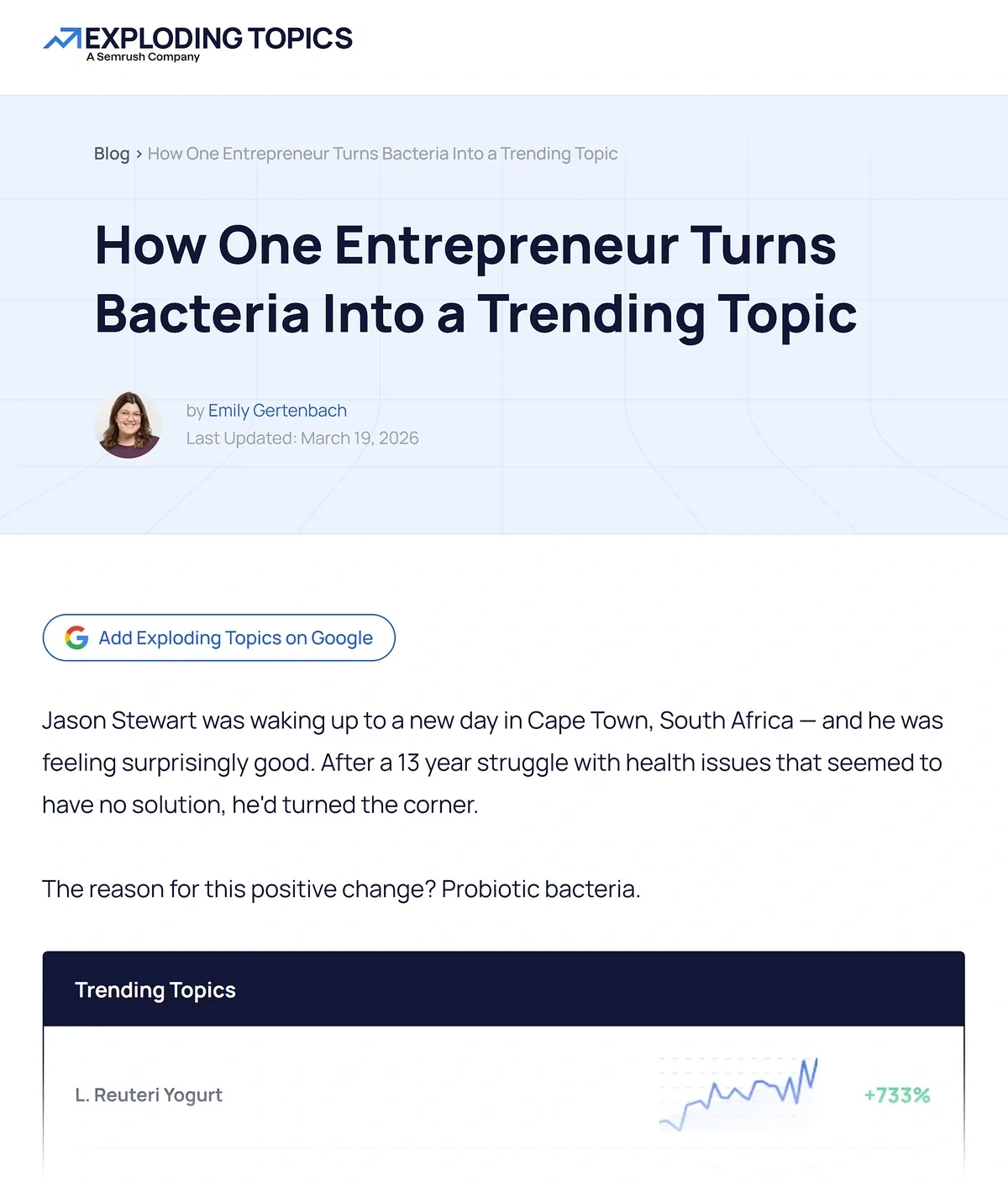
One thing to keep in mind is that case studies often require a greater time investment than other types of thought leadership content. You’ll need the customer’s permission to feature them, and possibly additional information from them to round out the content and make it compelling.
If you need to publish some content quickly, this probably isn’t the best avenue.
If you do have the time, though, customer stories that clearly demonstrate how a positive outcome was achieved can educate and inspire your audience while (subtly) promoting your product or service.
It’s important to remember the purpose of thought leadership content and avoid writing case studies that come across as “salesy.” Look for customers to feature whose experience highlights something important about your industry, then expand on that idea to demonstrate your knowledge of the topic.
Featuring your product should be entirely secondary. Any call to action should lean more towards engagement with the content than making a purchase.
3. Conduct Original Research Related to Your Industry
Original research such as surveys or macro data analysis can also demonstrate not only your expertise, but that you’re tuned in to your industry.
Positioning yourself as someone who is at the forefront of changes in your field makes you an attractive figure to follow. Others will look to you to guide their decision making through fluctuations in the market or advances in technology.

At Exploding Topics, we often publish original research about trends in marketing and current topics that are taking off online. If you’re looking for examples of content that incorporates original research, these are a great place to start.
AI Assist: Use your preferred LLM to analyze survey responses and other data you’ve collected, and to organize the results into a clear narrative you can turn into a blog post, YouTube video, or LinkedIn post.
4. Research Meta Trends That Align With Your Expertise
Speaking of keeping at the forefront of your industry, researching macro, or meta trends relevant to your niche is another way to generate thought leadership content ideas.
As you’re building out your thought leadership content strategy, I would keep this type of content in your back pocket as a flexible filler for your content calendar. It’s rare to have huge jumps in metrics overnight, and case studies and research are time consuming.
There’s always a new trend on the rise, so you can whip up a LinkedIn or blog post about the latest hot button industry topic relatively quickly.
Exploding Topics is the best tool for finding trends related to your industry, specifically because it enables you to find meta trends and not just specific topics.
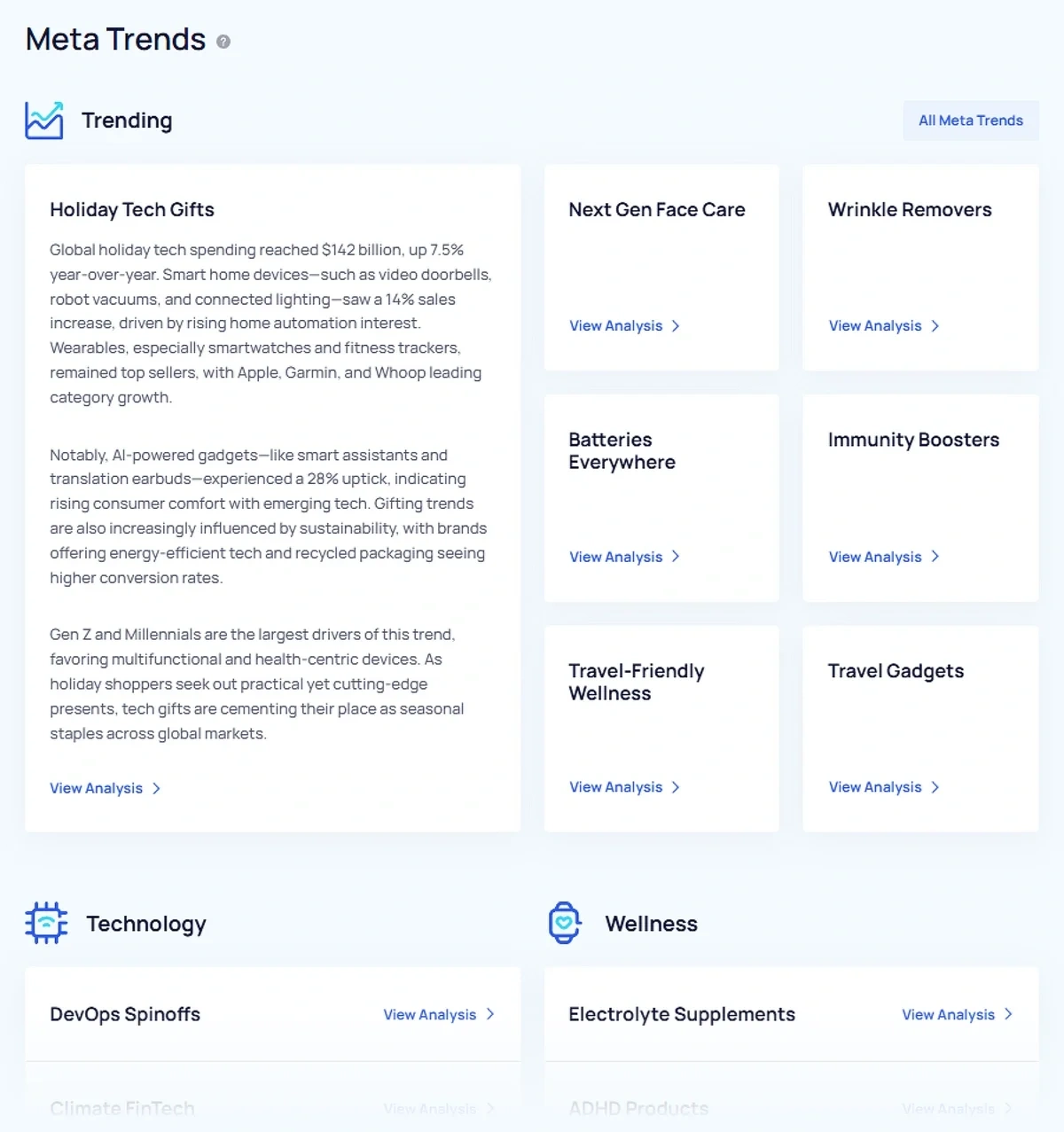
While you might be able to zero in on a niche trend every once in a while, generally speaking casting your net a little wider will help your content resonate with more people. For instance, you’ll probably find that more people have thoughts on AI transcription than they do on Otter AI in particular.
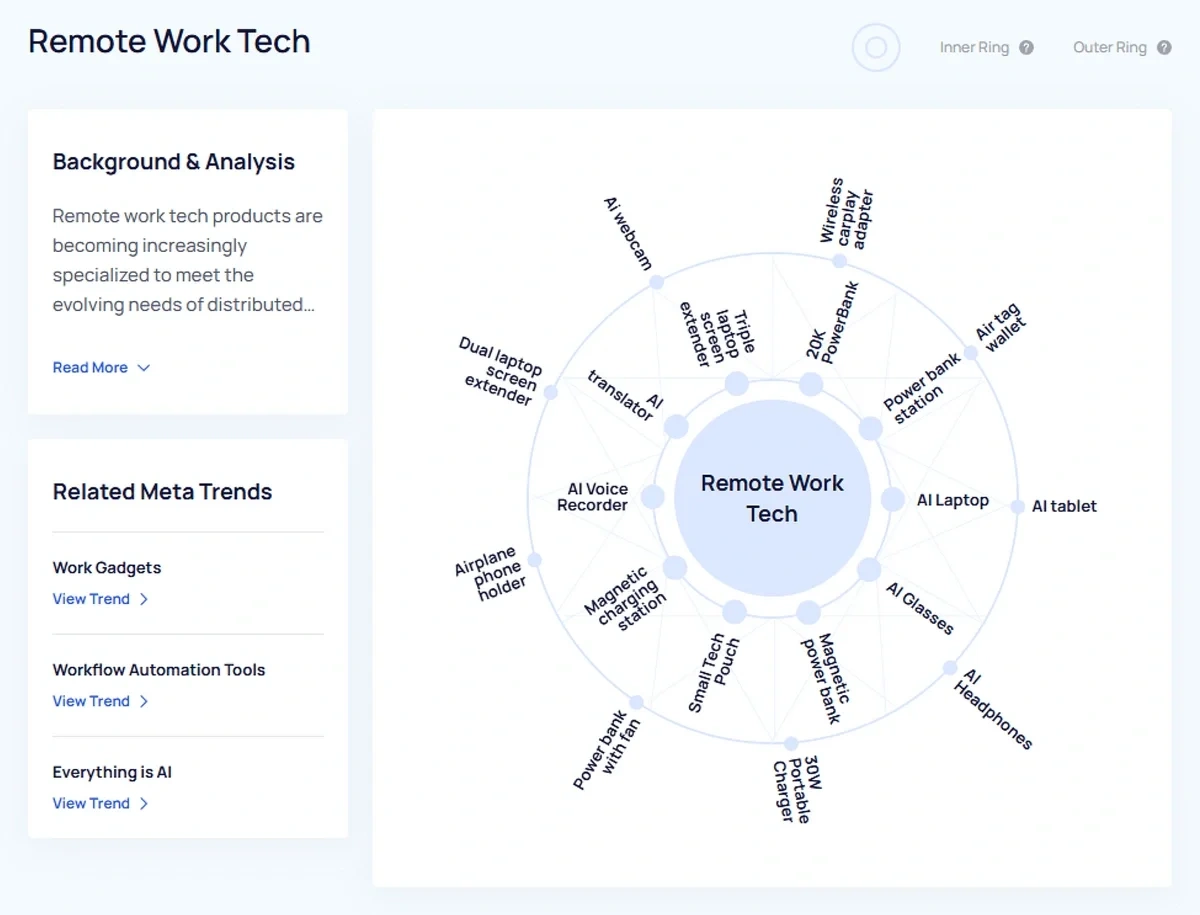
Publishing content about meta trends emphasizes your authority by showing you’re paying attention to what’s happening in your industry, and also educates your audience, who might not be up to speed on the latest issues.
AI Assist: Create a list of meta trends you’re interested in and ask your preferred LLM to help you identify the trends most likely to resonate with your audience.
5. Question Industry Norms
Although every brand claims to be on the cutting-edge, for the most part, companies follow a set of industry standards.
Often these strategies became the standards because they work and produce results, but there are always exceptions. You may have noticed some of them in your own work.
Challenging industry norms in thought leadership content can be a highly effective strategy, but only if you go about it the right way.
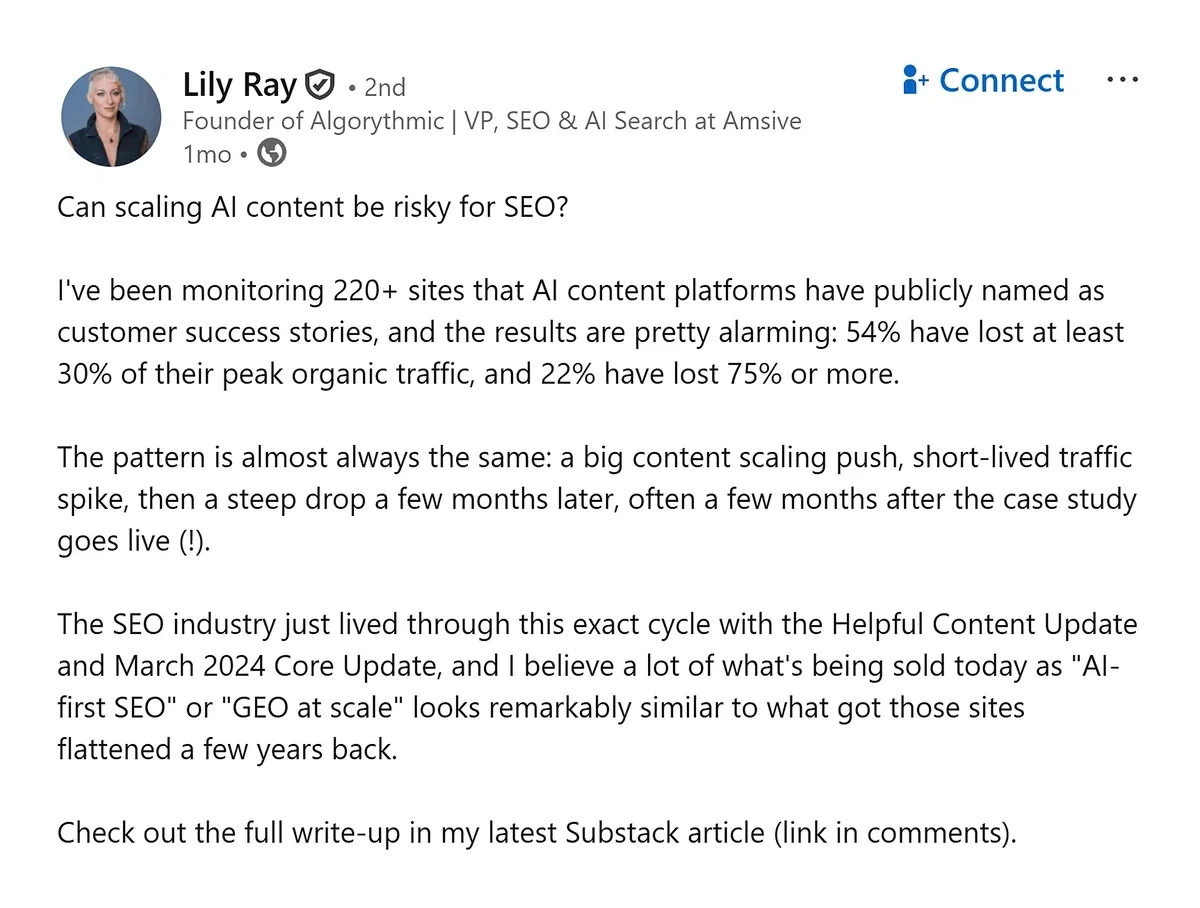
It’s important that you have real experience to back up your claims and that you’re not just making inflammatory statements to get a reaction out of your audience. Otherwise, you risk your credibility as a thought leader—and it’s a lot harder to build it back after it’s been lost than it is to gain it in the first place.
Ideally, you’ll want some data to back up your claims. Showing how you went against a traditional approach and were able to achieve positive results can encourage others to take calculated risks and question why they’re using the approach they’re using instead of following blindly.
6. Open Up About Your Failures
There is nothing more authentic than sharing about a time you missed the mark.
It might feel counterintuitive, but being vulnerable and talking about your failures—and more importantly, how you bounced back from them—shows your audience that you make mistakes, just like they do.

The most important element to this type of thought leadership content is explaining what you learned and what you do differently now. This is the educational component of the piece, and it provides direct value to your audience.
If they haven’t made the same mistake, they can now avoid it. If they have, now they know how to fix it.
7. Comment on Trending Content
Another source of thought leadership content ideas that’s perfect for filling in content calendar gaps is to build on other trending content.
This is a “work smarter, not harder” strategy. If you can find existing content that’s performing well and add unique personal insights, you can ride the coattails of the original content and generate some engagement for yourself.
One way to quickly spot content that’s taking off is using the TikTok Insights add-on for Exploding Topics.
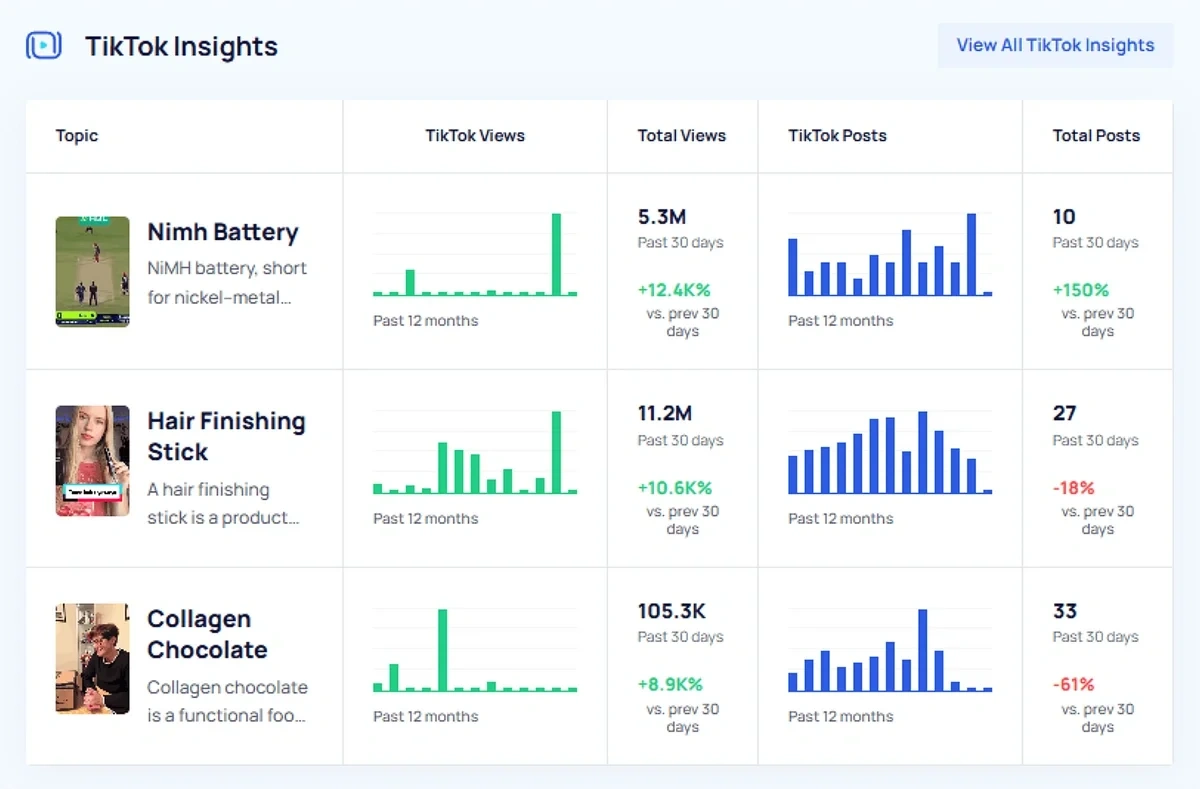
This tool shows you videos that are experiencing exponential growth. Find one that will resonate with your audience, then stitch. Or, if TikTok isn’t your audience’s primary platform, you can still write about the topic on your blog or LinkedIn.
If you’re directly referencing existing content, you have to make sure to add your own viewpoint. Repeating everything the original video says doesn’t demonstrate any knowledge on your part, just that you can parrot someone else.
AI Assist: Use your preferred LLM to analyze TikTok Insights data and identify the topics that are most likely to appeal to your audience.
Bonus: Pairing Exploding Topics and Zapier allows you to auto-generate content ideas straight into Asana, based on the latest trends data.
Publish Elevated Thought Leadership Content With Help From Exploding Topics
Becoming a thought leader requires you to stay on your toes and up to date on all the latest happenings in your industry. Exploding Topics is the best tool for spotting trends as they’re just starting to take off, putting you at the front of the pack when it comes to publishing valuable business insights.
I recommend Exploding Topics Pro, which gives you access to meta trends, plus the TikTok Insights add-on to help with generating thought leadership content ideas. To test it out, sign up for a seven-day free trial and see how your content strategy evolves.
Stop Guessing, Start Growing 🚀
Use real-time topic data to create content that resonates and brings results.
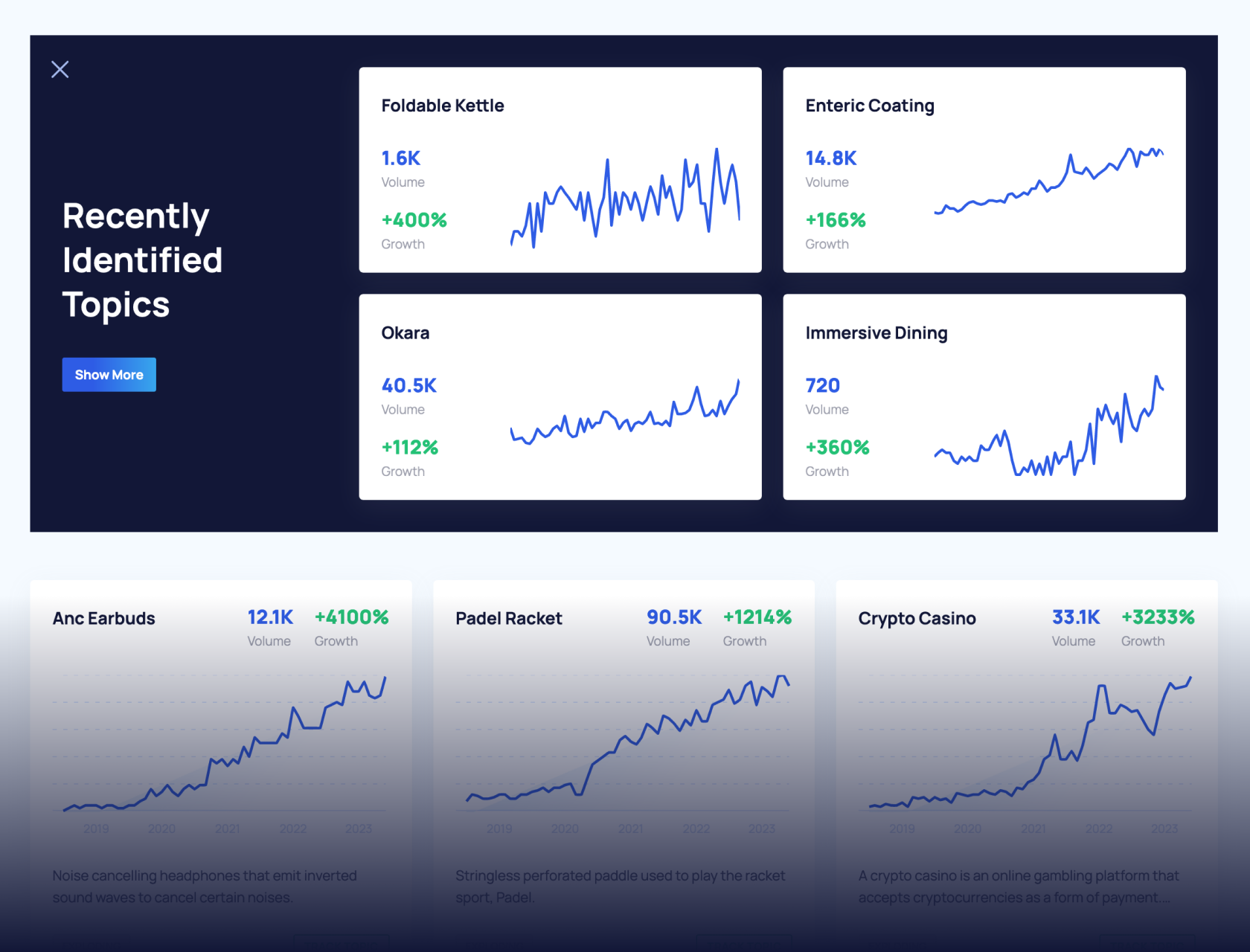
Exploding Topics is owned by Semrush. Our mission is to provide accurate data and expert insights on emerging trends. Unless otherwise noted, this page’s content was written by either an employee or a paid contractor of Semrush Inc.
Share
Newsletter Signup
By clicking “Subscribe” you agree to Semrush Privacy Policy and consent to Semrush using your contact data for newsletter purposes
Written By


Molly is a technical content writer with a passion for making technology easy for anyone to understand. She specializes in content... Read more