


Get Advanced Insights on Any Topic
Discover Trends 12+ Months Before Everyone Else
How We Find Trends Before They Take Off
Exploding Topics’ advanced algorithm monitors millions of unstructured data points to spot trends early on.
Keyword Research
Performance Tracking
Competitor Intelligence
Fix Your Site’s SEO Issues in 30 Seconds
Find technical issues blocking search visibility. Get prioritized, actionable fixes in seconds.
Powered by data from
Latest Blog Posts
Featured Case Studies
See what's trending before everyone else
Each week, we'll send you our best Exploding Topics. Plus, expert insight and analysis.
The 8 Best AI Mode Tracking Tools for SEO and GEO in 2026

 Add Exploding Topics on GoogleAdd Exploding Topics as your preferred source to see more of our stories on Google.
As Google makes AI Mode an increasingly central part of the search experience, it's important that brands and website owners keep up. This means understanding how your audience is using AI Mode, what they're searching for, and how your website is mentioned or cited in the AI results.
I've been experimenting with different AI Mode and LLM search tracking tools for a long time, and these are the seven platforms I think you should consider for tracking your own AI Mode presence. I've broken the list down by use case so it's easy to find the one that'll fit your needs best—and added my own personal recommendation at the bottom, too.
1. Semrush AI Visibility Toolkit: Best for Most Marketers
The Semrush AI Visibility Toolkit is an easy way to understand how citations and brand mentions drive traffic from Google AI Mode to your website.
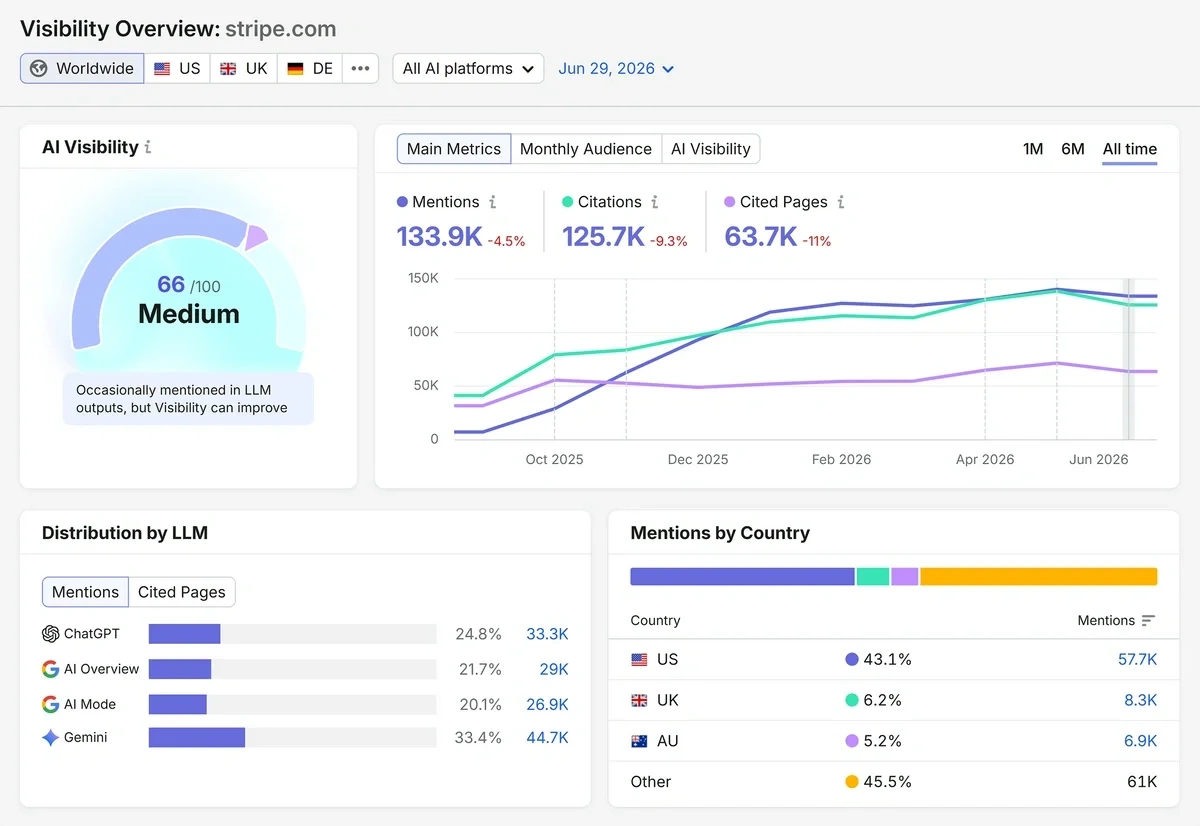
When you analyze your domain with the AI Visibility Overview, you get a report that includes:
- An AI visibility score reminiscent of Semrush’s website health scores
- The number of mentions, citations, and cited pages on your site
- How many times you’re mentioned by large language models (LLMs) in different countries
- The topics you’re achieving good coverage for, and ones that you can target through generative engine optimization (GEO) efforts
You can hone in just on AI Mode metrics or take a broad view of your performance across other AI results including those in ChatGPT and the Google AI Overview. (Here's a review of the best AI Overviews tracking tools.)
I like that the AI Visibility Toolkit shows you just your site’s information first via the Visibility Overview. This makes it very easy to see exactly how you’re performing, or to provide a GEO report to your client.
But you can also use the toolkit to:
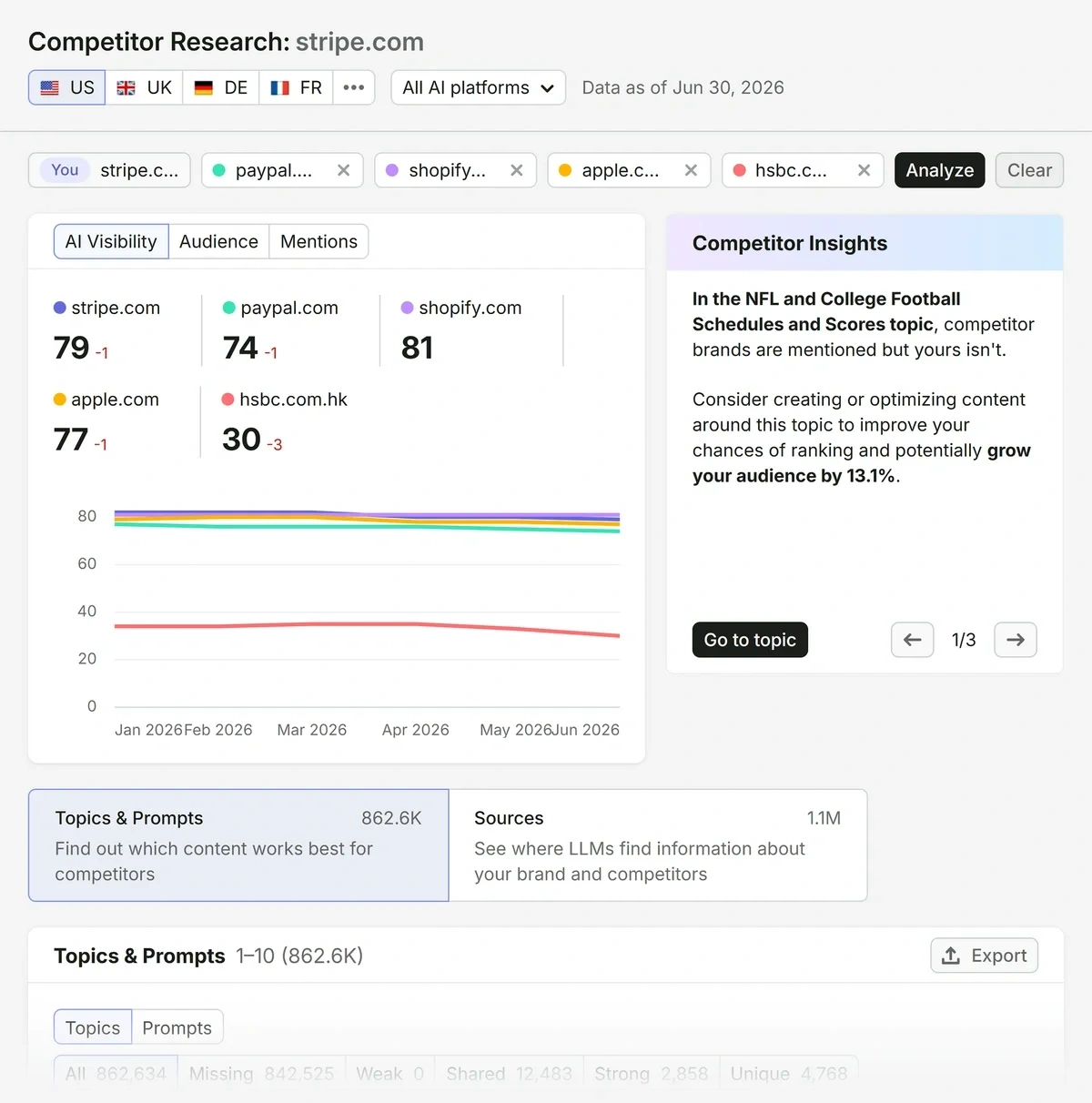
- Run a brand comparison report on demand
- Find gaps in LLM conversations that mention your competitors and you
- Discover what prompts can drive traffic to your site
- Explore what story LLMs tell about your brand
- Analyze LLM sentiment toward your brand
The AI Visibility toolkit is available to all Semrush One subscribers; plans start at $165.17 per month when billed annually. Semrush users on a Classic plan can add the AI Visibility toolkit to their plan for $99 per month, per domain.
This pricing flexibility and deep integration with other Semrush toolkits makes the AI Visibility toolkit best for most marketers.
2. HubSpot AEO: Best as a Free Starting Point
HubSpot AEO is lightweight compared to some of the other tools I've used, but it still shows you how often your brand appears in AI answers and gives suggestions for improvement.
One caveat: it doesn't check AI Mode directly, since the tool is in Beta. ChatGPT, Gemini, and Perplexity are covered. Of course, since AI Mode uses Gemini, you can expect some similarities.
HubSpot AEO will generate prompts for you, which cuts down on the mental load of coming up with them yourself.
The recommendations are not perfect, but they are a good starting point. Some of the topic ideas were already covered on the site I tested, but others were good suggestions.
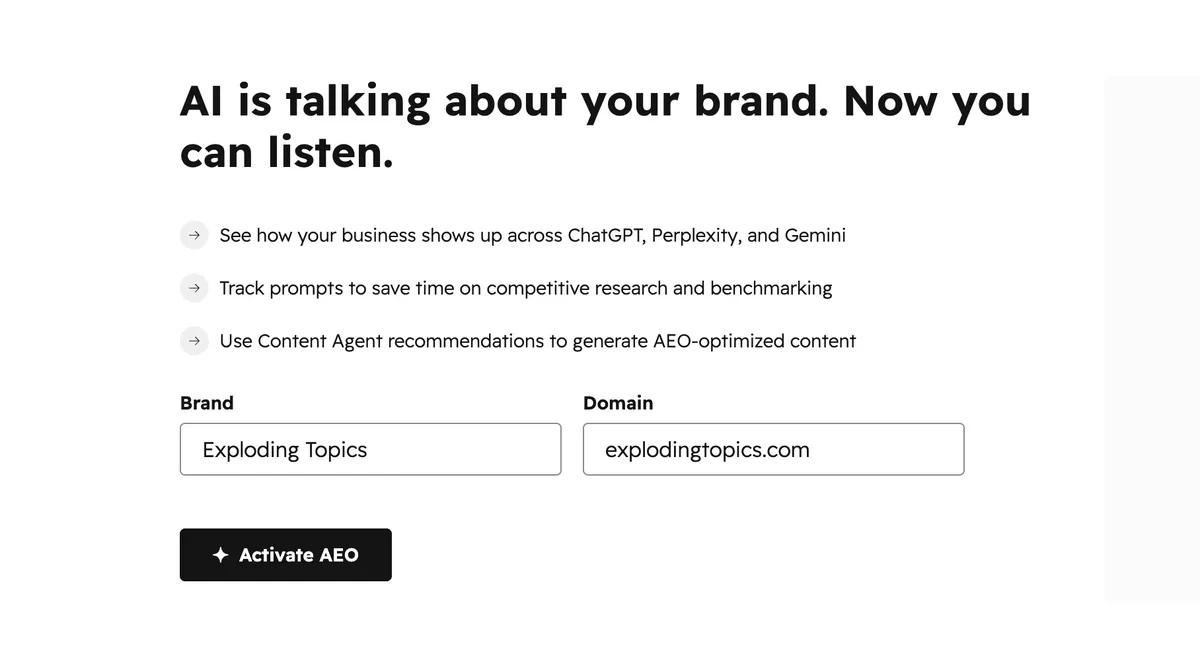
Plans start at $45/mo (paid annually) for 25 prompts, with upgrades available for more.
I think this tool works best as a companion to a broader platform. It's also great just for sampling the data for free. You can track 25 prompts on the free trial, and no credit card is needed.
3. SE Visible: Best for SE Ranking Users
SE Visible is a standalone AI SEO tool from the same company that makes SE Ranking.
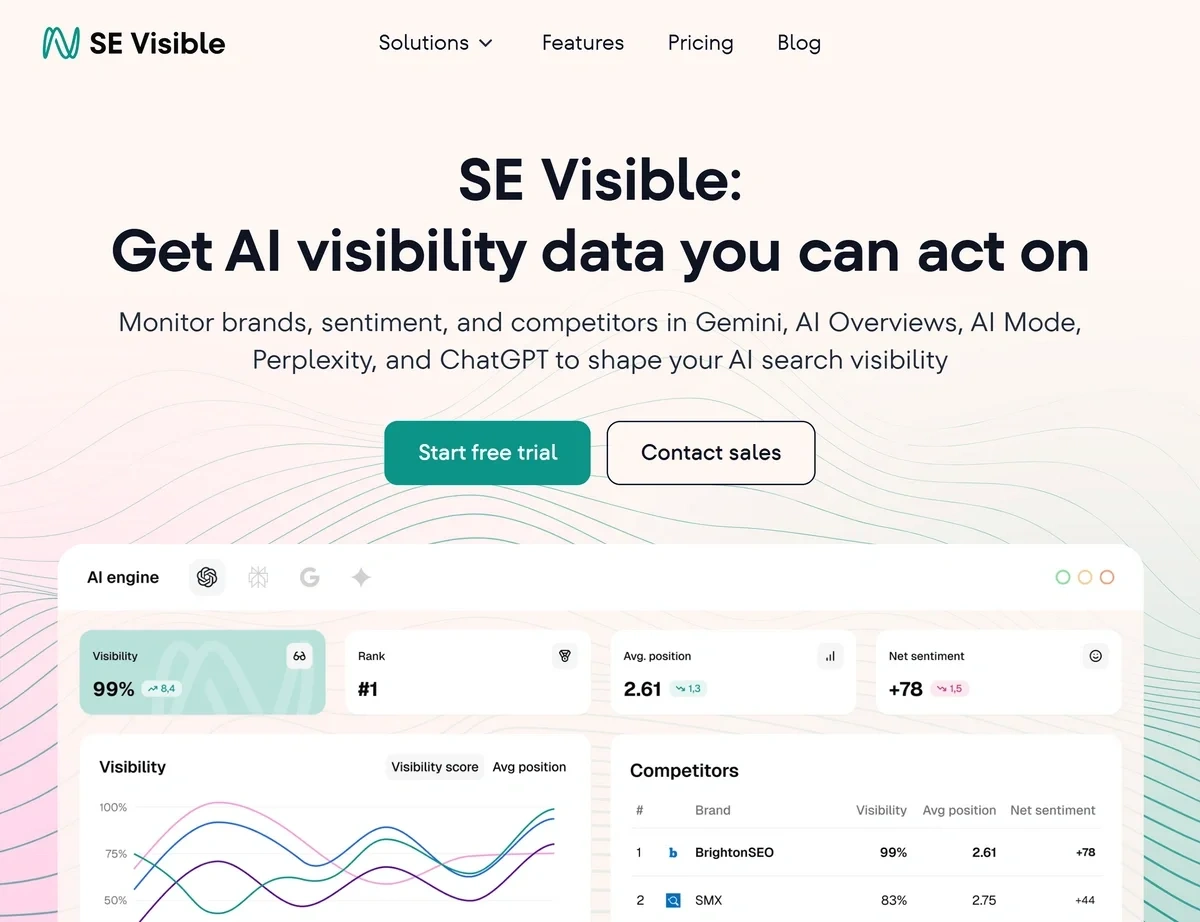
Using the tool feels similar to using the Semrush AI Visibility toolkit—enter the site and some preliminary details, then get a full report including:
- How you stack up against competitors in AI Mode answers and more
- Your share of voice when compared to other cited domains
- The average position at which you appear in cited responses (i.e. first citation, second citation, and so forth)
Like Semrush, SE Visible also shows you the sentiment associated with AI responses about your brand. I think that sentiment tracking is an important feature to look for in any AI mode tool. Citations and mentions are great—if they present your brand in a good light. But if you’re getting more citations than anyone else, and the LLMs produce negative summaries of your brand or website, those citations may hurt more than they help.
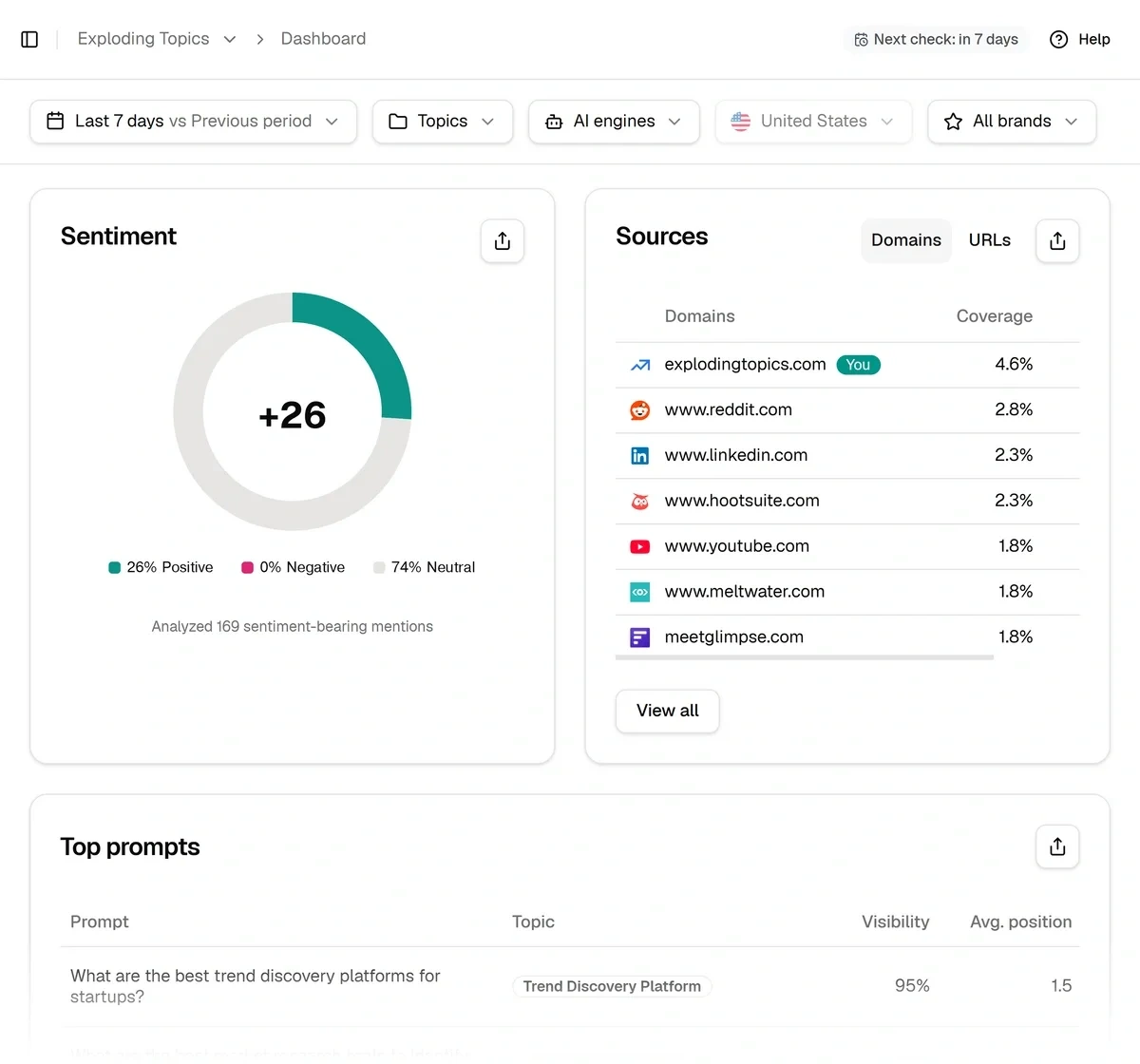
One slightly frustrating part of using SE Visible is that, by default, it checked my brand against a lot of branded AI Mode prompts—that is, questions that actually mention my brand by name. I’m actually interested in assessing how often my website appears in unbranded prompts. I can get this data from SE Visible, but it requires manually finding and adding the prompts I’d like to track.
The Semrush AI Visibility Toolkit, on the other hand, found and ranked my website for unbranded, topically relevant prompts right away without further configuration on my end.
SE Visible is available on its own, separate from SE Ranking. Plans start at $79 per month when billed annually.
For a full breakdown, check out our Semrush vs SE Visible comparison.
4. Otterly.AI: Best for Small Businesses
Otterly.ai is a prompt research and AI Mode analytics tool that supports researching and identifying prompts as well as analyzing your position in lists of mentions and citations.
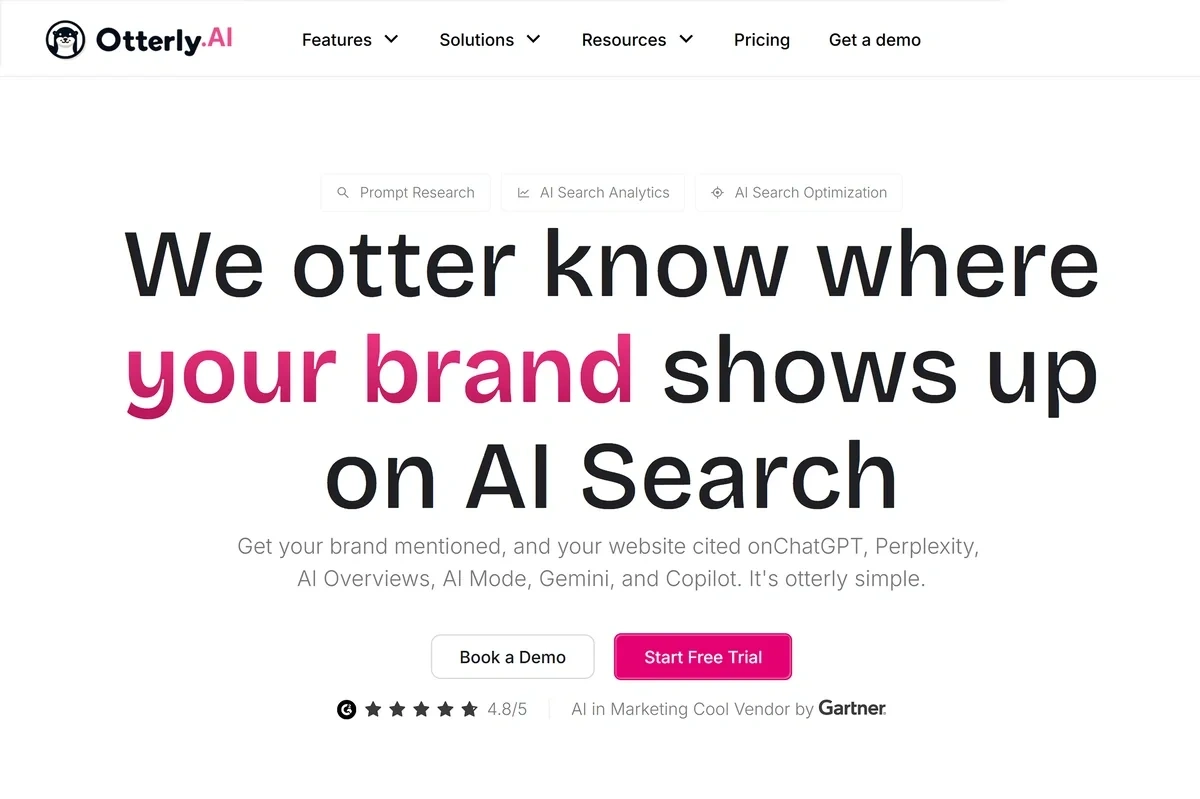
Like Semrush and SE Ranking’s tools, Otterly.ai lets you explore your positioning in not just AI Mode results, but in other results including:
- AI Overviews
- ChatGPT
- Microsoft Copilot
- Perplexity
Like Semrush, Otterly offers a prompt research tool to help you figure out which questions drive mentions and citations. The app will identify which webpages on your site aren’t crawled by AI tools and offer suggestions to improve your crawlability, too, though in my experience this feature isn't as robust as Semrush's site audit tools.
Otterly.ai is also one of the most affordable AI Mode analysis tools on the market right now. Plans start at just $29 per month, which is why I think it’s a solid choice for small businesses on a budget. That said, you'll need to add on AI Mode tracking for an extra fee—it’s not included in the base set of answer engines tracked across every plan.
5. Peec AI: Best for Digital PR Professionals
Peec AI is another AI Mode tracking tool with an interesting feature that’s well suited to digital PR professionals.
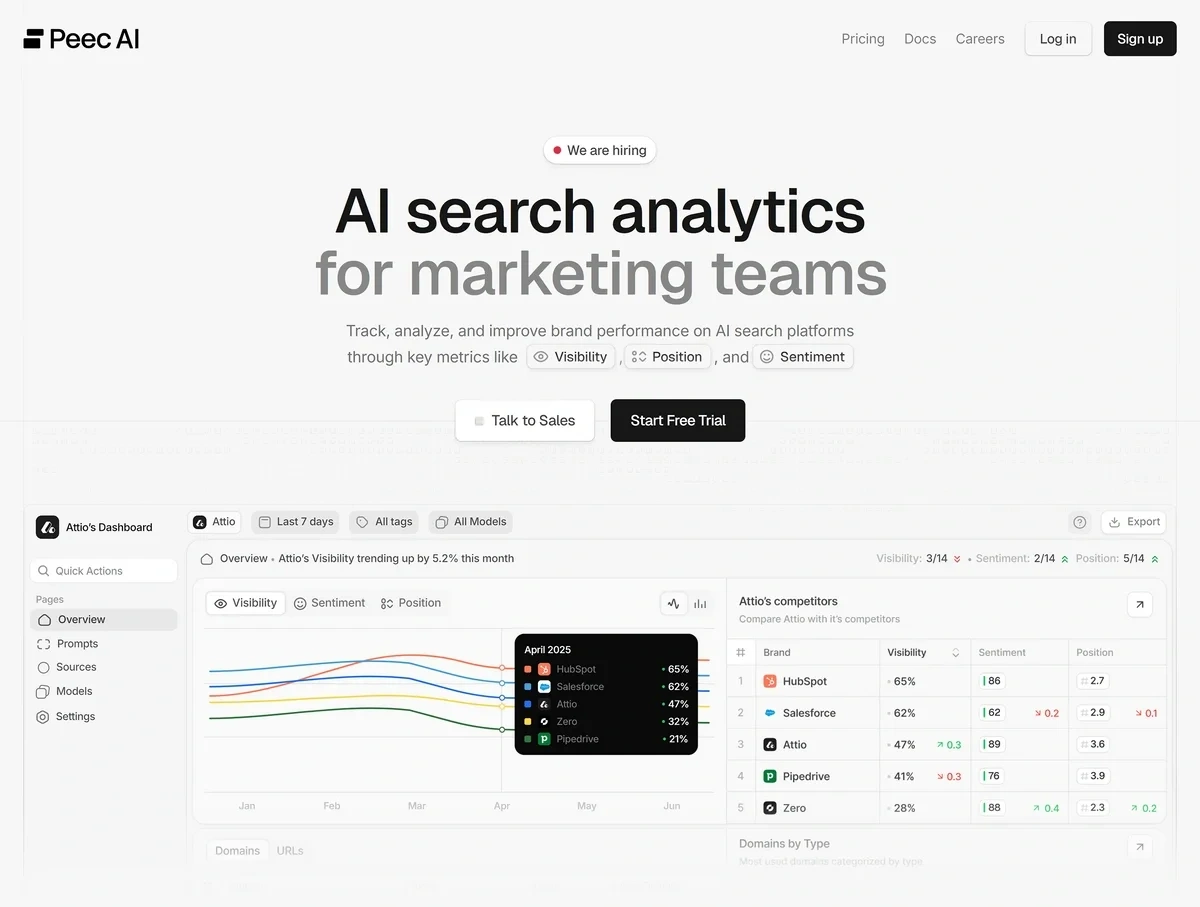
You can do the normal AI Mode tracking, prompt analysis, and SE Visible-style sentiment analysis with Peec—and then go one step further by identifying AI hallucinations and incorrect citations related to your brand.
Peec AI shows you:
- Where the incorrect mention appeared in results
- What sites (if any) publish the claim
- What overall LLM perception of your brand looks like
While you can’t completely change the data contained in an AI model, you can use Peec’s findings to reach out to other site owners and ask them to change the claims or mentions they’re making about your brand.
Over time, this can improve the accuracy and sentiment of brand mentions in AI Mode and other LLM search results. You can even track how your brand and products appear in AI shopping searches, which makes Peec a good choice for E-commerce companies, too.
Peec AI plans let you choose which models you’d like to track, and AI Mode is available to every paid subscriber. You just need to select AI Mode as a source while setting up your Peec account.
Paid Peec AI plans for brands start at $95 per month; Agency plans start at $245 per month.
Want to Beat Your Competition?
Find out who’s linking to them and build a better backlink strategy.
6. LLM Pulse: Best for Paid Advertisers
LLM Pulse offers a full suite of AI Mode and LLM search tracking tools but adds one extra feature that many competing tools don’t offer just yet—ads tracking in AI search.
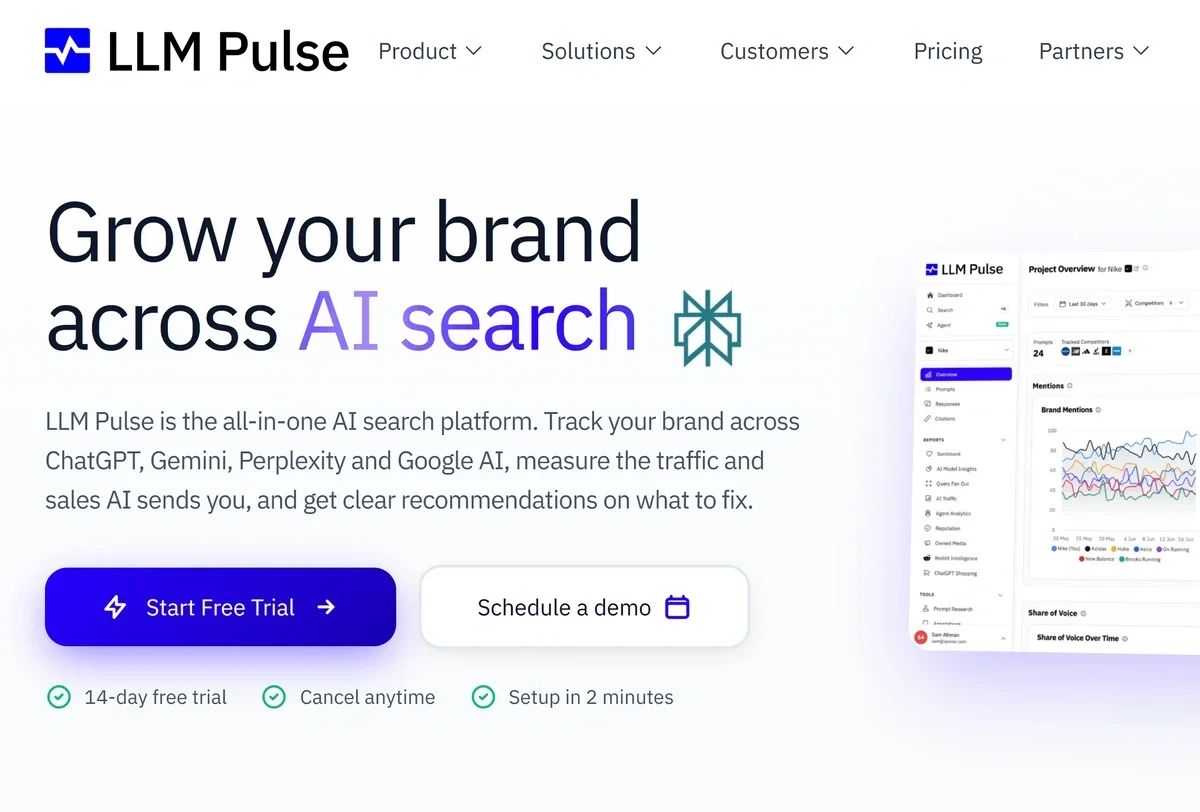
When using LLM Pulse to track paid advertising in AI search, you can:
- Identify prompts that show an ad and mention your brand organically through a citation or mention
- Monitor competitors’ ad spend and create competitor benchmarks for advertising across LLMs
- Get notifications when paid ads start appearing on prompts and responses that you’re already targeting for organic improvements
The LLM Pulse tool isn’t exclusive to AI Mode ads, either. You can use it to track ads across different AI platforms as they find ways to introduce advertisements to their users.
LLM Pulse plans start at $50 per month when billed annually, but you’ll need the company’s Scale plan, which costs $304 per month, to access AI Mode advertising insights.
7. Profound: Best for Enterprise Companies
Profound is a comprehensive LLM SEO tool that lets you see information about how you’re presented in AI results, where your competitors fall, how well your site is crawled by LLMs, and more.
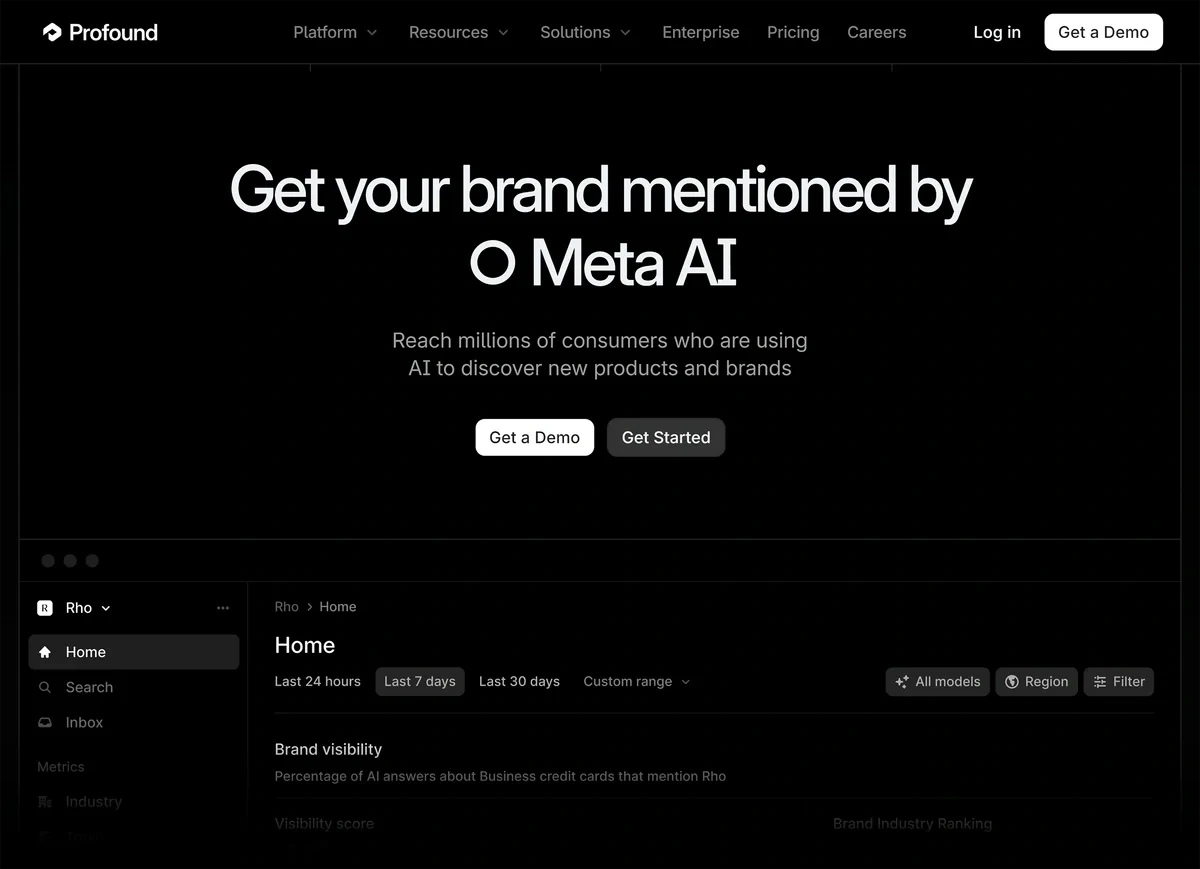
Profound’s crawl data, bot visit tracker, and visibility rankings make the process of analyzing your brand’s AI Mode citation presence similar to that of traditional SEO research. You can see data about how you appear in Google AI results as well as ChatGPT, Perplexity, and more.
One of the more unique aspects to Profound is its agentic AI tool. You can build custom AI agents directly in your Profound workspace and assign them to do marketing tasks including web scraping and content production.
Profound also publishes a comprehensive leaderboard of companies achieving the highest placement in AI search results. This leaderboard, called the Profound Index, is free to access—all you have to do is provide your email and some top-level details about your company.
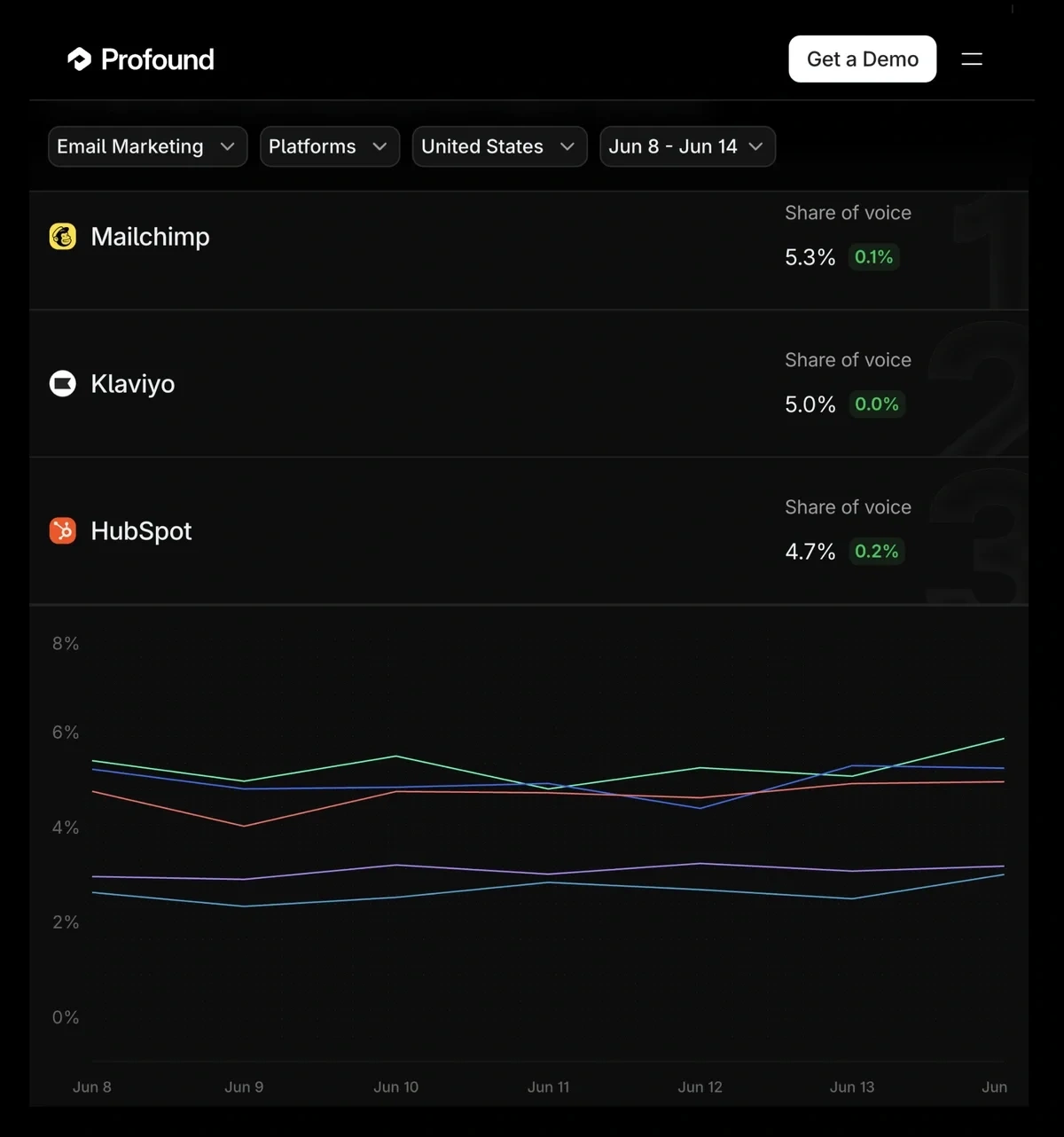
While the leaderboard insights are interesting—and remind me of Semrush’s top websites lists—I find that the available industries are limited. For example, I tried to search for marketing companies and had to choose between “Email Marketing” and “Marketing Automation.” To my surprise, there was no option for “Advertising and Marketing” or “Marketing and Sales” industries.
Given the quality of the free tools and the strict usage limits on many of Profound’s lower-tier plans, the platform seems to be best suited to automation-focused enterprise companies and agencies who can invest in the full Profound suite. Plan options start at $99 per month.
8. Waikay: Best for Content Strategists
Waikay, which stands for “what AI knows about you,” is an AI citation analysis tool that keeps its focus on content quality and relevance.
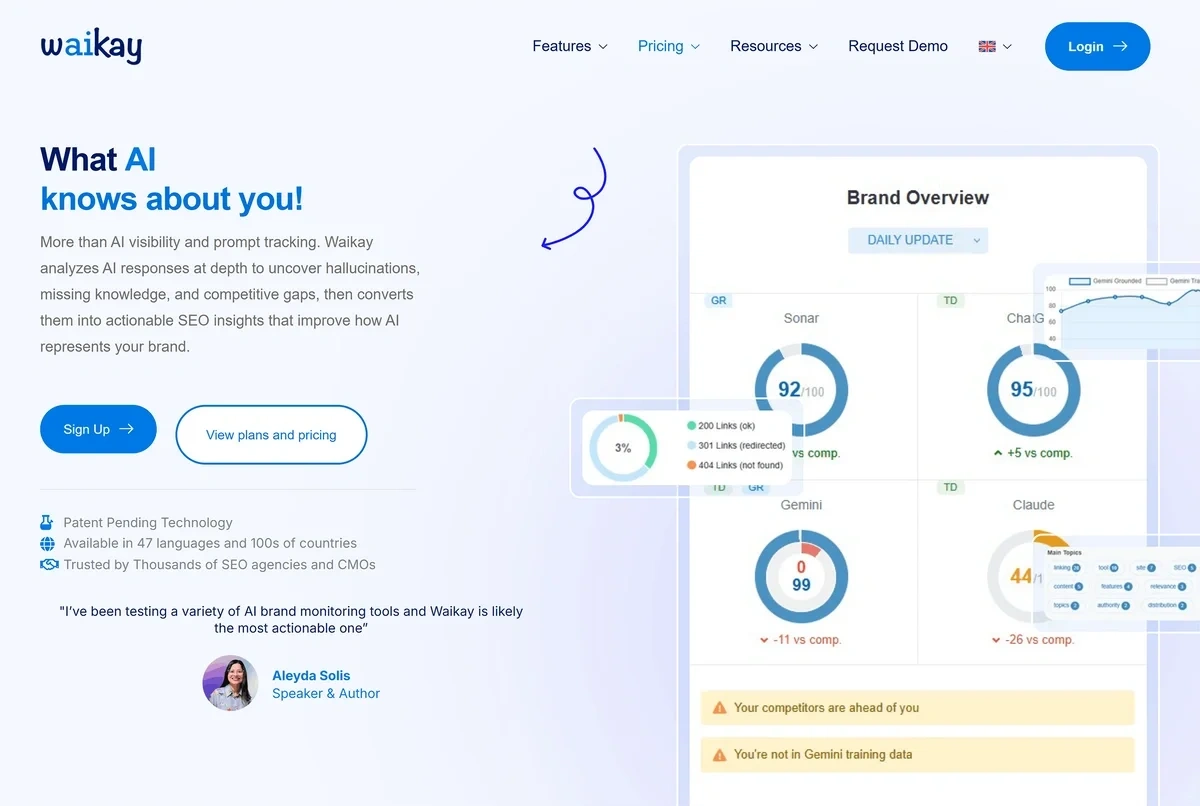
Waikay reports show you three key things:
- Whether or not your site appears in the training data that powers common LLMs including Google’s Gemini
- What entities, or topics, are associated with your site by the LLMs
- How your brand is mentioned by different LLMs for specific prompts
While the information isn’t exclusively focused on AI Mode, it’s a useful platform for getting a better grasp on how LLMs understand your site. In turn, this information can help you better optimize your webpages to appear in AI Mode results, Perplexity, ChatGPT, and more.
Waikay even includes data on Claude, which is uncommon. I found that most competing generative AI optimization tools don’t include the Claude LLM.
Estimate the potential traffic impact of updating your content
Monthly search volume for your target keyword
When was this content last significantly updated?
One of Waikay’s most unique features is its topic-specific improvement plans. Simply choose a topic associated with your site, and Waikay will produce a complete report that contains advice on how to better connect your pages and build out topics to increase your odds of being cited for related subjects.
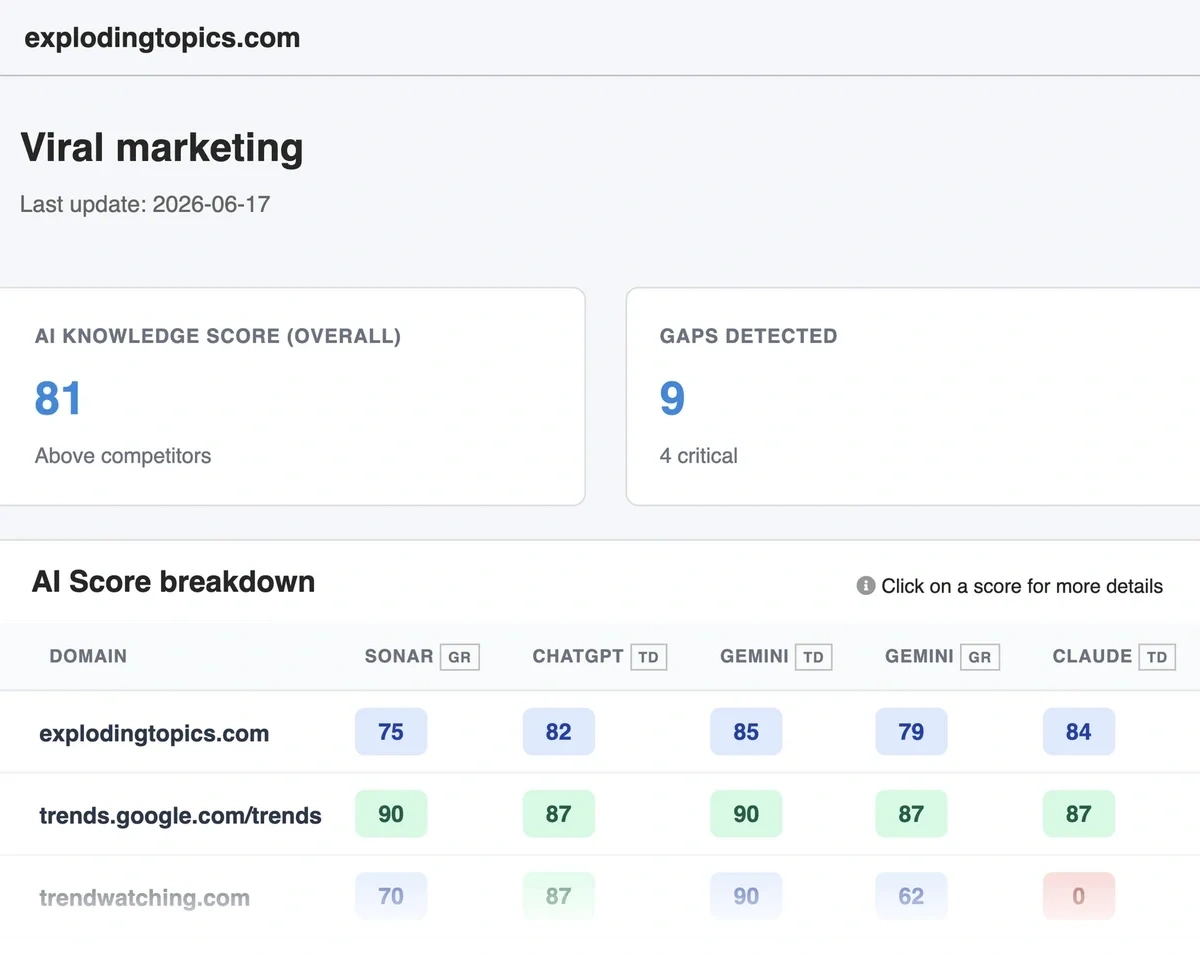
Waikay offers several pricing plans based on usage demand. Options start at $24.95 per month.
How to Start AI Mode Citation Tracking
Tracking your AI Mode mentions, citations, and click-through rates isn’t hard—you just need the right set of tools. In order to get started, you’ll want to:
- Choose the best AI Mode tracking tool for your needs based on the list presented in this guide. You can also check out our hands-on test of 5 AI citation tracking tools.
- Identify the prompts that you want to target, track, and optimize for. Many of the tools on this list will find relevant prompts for you, but you can also conduct normal keyword research and convert the terms into questions using a tool like Semrush or AlsoAsked. This will give you a good baseline prompt library.
- Find the top competitors that you want to track in AI search results. If you aren’t sure where to start, running a Domain Overview report in Semrush will show you who you’re competing against right now.
- Enter the prompts and competitors you identified in steps two and three into your tracking tool of choice. This allows you to begin competitor benchmarking and prompt tracking in AI Mode.
My recommendation: Start by using the Semrush AI Visibility toolkit. With a Semrush One subscription, this gives you access to the widest array of SEO tools for both traditional and AI search in one. You’ll get great data around your visibility on a variety of LLM platforms and can optimize for both AI Mode and the AI Overviews at once.
I find it easy to appear in Google’s AI results for specific keywords and prompts using this data. But you don’t have to take my word for it alone—you can grab our exclusive coupon code to get an extended 14-day free trial of Semrush One and check out the AI Visibility toolkit for yourself!
Stop Guessing, Start Growing 🚀
Use real-time topic data to create content that resonates and brings results.
Exploding Topics is owned by Semrush. Our mission is to provide accurate data and expert insights on emerging trends. Unless otherwise noted, this page’s content was written by either an employee or a paid contractor of Semrush Inc.
Share
Newsletter Signup
By clicking “Subscribe” you agree to Semrush Privacy Policy and consent to Semrush using your contact data for newsletter purposes
Written By


Emily is a freelance content writer at Exploding Topics. A former news correspondent, she has over 15 years' experience creati... Read more