Exploding Topics
Remineralizing Gum search volume grew from under 100 to 27,100 monthly searches between February 2024 and January 2026.
Remineralizing gum
+5100%
GLP 1 Supplement search volume grew from 5,920 to 74,000 monthly searches between February 2024 and January 2026.
GLP 1 supplement
+1150%
Soursop Bitters search volume grew from 9,900 to 110,000 monthly searches between March 2024 and February 2026.
Soursop bitters
+1011%



Get Advanced Insights on Any Topic
Discover Trends 12+ Months Before Everyone Else
How We Find Trends Before They Take Off
Exploding Topics’ advanced algorithm monitors millions of unstructured data points to spot trends early on.
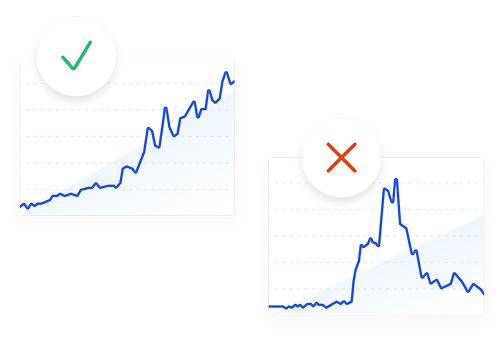
Keyword Research
Performance Tracking
Competitor Intelligence
Fix Your Site’s SEO Issues in 30 Seconds
Find technical issues blocking search visibility. Get prioritized, actionable fixes in seconds.
Powered by data from
Latest Blog Posts
Featured Case Studies
See what's trending before everyone else
Each week, we'll send you our best Exploding Topics. Plus, expert insight and analysis.
How to Do E-Commerce Niche Validation

 Add Exploding Topics on GoogleAdd Exploding Topics as your preferred source to see more of our stories on Google.
E-commerce niche validation is a matter of doing your due diligence to make sure your business idea is viable before you make it a reality.
Nine out of ten e-commerce businesses fail according to Forbes. It’s a disappointing statistic, especially if you’re passionate about your product or service.
But a business plan that doesn’t account for consumer demand, market saturation, and startup resources is one that’s doomed before it ever gets off the ground.
This e-commerce niche validation guide will help you check that your concept is a sound investment and lay the groundwork for your initial launch in just a few simple steps.
Why E-Commerce Niche Validation Matters to Your Business
Niche validation is a type of research that focuses on ensuring there is a viable market for your product or service before you invest in establishing a business around it.
It combines elements of competitive analysis, trend analysis, consumer research, and product development to help you understand the market landscape before you commit to entering it.
One of the things that makes e-commerce appealing is its relatively low barrier to entry when compared to starting a brick-and-mortar business.
However, it still requires a significant investment up front: a website with payment processing capabilities, marketing and advertising budgets, and the cost of producing whatever it is you plan to sell.
Without first taking the time to validate your business idea, you could find yourself in a variety of difficult circumstances, such as:
- Trying to stand out in an already saturated market
- Producing a product that has no organic demand
- Realizing your product is too costly to produce at scale
Any one of these problems could spell the end of your business, but they’re entirely preventable. Niche validation can tell you if you should steer clear of an idea altogether, tweak it a bit before launching, or if it’s ready to start promoting to customers.
In other words, niche validation can stop a bad idea before you get in too deep, or set a good idea up for success by providing valuable market information.
Build a winning strategy
Get a complete view of your competitors to anticipate trends and lead your market
How to Do E-Commerce Niche Validation
To complete a full e-commerce niche validation, you’ll need to combine several types of research. You may already be familiar with some or all of these processes, but niche validation brings them all together to create a full picture of your business idea’s potential.
Step 1: Identify the Pain Points Your Product or Service Solves
It’s easy to get excited about a new product idea. Maybe it’s something you personally would like to use, or something related to a passion of yours.
However, that doesn’t always mean you can build a profitable business around it. That’s why the first step in niche validation is identifying the pain points your product or service solves.
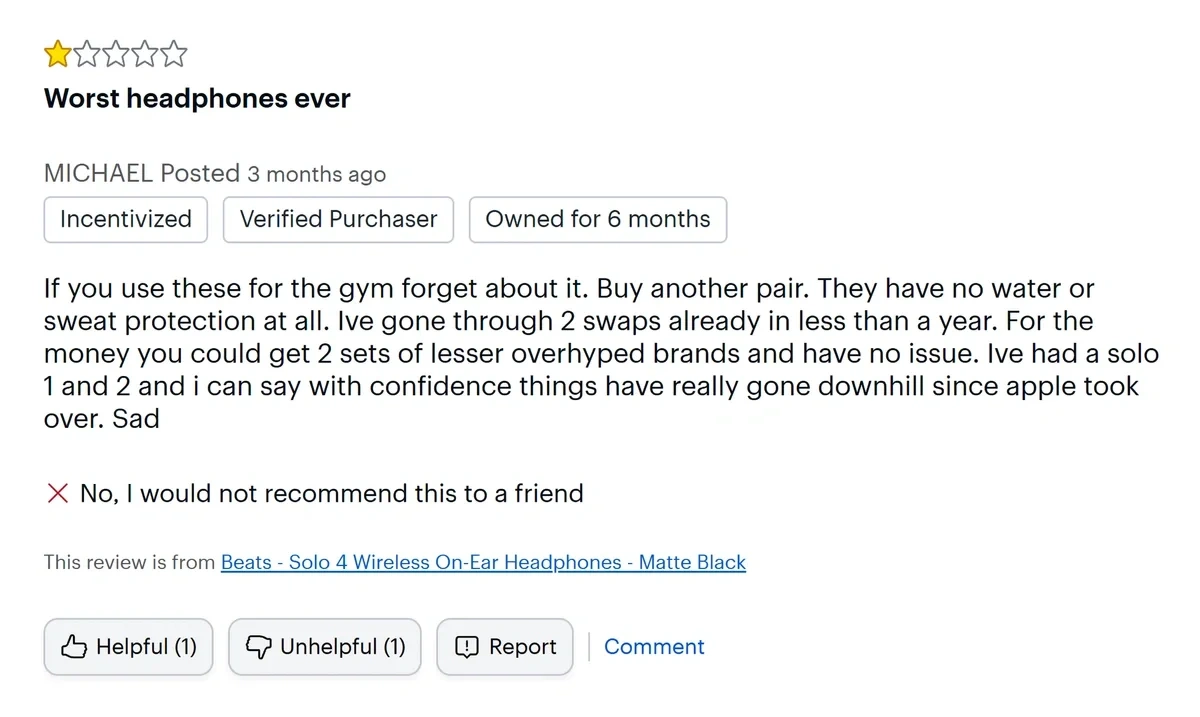
There are a lot of ways to assess the problems real people are experiencing. One is to check negative reviews for popular products in your prospective industry.
Forum sites like Reddit can also be fruitful hunting grounds for consumers’ complaints with existing products and services.
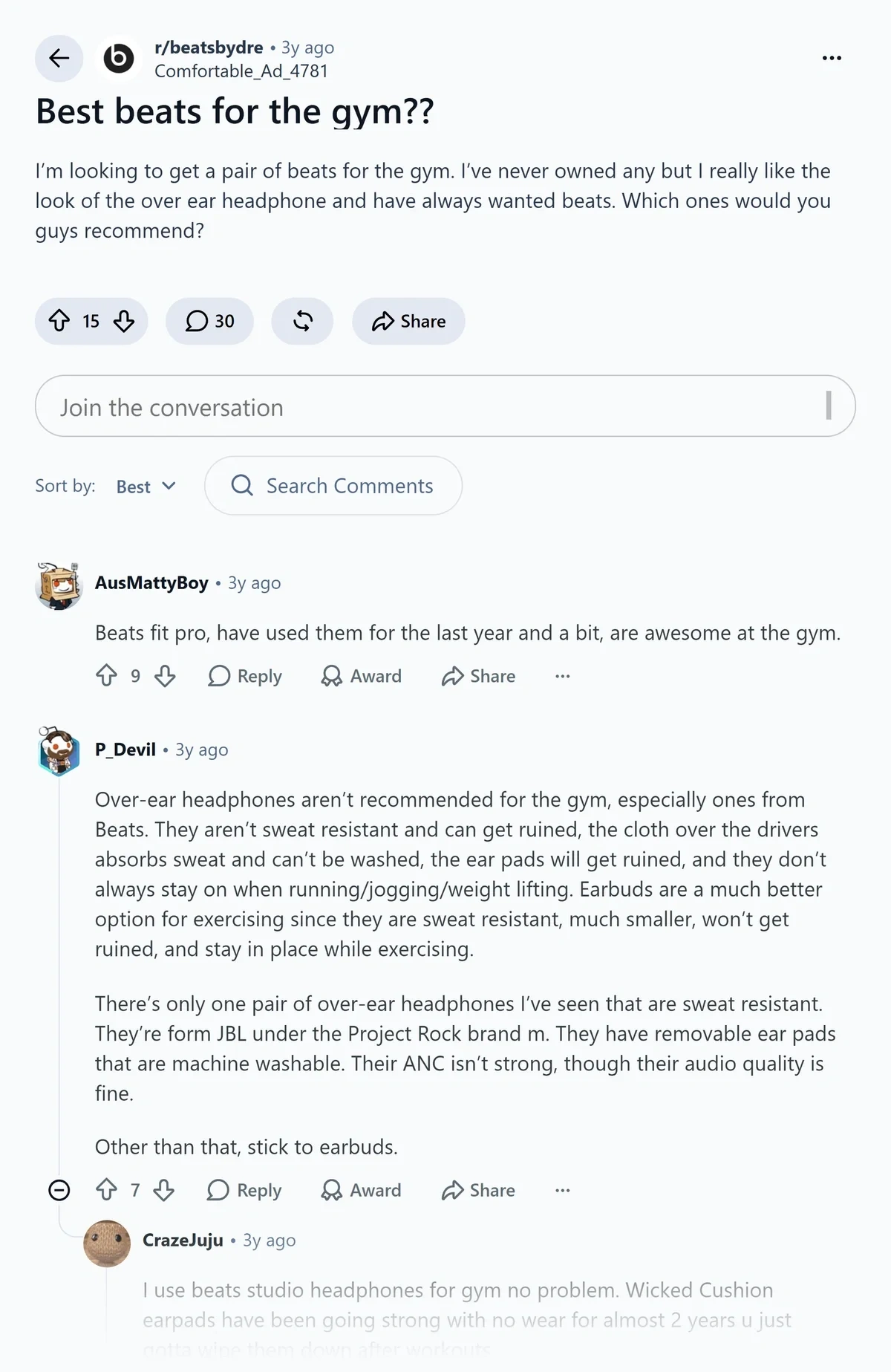
You want to look for consistency across the reviews and threads you read. Make sure you’re not just fixating on edge cases, but are finding recurring pain points your target audience is willing to pay to fix.
Step 2: Conduct Market Research
Knowing the “why” behind your business idea is a solid start for gauging whether there’s a customer base for your product or service. But the next step in your niche validation is to conduct market research to gather real data on consumer interest.
Market research is an important practice, and you can build a daily routine to stay on top of changes in your industry once you’ve launched your business.
For now, there are two areas to look into: trend analysis and keyword research.
Exploding Topics Pro is my preferred tool for assessing trending topics online. To get a sense for how popular your product idea currently is, head over to the Trends Database and search for it.
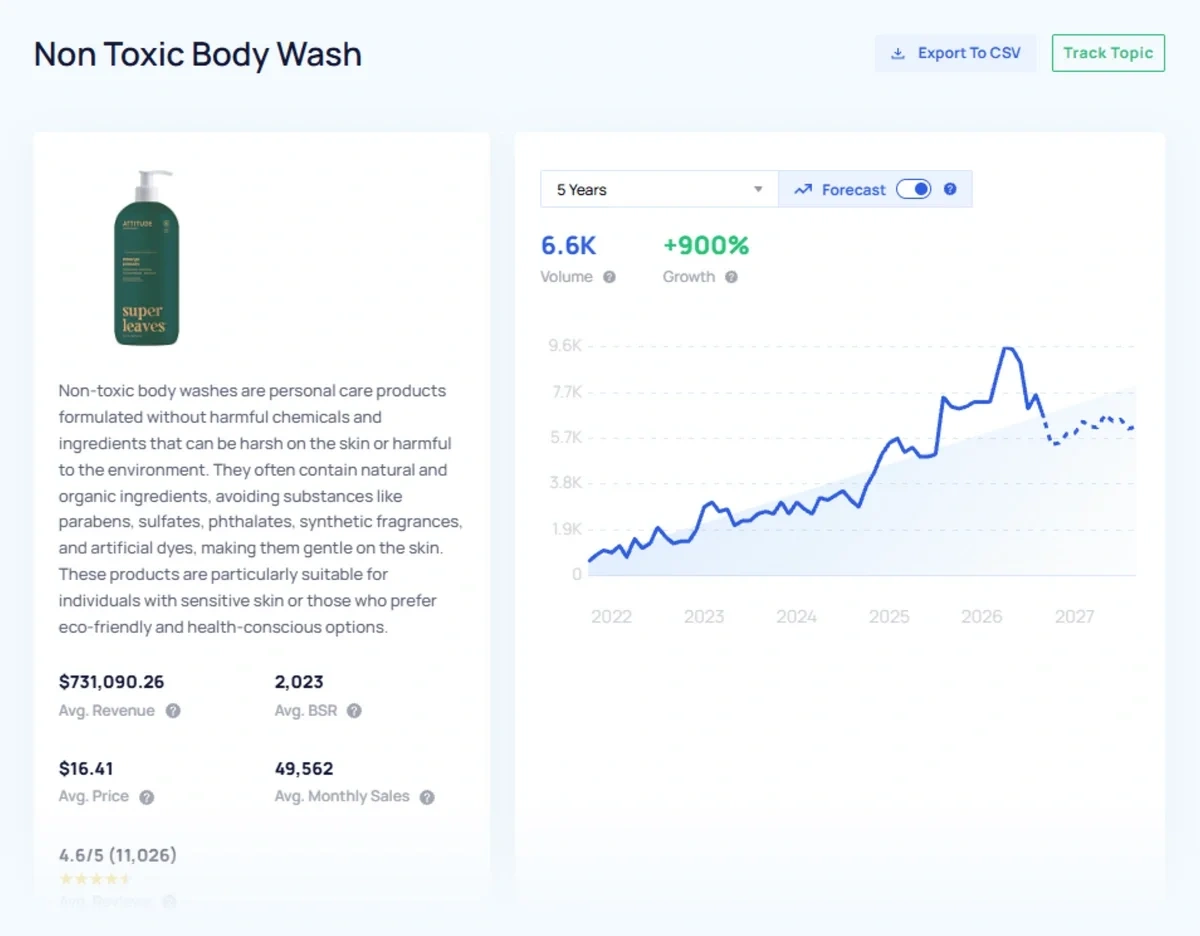
Assess the results, and pay particular attention to the growth curve. If your product idea has already peaked, by the time you’re ready to launch interest will be waning and you’ll have a hard time getting off the ground.
I also recommend looking at the Related Trends section.
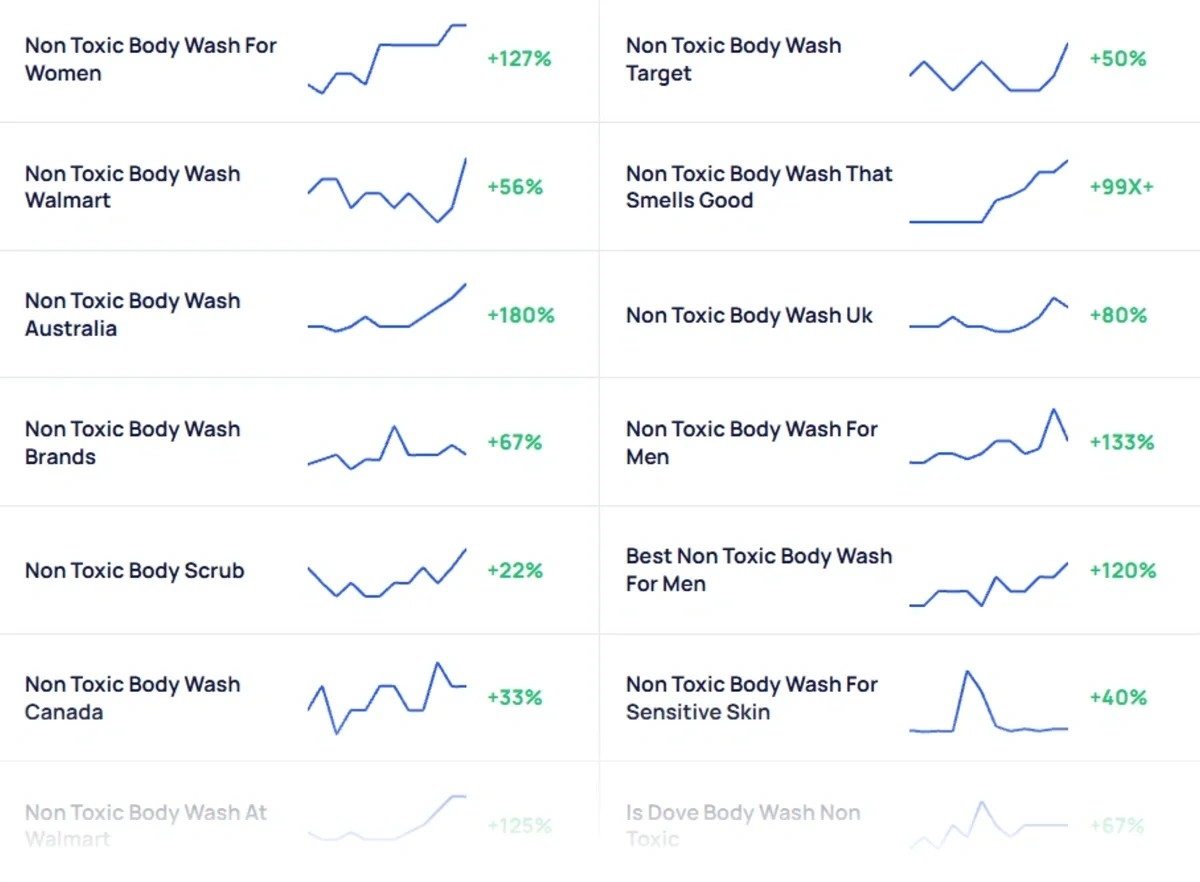
This can show you trends that may provide more insight into what customers find compelling about your product idea, or additional pain points you might address. For instance, in the example above, you can see related trends for “non-toxic body wash that smells good” and “non-toxic body wash for sensitive skin.”
Next, use a keyword research tool like Semrush to check the search volume and competition for your product or service.
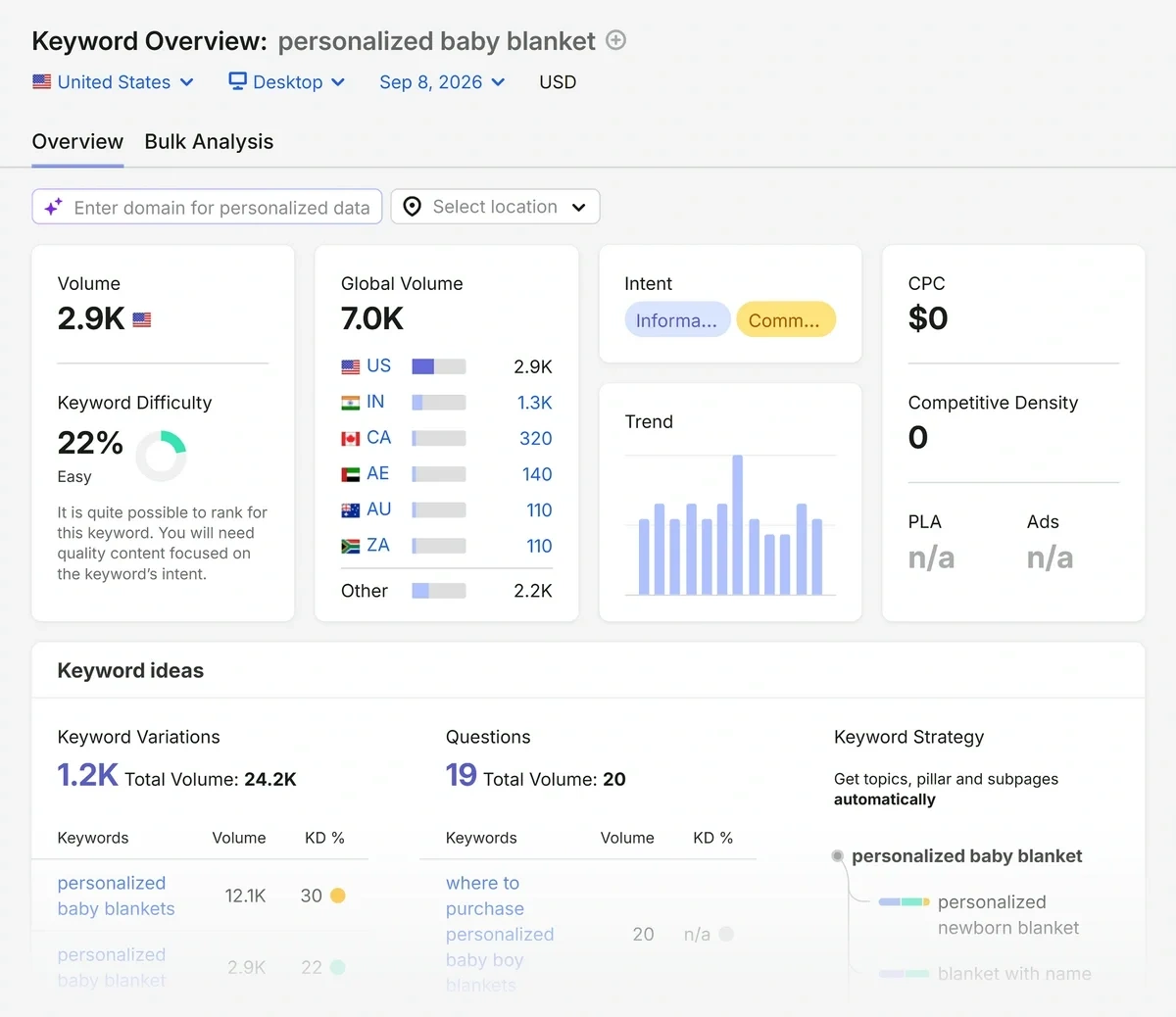
Don’t be too put off if the search volume isn’t off the charts. As long as you can prove there’s sustainable growth using Exploding Topics data, there’s reason to believe that the search volume may be on the rise. Around 1,000 monthly searches is a solid benchmark.
You also want the competition for your keyword to be high enough to show that there’s an established market, but not so high that it will be difficult to rank your website for keywords related to your product. I recommend aiming for between 15% (Easy) and 49% (Possible) keyword difficulty.
Step 3: Complete a Competitive Analysis
Once you’re sure there’s a substantial market for your business idea, it’s time to start looking into who is already operating in the industry.
Competitive analysis is about understanding the brands that are doing well in the space you want to enter. This will not only give you inspiration for what’s currently resonating with customers, but also provides the opportunity to find gaps that existing businesses have left and you can fill.
I’ve written a complete guide on how to do an e-commerce competitive analysis, so I’ll share the short and sweet version here:
- Define Your Goals: In this case, you have two goals for competitive analysis. The first is to validate that there is existing demand, and the second is to find competitive gaps (also known as opportunity).
- Identify Competitors: A simple Google search may turn up some top contenders. You can then use those brands to find additional players using Semrush’s Market Overview tool.
- Understand Their Target Audiences: Learn more about who’s shopping in your prospective industry, and what makes them tick.
- Assess Value Propositions: Consider what competitors are providing beyond the actual product or service to attract consumers.
- Analyze Marketing Strategies: Discover where your audience spends time online and what marketing strategies resonate with them.
- Search Market Trends: You already took care of this in your market research in the previous step.
- Spot Competitive Gaps: Look for unmet needs in your market and consider how you can address them with your product or service.
If you want to take this a step further, you can also do a full competitive product analysis for the top two or three competitors you discover. This may help you uncover additional opportunities to bring something fresh to the market.
Step 4: Refine Your Product Idea
You’ve collected a lot of data now about your market and competitors. This information should shape your existing product idea and help you refine it to better appeal to your audience.
At this point, you need to ask yourself questions like:
- How could my product better solve consumers’ pain point(s)?
- Are there any meta trends or secondary keywords from your market analysis that could help you niche down and make your product more specific?
- What changes can you make to your product or service to fill competitive gaps in your market?
- Can you offer additional value propositions to stand out from your competition?
Take some time to brainstorm changes to your product, or product variations, before you move on to the next step.
Step 5: Calculate Your Potential Return on Investment (ROI)
E-commerce business finances require careful balance. You might have a great product with high demand, but if it costs more to produce than you can sell it for, you’ll still end up under water.
While you don’t need to do a complex financial analysis at this stage, you do need to know if your product has the potential to be profitable.
Some simple math will do the trick here. Calculate:
- Basic Monthly Expenses: Your website, the cost to produce your product (or hours to complete your service), and other ongoing costs such as marketing tools and credit card processing fees.
- Potential Monthly Revenue: The price of your product or service multiplied by the number of sales you anticipate you can make each month.
- Estimated ROI: Subtract your expenses from your revenue to find how much profit you’ll likely make each month.
If your ROI is too low to be sustainable, building a whole business around this product isn’t the way to go. You can look into ways to reduce expenses and increase revenue, or move on to a new idea.
Step 6: Test Your Product or Service
If you calculate your estimated ROI and feel confident you can make a steady profit, it’s time to take your product for a test drive.
Creating a Minimum Viable Product (MVP) and rolling it out to a small segment of early customers to see how it’s received is the final test of how well it’s likely to perform in the wild.
An MVP doesn’t need to include all the bells and whistles you might like to see in your product when it launches. It needs just enough to hook customers and show them that you have the solution they’ve been looking for.
The idea is to put as little effort into creating the physical product as possible. If you’re providing a service, you might consider a simplified offering that gives clients a sense of what they would get if they purchased your full package.
Once you have your MVP, you need to get it in front of consumers. You can do this in a few different ways:
- Launch a startup campaign. Include product images of your MVP and a thorough description of the problem(s) it solves. The contributions you receive should help you gauge interest in your product, and can also double as preorders if you like.
- Grow an email list. Create a landing page on your e-commerce site with your product details and a sign up form where customers can opt in to learn more about your brand and receive notifications when your product becomes available for purchase.
- Start a social media profile. Post video demos and product photos to show how you’re going to solve customers’ pain points. Follows and engagement will help you assess interest.
If your testing is successful, you’ve checked all the boxes and can continue towards launching your business with the confidence that it can turn a profit.
Catch the Next Trend With Exploding Topics Pro
Exploding Topics can help with your e-commerce niche validation efforts, but it’s capable of much more, too. Track trending products, discover new startups taking off, and monitor key trends from your dashboard to stay on top of their growth.
Try it yourself, free for seven days, and see how many new product ideas you can claim at just the right moment.
Stop Guessing, Start Growing 🚀
Use real-time topic data to create content that resonates and brings results.

Exploding Topics is owned by Semrush. Our mission is to provide accurate data and expert insights on emerging trends. Unless otherwise noted, this page’s content was written by either an employee or a paid contractor of Semrush Inc.
Share
Newsletter Signup
By clicking “Subscribe” you agree to Semrush Privacy Policy and consent to Semrush using your contact data for newsletter purposes
Written By


Molly is a technical content writer with a passion for making technology easy for anyone to understand. She specializes in content... Read more