Exploding Topics
Remineralizing Gum search volume grew from under 100 to 27,100 monthly searches between February 2024 and January 2026.
Remineralizing gum
+5100%
GLP 1 Supplement search volume grew from 5,920 to 74,000 monthly searches between February 2024 and January 2026.
GLP 1 supplement
+1150%
Soursop Bitters search volume grew from 9,900 to 110,000 monthly searches between March 2024 and February 2026.
Soursop bitters
+1011%



Get Advanced Insights on Any Topic
Discover Trends 12+ Months Before Everyone Else
How We Find Trends Before They Take Off
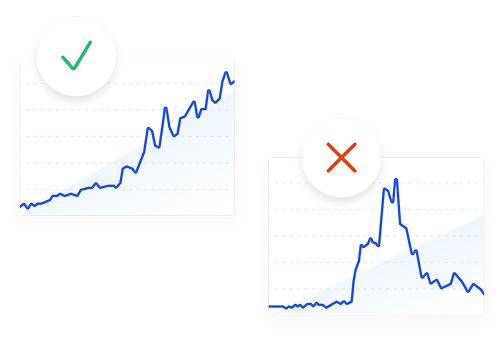
Exploding Topics’ advanced algorithm monitors millions of unstructured data points to spot trends early on.
Keyword Research
Performance Tracking
Competitor Intelligence
Fix Your Site’s SEO Issues in 30 Seconds
Find technical issues blocking search visibility. Get prioritized, actionable fixes in seconds.
Powered by data from
Latest Blog Posts
Featured Case Studies
See what's trending before everyone else
Each week, we'll send you our best Exploding Topics. Plus, expert insight and analysis.
Google Trends vs Exploding Topics: Comparison for 2026

 Add Exploding Topics on GoogleAdd Exploding Topics as your preferred source to see more of our stories on Google.
Google Trends is a powerful tool for analyzing topics on the web.
While most tools can’t match Google Trends' extensive database, alternatives like Exploding Topics offer great contextual depth for each topic they track.
I’m a regular user of both tools for my marketing and SEO tasks. And I find great value in using both tools depending on the kind of information I want to extract.
In this post, I’ll compare Google Trends and Exploding Topics, focusing on specific features that make both tools worthy additions to any marketer’s stack.
Key Highlights: Google Trends vs Exploding Topics
| Exploding Topics | Google Trends | |
| Design | Visual grid revealing trending topics in a category and trend charts | Keyword-first flow with trend charts for individual search terms |
| Trend data sources | Google search, social media, blogs, and more | Web search, image search, YouTube search, news search, Google Shopping |
| Search metrics | Average Google search volume, sales and revenue data (products), funding, stage, and headcount (startups) | Relative search interest score on a scale of 0-100 |
| Social media activity | Breakdown by channel across popular platforms (reddit, linkedin, TikTok, pinterest, etc.) | None |
| API | Historical data up to 15 years back, forecasts, detailed parameters and filters | Up to 5 year of past data, with relative interest indicators only |
| Other reports and features | Meta trends, weekly trend reports, TikTok insights for social commerce, forecasts and trend indicators | Multi-trend charts, Gemini autosuggestions, Trending now data |
| Price | Paid plans start at $39/mo | Free |
How Does Google Trends Compares with Exploding Topics?
Google Trends has the largest database of trends, and is often useful for topic research by diving deeper into trending clusters of keywords associated with the seed topic.
The Gemini integration meaningfully improves topic discovery. But it still doesn’t enable visual discovery of unfamiliar trends as Exploding Topics does.
Along with other shortcomings like the lack of a dedicated product database and absolute search metrics showcases Google Trends’ many limitations compared to Exploding Topics.
Basic Trend Analysis
Google Trends shines as a trend analysis tool when you want to measure the popularity of a topic you already know about.
The typical flow inside Google Trends goes something like this:
Type in a topic or a keyword > analyze the topic popularity on a chart > find other queries and topics related to the trend > use the insights in your marketing.
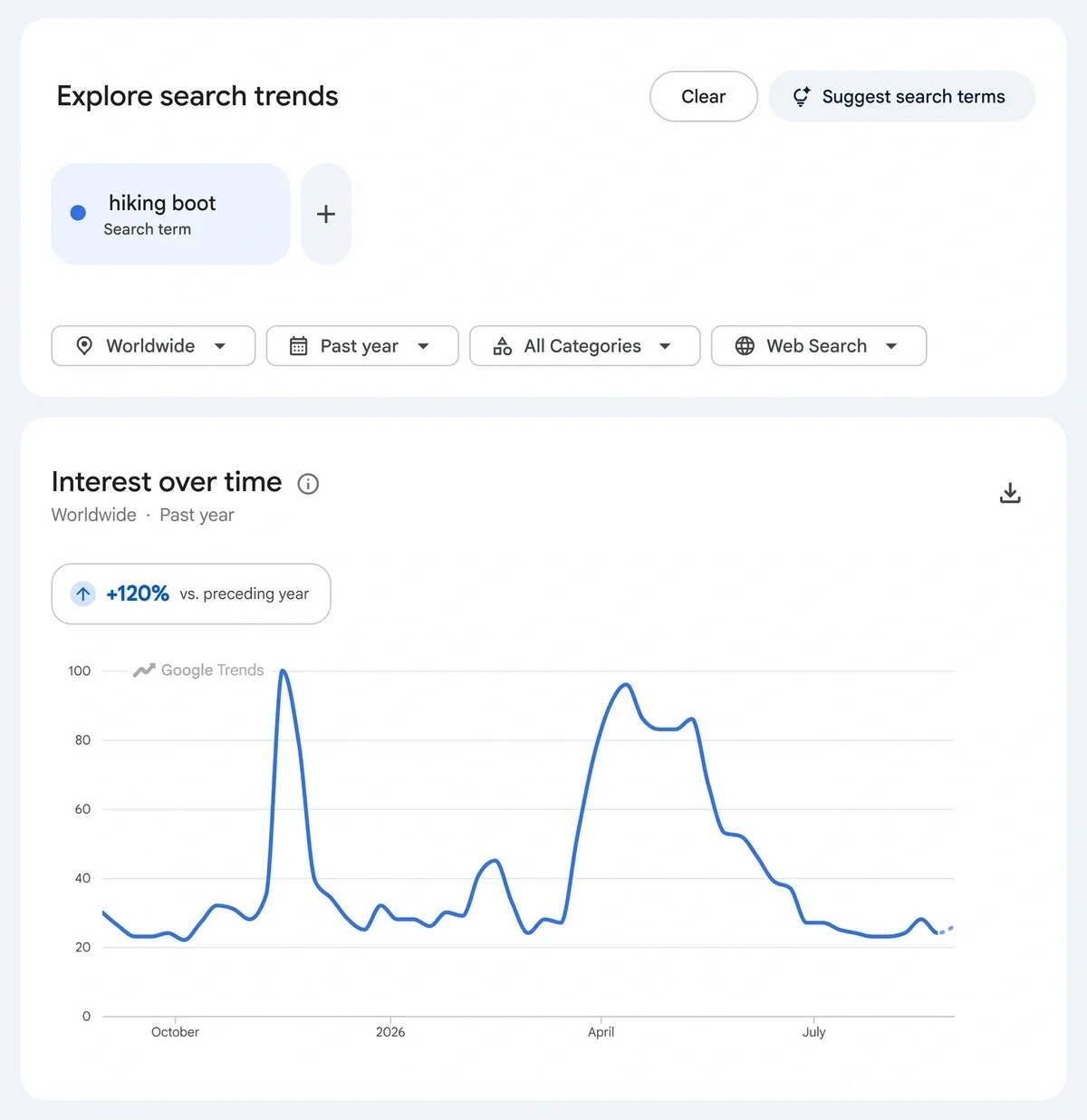
Google Trends doesn’t give you an exact number for a topic’s popularity. Instead, it uses a relative scale that measures interest in a topic over time.
A score of 100 means the topic was at its peak popularity at the given point in time, 50 means half as popular, and 0 indicates Google Trends doesn’t have enough measurement data for the topic.
Personally, I’m not a huge fan of this scoring metric. It’s hard to gauge how popular a topic really is without any absolute numbers.
Things get especially muddy when you’re comparing multiple search terms.
All you get is a relative score indicating a topic’s current popularity compared to its own peak, without any insights into whether one topic is objectively more popular than the other.
That aside, Google Trends offers great filters. It’s one of my favorite features about the tool.
While you don’t have a ton of filtering options, the ones you get go quite deep:
- Location: Every country, down to the state/province level
- Time: From the past hour to all the way back to 2004
- Categories: Dozens of main categories that break into a variety of subcategories
- Search platform: Lets you analyze a topic’s popularity on web search, image search, news search, Google Shopping, and YouTube.
Tip: Google Trends is far from ideal when it comes to e-commerce and product trend research. That said, there are several use cases where Google Trends comes in handy for e-commerce research.
The sections at the bottom showing top queries and fastest ising queries are super helpful for content teams.
You’ll often get related keywords and content ideas to develop a cluster for your core topics.
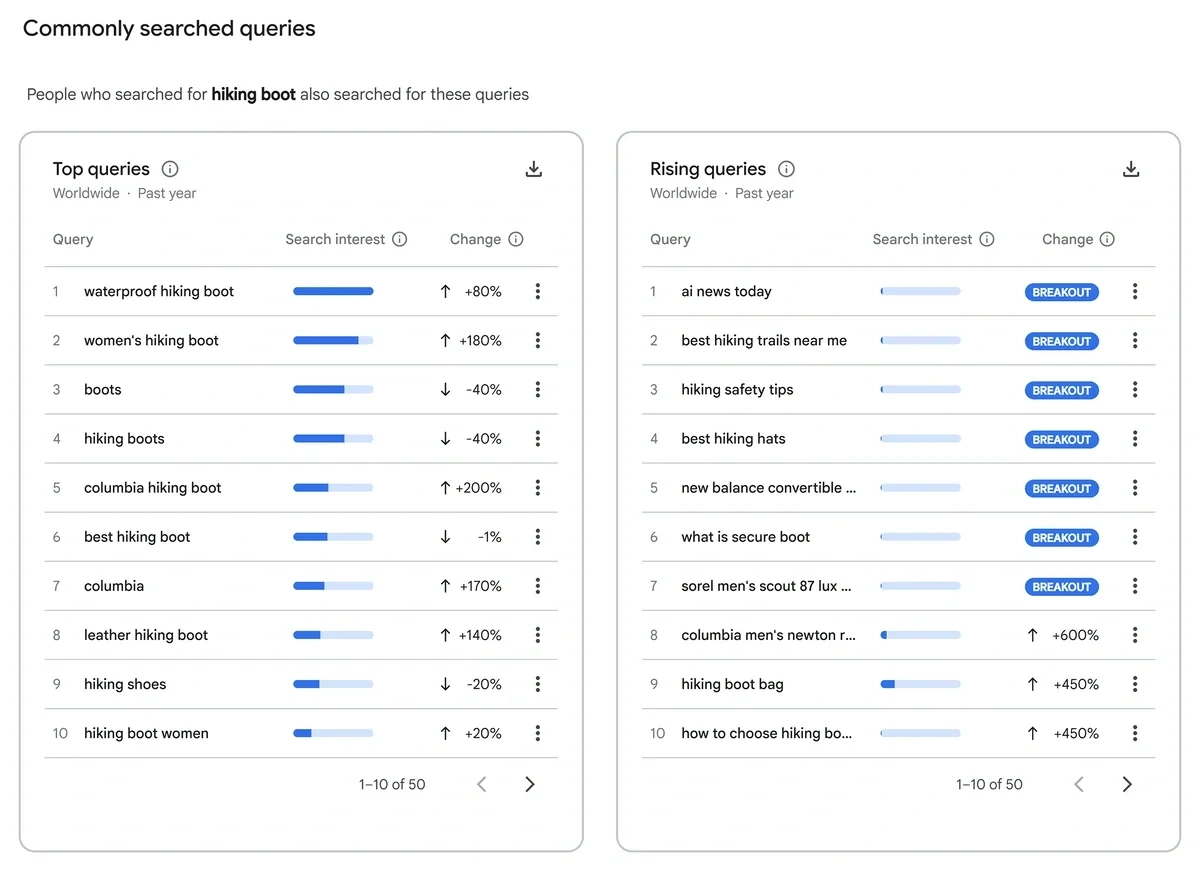
The queries Google shows in this section are breaking out in popularity, so you have a good chance of attaining first-mover advantage if you publish your content fast enough.
Trend Comparisons
One of the nicer features you get in Google Trends is the ability to compare multiple search terms.
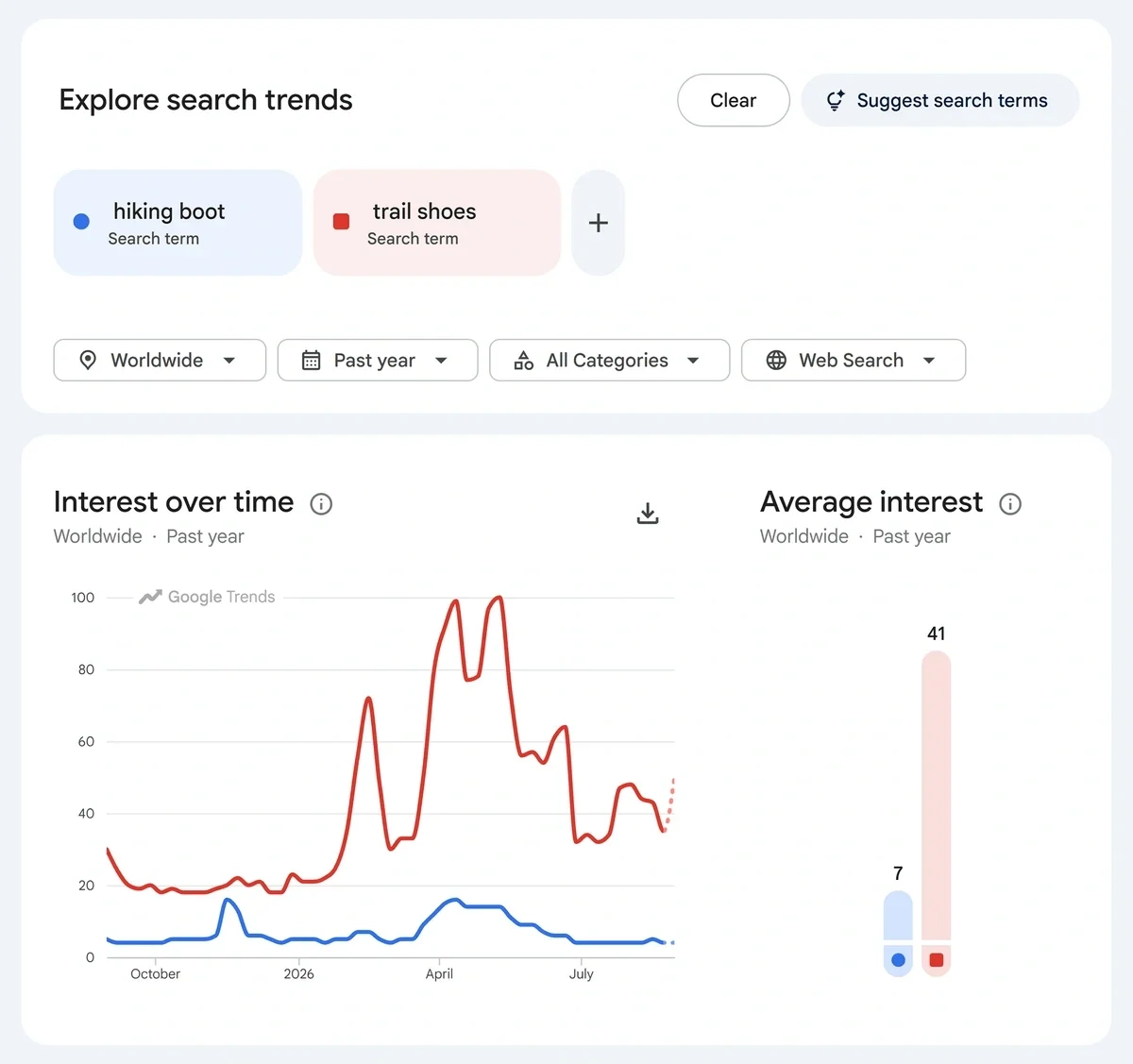
With every term you add, you’ll see a new line chart tracing the trend’s average search interest in the same graph.
This works whether the terms you want to check are completely unrelated or if you want to find the more popular trend between a set of closely related queries.
It’s convenient to analyze multiple terms on the same screen when you’re interested in several topics rather than opening the tool in separate tabs.
That said, there is a huge limitation here.
Since you only get relative metrics for search interest, there’s no reliable way to compare the popularity between two related queries.
That can throw off your decision-making as a content marketer if you’re picking one of several topics based on their popularity.
But the convenience of analyzing unrelated trends manifests in another important way.
The tables for related keywords show up with tabs for each term when you type in multiple terms to analyze.
That means you can cycle smoothly through your main queries using the tabs to change the view in the related topics and queries tables, matching the query you want to see.
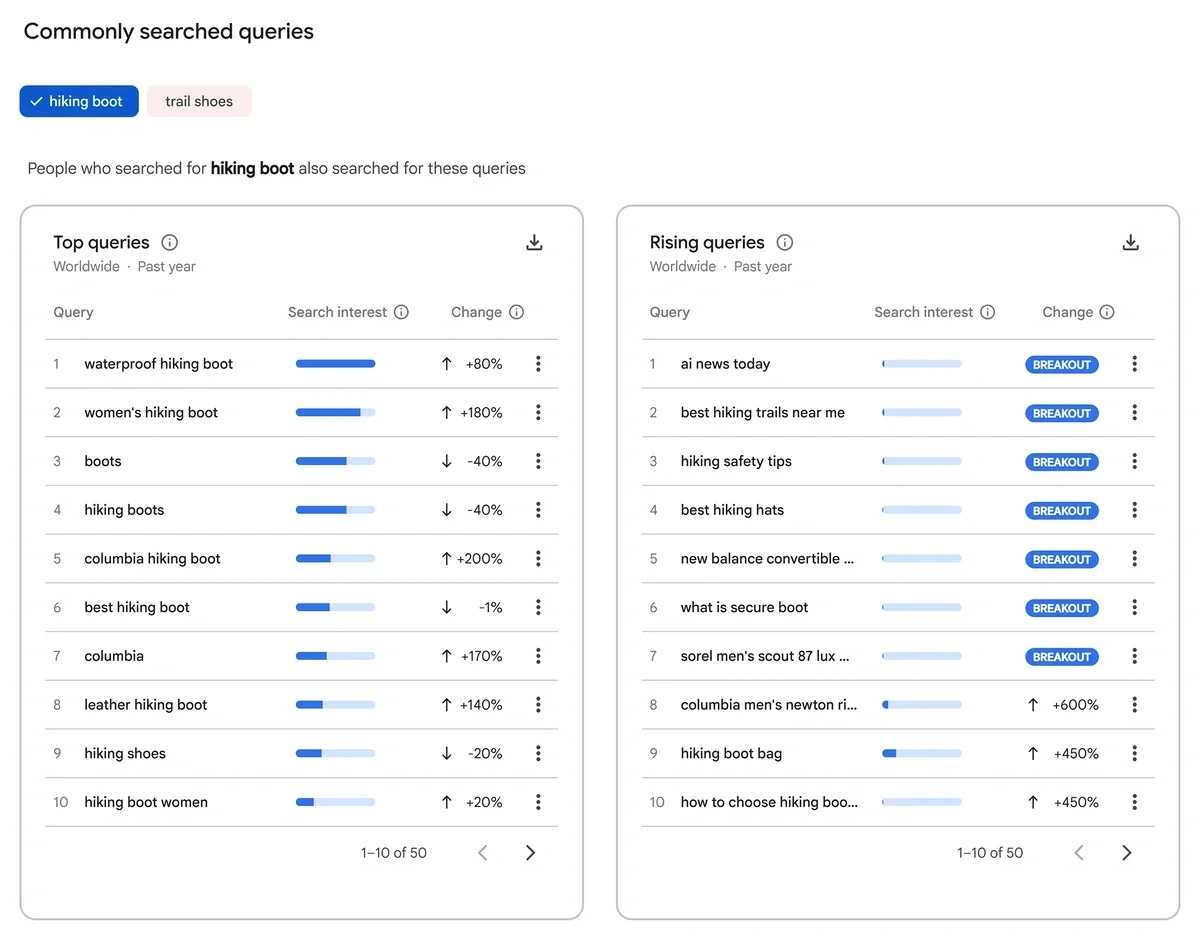
From a usability point of view as well, this is ideal.
All you have to do is plug in your search terms in one go and bulk analyze them to find how trends related to your topics are performing on the web.
It’s an overlooked Google Trends feature that’s seriously helpful for SEO, especially when it comes to competitor research and topic planning centered on trending ideas.
Trend Discovery with Gemini
Google Trends’ generative AI features with Gemini are really good in certain situations, such as when you don’t know the exact query you want to analyze.
For instance, say you only have a vague idea for a topic.
Use the Gemini-powered search suggestion feature to describe your general area of interest.
Gemini will fill in the blanks for you and automatically run the results for the search terms matching your description.
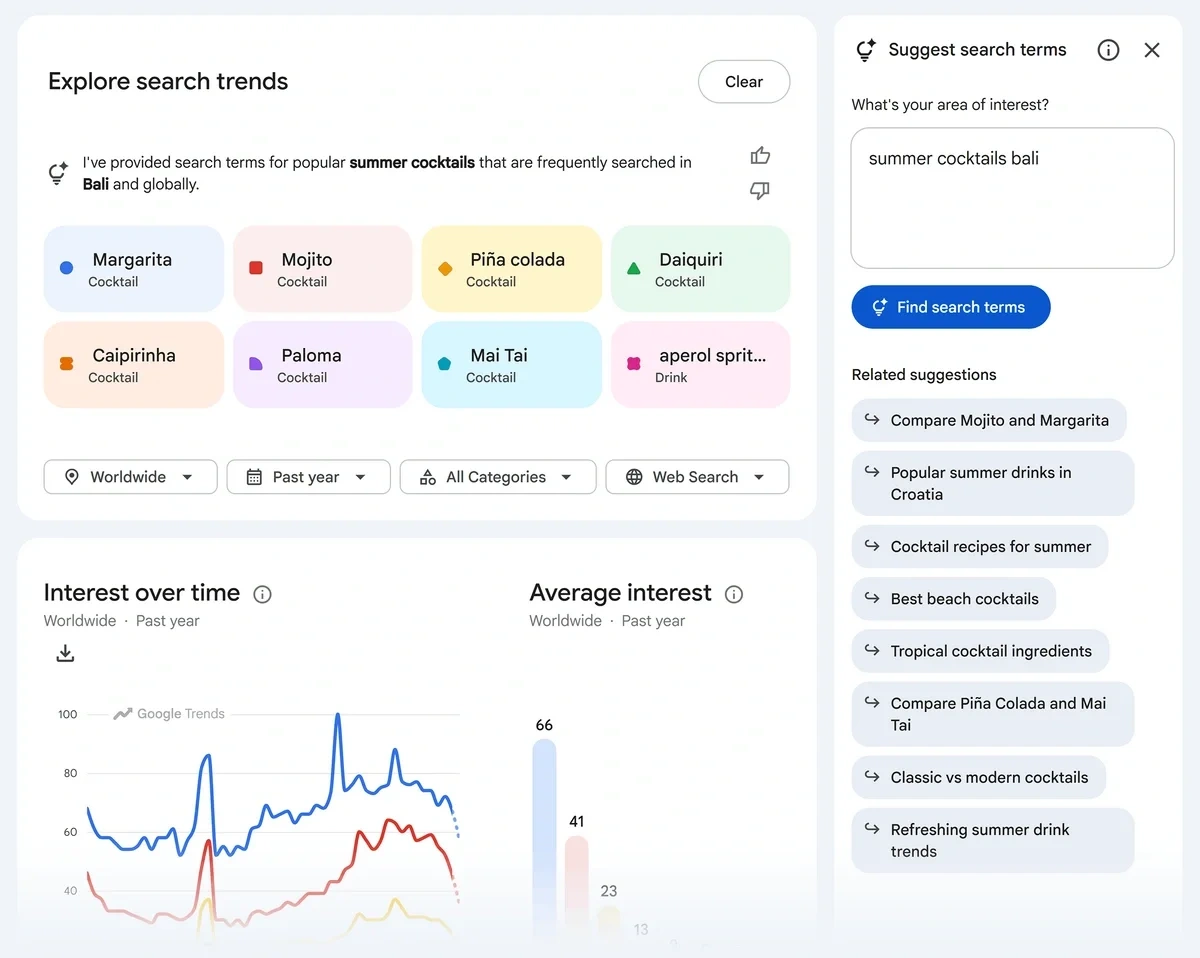
While Google Trends generally isn’t a very good tool for trend discovery, the Gemini search suggestion feature is a step in the right direction.
Despite these improvements, Google Trends doesn’t hold up well against tools like Exploding Topics.
That’s because Exploding Topics is designed to be discovery-focused rather than just provide good popularity analysis.
Trending Now
Google Trends has a dedicated dashboard that shows top trending searches at the moment.
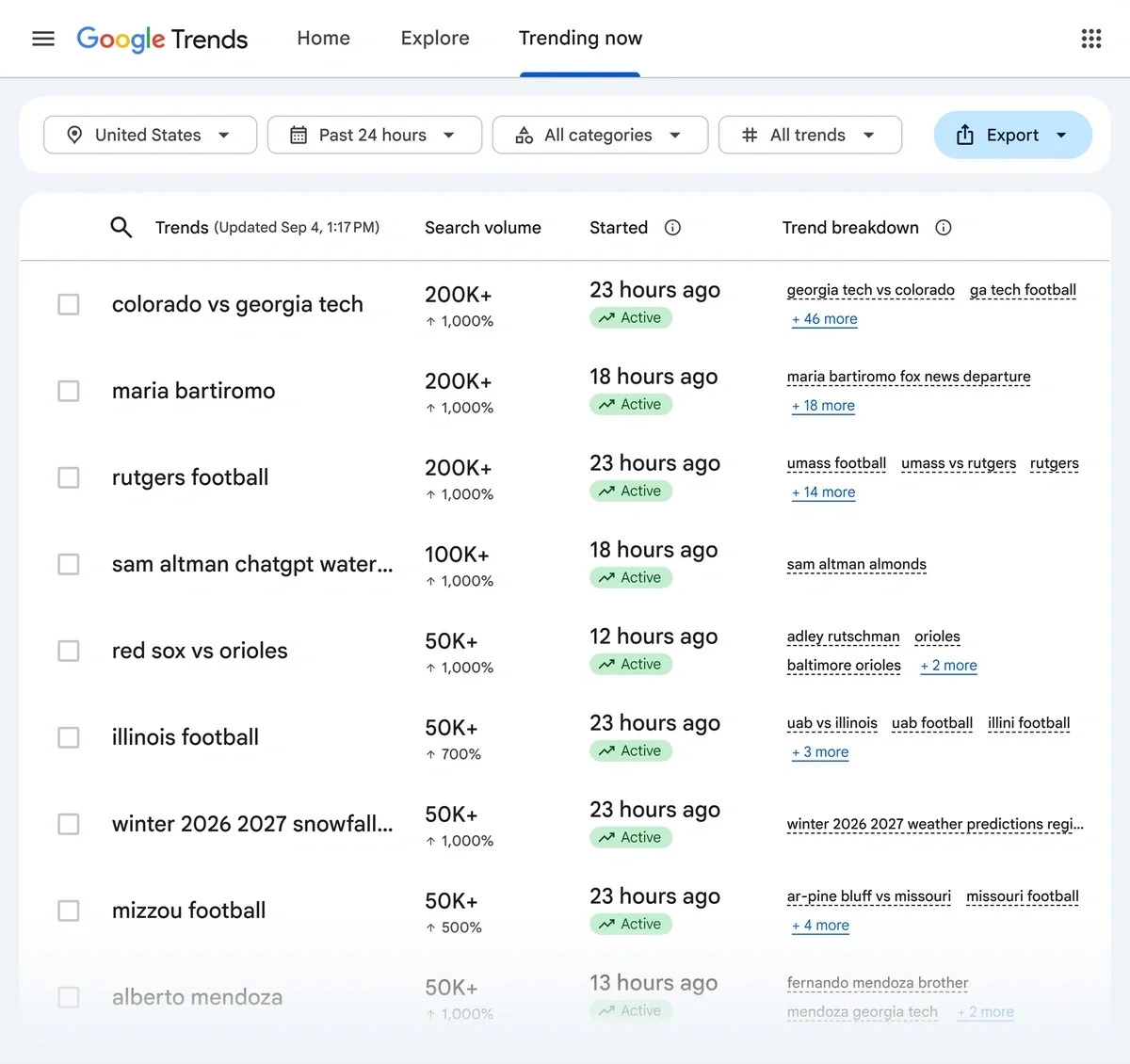
If you want to see what people have been typing into Google in the past 24 hours, this is the place.
The default timeframe is 24 hours. But you can change the timeframe filter to trends that have only just started trending (past 4 hours) or go back at least a week.
What’s interesting about the Trending Now dashboard is that you get an approximate search volume for the keywords.
This is a piece of information that’s missing in other parts of Google Trends, where it would be significantly more valuable.
That’s because the Trending Now report is essentially a nice curiosity for casual users.
Its value in marketing or business is extremely limited, beyond providing some guidance to news outlets that need to validate a trending story before rushing to publish.
Most of the time, the only trending ideas you’ll find are related to sports, entertainment, and politics. For any business operating outside these areas, the Trending Now report is of little use.
Is Exploding Topics a Superior Alternative to Google Trends?
Exploding Topics goes considerably further than Google Trends to offer trend data with greater depth and context. It’s especially useful for discovering trends that you might have no prior knowledge of.
With a dedicated products and startups database, Exploding Topics serves e-commerce and investors with a precision that Google Trends has no answer to. Plus, the Exploding Topics API enables you to extract highly specific topics meeting your exact criteria, enriched by historical data and forecasts.
Topic Trend Trend Discovery
Exploding Topics has a trend database consisting of a diverse set of categories.
If you have a topic in mind, you can type it in the search bar on the database page.
But if you want to explore what’s trending in a niche, that’s where Exploding Topics is at its most useful.
Select a category to see a collection of trending topics related to the category.
Each topic appears as a card with useful metrics like its search volume and growth rate, along with a trend chart.
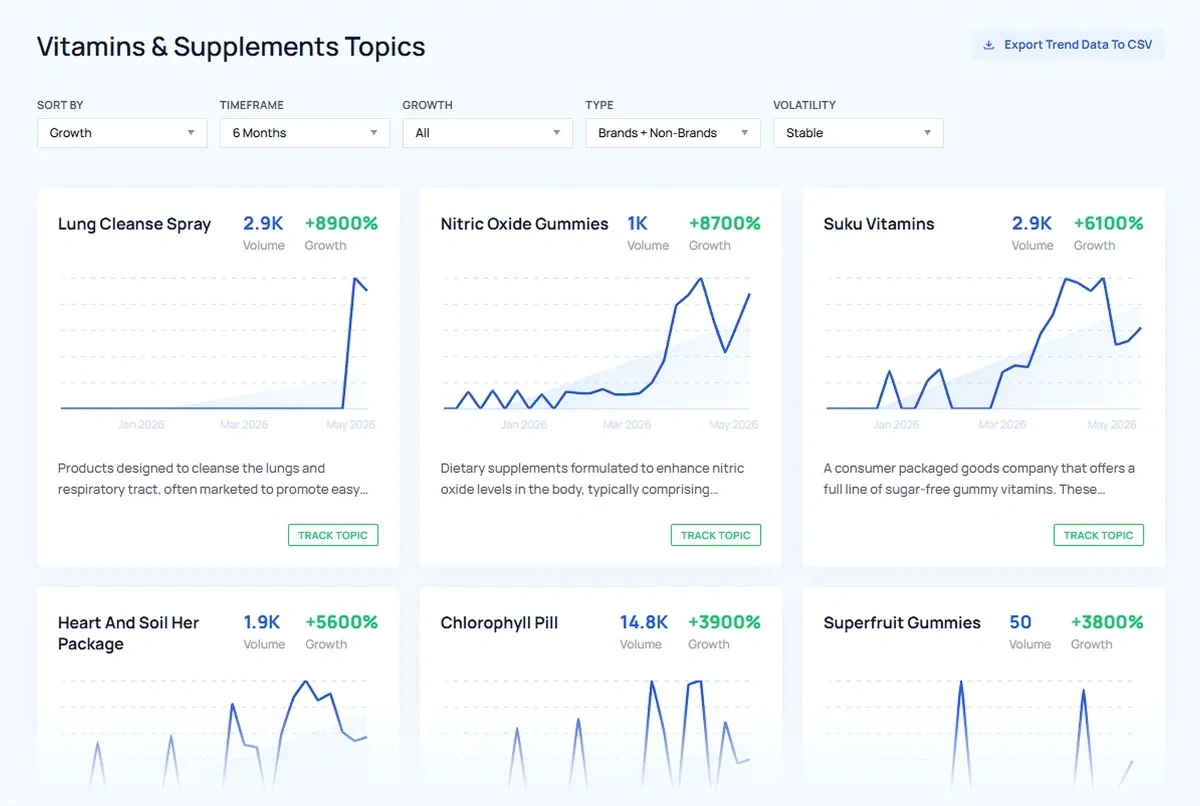
You also have a nice set of filters.
And these are particularly important in a tool like Exploding Topics since trend discovery starts at the category level here, unlike Google Trends.
- Sort by: Lets you select a metric (search volume, growth, discovered date etc.) for sorting.
- Timeframe: So you can select the timeframe for analysis, including future forecasts.
- Growth: Allows you to filter by the growth stage of a trend (regular, exploding, or peaked).
- Type: Gives you the option to focus only on branded or non-branded trends.
- Volatility: Lets you focus on trends with strong stability.
Each trend in the database also includes a dedicated page with additional details and context.
You can characterize a trend manually by reading its chart and measuring the growth or decline in its search volume.
The tool labels a trend’s growth pattern, seasonality, and other characteristics if you’re unsure. These insights help understand the big picture about the topic in question.
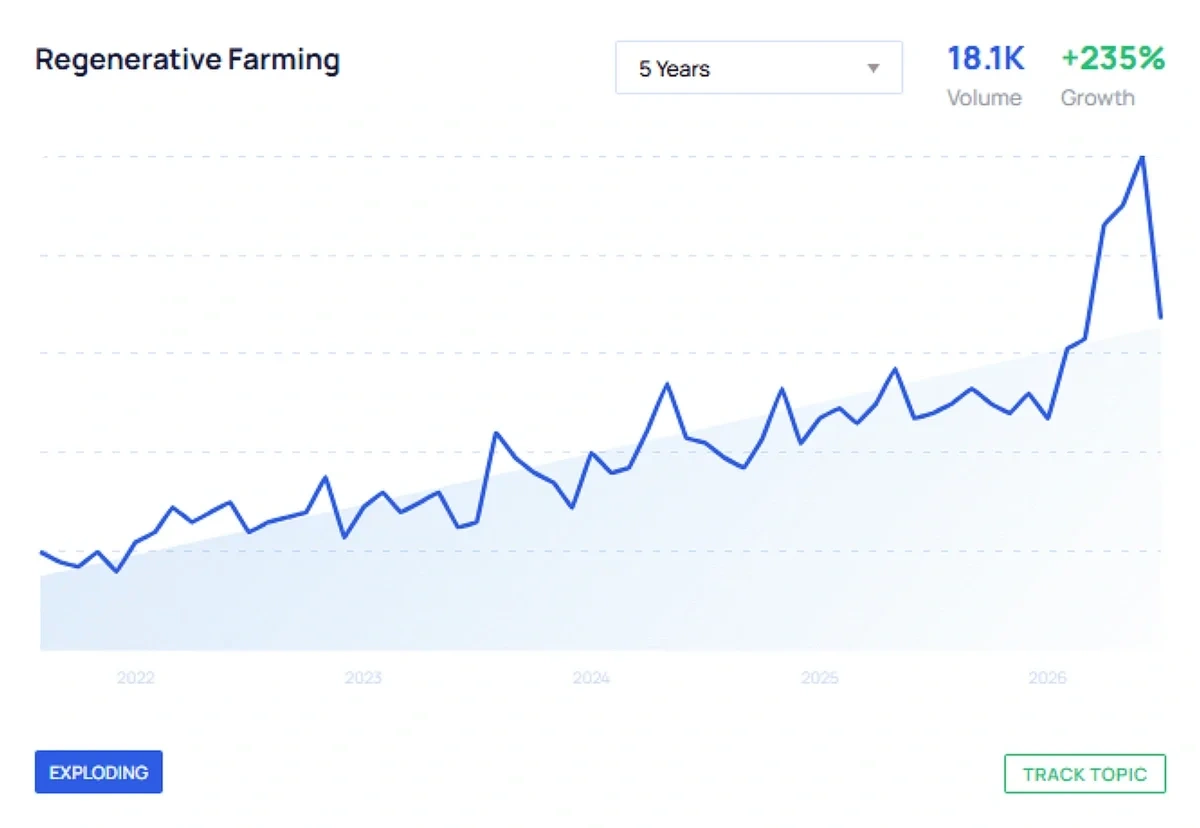
A seasonal trend could work really well for fashion and lifestyle blogs. But a security firm would usually need blog topics with a longer lifespan.
Exploding Topics allows you to make these calls about a topic much better than Google Trends.
Besides, Google Trends’ data looks only backward. With Exploding Topics, you can also see forecasts to determine the forward evolution of any given trend.
So you’re much more likely to spot opportunities before they’ve already become a popular trend.
Plus, having absolute search volume figures to work with makes the analysis more concrete.
Inside a topic page, you’ll also find social media activity levels that tell you how people are talking about a trend on different platforms outside of Google.
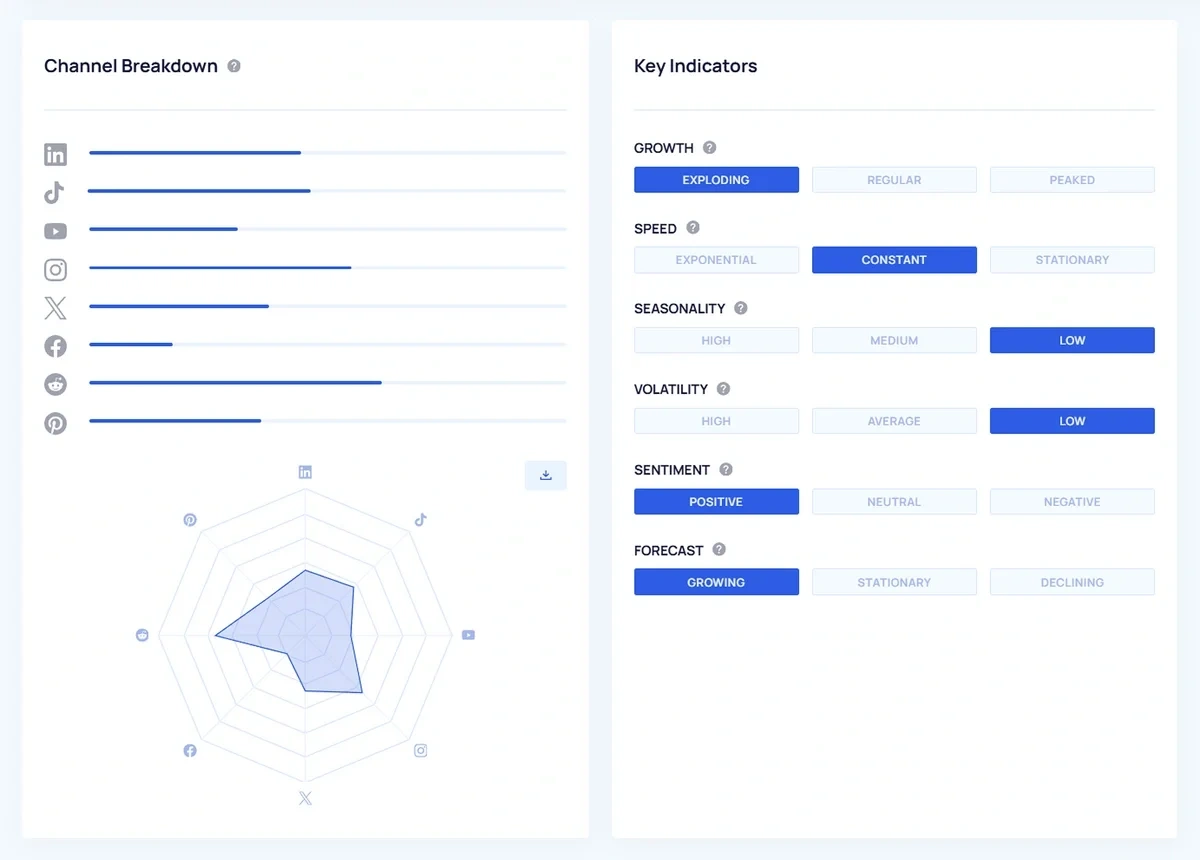
It’s another piece of data that helps you validate your topic research based on general popularity across the web. You’re not just limited to Google like you are with Google Trends.
Finally, there’s a Related Trends section that reveals trending topics closely related to the core topic.
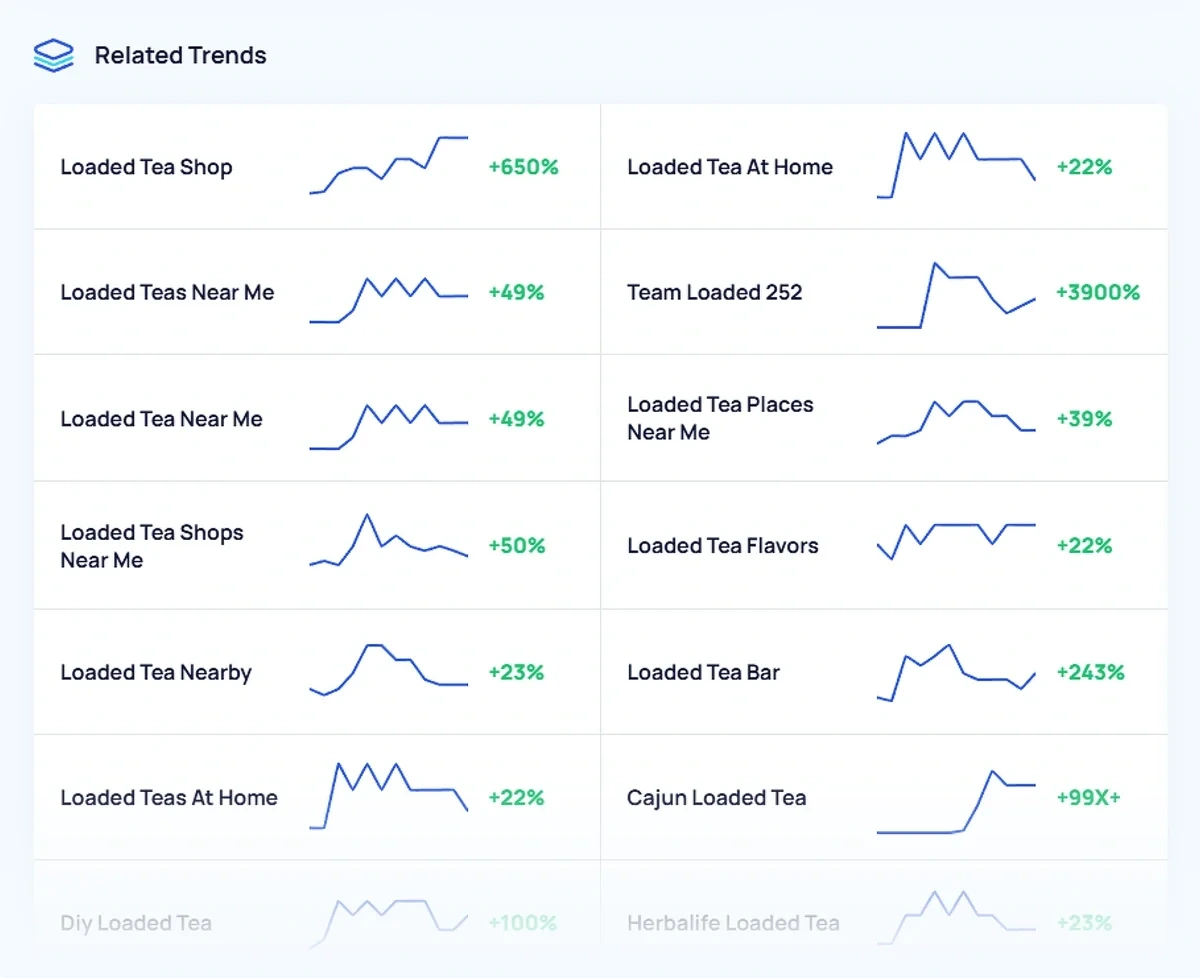
It’s a uniquely helpful feature that has helped me discover a topic idea with an angle I hadn’t thought of, all backed by real data.
Trending Products
Exploding Topics has a separate database of trending products, aimed at e-commerce businesses.
It’s one of the biggest gaps in Google Trends, and Exploding Topics covers it well.
The thing that I like most about the products database is how the information is presented.
On top of search volume, growth, and trend characteristics, this report also shows you product-specific data such as average revenue, sales, and reviews.
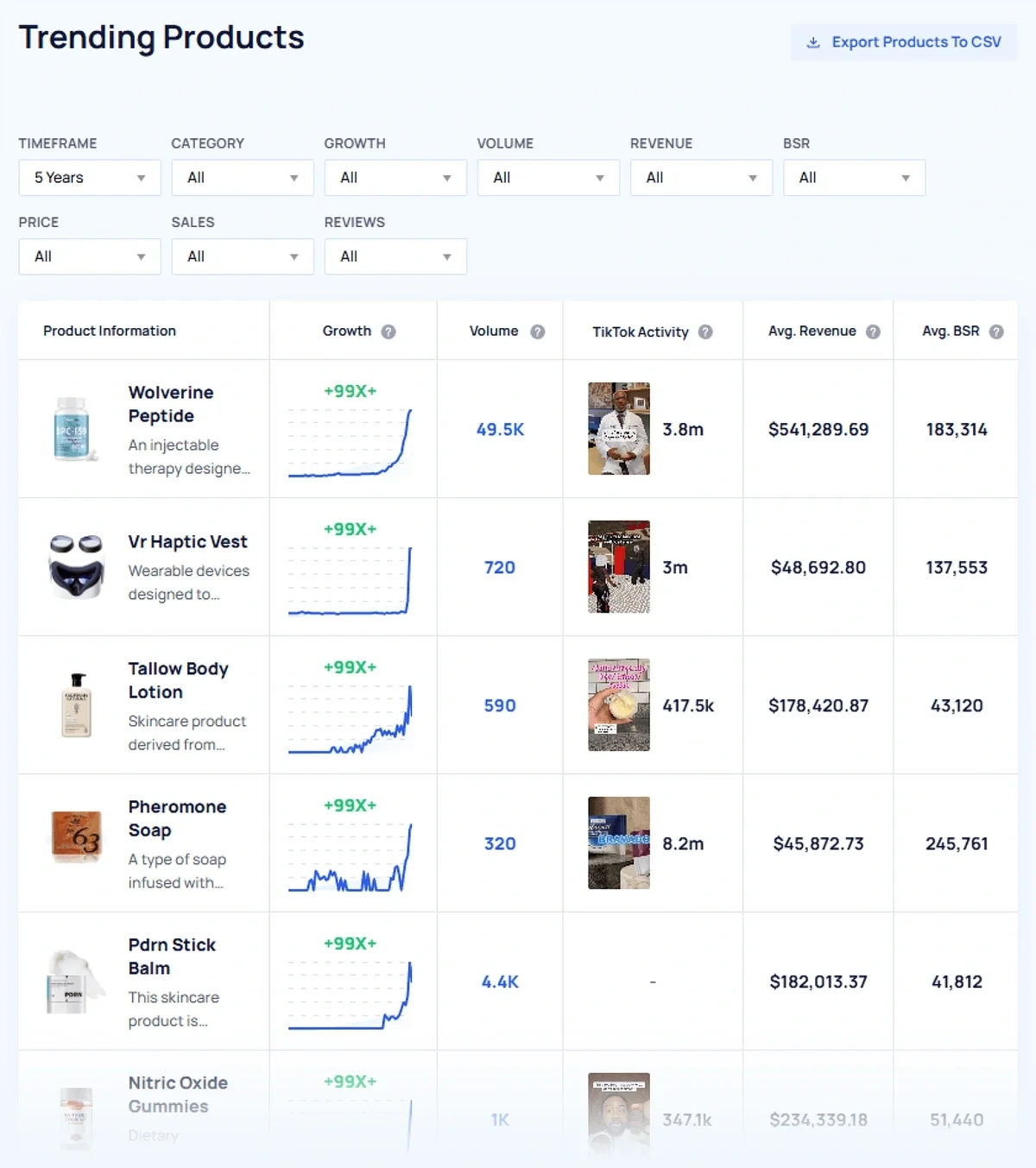
When it comes to products, simply a high search volume isn’t enough to decide your stocks, inventory, or any aspect of product planning.
Insights about sales, social media popularity, and other performance metrics of a product are critical to understand the full story.
The tool gives you additional filters in this report, allowing you to focus on products matching your criteria for search volume, trend growth, or sales performance metrics.
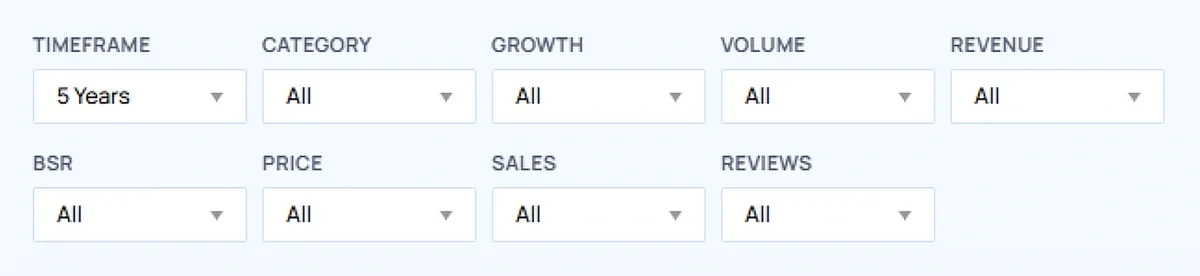
With Google Trends, you’re only limited to search interest data. Exploding Topics provides a deeper context with a variety of data points beyond Google, which help you make decisions for e-commerce with a lot more clarity.
Each product page offers additional details like:
- Key metrics: A summary of channel breakdown, trend indicators, product info, and historical trend (with forecast).
- TikTok insights: Reveals popular TikTok posts featuring the product in question with engagement metrics and relevant hashtags
- Top sellers: Highlights real product listings from e-commerce platforms with brands and seller info
- Related products: Shows other products similar to the one you’re investigating
- Related trends: Gives trending search queries and topics related to the product.
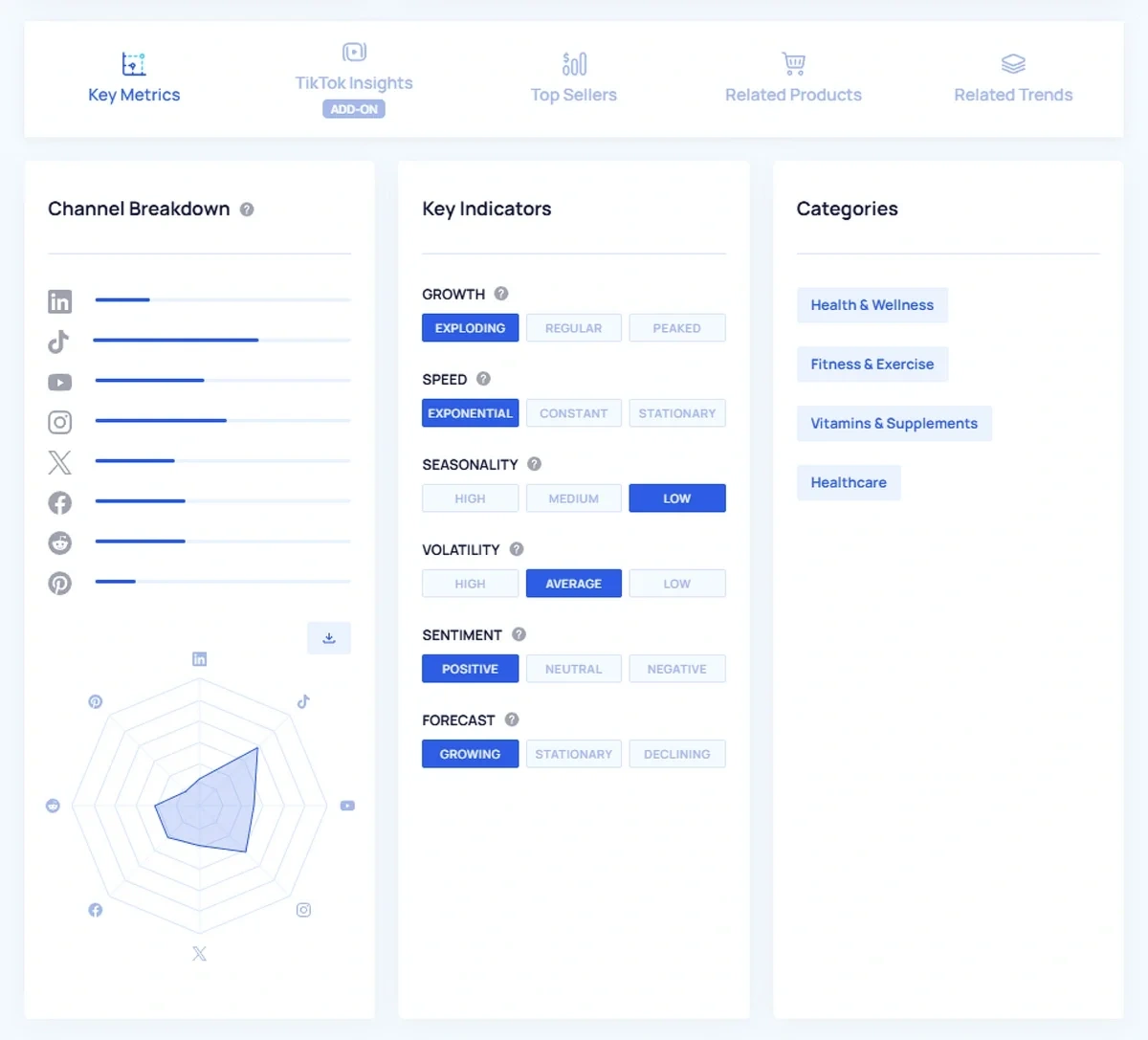
Exploding Topics pulls data from a variety of sources so you can validate your product idea with more conviction.
Search volume from the web is great, but social media activity and insights from TikTok almost eliminate any guesswork when you need a handle on the popularity of any topic before making a marketing decision.
Trending Startups
Exploding Topics also serves insights for investors and founders.
The startups database tracks trending companies across all prominent verticals.
It does more than just list companies based on search volume.
You’ll find valuable info on the company's current standing, brand search volume, and growth potential as well.
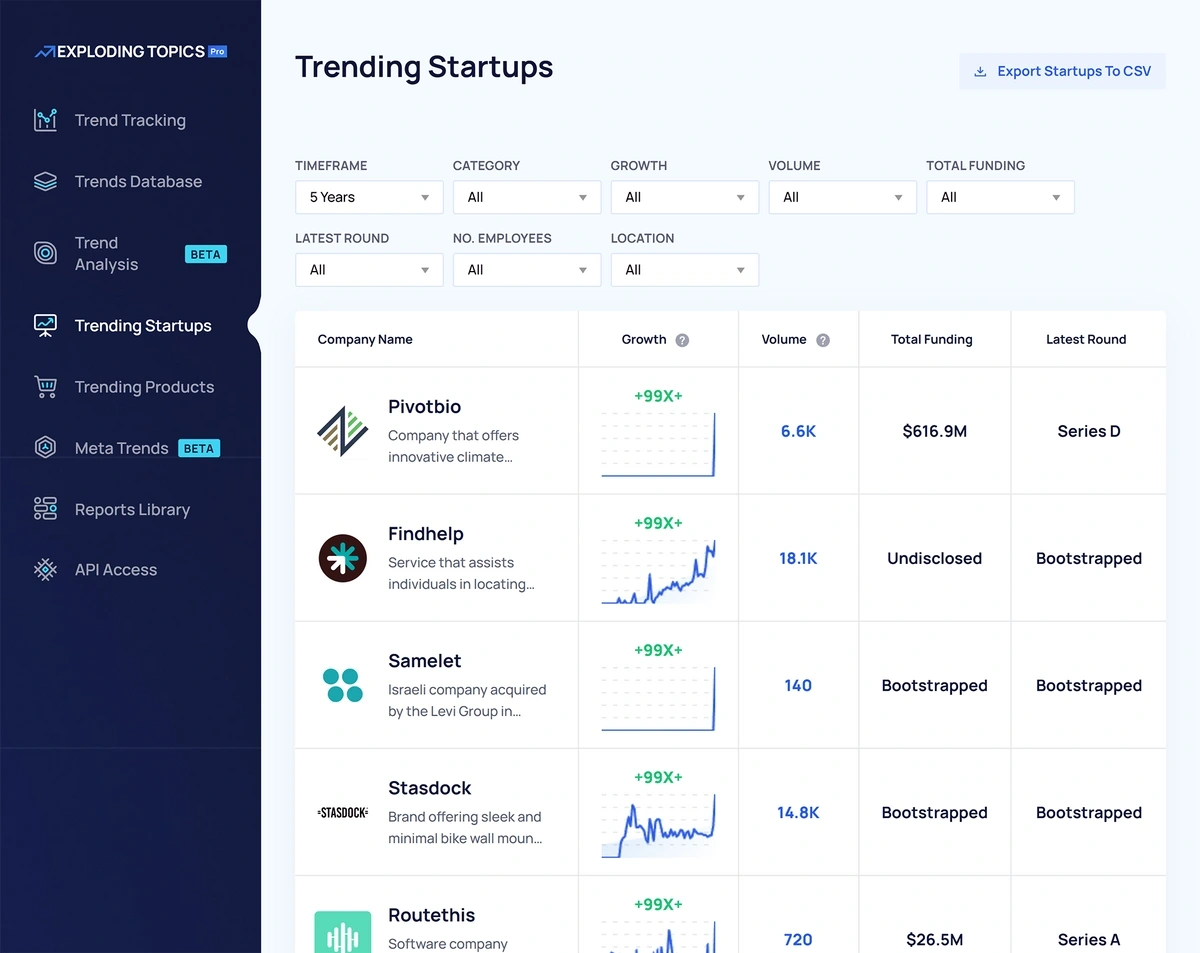
Essentially, Exploding Topics condenses the research process for investors.
With trend data sprinkled on top of funding details, the latest round, and the size of a company, you’ll find all the key details you need in a single report.
Once again, the filters will make your life easier by letting you select criteria for total funding, latest round, employee headcount, and location.
The mainstay filters, like growth, search volume, and timeframe, are also there to further refine your search for the right company.
There’s no parallel to this feature in Google Trends.
While you can use Google Trends to analyze search interest for specific companies, you don’t have the luxury of diving into a ready-made database of companies matching your criteria.
Meta Trends
The Meta Trends report is another feature that’s unique to Exploding Topics.
This report illustrates how an individual trend fits into a larger picture.
Think of it like a map showing the relationship between several adjacent trends in a category and an overarching theme at the center of them all.
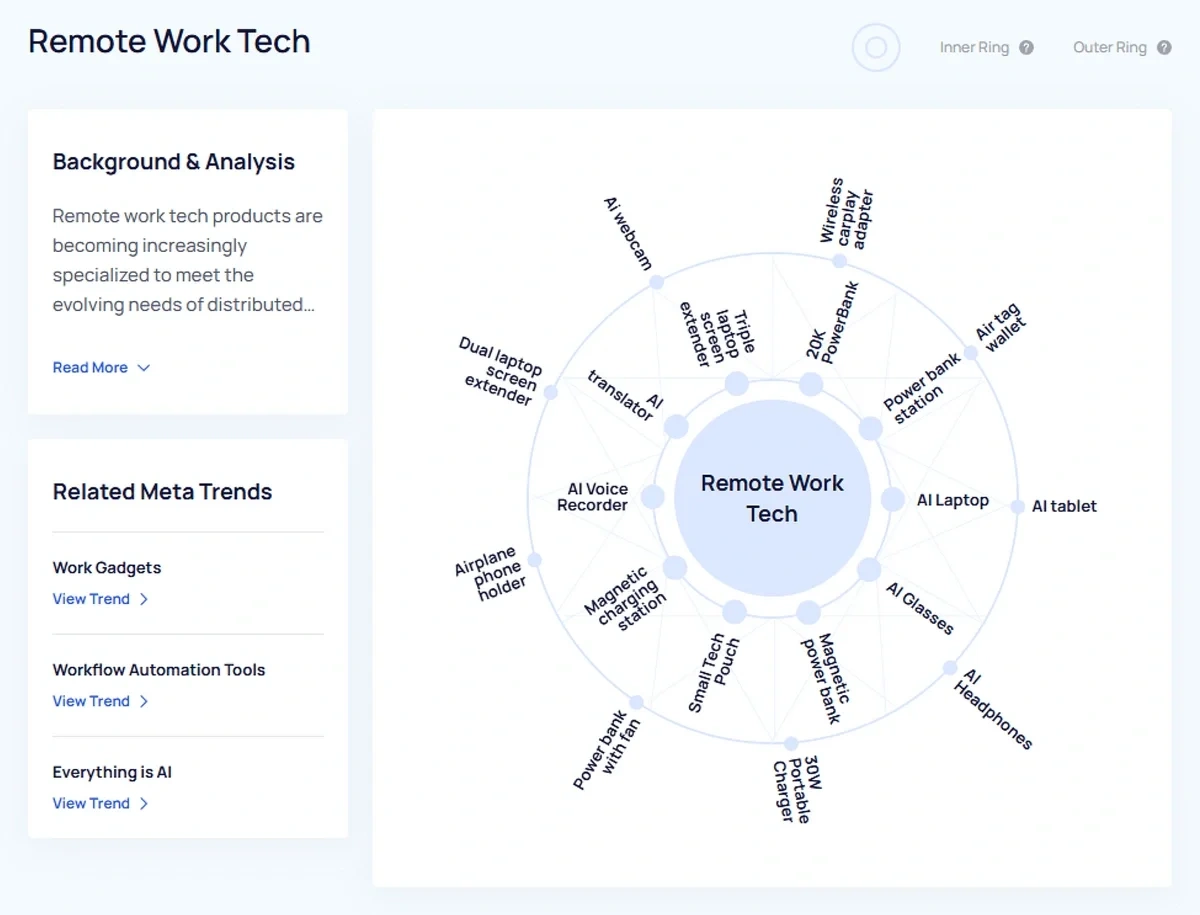
It’s a report that’s most valuable when you’re researching a new niche and want to understand the key concepts and topics dictating a meta trend.
It also comes in handy for developing content clusters and categories at a higher level of planning.
For e-commerce websites, Meta Trends can even provide ideas about an entire line of products connected by a common thread.
The meta trend chart itself is conveniently interactive.
Click any individual trend in the chart, and the interface will display key metrics like search volume and growth for that trend.
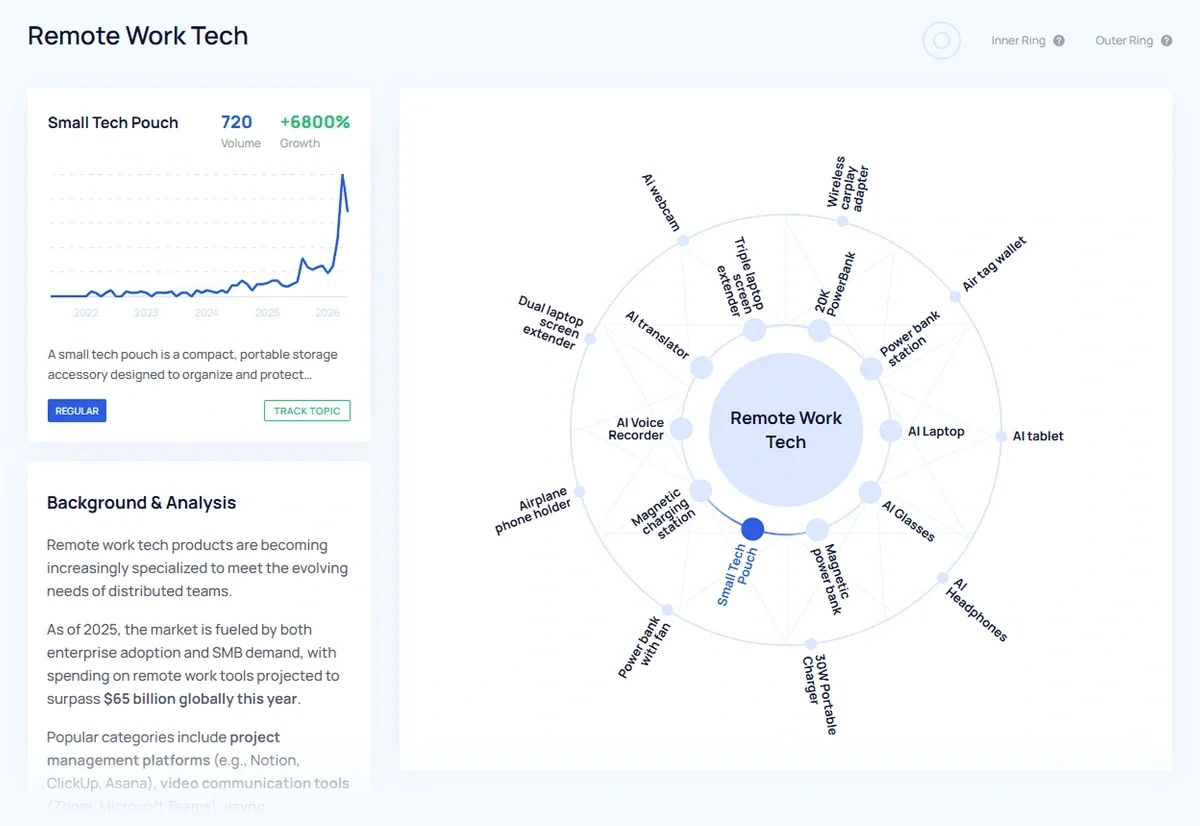
You don’t have to navigate away from the page or open another tab to pull key data about the trends appearing in the meta trend ring chart in question.
Exploding Topics regularly updates the meta trends report with new categories and concepts.
It’s a powerful asset to have for any marketing and product team in industries susceptible to rapid changes at the macro and micro level.
Exploding Topics API
API access is another area where Exploding Topics has a clear edge over Google Trends.
The Exploding Topics API gives you the same useful metrics as absolute search volume, growth percentage, and key indicators characterizing the trend pattern for any topic.
With the Google Trends API, you’re still limited to a relative scale to measure search interest. While this is certainly useful, there’s significantly more guesswork involved working with relative indicators.
Another advantage of the Exploding Topics API is the rich availability of parameters you can use to discover trends meeting highly specific criteria.
Since Google Trends has no system to differentiate between different growth stages of a trend, you can’t filter a peaked trend from an exploding one like you can with the Exploding Topics API.
Josh goes into more of these limitations of the Google Trends API and important ways in which Exploding Topics API covers those blind spots.
Trend Tracking and Dashboard
A big part of what makes Exploding Topics such a useful tool is the clean and organized dashboard that’s personalized for your use cases.
This is where you’ll find a curated carousel of trending topics from categories that you’ve recently shown interest in.
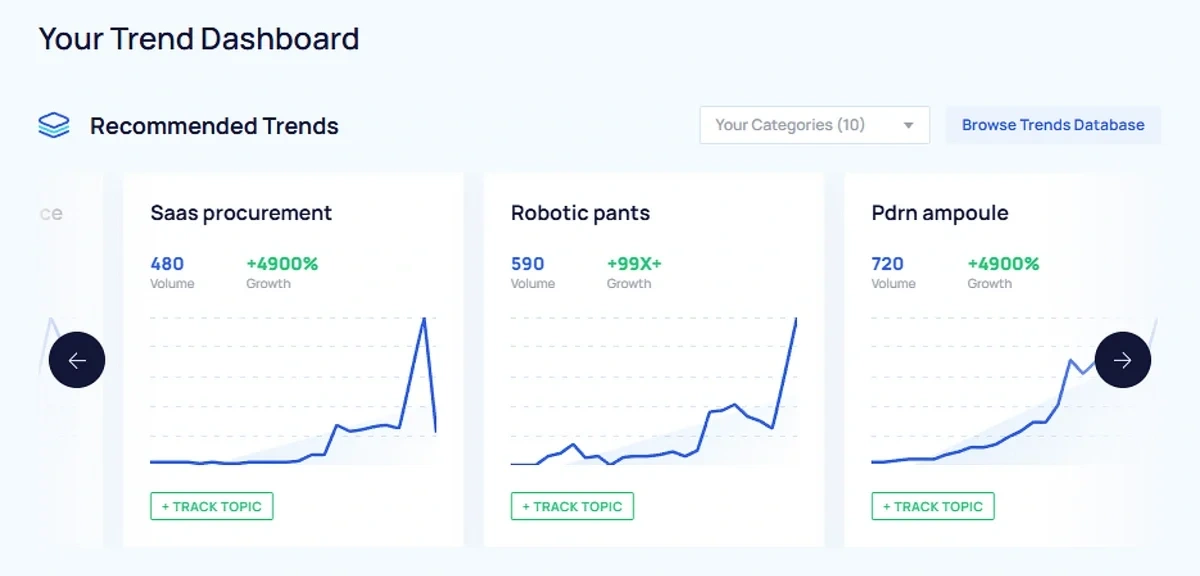
The recommendations get better over time as the algorithm learns your topic interests. So it’s a pretty handy way to take a quick sneak peek at new trends you might want to research deeper.
You’ll also find a selection of trending products and startups here, along with an overview of successful products rising on TikTok.
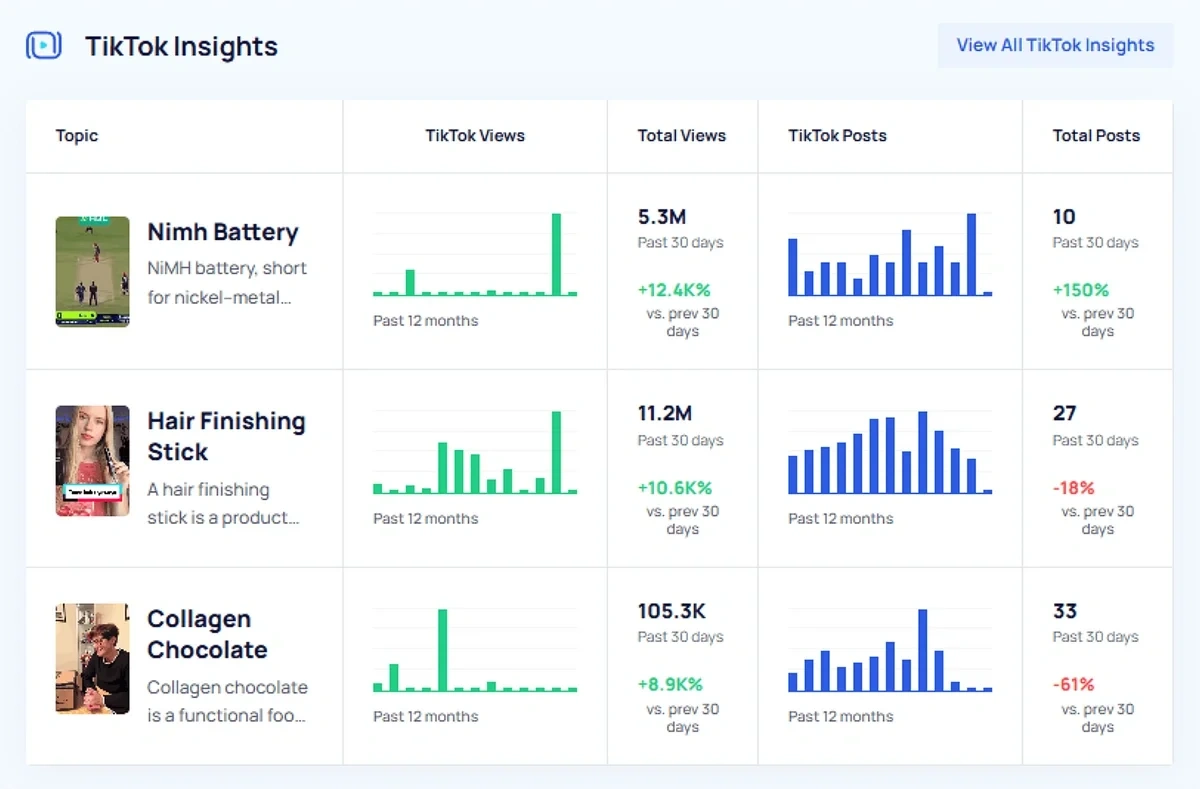
Essentially, the dashboard is a centralized space that functions as a shortcut to every trend database and report in Exploding Topics.
This is a significant improvement over Google Trends, which has no personalized homepage or dashboard to simplify your experience.
Exploding Topics adds tracking features on top of this.
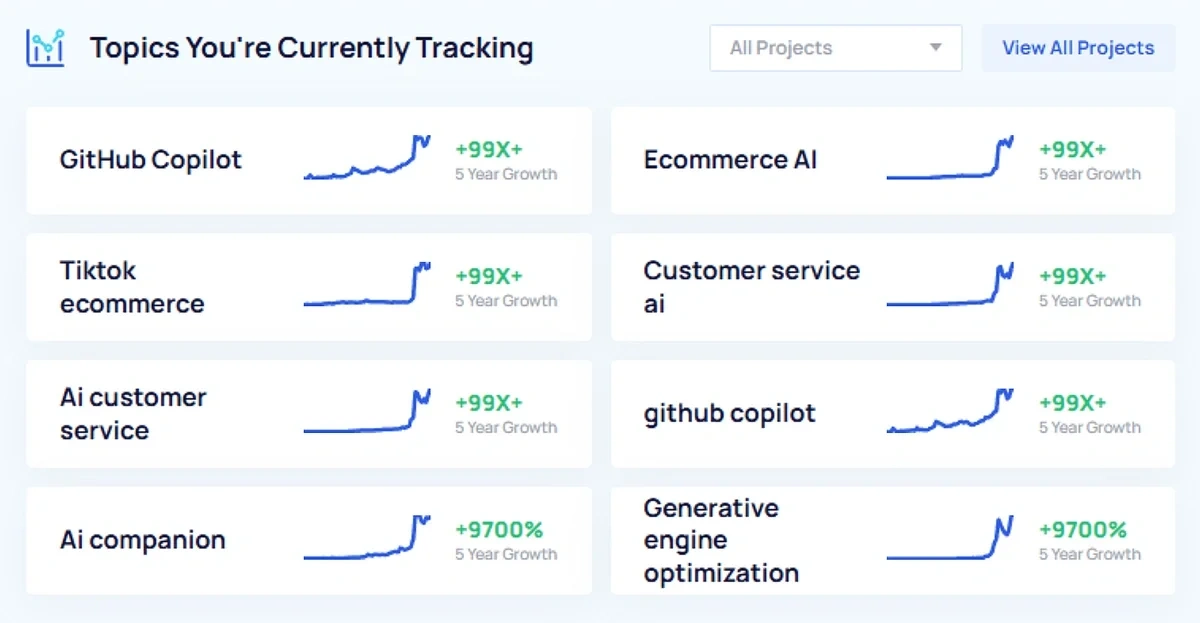
The dashboard presents an overview of your tracked trends, organized by projects. This way, you won’t lose sight of important trends you want to be keeping an eye on every time you log in.
Pricing
Exploding Topics offers three pricing plans that suit different businesses:
- Entrepreneur ($39/mo): Brings core features like trends database and trending products with up to 100 tracked trends. Good for small e-commerce setups and content marketing teams.
- Investor ($99/mo): Enhances tracking limit to 500 and adds startup trends database, along with CSV export for each. This plan suits investors, VCs, market research firms, and growing e-commerce and content teams.
- Business ($249/mo): Unlocks weekly trend reports and increases tracking limit to 2,000. Good for agencies and enterprises.
You can also discover trends for free on the Exploding Topics homepage. However, it’s worth upgrading to Exploding Topics Pro.
The value you get with features like topics, products, and startup trends is hard to find in other trend detection software on the market.
Should You Use Exploding Topics Over Google Trends?
Exploding Topics is the better choice for marketing, e-commerce, and product teams as well as investors.
It allows you to discover trends without requiring you to have any prior knowledge about said trends.
For every trend, Exploding Topics gives you clear indicators so you can make sense of the direction it’s heading.
Google Trends works great when you already know what trend you want to analyze. The ability to bulk analyze multiple trends on a single chart is also a great touch that makes your life easier.
But the absence of tracking features, a personalized dashboard, and trend databases with a focus on discovery limits Google Trends to a narrow set of use cases.
SEO, content, and e-commerce teams will find more value in Exploding Topics for identifying niche-relevant topic opportunities and catching product trends before competitors have a chance.
Sign up for Exploding Topics today and discover important trends you can leverage for your business growth.
Stop Guessing, Start Growing 🚀
Use real-time topic data to create content that resonates and brings results.
Exploding Topics is owned by Semrush. Our mission is to provide accurate data and expert insights on emerging trends. Unless otherwise noted, this page’s content was written by either an employee or a paid contractor of Semrush Inc.
Share
Newsletter Signup
By clicking “Subscribe” you agree to Semrush Privacy Policy and consent to Semrush using your contact data for newsletter purposes
Written By


Osama is an experienced writer and SEO strategist at Exploding Topics. He brings over 8 years of digital marketing experience, spe... Read more