Exploding Topics
Remineralizing Gum search volume grew from under 100 to 27,100 monthly searches between February 2024 and January 2026.
Remineralizing gum
+5100%
GLP 1 Supplement search volume grew from 5,920 to 74,000 monthly searches between February 2024 and January 2026.
GLP 1 supplement
+1150%
Soursop Bitters search volume grew from 9,900 to 110,000 monthly searches between March 2024 and February 2026.
Soursop bitters
+1011%



Get Advanced Insights on Any Topic
Discover Trends 12+ Months Before Everyone Else
How We Find Trends Before They Take Off
Exploding Topics’ advanced algorithm monitors millions of unstructured data points to spot trends early on.
Keyword Research
Performance Tracking
Competitor Intelligence
Fix Your Site’s SEO Issues in 30 Seconds
Find technical issues blocking search visibility. Get prioritized, actionable fixes in seconds.
Powered by data from
Latest Blog Posts
Featured Case Studies
See what's trending before everyone else
Each week, we'll send you our best Exploding Topics. Plus, expert insight and analysis.
5 Holiday Shopping Trends to Define Thanksgiving and Christmas 2026

 Add Exploding Topics on GoogleAdd Exploding Topics as your preferred source to see more of our stories on Google.
It’s a critical time of year for the retail industry. US holiday sales are on track to top $1 trillion for the first time, and online spending is growing quickly.
In fact, Adobe expects US shoppers to spend a record $275.1 billion online this season, up 6.7% from last year.
Nevertheless, holiday shoppers are feeling the pressure of higher prices. The average gift budget has dropped to $708 from last year's $721 and 79% of consumers say deals and discounts influence when they shop, so retailers have an even bigger incentive to price competitively.
These factors are all shaping the 2026 holiday shopping trends. Here’s what I expect to see as consumers start their holiday shopping.
1. Holiday Spending Explodes on TikTok
TikTok Shop passed $500 million in sales over the four-day 2025 peak shopping weekend, with nearly 50% more shoppers across the full holiday season than the previous year.
That comes as little surprise, given the rise of social commerce. Appetite for buying directly through social media has had its peaks and troughs, especially in the West, but TikTok Shop has proved hugely popular with US consumers.
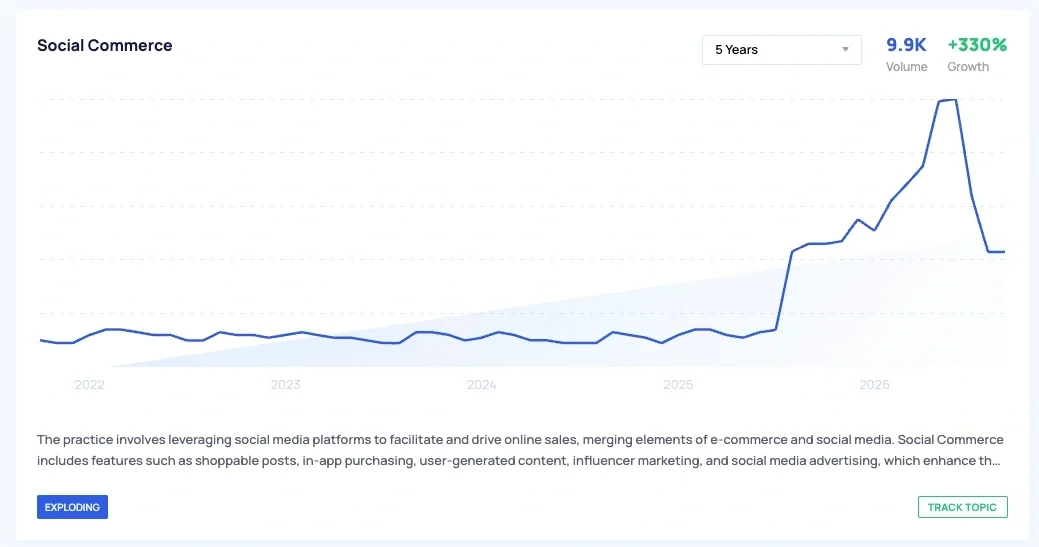
“Social commerce” searches are up 330% in the last 5 years.
Just as online shopping once transformed the holiday retail scene, TikTok Shop and social commerce could be in line to do the same in 2026. The format lends itself uniquely well to shopping for gifts, with users able to browse idly for ideas before efficiently completing a purchase when they see a product they like.
Nearly half of Gen Z shoppers (48%) now identify as social shoppers, along with 37% of Millennials.
And with that age demographic making up a large percentage of TikTok’s user base, the platform is bound to be a popular holiday shopping destination for young people.
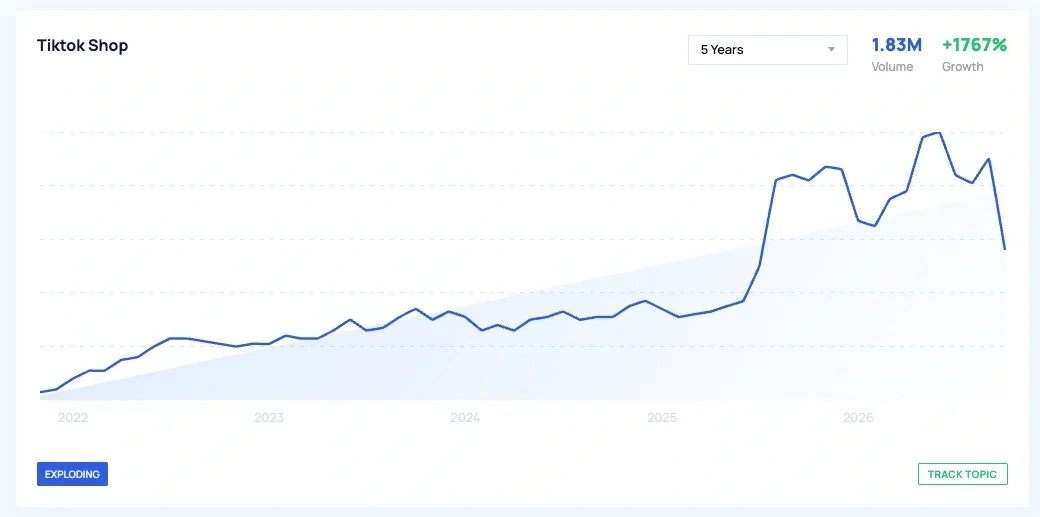
The growth of TikTok Shop has been astronomical.
Semrush recorded more than 2 billion visits to TikTok last month, so there is a huge potential pool of holiday shoppers. The social media platform clearly knows this and is relying on more than just organic growth to amplify its social commerce offering.
TikTok struck deals with some major celebrities for the 2025 holiday shopping season. It featured John Legend for a Black Friday live shopping event and Kim Kardashian for her first TikTok LIVE.
Household names are joining the platform as sellers, too. Gap, Samsung, and H&M all launched on TikTok Shop ahead of its 2025 Black Friday and Cyber Monday event, with exclusive offers available through the app. These discounts could prove even more effective than celebrity collaborations when it comes to attracting customers.
Live shopping is really catching on in the US. Sellers who hosted livestreams during TikTok Shop's 2025 Black Friday and Cyber Monday campaign grew their sales by 84%.
TikTok Shop has also used generous return windows to win over holiday shoppers. Last year, eligible purchases made between November 12 and December 31 could be returned until February 10.
Keep an eye out for agentic commerce in 2026 as well. Like social commerce, it meets consumers where they are, helping them find and compare products through chatbots like ChatGPT. AI and agents influenced $262 billion of global online holiday sales in 2025, and Adobe expects AI traffic to retail sites to grow 130% this season.
This could be the biggest AI Black Friday yet.
Build a winning strategy
Get a complete view of your competitors to anticipate trends and lead your market
2. BNPL Tempts Holiday Shoppers
Buy now, pay later (BNPL) is nothing new anymore. In fact, it has become a staple of the holiday online shopping scene because it can provide some short-term relief at a notoriously expensive time of year.
BNPL drove $20 billion in online spending over the 2025 holiday season, up 9.8% from the year before.
Holiday shoppers are also contending with higher prices. Inflation ran at 3.4% in the past 12 months, so the allure of BNPL offerings is obvious.
Klarna, a major BNPL provider, shows how far the model has spread. More than 1 million merchants now offer Klarna at checkout, a 47% increase over the last year.
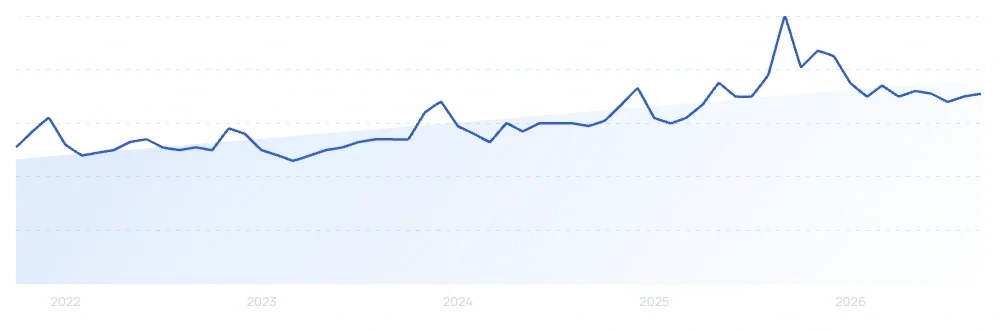
Searches for Klarna hit an all-time high around the 2025 holiday season and have remained high throughout 2026:
Its website provides links to businesses that accept Klarna at checkout, amplifying their holiday deals.
For retailers hoping to cash in on holiday spending, making BNPL available is an important part of any E-commerce marketing strategy. It features on our list of Black Friday marketing tactics for 2026.
3. A Big Black Friday And Cyber Monday
As holiday shoppers watch their budgets, Black Friday and Cyber Monday are likely to become even bigger events than ever. Falling after Thanksgiving but before Christmas, they offer the prospect of some good deals on gifts for the latter holiday.
A Bain forecast estimates that around 90% of shoppers plan to spend during at least one major sales event this season.
And that only accounts for spending within a very specific time window. The reality is that Black Friday in particular has sprawled, stretching across essentially the entire holiday shopping season.
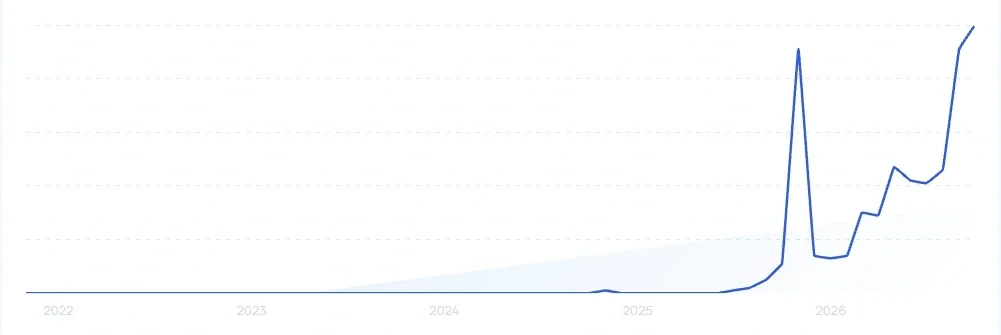
Consumers are already starting to search for “Black Friday 2026”
Amazon is a good example. Its 2025 Black Friday Week and Cyber Monday events ran for 12 days, from November 20 through December 1. Semrush data shows that the total number of visits to Amazon hit 2.33 billion in August 2026.
Plenty of holiday sales now start even earlier. Adobe expects US shoppers to spend $95.8 billion online in October, up 8% from last year, as retailers across the industry discount around Prime Day.
Black Friday itself remains the biggest event. It was the top shopping day both in-store and online in 2025, attracting 80.3 million in-store shoppers and 85.7 million online.
Cyber Monday, though, is the biggest online shopping day of the year. Adobe expects it to pass $15 billion in online sales for the first time in 2026.
That looks smaller once in-store spending is counted, though. Stores still account for around 70% of holiday sales, and Cyber Monday is primarily an online event.
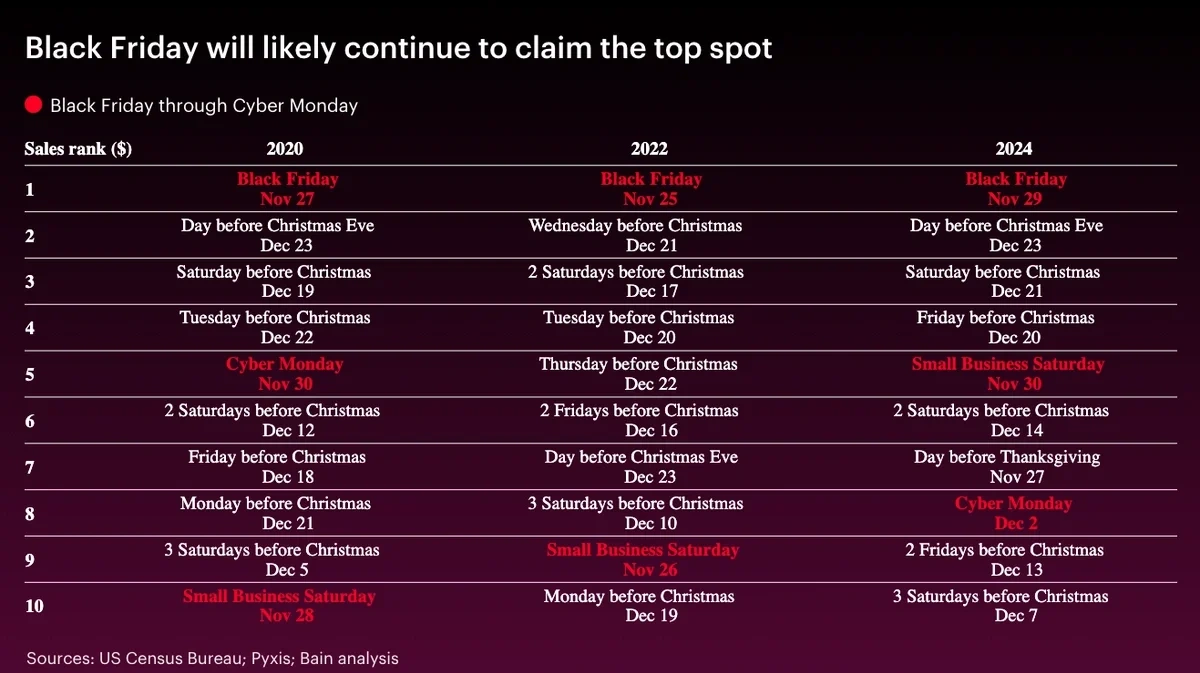
Bain's analysis of total retail sales shows it has not ranked among the top 10 shopping days since 2020:
Around 73% of shoppers plan to shop on Black Friday this year, whether online, in-store, or a mix of both.
4. Holiday Shoppers Turn To “Dupes”
A “dupe” (short for duplicate) is a budget product designed to replicate a more high-end item as closely as possible. Retailers will sometimes even claim to be using the same factories and materials as bigger brand names.
Around 27% of adults have purchased a dupe. That figure rises to 45% among Gen Z.
And this year, 35% of holiday shoppers are actively trading down to cheaper alternatives.
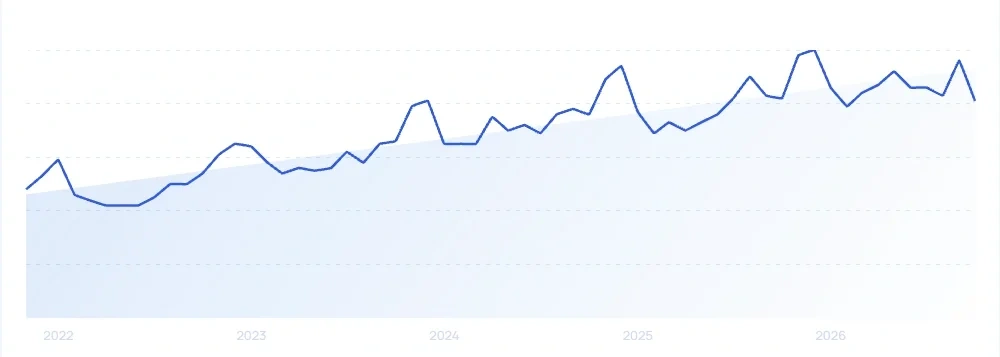
“Dupes” searches are up 69% in the last 5 years.
For established brands, this creates a heightened need to prove value.
How might this apply specifically to the holiday season? One example is beauty advent calendars.
“Advent calendars” are becoming a progressively bigger deal every year, having evolved beyond the classic chocolate offerings.

These luxury calendars are likely to be extensively reviewed in “unboxing” videos. The big names will need to deliver high-quality products in order to fend off cheaper alternatives.
In fact, essentially any giftable product will need to meet that same standard. Last year, 22% of US holiday shoppers planned to buy gifts on Temu, and 43% of Gen Z shoppers planned to shop on Shein. The onus is on their competitors to prove they are providing a higher level of product and service.
5. Visual Search Points Physical Buyers Toward Online Shopping
Even in an increasingly online world, in-store shopping still accounts for billions of dollars of holiday spending. Bain expects stores to drive around 70% of holiday sales in 2026.
However, E-commerce is growing. Bain forecasts that online and other non-store sales will grow 9% this season and generate around 60% of all sales growth.
The line between the two is blurring, though—Salesforce found that 79% of shoppers use their phones while walking the aisles, and 24% are checking competitors' prices.
So this year, even shoppers who go in stores to look for gifts could ultimately be driven online.
And visual search has made hybrid browsing seamless. Visual search technology, which allows users to find out more about something by taking a picture of it, is not completely new—Google first launched its version in 2017.
But adoption of visual search keeps climbing. More than 1.5 billion people use Google Lens every month, and visual searches grew 65% in a year.
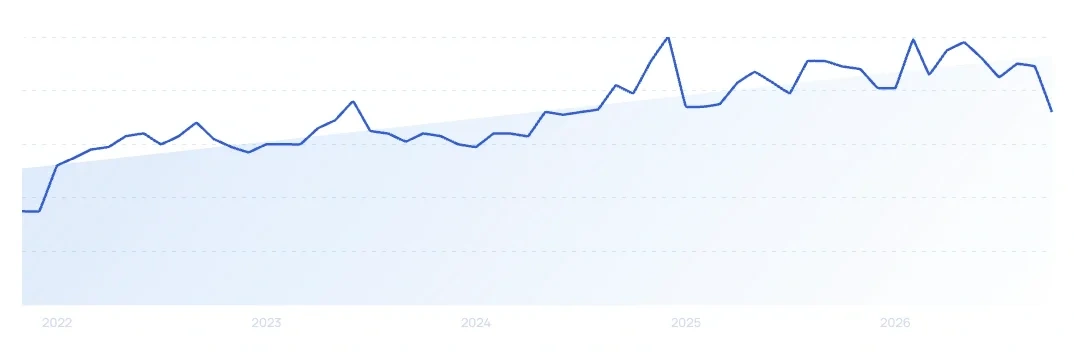
Searches for “Google Lens” are up 106% in the last 5 years.
I think these changing consumer behaviors will alter how holiday shopping takes place.
Picture a young consumer at a physical retail location. It’s little more than common sense for them to do a quick visual search of an item that catches their eye — in an instant, they can find similar products they might prefer, or even the same product available for less money.
Google Lens could turn in-store browsing into online purchasing.
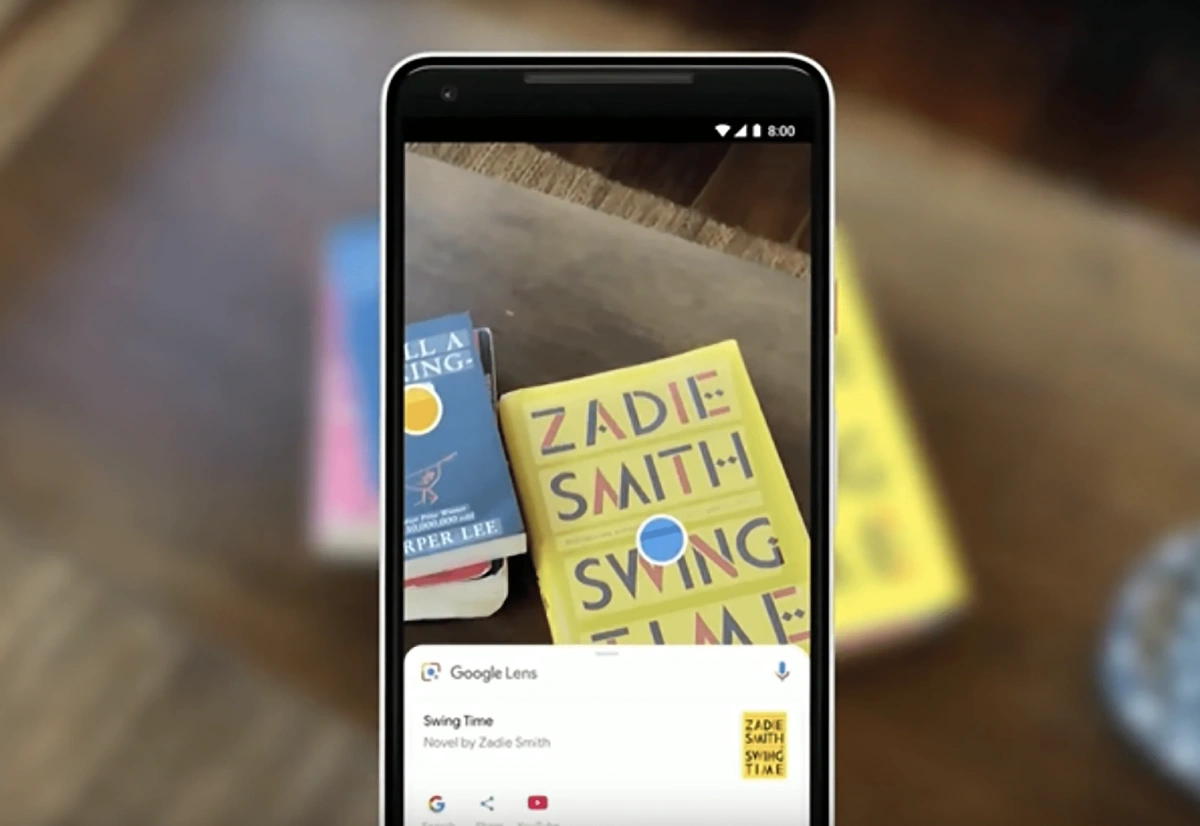
The Pinterest visual search feature is even more specifically geared toward online shopping. The “Shop” tab brings up an array of retail links related to the searched image.
Physical stores do still boast the intangible advantage of a holiday atmosphere, and will remain baked into the routines of lots of shoppers. But these retailers will need to move with the times — shoppers now arrive with a price-comparison tool in their pockets.
Navigate Holiday Shopping Trends As A Retailer And A Consumer
Whether you are selling or buying, it’s worth having an awareness of the trends shaping the 2026 holiday shopping season.
Consumers are more empowered and motivated than ever to make smart buying decisions. It’s up to retailers to adapt accordingly.
That means meeting buyers where they are at, including platforms like TikTok Shop and in AI chatbots. It means having a clear brand value message. And it means embracing technology like BNPL and visual search.
US total retail spend over the holiday season is expected to pass $1 trillion for the first time. Good discoverability over this period is an opportunity too important for sellers to pass up — which is why now is the perfect time to sign up to Semrush.
Stop Guessing, Start Growing 🚀
Use real-time topic data to create content that resonates and brings results.
Exploding Topics is owned by Semrush. Our mission is to provide accurate data and expert insights on emerging trends. Unless otherwise noted, this page’s content was written by either an employee or a paid contractor of Semrush Inc.
Share
Newsletter Signup
By clicking “Subscribe” you agree to Semrush Privacy Policy and consent to Semrush using your contact data for newsletter purposes
Written By


James is a Journalist at Exploding Topics. After graduating from the University of Oxford with a degree in Law, he completed a... Read more