


Get Advanced Insights on Any Topic
Discover Trends 12+ Months Before Everyone Else
How We Find Trends Before They Take Off
Exploding Topics’ advanced algorithm monitors millions of unstructured data points to spot trends early on.

Keyword Research
Performance Tracking
Competitor Intelligence
Fix Your Site’s SEO Issues in 30 Seconds
Find technical issues blocking search visibility. Get prioritized, actionable fixes in seconds.
Powered by data from
Latest Blog Posts
Featured Case Studies
See what's trending before everyone else
Each week, we'll send you our best Exploding Topics. Plus, expert insight and analysis.
13 Top Marketing Trends (2026): Generative AI, Video, Personalization & More

 Add Exploding Topics on GoogleAdd Exploding Topics as your preferred source to see more of our stories on Google.
Businesses of all sizes are adapting their marketing strategies as consumer behavior continues to evolve.
And new technology (like generative AI) may change how content is produced.
With that, here are the most important marketing trends over the next 24 months.
1. Generative AI changes how marketing is done
No new platform or technology is impacting the marketing space in 2026 more than generative AI.
In fact, marketers are already using AI tools to create content, brainstorm campaigns, and improve overall efficiency.
It's given rise to a whole new philosophy of "vibe marketing".
A recent Salesforce survey found that 75% of marketers already use AI tools on a regular basis.
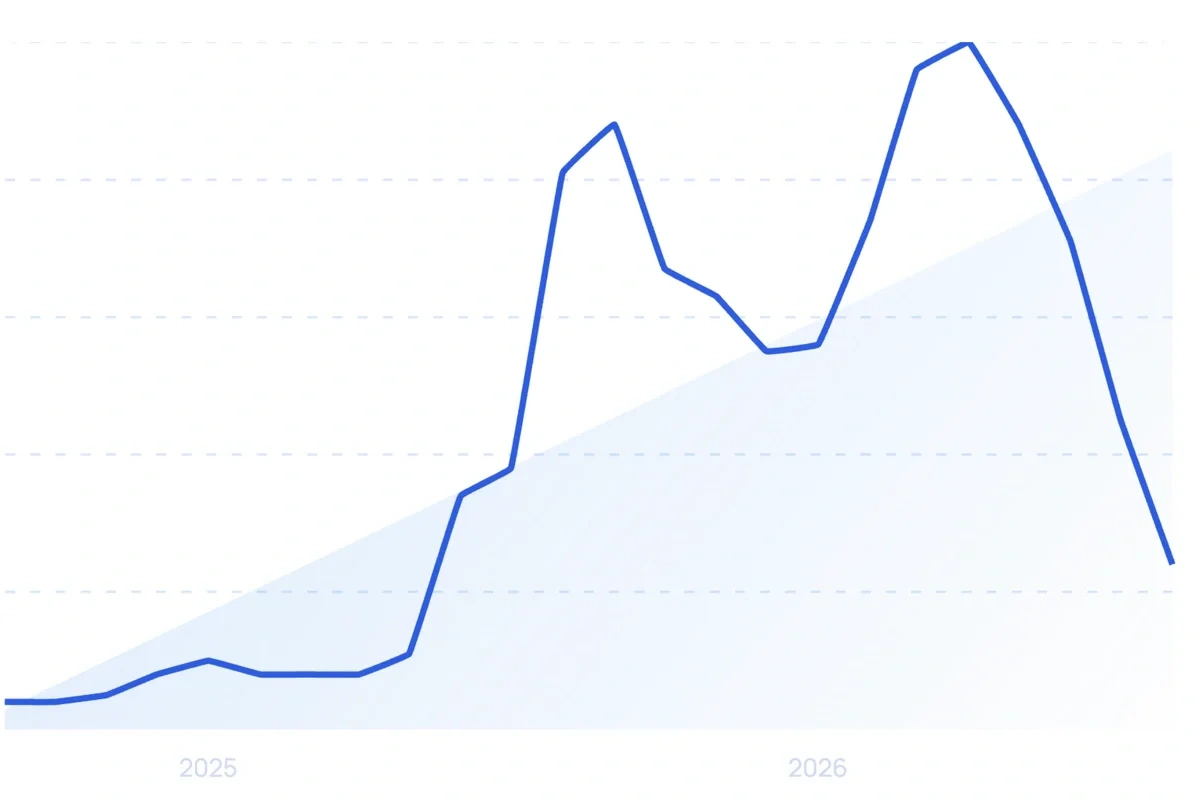
Notably, Google searches for "AI marketing tools" have increased by 194% over the past 24 months.
Search volume for "AI marketing tools" since late 2024.
Here are a few practical ways that AI is being used for marketing:
1. Ideation and brainstorming: ChatGPT and other LLMs can help come up with ideas for new campaigns, ad creatives and more.
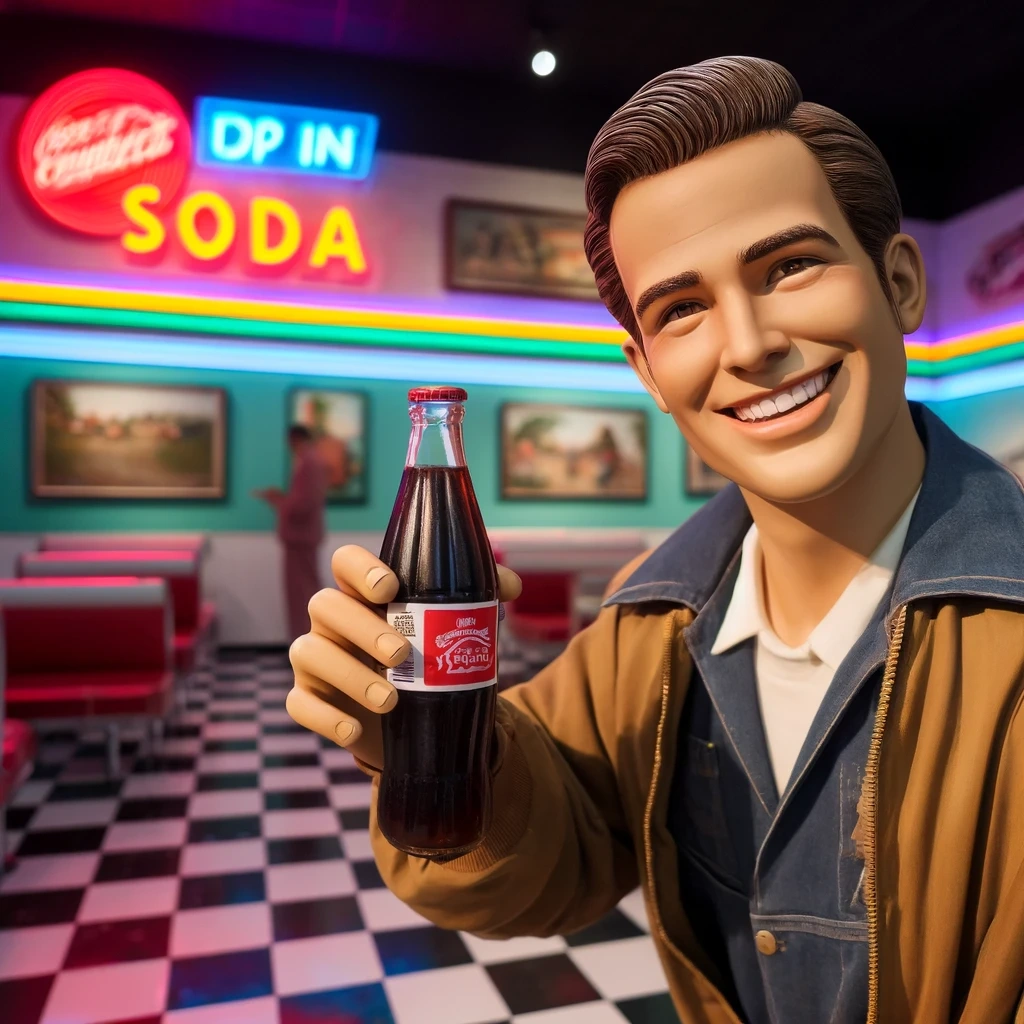
2. Content creation: User-friendly platforms like Midjourney and DALL-E make it so any member of a marketing team can create ad copy or even social media images.
Example of a marketing image created with DALL-E.
3. Campaign analysis: Analyzing campaigns once tool days or weeks. Much of this work can now be done in minutes with generative AI. For example, marketers can upload a spreadsheet of an email campaign containing data like open rates, click-through rates and sales. And within minutes understand which messages and user segments performed the best.
4. Predictions and forecasting: With the right data, AI can help forecast future consumer interests and demand.
In 2026, expect AI usage to expand into new use cases (like automated A/B testing, AI influencers and campaign management).
5. Content planning and optimization
Content marketers are increasingly using AI to outline, update, and optimize content. In SEO, LLMs can be used for topic clustering and keyword planning.
AI in Search Engines
The introduction of AI in search engine results has huge implications for websites relying on organic traffic.
Interest in the search term "answer engine optimization" has been exploding since late 2024.
And this trend is continuing to rise rapidly in 2026.
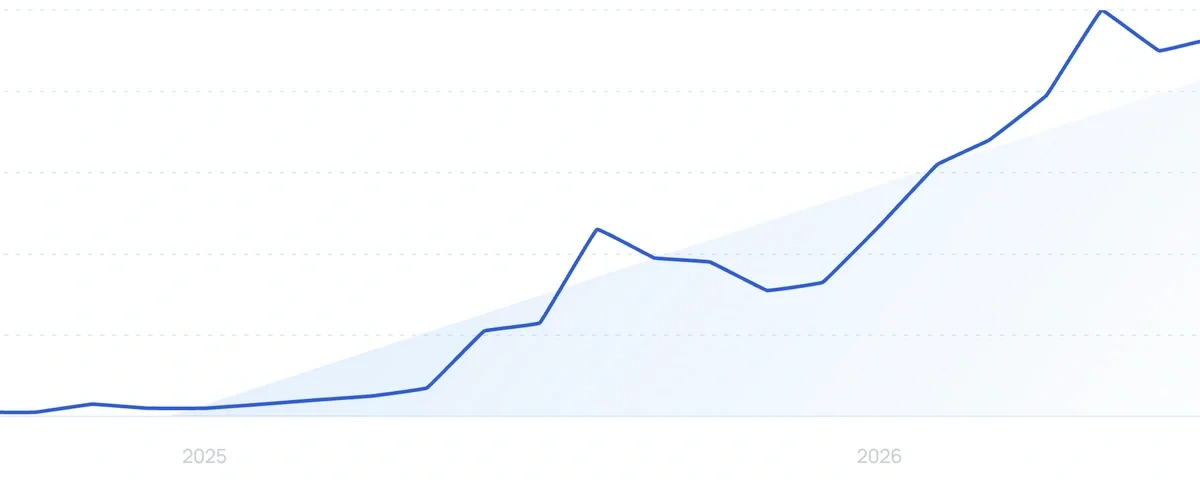
Search interest for "Answer engine optimization" has been climbing since late 2024.
There are a few reasons behind this.
First, AI Overviews have spiked in frequency since the March 2025 Google Update.
BrightEdge estimates show that 48% of tracked queries are triggering AI Overviews in Google (as of February 2026).
Curiously, ranking #1 doesn't guarantee representation in AI Overviews.
The same report also found that only about 17% of citations in AI Overviews are pulled from top 10 organic links. This varies from industry to industry, but the general trend is clear: winning AI visibility isn't just about top organic rankings.
AI Overviews directly lead to the AI Mode for longer interactions and conversational search, a platform that's also growing rapidly.
By December 2025, AI mode reached 75 million.
Considering the detrimental effect of AI Mode and AI Overviews on clickthrough rates and web traffic, these are likely to remain huge challenges for organic matters in 2026 and beyond.
2. Marketers go all-in on TikTok
Despite being a household name with over 1 billion users, TikTok is still seeing significant growth.
Searches for “TikTok” have increased by 58% in 5 years.
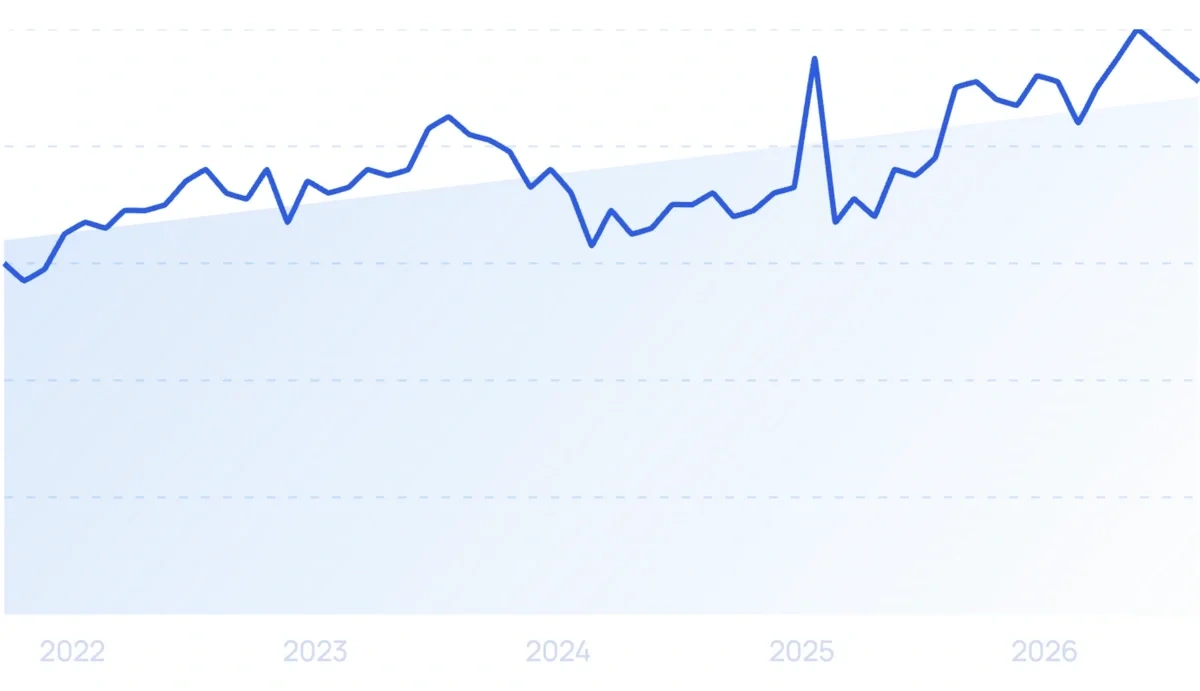
In fact, TikTok crossed 2.21 billion users in April 2026. Here's what the TikTok active user count by quarter looks like since 2024:
- Q2 2026: 2.21 billion
- Q2 2025: 1.84 billion
- Q2 2024: 1.56 billion.
Many marketers see TikTok as a Gen Z-only platform. Others are unsure of how to promote their brand with short-form video content.
It's reasonable to expect more and more businesses do all-in with TikTok simply based on the sheer number of active users on the platform.
TikTok also boasts incredibly high user engagement levels.
Recent developments show that TikTok is putting focus on businesses and their marketing needs.
For example, TikTok's ad platform now directly competes with giants like Google and Meta.
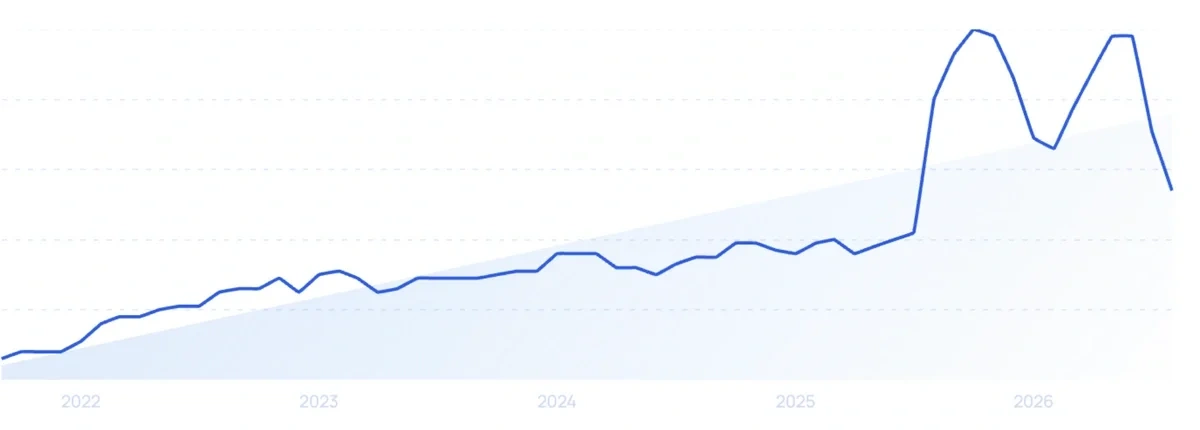
Searches for “TikTok ads” have increased by 800% in 5 years.
Like with major ad players, TikTok now allows dozens of ad targeting "dimensions", including:
- Age
- Gender
- Location
- Interests
- Purchase intent
And we're starting to see nationwide brands to add TikTok to their marketing mix.
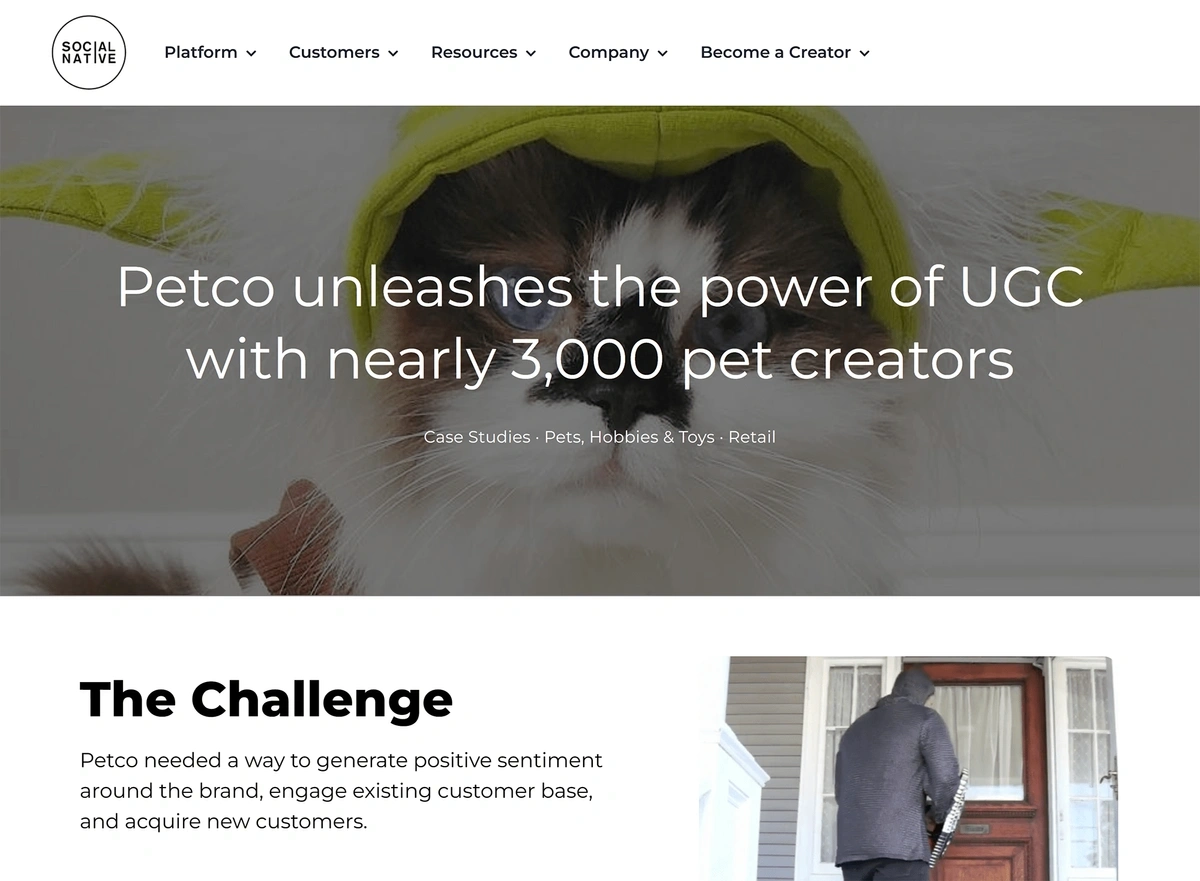
For example, Petco ran a large-scale UGC campaign on TikTok that reached 67 million people.
Example of a large brand using TikTok ads.
In the US, the continued threat of a TikTok ban saw users flock to RedNote. But TikTok continues to remain popular in the US now that the ban has lifted.
3. AI helps with personalized marketing campaigns
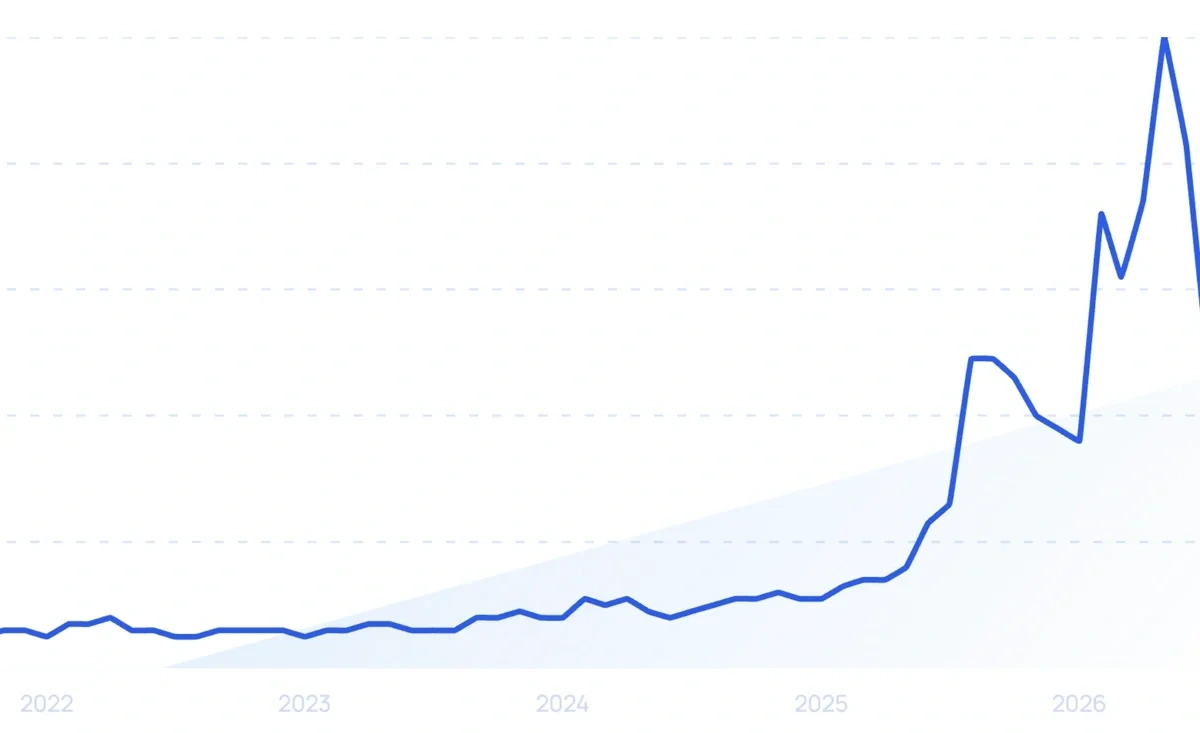
Searches for "personalized marketing" are growing exponentially since the past couple of years.
More and more companies are using data to create deeper personalized interactions between their brand and their audience.
In fact, 93% of consumers are more likely to become long-term customers of a brand when offered personalized experiences online.
Build a winning strategy
Get a complete view of your competitors to anticipate trends and lead your market
However, personalization and data privacy are concepts situated across the crossroads.
Even though 71% are conscious about their privacy, 69% of them still want brands to collect data about their shopping habits if it means more personalized experiences.
One example of personalization: Crate and Barrel offers a “view in my room” feature on their website.
View my room uses basic AR technology to simulate how furniture would look in a customer's room.
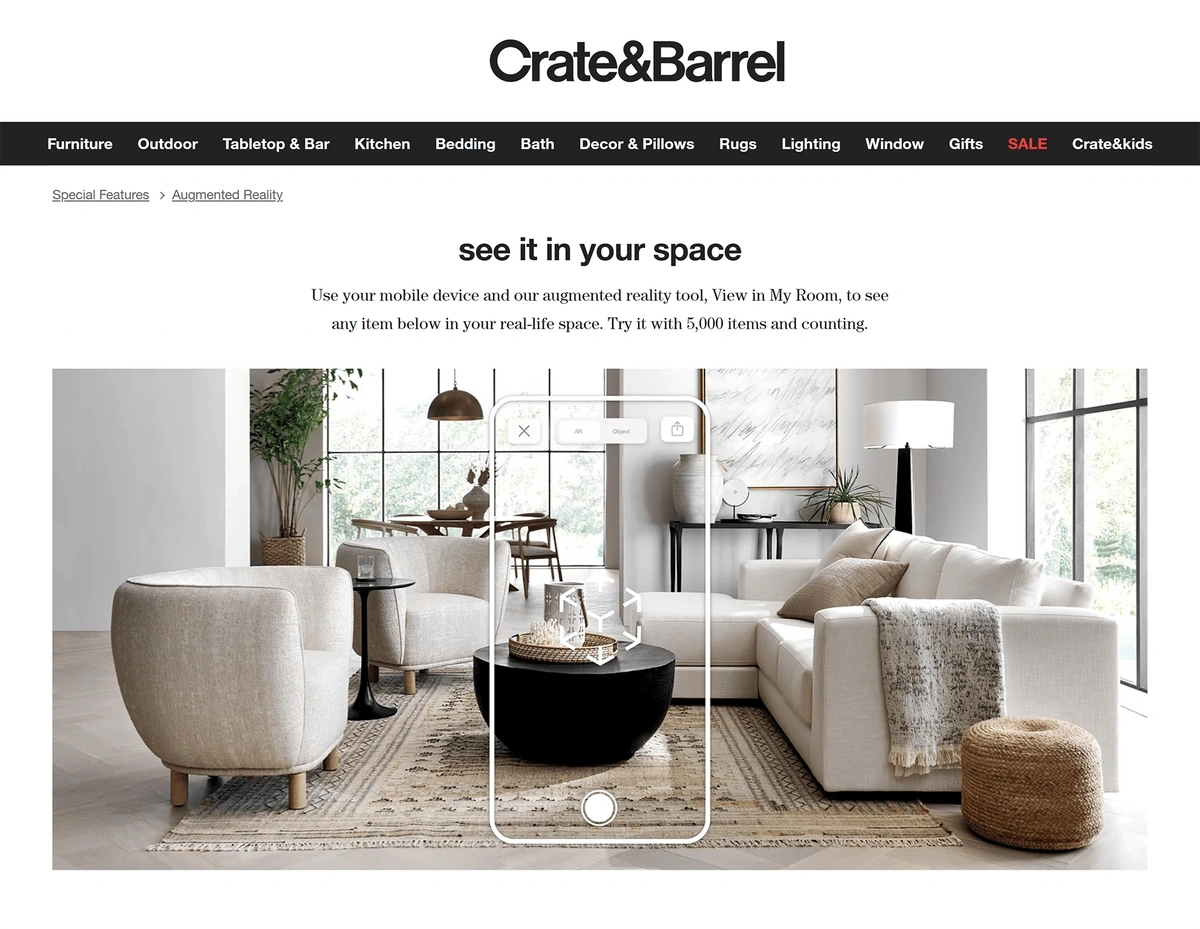
Thanks to augmented reality, consumers can scan a QR code to see a piece of furniture come to life in their very own home.
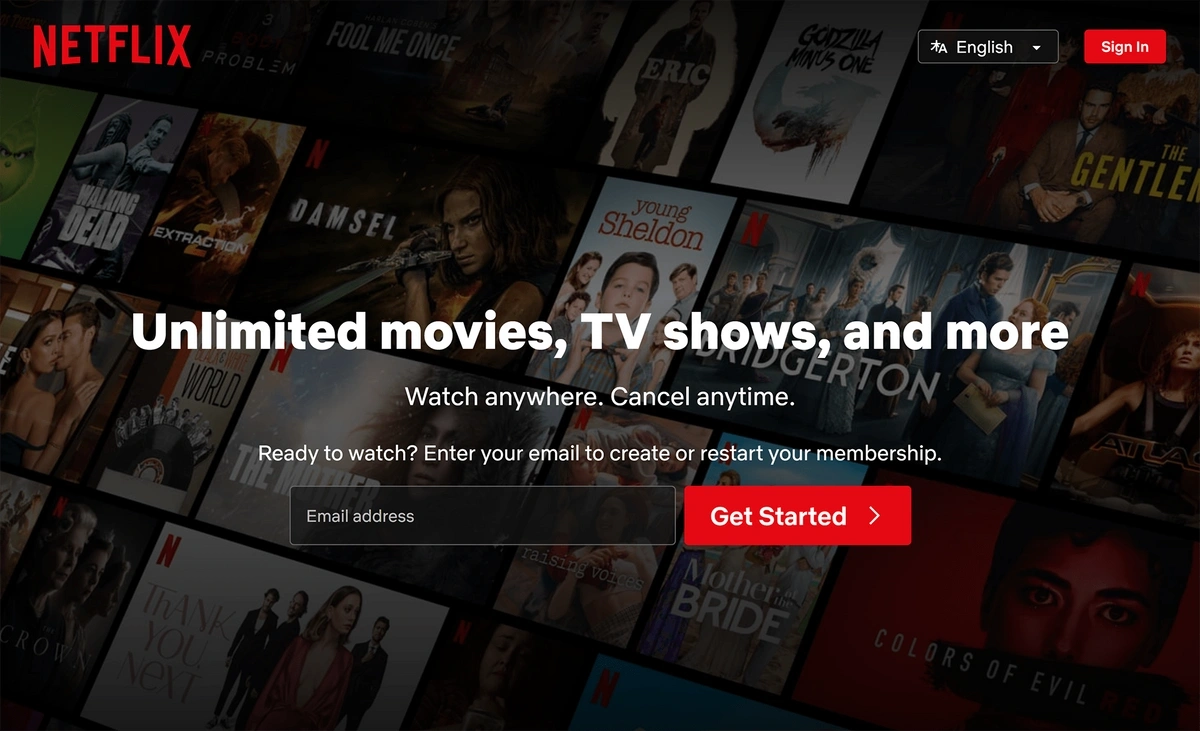
Netflix is constantly pushing the limits of personalization.
The company’s “recommended” algorithm is so accurate that 75-80% of all viewing comes from algorithmic recommendations with only the remaining 25-20% coming from a direct library search.
Netflix is one of many companies combining artificial intelligence and big data to provide highly personalized recommendations.
McKinsey, a global consulting firm, predicts that “offline person-to-person experiences will be the next horizon for personalization”.
They suggest that advanced analytics and AI-enabled tools will drive the change.
Even though the full impact of AI-driven personalization is yet to be seen, companies that are using the marketing strategy are seeing a huge impact.
A research study from 2005 showed that AI has a direct impact in reducing decision fatigue and purchase postponement, especially in luxury shoppers.
4. E-commerce drives news features on Instagram
The inventor of the hashtag, Chris Messina, was quoted: “Instagram is set on colonizing the bleeding edge of where commerce is going”.
As of April 2026, Instagram has 1.99 billion active users (measured by ad reach, not unique individuals).
Those millions of users are on Instagram for more than just sharing photos with their friends.
In fact, 62.2% of users use Instagram to follow brands or research products, more than any other social app.
Businesses can gain followers, build their brands, and sell their products right on the app.
As one marketing agency puts it, “[Instagram keeps] making it easier for brands to attract new audiences and move existing consumers down the sales funnel, all within one platform”.
This path to purchasing comes into play in several different ways, making it easier than ever for marketers to convert followers into sales.
Users can shop on Instagram’s reels, live broadcasts, posts, and stories, and through a store link in a business’ bio.
Of course, most marketers take advantage of Instagram ads, too.
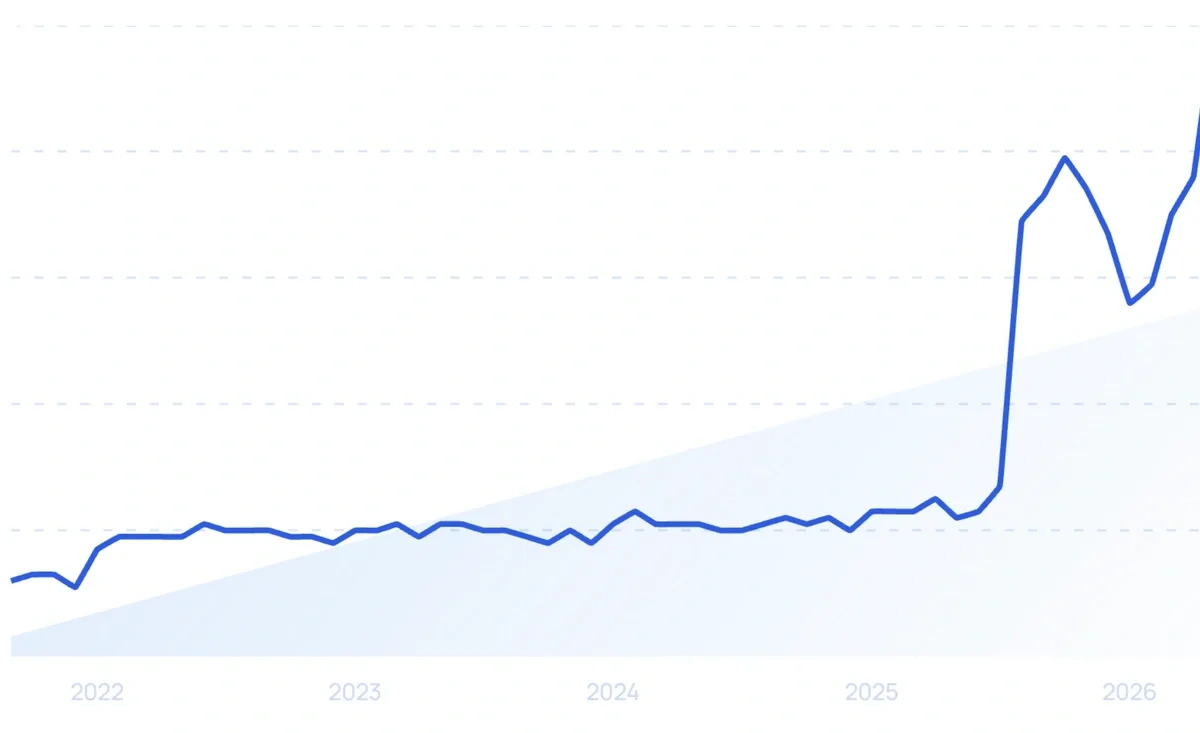
Google searches for "Instagram ads" have increased by 225% in 5 years.
A recent HubSpot survey showed that Instagram leads in terms of ROI perception as 48% of marketers put it at the top of their list of social media ROI.
Overall, social ad spending is expected to cross $480 by 2030, and Instagram is set to play a leading role in that.
5. Influencer marketing matures
Influencer marketing is no longer "the next big thing" in the marketing space.
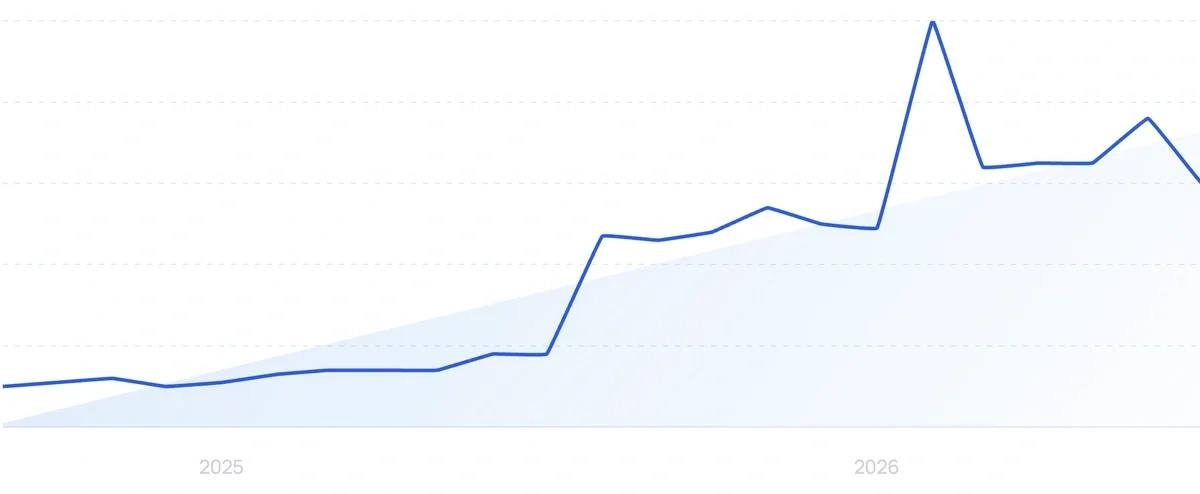
“influencer marketing” has had a resurgence in search interest since last 2025.
In fact, influencer marketing is now a mainstay channel for small and large brands.
(Especially in B2C)
According to Sprout Social, 94% of organizations think influencer marketing outperforms traditional digital ads, by 2 to 3 times.
For many businesses, the strong ROI makes influencer marketing a smart choice.
Big businesses have seen recent success with mega-influencers.
For example, Dunkin’s partnership with TikTok influencer Charli D'Amelio reportedly resulted in a 20% increase in cold brew sales and a 57% increase in downloads of the Dunkin' app.
Dunkin's campaign with Charli D'Ameli led to significant real world results for the brand.
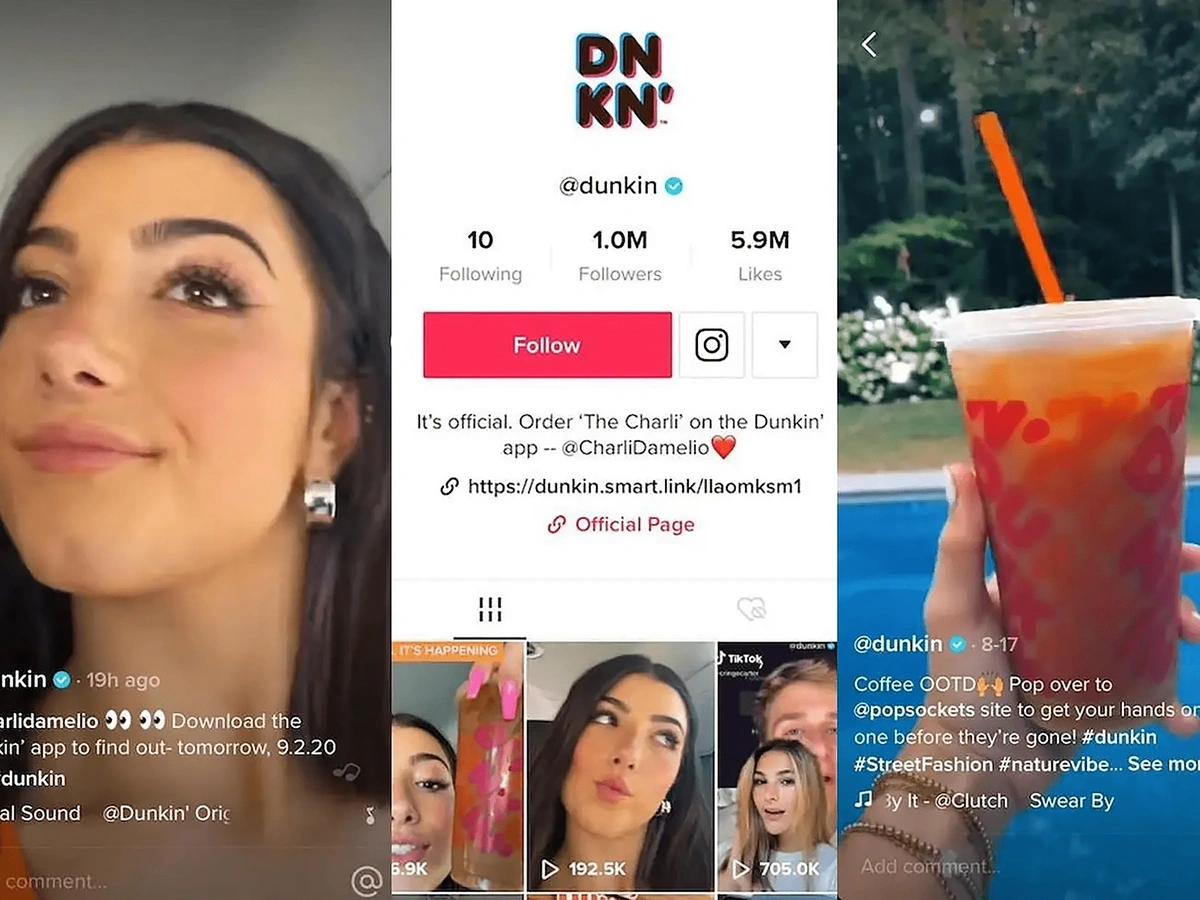
Dunkin’ partnered with several micro-influencers, showing that companies using this marketing strategy are using different influencers for different purposes.
Overall, the campaign reached more than 1 million people on Instagram and boasted a 5.2% engagement rate.
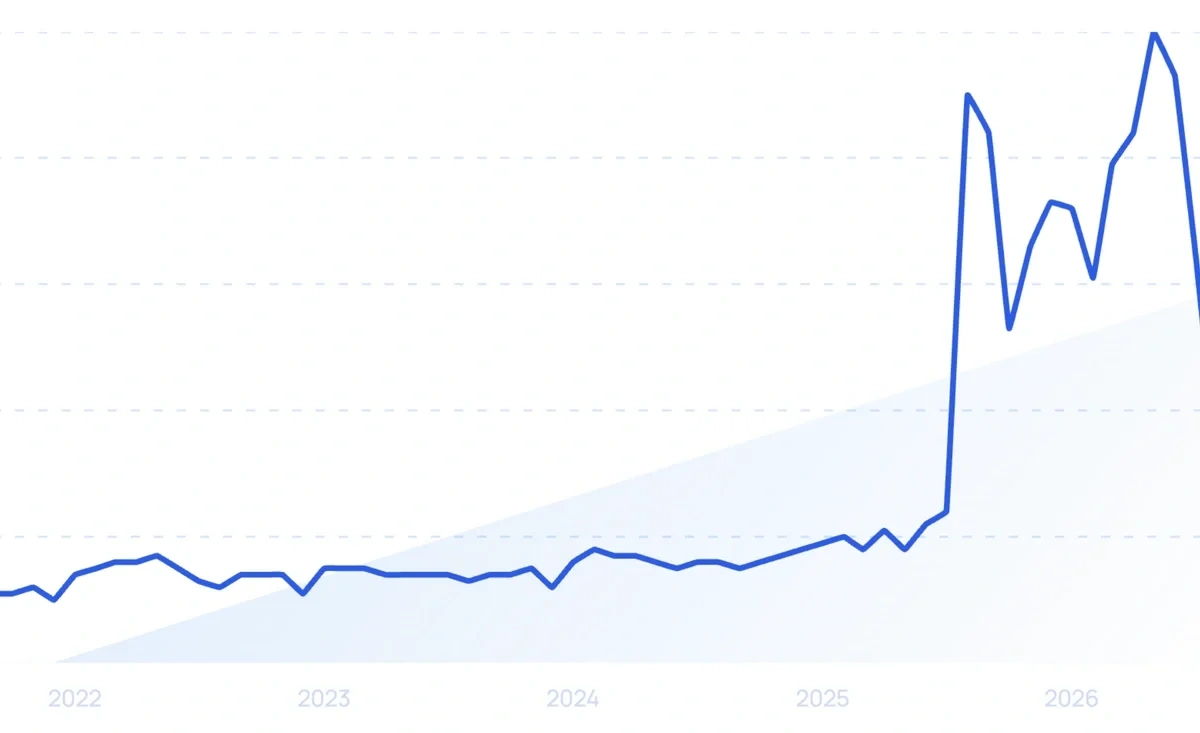
Searches for “micro influencers” have skyrocketed.
6. Advertisers prioritize user-generated content
One important trend that accompanies the drive for authenticity on social media is the rise of user-generated content (UGC).
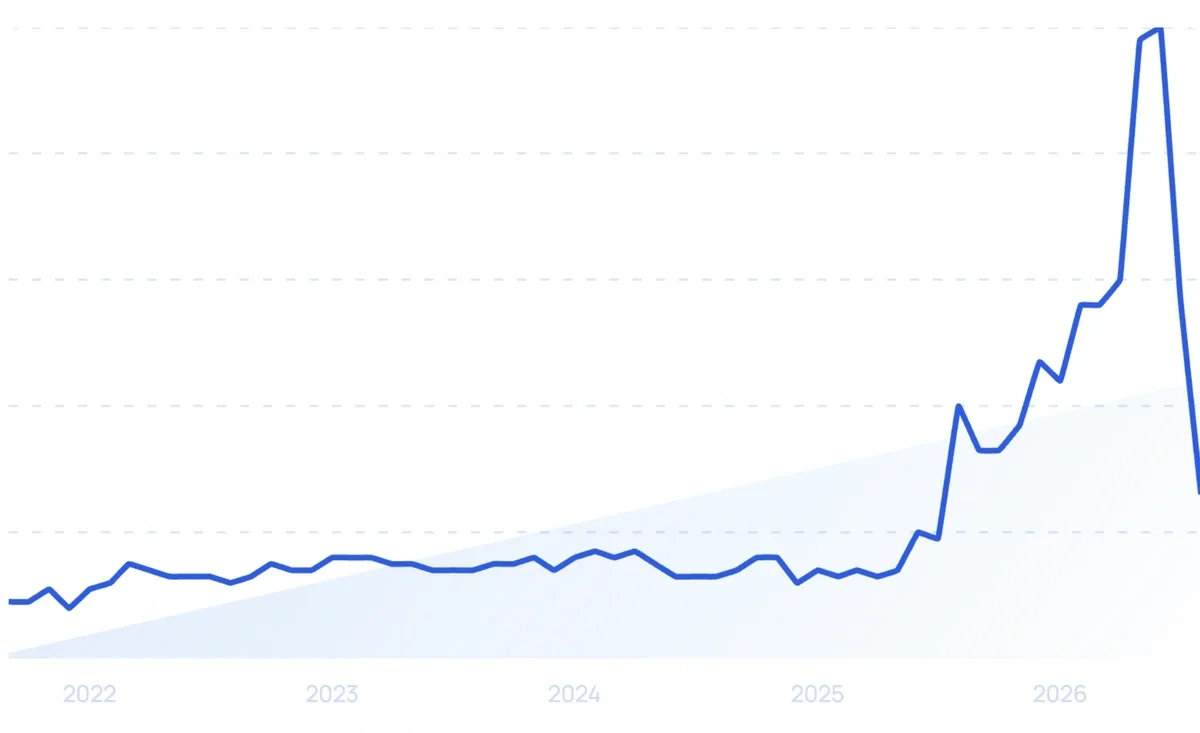
Search engine interest for "user generated content" has doubled over the past 5 years.
Today, 92% consumers trust recommendations from other customers more than paid advertisements.
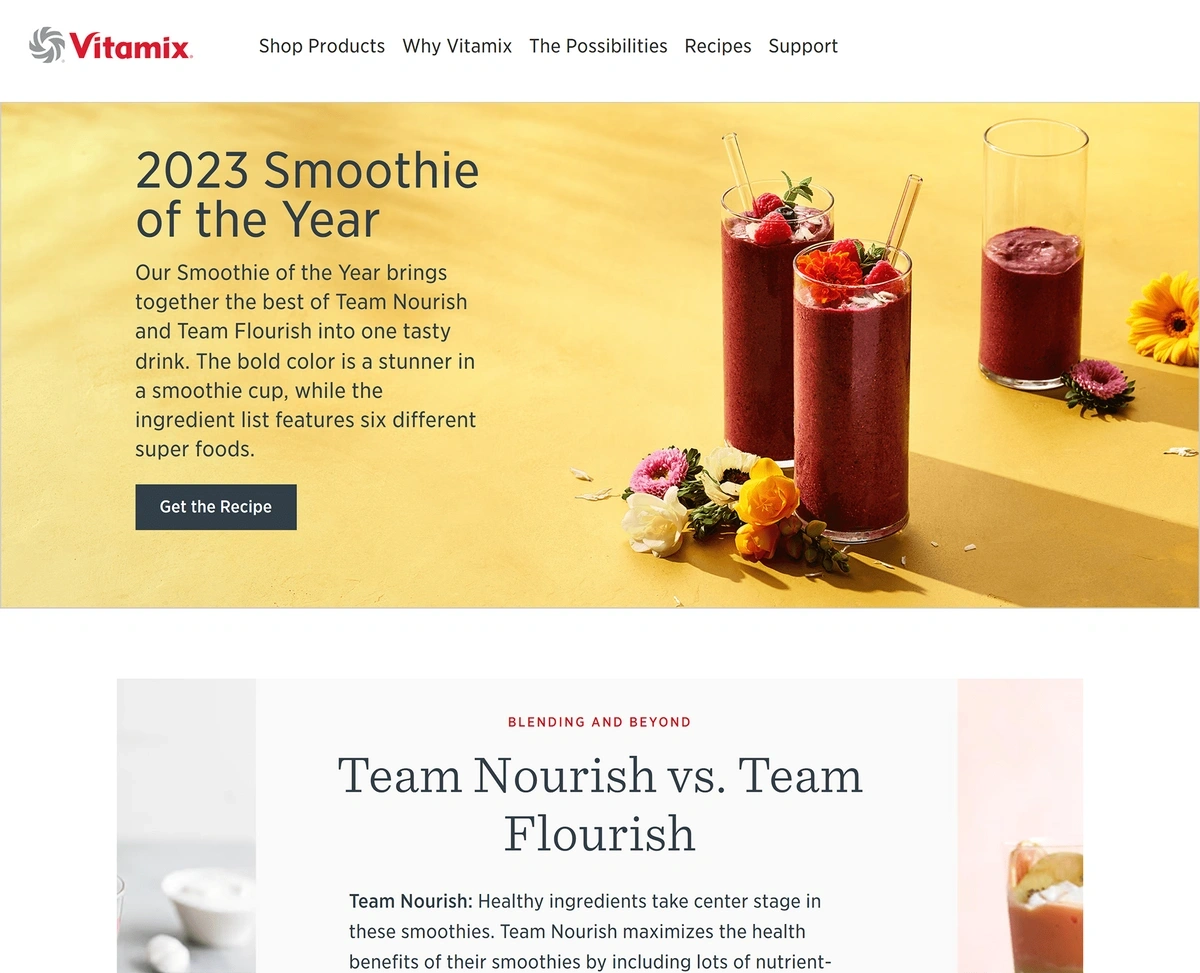
For example, Vitamix runs a "smoothie of the year" campaign that features smoothies made with the product.
Vitamix is one of many major brands focused on UGC.
Brands can also use UGC to promote social causes and increase engagement among their social followers.
Clothing company Aerie started the #aeriereal hashtag, encouraging their customers to post unfiltered images of themselves on Instagram.
7. Marketers go all-in with video
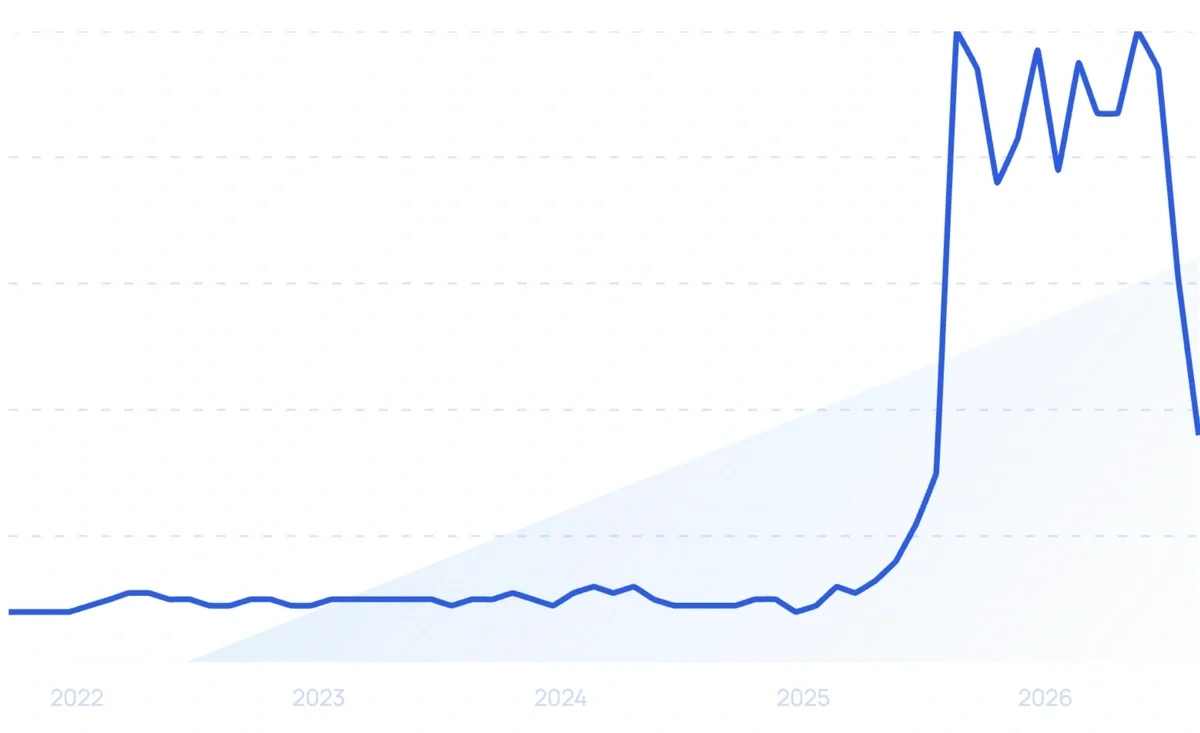
Search growth for the term "video marketing" over the past 5 years.
HubSpot has named video marketing as “one of, if not the, most important marketing trend today and likely for the next 5-10 years”.
To see the dominance of video, you don’t need to look any further than YouTube.
The platform reports that more than 20 million videos are uploaded every day.
However, YouTube is now one of many video-first social media platforms.
Instagram, TikTok and even X (formerly Twitter) are becoming video-first platforms.
And marketers are starting to take notice by making video the focus of their campaigns.
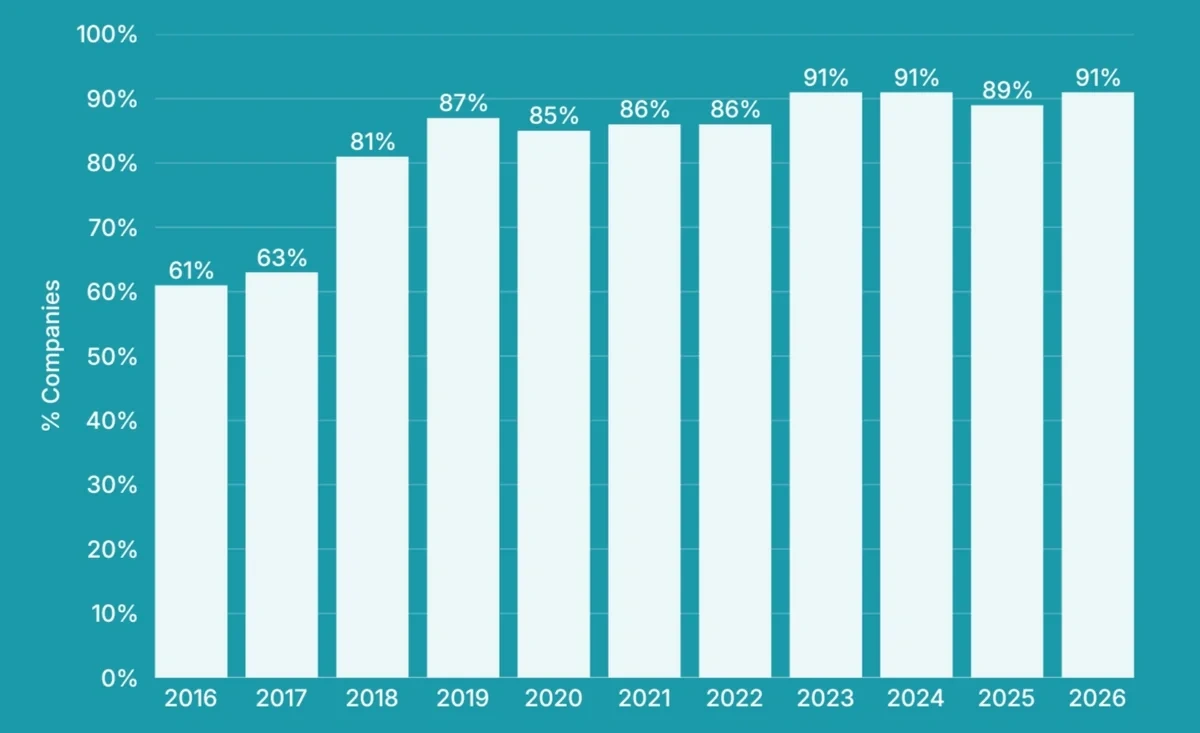
Wyzowl reports that, in 2026, 91% of businesses use video as a marketing tool.
According to one industry study, nearly every business now invests in video content.
The stats regarding video content on social media are especially convincing.
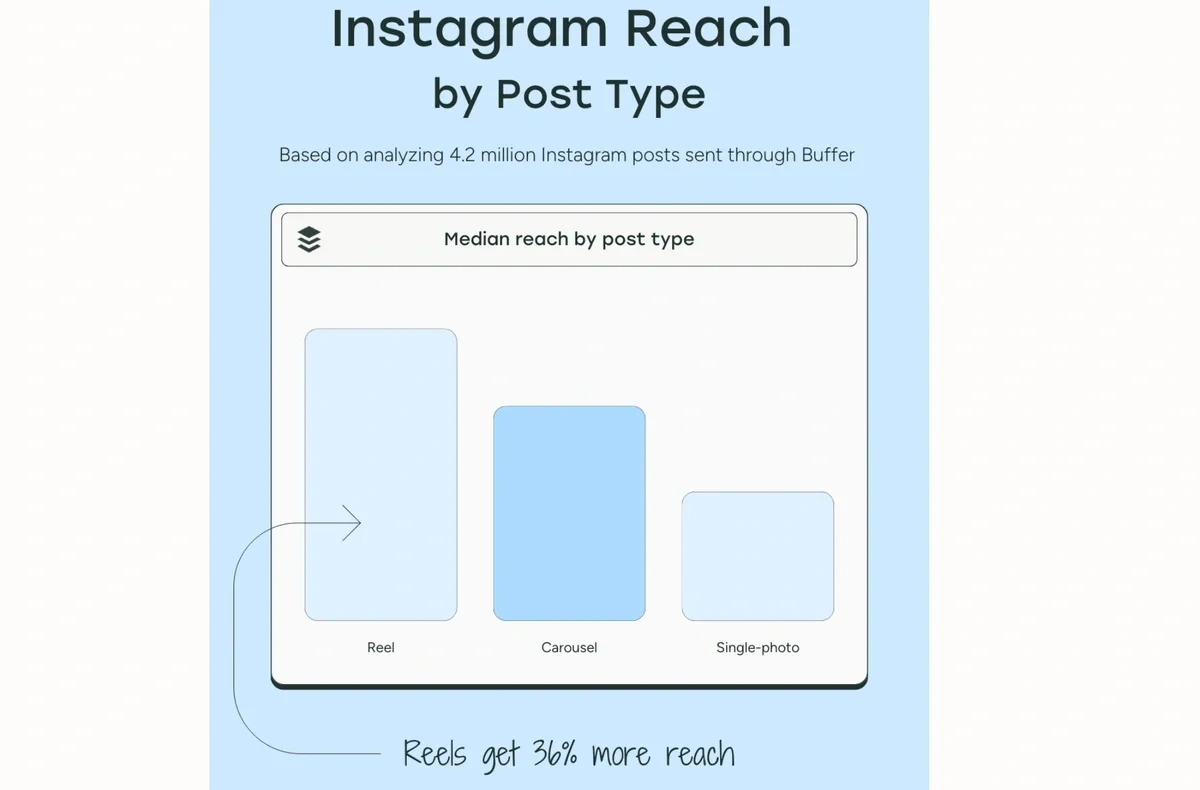
For example, Instagram Reels significantly outperform other content types on the platform.
When it comes to user engagement, Reels get more engagement than non-video posts.
There is a sweet spot in video marketing, though.
Data shows that the ideal length for short videos isn't clear-cut. Between 45-60 seconds is a sweet spot, but engagement also peaks at the 120-180 second mark.
But engagement falls fast with anything that's longer.
8. Consumer demand fuels visual search
Search interest in “Google lens” has been on a steady climb.
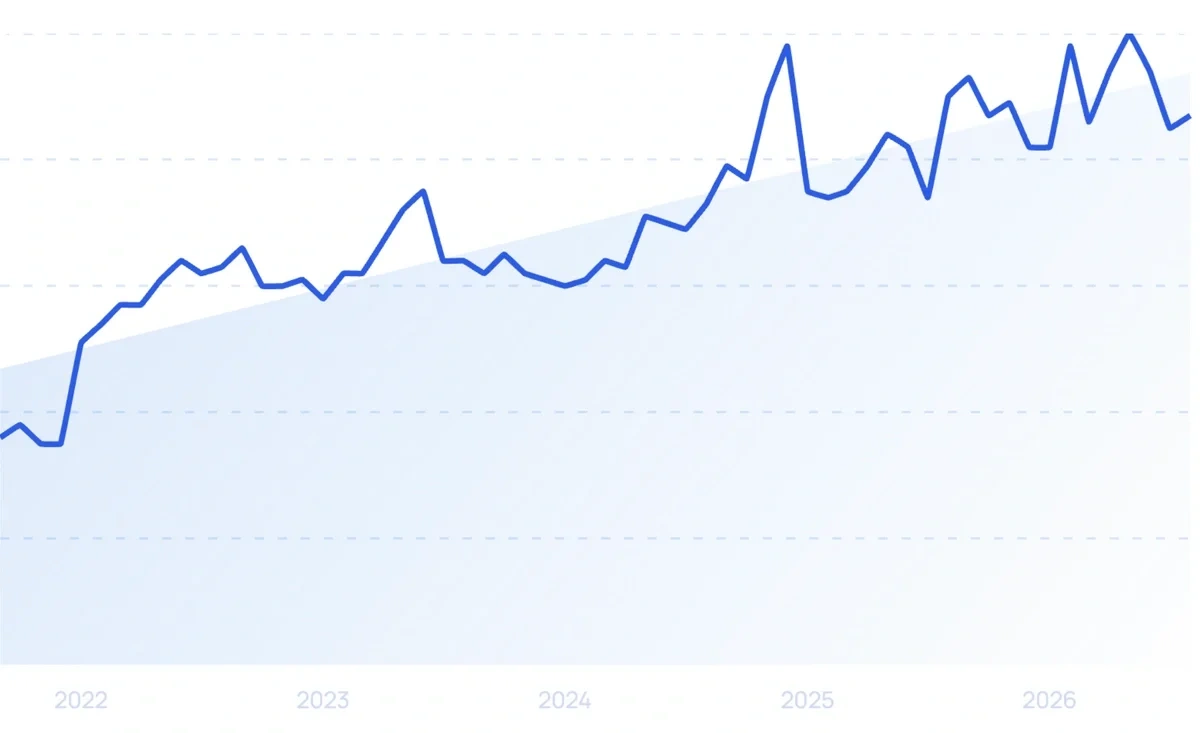
Visual search is now an integral component baked into AI platforms, apps, and search engines people already use.
During the 2025 Google I/O, Sundar Pichai stated that Google Lens grew 65% year over year, logging more than 100 billion visual searches.
The trend is only gaining explosive momentum as Google reports 25 billion Lens queries taking place every month. What's more, 1 in 5 of these queries carry commercial intent, marking a clear opportunity for visually optimized e-commerce stores and retailers.
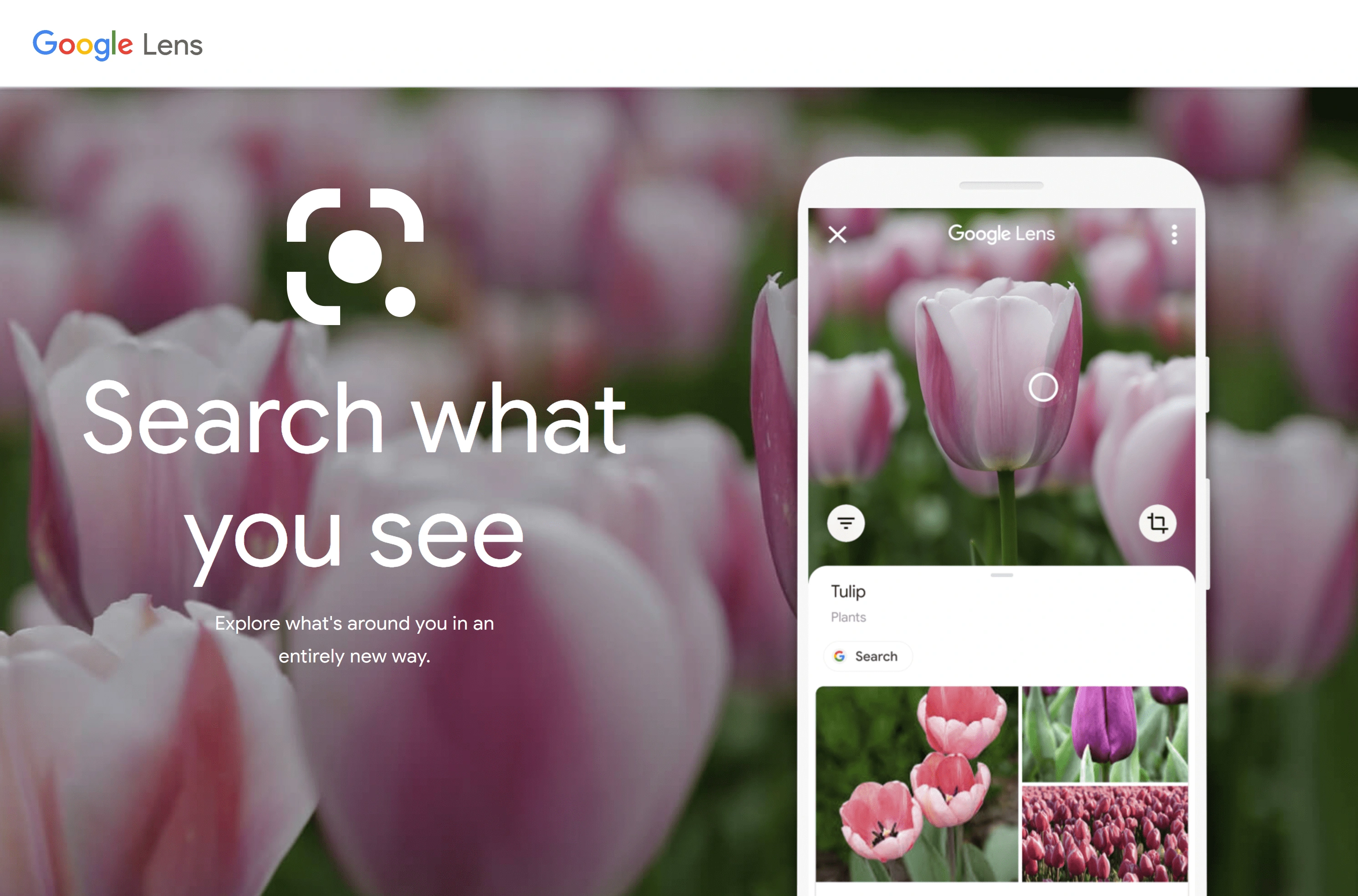
Google Lens is steadily growing.
In fact, Lens represents a small and shrinking facet of visual search. Newer tech like Circle to Search is now a standard Android feature active on over 580 million devices that reduces the need for a standalone app like Lens.
Additionally, Google AI Mode and Gemini are multi-modal chat interfaces by default supporting text, image, and voice queries. AI Mode crossed 1 billion users in just 1 year and is growing rapidly every quarter.
Pinterest is another platform at the forefront of visual search. It's a platform that's particularly finding popularity among younger Gen Z audiences as well who represent the largest and fastest-growing demographic with about half of the 640 million monthly users.
Data from Pinterest Q2 earnings reports that the platform generates 80 billion monthly searches, with visual searches being the most common and bearing commercial interest more than half the time.
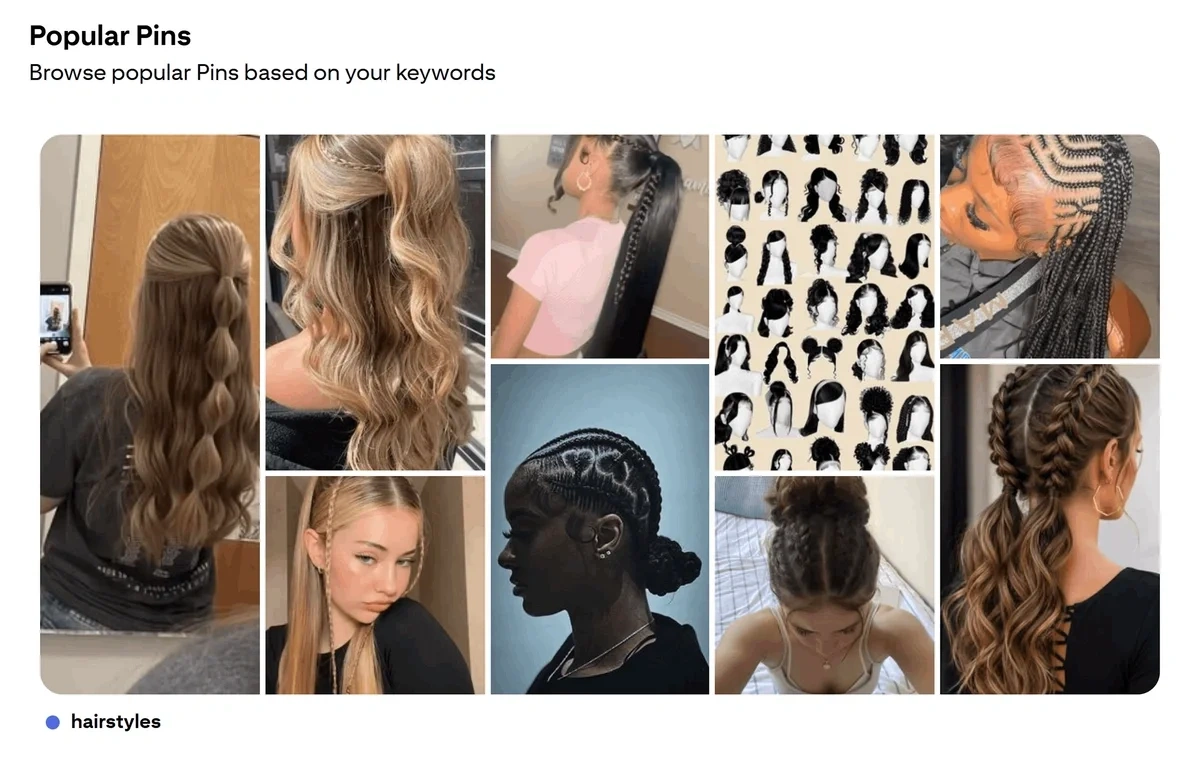
It's a pattern that Google is also seeing with visual search rapidly rising in popularity among Gen Z.
And this behavior isn't tied to search alone. The preference for visual content tells the same story.
According to Bazaar Voice's holiday shopping survey in 2025, Gen Z value user generated content with text reviews, customer photos, and videos being their top 3 most trusted sources of truth. 54% of Gen Z trust customer photos when making shopping decisions, markedly more than other age groups.
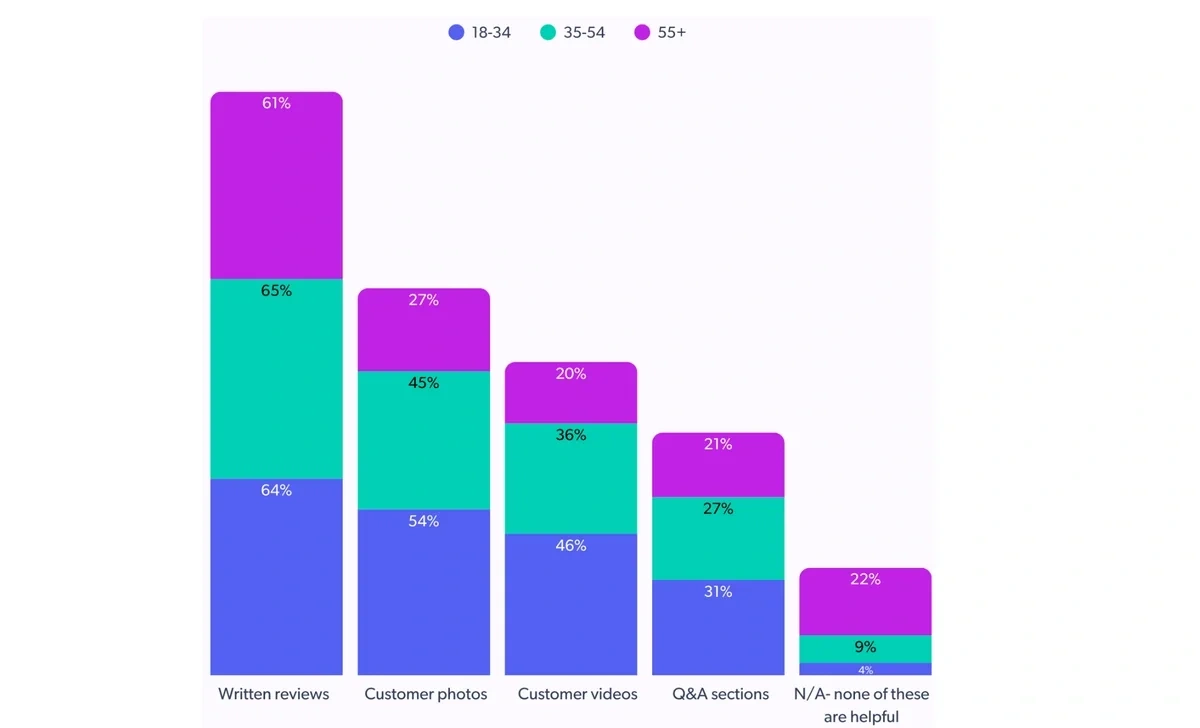
The shift toward visual search is cutting across industries widely.
Visual search has even reached health industry. Google Lens sees roughly 10 billion searches a year related to skin, hair, and nail concerns. Apps like Lens eliminate the need to describe a rash or mole. An image search performs that function with remarkable ease.
AI tools followed the same trajectory, starting as text generative tools before adding visual support with increasingly superior quality of output in every iteration.
In short, visual search is a default standard that's been absorbed into existing technologies and platforms, serving the growing demand and trust people have in visual content and interaction.
9. Marketers Turn to YouTube Ads for Increased Reach and Improved ROI
As consumers shy away from watching traditional television, companies are spending their ad budgets elsewhere.
YouTube has become a modern advertising giant for many brands, big and small.
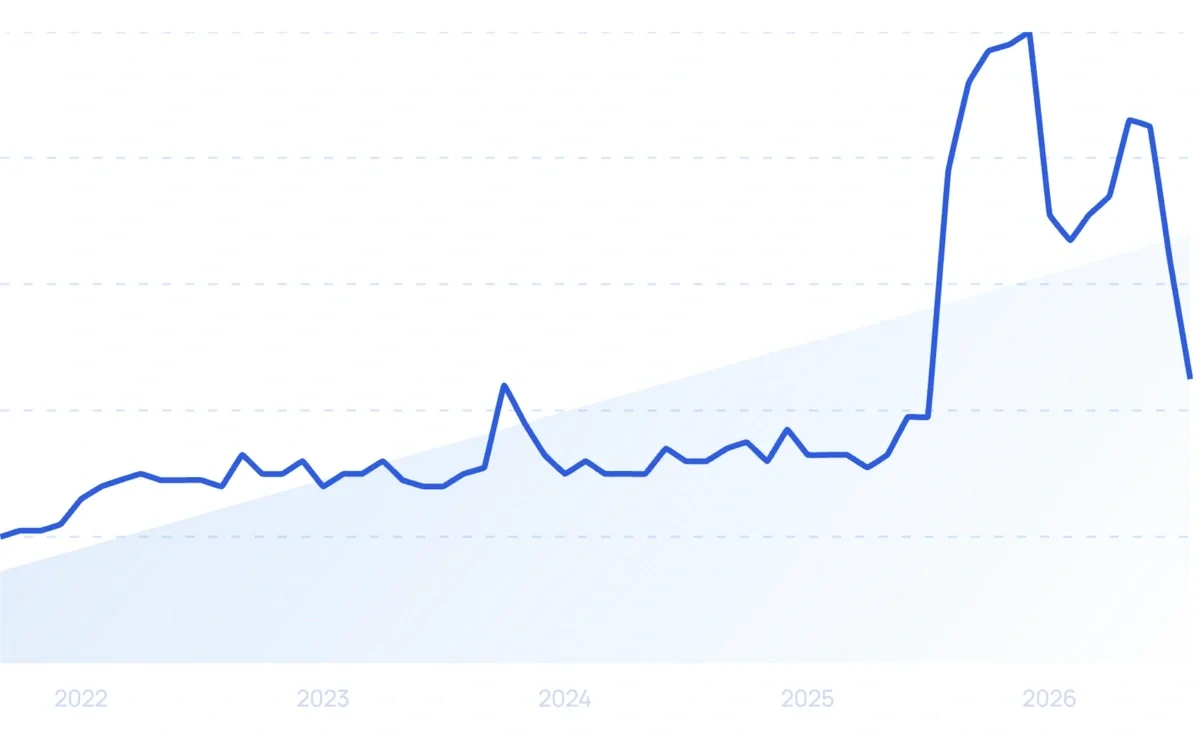
Search volume for “youtube ads” has grown 126% over the past 5 years.
The platform’s global revenue is up to $11 billion per quarter in Q2 2026.
HubSpot reports that 69% of marketers are currently using YouTube.
Digital marketers who use YouTube ads have the potential to reach 2.58 billion unique visitors every month, which is about 45% of the world's social media population.
These ads are also relatively cheap, too — $.01 to $.05 per view.
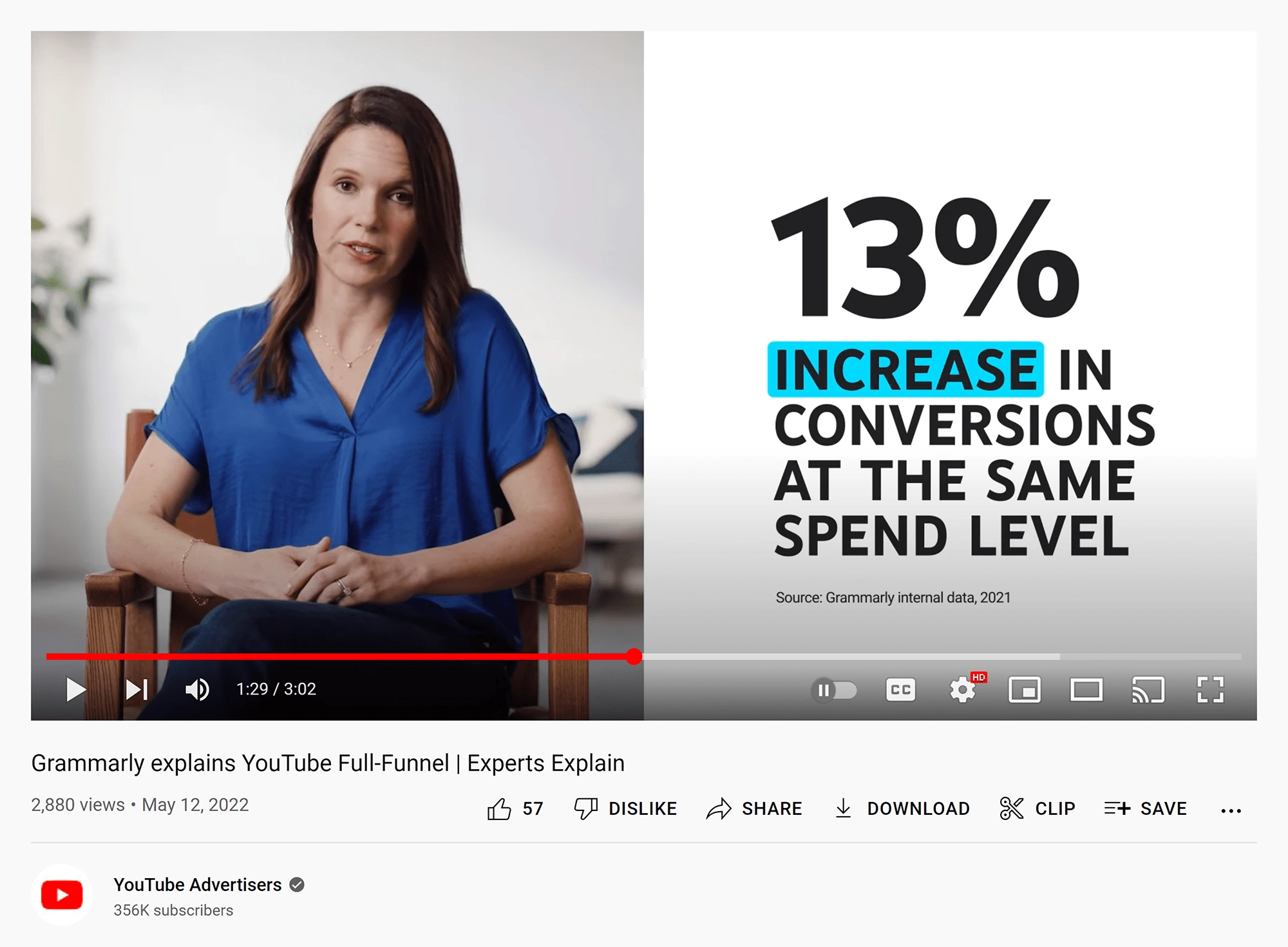
Grammarly, a cloud-based typing assistant with 30 million users, is one of the best proponents of YouTube’s full-funnel ad strategy with a dual focus on long-term brand building and new customer acquisition.
The result was a 9% higher ROI compared to awareness advertising alone and a 13% increase in conversions with the same ad budget.
Grammarly saw an improved conversion rate when running YouTube ads in 2021.
Digital marketers at Kayak, a popular travel booking site, launched a series of humorous ads on YouTube. The goal was to inspire people to get back to traveling after the pandemic. The ads aired on YouTube’s connected TV.
Kayak’s ad campaign took advantage of YouTube’s broad reach in order to target potential travelers in the United States.
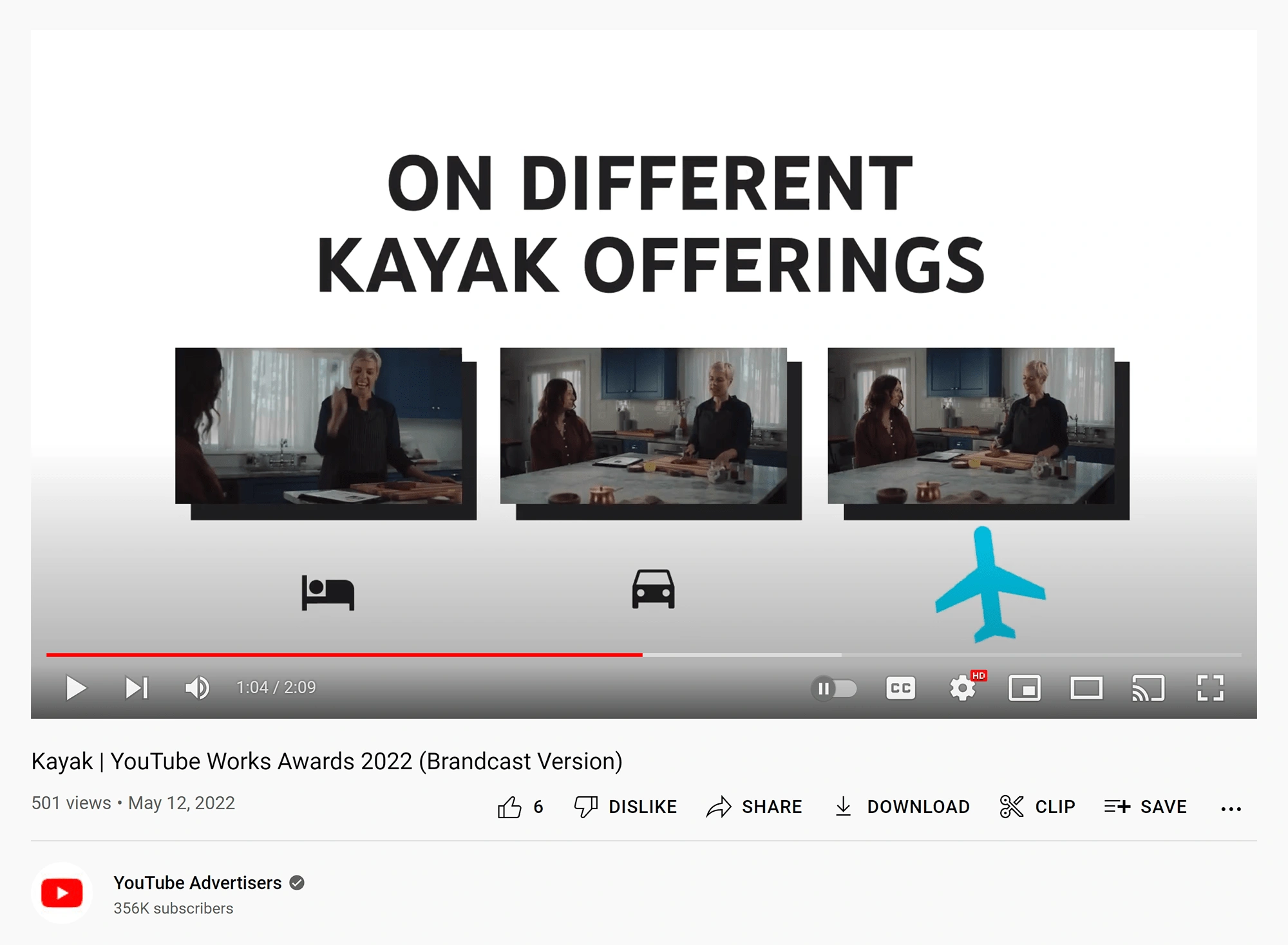
The campaign was able to reach 1 in 4 US adults in just one month and conversion rates increased by 7.5%.
Want to Spy on Your Competition?
Explore competitors’ website traffic stats, discover growth points, and expand your market share.
10. Data Privacy Concerns Prompt Marketers to Change Strategies
In order for digital marketers to personalize content and target ads at consumers, they need data. But, very soon, that data may be hard to come by.
Consumers are becoming increasingly concerned about privacy.
Search volume for “data privacy” has jumped over the past 5 years.
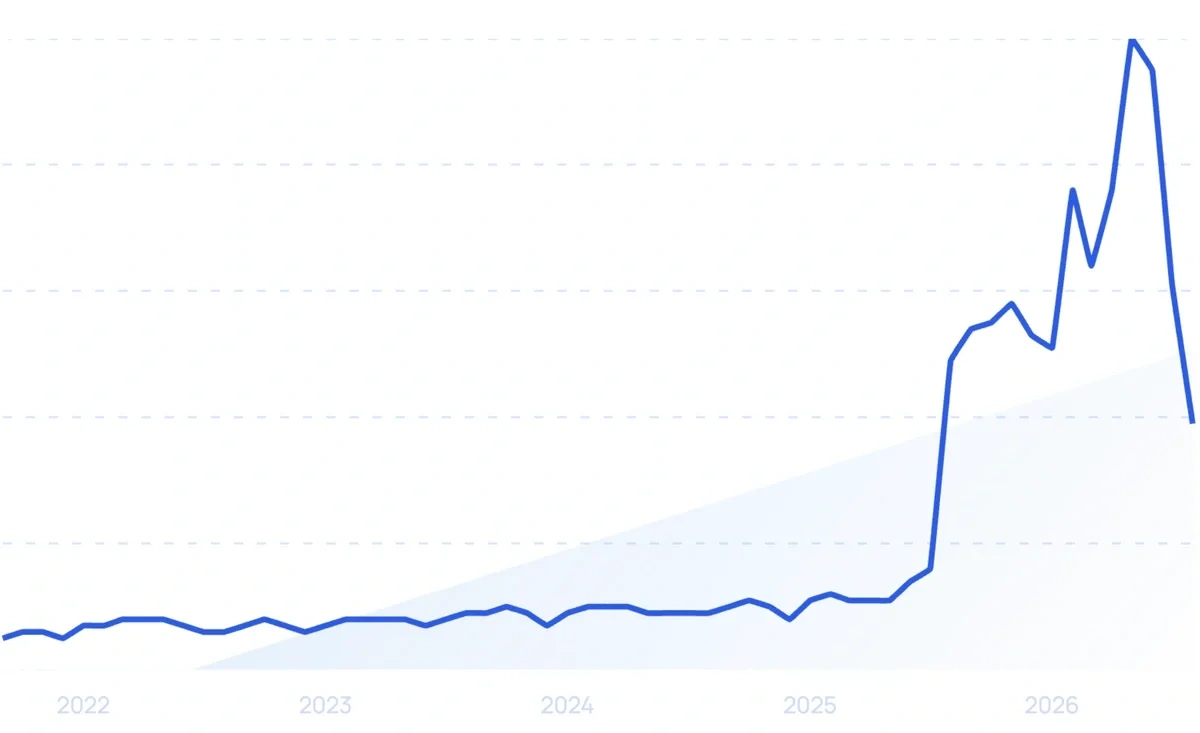
The Pew Research Center reports that more than 80% of Americans feel that the risks of companies collecting data on them outweigh the benefits.
Despite these concerns, Google's plans to phase out third-party cookies never really come into full effect.
Instead of deprecating cookies entirely, Google instead pivoted to providing user choice for cookies settings.
Even though Firefox and Apple followed through by blocking third-party cookies, these remain functional for the majority of the web thanks to Chrome's popularity, a browser that still uses third-party cookies today.
However, a safer long-term bet for marketers is to revamp their data collection strategies and aim to gain back consumer trust.
Advertisers who can deliver the transparency consumers demand can expect to see an increase in data willingly exchanged by the customer.
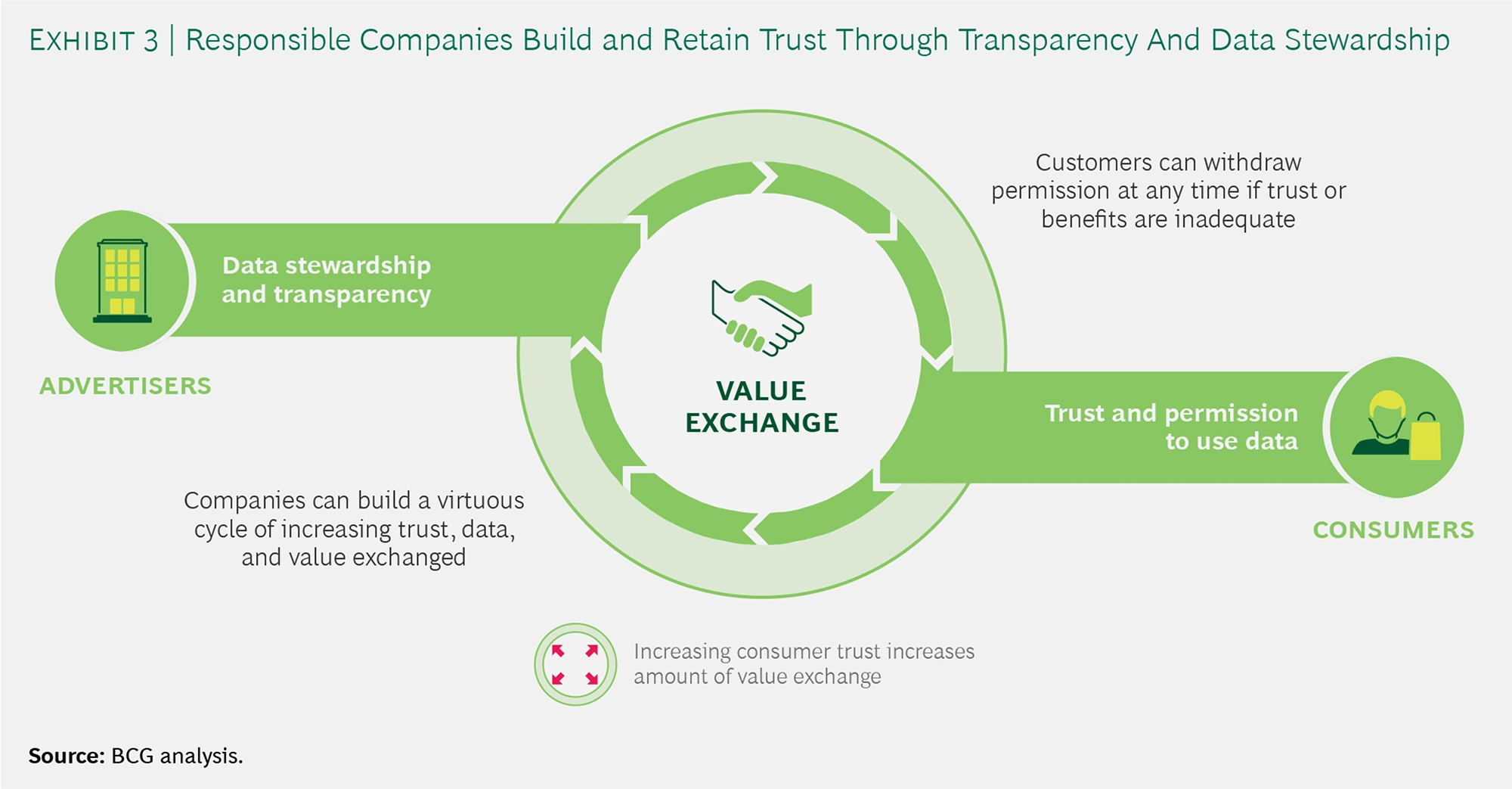
There are clear benefits to first-party data.
It’s cheap to collect. It’s owned by the company. It’s accurate, and it can be used to strengthen relationships with customers.
A BCG study found that retailers that leverage first-party data from strong loyalty programs to apply personalization can lift profit by 3% to 5%. Even more if you're a specialty or fashion retailer.
11. Metaverse Hypes Dies Down
In simple terms, the metaverse was dubbed to be a game changer for consumers.
(To the point where Facebook's parent company rebranded to Meta).
So far, reality never really lived up to the hype.
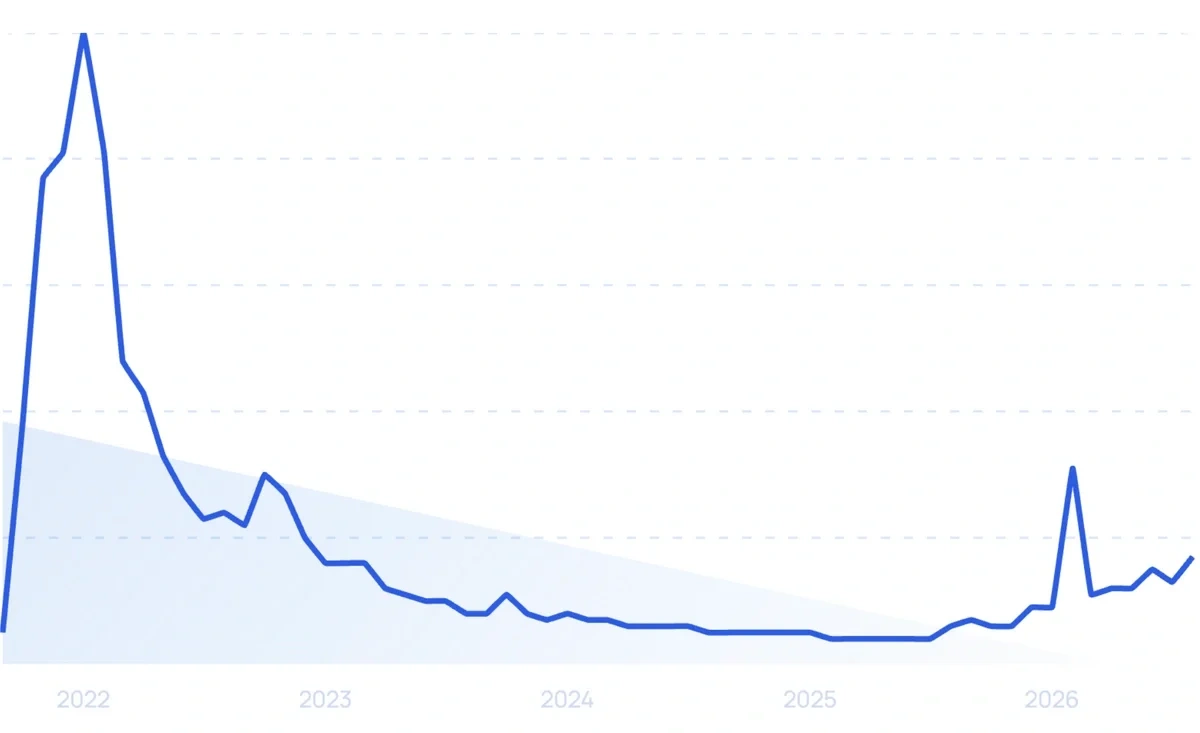
Searches for "metaverse" have steadily declined since peaking in 2022.
In 2023, it was predicted that 110 million people would use AR at least once per month.
The number of people using was projected to grow. But it's unclear whether this trend has legs.
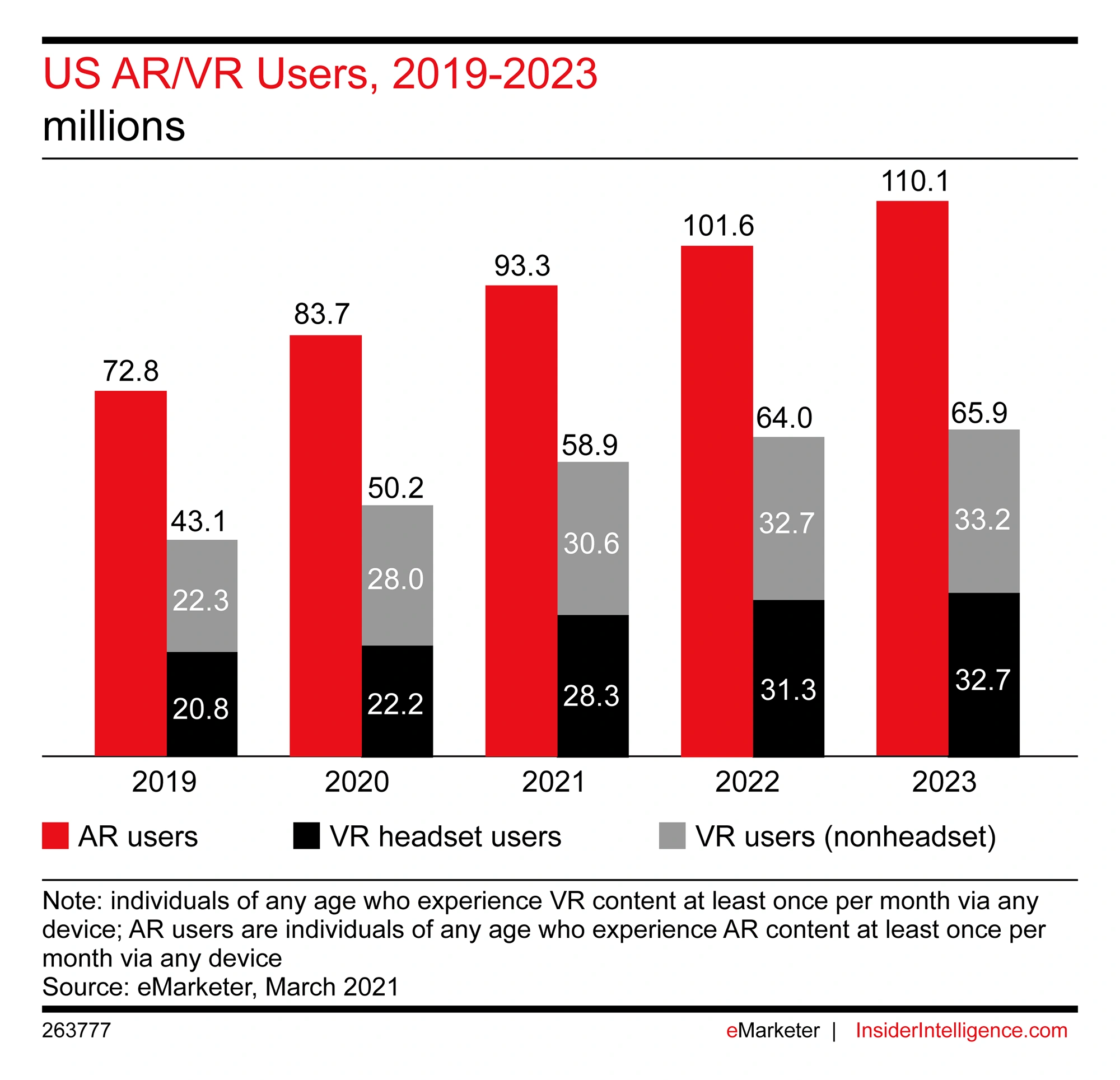
But those projections never panned out.
Currently, the metaverse is more of a vague concept than a channel that marketers can target.
However, there are a few examples of metaverse marketing panning out.
For example, Gucci.
The fashion retailer launched a limited-time-only Gucci Gardens in Roblox, a metaverse version of the brand’s real-life Gucci Garden Archetypes in Italy.
In Gucci Gardens, people could mingle with other avatars, explore the space, and purchase digital products.

More than 19 million people visited the space.
Once there, they could purchase Gucci accessories that ranged in price from $1.20 to $9. More than 4.5 million items were sold.
The mega hit video game Fortnite has seen millions of people show up for virtual events (drawing over 12 million people).
12. Marketing Leaders Respond to Calls for Increased Diversity
Digital marketers are listening as consumers call for more diversity, equality, and inclusion (DEI).
But pro-DEI policies are threatened now more than ever, with the Trump administration aggressively targeting brands with DEI programs with executive orders.
In addition, Robby Starbucks' anti-DEI campaigns forced many notable brands to dial back their DEI policies. Target, Walmart, Caterpillar, Amazon, McDonald's are among the ones most affected by these protests.
That said, most of the policy changes were merely rebrands or changes in phrasing rather than a meaningful attitude shift. Some companies merely swapped "DEI" for terms with less political connotations such as "belonging" or "inclusion".
What's interesting is that the consumer attitude in favor of DEI has continued its forward momentum.
Mintel's report shows that pro-DEI sentiment among US consumers rose from 42% to 56% over the past year, despite the political pushbacks and the resulting waning of corporate commitments.
Consumers are more sensitive to tokenism and lack of authenticity in DEI-oriented messaging. SparkFoundry found an 18% rise in consumers who find representations of DEI insincere and performative, signifying a receding space for half-measures.
When it comes to purchase decisions, diverse representation matters a great deal to 63% of the people in Numerator's study.
The sentiment is stronger among younger populations, with 45% of Gen Z shoppers considering LGBTQ+ representation important in advertising.
Nearly 90% of marketers agree that there’s room for growth when it comes to using diverse images in marketing campaigns.
Thoroughly researching the target audience, using inclusive language, and featuring diverse imagery are a few ways digital marketers are adjusting their strategies.
Many brands are also partnering with minority-owned businesses in order to make their marketing more inclusive.
Digital marketers are looking at a pathway like this one as they work toward inclusive representation.
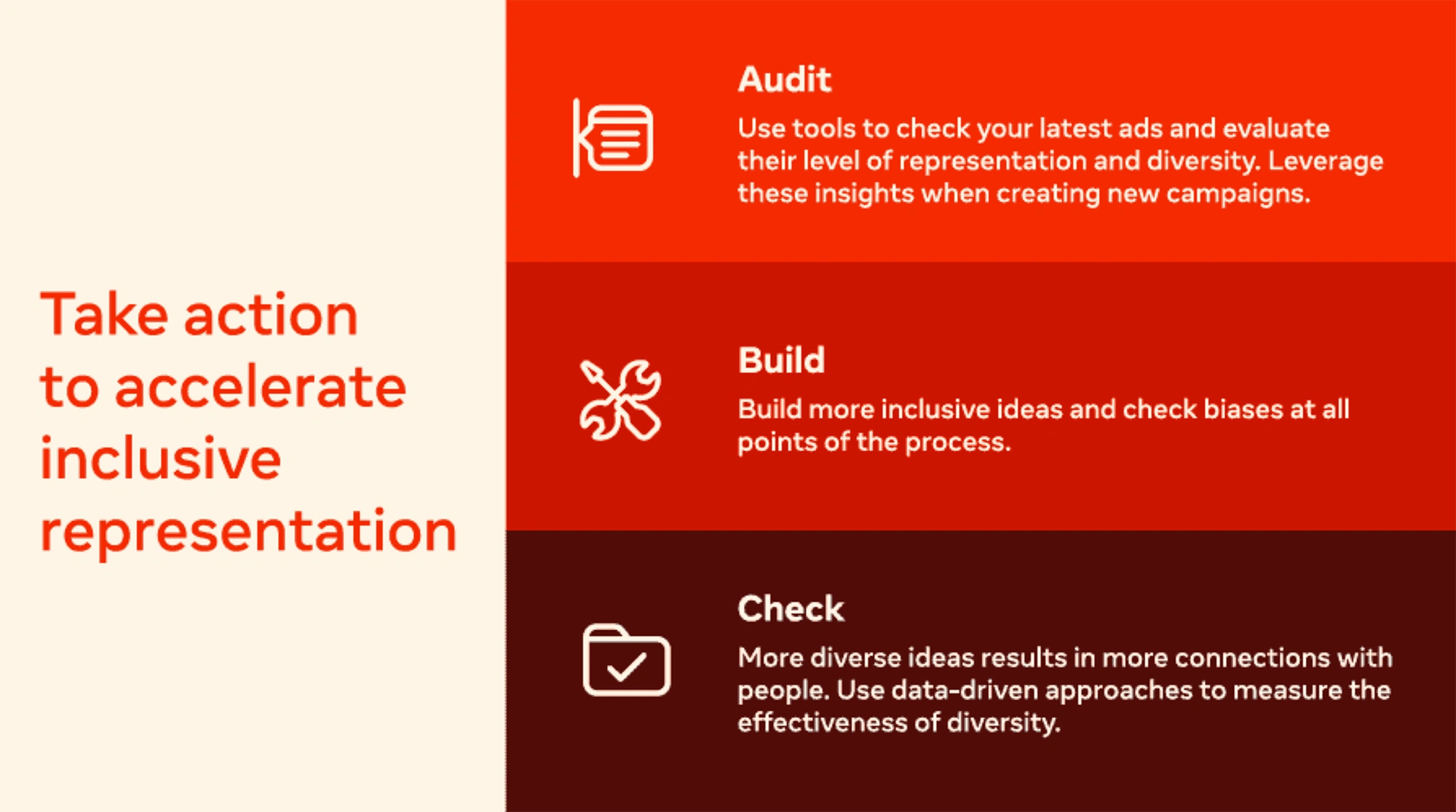
Procter & Gamble provides one example of a successful initiative aimed at diversity in marketing.
The corporation’s “Widen the Screen” video series aims to expand and elevate Black voices. The initiative has created partnerships with Black creators in film, television, and advertising with the goal of confronting prejudice.
Oreo is another brand that’s been committed to LGBTQ+ inclusion for the past several years.
They partnered with PFLAG, an organization dedicated to advocating for LGBTQ+ rights, to launch the #proudparent campaign.
They utilized filters on Instagram, Twitter ads, and a dedicated website in their marketing.
The campaign was a huge success, especially on social media. It produced 315 million impressions and 2 million engagements.
13. Chatbot App Integrations Grow
One digital marketing strategy that combines a few of the trends already on this list is the use of chatbots.
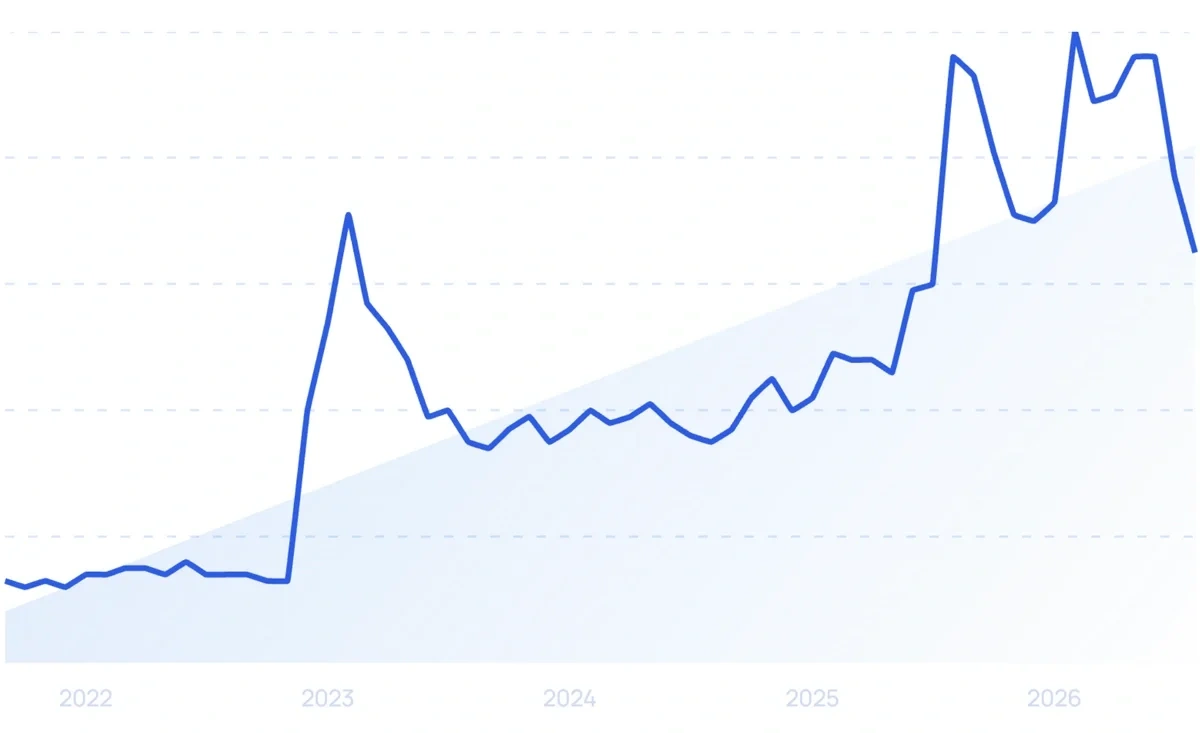
Search volume for “chatbot” is growing, up 400% in the past 5 years.
AI-powered chatbots combine the personalization consumers crave with the technology of the future.
OpenAI's ChatGPT passed 900 million weekly active users in February 2026, and Google's Gemini has been the fastest-growing competitor to it.
The space is a crowded one with alternatives like DeepSeek, Perplexity, Claude, and many other LLM-powered chatbots easily accessible to most of the world today.
Facebook Messenger remains one of the top platforms for chatbots.
There are more than 300k active chatbots on Messenger and more than 8 billion messages go between businesses and consumers each month.
And chatbots today are capable of a lot more than just performing support functions. They can be used to automate entire workflows, and assist with shopping and product research.
73% of buyers expect apps and sites to feature digital assistants for instant interactions.
With the prevalence of AI features, good chatbots are hardly considered a distinguishing characteristic for app or software service. These integrations are almost expected as a bare minimum.
Conclusion
Social media platforms continue to roll out features for businesses, but consumers are demanding more authenticity and personalization from businesses.
Brands that can find the right balance between paid marketing and digital word-of-mouth directly from their customers are poised to be the most successful in the coming years.
You may also like:
Stop Guessing, Start Growing 🚀
Use real-time topic data to create content that resonates and brings results.
Exploding Topics is owned by Semrush. Our mission is to provide accurate data and expert insights on emerging trends. Unless otherwise noted, this page’s content was written by either an employee or a paid contractor of Semrush Inc.
Share
Newsletter Signup
By clicking “Subscribe” you agree to Semrush Privacy Policy and consent to Semrush using your contact data for newsletter purposes
Written By


Josh is the Co-Founder and CTO of Exploding Topics. Josh has led Exploding Topics product development from the first line of co... Read more