Exploding Topics
Remineralizing Gum search volume grew from under 100 to 27,100 monthly searches between February 2024 and January 2026.
Remineralizing gum
+5100%
GLP 1 Supplement search volume grew from 5,920 to 74,000 monthly searches between February 2024 and January 2026.
GLP 1 supplement
+1150%
Soursop Bitters search volume grew from 9,900 to 110,000 monthly searches between March 2024 and February 2026.
Soursop bitters
+1011%



Get Advanced Insights on Any Topic
Discover Trends 12+ Months Before Everyone Else
How We Find Trends Before They Take Off
Exploding Topics’ advanced algorithm monitors millions of unstructured data points to spot trends early on.

Keyword Research
Performance Tracking
Competitor Intelligence
Fix Your Site’s SEO Issues in 30 Seconds
Find technical issues blocking search visibility. Get prioritized, actionable fixes in seconds.
Powered by data from
Latest Blog Posts
Featured Case Studies
See what's trending before everyone else
Each week, we'll send you our best Exploding Topics. Plus, expert insight and analysis.
7 E-Commerce APIs to Build the Perfect Online Store

 Add Exploding Topics on GoogleAdd Exploding Topics as your preferred source to see more of our stories on Google.
E-commerce APIs can help you bring together the most reliable tools while also keeping your store scalable and flexible as it grows. With the right combination of technologies, you can provide the best products, secure payment processing, and personalized customer experiences.
The best part? APIs can also automate processes for your store to save you valuable time.
I’ve brought together the best e-commerce APIs in one list so you can find the right ones to power your business.
What Is an E-Commerce API?
API stands for Application Programming Interface. APIs enable software to communicate by sending requests for resources from one app to another, which then sends back a response.
If that sounds a bit vague, that’s because APIs offer almost infinite possibilities. The resources and responses can be almost anything, including valuable assets for your online store.
Here are a few e-commerce API use cases:
- Payment Processing: One of the most common ways e-commerce sites use APIs is to connect with payment gateways to facilitate transactions. This enables you to use the secure processing provided by dedicated payment management apps.
- Inventory Management: Keeping track of the products you have available is important for fulfilling orders and meeting customers’ expectations. It’s not always the easiest to do without dedicated software, but you can use an API to connect your store with your preferred tool.
- Marketing: Email, social media, paid ads—however you connect with prospective customers, it’s helpful to integrate those channels with your e-commerce site. This lets you collect customer information to use for marketing purposes.
- Order Management: Fulfilling online orders requires coordinating shipping, customer notifications, and your inventory management system. APIs can integrate key systems to ensure everything runs smoothly and your customers end up happy.
Basically, APIs bring all the pieces of a successful e-commerce venture together by enabling them to send information to each other. What you choose to integrate and how is up to you.
The Benefits of E-Commerce APIs
Why use e-commerce APIs to build your online store?
For starters, it’s more efficient to make use of existing resources than to build your own. You don’t need to develop an entire payment gateway if you can use an API to connect your site to an existing one.
Dedicated third-party tools are also usually very good at what they do. Tapping into their specialized expertise means you get the best of the best for your online store.
APIs are generally considered a cost effective solution, too. By saving time on development, you’re also saving money. Plus, you don’t have to pay to maintain multiple tools.
In time, your e-commerce site will grow, and your API integrations can grow with it. The scalability offered by APIs will help you continue to meet customer demand, even if it increases rapidly.
By automating processes for your site and connecting your e-commerce platforms, you minimize the manual effort you need to invest in managing your business.
7 E-Commerce APIs to Automate Your Online Store
Depending on what you sell and the complexity of your e-commerce site, you may benefit most from incorporating only a few APIs. Or, if you have a large customer base and sell a wide variety of products, you might need to use several to meet the needs of your buyers.
The APIs listed below are well-established and secure solutions. You can use them separately or in combination to achieve your goals.
Shopify API
Shopify offers multiple APIs for different purposes, but I’m going to focus on its Storefront API.
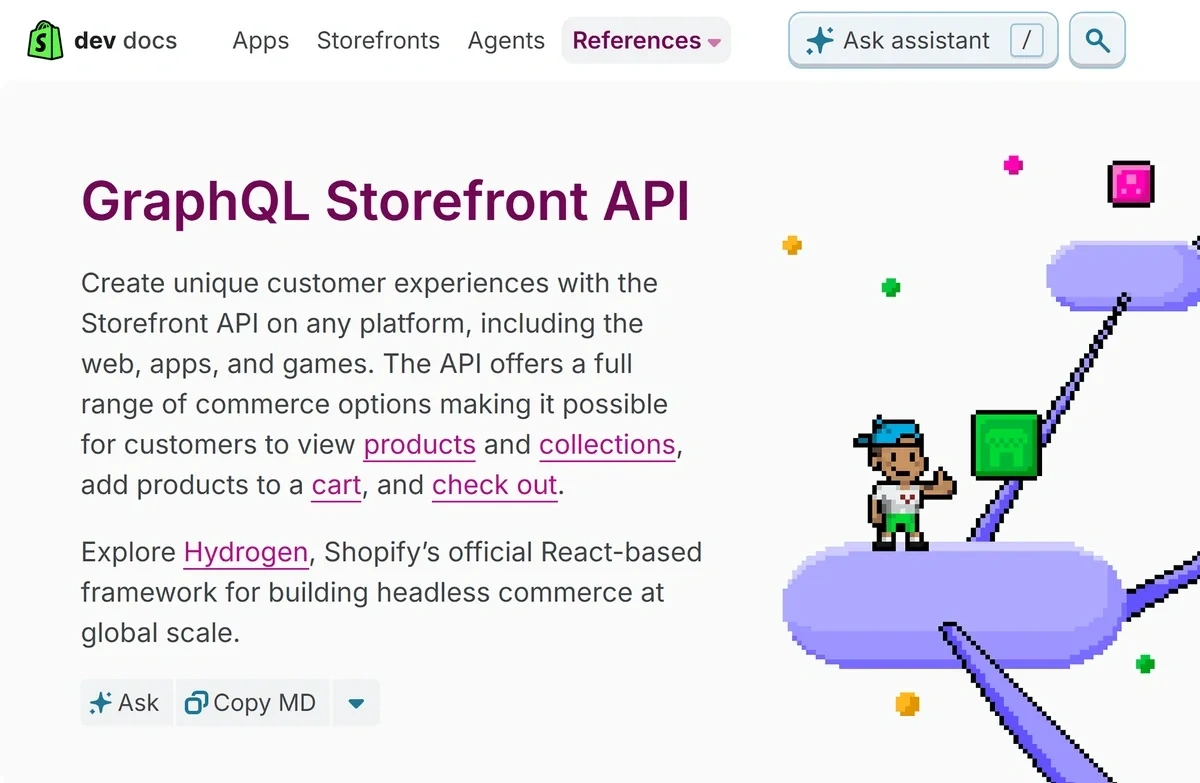
The Storefront API enables you to build a headless e-commerce store. You can use all of Shopify’s e-commerce capabilities, like creating products and allowing customers to add them to a cart for checkout, but with your own customer-facing website.
To put it another way, you can build your own custom e-commerce website and use Shopify to power it.
The Storefront API is a GraphQL API, which means that it provides a single endpoint (or URL) that allows you to access multiple resources. This is a flexible option that lets you extend your store while keeping it lean.
Shopify provides multiple frameworks and Software Development Kits (SDKs) to help you build your headless e-commerce site.
You can build custom apps using Shopify APIs on the basic plan, but in order to access the Storefront API and unlock all the available customization features, you’ll need a Shopify Plus account.
If you like the idea of headless e-commerce but aren’t sold on the Shopify API, Bigcommerce and Magento (Adobe Commerce) are alternative solutions.
Stripe API
Taking payments is, of course, an integral part of any e-commerce operation. Stripe offers an easy-to-use REST API for collecting one-time, subscription, and usage-based payments.
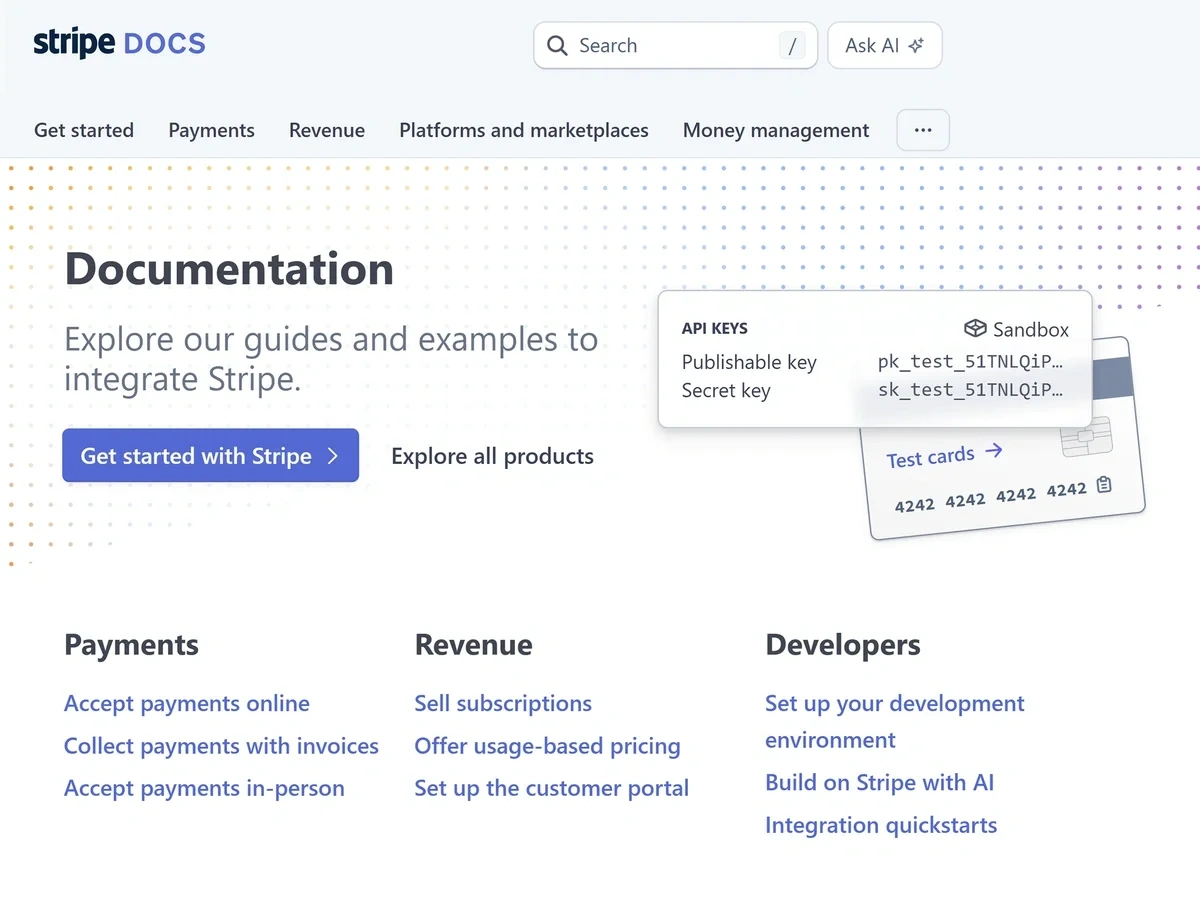
The Stripe API also allows you to implement multiple payment methods, such as credit cards or bank transfers. It enables you to use webhooks to track payment statuses and integrate with marketing platforms to notify customers.
Stripe’s Payments Records API also gives you the ability to track and monitor all your e-commerce payments, including ones processed using another payment gateway.
Even though Stripe offers a dashboard where you can track payments, this API enables you to build your own payment record keeping system. This will help you when you need to report profits, manage refunds, and troubleshoot failed payments.
This API offers a lot of flexibility and has a good track record of being very developer-friendly. It offers multiple SDKs to help you get started quickly, and is very well documented.
Every Stripe account—including free accounts—includes API access. Some API calls, such as account balance retrieval and bank account owner verification, have fees for each successful request. Rate limiting also applies.
Amazon Product Advertising API
You don’t need your own products to get into the e-commerce business. You can sell products from marketplaces like Amazon and earn commissions through affiliate programs.
However, you don’t have to rely on shoppers finding their way to your Amazon storefront to make sales. Using the Amazon Product Advertising API, you can display Amazon products on your website.
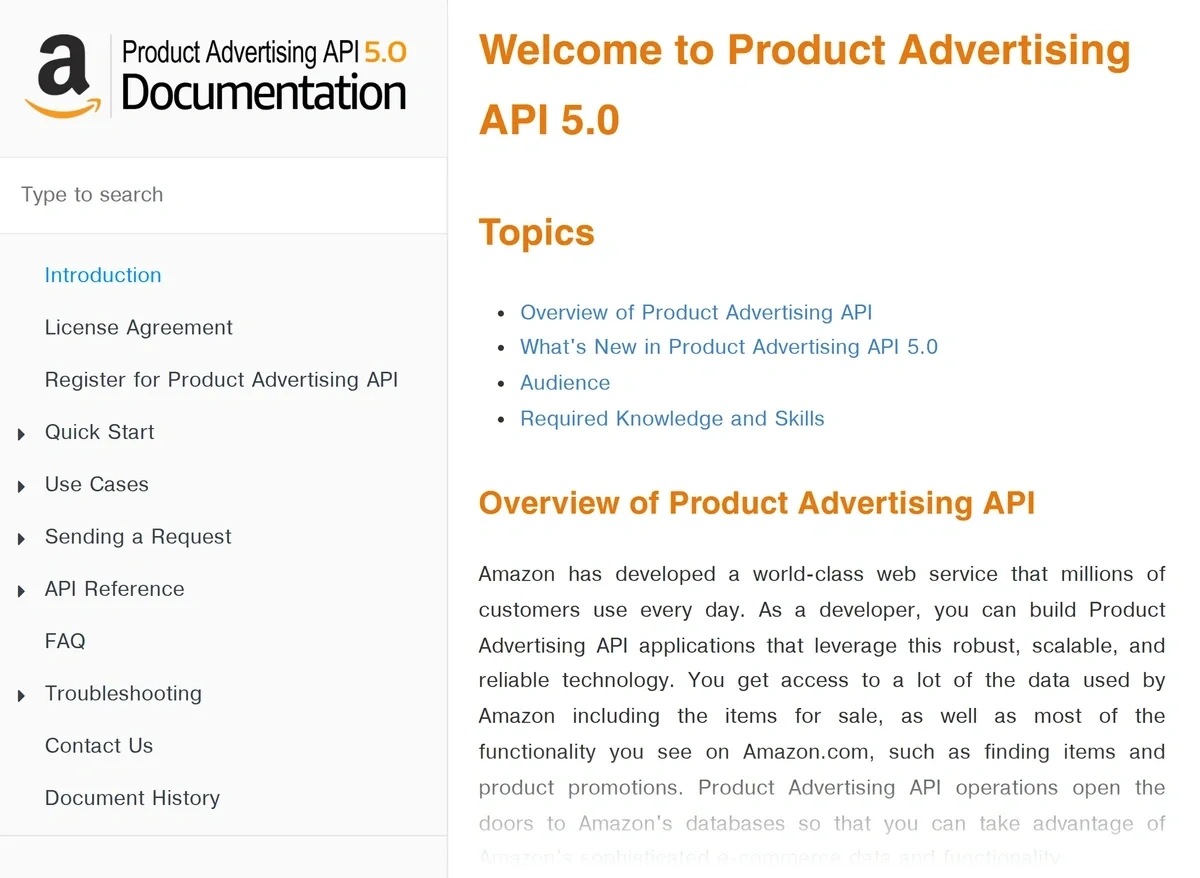
This is a great solution if you have an active blog that you use to recommend products to readers. Rather than making them leave your site to see information about the items you’re selling, you can display details such as the product’s price and description.
The Product Advertising API also enables you to incorporate search functionality to allow customers to find the items they’re interested in. If you want to display Amazon products in a more traditional online store format, this feature will come in handy.
To use the Amazon Product Advertising API, you need a verified Amazon Associates account that has been accepted into the Amazon Associates Program.
Exploding Topics
E-commerce involves some level of risk and reward. You can minimize the risks and maximize the rewards by making sure you have the right products on offer at the right time.
Exploding Topics is an excellent resource for discovering products right before they take off. By capitalizing on public interest, you can make sure you have the most desirable items for sale when the demand hits its peak.
The Exploding Topics API enables you to track trending products using your own system. You can create alerts for messaging apps like Slack to let you know when new products in your niche start to gain momentum, or track products in more traditional reports.
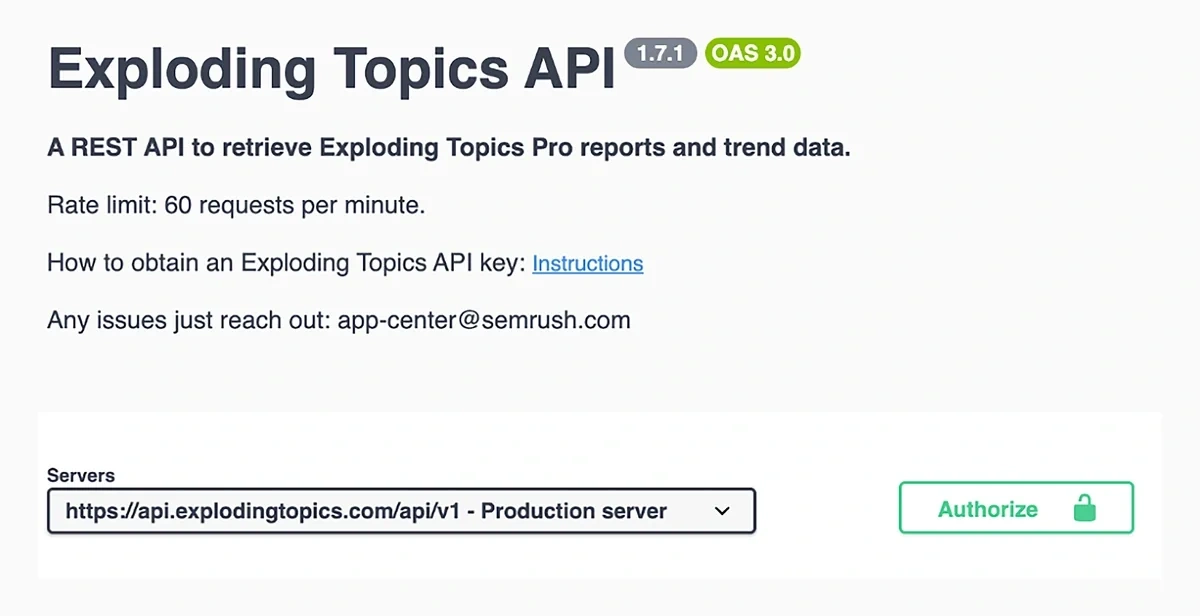
The Products endpoint accepts parameters for price, monthly sales volume, and revenue in addition to filtering trending products by category.
Whether you’re selling third-party products as an Amazon affiliate or your own products, knowing where consumers’ interests lie can help shape your e-commerce strategy. API access enables you to retrieve this information as quickly as possible so you’re ahead of the game.
To use the Exploding Topics API, you’ll need an Exploding Topics Business plan as well as the Exploding Topics API add-on.
Build a winning strategy
Get a complete view of your competitors to anticipate trends and lead your market
Shippo API
Shipping is a necessary expense when you’re selling physical products online. Using multiple carriers so you can get the best rate is one way to minimize the cost, but without the right tools, the logistics of this becomes complex fast.
Shippo API can handle those logistics for you. It compares carrier rates, validates addresses, creates shipping labels for your orders, tracks shipments, and more to help ensure a smooth experience for both you and your customers.
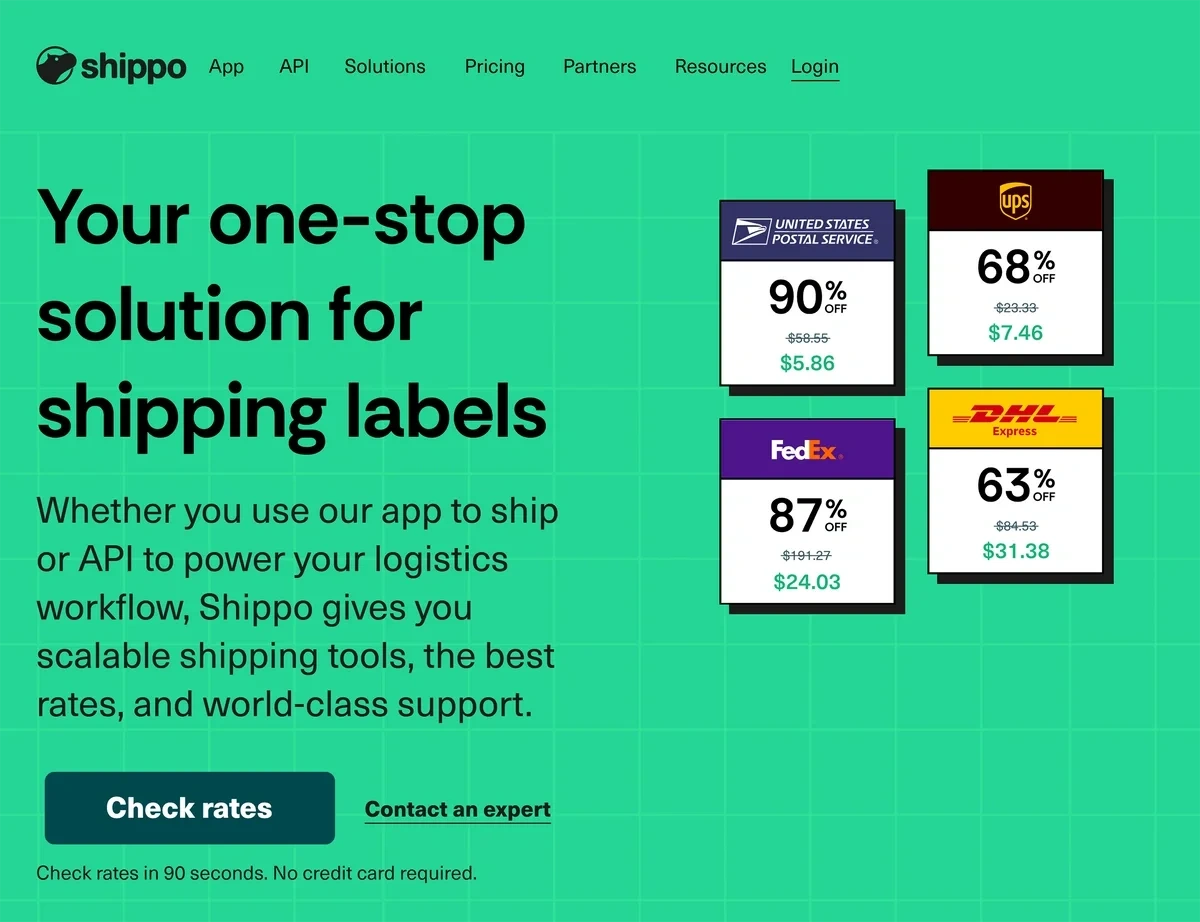
I’ve shared APIs in this post that can help you build custom e-commerce platforms powered by Shopify or Amazon, but if you’re using these solutions as-is, Shippo has direct integrations that will let you connect them (and other e-commerce tools) to its network of carriers.
If you’re building your own online store from scratch, Shippo will integrate with your custom e-commerce hub, too. It’s well documented and even offers an MCP server to allow you to optimize your shipping operations with help from your preferred AI assistant.
Shippo offers scalable pricing as well, making it affordable to get started. There’s a free tier that lets you generate 30 labels per month, as well as pay-as-you-go and custom plans.
Quickbooks API
It might not be glamorous, but running a business means keeping up with invoices, tracking profits, and if you have other employees, managing payroll. Quickbooks is a popular software for handling all of this, and it offers an API to make integrating it with your e-commerce site simple.

The Quickbooks API lets you create invoices, categorize income and expenses, calculate sales tax, and more. Connecting it to your e-commerce site directly streamlines these processes by allowing your site to share data with Quickbooks automatically, instead of requiring you to manually input information.
To use the API, you’ll need an Intuit Developer account. There are several SDKs available to assist with your development as well.
HubSpot
The last API I’ll share with you is the HubSpot API. There are lots of marketing platforms with APIs available, but I’ve chosen HubSpot for this list because of the variety of features it provides.

HubSpot’s central feature is its Customer Relationship Management (CRM) database, which stores details about your customers. Using the HubSpot API, you can collect customer information on your website and send it to HubSpot to use in email marketing campaigns.
HubSpot’s API also includes endpoints to manage events, track engagement, publish website content, and even facilitate e-commerce orders. It’s very well documented, so you should have no trouble finding your way around the different resources that are available.
HubSpot has a variety of account types available, including Developer test accounts and Sandbox accounts for trying out the API. A Standard HubSpot account (free or paid) will provide access to most API resources, but a Marketplace provider account is required for some features. API rate limiting applies.
If HubSpot isn’t quite what you need to get the word out about your e-commerce business, you might try the Mailchimp API for email marketing or the Meta marketing API for social media.
Considerations When Choosing E-Commerce APIs
As I mentioned earlier, you can incorporate multiple APIs when you’re building your e-commerce site. However, there are a few things to keep in mind when selecting which ones you’re going to use.
First of all, you’ll want to make sure all the APIs you integrate are compatible with each other and with any e-commerce tools you’re using out of the box. For example, Shippo API has dedicated integrations for Shopify, making it faster and easier to set up if that’s the platform you’re using to sell products online.
Security is also an important factor, especially when it comes to handling payment information and customer data. Be sure to read up on relevant regulations and ensure any APIs you integrate your store with follow best practices for authentication and data encryption.
Using APIs that are well documented and have an established track record will help on both of these fronts.
It’s also wise to check out the developer communities around the APIs you’re considering to learn about any quirks or potential issues that might arise while you’re working with the API. Developer communities are an excellent resource for troubleshooting if you need help down the road, so looking for active groups who are responsive will benefit you as well.
Capitalize on Trending Products With Exploding Topics
There are infinite ways to build your e-commerce site, and APIs like Shopify Storefront, Stripe, and Amazon Product Advertising can help keep your online store flexible and scalable as you grow your customer base.
Just as importantly, the Exploding Topics API can give you timely access to emerging trends in e-commerce products so you can add the items customers want to your virtual shelves and have them ready when shoppers come searching.
All you need is an Exploding Topics Business plan and the API add-on to get started. There are many use cases for the API beyond finding new products, too, so make sure to try out all its endpoints to make the most of the data it has to offer.
Stop Guessing, Start Growing 🚀
Use real-time topic data to create content that resonates and brings results.
Exploding Topics is owned by Semrush. Our mission is to provide accurate data and expert insights on emerging trends. Unless otherwise noted, this page’s content was written by either an employee or a paid contractor of Semrush Inc.
Share
Newsletter Signup
By clicking “Subscribe” you agree to Semrush Privacy Policy and consent to Semrush using your contact data for newsletter purposes
Written By


Molly is a technical content writer with a passion for making technology easy for anyone to understand. She specializes in content... Read more